Skip to content

New Year's Wagashi - Hojicha Hanabira Mochi


Download Printable Recipe PDF Now

Sign up for the free Green Tea Club (unsubscribe anytime) to download the printable PDF of this recipe now.


When it comes to New Year's festivities in Japan, one sweet that steals the spotlight among Wagashi (traditional Japanese sweets) is none other than Hanabira-Mochi. Its name translates to
'Flower Petal.' This unique treat falls under the category of Wagashi - beautiful Japanese sweets traditionally savored during Matcha tea ceremonies. (Read more about Matcha Tea Ceremonies here). While Hanabira-Mochi is perfect for a tea ceremony, it is just as delightful even when enjoyed on its own due to its wonderfully balanced flavors and tastes.

In Japan, as the New Year approaches, the famous Wagashi makers put their own spin on Hanabira Mochi, giving it unique touches based on the region or the artisan's personal style.

This winter, we poured our hearts into crafting our version of Hanabira-Mochi, infusing it with the comforting, nutty, and aromatic essence of our beloved Hojicha loose-leaf tea.

New Year's Waagashi

Unique aspects of Dream of Japan's Hanabira-Mochi

  • Easy to make at home regardless of your sweet-making skills.
  • Uses ingredients readily available outside Japan
  • Uses a secret hidden ingredient, 'Hojicha,' which adds more richness and depth to the taste and flavor of the Hanabira Mochi
  • Perfect to serve with Matcha, other kinds of Japanese tea, Japanese coffee, or on its own

The First Tea Ceremony of the Year "Hatsugama (初釜) Tea Ceremony"

In Japanese tea ceremonies, it is customary to use ingredients, utensils, and themes according to the time of the year, celebratory occasions, or the seasons. If you're interested in discovering more fascinating facts about the Japanese Tea Ceremony or simply wish to learn more, you can read about them here.

To celebrate the New Year, there is a special Japanese Tea Ceremony, typically performed in January, marking the first tea ceremony of the year. This ceremony is known as "Hatsugama (初釜)." 'Hatsu' means first, and 'Gama' means kettle, giving it the literal translation of 'First Kettle.'

You might also be aware that during the Japanese Tea Ceremony, a wagashi, a traditional Japanese sweet, is usually served, perfectly aligned with the ceremony's theme. For the Hatsugama Tea Ceremony, the most popular or traditional Wagashi is the 'Hanabira Mochi.'

Good-to-know Japanese Tea-knowledge: Hanabira Mochi is the traditional Wagashi for the Hatsugama Tea Ceremony (the first Matcha Tea Ceremony of the year).

The Story Behind Hanabira Mochi - Origin, History, Roots

The origin of Hanabira Mochi has two different versions:

First version - From the Imperial Courts of the Heian Period

The origin of Hanabira Mochi goes all the way back to the Imperial Court Rooms in the Heian Period (794 to 1185). Back then, as part of their New Year's celebrations on the 3rd day of the year, the Royal Courts held a special ceremony called the 'Teeth-strengthening ceremony,' also known as 'Ha-gatame no Gyoji' (歯固めの儀).

During this ritual, people nibbled on foods believed to toughen their teeth. Munching on tough and chewy food like sweetfish (called Ayu in Japanese), Mochi, and daikon radish was thought to fortify tooth roots, promoting a longer life. It was all about hoping for good health and a long life.

Over time, the menu for this ceremony changed, simplifying until it resembled what we now know as 'Hanabira Mochi.' The burdock nestled between the petal-shaped Mochi is a nod to the pressed sweetfish of old, while the 'miso-an' traces its roots to a soupy Mochi dish served during New Year's festivities called 'O-zoni' in Japanese.

In the Meiji period, Hanabira-Mochi became a standard sweet for Hatsugama (the first tea ceremony of the new year) in Urasenke, one of the schools of tea ceremony.

First Tea Ceremony of the Year
Second Version - A Way to Save Cost of the Ingredients

Another tale suggests that Hanabira-Mochi's roots lie in the Muromachi period (1336 to 1392), a time of economic hardship. Back then, 'Maru-Mochi' (whole Mochi) used in O-zoni (a Mochi-based New Year's soup dish) faced a transformation. People began rolling up the Maru-Mochi into smaller bits, shaping them into what we now know as Hanabira Mochi.

The idea was simple yet clever: crafting these Mochi into crescent shapes cut down on the amount of glutinous rice needed, making it a pocket-friendly choice during financially challenging times.

As time went on, petal-shaped Mochi fell out of use in imperial Ozoni or rituals, finding its new identity as a beloved Japanese sweet. Especially during the Meiji period, when Urasenke, a school of tea ceremony, adopted Hanabira Mochi as a treat for Hatsugama (the first tea ceremony of the new year), its popularity skyrocketed, spreading across the nation.

And so, Hanabira Mochi found its place among sweets, enduring through time. However, in the Iga region (Western Mie Prefecture), the tradition of enjoying Hanabira-Mochi in O-zoni (Japanese New Year Mochi Soup) during the New Year persisted, maintaining an unbroken bond with O-zoni.

🍵 Read More Fascinating Stories of Tea and Japanese History:

The Symbolic Meaning Behind Ingredients of Hanabira Mochi

In Japanese New Year-related cooking and tea ceremonies, many 'hidden' or 'symbolic' meanings exist. The same holds true for Hanabira Mochi - the ingredients, besides being beautiful, delicious, and healthy, carry symbolic meanings that are quite intriguing.

  • Burdock Root: Burdock, with its deep roots, symbolizes family or family businesses deeply connected to the land, passing down through generations, praying for enduring happiness. It's also recognized as a New Year's food promoting good health due to its medicinal properties; tapping the burdock root is believed to open the body and bring good luck.
  • Mochi: In ancient times, Mochi was revered as a sacred food offered solely to gods and nobility. As per tradition, eating Mochi is believed to bring good fortune and robust health.
  • White Bean Paste: Japanese New Year's cuisine commonly incorporates beans, signifying a wish for the ability to 'work hard with good health and energy.'
Excited to make Hanabira-Mochi Yourself? Find the Ingredients and follow our easy recipe video to make your own Hanabira-Mochi!

videoid="fRUd57kZPEQ"


Ingredients
  • 1 parsnip, peeled and thinly sliced into 4" strips
  • ½ cup sugar
  • ½ cup water
  • Potato starch
Shiro-an

Hojicha Hanabira Mochi Shiro-an

Pink Yuki
Hojicha Hanabira Mochi Pink Yuki

White Yuki
  • 2 tbsp sweet rice flour
  • 3 tbsp sugar
  • 3 tbsp water
Hojicha Hanabira Mochi White Yuki
Instructions
  1. In a small saucepan, heat the water and sugar until it dissolves. Add in the parsnip strips and boil for 30 minutes until the parsnip softens.
  2. To make the Shiro-an, add the white beans into a food processor and blend until a paste-like consistency forms. In a small saucepan, heat the sugar and water until the sugar dissolves. Add the white bean paste to the water and cook over medium-high heat, mixing continuously until the paste thickens.
  3. In a small bowl, add the miso and Hojicha Powder to the white bean paste and mix until everything is well combined. Take small pinches of the paste (about 1 tsp) and roll into small balls. Flatten the bottom and ends to form an oval shape. Set aside.
  4. To make the pink yuki, combine the sweet rice flour, sugar, and water into a small bowl and mix. Set aside for 5 minutes. Next, add the mixture to a small saucepan and cook over medium heat, mixing continuously until the mixture turns sticky.
  5. Add the boot root juice and mix for another minute or two until the color evenly coats the yuki.
  6. On a cutting board, add potato starch. Pour the pink Yuki over the starch and sprinkle more potato starch on top. Let it cool for 5 minutes.
  7. Repeat steps 3 & 6 to make the white yuki.
  8. Using a rolling pin, carefully roll out the pink yuki. Cut into small squares. Set aside.
  9. Roll out the white Yuki and cut out about 2-inch circles using a cookie cutter. Using your hands, shape the white yuki into an oval shape.
  10. Now assemble! Place one pink Yuki square on one end of the white Yuki, then place the parsnip stick in the middle of the white Yuki and the Hojicha paste round on the other end.
  11. Carefully fold the end with the pink Yuki over to meet the other end.
  12. Serve and enjoy!

how to make Hojicha Hanabira Mochi 

Drinks to Enjoy with your Hanabira Mochi

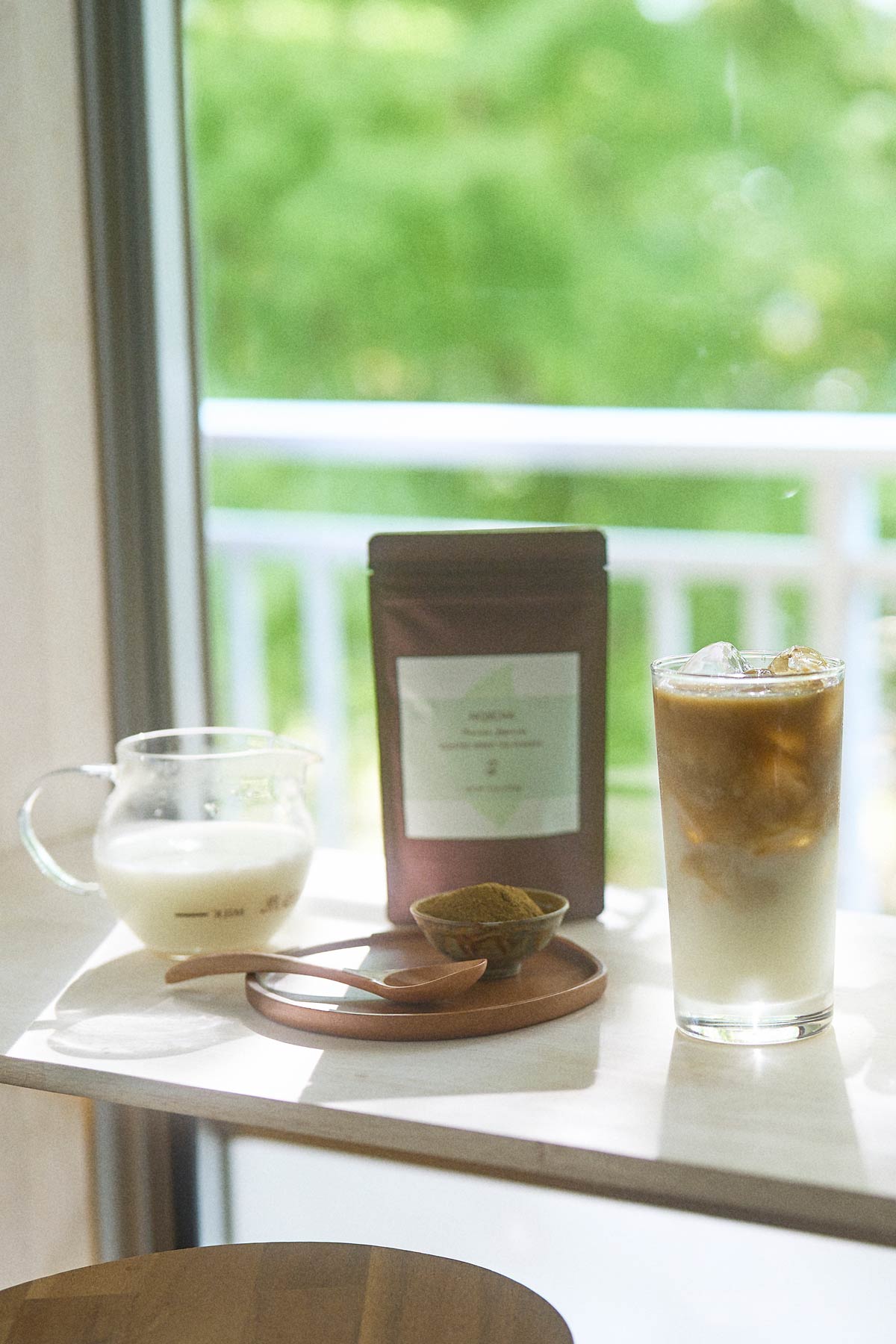
You can enjoy any drink with your home-made Hanabira-Mochi, but if you are looking to create a home-made drink that creates the perfect drink and dessert combination, here are some easy to follow recipes you can try at home.

Try making your own Hanabira-Mochi, and let us know how it went! It might look challenging, but the end result is so worth it!

FAQs about Hojicha Hanabira Mochi and New Year Wagashi

What is hanabira mochi and why is it associated with New Year?

Hanabira mochi (花びら餅, "flower petal mochi") is a traditional Japanese New Year wagashi (Japanese sweet) — a soft, white mochi disk folded over a strip of pickled gobō (burdock root) and a thin slab of miso-flavored anko (red bean paste). The pink center peeking through the white mochi gives it a subtle flower-petal appearance. It's eaten during the first tea ceremony of the year (hatsugama) in early January.

The history goes back to the Heian court (794-1185), where a similar dish called hishi-hanabira mochi was served at imperial New Year banquets. The modern hanabira mochi was developed for tea ceremony use in the Kyoto imperial court tradition. It's specifically associated with the Urasenke school's hatsugama tea ceremony, where it's the canonical wagashi served alongside the first matcha of the year.

Outside tea ceremony, hanabira mochi is sold at Japanese confectionery shops only during the first few weeks of January. After that the seasonal item disappears from stores until the following year.

What's the role of hojicha in this New Year wagashi recipe?

In the traditional version, the wagashi is paired with usucha (thin matcha) at the first tea ceremony of the year, not hojicha. The hojicha-flavored modern variant adapts the recipe with hojicha powder worked into the mochi or the bean paste, giving the sweet a roasted depth that works particularly well in cold weather.

Hojicha and red bean paste pair beautifully — the roasted, caramel notes of hojicha echo the slightly burnt-sugar sweetness of properly-cooked anko. White-bean (shiroan) versions of the bean paste work even better than red bean for hojicha-flavored hanabira mochi because the lighter bean profile lets the hojicha come through.

Whether you serve hojicha hanabira mochi with hot hojicha tea (matching) or with matcha (contrasting) is a stylistic choice. Both work; matching is more harmonious, contrasting is more dynamic.

Can I actually make hanabira mochi at home, or is it too technical?

It's harder than typical wagashi but doable. The hardest part is the mochi texture — soft, smooth, not sticky-tough. Achieved through proper proportions of gyūhi (sweet-rice flour glutinous mochi) cooked carefully and kneaded while warm. If you've made daifuku at home, hanabira mochi is in the same difficulty range.

The pickled gobō is the most-skipped element — it's traditional but not strictly necessary, and most home recipes substitute candied burdock or even thin sweet-pickled vegetable strips that match the visual without the precise traditional flavor. The bean paste (anko or shiroan) is straightforward to make from dried beans, sugar, and time.

If you want the traditional experience without the home-cooking project, Japanese specialty grocery stores in major U.S. cities (Mitsuwa, Nijiya) often carry imported hanabira mochi during the first week of January. Online from specialty Japanese-confectionery retailers also works but they ship overnight only and within a narrow seasonal window.

What other Japanese sweets pair well with hojicha besides mochi?

Hojicha pairs beautifully with most traditional wagashi. Castella (kasutera) — the Portuguese-derived sponge cake — works particularly well; the eggy sweetness has chocolate-adjacent depth that hojicha echoes. Manjū (steamed bean-paste buns) and dorayaki (red-bean pancake sandwiches) both pair cleanly with hojicha because the bean paste pairs reliably with the roasted notes.

Yokan (firm bean-paste jelly bars) is the most traditional pairing — strong, sweet, dense, and works as the sweet-bookend to hojicha's bitter-but-rounded profile. Higashi (pressed sugar candies) are too delicate and get overwhelmed by hojicha's strength; pair those with sencha or matcha instead.

Modern Japanese desserts: hojicha + cheesecake is a great pairing (the dairy and slight tartness work with hojicha's depth), hojicha + matcha-flavored anything is overkill (two strong tea flavors fighting), hojicha + dark chocolate desserts is genuinely excellent (roasted-on-roasted harmony).

Is there a specific hojicha grade that's best for cooking and baking with wagashi?

Powder form, ideally. JPCo's hojicha powder is processed specifically for cooking applications — fine grind, concentrated flavor, dissolves cleanly into doughs and bean pastes. Loose-leaf hojicha can be ground in a coffee mill for cooking but won't be as finely consistent as commercial powder.

For mochi, baked goods, and ice cream, hojicha powder is the right tool. For broths and savory applications (yes, hojicha works in some savory dishes — try it in chicken stock for ramen), steeped strong hojicha tea works better than powder because you want a clear liquid rather than suspended particulates.

Quality matters more than people think for cooking applications. Cheap hojicha that tastes harsh as a beverage will taste harsh in your wagashi too — the cooking process doesn't mask off-flavors. Use the same grade you'd drink for the best result; if you wouldn't drink it as tea, don't bake with it.

Buy Hojicha Roasted Tea

45 reviews

Hojicha - Roasted Green Tea

$25.00
Quick view

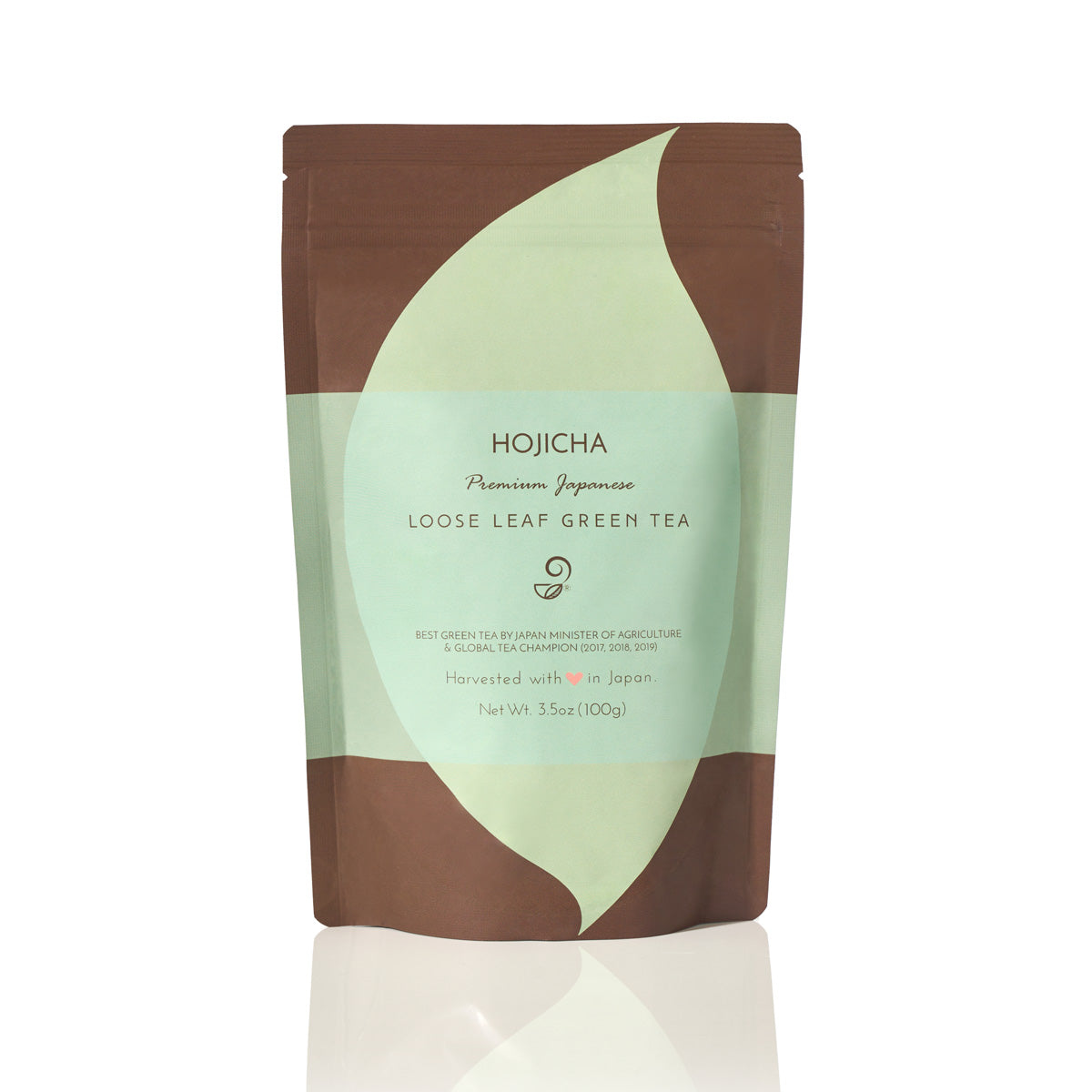
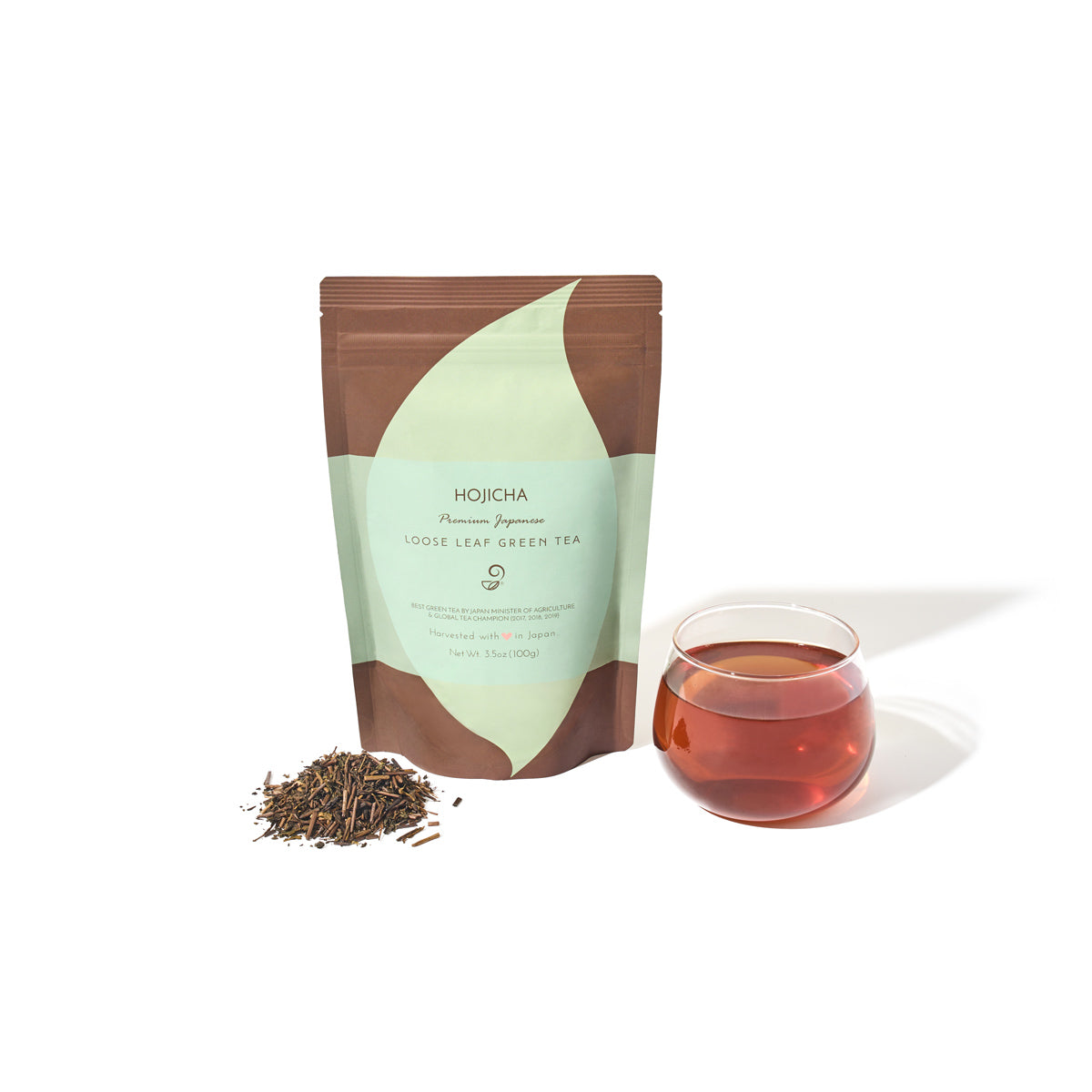
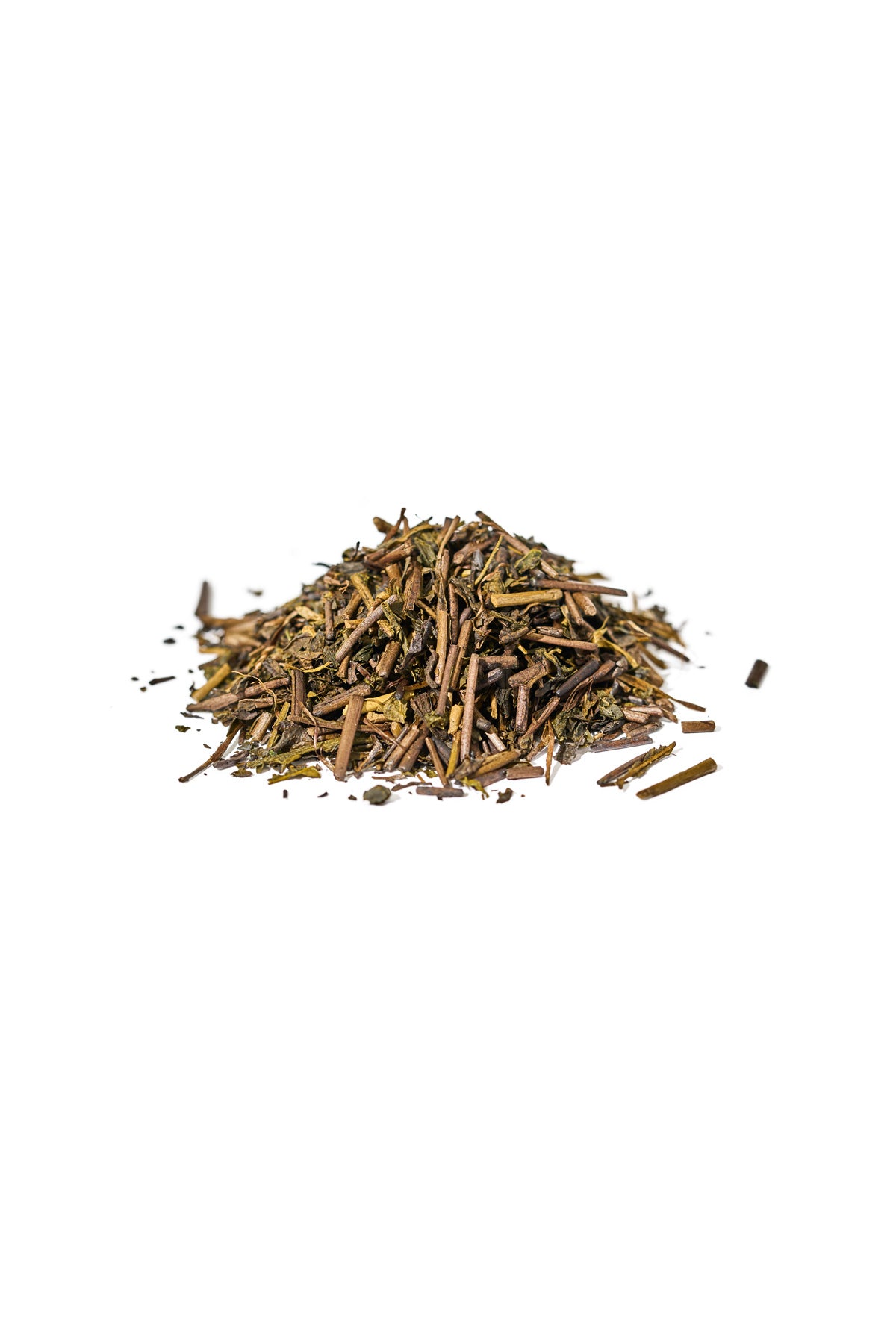
Our roasted green tea, known as hojicha (ほうじ茶), is crafted from freshly harvested premium green tea carefully roasted in porcelain over charcoal to maximize flavor while retaining more catechins than typical hojicha on the market. With lower caffeine and a smoother, less bitter taste compared to steamed green tea, it is an ideal choice for evening relaxation and is gentle enough for kids and pregnant women. Cultivated using the Chagusaba method in nutrient-rich sugarcane soil, this loose-leaf authentic Japanese roasted green tea, made from the Yabukita cultivar, also pairs beautifully with oily foods. Each eco-friendly resealable package contains 3.5 oz (100g) of tea, enough to steep 30–40 comforting cups.

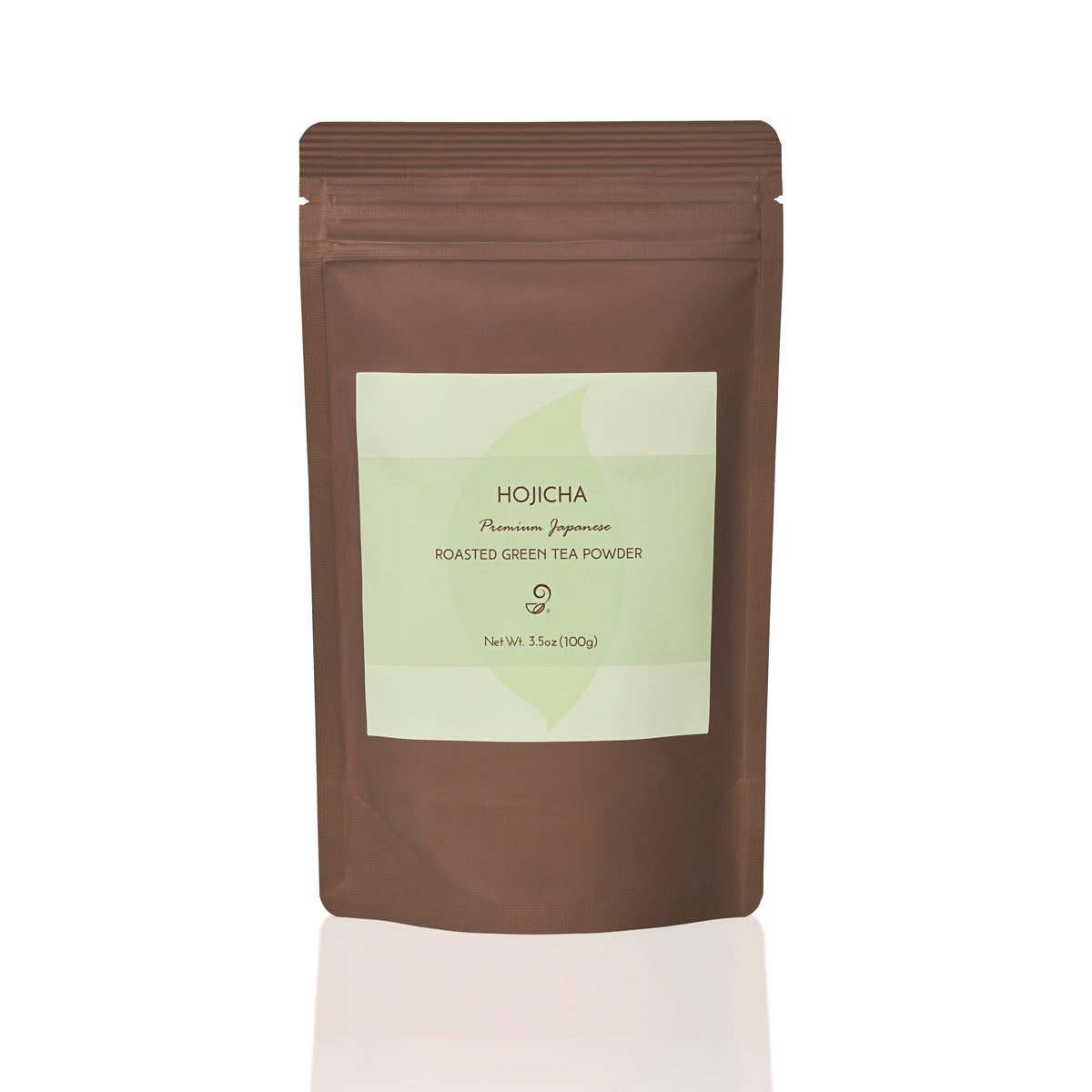
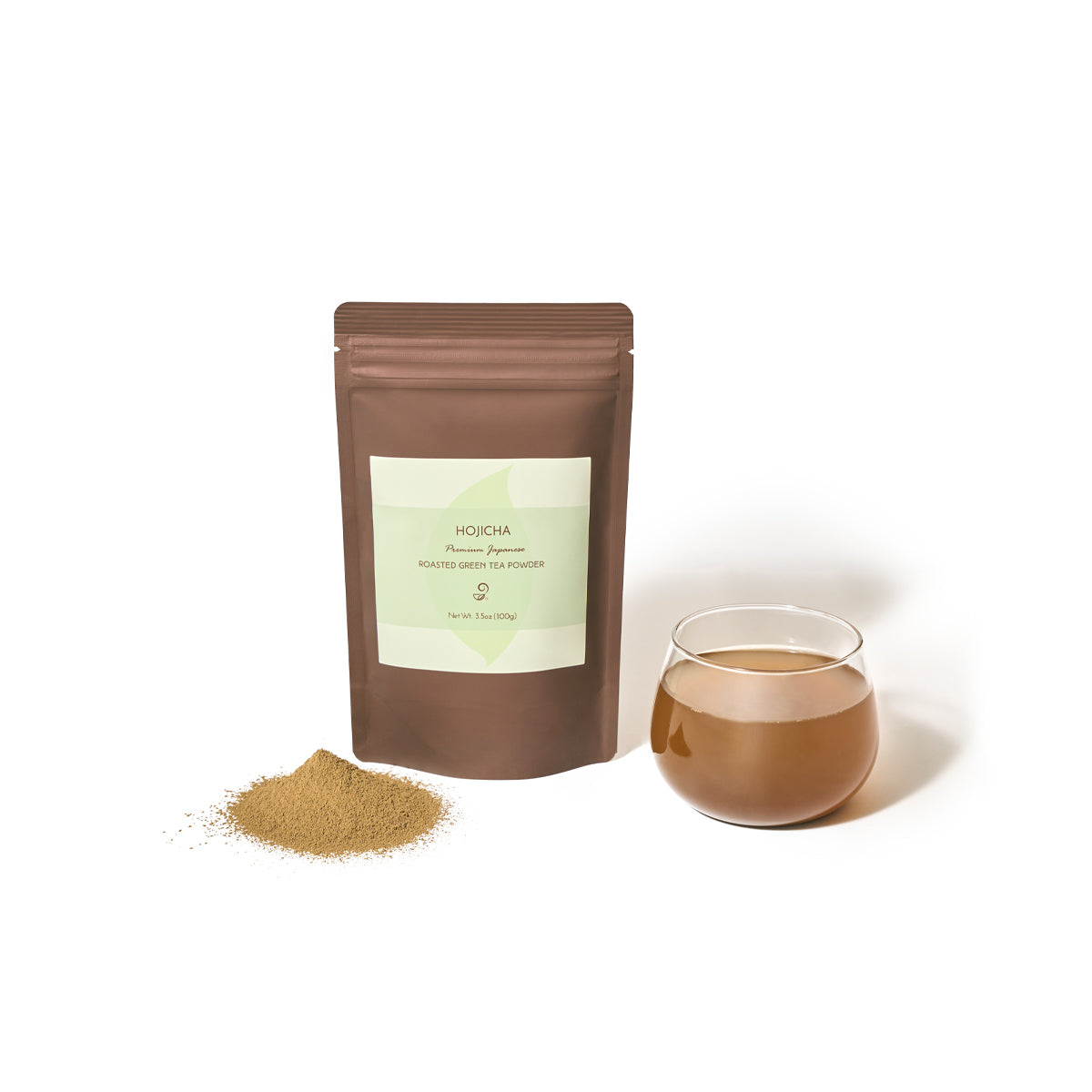
Hojicha Powder - Roasted Green Tea Powder

$25.00
Quick view

Our roasted green tea, known as hojicha (ほうじ茶), is crafted from freshly harvested premium green tea carefully roasted in porcelain over charcoal to maximize flavor while retaining more catechins than typical hojicha on the market. With lower caffeine and a smoother, less bitter taste compared to steamed green tea, it is an ideal choice for evening relaxation and is gentle enough for kids and pregnant women. Cultivated using the Chagusaba method in nutrient-rich sugarcane soil, this loose-leaf authentic Japanese roasted green tea, made from the Yabukita cultivar, also pairs beautifully with oily foods. Each eco-friendly resealable package contains 3.5 oz (100g) of tea, enough to steep 30–40 comforting cups.

1 review

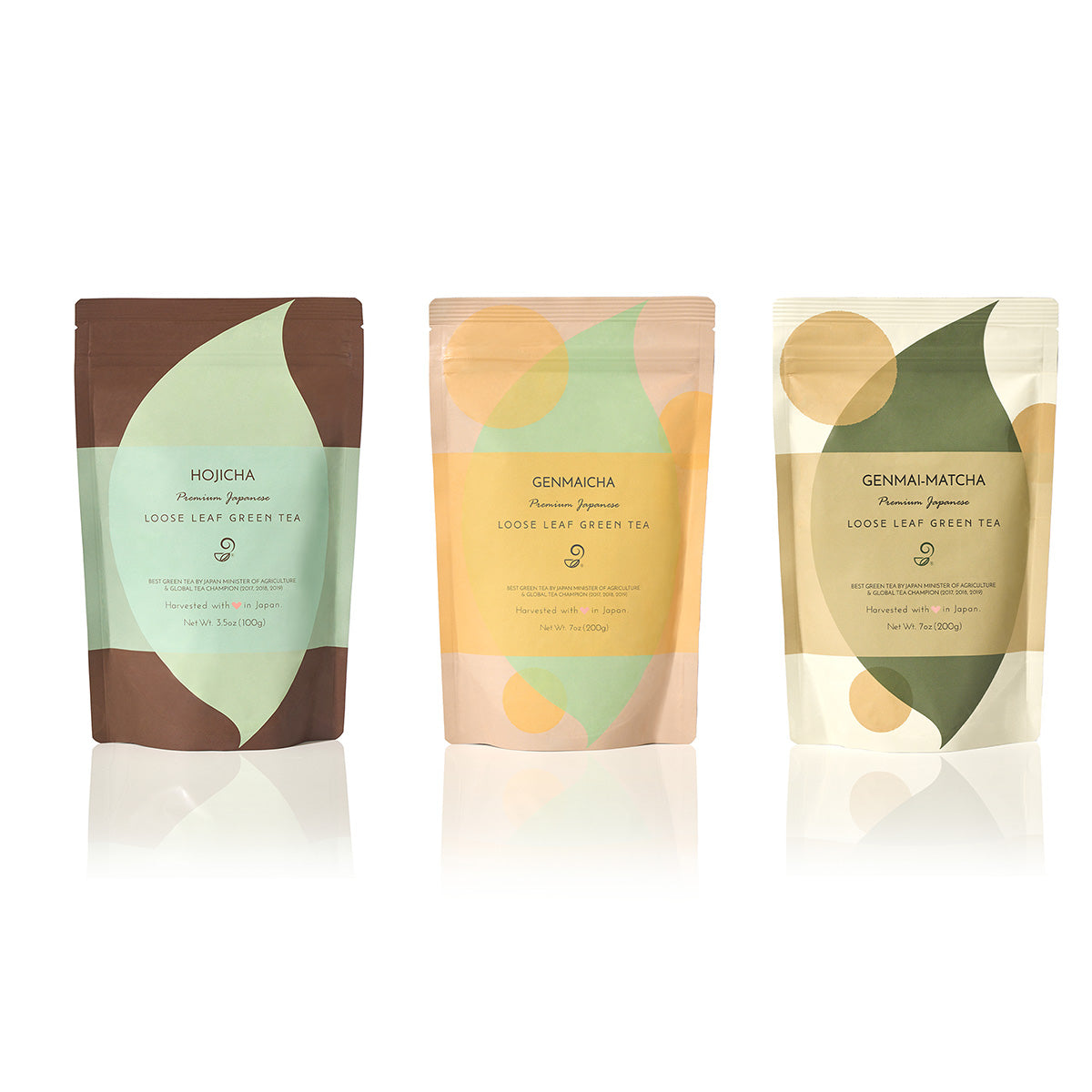
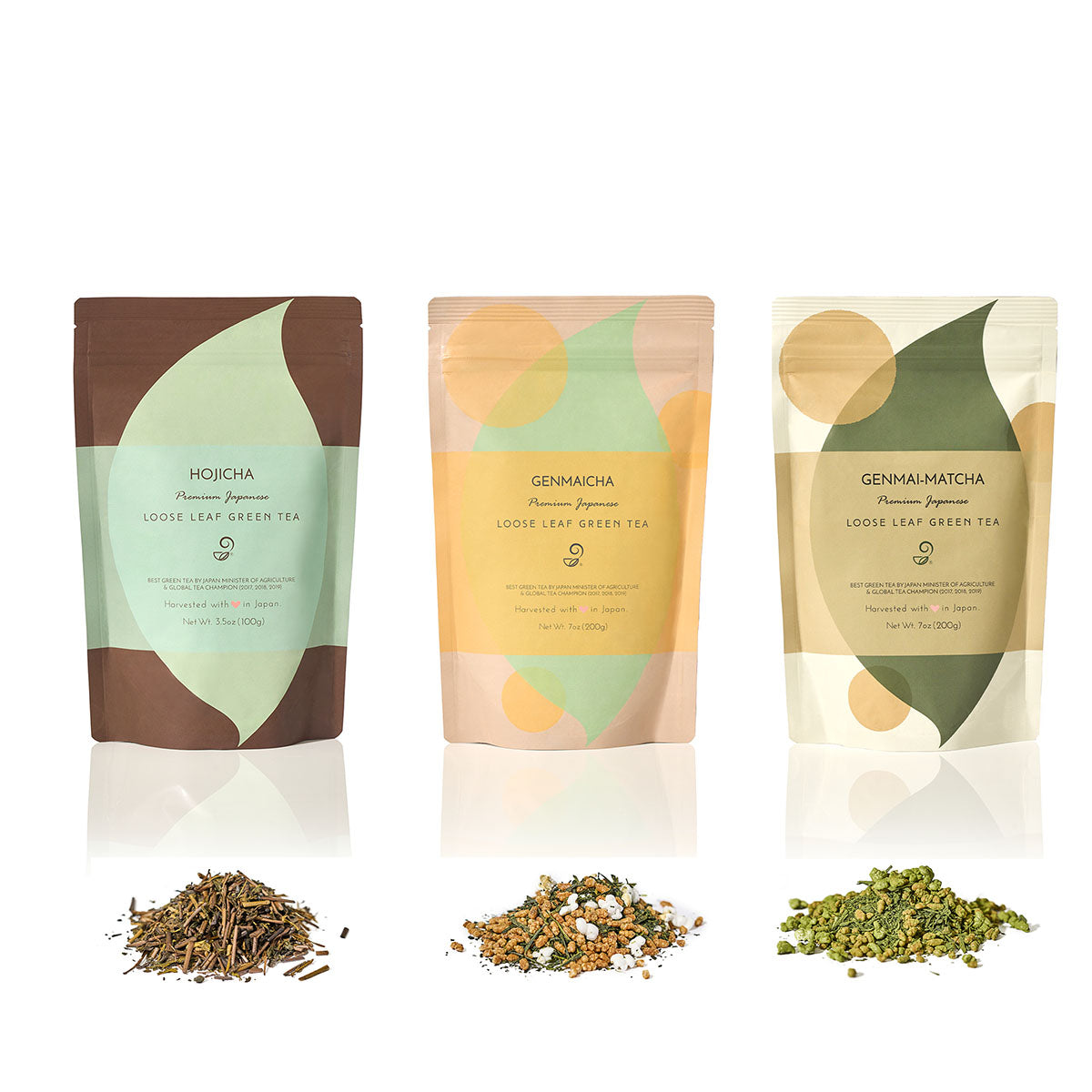
Hojicha Genmaicha Trio Gift Set - Premium Japanese Green Tea Set Package
$90.00 $72.00
Quick view

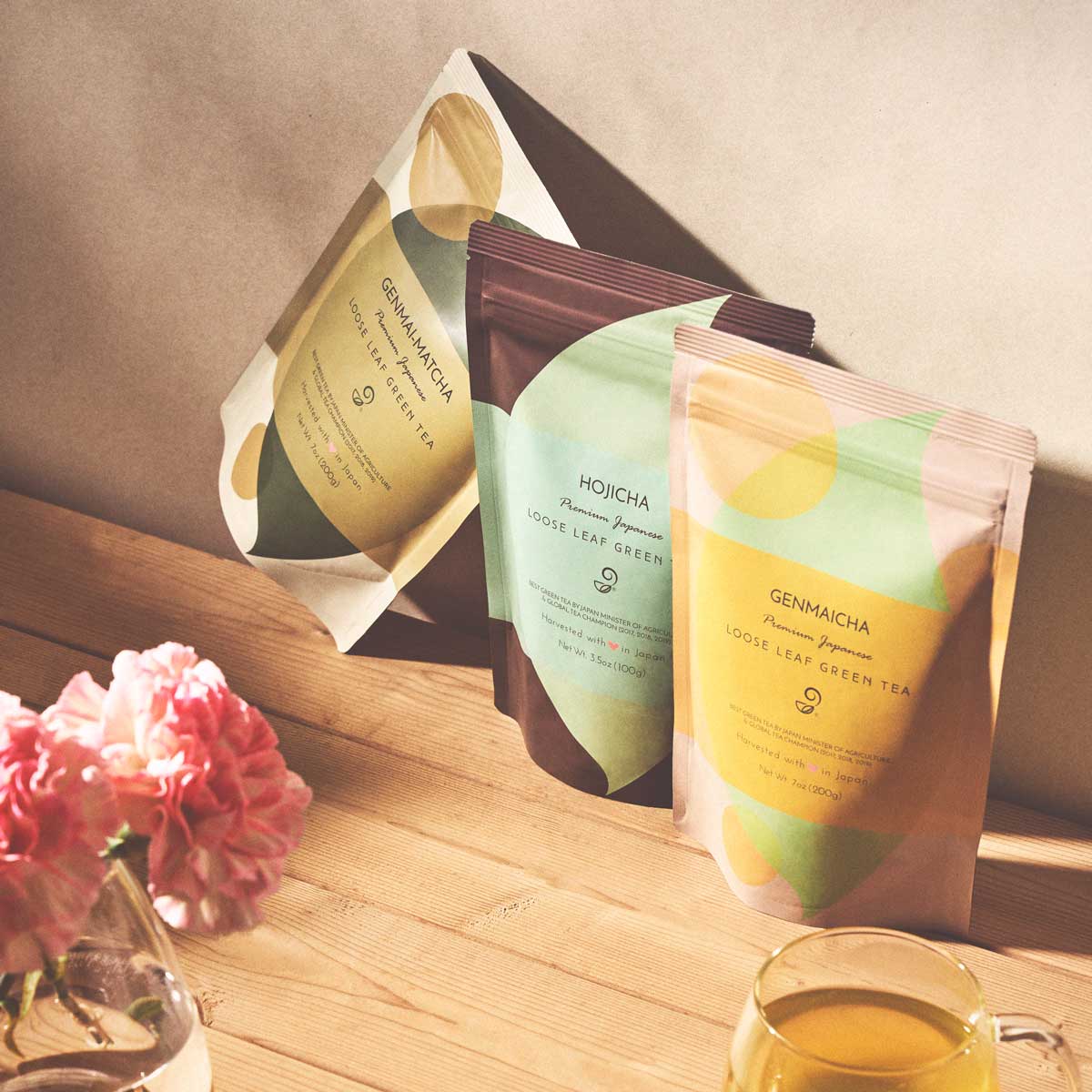
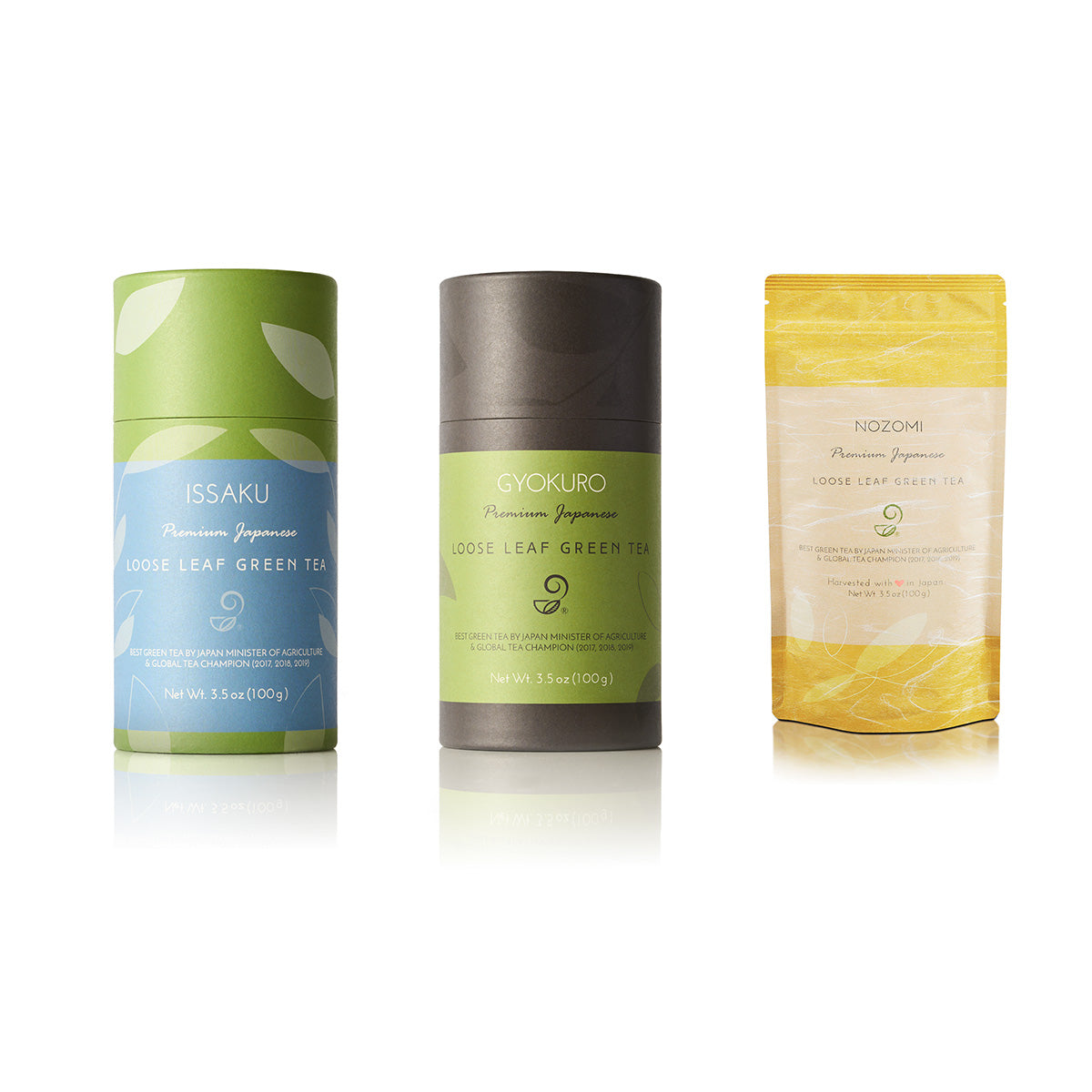
This special tea set features three traditional Japanese teas, each offering a unique and satisfying experience. Hojicha is made by roasting Bancha leaves at high temperatures, resulting in a reddish-brown tea with a rich umami flavor and a warm, toasty aroma. Genmaicha combines green tea with roasted brown rice, creating a nutty, aromatic flavor that is both comforting and ideal for enjoying between meals.

The set also includes Genmai Matcha, crafted using premium green tea grown in nutrient-rich sugarcane soil in Japan. Thanks to this special soil, the tea offers an award-winning aroma, a smooth and gentle flavor, and significantly less bitterness and astringency, providing a refreshing and healthful drinking experience.

8 reviews

The Sencha Lover Gift Set - Premium Japanese Green Tea Set Package
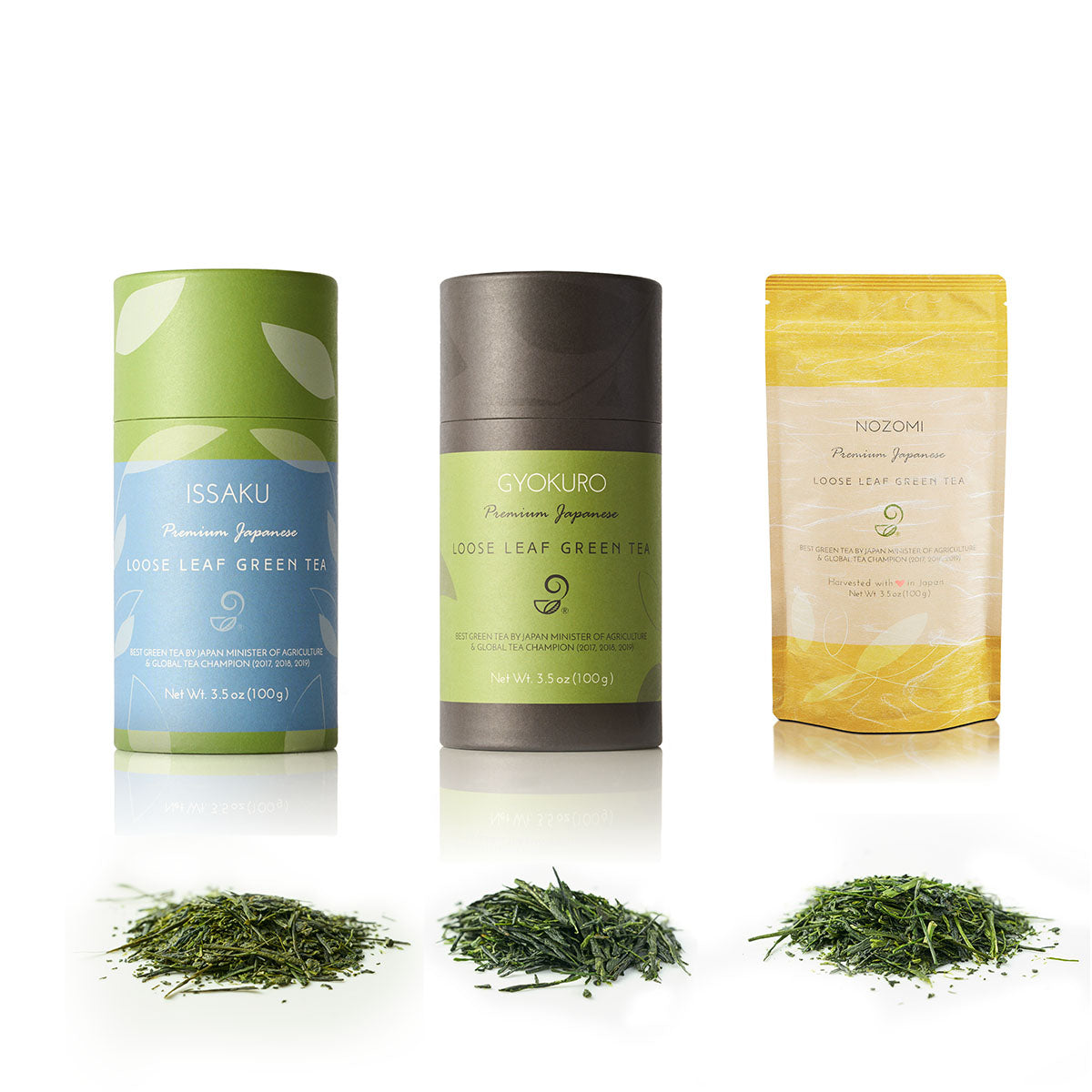
$179.00 $159.99
Quick view

This tea set features three exceptional Japanese green teas, each crafted with care and traditional techniques. Issaku Reserve, a Global Tea Champion winner in 2017 and 2019, is a rare masterpiece created by Farm Master Mr. Arahata at Arahataen Green Tea Farm. Handpicked once a year from the first flush and processed with advanced methods, Issaku represents the highest-grade deep-steamed green tea, available only in limited quantities even in Japan.

The set also includes Gyokuro, a premium shaded green tea known for its rich, sweet flavor and deep mossy green color. Grown under special mats for 20 days to increase caffeine and amino acid levels, Gyokuro offers a layered, smooth taste unlike any other. Completing the collection is Nozomi, a fine Kabuse-cha, or "Covered Green Tea," carefully grown under nets to gently shade the leaves just before new sprouts emerge, resulting in a soft, rich, and refined flavor profile.

97 reviews

Gyokuro - Shaded Imperial Premium Green Tea

$65.00
Quick view

Gyokuro, also known as "jade dew" or "jewel dew tea," is a premium Japanese green tea shaded from the sun for 20 days using specially made mats, a method that boosts caffeine levels and strengthens amino acids to create a sweeter, richer flavor. This extended shading process results in dark, mossy green leaves with an unmistakable aroma and a complex taste that is layered yet balanced. Cultivated by the Chagusaba method in nutrient-rich sugarcane soil and made from the Yabukita cultivar, this loose-leaf authentic Gyokuro is offered in a high-quality, air-tight paper tube canister (chyazutsu) to preserve its exceptional freshness and flavor. Each 3.5 oz (100g) full-size package steeps 30–40 cups, and a convenient single-serve sample is also available.


Related Articles You May Be Interested

Everything You Need To Know About Japanese Hojicha Tea
How to Make Hojicha Syrup
Our Tea and Coffee are Available in Store at TOIRO Donabe, first in the Los Angeles Area
Hojicha Banana Daifuku (Mochi): The Collaboration of Aromatic Roasted Tea and Richly Sweet Banana
Hojicha Pudding (Video Recipe) & Learn about Pudding and Japan プリン
Hojicha Pudding (Video Recipe) and Everything You Need to Know about Pudding プリン and Japan

Get Free Bonus Books

Join Green Tea Club

Sign up for free to the Green Tea Club to get advice and exclusive articles about how to choose Japanese Tea, and tips, tricks, and recipes for enjoying Japanese tea.

Unsubscribe anytime. It’s free!

About the author

Kei Nishida

Kei Nishida

Author, CEO Dream of Japan

info@japanesegreenteain.com

Certification: PMP, BS in Computer Science

Education: Western Washington University

Kei Nishida is a passionate Japanese green tea connoisseur, writer, and the founder and CEO of Japanese Green Tea Co., a Dream of Japan Company.

Driven by a deep desire to share the rich flavors of his homeland, he established the only company that sources premium tea grown in nutrient-rich sugarcane soil—earning multiple Global Tea Champion awards.

Expanding his mission of introducing Japan’s finest to the world, Kei pioneered the launch of the first-ever Sumiyaki charcoal-roasted coffee through Japanese Coffee Co. He also brought the artistry of traditional Japanese craftsmanship to the global market by making katana-style handmade knives—crafted by a renowned katana maker—available outside Japan for the first time through Japanese Knife Co.

Kei’s journey continues as he uncovers and shares Japan’s hidden treasures with the world.

Learn more about Kei Nishida

Related Posts

Behold: Balmuda's "The MoonKettle" — Where Boiling Water Becomes Art

We were privileged to be invited by Balmuda's Private MoonKettle Launch Event. Here are videos of it and everything you

Read More
OC Japan Fair April 2026 — Visit Us at Booth #A8!
OC Japan Fair Spring 2026 Recap (April 3 - 5 2026)

We were at OC Japan Fair again! April 3-5 2026 with new products, Miki Pon's art debut and more. Here is a recap video f

Read More
Super Mario and Japanese Green Tea

Super Mario and green tea share a hometown! Watch our Yoshi Matcha Cookies video recipe + discover how Nintendo and matc

Read More
Leave a comment

Your email address will not be published..

Cart

Your cart is currently empty.

Start Shopping

Select options