Download Printable One-Page Recipe PDF Now
Sign up for the free Green Tea Club (unsubscribe anytime) to download the printable PDF of this recipe now.
Hojicha Syrup
Ingredients:
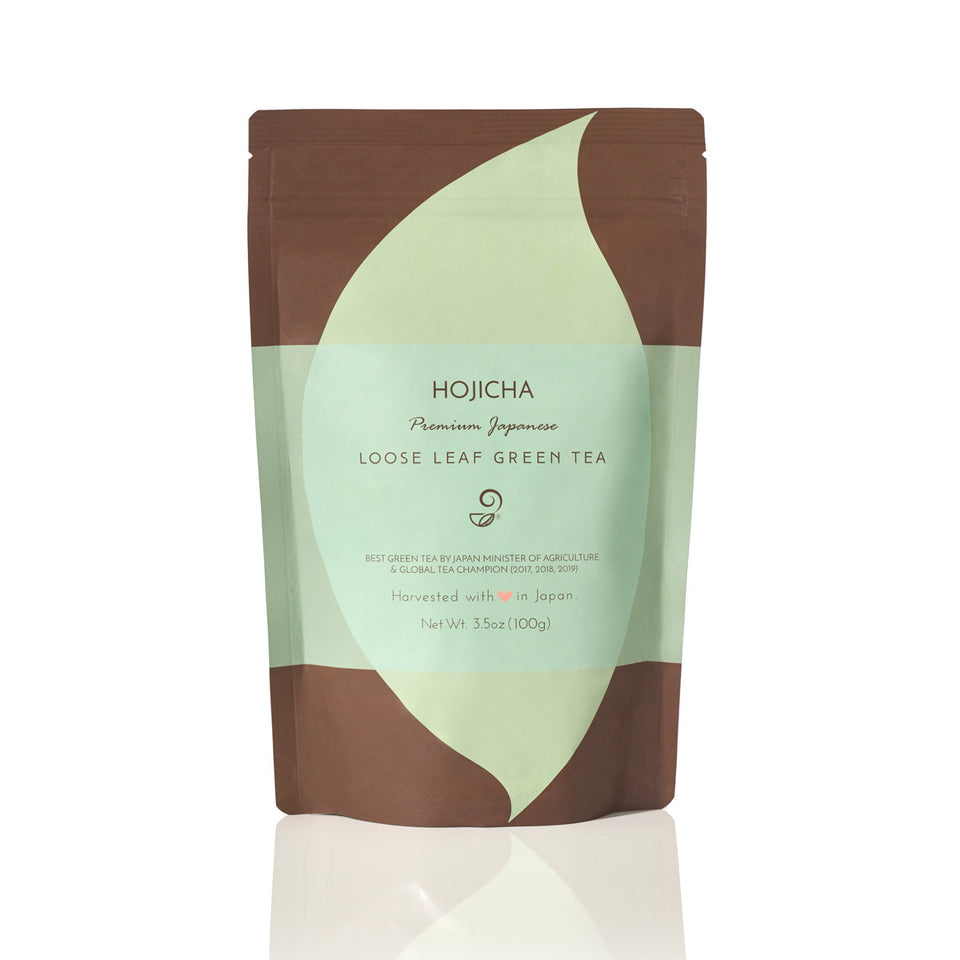
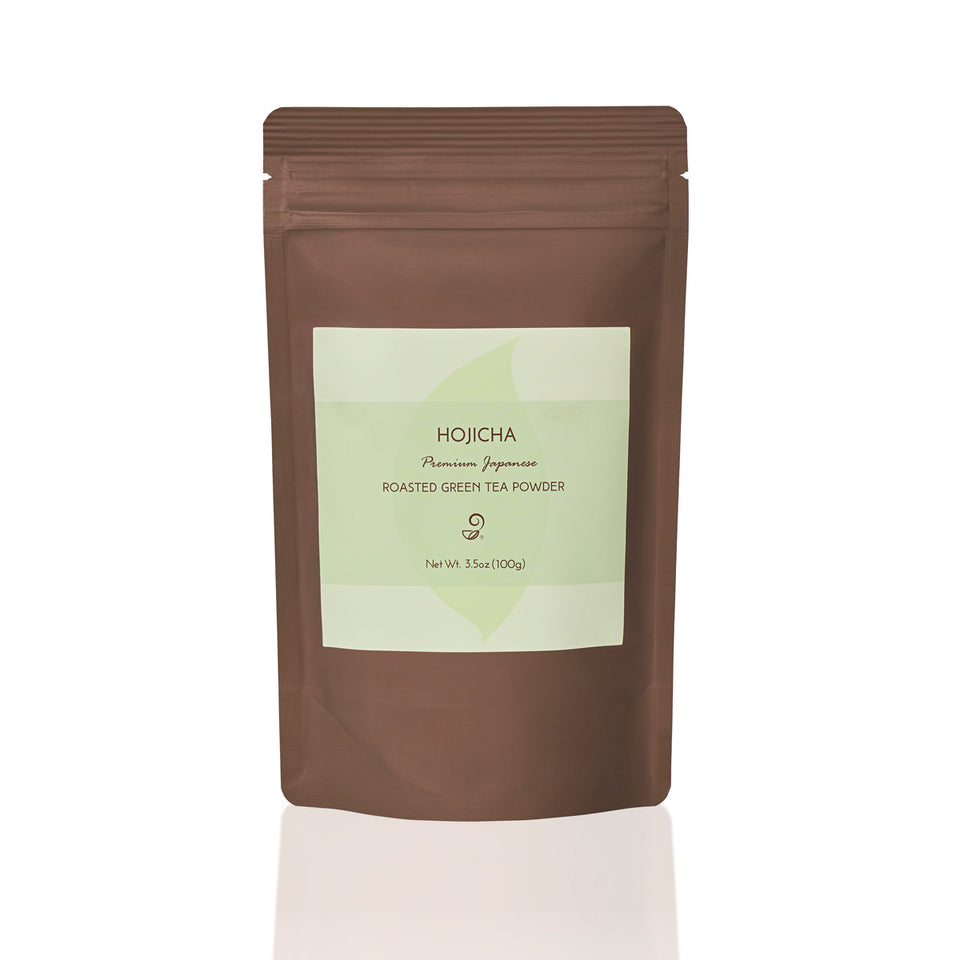
- 6 tbsp of Hojicha Loose Leaf or Hojicha Powder
- 1 cup of water
- 7 oz of cane sugar (or brown sugar)
Directions:
- Pour water and cane sugar into a pot
- Put the pot on high heat and continuously stir it until combined
- Lower the heat once bubbles start appearing
- Add Hojicha Loose Leaf (or Hojicha Powder) to the pot before it starts to boil
- Cook it on medium heat for a minute and gently stir it (don’t stir too much)
- Cover and wait for three minutes
- Strain it
- Pour the liquid into a mason jar and cool to room temperature before putting it in a fridge

How to Make Latte with Hojicha Syrup
Ingredients:
- 1 cup of oatmilk
- 1.5 tbsp of hojicha syrup
Directions:
- Pour hojicha syrup into a mug
- Froth warm oatmilk and pour it into the mug
FAQs about Making Hojicha Syrup
What's hojicha syrup actually used for?
Hojicha syrup is a concentrated tea-and-sugar reduction you can stir into drinks, drizzle over desserts, or use as a baking substitute for vanilla extract. It captures hojicha's roasted, almost chestnut-like flavor in a stable form that lasts in the fridge for weeks. The most common uses are: hojicha lattes (stir into milk), hojicha sodas (stir into sparkling water), drizzled over ice cream or yogurt, brushed on cake layers, or mixed into cocktails as a toasted-tea note.
It's especially useful for people who want hojicha flavor in cold drinks without the hassle of brewing fresh tea every time. A jar of syrup means an instant hojicha cold latte in 30 seconds.
In bartending, hojicha syrup pairs particularly well with whiskey and dark rum — the roasted notes layer onto barrel-aged spirits naturally. It also works in hot cocktails as a substitute for the vanilla or caramel notes in hot toddies and hot buttered rum.
What's the right ratio for making hojicha syrup at home?
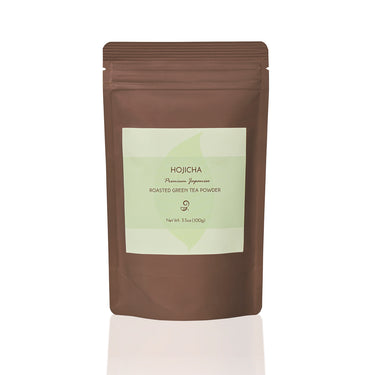
The standard ratio is 1:1 sugar to water (by volume), with strong-brewed hojicha as the water portion. Use about 4-5g of loose-leaf hojicha or 3g of hojicha powder per cup of water, brew for 5 minutes at 195°F, strain, then dissolve an equal volume of sugar into the hot tea. Cool and bottle.
For a thicker, more concentrated syrup, use 1.5:1 sugar to brewed tea. That keeps better and stays liquid in the fridge instead of crystallizing. For a lighter syrup that can be poured generously, stick to 1:1.
Brown sugar gives a deeper roasted flavor that complements hojicha's profile better than white sugar. White sugar lets the tea's roasted notes come through cleaner. Maple syrup as a sugar substitute works but is more expensive and the maple flavor competes with the hojicha. The cards below cover both leaf and powder forms.
How long does hojicha syrup keep, and does it need refrigeration?
Refrigerated, hojicha syrup keeps for 3-4 weeks reliably. The high sugar concentration acts as a preservative, and the residual catechins from the tea provide some antimicrobial protection. After about a month, the flavor starts to flatten — not unsafe, just less interesting. Make a smaller batch you'll actually use rather than a giant one that ages in the fridge.
At room temperature, hojicha syrup will start fermenting within a week or two depending on temperature. Don't leave it on the counter unless you plan to use it the same day.
If you want long-term storage, freeze it in ice cube trays. Each cube is roughly 1oz of syrup, perfect for a single drink. Frozen, it keeps 6+ months without flavor loss. That's the better preservation method if you brew big batches.
Should I use hojicha powder or loose leaf for syrup?
Powder gives a slightly more concentrated, slightly cloudier syrup — the fine particles stay in suspension and add to the body. Loose leaf gives a clearer, slightly more delicate syrup. For drinks where you want maximum hojicha flavor (lattes, ice cream toppings), powder is better. For drinks where clarity matters (cocktails, sodas), loose leaf is better.
Powder syrup also has a slight grit to it that some drinkers don't like in clear sparkling drinks. If you blend or strain hard after dissolving the powder, that mostly resolves, but the cleanest sparkling-drink syrup comes from loose leaf strained well.
For most home cooks, loose leaf is the more flexible choice — it produces a syrup that works in any context. Powder is the better choice if your main use is lattes or smoothies where the slight cloudiness is fine.
What's the difference between hojicha syrup and matcha syrup?
Different flavor profiles entirely. Hojicha syrup is roasted, warm, slightly chestnut-like — pairs naturally with brown sugar, dark spirits, autumn flavors. Matcha syrup is bright, vegetal, slightly bitter — pairs with white sugar or honey, cream-based drinks, lighter desserts. They're not interchangeable in recipes; substituting one for the other changes the dessert or drink fundamentally. Our culinary matcha is what most syrup recipes call for if you're making a matcha syrup, since the bolder grade survives the sugar cooking.
Hojicha syrup is also less bitter than matcha syrup at the same sugar ratio, because the leaf is less astringent to begin with. Many people who find matcha syrup too bitter actually prefer hojicha syrup — it's a gentler entry to tea-flavored sweets.
If you want both, make small batches of each and rotate based on the dish. They take up the same fridge space and double your range of tea-flavored applications.
TRY OUR HOJICHA
Hojicha - Roasted Green Tea
Our roasted green tea, known as hojicha (ほうじ茶), is crafted from freshly harvested premium green tea carefully roasted in porcelain over charcoal to maximize flavor while retaining more catechins than typical hojicha on the market. With lower caffeine and a smoother, less bitter taste compared to steamed green tea, it is an ideal choice for evening relaxation and is gentle enough for kids and pregnant women. Cultivated using the Chagusaba method in nutrient-rich sugarcane soil, this loose-leaf authentic Japanese roasted green tea, made from the Yabukita cultivar, also pairs beautifully with oily foods. Each eco-friendly resealable package contains 3.5 oz (100g) of tea, enough to steep 30–40 comforting cups.
Hojicha Powder - Roasted Green Tea Powder
Our roasted green tea, known as hojicha (ほうじ茶), is crafted from freshly harvested premium green tea carefully roasted in porcelain over charcoal to maximize flavor while retaining more catechins than typical hojicha on the market. With lower caffeine and a smoother, less bitter taste compared to steamed green tea, it is an ideal choice for evening relaxation and is gentle enough for kids and pregnant women. Cultivated using the Chagusaba method in nutrient-rich sugarcane soil, this loose-leaf authentic Japanese roasted green tea, made from the Yabukita cultivar, also pairs beautifully with oily foods. Each eco-friendly resealable package contains 3.5 oz (100g) of tea, enough to steep 30–40 comforting cups.
Hojicha Genmaicha Trio Gift Set - Premium Japanese Green Tea Set Package
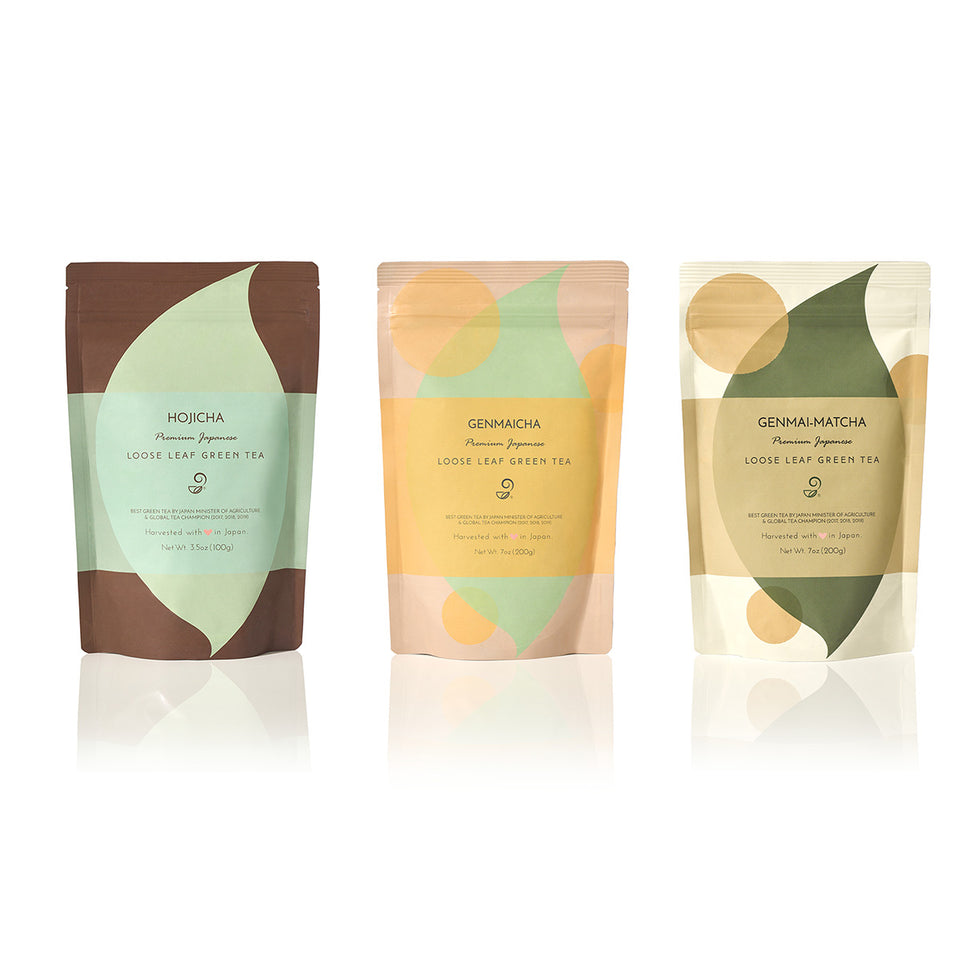
This special tea set features three traditional Japanese teas, each offering a unique and satisfying experience. Hojicha is made by roasting Bancha leaves at high temperatures, resulting in a reddish-brown tea with a rich umami flavor and a warm, toasty aroma. Genmaicha combines green tea with roasted brown rice, creating a nutty, aromatic flavor that is both comforting and ideal for enjoying between meals.
The set also includes Genmai Matcha, crafted using premium green tea grown in nutrient-rich sugarcane soil in Japan. Thanks to this special soil, the tea offers an award-winning aroma, a smooth and gentle flavor, and significantly less bitterness and astringency, providing a refreshing and healthful drinking experience.
The Sencha Lover Gift Set - Premium Japanese Green Tea Set Package
This tea set features three exceptional Japanese green teas, each crafted with care and traditional techniques. Issaku Reserve, a Global Tea Champion winner in 2017 and 2019, is a rare masterpiece created by Farm Master Mr. Arahata at Arahataen Green Tea Farm. Handpicked once a year from the first flush and processed with advanced methods, Issaku represents the highest-grade deep-steamed green tea, available only in limited quantities even in Japan.
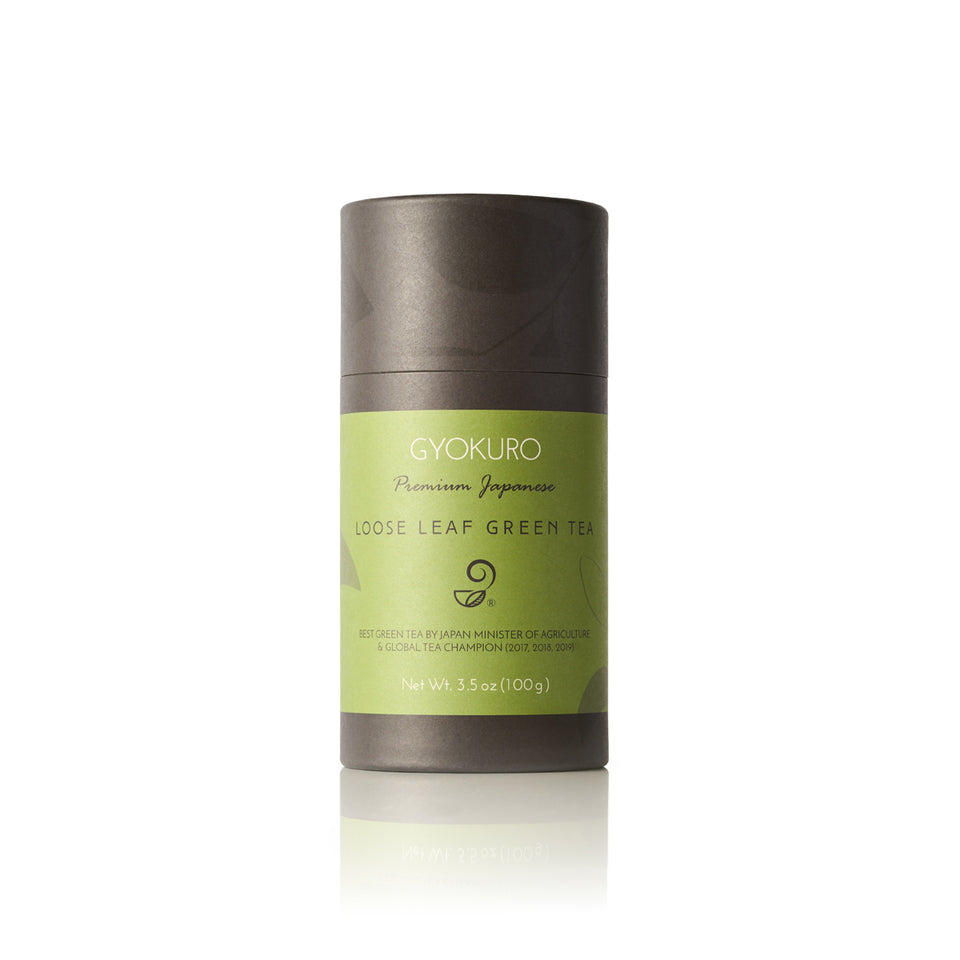
The set also includes Gyokuro, a premium shaded green tea known for its rich, sweet flavor and deep mossy green color. Grown under special mats for 20 days to increase caffeine and amino acid levels, Gyokuro offers a layered, smooth taste unlike any other. Completing the collection is Nozomi, a fine Kabuse-cha, or "Covered Green Tea," carefully grown under nets to gently shade the leaves just before new sprouts emerge, resulting in a soft, rich, and refined flavor profile.
Gyokuro - Shaded Imperial Premium Green Tea
Gyokuro, also known as "jade dew" or "jewel dew tea," is a premium Japanese green tea shaded from the sun for 20 days using specially made mats, a method that boosts caffeine levels and strengthens amino acids to create a sweeter, richer flavor. This extended shading process results in dark, mossy green leaves with an unmistakable aroma and a complex taste that is layered yet balanced. Cultivated by the Chagusaba method in nutrient-rich sugarcane soil and made from the Yabukita cultivar, this loose-leaf authentic Gyokuro is offered in a high-quality, air-tight paper tube canister (chyazutsu) to preserve its exceptional freshness and flavor. Each 3.5 oz (100g) full-size package steeps 30–40 cups, and a convenient single-serve sample is also available.
Related Articles You May Be Interested
Get Free Bonus Books
Sign up for free to the Green Tea Club to get advice and exclusive articles about how to choose Japanese Tea, and tips, tricks, and recipes for enjoying Japanese tea.
Unsubscribe anytime. It’s free!
About the author
Kei Nishida
Author, CEO Dream of Japan
Certification: PMP, BS in Computer Science
Education: Western Washington University
Kei Nishida is a passionate Japanese green tea connoisseur, writer, and the founder and CEO of Japanese Green Tea Co., a Dream of Japan Company.
Driven by a deep desire to share the rich flavors of his homeland, he established the only company that sources premium tea grown in nutrient-rich sugarcane soil—earning multiple Global Tea Champion awards.
Expanding his mission of introducing Japan’s finest to the world, Kei pioneered the launch of the first-ever Sumiyaki charcoal-roasted coffee through Japanese Coffee Co. He also brought the artistry of traditional Japanese craftsmanship to the global market by making katana-style handmade knives—crafted by a renowned katana maker—available outside Japan for the first time through Japanese Knife Co.
Kei’s journey continues as he uncovers and shares Japan’s hidden treasures with the world.