Recipes using Hojicha cookie dough
First off, here is a recipe of how to make hojicha cookie dough!
Hojicha Thumbprint Cookies
Ingredients
- Hojicha cookie dough (exclude protein powder and chocolate chips)
- Fig jam
Instructions
- Take 3-4 scoops of cookie dough using a cookie scoop. Smooth out the dough using your hands.
- Gently press down the center of each cookie dough bite with your thumb.
- Add ¼ tsp of fig jam to each, filling each indent to the brim.
- Refrigerate for 5-10 minutes.
Dark Chocolate-Covered Hojicha Cookie Dough
Ingredients
- Hojicha cookie dough (exclude protein powder)
- Melted dark chocolate
Instructions
- Take 3-4 scoops of cookie dough using a cookie scoop. Smooth out the dough using your hands.
- In a small bowl, melt dark chocolate. Place the cookie dough bite into the chocolate with a spoon and roll it around until fully covered.
- Place the dark chocolate cookie dough bites on a baking rack. Freeze for 5-10 minutes.
Hojicha cake pops
Ingredients
- Hojicha cookie dough (exclude protein powder)
- Melted white chocolate
- Melted dark chocolate
- Lolipop sticks
Instructions
- Take 3-4 scoops of cookie dough using a cookie scoop. Smooth out the dough using your hands.
- In a small bowl, melt white chocolate. Place the cookie dough bite into the white chocolate with a spoon and gently press a lollipop stick into the center of each cookie dough bite. Roll it around until fully covered.
- Place the cake pops on a baking rack. Drizzle dark chocolate on top using a spoon. Freeze for 5-10 minutes.
FAQs about Hojicha Cookie Dough
What does hojicha cookie dough actually taste like?
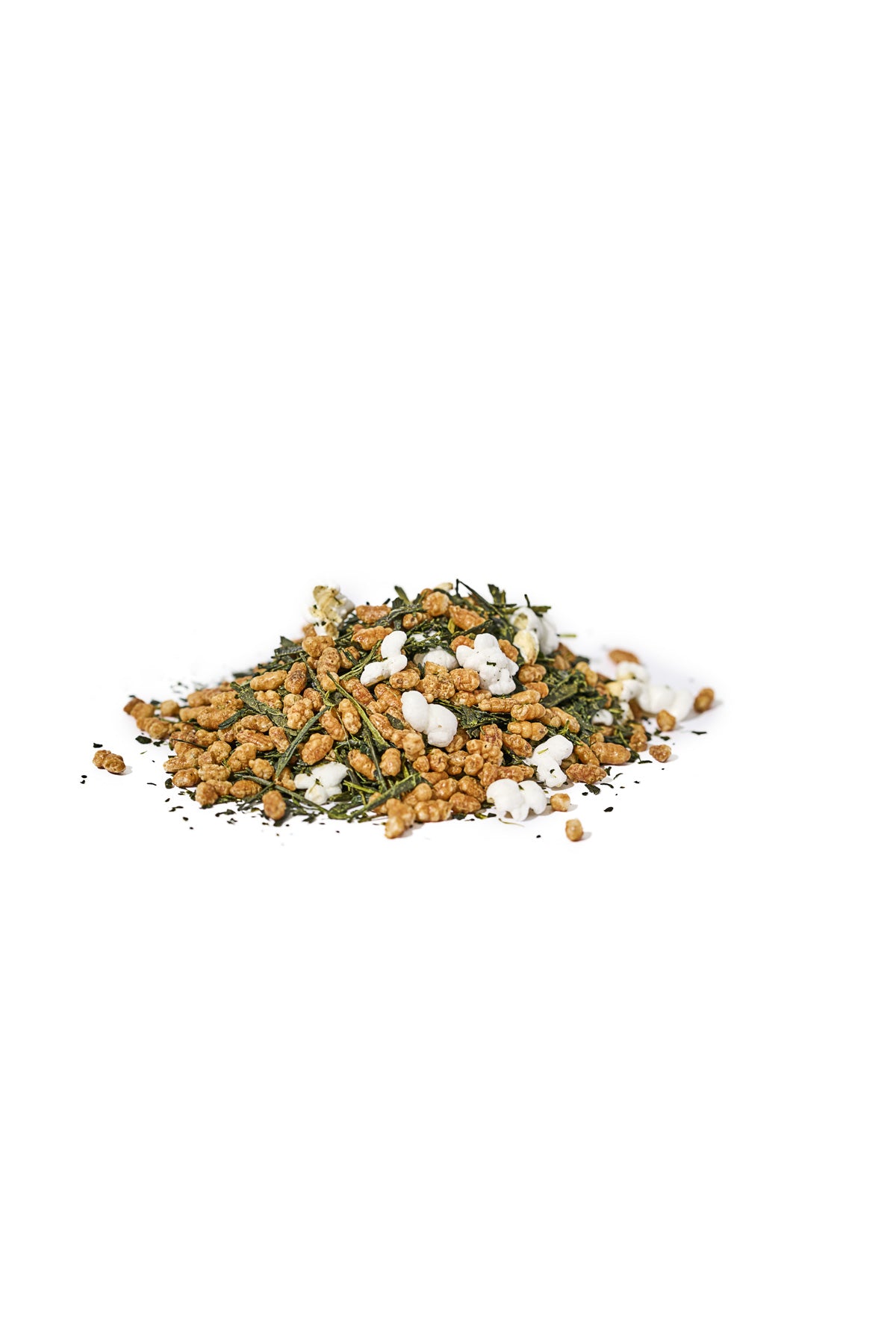
Like a buttery brown-sugar cookie that's been kissed with toasted nut and faint smoke notes. Hojicha (ほうじ茶) is roasted green tea, so it brings caramelized, almost coffee-adjacent flavors to baked goods rather than the grassy vegetal notes you'd get from matcha. In cookie dough specifically, it pairs unbelievably well with brown butter, dark chocolate, and dried fruit. Most people who try hojicha desserts the first time say something like 'oh, this is what matcha desserts wish they were.'
It's also more approachable than matcha for guests who haven't grown up on green tea. The roasted character reads as familiar — closer to coffee or toasted oats — while still being distinctly Japanese. A great gateway dessert.
Should I use hojicha powder or steep loose-leaf hojicha for cookie dough?
Powder, almost always. Hojicha powder is ground roasted leaves — when you stir it into the dough, the entire leaf becomes part of the cookie, which means more flavor, more color, and the slight textural depth that makes hojicha desserts feel substantial. Steeped hojicha tea adds liquid (which throws off your dough hydration) and only a fraction of the flavor.
If powder isn't available, the workaround is to grind a small amount of loose-leaf hojicha in a clean spice grinder or coffee grinder until fine. It's less consistent than commercial powder but works in a pinch. Don't try to substitute steeped tea for the dry powder in any recipe that specifies grams of dry hojicha — the math won't work.
How much hojicha powder should I add to a cookie dough recipe?
For most cookie dough recipes that yield about 24 cookies, start with 2 tablespoons of hojicha powder. That gives you a clear, identifiable hojicha flavor without overwhelming the buttery base. If you want a more pronounced roasted character, scale up to 3 tablespoons; if you want hojicha to be a background note rather than the main flavor, drop to 1 tablespoon.
The flour-to-hojicha ratio matters too — the powder absorbs some moisture from the dough. If you go above 2 tablespoons, consider adding 1-2 extra teaspoons of liquid (milk, melted butter, or even an extra splash of vanilla) to keep the dough from getting crumbly. Most recipes don't need this adjustment, but heavy hojicha doses do.
Is hojicha cookie dough safe to eat raw?
Same caveats as any cookie dough. Two ingredients matter: raw eggs (salmonella risk, even small) and raw flour (E. coli risk, more common than people realize). For dough you actually plan to eat raw — the no-bake bites, the cake pops in the original recipe — use heat-treated flour and either pasteurized eggs or no eggs at all. Most edible cookie dough recipes are designed without eggs entirely.
To heat-treat regular flour at home: spread 2 cups flour on a baking sheet, bake at 350°F for 5-7 minutes, stir, bake another 5 minutes until it reaches 165°F internally. Cool fully before using. This step takes 15 minutes and is the most overlooked safety step in home edible-dough recipes.
For the thumbprint cookies and any dough that goes into the oven, normal baking temperatures (350°F+ for 10+ min) handle both risks. The raw safety question only applies to truly no-bake recipes.
What goes well with hojicha cookie dough besides chocolate?
Hojicha's roasted-caramel character pairs well with: dried figs, dates, dried apricots, candied ginger, toasted pecans or walnuts, vanilla bean, brown butter, dark muscovado sugar, miso (a small amount, in a cookie context — sounds weird, tastes amazing), white chocolate (less expected than dark, gentler contrast), and a pinch of flaky sea salt as topping. Avoid pairing with anything strongly acidic like fresh citrus or berries — the roasted notes get muddled.
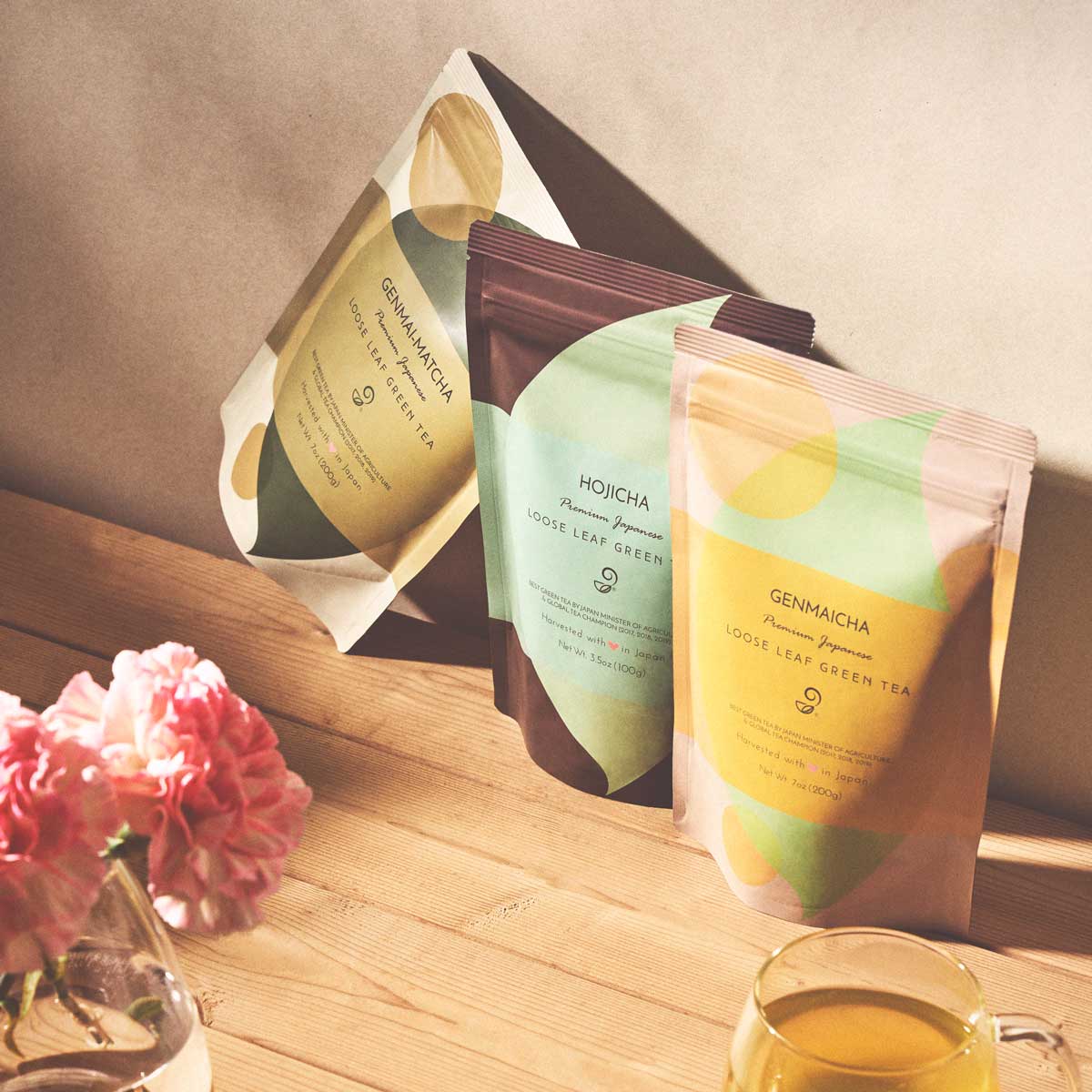
If you want to scale up hojicha experiments beyond cookie dough, the Hojicha Genmaicha Trio Gift Set gives you three roasted/toasted Japanese teas to play with in baking. Both genmaicha and matcha hojicha have similar dessert-flexibility to plain hojicha but with their own twists.
USE OUR PREMIUM HOJCHA SELECTION FOR YOUR COOKIE DOUGH!
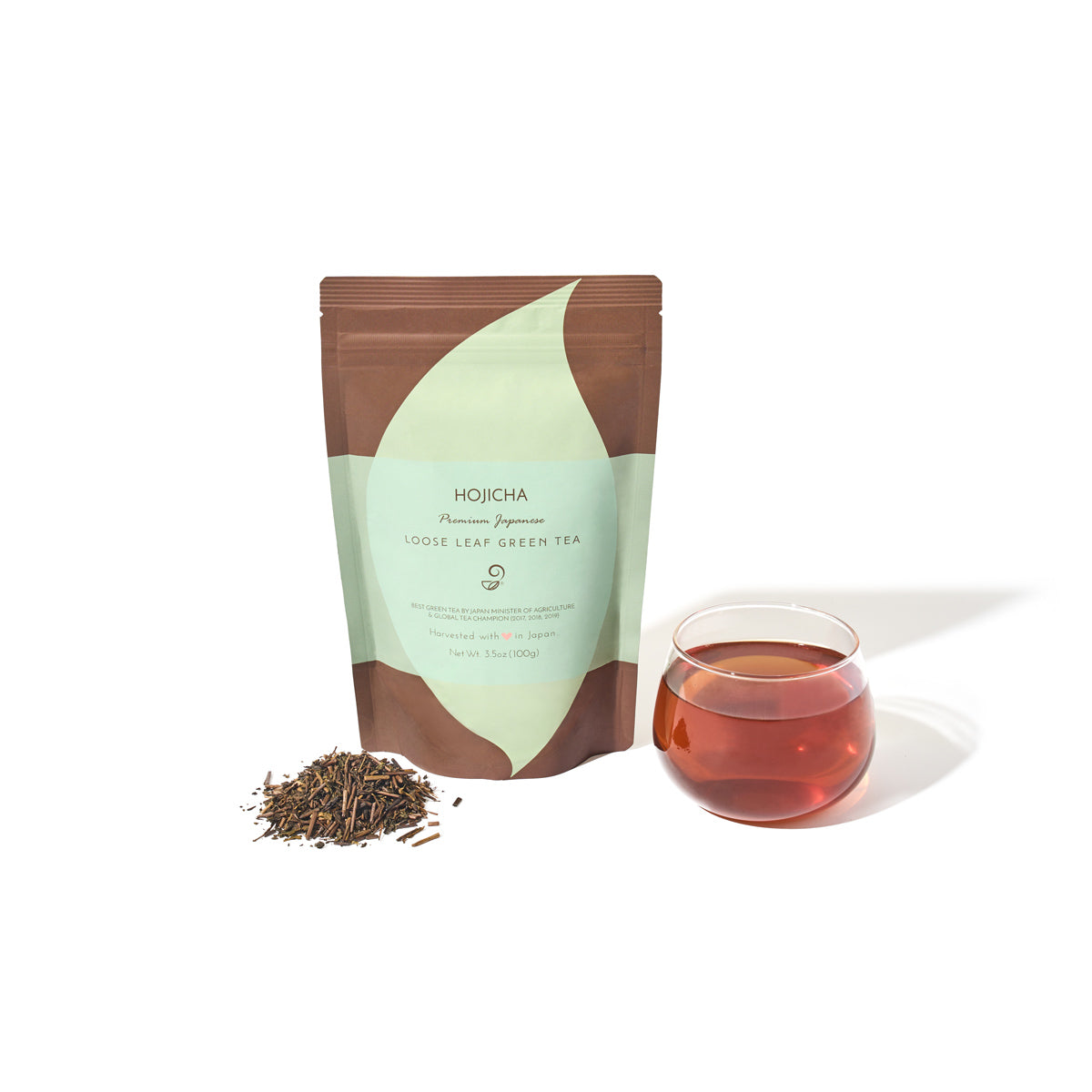
Hojicha - Roasted Green Tea
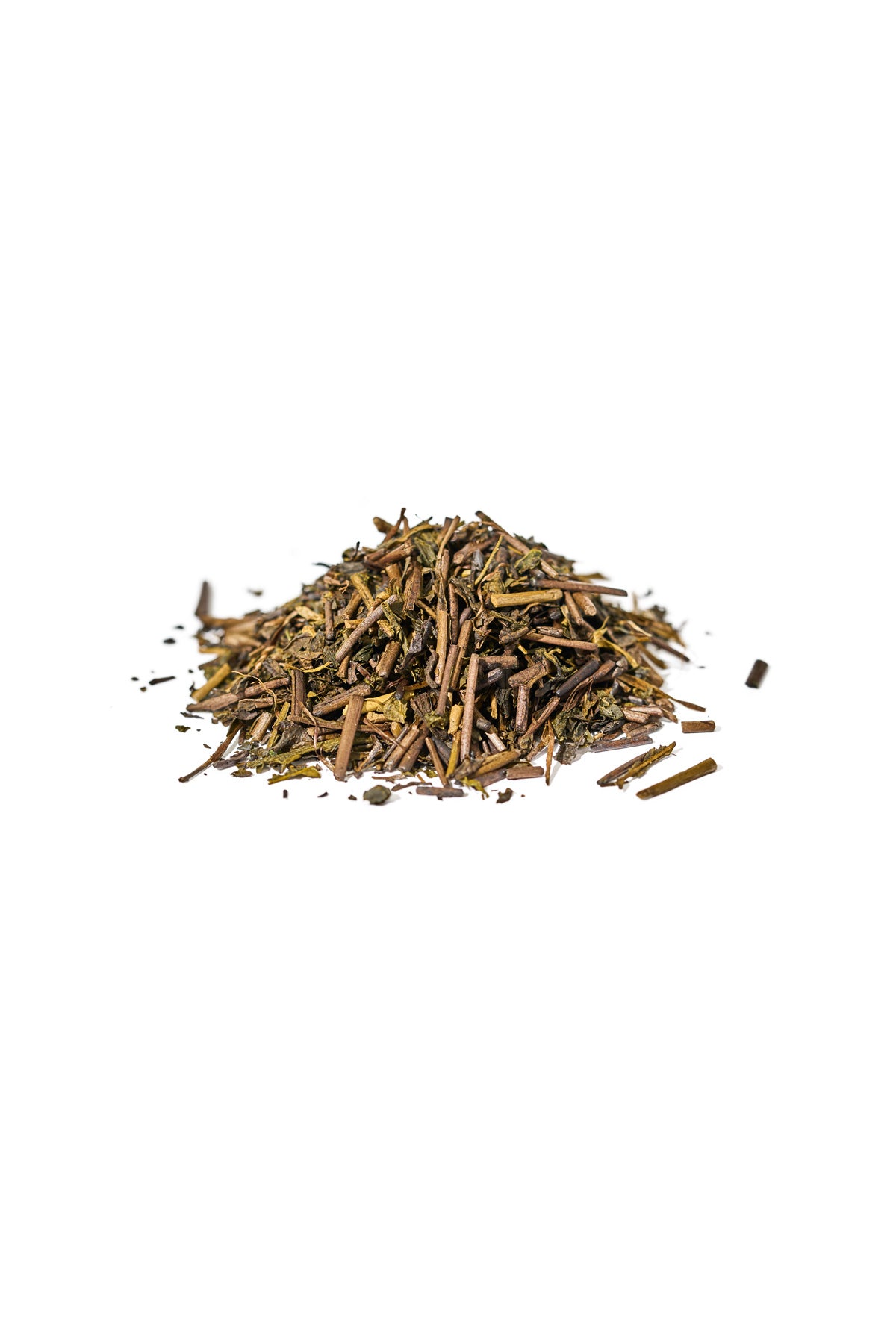
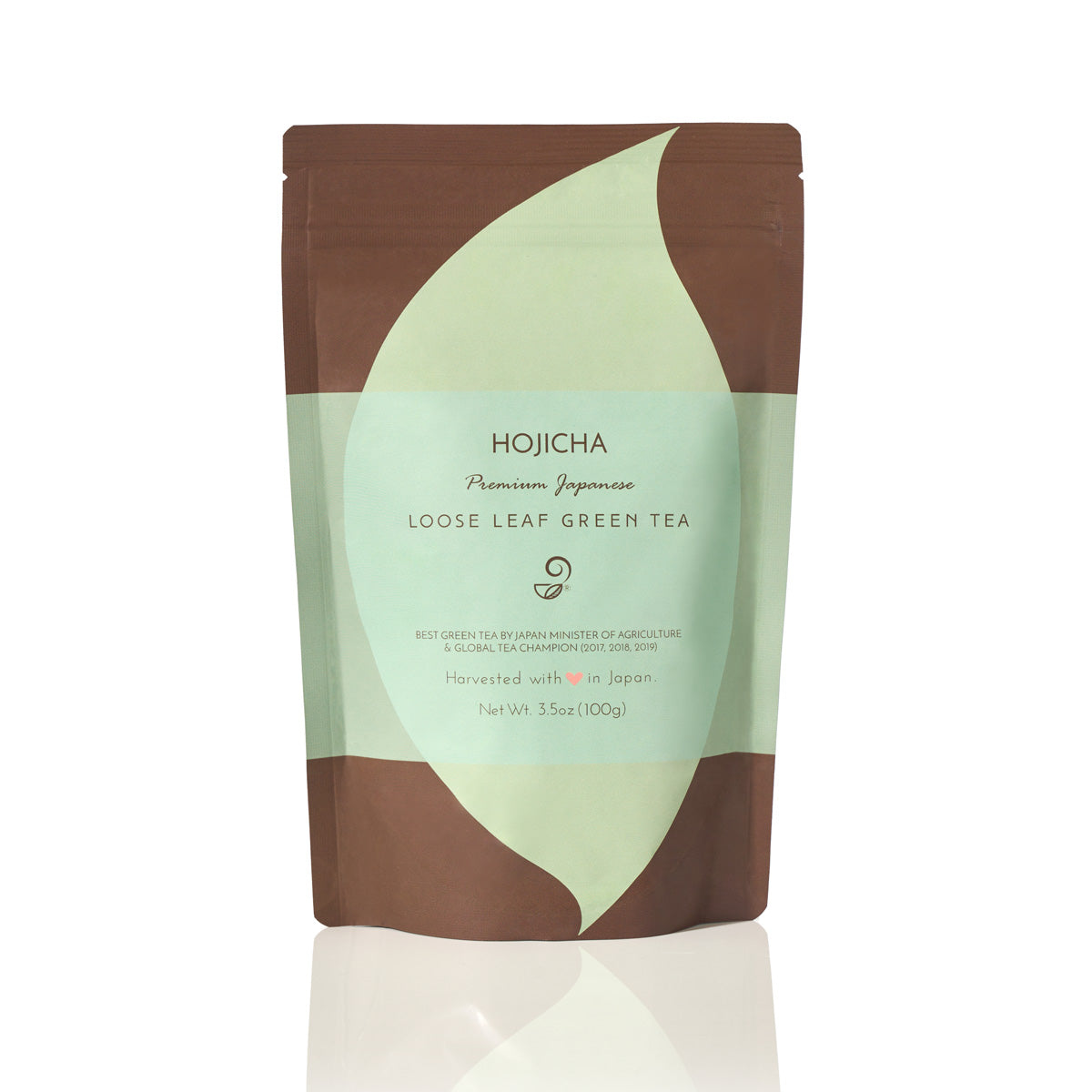
Our roasted green tea, known as hojicha (ほうじ茶), is crafted from freshly harvested premium green tea carefully roasted in porcelain over charcoal to maximize flavor while retaining more catechins than typical hojicha on the market. With lower caffeine and a smoother, less bitter taste compared to steamed green tea, it is an ideal choice for evening relaxation and is gentle enough for kids and pregnant women. Cultivated using the Chagusaba method in nutrient-rich sugarcane soil, this loose-leaf authentic Japanese roasted green tea, made from the Yabukita cultivar, also pairs beautifully with oily foods. Each eco-friendly resealable package contains 3.5 oz (100g) of tea, enough to steep 30–40 comforting cups.
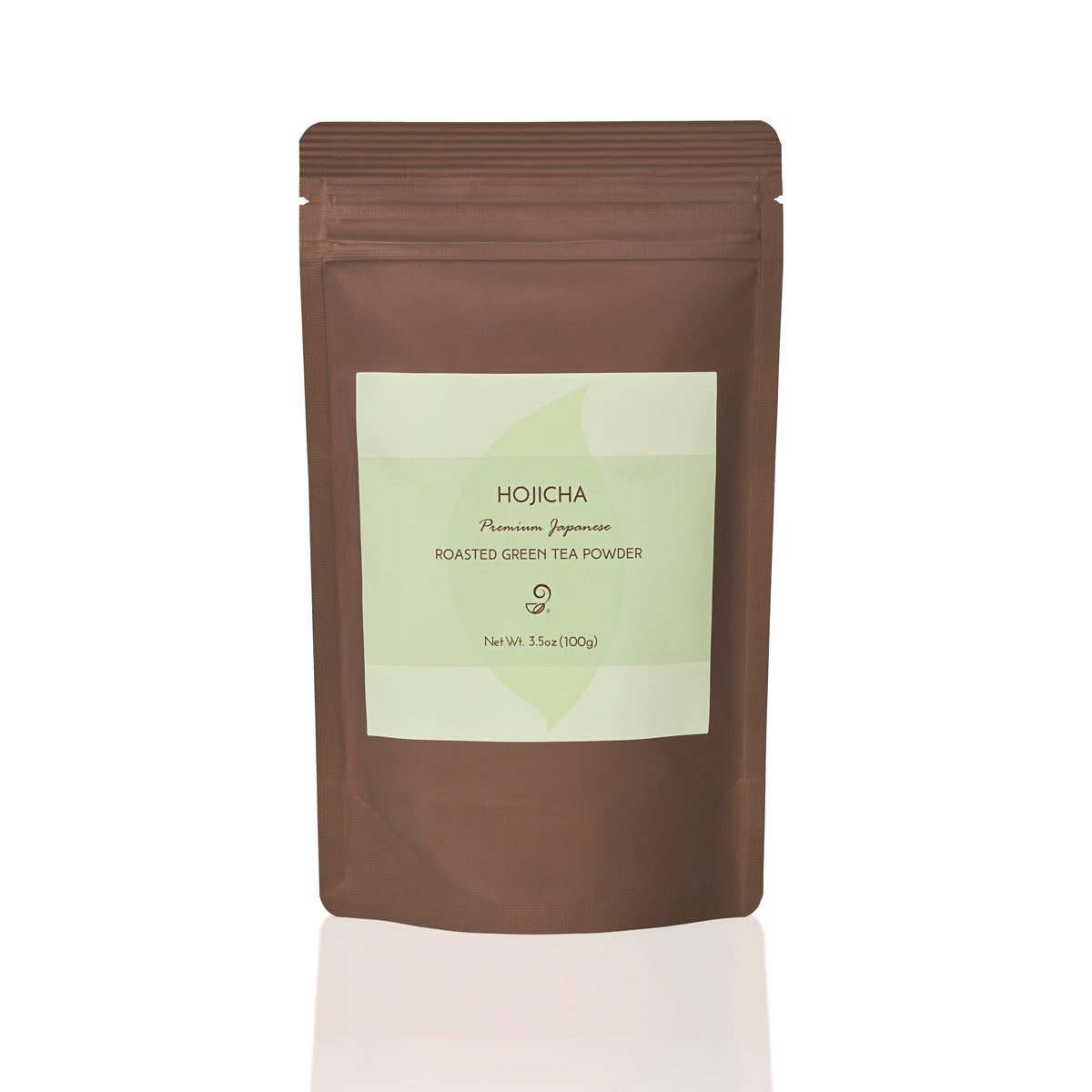
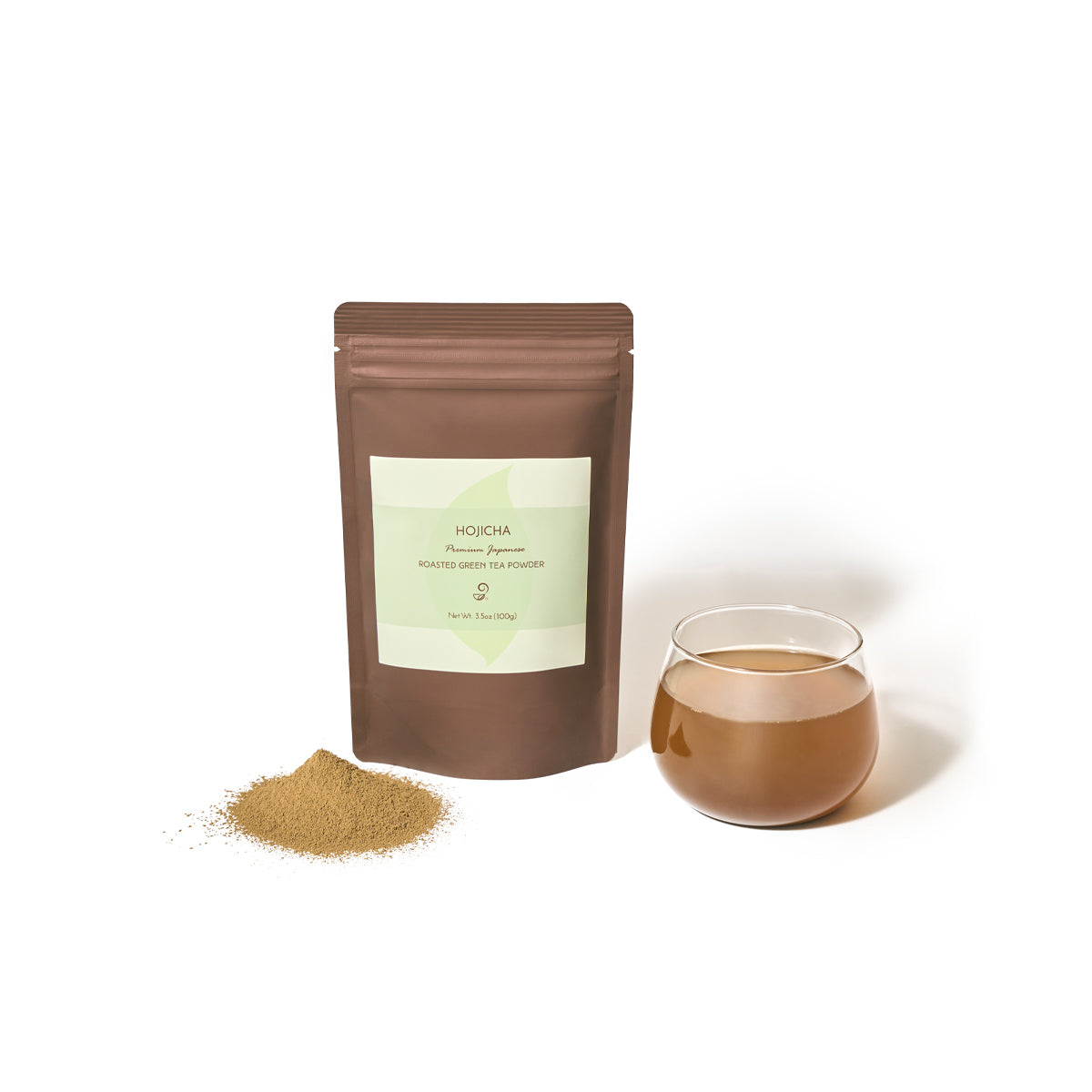
Hojicha Powder - Roasted Green Tea Powder
Our roasted green tea, known as hojicha (ほうじ茶), is crafted from freshly harvested premium green tea carefully roasted in porcelain over charcoal to maximize flavor while retaining more catechins than typical hojicha on the market. With lower caffeine and a smoother, less bitter taste compared to steamed green tea, it is an ideal choice for evening relaxation and is gentle enough for kids and pregnant women. Cultivated using the Chagusaba method in nutrient-rich sugarcane soil, this loose-leaf authentic Japanese roasted green tea, made from the Yabukita cultivar, also pairs beautifully with oily foods. Each eco-friendly resealable package contains 3.5 oz (100g) of tea, enough to steep 30–40 comforting cups.
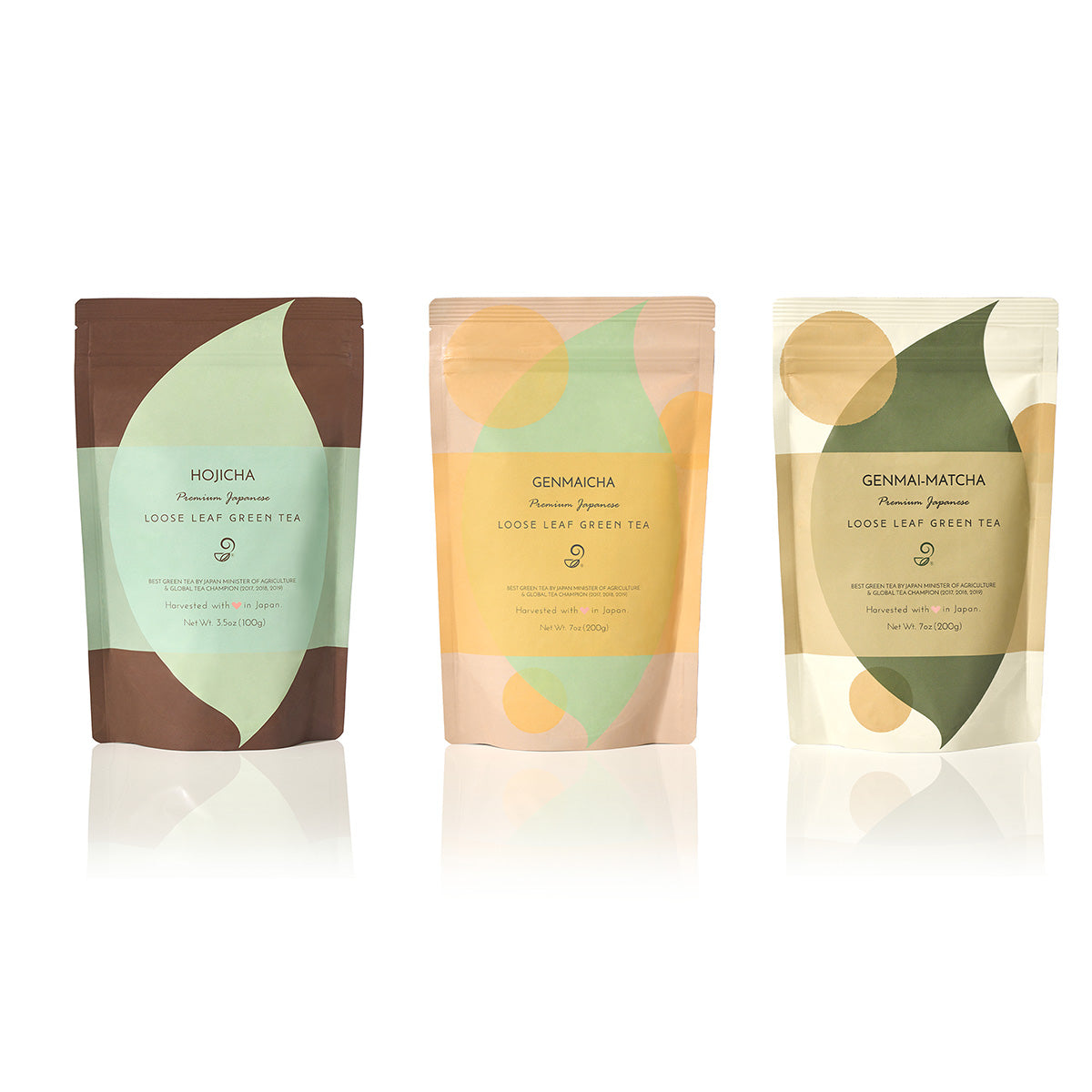
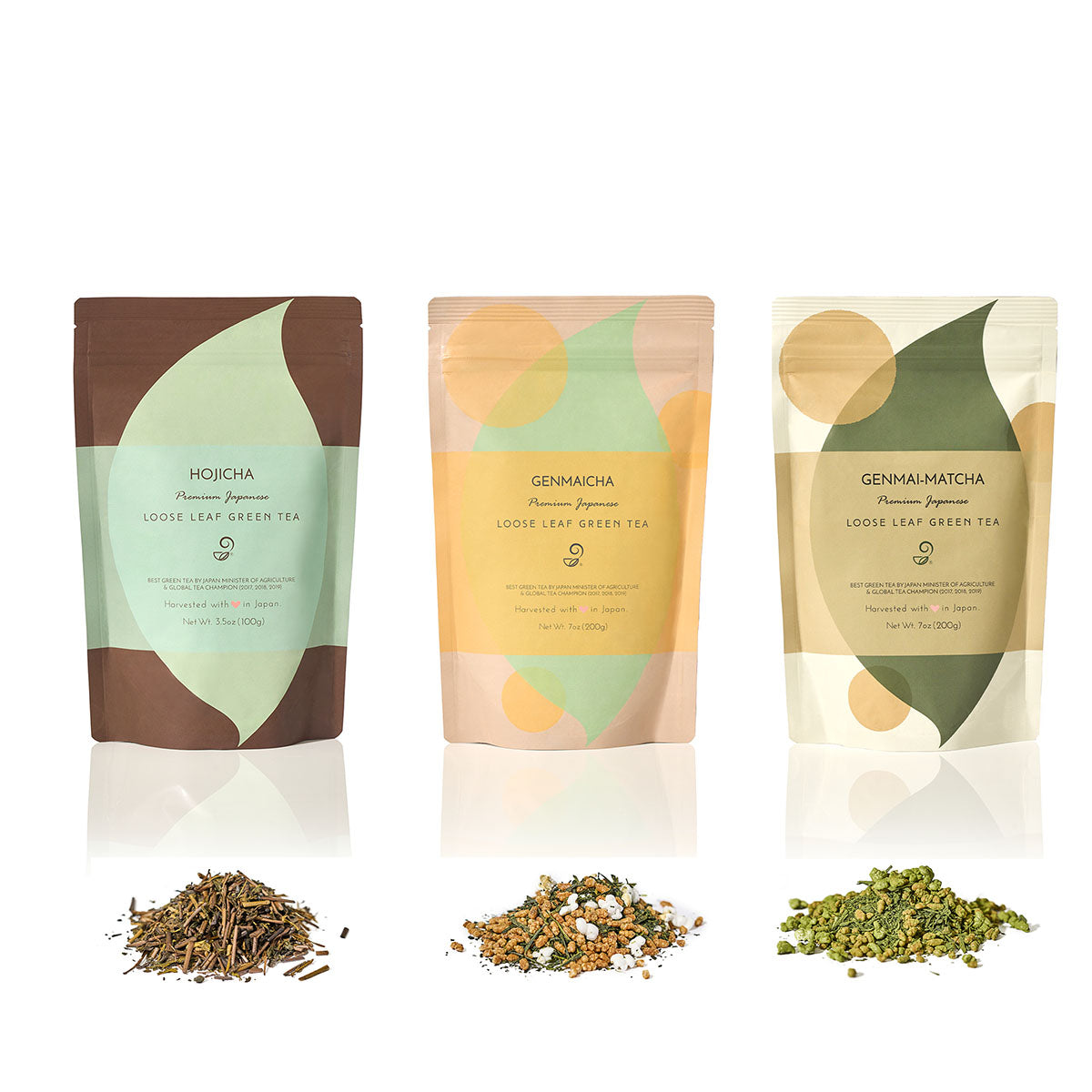
Hojicha Genmaicha Trio Gift Set - Premium Japanese Green Tea Set Package
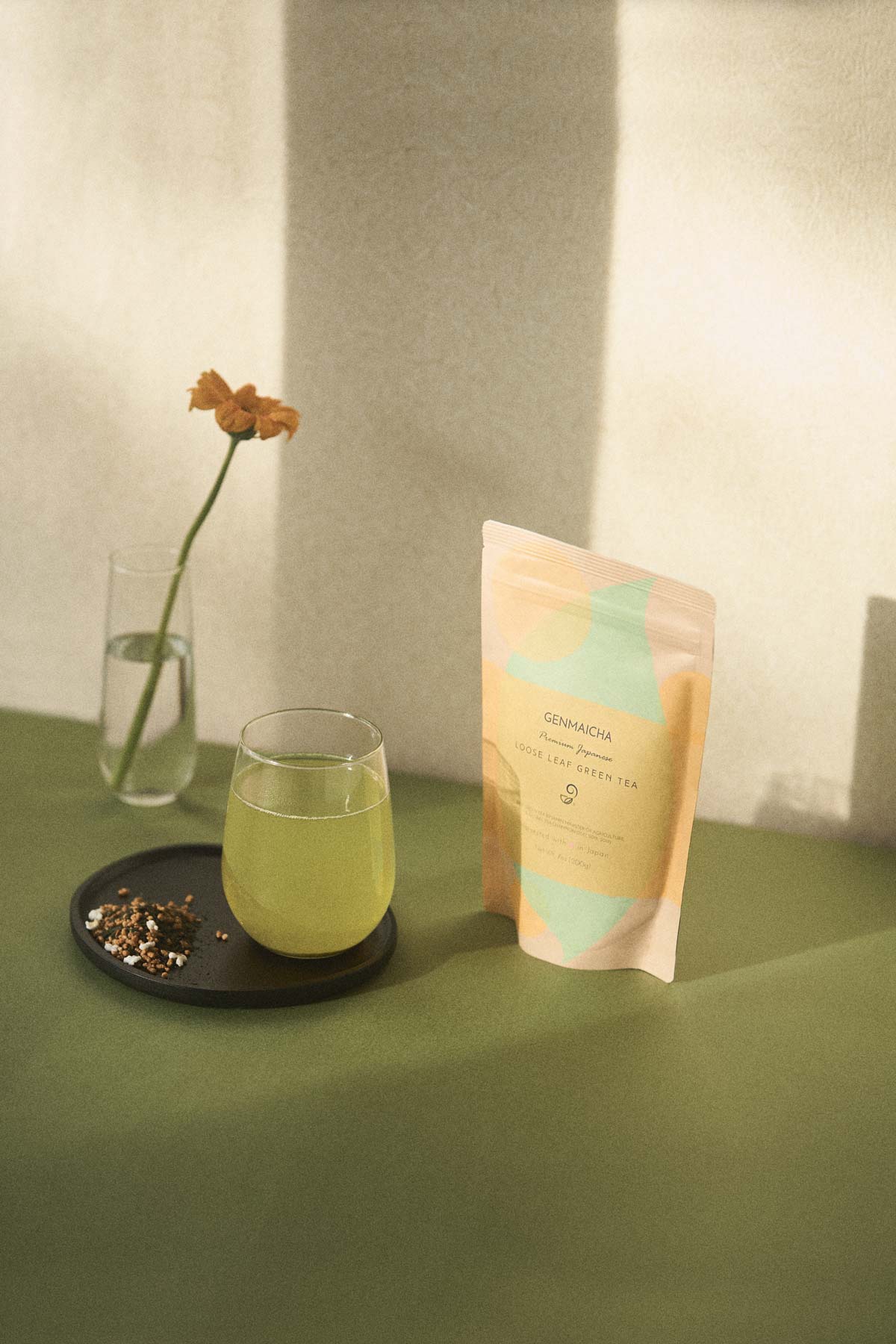
This special tea set features three traditional Japanese teas, each offering a unique and satisfying experience. Hojicha is made by roasting Bancha leaves at high temperatures, resulting in a reddish-brown tea with a rich umami flavor and a warm, toasty aroma. Genmaicha combines green tea with roasted brown rice, creating a nutty, aromatic flavor that is both comforting and ideal for enjoying between meals.
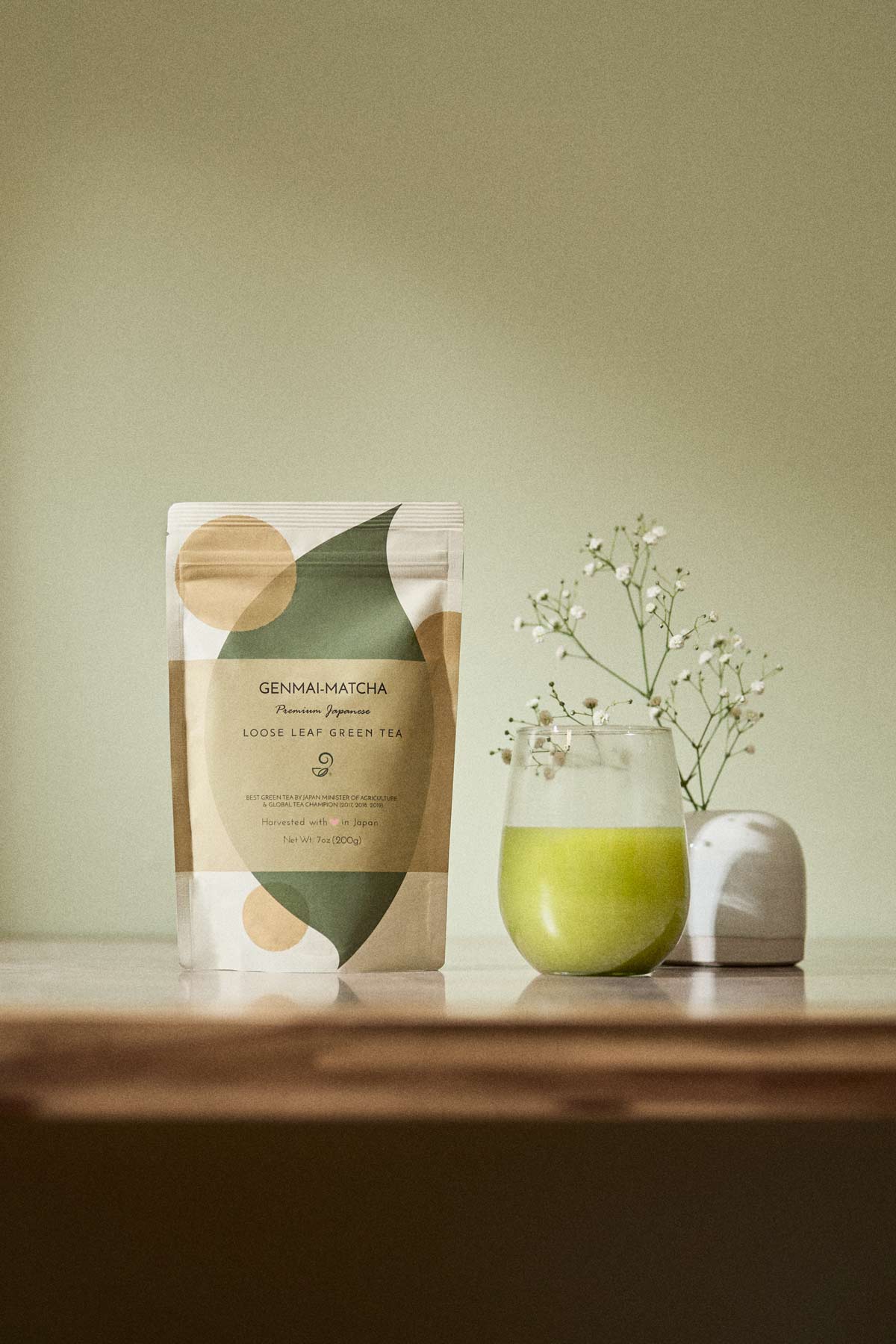
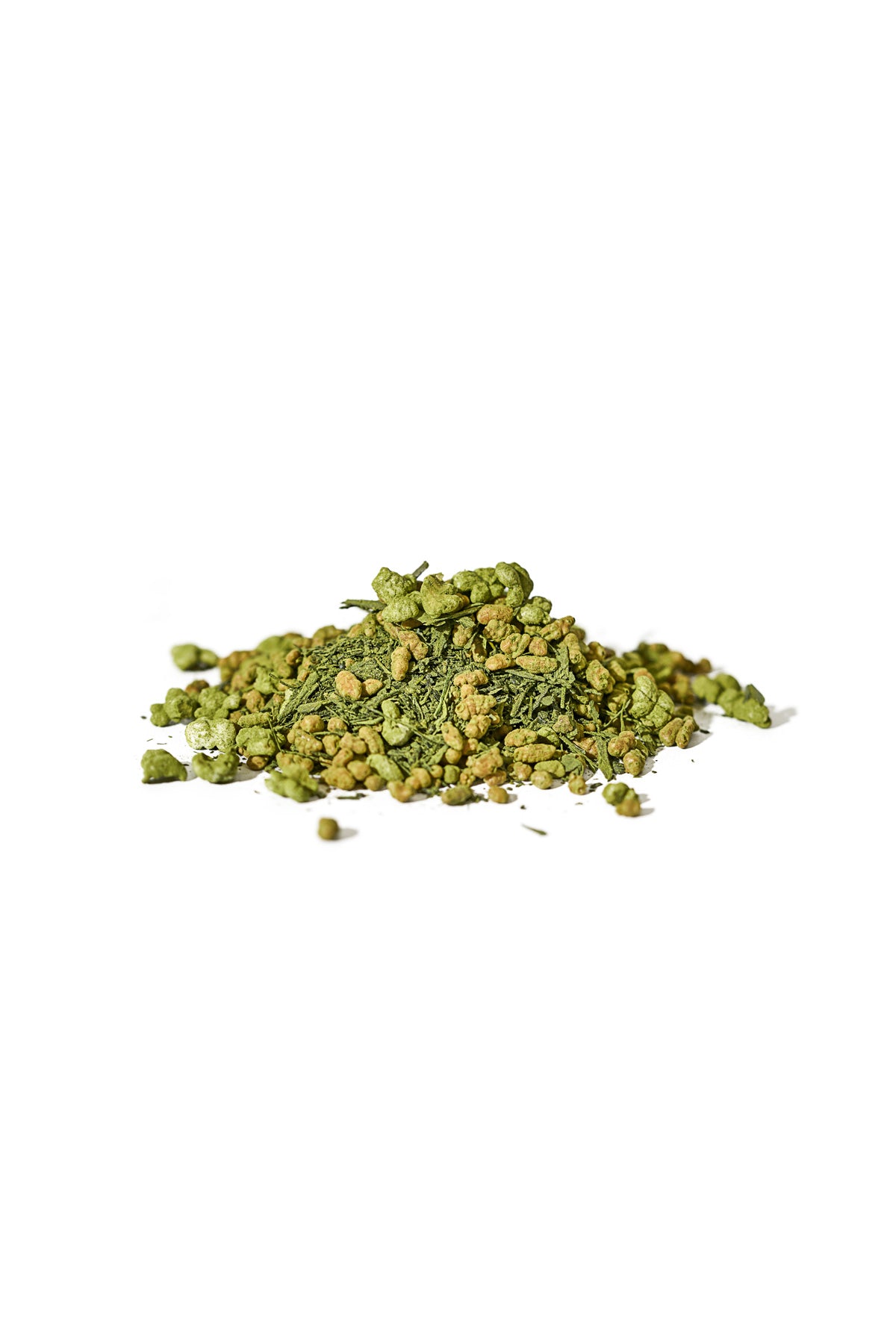
The set also includes Genmai Matcha, crafted using premium green tea grown in nutrient-rich sugarcane soil in Japan. Thanks to this special soil, the tea offers an award-winning aroma, a smooth and gentle flavor, and significantly less bitterness and astringency, providing a refreshing and healthful drinking experience.
The Sencha Lover Gift Set - Premium Japanese Green Tea Set Package
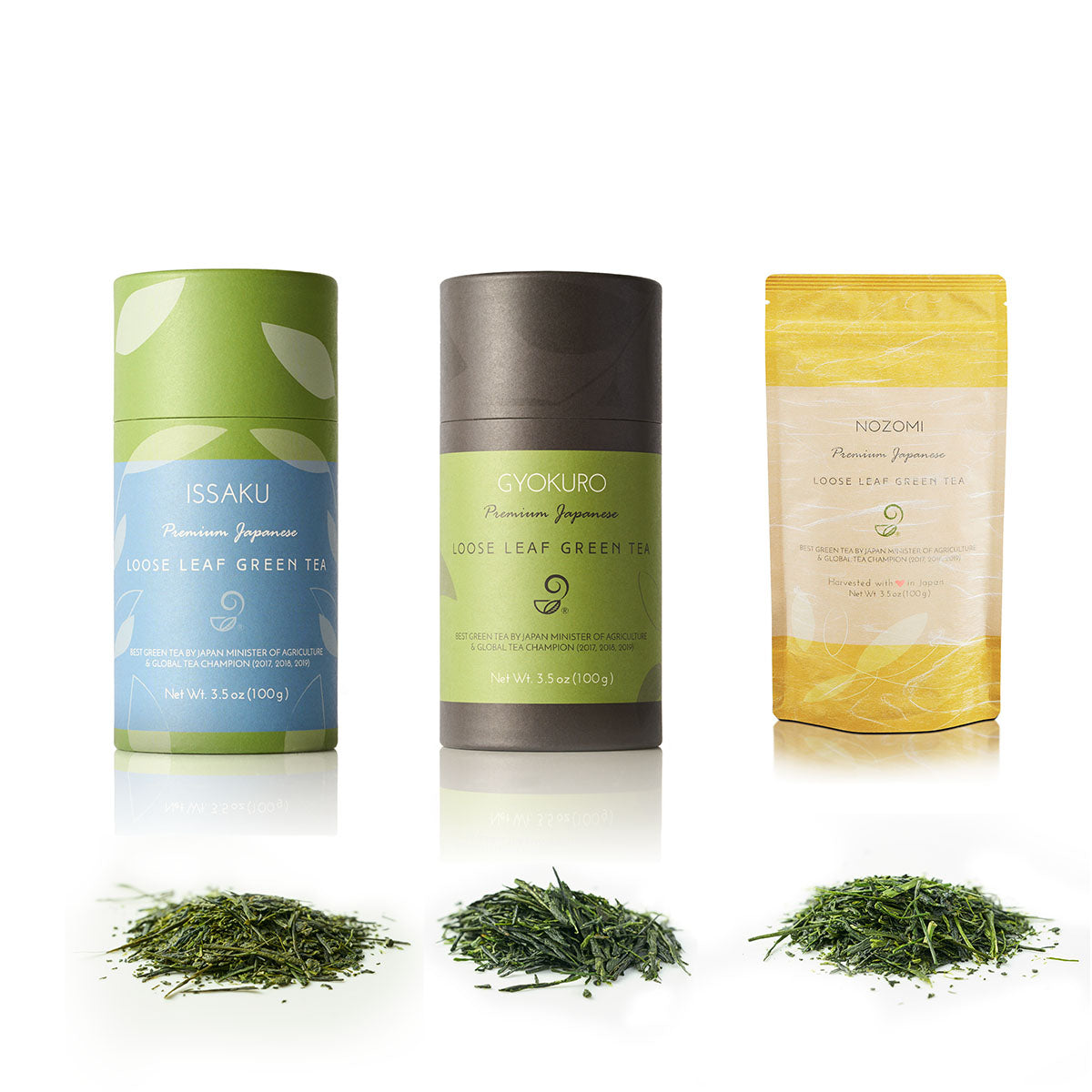
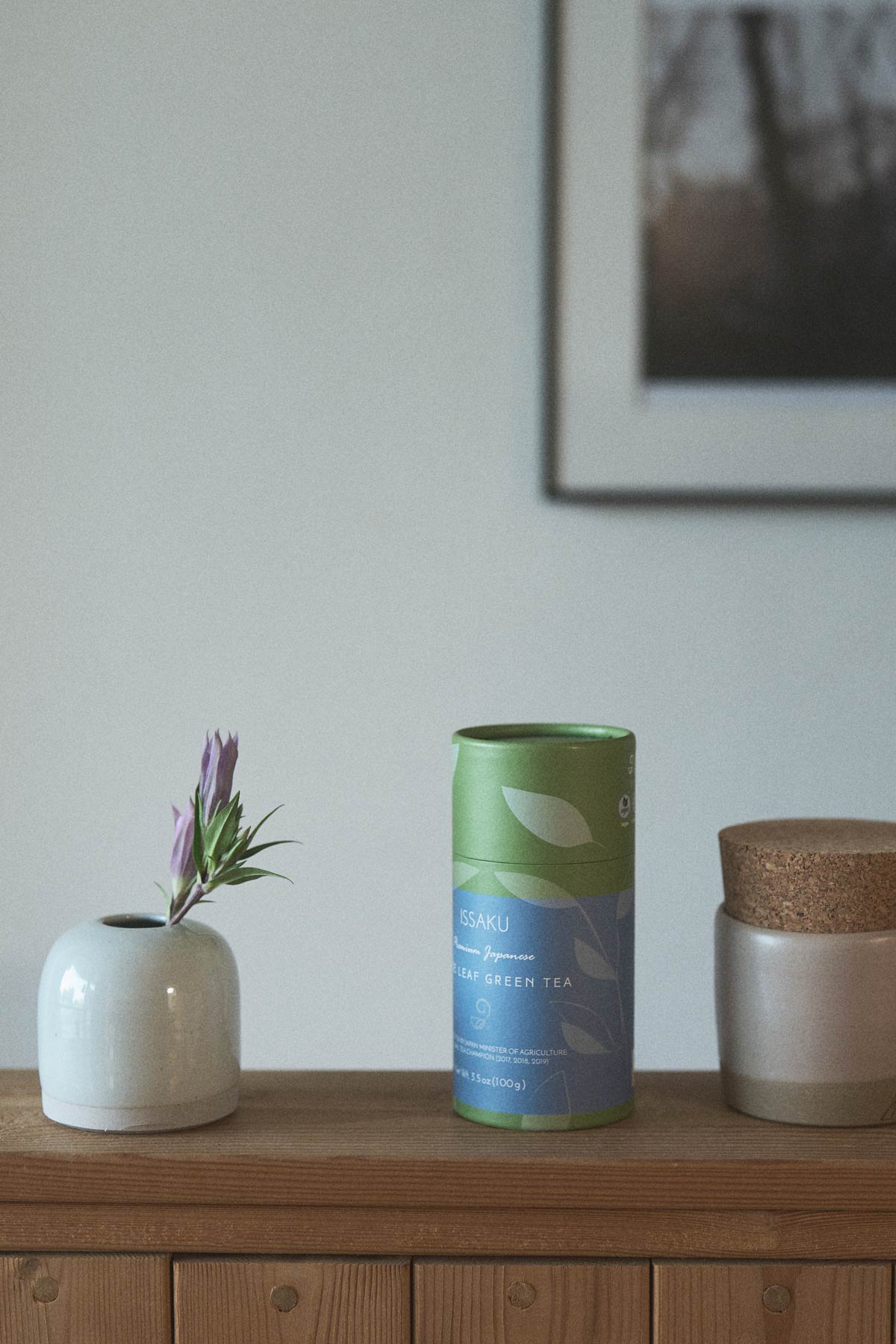
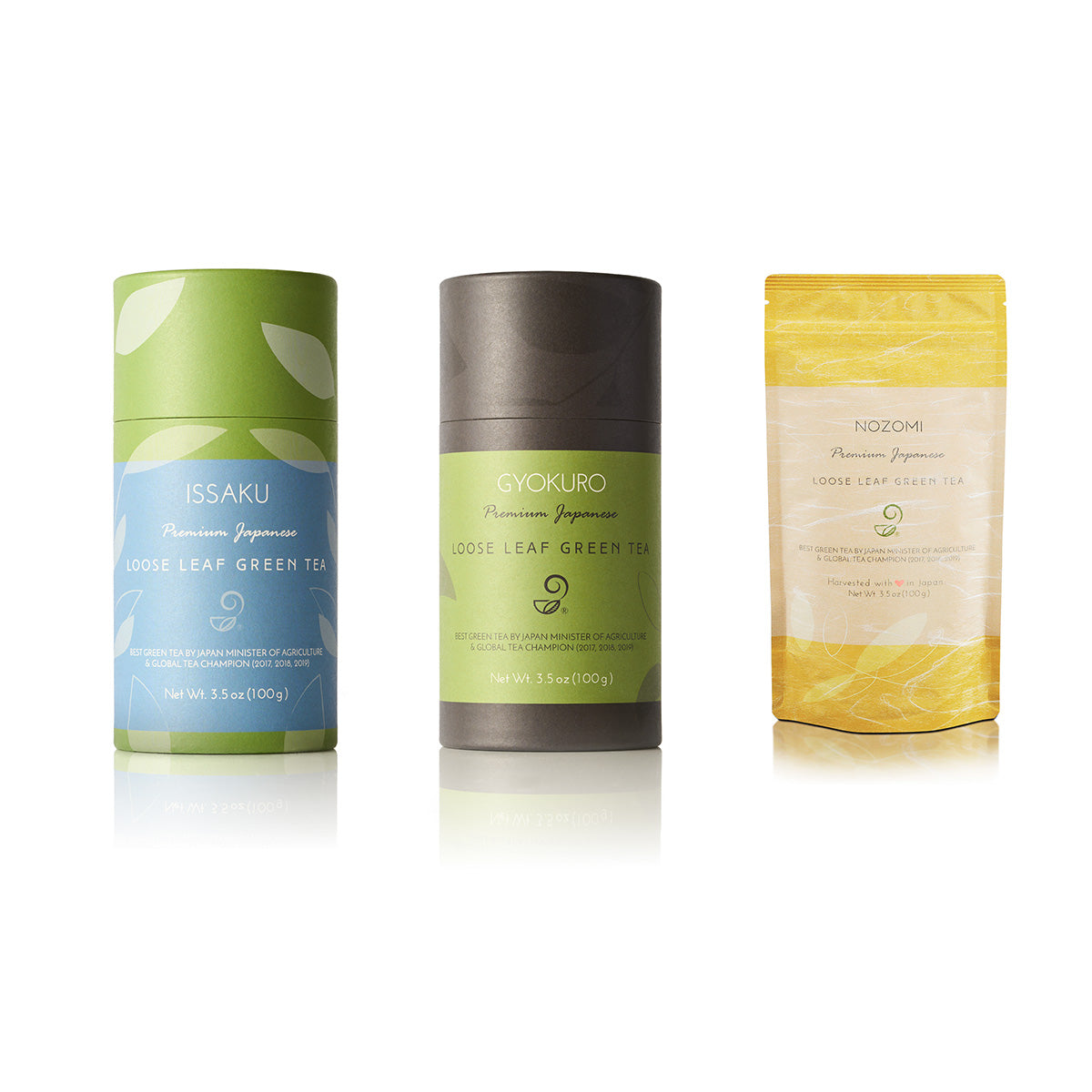
This tea set features three exceptional Japanese green teas, each crafted with care and traditional techniques. Issaku Reserve, a Global Tea Champion winner in 2017 and 2019, is a rare masterpiece created by Farm Master Mr. Arahata at Arahataen Green Tea Farm. Handpicked once a year from the first flush and processed with advanced methods, Issaku represents the highest-grade deep-steamed green tea, available only in limited quantities even in Japan.
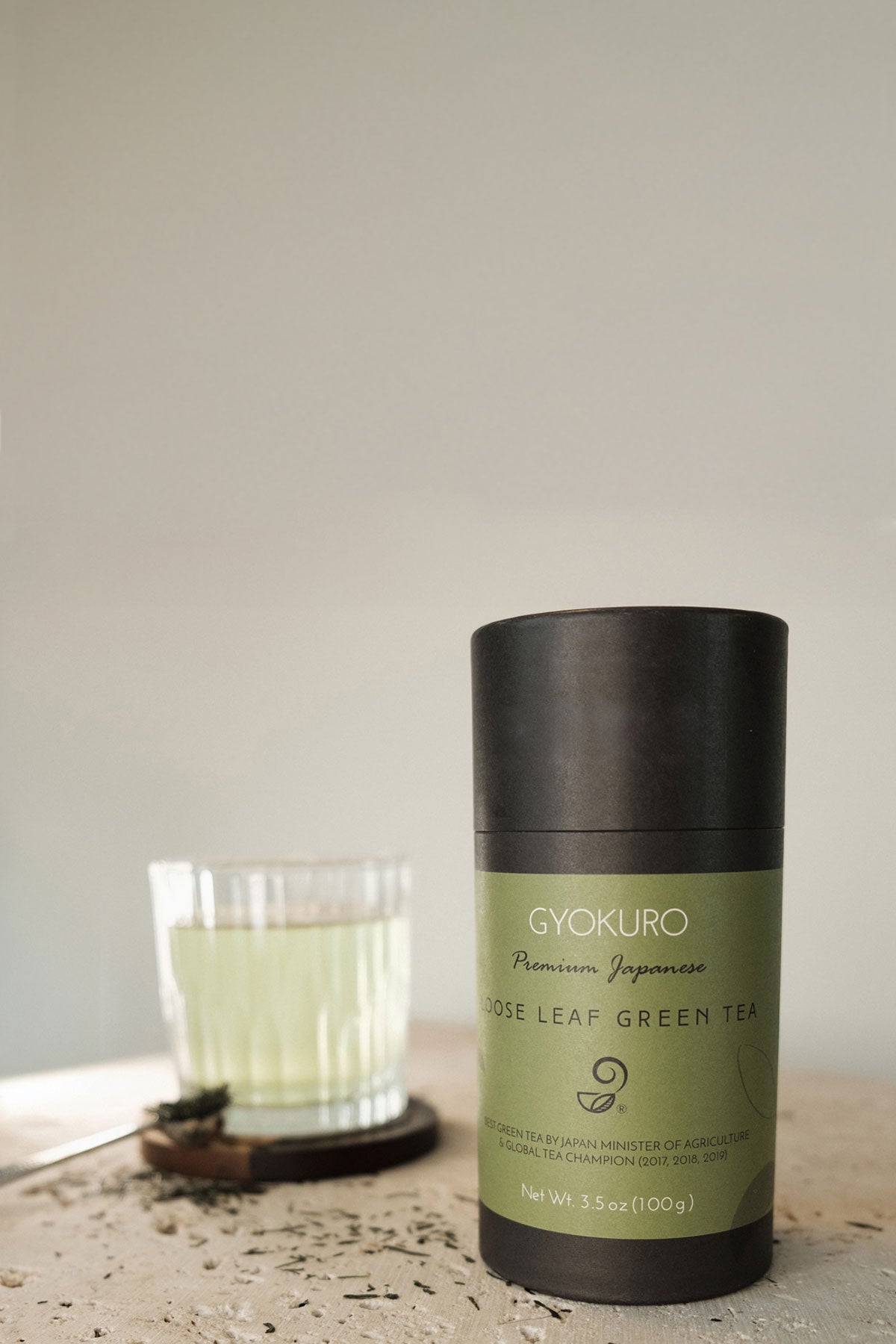
The set also includes Gyokuro, a premium shaded green tea known for its rich, sweet flavor and deep mossy green color. Grown under special mats for 20 days to increase caffeine and amino acid levels, Gyokuro offers a layered, smooth taste unlike any other. Completing the collection is Nozomi, a fine Kabuse-cha, or "Covered Green Tea," carefully grown under nets to gently shade the leaves just before new sprouts emerge, resulting in a soft, rich, and refined flavor profile.
Gyokuro - Shaded Imperial Premium Green Tea
Gyokuro, also known as "jade dew" or "jewel dew tea," is a premium Japanese green tea shaded from the sun for 20 days using specially made mats, a method that boosts caffeine levels and strengthens amino acids to create a sweeter, richer flavor. This extended shading process results in dark, mossy green leaves with an unmistakable aroma and a complex taste that is layered yet balanced. Cultivated by the Chagusaba method in nutrient-rich sugarcane soil and made from the Yabukita cultivar, this loose-leaf authentic Gyokuro is offered in a high-quality, air-tight paper tube canister (chyazutsu) to preserve its exceptional freshness and flavor. Each 3.5 oz (100g) full-size package steeps 30–40 cups, and a convenient single-serve sample is also available.
Related Articles You May Be Interested
Get Free Bonus Books
Sign up for free to the Green Tea Club to get advice and exclusive articles about how to choose Japanese Tea, and tips, tricks, and recipes for enjoying Japanese tea.
Unsubscribe anytime. It’s free!
About the author
Kei Nishida
Author, CEO Dream of Japan
Certification: PMP, BS in Computer Science
Education: Western Washington University
Kei Nishida is a passionate Japanese green tea connoisseur, writer, and the founder and CEO of Japanese Green Tea Co., a Dream of Japan Company.
Driven by a deep desire to share the rich flavors of his homeland, he established the only company that sources premium tea grown in nutrient-rich sugarcane soil—earning multiple Global Tea Champion awards.
Expanding his mission of introducing Japan’s finest to the world, Kei pioneered the launch of the first-ever Sumiyaki charcoal-roasted coffee through Japanese Coffee Co. He also brought the artistry of traditional Japanese craftsmanship to the global market by making katana-style handmade knives—crafted by a renowned katana maker—available outside Japan for the first time through Japanese Knife Co.
Kei’s journey continues as he uncovers and shares Japan’s hidden treasures with the world.