Download Printable One-Page Recipe PDF Now
Sign up for the free Green Tea Club (unsubscribe anytime) to download the printable PDF of this recipe now.
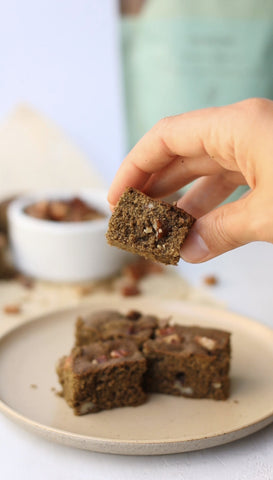
Hojicha Brownie
Ingredients
- 4 tbsp Hojicha Powder (or grind Hojicha Loose Leaf)
- ½ cup All Purpose Flour
- ¼ tsp Salt
- ¼ tsp Baking Powder
- ¾ cup Unsalted Butter, room temperature
- ½ cup Brown Sugar
- 2 Eggs
- 1 tsp Pure Vanilla Extract
- ½ cup Pecans, crushed
Instructions
- Preheat the oven to 350°F and grease a 6-inch (or 8-inch) square cake pan.
- Sift flour into a mixing bowl. Add Hojicha Powder, salt, and baking powder and whisk together.
- Place softened butter and sugar into a mixing bowl and mix until light and fluffy. Add the eggs and vanilla extract to the bowl and mix well.
- Add the flour mixture and mix thoroughly. Add crushed nuts.
- Pour the batter into the cake pan. Bake for 25 minutes, or until a toothpick or skewer stuck in the middle of the cake comes out clean.
- Let it cool completely, then cut it into 16 pieces (or 9 pieces if you prefer a bigger brownie!)
Note: Using a hand mixer is recommended.
FAQs about Hojicha Brownies
Why use hojicha specifically in brownies — does it actually add anything?
Hojicha (ほうじ茶) is the underrated baking partner for chocolate. The roasted, caramel notes of hojicha echo the toasted-cocoa notes in chocolate, so the two flavors layer rather than compete. Where matcha-chocolate brownies often taste like "chocolate plus a green-tea aftertaste," hojicha powder + chocolate brownies taste like a single integrated flavor — chocolate with deeper roasted character.
The other advantage: low caffeine. Hojicha has roughly a third the caffeine of standard matcha, so a hojicha brownie at 9 PM doesn't disrupt sleep the way a matcha brownie might. For dessert applications specifically, that's a meaningful practical benefit.
Honest comparison: matcha brownies are visually striking (the green color is dramatic) but flavor-wise hojicha brownies are arguably more refined. Make matcha brownies if you want the visual impact; make hojicha brownies if you want the better-tasting result.
Should I use hojicha powder or steeped hojicha tea for brownies?
Powder, almost always. Hojicha powder dissolves directly into the batter and delivers concentrated flavor distributed evenly through the brownie. Steeped hojicha tea would replace some of the liquid in the recipe but only delivers a fraction of the hojicha flavor — the cup gets the soluble compounds; the leaf retains many of the volatile aromatics that give hojicha its character.
If you only have leaf hojicha and not powder, grind the leaves in a coffee grinder or spice mill until fine — not as fine as commercial hojicha powder but workable for baking. Use about 1.5x the powder amount you'd use otherwise to compensate for the slightly less concentrated grind.
Brewed hojicha tea works only if you specifically want the hojicha flavor to be subtle background — for that, replace half the water in the recipe with strongly-brewed hojicha. The result is a hojicha-tinged chocolate brownie rather than a clearly hojicha brownie. Different goal, different technique.
How much hojicha powder do I add to a standard brownie recipe?
Roughly 1-2 tablespoons of hojicha powder for an 8x8 inch brownie pan (typically 8-12 servings). That ratio puts the hojicha forward without overwhelming the chocolate. More than 2 tablespoons starts to dry out the texture (powder absorbs moisture); less than 1 tablespoon and you barely taste it.
If you want hojicha to be the primary flavor with chocolate as accent, push to 3 tablespoons but cut back the cocoa or chocolate. Otherwise the brownie ends up overpowered. The balance to aim for is hojicha and chocolate as roughly equal partners; the powder amount should match the cocoa content.
Sift the hojicha powder before adding to avoid clumps. Same rule as cocoa powder — the fine particles want to stick together, and a quick pass through a mesh strainer keeps the brownie texture even.
What chocolate works best with hojicha — dark, milk, or white?
Dark chocolate (60-70% cacao) is the classic match. Hojicha's roasted notes harmonize with dark chocolate's toasted-cocoa profile, and the modest sweetness of dark chocolate (vs. milk chocolate's heavy sweetness) lets hojicha's complexity come through.
Milk chocolate works but produces a sweeter, more straightforward result — fine for kids or sweeter palates, but the hojicha gets somewhat masked. White chocolate is interesting in small accent amounts (a swirl through the brownie) but doesn't make a great primary chocolate base for hojicha brownies — too much sweetness, no cocoa to harmonize with.
70-72% cacao dark chocolate plus hojicha powder plus a pinch of salt is the canonical combination. Some recipes add a few coffee beans or a teaspoon of espresso powder for additional depth — coffee + hojicha + dark chocolate is a triple-roasted-flavor stack that works beautifully.
Are hojicha brownies caffeinated? Should I worry about feeding them to kids?
Lightly caffeinated. Two tablespoons of hojicha powder spread across 8 brownies puts each brownie at roughly 4-6 mg of caffeine — about a third of what a small piece of dark chocolate already contains, and well within the range that's been deemed safe for children by most health authorities.
For comparison, matcha brownies at the same powder ratio would be 25-30 mg per brownie, which is meaningfully more caffeine per serving. So hojicha brownies are the kid-friendlier option among Japanese-tea baked goods.
That said, caffeine sensitivity varies. If you're baking for very young children (under 5) or anyone with caffeine sensitivity, the hojicha brownies are still safer than matcha but not zero. A tea-free chocolate brownie is the truly kid-safe option; the hojicha version is the "a little caffeine in dessert" option.
TRY OUR HOJICHA NOW
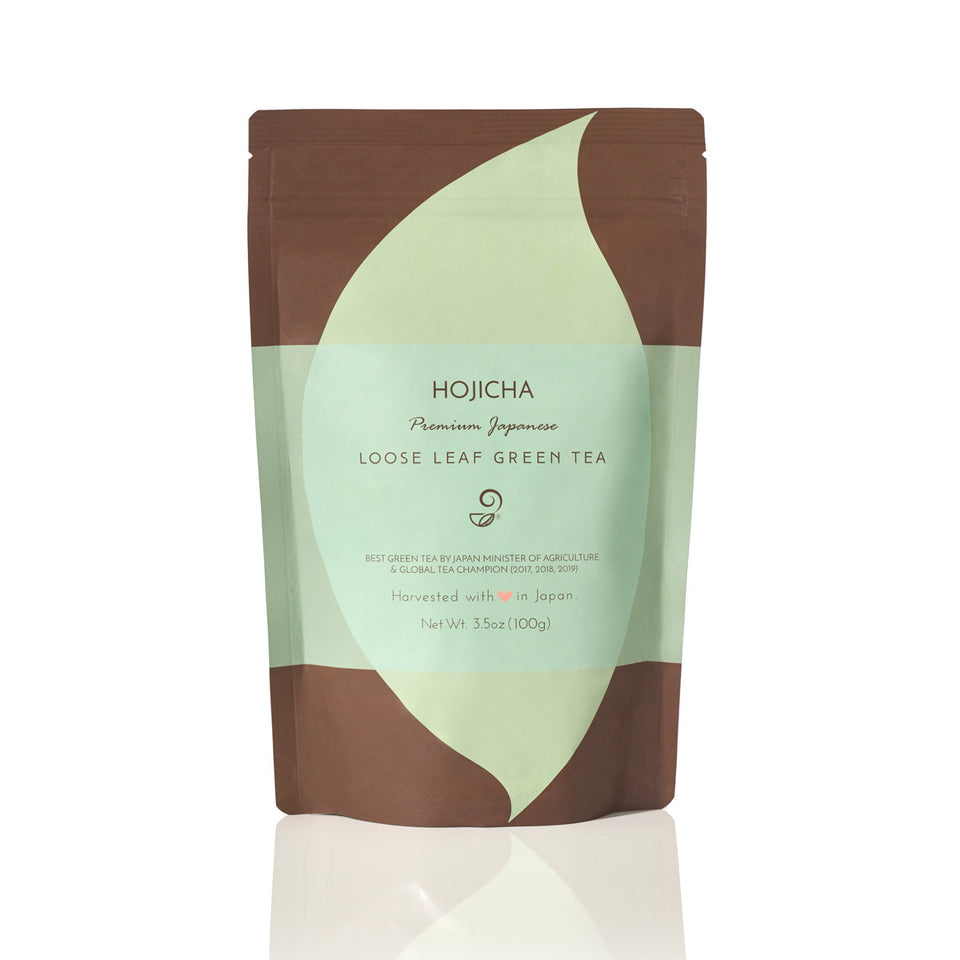
Hojicha - Roasted Green Tea
Our roasted green tea, known as hojicha (ほうじ茶), is crafted from freshly harvested premium green tea carefully roasted in porcelain over charcoal to maximize flavor while retaining more catechins than typical hojicha on the market. With lower caffeine and a smoother, less bitter taste compared to steamed green tea, it is an ideal choice for evening relaxation and is gentle enough for kids and pregnant women. Cultivated using the Chagusaba method in nutrient-rich sugarcane soil, this loose-leaf authentic Japanese roasted green tea, made from the Yabukita cultivar, also pairs beautifully with oily foods. Each eco-friendly resealable package contains 3.5 oz (100g) of tea, enough to steep 30–40 comforting cups.
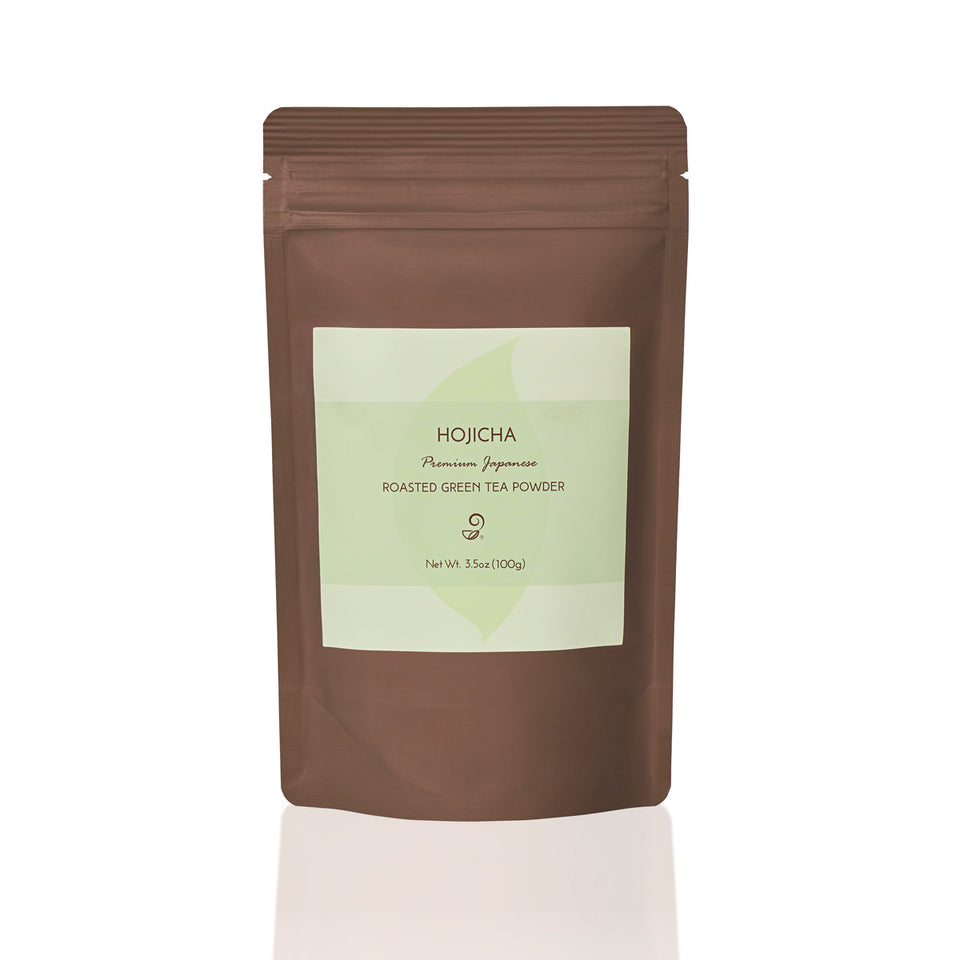
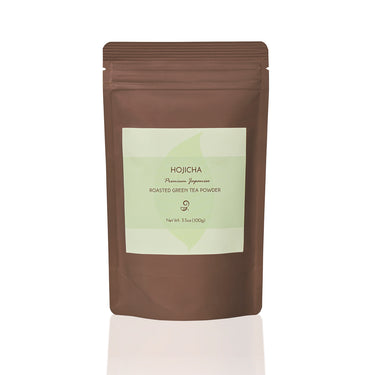
Hojicha Powder - Roasted Green Tea Powder
Our roasted green tea, known as hojicha (ほうじ茶), is crafted from freshly harvested premium green tea carefully roasted in porcelain over charcoal to maximize flavor while retaining more catechins than typical hojicha on the market. With lower caffeine and a smoother, less bitter taste compared to steamed green tea, it is an ideal choice for evening relaxation and is gentle enough for kids and pregnant women. Cultivated using the Chagusaba method in nutrient-rich sugarcane soil, this loose-leaf authentic Japanese roasted green tea, made from the Yabukita cultivar, also pairs beautifully with oily foods. Each eco-friendly resealable package contains 3.5 oz (100g) of tea, enough to steep 30–40 comforting cups.
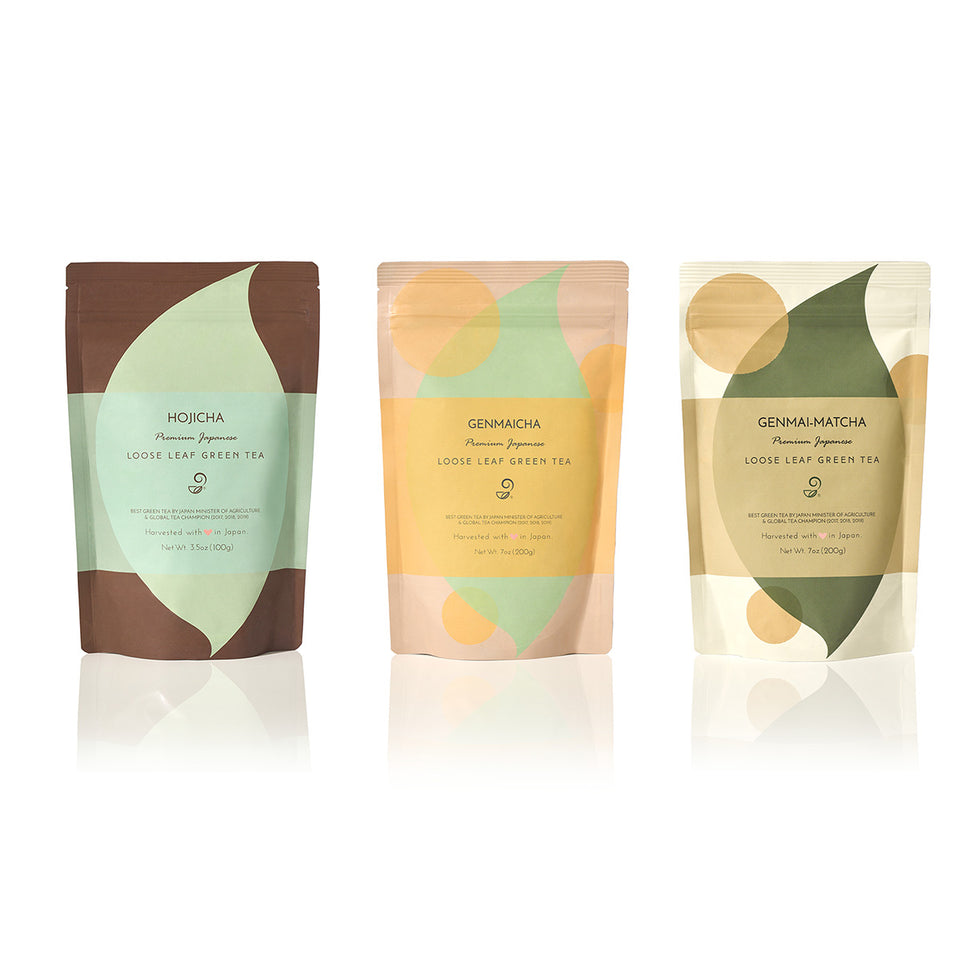
Hojicha Genmaicha Trio Gift Set - Premium Japanese Green Tea Set Package
This special tea set features three traditional Japanese teas, each offering a unique and satisfying experience. Hojicha is made by roasting Bancha leaves at high temperatures, resulting in a reddish-brown tea with a rich umami flavor and a warm, toasty aroma. Genmaicha combines green tea with roasted brown rice, creating a nutty, aromatic flavor that is both comforting and ideal for enjoying between meals.
The set also includes Genmai Matcha, crafted using premium green tea grown in nutrient-rich sugarcane soil in Japan. Thanks to this special soil, the tea offers an award-winning aroma, a smooth and gentle flavor, and significantly less bitterness and astringency, providing a refreshing and healthful drinking experience.
The Sencha Lover Gift Set - Premium Japanese Green Tea Set Package
This tea set features three exceptional Japanese green teas, each crafted with care and traditional techniques. Issaku Reserve, a Global Tea Champion winner in 2017 and 2019, is a rare masterpiece created by Farm Master Mr. Arahata at Arahataen Green Tea Farm. Handpicked once a year from the first flush and processed with advanced methods, Issaku represents the highest-grade deep-steamed green tea, available only in limited quantities even in Japan.
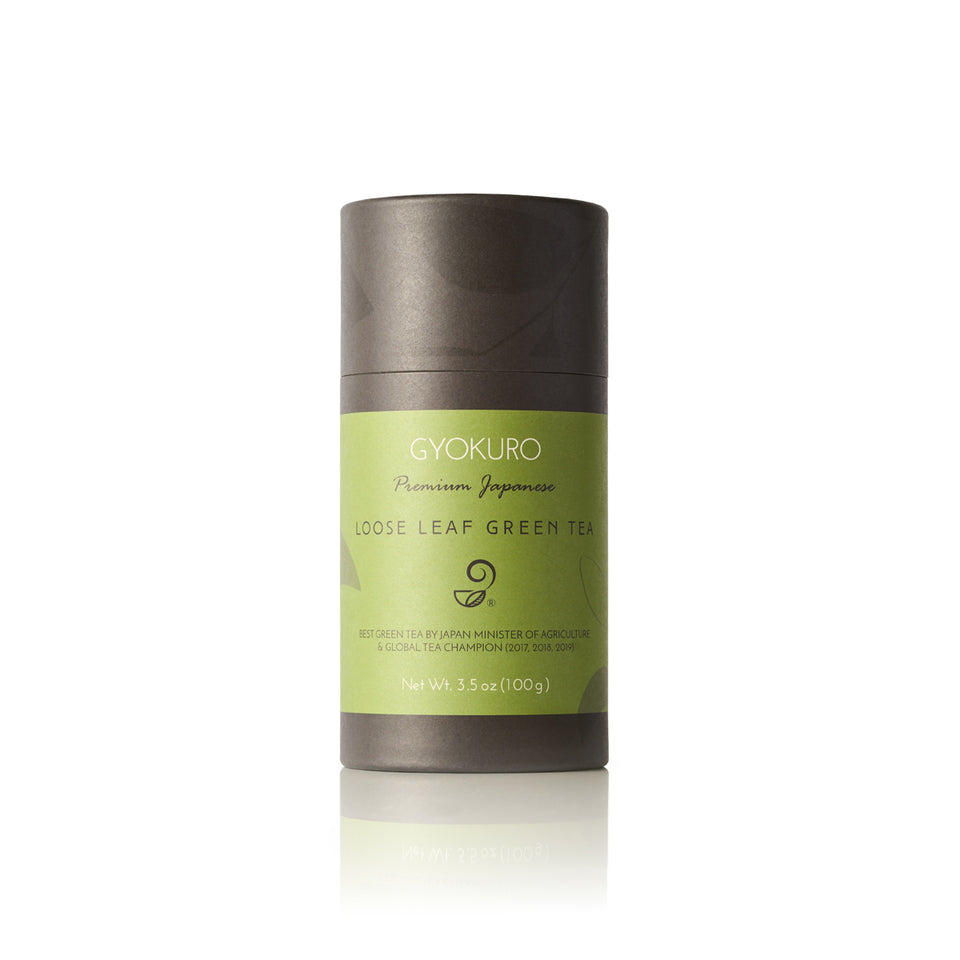
The set also includes Gyokuro, a premium shaded green tea known for its rich, sweet flavor and deep mossy green color. Grown under special mats for 20 days to increase caffeine and amino acid levels, Gyokuro offers a layered, smooth taste unlike any other. Completing the collection is Nozomi, a fine Kabuse-cha, or "Covered Green Tea," carefully grown under nets to gently shade the leaves just before new sprouts emerge, resulting in a soft, rich, and refined flavor profile.
Gyokuro - Shaded Imperial Premium Green Tea
Gyokuro, also known as "jade dew" or "jewel dew tea," is a premium Japanese green tea shaded from the sun for 20 days using specially made mats, a method that boosts caffeine levels and strengthens amino acids to create a sweeter, richer flavor. This extended shading process results in dark, mossy green leaves with an unmistakable aroma and a complex taste that is layered yet balanced. Cultivated by the Chagusaba method in nutrient-rich sugarcane soil and made from the Yabukita cultivar, this loose-leaf authentic Gyokuro is offered in a high-quality, air-tight paper tube canister (chyazutsu) to preserve its exceptional freshness and flavor. Each 3.5 oz (100g) full-size package steeps 30–40 cups, and a convenient single-serve sample is also available.
Related Articles You May Be Interested
Get Free Bonus Books
Sign up for free to the Green Tea Club to get advice and exclusive articles about how to choose Japanese Tea, and tips, tricks, and recipes for enjoying Japanese tea.
Unsubscribe anytime. It’s free!
About the author
Kei Nishida
Author, CEO Dream of Japan
Certification: PMP, BS in Computer Science
Education: Western Washington University
Kei Nishida is a passionate Japanese green tea connoisseur, writer, and the founder and CEO of Japanese Green Tea Co., a Dream of Japan Company.
Driven by a deep desire to share the rich flavors of his homeland, he established the only company that sources premium tea grown in nutrient-rich sugarcane soil—earning multiple Global Tea Champion awards.
Expanding his mission of introducing Japan’s finest to the world, Kei pioneered the launch of the first-ever Sumiyaki charcoal-roasted coffee through Japanese Coffee Co. He also brought the artistry of traditional Japanese craftsmanship to the global market by making katana-style handmade knives—crafted by a renowned katana maker—available outside Japan for the first time through Japanese Knife Co.
Kei’s journey continues as he uncovers and shares Japan’s hidden treasures with the world.