

Today's article is going to be slightly different from what you are used to reading here. I have gotten in touch with Kei, and we started talking about tea. As a result, I am contributing to his lovely website.
Although I love tea but don’t know as much about it as Kei does, I do know quite a lot about water quality. So today, I am not going to talk about Japanese green tea but rather about water and how it affects your favorite beverage.
We will take a look at what you can do to improve the quality of the water. This will inevitably make your whole experience of drinking green tea even better.
So, without further ado, let's get rolling, as we have plenty to discuss here.
Water Quality and Tea
I am pretty sure most of us have found ourselves in a situation where drinks at a friend's house who lives in a different city taste different.
Different—not necessarily better or worse, just different. With that, you might have noticed that seemingly the same coffee or tea from the same kettle you have at home tastes different.
Ever wondered why?
It all starts and ends with water. But how can water affect the taste so much?
The answer is the mineral content. In particular, I am talking about calcium and magnesium minerals.
These two minerals are responsible for two things: hardness and taste.
So let's dig a bit deeper here.
Both minerals are often found in groundwater. These are also essential to our body, so logically, you would assume that the more, the better, but there is a caveat.
Although these minerals are great, everything has its limits.
Too much is bad, and too little is also not ideal for Japanese tea, as it is especially sensitive to the quality of the water.
The overall content you are aiming for is somewhere between 1 and 4 grains per gallon.
Now, there is much more to know about ideal water for tea, and if you want to learn more, read Kei's post on the blog.
However, I want to talk about contaminants that will negatively affect water taste and overall quality.

Contaminants in Water
Contaminants that negatively affect taste: iron, chlorine, organic matter in plumbing, bacteria
You can argue by saying that tap water is treated at the local treatment facilities, and you would be right.
But here is the thing:
First of all, although treatment facilities are getting more sophisticated, there is still a long way to go to provide truly safe water. Just take a look yourself at the EWG database.
Second, there is still a long journey where anything could happen between the facility and your house.
Third, the condition of your own house or apartment building can contaminate water.
As you see, although treated, water is still greatly exposed to harmful contaminants until it reaches your tap.
So what contaminants are we talking about?
There are hundreds of them, and the vast majority are pretty undetectable in water. Those won't be visible and won't change the flavor.
However, let's introduce contaminants that will directly affect the taste of your green tea.
Iron and Manganese
People who use well water are mostly affected by these two contaminants. Old plumbing can also start leaking iron into the water.
As a result, iron and manganese not only cause horrible brownish discoloration, but especially when mixed with tea or coffee, they make a beverage absolutely unpleasant to drink.
Chlorine
Chlorine is a well-established disinfectant used by many treatment facilities.
How does chlorine affect the taste?
Just remember the last time you were in a swimming pool. Yes, that's right. Chlorine is also used to disinfect the water in swimming pools.
It's not very difficult to imagine how your tea would taste with chlorine water.
Bacteria
Bacteria are slightly different from other contaminants in water.
The thing is, these often start breeding in wet and moist corners of the plumbing or in areas like the ends of the taps and water heaters.
As they breed, they often create slime, which then leaches into the water and makes it smell unpleasant and unpleasant to drink.
These are definitely not all contaminants in water, but they are definitely the main ones.
I bet you are wondering now what you can do.

Water Filters
The answer is water filters.
There are plenty of different filters on the market, so it can be overwhelming to select which one to pick and which one to avoid.
No worries, I've got you covered here too, but before we get to them, let me briefly explain what filters are and what to keep in mind before buying one.
Essentially, a water filter is a simple housing with a cartridge inside. As water runs through the cartridges, contaminants are trapped within it, and on the other end, pure water comes out.
As simple as that.
However, it gets complicated when you decide to actually buy one for yourself.
Here are only three aspects to bear in mind while choosing a filter:
Type of Filter
First of all, you need to decide what kind of filter you want. In general, we can classify them into five categories.
- Pitcher filters
- Faucet filters
- Countertop filters
- Undersink
- Whole house
Probably the most popular are pitchers and faucet filters. They are cheap to buy and will provide the essential treatment. However, the lifespan is very short, and the overall quality is not anywhere near as good as with the other three types.
Countertop units are a nice compromise between price, quality, and lifespan. They last quite long, and if you want to only treat water for drinking, they are a great option.
If you ask me, I will go with a countertop unit for brewing the Japanese tea.
Under-sink units and the whole house usually come with many stages and can treat a lot of water.
Reverse osmosis filters are often under-the-sink units.
Treatment Capacity
I have touched on this topic in the previous consideration, so let me expand on it. The type of filter you select will directly impact the capacity you will be able to treat.
So, if you only want to have filtered water for beverages and drinking, you would go with either a pitcher, countertop, or faucet filter.
Here is the amount of treated water you can expect for each type of filter before you have to replace the cartridge.
- Pitcher: 40–120 gallons
- Faucet: 50-150 gallons
- Countertop: 300-500 gallons
- Undersink: 1500–2000 gallons
- Whole house: 50,000–150,000 gallons
As you can see, the difference is significant, so be wise when selecting a filter.
Performance
Last on our list, but certainly not least, is performance.
Reverse osmosis is considered the most efficient treatment right now. It generates water almost identical to distilled water, so you can imagine the performance.
The most common type of cartridge you will notice is carbon or coconut shell. This is the industry's most common type and is often found in all types of filters.
In terms of performance, it is not as efficient as reverse osmosis but will make your water safe from VOCs, pesticides, chlorine, herbicides, or heavy metals.
Manufacturers often put a list of contaminants and display the rates removed by their filters, so you can either find it or contact the manufacturer.
I always recommend doing at least some fundamental analysis of water to actually know what you need to remove from it.
Finally, we are getting to the part of the article with specific filters.
Here is my recommendation:
1. Home Master TMJRF2 Jr F2 Countertop
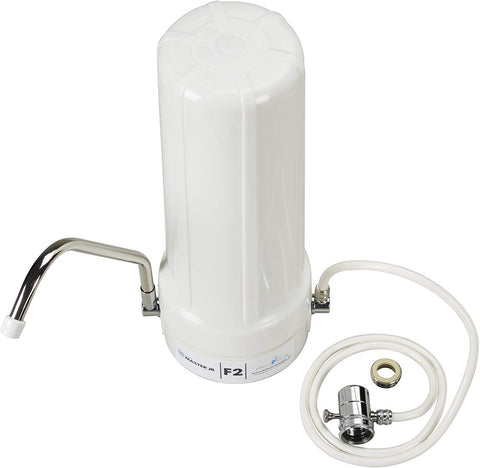
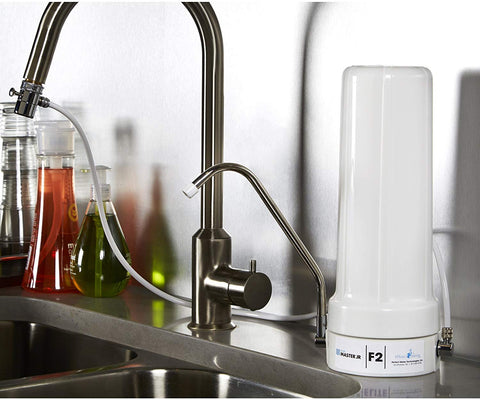
Home Master is my favorite for a couple of reasons.
First of all, their customer service is always super friendly and helpful. Any problem you have, they will help you out.
Especially when you are not the type to be very familiar with filters, you will appreciate the help. Imagine when it starts to leak and you think it's faulty, but actually, it is just not tightly screwed somewhere.
Second, Home Master has a robust build; when you actually touch the housing itself, you can tell that the construction and parts are just solid.
Lastly, this filter gets rid of a long list of contaminants, including fluoride, which does no good when you are overexposed to it.
If you are looking for a countertop unit, don't hesitate to check it out on Amazon.
2. Aquagear
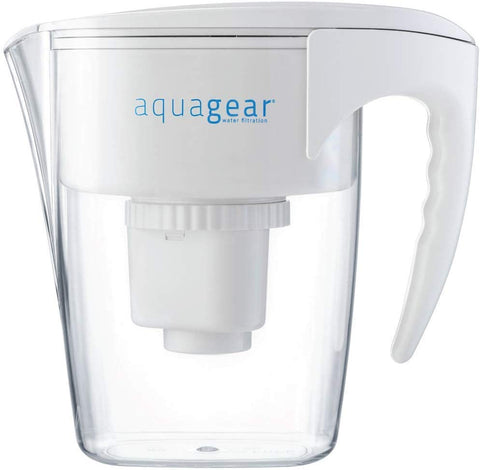
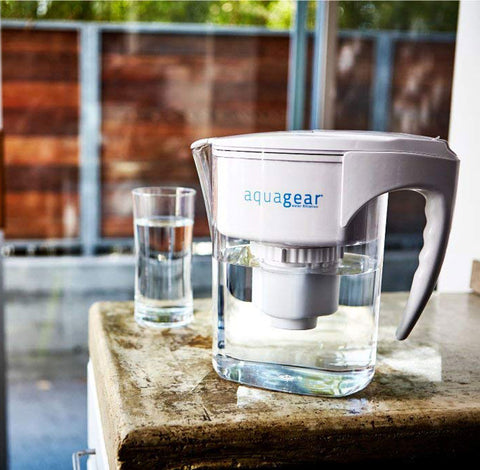
Although I am not the biggest fan of pitcher filters purely because of the massive Brita campaign, I like Aquagear. There are a couple of reasons for that.
First of all, it is the performance.
If you compare Aquagear with other pitcher filters, you will soon find out that it removes a tremendous amount of contaminants, unlike other popular pitchers like Brita or PUR.
It removes a lot, including fluoride. Unfortunately, it comes at a cost. But not necessarily the price of the filter, as I think it is acceptable for the quality you will get.
The cost I am talking about is the speed of filtration and the cartridge lifespan.
Because it removes so much from your water, you will have to accept that it is not fast. So you will need to leave it overnight for the water to be ready by the morning.
Yes, it is that slow, and it gets even slower the more contaminants you have.
Second, it will cost more if that cartridge doesn't last very long. If you treat one pitcher a day, you will need to replace the cartridge roughly once a month.
Let's talk about something unrelated to the pitcher itself: the company.
In particular, I want to mention the sustainability part of the company.
When you buy a pitcher, Aquagear builds water stations in Africa, and part of the margins are donated to that cause.
I think this is brilliant, and they definitely got me hooked there.
Another part of sustainability is the fact that you can send used cartridges and the pitcher back to the manufacturer, all free of charge.
The pitcher is fully recyclable, and the manufacturer will do it on your behalf and even provide a pre-paid label for you to send it back.
This is an amazing approach to sustainability, and if you want to be part of that, definitely check out Aquagear on Amazon. Click here to see it on Amazon.
3. iSpring with Remineralization stage
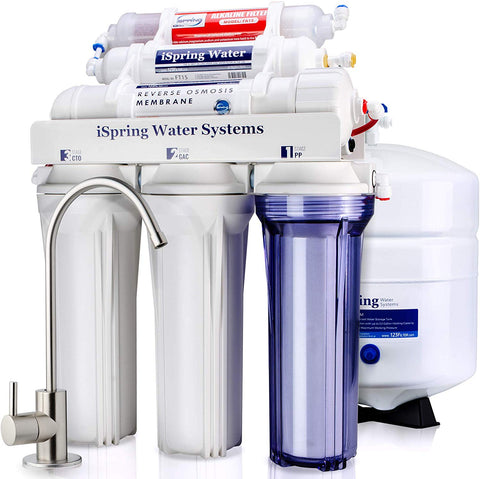
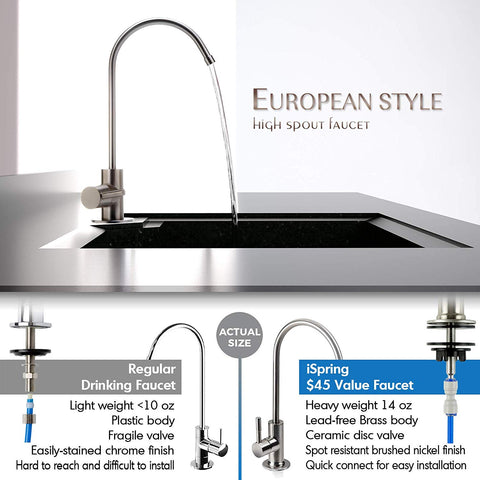
I have decided to include one of the reverse osmosis systems here as well. Although you have to be careful with these.
Remember earlier when I said that water needs to have a certain hardness and a neutral pH?
Well, RO removes all the hardness and, in fact, lowers the pH, which makes the water slightly acidic. This, of course, is not ideal for our Japanese green tea.
The good news is that you can still enjoy the highest quality tea with RO water. The only thing you need to do is get the filter with the remineralization stage.
Essentially, this is the latest stage of treatment. It increases the pH of the water and adds calcium and magnesium minerals back, but not too much.
Just enough to make perfect and safe water for tea.
The unit I have selected here is called iSpring. It is a well-known brand with a long history here in the US, so you cannot go wrong with this choice and quality.
I won't go into too much detail, as the most important thing you need to know is that it will treat 99% of contaminants in water. That tells you everything you need to know.
So make sure to check out iSpring on Amazon today if you want to get special treatment.
4. Big Berkey
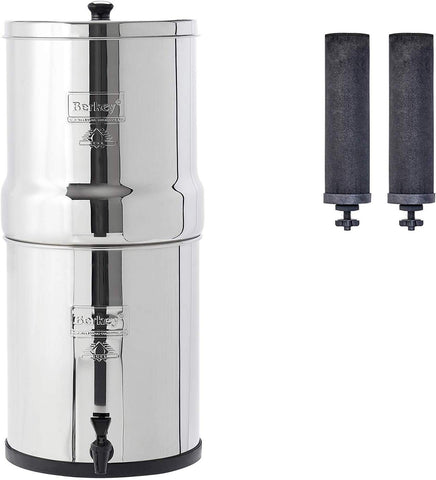
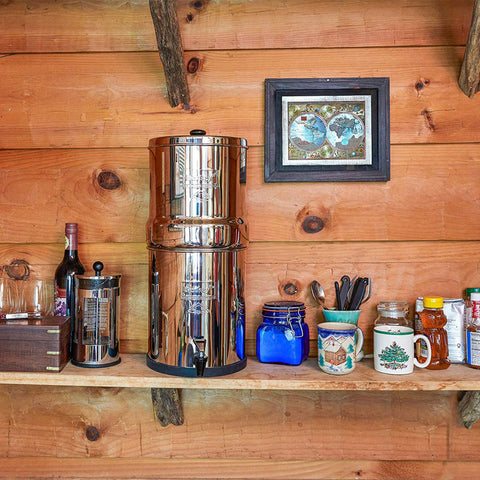
This one is for all of you travelers.
Big Berkey is like a pitcher on steroids. Much bigger, much more robust, and with better performance.
The reason I said for travelers is simple. You can disassemble the metal chambers, nest them into each other, and carry them around or fit them into your RV.
I think it is always handy to have one of these on the trip. I probably wouldn't carry it when backpacking, but there is a small 2.25-gallon version for this purpose as well.
But for all of those RV fans out there who want to enjoy quality tea on their journey, Big Berkey is a great option worth discovering.
Have a look for yourself on Amazon.
5. Woder 8k

If you want to install a filter under your sink that would keep the flow high and, at the same time, is not as expensive, the Woder 8K is a way forward.
The biggest benefit of this filter is that it works without reducing the flow.
Whether you like it or not, a reverse osmosis system without an external pump can be quite slow at times.
It heavily depends on your house pressure, so if you are often having trouble with low pressure, an RO unit might just not be right for you.
Also, reverse osmosis filters take up a lot of space inside your under-sink cabinet, while Woder is very compact.
Excellent performance in combination with compact size and fast flow is what makes this filter have its place in this list.
You can check it out yourself on Amazon.
Filters to Avoid
Now let's get to the generic filters that I would personally avoid.
Mostly, I advise people to avoid pitchers and faucet filters. But if I had to pick which one is worse, I would probably say both are the same.
But as always, there are some exceptions and good filters in both categories, but in general, I would avoid them.
So what filters should I avoid?
Brita
Brita has massive marketing, and you can find their pitchers almost everywhere.
Does that mean they are good?
Absolutely not; in fact, compared to other pitchers in a similar price range, Brita can offer much less than, say, ZeroWater.
From the price point, the replacement cartridges are where manufacturers of pitcher filters make money, so in the long term, you will overpay so much for Brita cartridges.
But to be fair to them, it will still be cheaper than buying bottled water.
The bottom line is that among the competitors, Brita is not as good.
Faucet Mount Filters
The problem with faucet filters is construction. Often, manufacturers just save money on it, and after a while, you will end up with a filter that leaks from every single hole.
This is the harsh reality, and therefore I am trying to avoid it as well.
The performance is similar to pitcher filters because the cartridge is pretty much the same, just mounted directly to the tap.
So the only benefit you will get is the faster flow rate as water is pushed through it.
Maybe one day someone will finally make a robust design for the faucet filter that will last longer than 3–6 months.
But for now, I would probably avoid them.
Final Words
I believe that by now you should have a pretty good idea of what filter you need to enjoy Japanese tea.
However, if there are any questions left, please feel free to ask them below, and I will personally help you out.
Thanks for reading, and enjoy every single drop of your next cuppa.
About the Author:

Eugen Nikolajev
Founder of DrinkingWaterBase
Eugen has always been interested in a healthy lifestyle. The more he discovered it, the more it became apparent that water has a much bigger role than being ignored. So he started a website, drinkingwaterbase.com, where he shares everything he knows about water quality with his readers.
FAQs about Water Filters for Brewing Japanese Green Tea

Related products


8 reviews
$179.00
$159.99
/
Quick view
The Sencha Lover Gift Set - Premium Japanese Green Tea Set Package


Get Free Bonus Books

Sign up for free to the Green Tea Club to get advice and exclusive articles about how to choose Japanese Tea, and tips, tricks, and recipes for enjoying Japanese tea.


