Skip to content

What is Japanese Tea Ceremony? – Explained in 6 Simple Steps

Chanoyu(茶の湯), Sado(茶道) or simply the Japanese tea ceremony, is a ritual that is religiously followed in Japan. Japanese matcha green tea is served in a series of choreographed steps, with the host simply gliding through the whole ceremony. In order to balance the slight bitterness of the tea, traditionally prepared Japanese sweets are also served along with it.

This whole process is more than just about making tea. It is an aesthetic compilation of certain predefined movements coordinated in such a way that each action comes straight from the soul. Every movement and every gesture made by the host are done in consideration of the guest's comfort. From the placement of required utensils, the point of view of the main guest, or Shokyaku (正客), is always considered.

The tea ceremony is so deep, and there are so many different "ryuha," or divisions, that have different approaches.
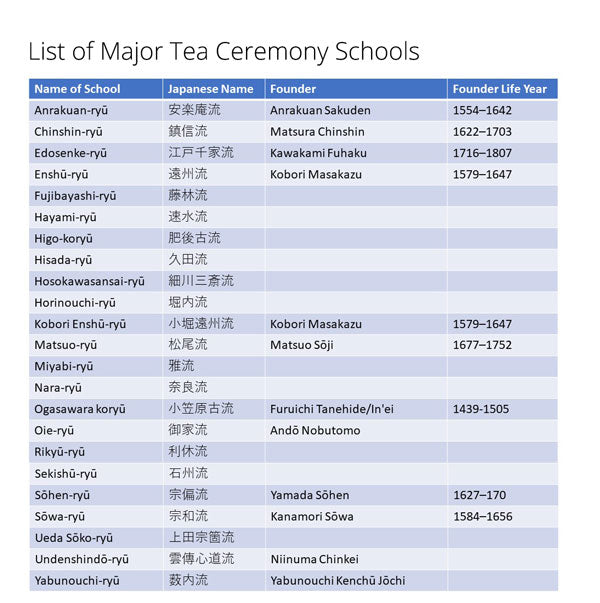
List of Major Tea Ceremony Shools

But I tried to summarize the simple ceremony in easy, simple steps so that you could understand what they are.

Steps Involved in the Ceremony

A very strict protocol needs to be followed when executing the steps of the Japanese tea ceremony, or "Way of Tea." While these steps, along with the myriad of utensils used, might seem a bit difficult to understand at first, breaking them into the following 6 steps would enable the reader to gain a certain degree of familiarity with the same.

While there are some variations in the steps involved in the different types of Japanese tea ceremonies celebrated, the basic steps remain the same.

  1. Preparation taken by the host:

    This starts weeks in advance of the actual day of the ceremony, with the host sending out formal invitations to the invitees or guests. Then comes the part wherein the host prepares her soul so that it can leave the worldly thoughts behind and start to put all its focus on imbibing within herself a sense of equilibrium and harmony.

  1. The start of the worldly preparations usually commences with the selection of the right utensils based on:
    • The season when it is being held and
    • The time of day when the ceremony is slated to be held


    Then comes the stage when the tea room or the tea garden, whichever is to be used depending on the season, is cleaned, the utensils are washed and kept ready for use to prepare the premium green tea, and the tatami is changed.

    Lastly, if the tea ceremony is inclusive of a meal, the host starts to prepare for the same in the early hours of the morning.
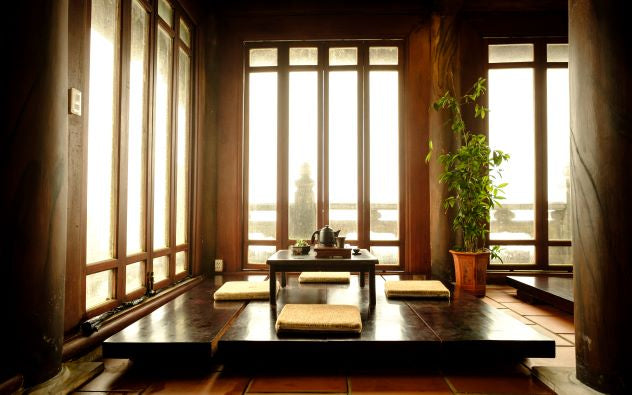
    Traditional Tea Room

  2. Preparation taken by the guests of the ceremony:

    The guests too have to undergo a process of spiritual preparation for the same by leaving their worldly worries aside and purifying their hearts and their thoughts.

    On the day of the ceremony, they have to wait outside for a signal from their host, which indicates that the host is ready to receive them in the tea room or tea garden.

    They have to wash their hands before entering, and this symbolizes their washing away the dust gathered from the world outside. While entering after receiving a signal from the host, the guests have to bend and pass through a low door.

    This is taken to be a way of showing the respect one has for the host. It is also a sign of acknowledgement and thanks for the preparations that the host has made for the ceremony.

  3. Cleaning of the tools:

    This starts the actual preparation of the Japanese matcha green teaAll utensils to be used are brought out and cleaned in front of the guests using graceful and aesthetically beautiful movements and gestures. Such is the concentration on this task that no extra movements or unnecessary words are allowed even during the ceremony.

    The beauty of the ceremony lies in the harmonious flow of one action to another, starting with the utensil cleaning and ending with the impeccable behavior of the guests. The most important utensils and tools used for the ceremony involve:

    • The Mizusashi (水差し)or the container for cold water,
    • Furo (風炉), a small clay stove,
    • Chawa (茶碗) or the tea bowl,
    • The Chasen (茶筅) or the tea whisk,
    • The Chashaku (茶杓)or the scoop used to take out the Matcha powder,
    • The Natsume (棗)or the container which will hold the tea and
    • The Kama (釜) which includes the kettle and its lid.
          
Whisk and a cup

  1. Preparing the Matcha:

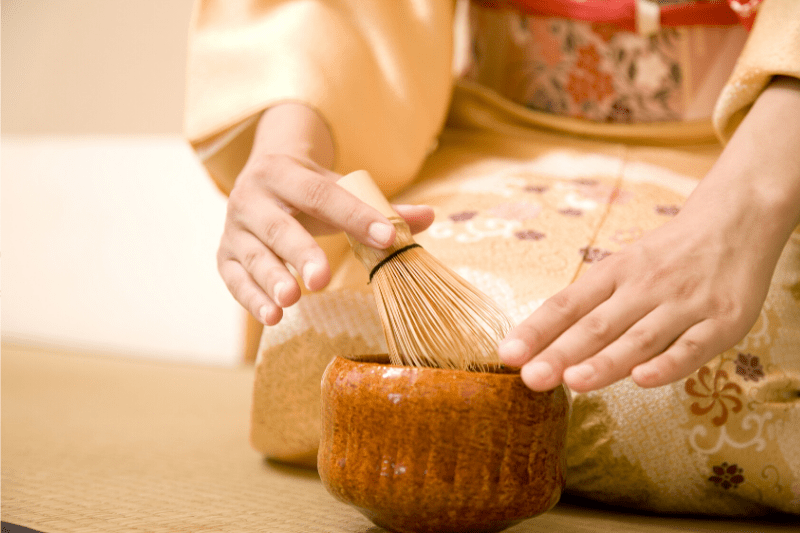
    After the tools are cleaned, they need to be elegantly displayed, and then the preparation for the matcha begins. The host takes out a tea bowl and fills it with matcha powder, taking three scoops of the powder for every guest present. Water is then added to the tea bowl, and a thin paste is made by whisking the composition. After this paste is properly made, more water is gradually added.

  2. Serving the Matcha :

    The prepared tea bowl is then presented to the Shokyaku, or main guest, and the exchange of bowls takes place. The Shokyaku starts with admiring the bowl, rotating it, and then taking a sip from it.

    The guest subsequently wipes off the tea bowl rim and offers it respectfully to the guest seated beside him. This guest too repeats the same actions and passes the tea bowl onto the next. This action gets repeated until all the guests have taken turns sipping the prepared premium green tea, and the tea bowl finally comes back to the host.
Japanese Tea Ceremony

  1. Completion of the ceremony:

    The host sets about cleaning the bowl after it comes back to him or her, and then the tea cup and the tea scoop are also cleaned. These cleaned utensils and tools need to be inspected by the guests who have come to attend the ceremony.

    This is done to show the admiration and respect they have for the host. The tea bowls and other utensils and tools are inspected and examined with care and respect. The utensils are handled with great caution with the help of a cloth, and then the host gathers up all the tools. It is during this time that the guests' exit after bowing, thereby marking the end of the ceremony.


A tray containing traditional sweets is also presented to the guests along with the tea. In the event that there is a meal involved, the same is also served to the guests.

The Japanese tea ceremony is a beautiful attempt by the Japanese people to preserve their cultural heritage, and to pass it on to the generations to come.

From the preparations to the ending until the leaving of the guests, the whole journey can be taken to be an attempt by the host to build a connection with the people at the ceremony and with nature on a spiritual level.

FAQs about Japanese Tea Ceremony

Is Japanese tea ceremony really 6 steps, or is that an oversimplification?

It's an oversimplification — but a useful one for beginners. The full Japanese tea ceremony, chanoyu (茶の湯) or sadō (茶道), is dozens of small choreographed gestures grouped into broader phases. Practitioners study for decades and still find more depth in each motion. Reducing it to "six steps" makes it teachable to newcomers, which is genuinely valuable, but anyone who's seen a real ceremony knows it's far more granular.

The six-step framing is something like: prepare the room, welcome the guests, prepare the tools, whisk the matcha, serve and drink, clean up. That captures the structural arc. What it misses is the philosophical layer — the seasonal ikebana in the alcove, the choice of the bowl based on the guest, the precise way utensils are placed, the silence held between phrases. Those are where the ceremony actually happens.

If you're learning from a video or article, the six-step version is a fine starting frame — just know that the real practice is much more nuanced. Our tea ceremony breakdown walks through the simplified version with notes on what's left out.

Do I need to learn the formal ceremony to drink matcha at home?

Honestly, no. The formal ceremony is a cultural practice with deep roots in Zen Buddhism and Japanese aesthetics, and it's beautiful — but you don't need to perform it to enjoy a daily bowl of matcha. Plenty of Japanese people drink matcha at home casually without ever studying chanoyu, the same way an American can enjoy good wine without learning sommelier protocol.

What's worth borrowing from the ceremony is the attention. Even a 30-second pause to focus on whisking, the sound of the chasen against the bowl, the shape of the foam — that captures the essence of what makes matcha drinking different from coffee. The structure isn't required; the attention is what changes the experience.

Most people who get serious about home matcha eventually take a one-time class to understand what they're skipping. After that they go back to their own informal version with a clearer sense of what's casual and what would be different in a formal setting.

What's the difference between formal chanoyu and casually whisking matcha for friends?
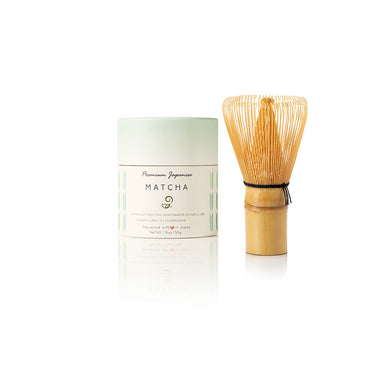
The biggest difference is intention. In chanoyu (茶の湯), every gesture is deliberate, every utensil chosen for the season and guest, and the silence is part of the experience. The ceremony assumes you're there for the practice as much as the tea. Casual matcha — making a bowl for friends in your kitchen — is about hospitality and the drink itself, with much less of the ritual layer. You can use a standard matcha whisk set and still make excellent matcha; you just don't bring the formality.

Practically, casual whisking takes about 30 seconds and produces the same drink chemically. The ceremony stretches that into 20+ minutes through the choreography around it. Both versions can produce a beautiful bowl. They're not competing — they're different uses of the same drink.

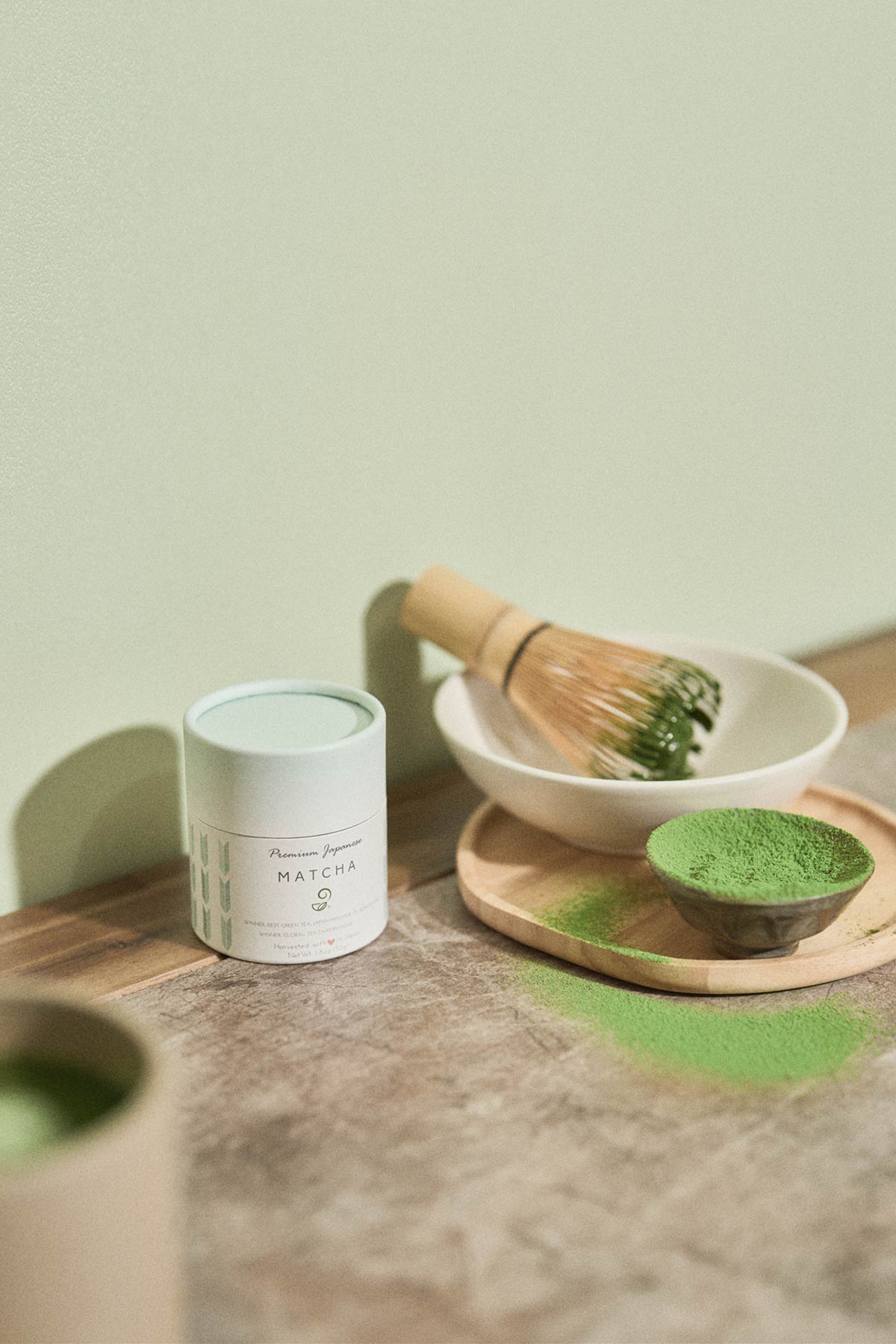
For most home drinkers, casual whisking is what you'll do daily and ceremony is what you'll experience occasionally. The whisk set in the card below is what I keep on the kitchen counter for the casual version.

Why does the host turn the bowl before drinking, and does it matter at home?

In formal chanoyu, the host hands the bowl with the front (the most decorated side, called the shōmen 正面) facing the guest as a sign of offering the most beautiful angle. The guest then turns the bowl two times clockwise so they don't drink from the front — which would feel like consuming the host's gesture of beauty rather than receiving it. After drinking, they turn the bowl back so the front faces the host again when returned. It's an exchange of small respects.

At home, none of that is required. If you're whisking your own matcha for yourself, there's no front, no host, no guest. The gesture loses its meaning when there's no one offering or receiving. So most home drinkers skip it.

If you're hosting friends and you'd like to nod toward the tradition, you can use a bowl with a clearly decorated front and turn it once when you hand it over. It's a small acknowledgment of the practice without performing the full ceremony — and most guests find the gesture meaningful even when they don't know the meaning behind it.

How long does a real Japanese tea ceremony actually take?

It depends on the format. A short tea (chakai, 茶会) lasts about an hour and includes a single bowl of usucha (thin matcha) plus light sweets. A formal tea (chaji, 茶事), the full Japanese tea ceremony, runs roughly four hours and includes a kaiseki meal, a charcoal demonstration, both koicha (thick matcha) and usucha (thin matcha), and several breaks. Practitioners describe chaji as the complete experience and chakai as the introduction.

Most non-practitioner Westerners encounter the chakai-length version on cultural tours or at tea shops, which is why "tea ceremony" tends to register as an hour-long thing. The full chaji is rarer to attend without knowing someone in the practice. If you ever get the chance, take it — it's a fundamentally different experience than the shorter version.

The four-hour length isn't accidental — it's calibrated to the rhythm of Japanese hospitality and the seasonal flow of food, tea, and conversation. Compressing it into an hour loses some of the point, even if it's still a valuable introduction.

Related products

80 reviews

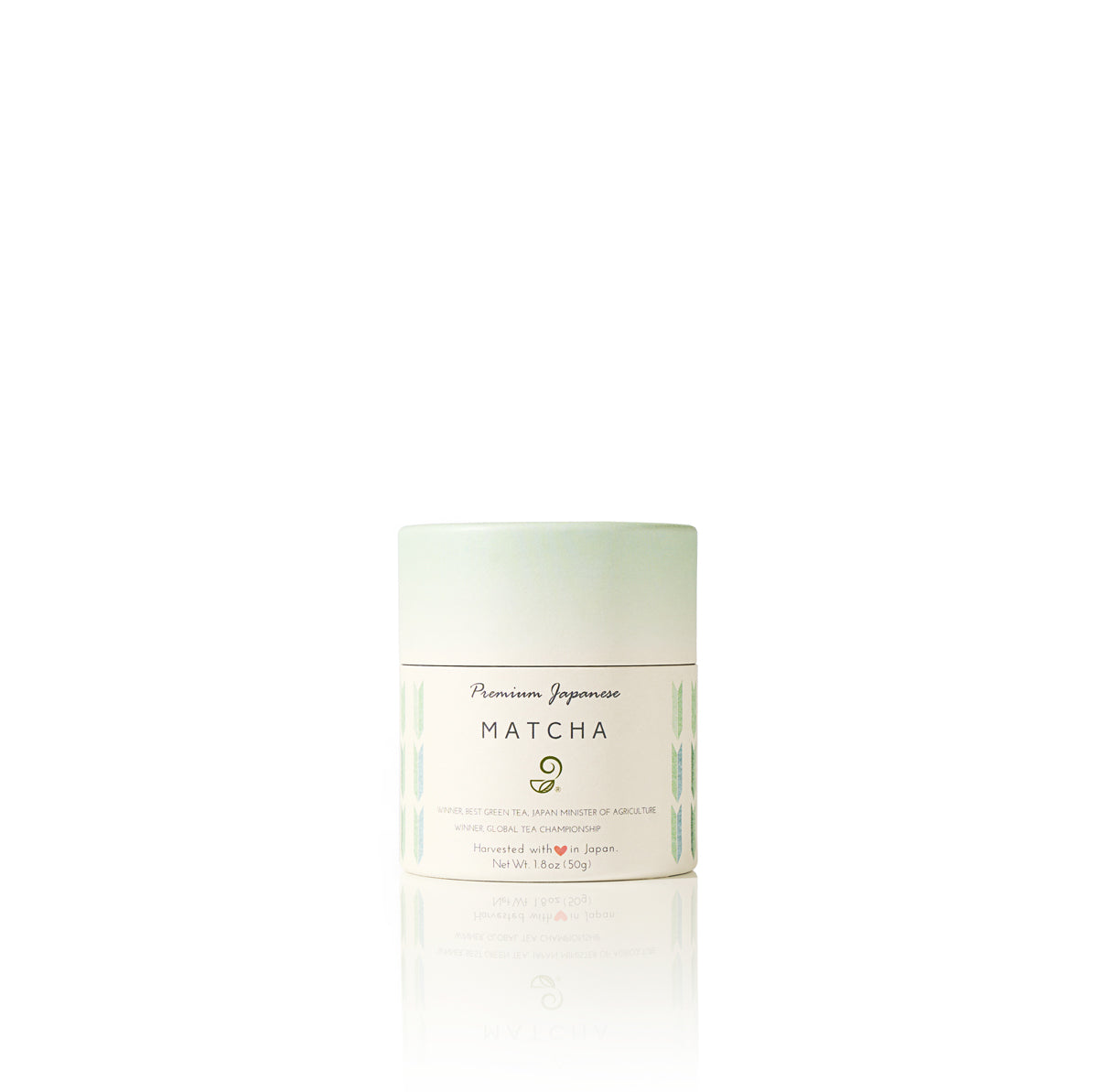
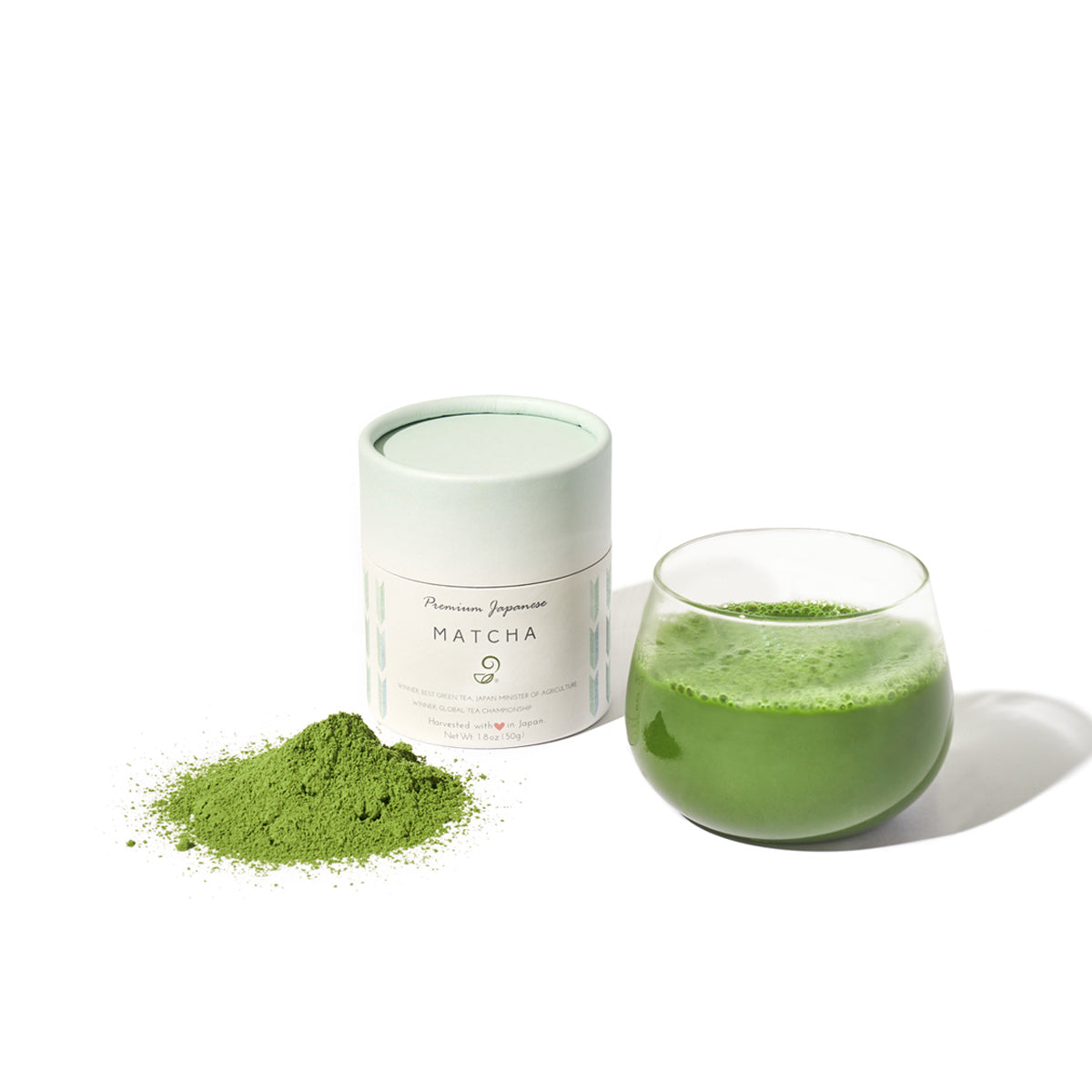
Matcha - Ceremonial Japanese Powdered Green Tea

$39.00
Quick view

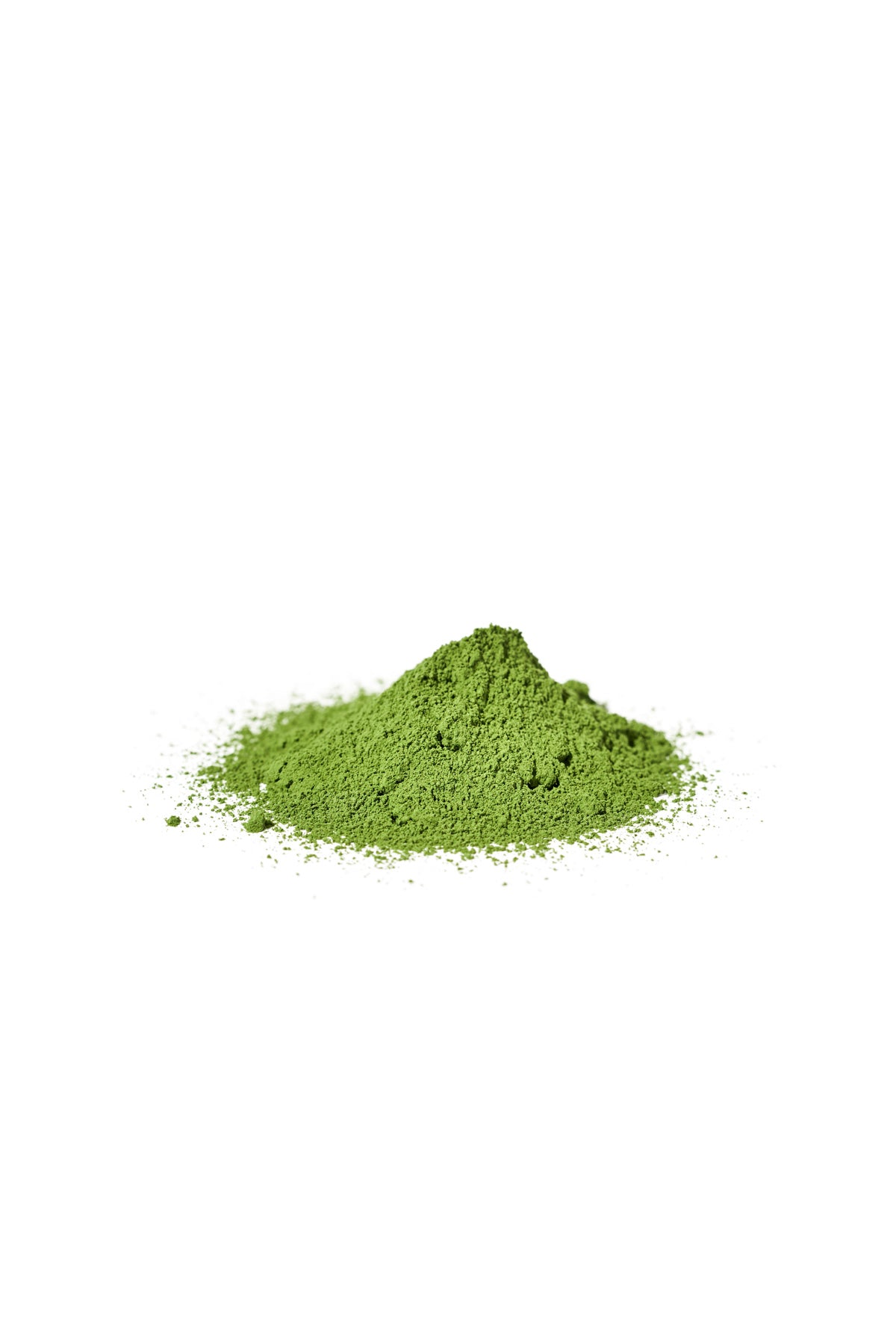
This ceremonial matcha is crafted from the finest Japanese green tea, grown in nutrient-rich soil enhanced with compostable grasses and sugarcane through the Chagusaba method, which gives the tea a natural sweetness and exceptional flavor. In collaboration with researchers from Shizuoka University, farmers ensure that the soil quality consistently produces tea of the highest standard.

Renowned among top Japanese chefs for its unmatched aroma, this matcha is made by carefully shading the plants before harvest to boost caffeine and amino acids, then meticulously drying, de-stemming, and grinding the leaves into a fine powder. Made from the Yabukita cultivar, this 1.8 oz (50g) matcha comes in a high-quality, air-tight paper tube canister, providing a luxurious and authentic Japanese tea experience.

8 reviews

The Sencha Lover Gift Set - Premium Japanese Green Tea Set Package
$179.00 $159.99
Quick view

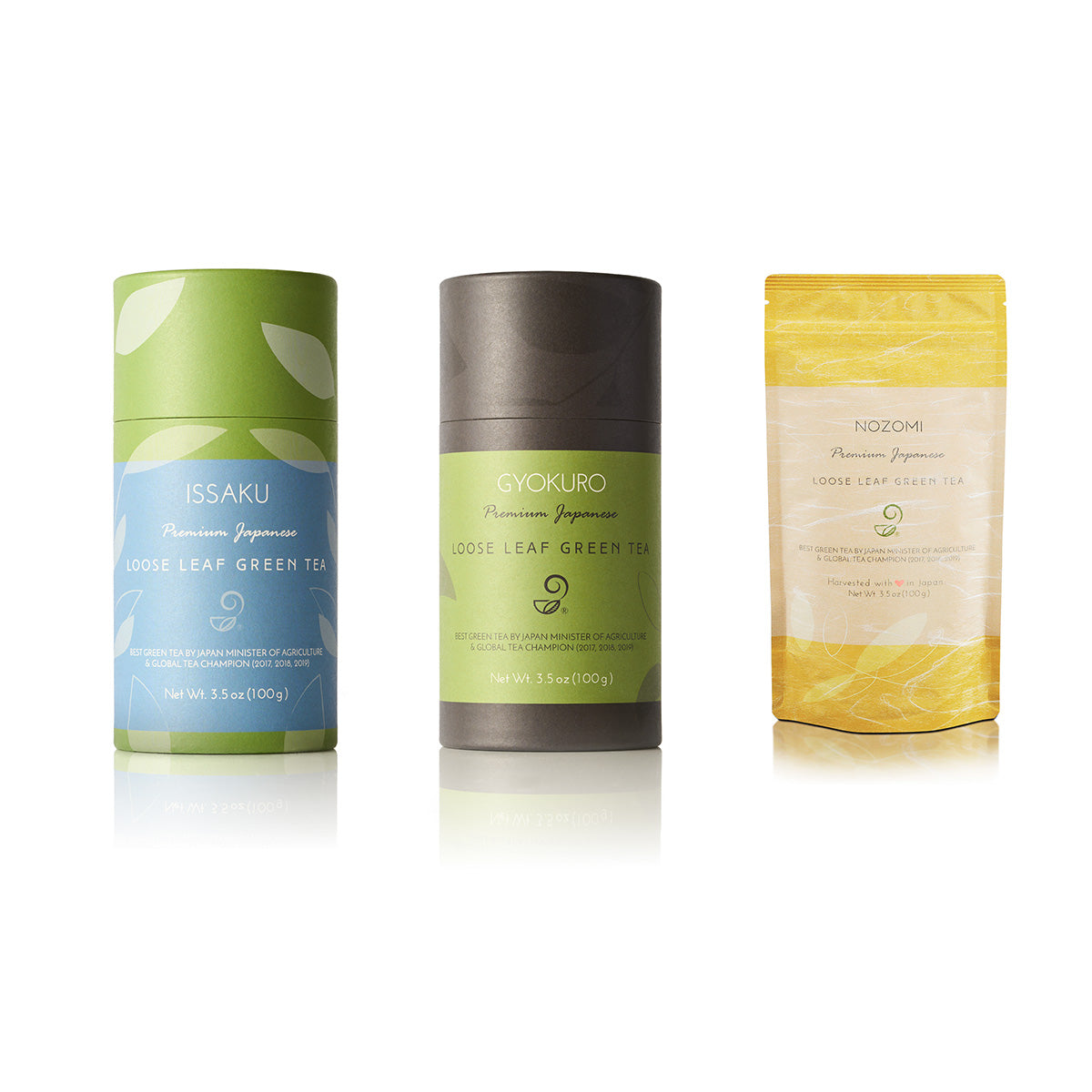
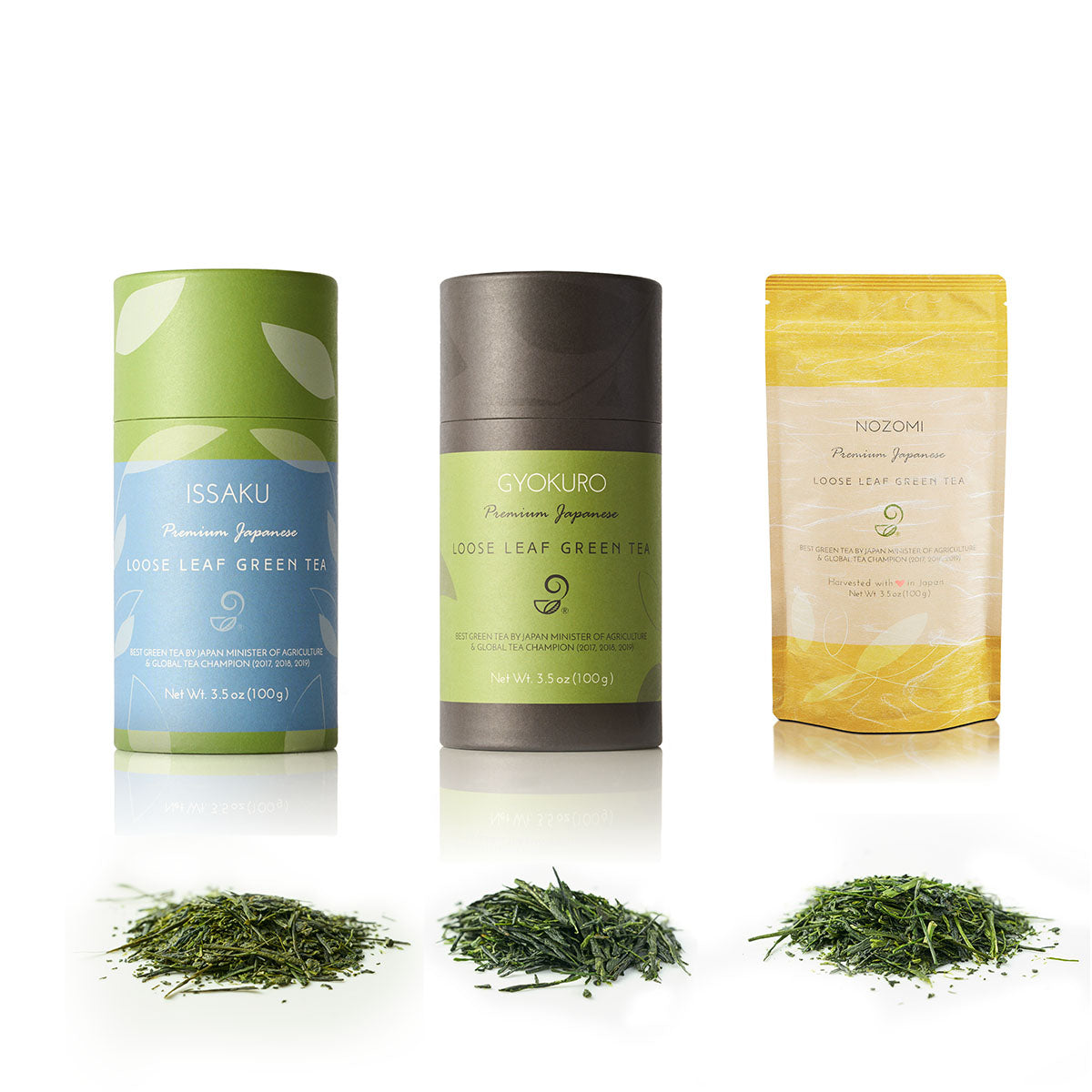
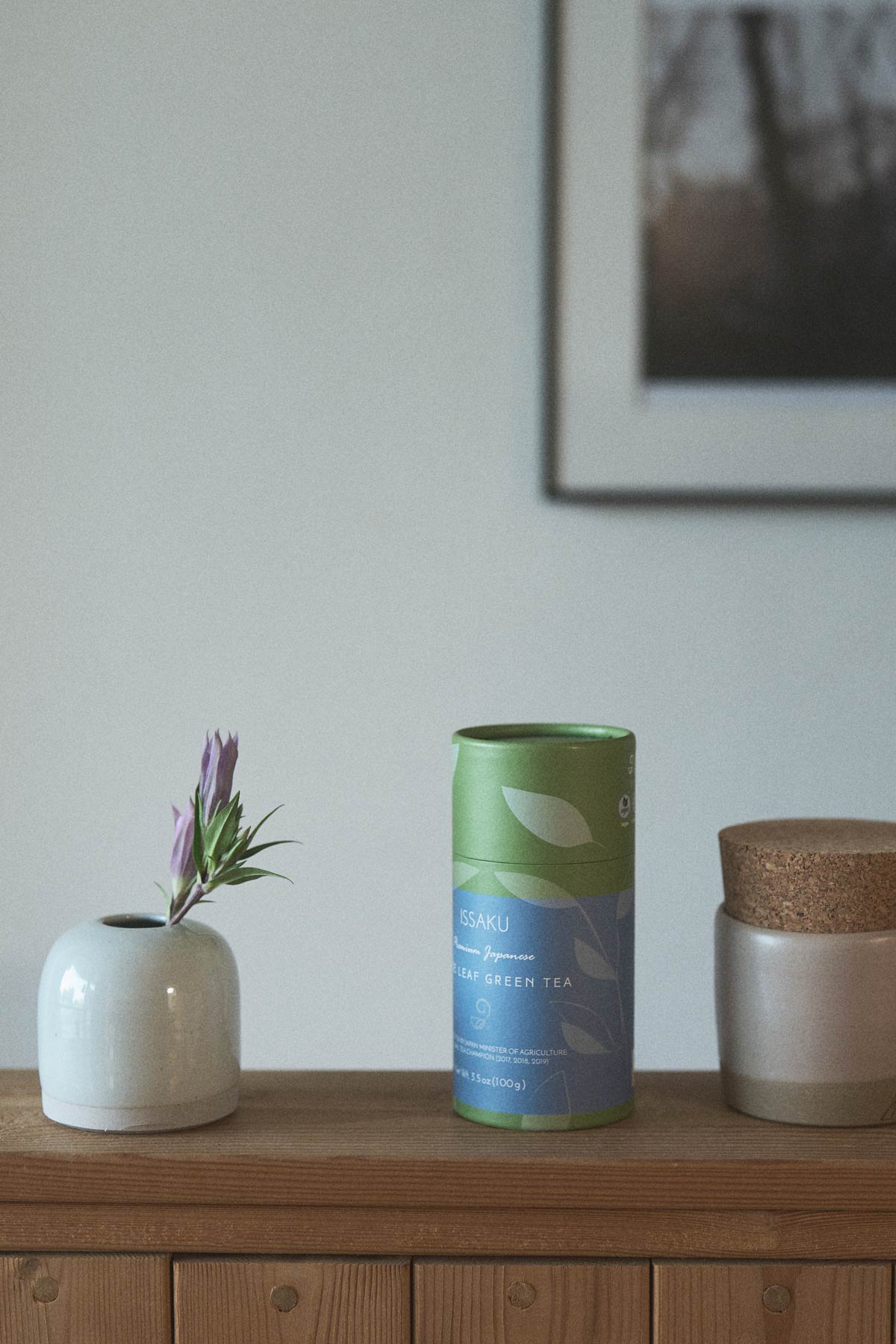
This tea set features three exceptional Japanese green teas, each crafted with care and traditional techniques. Issaku Reserve, a Global Tea Champion winner in 2017 and 2019, is a rare masterpiece created by Farm Master Mr. Arahata at Arahataen Green Tea Farm. Handpicked once a year from the first flush and processed with advanced methods, Issaku represents the highest-grade deep-steamed green tea, available only in limited quantities even in Japan.

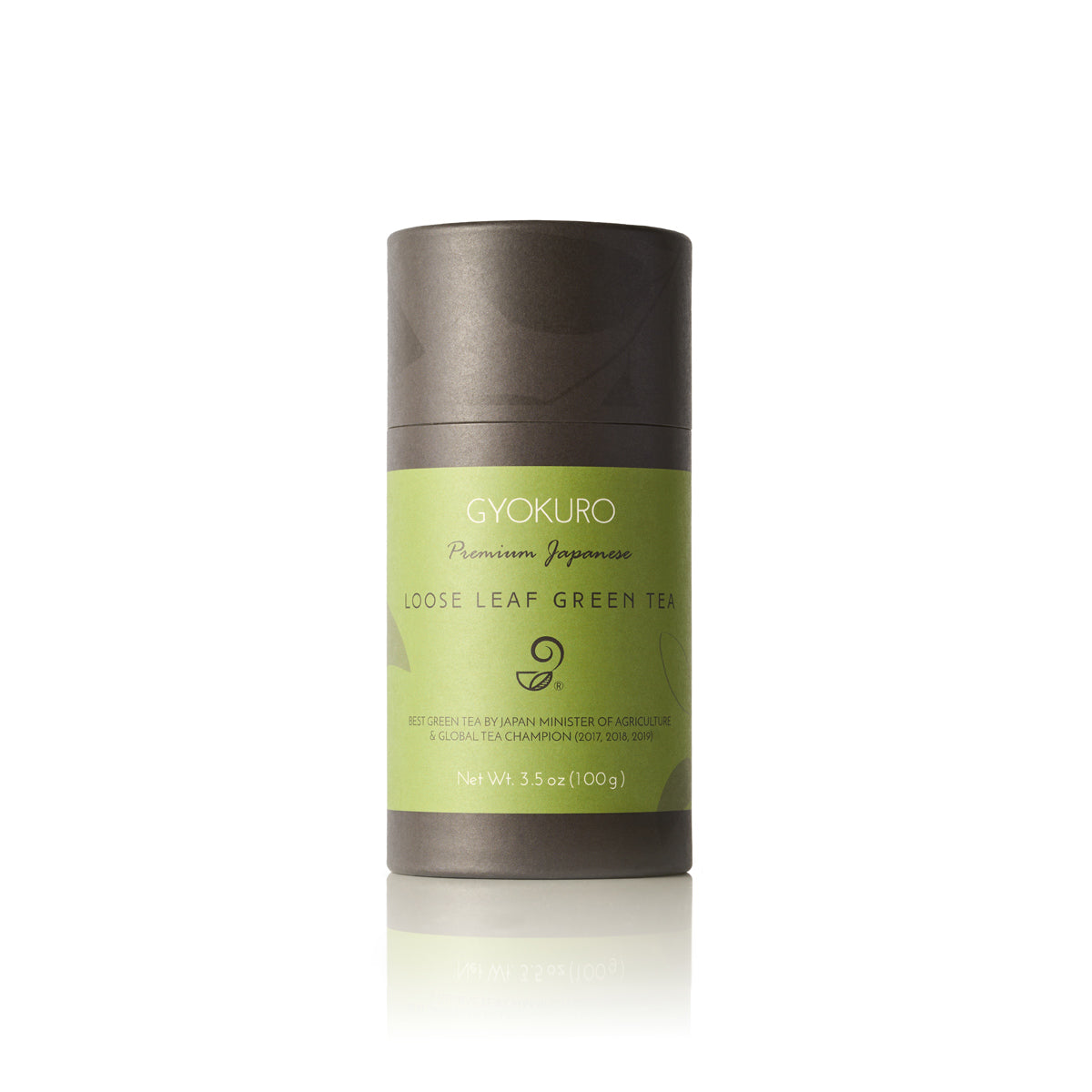
The set also includes Gyokuro, a premium shaded green tea known for its rich, sweet flavor and deep mossy green color. Grown under special mats for 20 days to increase caffeine and amino acid levels, Gyokuro offers a layered, smooth taste unlike any other. Completing the collection is Nozomi, a fine Kabuse-cha, or "Covered Green Tea," carefully grown under nets to gently shade the leaves just before new sprouts emerge, resulting in a soft, rich, and refined flavor profile.

97 reviews

Gyokuro - Shaded Imperial Premium Green Tea

$65.00
Quick view

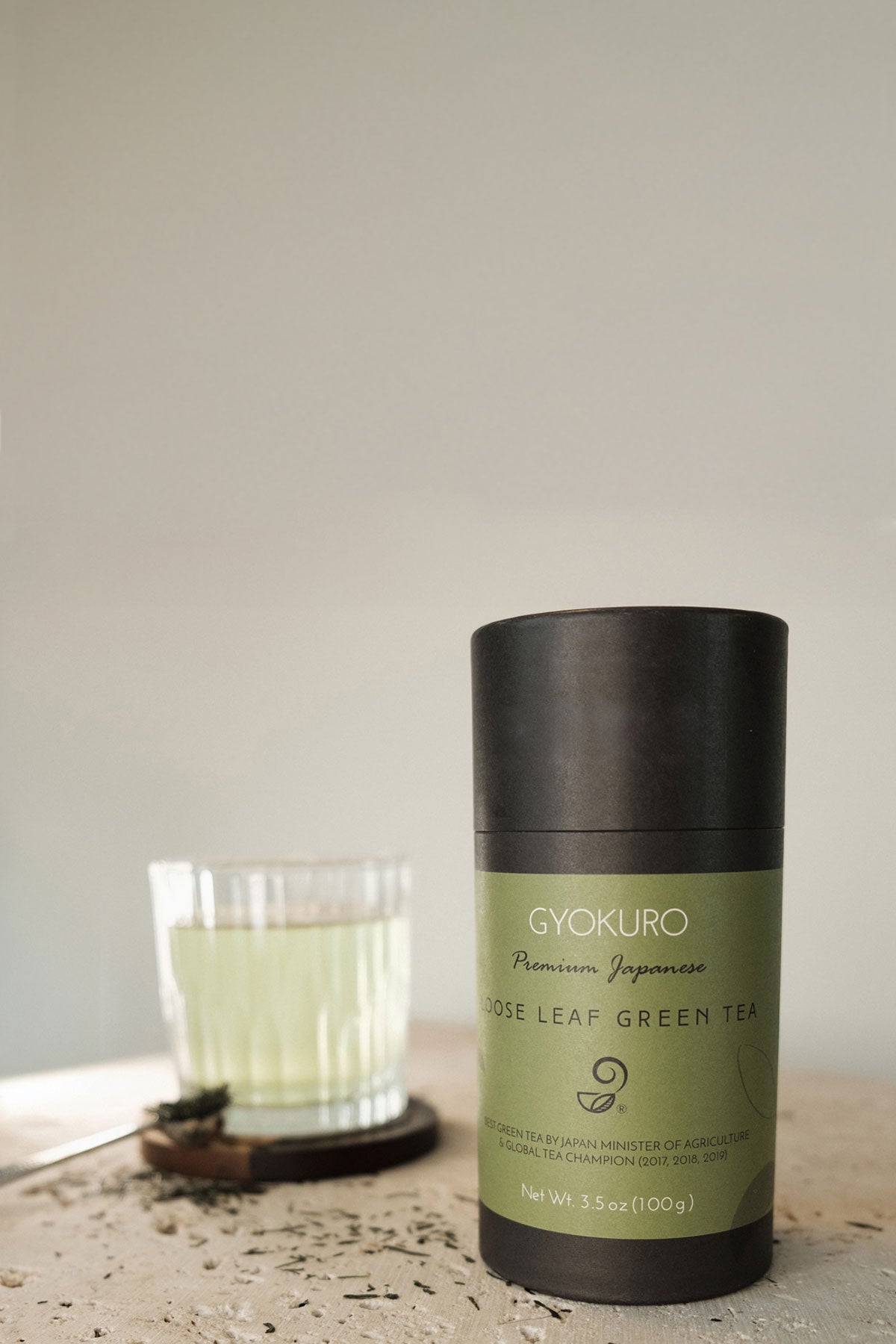
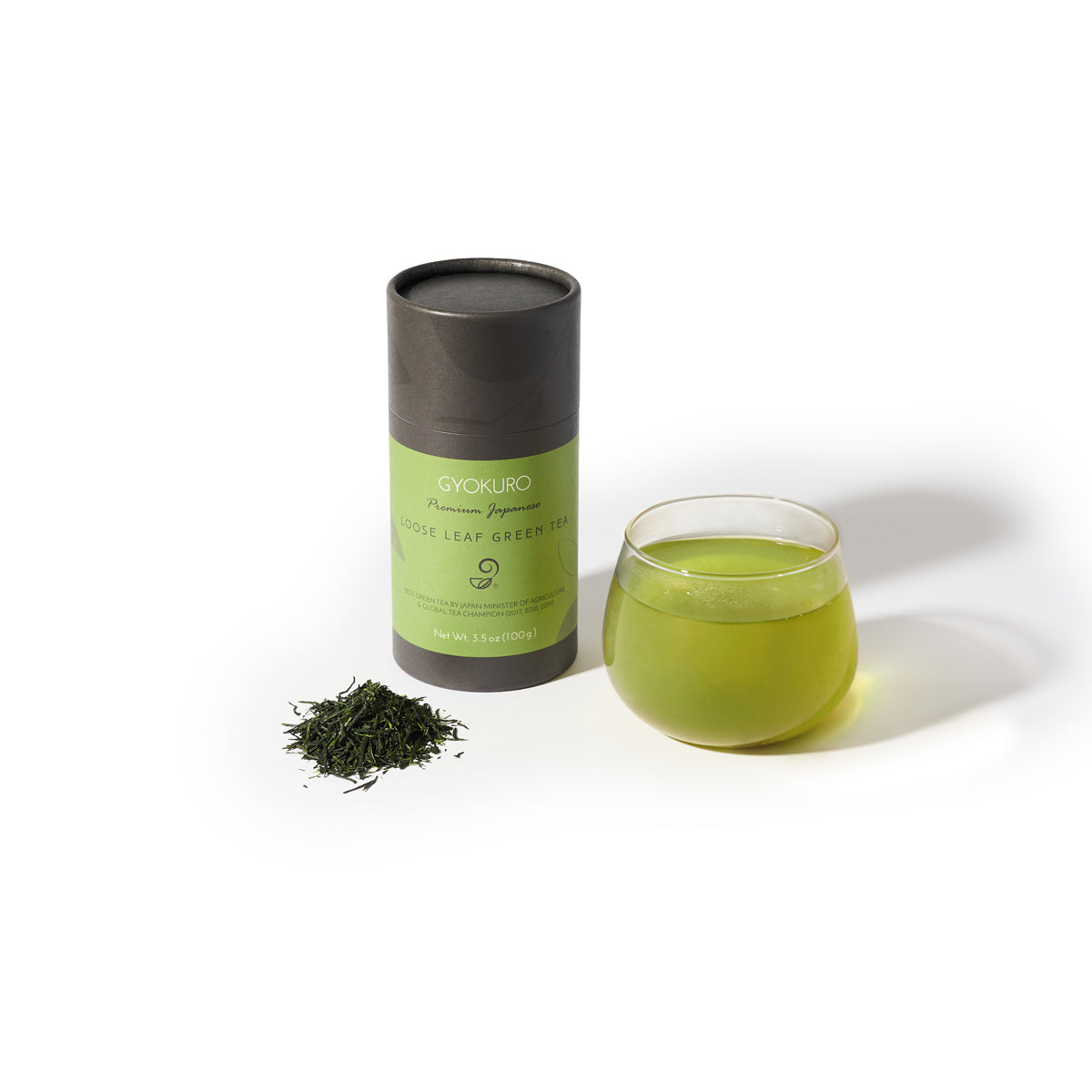
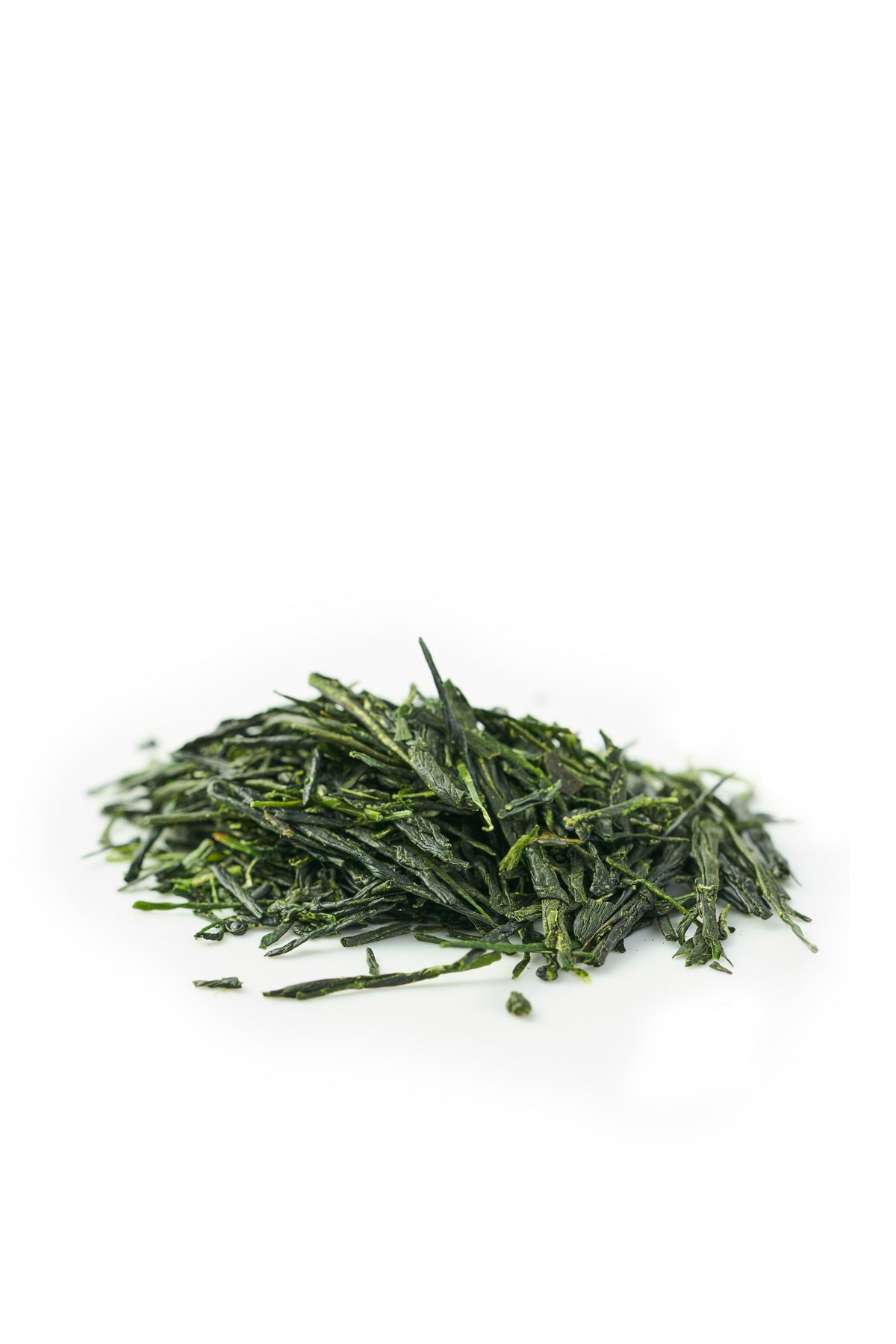
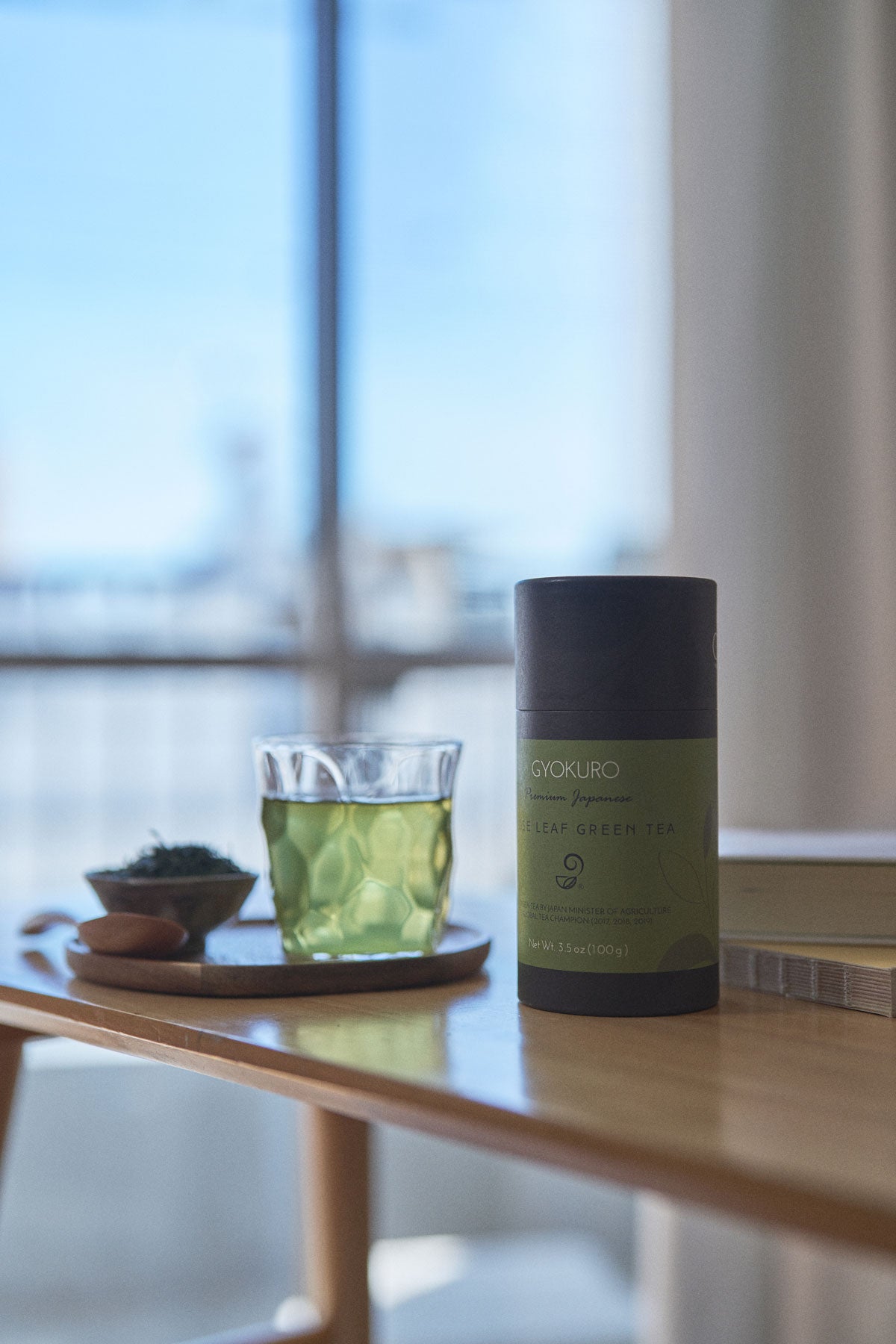
Gyokuro, also known as "jade dew" or "jewel dew tea," is a premium Japanese green tea shaded from the sun for 20 days using specially made mats, a method that boosts caffeine levels and strengthens amino acids to create a sweeter, richer flavor. This extended shading process results in dark, mossy green leaves with an unmistakable aroma and a complex taste that is layered yet balanced. Cultivated by the Chagusaba method in nutrient-rich sugarcane soil and made from the Yabukita cultivar, this loose-leaf authentic Gyokuro is offered in a high-quality, air-tight paper tube canister (chyazutsu) to preserve its exceptional freshness and flavor. Each 3.5 oz (100g) full-size package steeps 30–40 cups, and a convenient single-serve sample is also available.

45 reviews

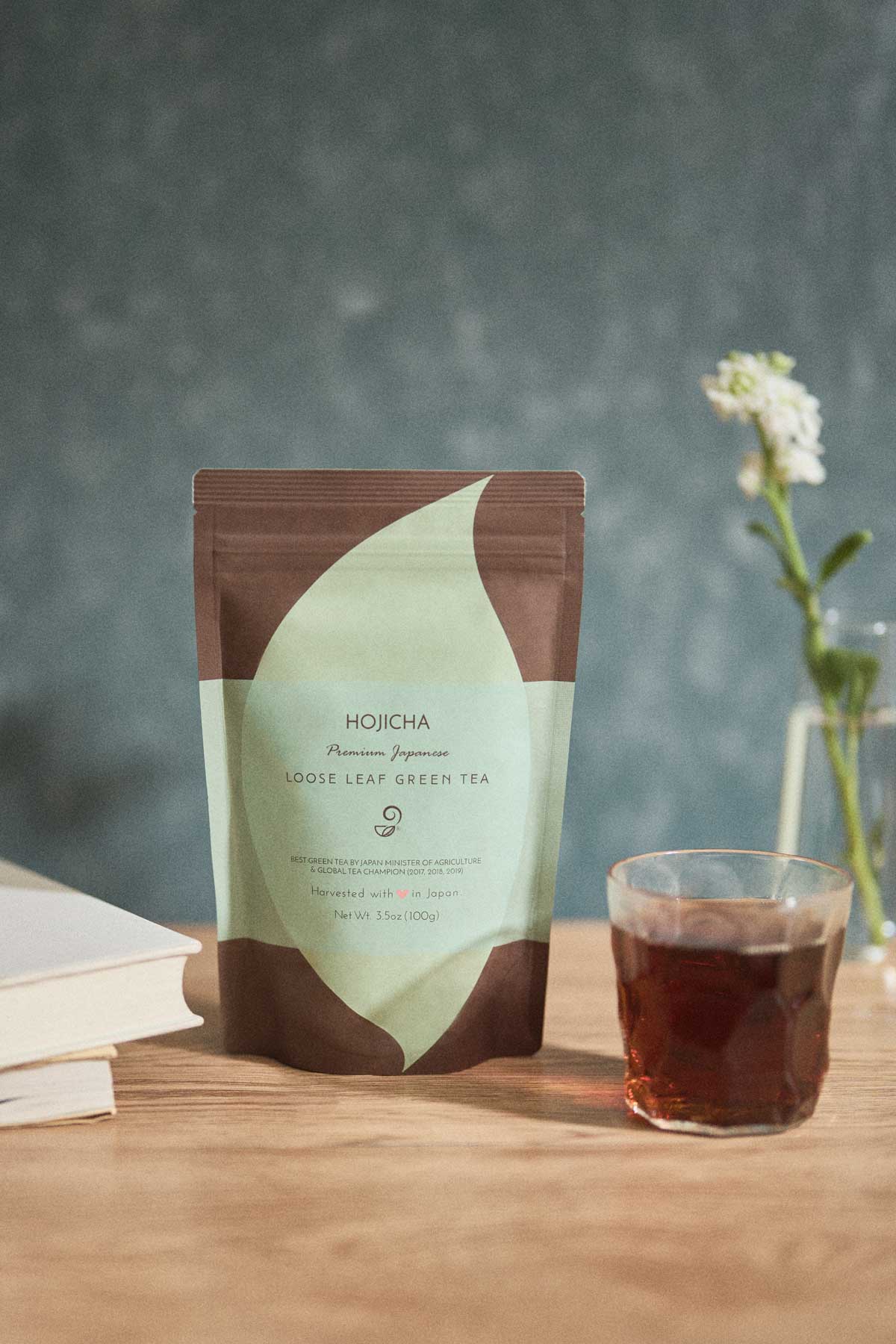
Hojicha - Roasted Green Tea

$25.00
Quick view

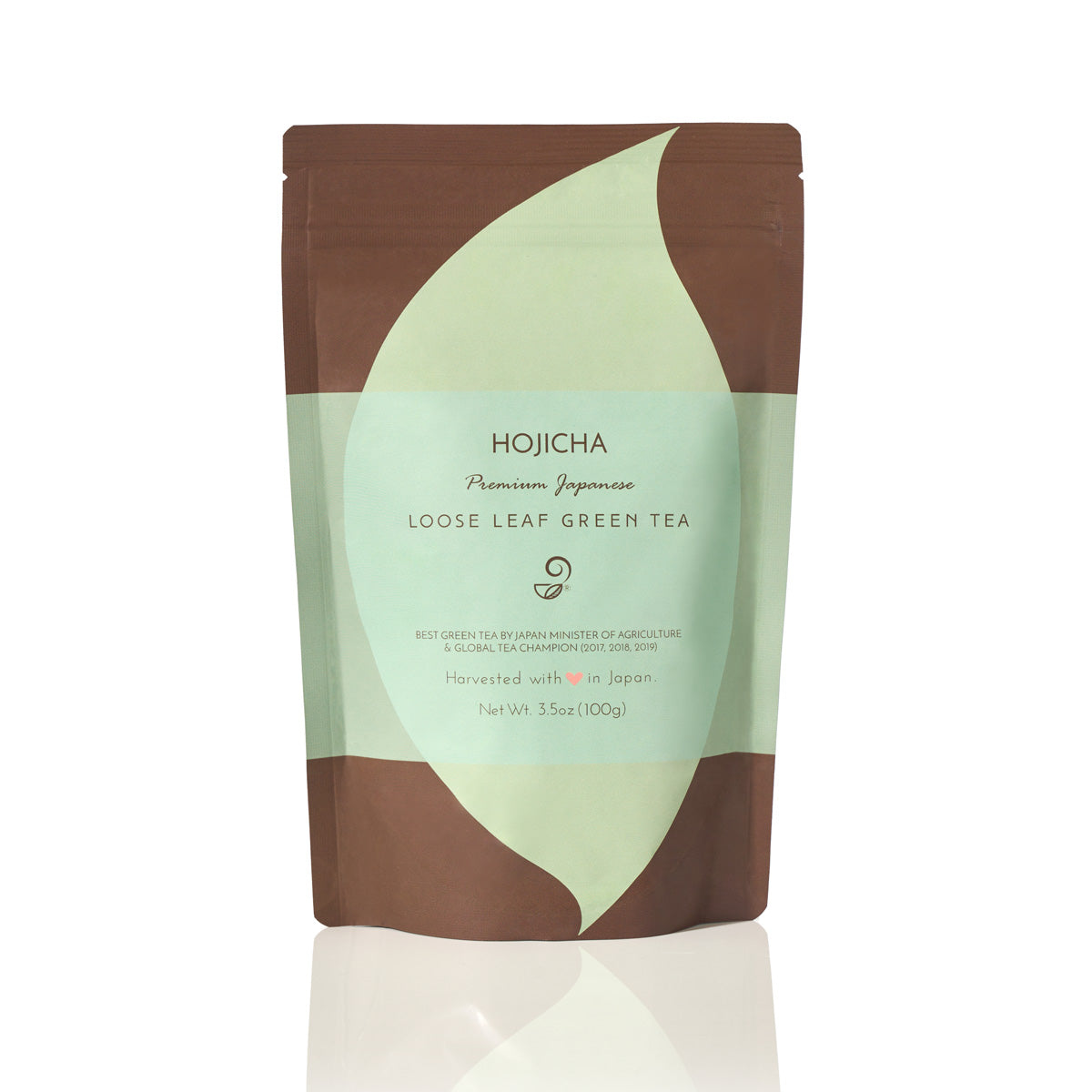
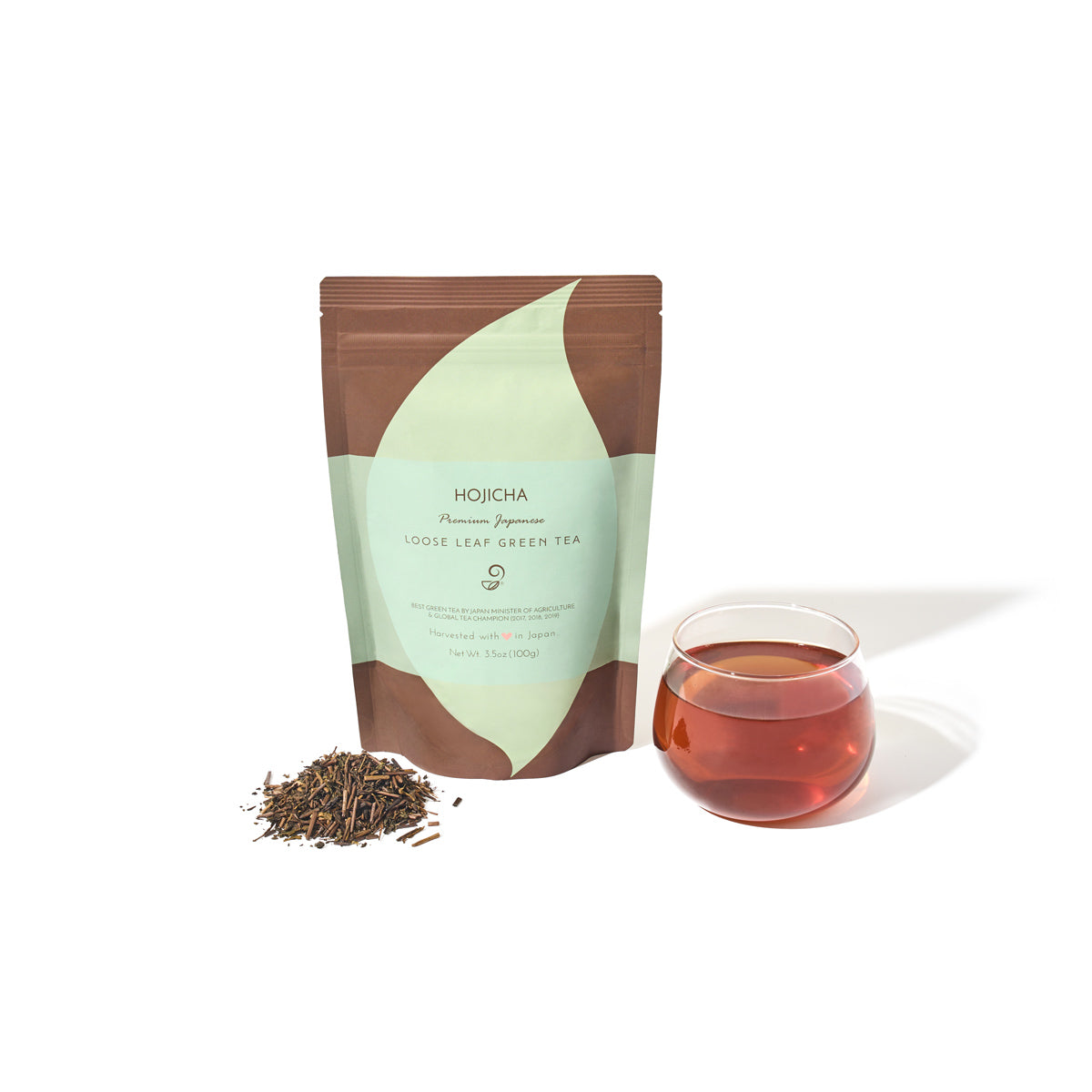
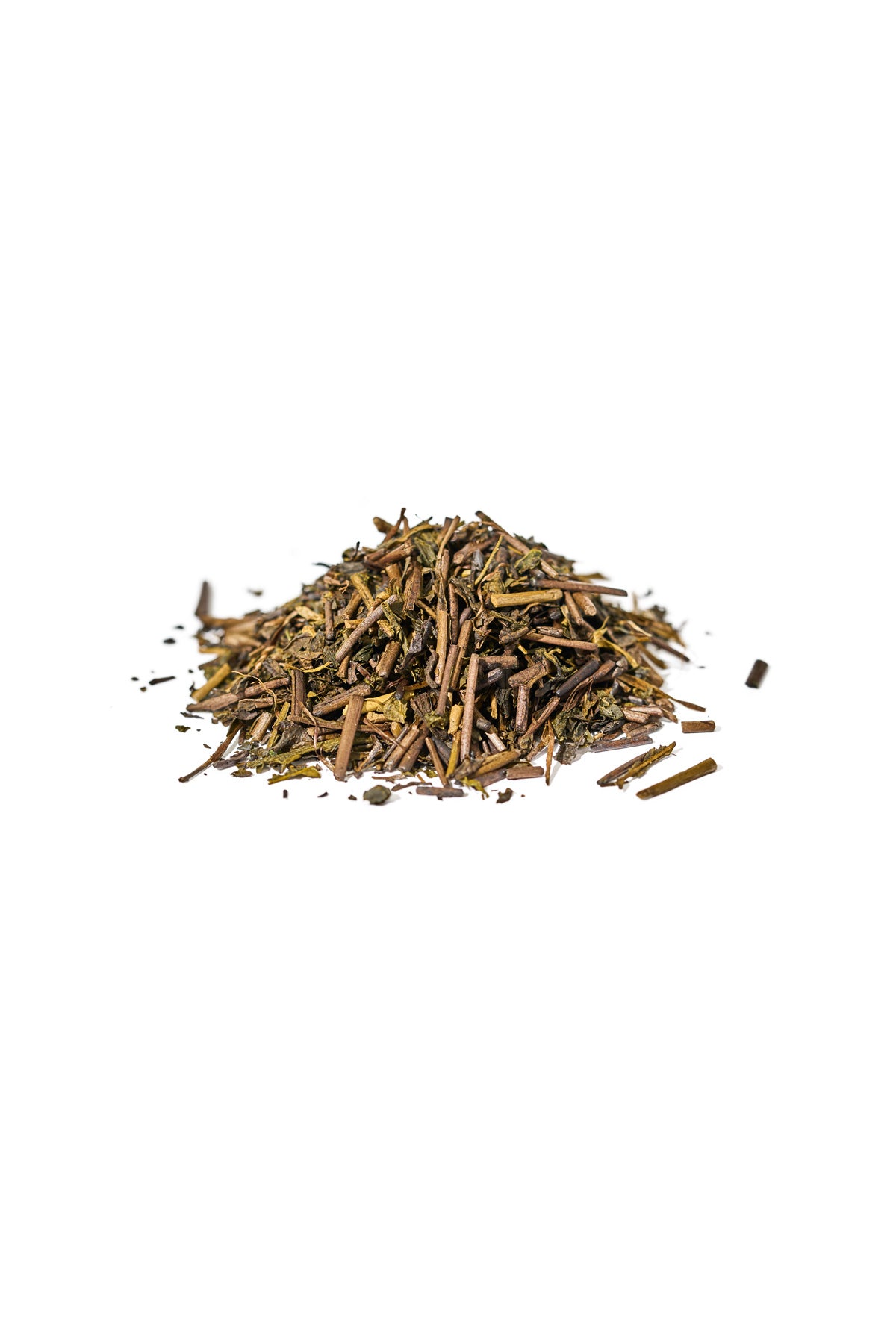
Our roasted green tea, known as hojicha (ほうじ茶), is crafted from freshly harvested premium green tea carefully roasted in porcelain over charcoal to maximize flavor while retaining more catechins than typical hojicha on the market. With lower caffeine and a smoother, less bitter taste compared to steamed green tea, it is an ideal choice for evening relaxation and is gentle enough for kids and pregnant women. Cultivated using the Chagusaba method in nutrient-rich sugarcane soil, this loose-leaf authentic Japanese roasted green tea, made from the Yabukita cultivar, also pairs beautifully with oily foods. Each eco-friendly resealable package contains 3.5 oz (100g) of tea, enough to steep 30–40 comforting cups.

42 reviews

Genmaicha - Green Tea with Roasted Brown Rice

$30.00
Quick view

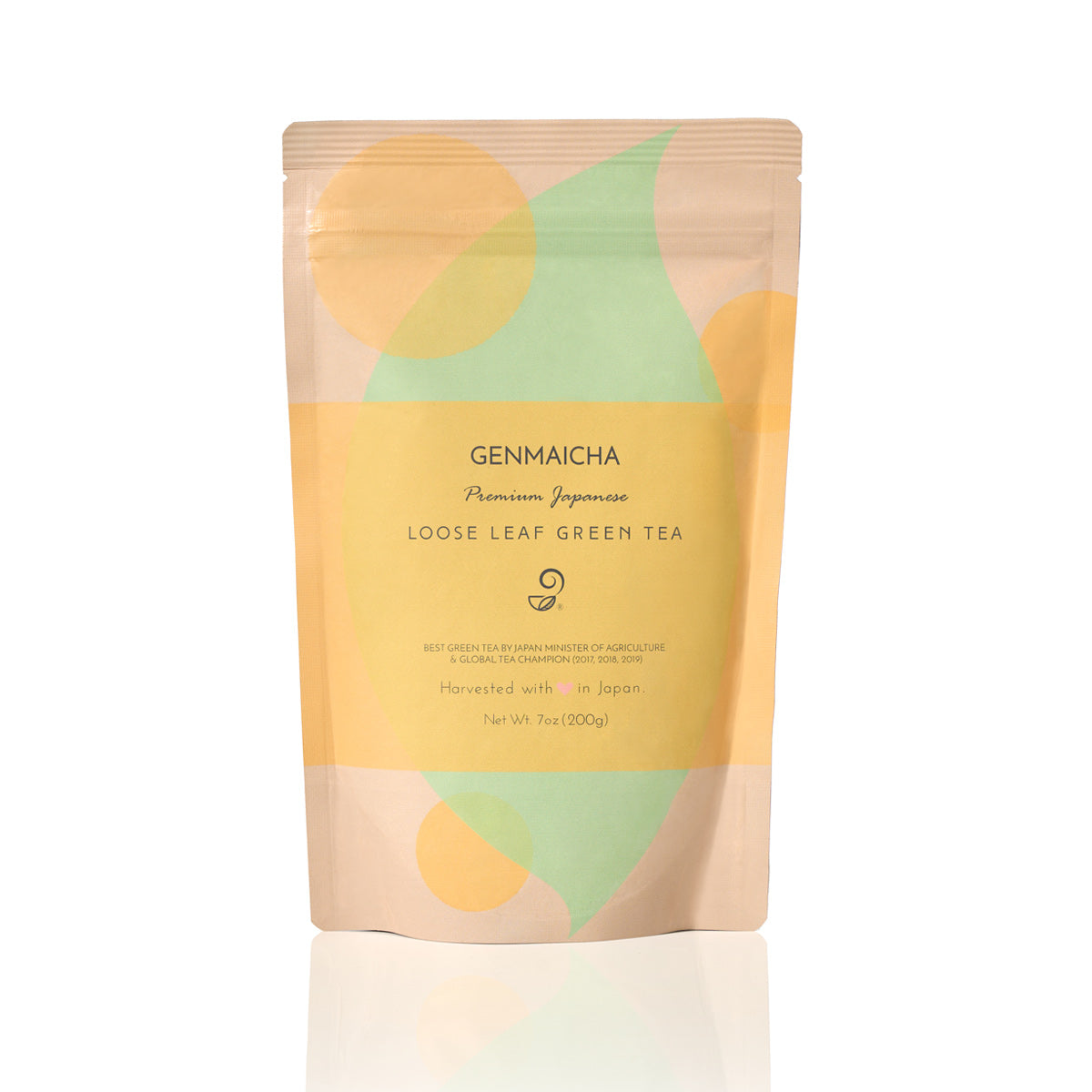
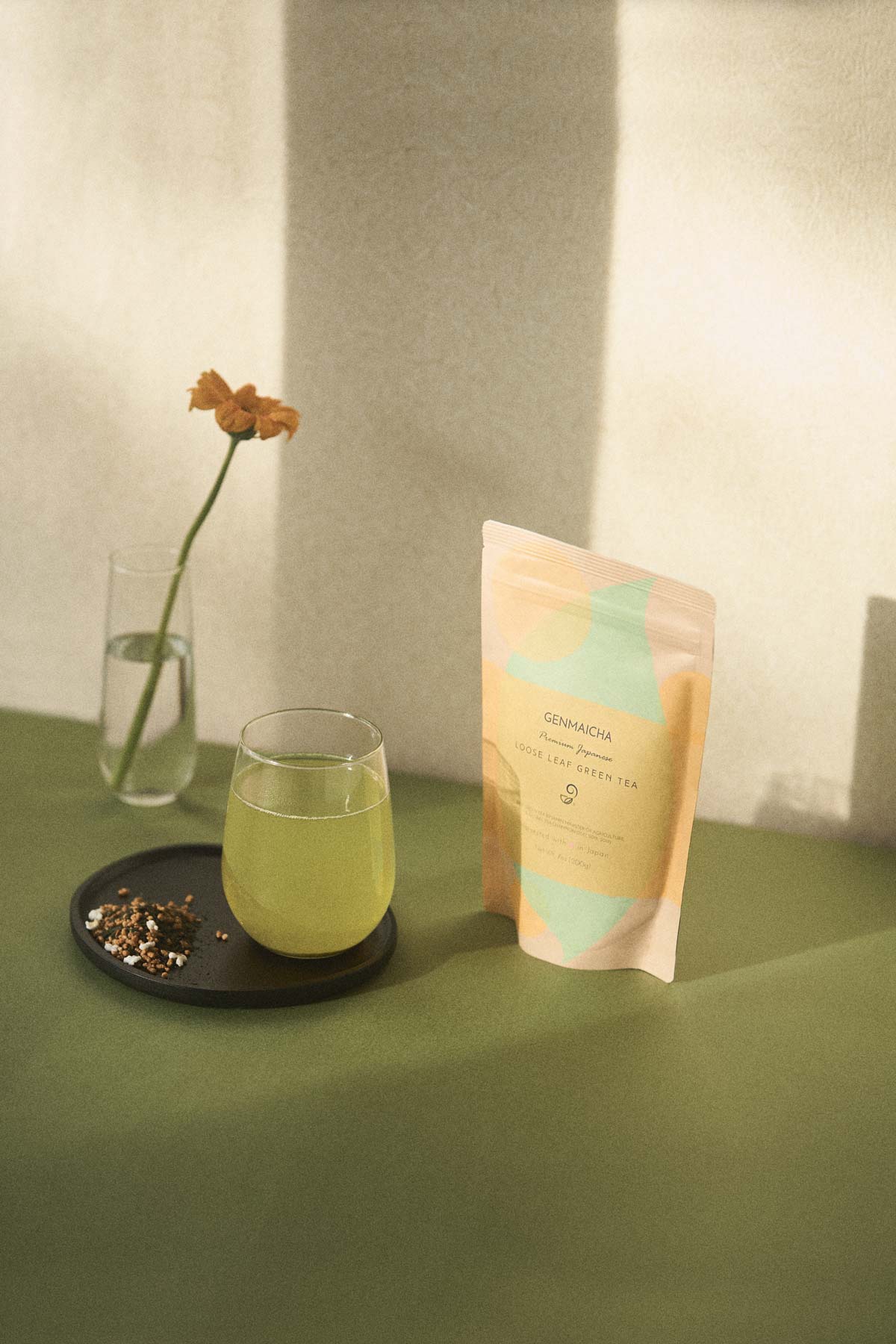
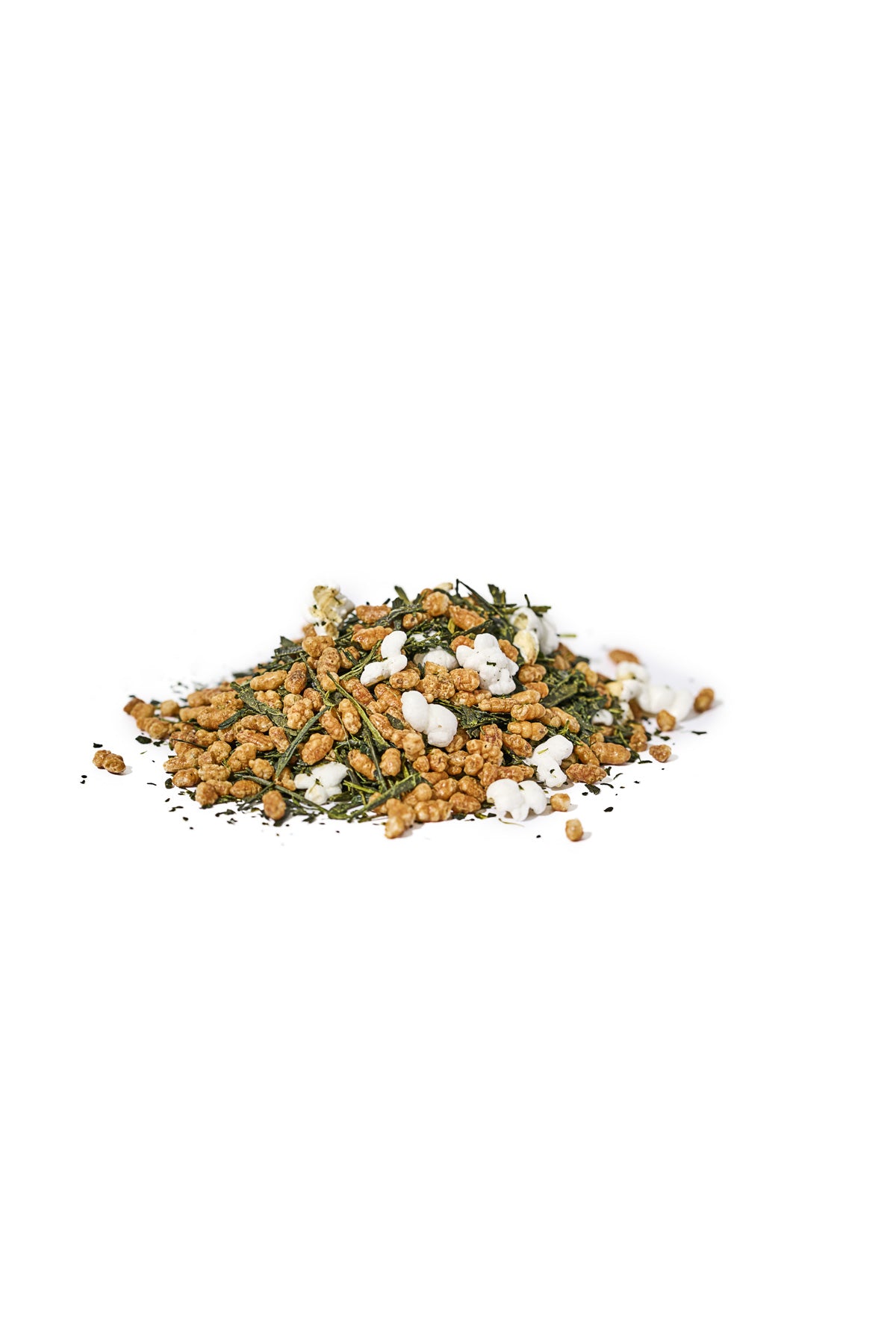
Our premium Japanese Genmaicha blends high-quality green tea with roasted popped brown rice (genmai 玄米), often nicknamed "popcorn tea" because the roasting process sounds like popcorn popping. Popular especially among the older generation in Japan for its mild flavor and lower caffeine content, this tea is easier on the stomach while still offering a rich, comforting taste. The brown rice used is premium Japanese mochi-gome (もち米) sticky rice, enhancing the tea’s nutty, aromatic profile. Made from Fukamushi Sencha and cultivated using the Chagusaba method in nutrient-rich sugarcane soil, this Genmaicha features the Yabukita cultivar and comes in a 7.0 oz (200g) eco-friendly resealable package, enough to steep 50–60 cups.


Related Articles You May Be Interested

Samurai and Tea
Brief History of Japanese Green Tea: A Cup Full of History and Mystery
30 Surprising History About Japanese Green Tea You (Probably) Didn't Know
Japanese Tea Ceremony: What Not To Do
Major Japanese Tea Manufacturers in 2025 and the Best Sellers

Get Free Bonus Books

Join Green Tea Club

Sign up for free to the Green Tea Club to get advice and exclusive articles about how to choose Japanese Tea, and tips, tricks, and recipes for enjoying Japanese tea.

Unsubscribe anytime. It’s free!

About the author

Kei Nishida

Kei Nishida

Author, CEO Dream of Japan

info@japanesegreenteain.com

Certification: PMP, BS in Computer Science

Education: Western Washington University

Kei Nishida is a passionate Japanese green tea connoisseur, writer, and the founder and CEO of Japanese Green Tea Co., a Dream of Japan Company.

Driven by a deep desire to share the rich flavors of his homeland, he established the only company that sources premium tea grown in nutrient-rich sugarcane soil—earning multiple Global Tea Champion awards.

Expanding his mission of introducing Japan’s finest to the world, Kei pioneered the launch of the first-ever Sumiyaki charcoal-roasted coffee through Japanese Coffee Co. He also brought the artistry of traditional Japanese craftsmanship to the global market by making katana-style handmade knives—crafted by a renowned katana maker—available outside Japan for the first time through Japanese Knife Co.

Kei’s journey continues as he uncovers and shares Japan’s hidden treasures with the world.

Learn more about Kei Nishida

Related Posts

The Story Behind Our Booth Backdrop: Craftsmanship, Engineering, and Sacred Wood
Behind the Scenes – How We Made the Event Booth & Backdrop Using Sacred Wood

Discover how our one-of-a-kind event booth came to life—from Japanese Kōshi (格子) design and rare Port Orford Cedar to mo

Read More
Hojicha Banana Daifuku (Mochi): The Collaboration of Aromatic Roasted Tea and Richly Sweet Banana

Dive into the soft, chewy world of Hojicha Banana Daifuku—where toasted tea meets sweet banana in a cloud of fresh mochi

Read More
Ceremonial Matcha Gift Set HARIO and JPCo
The Art of Precision: HARIO Unveils the Definitive US-Exclusive Matcha Collection

✨Discover the secret behind Japan’s most coveted matcha — a US-exclusive precision ritual that could change how you brew

Read More
Leave a comment

Your email address will not be published..

Cart

Your cart is currently empty.

Start Shopping

Select options