Table of contents

Introduction
We're happy to share some fun news!
Rice Market in Washington, D.C. now carries some of our products on their shelves.
I'll let you discover which ones in person — shelf lineups grow and change over time, and finding them is part of the fun of a store like this.
The more I see of this place, the more I wish it were in my neighborhood. I simply love the taste of this store — and I mean their taste in everything: what they stock, how they display it, who they work with.
The owner has a design background —he ran a home furnishings store before opening the restaurant.
The restaurant came first, back in 2003, and the market grew out of it later.
Which explains a lot, if you ask me — when a chef's kitchen is choosing what goes on the grocery shelf downstairs, of course the ingredients are chef-class.
And the name?
"Rice"
It comes from the owner's childhood in Thailand — growing up with the scent of steamed jasmine rice in the household.
A store named after a memory of rice.
I like that more than I can explain.
Here's how I imagine having them nearby.
On a weekday, you stop in for a yuzu drink and some hot food for an easy dinner.
On the weekend, you take a cooking class upstairs, or meet friends at the restaurant.
A friend's party? You grab a good bottle of sake on the way.
That's not a store — that's a neighbor you're lucky to have.
So consider this article part introduction, part thank-you, and part personal travel wish list. Let me show you around.


About Rice — Three Floors of Pan-Asian Food Culture
First, a quick orientation: "Rice Market" is one part of a larger building simply called Rice, at 1608 14th Street NW in D.C.'s Logan Circle neighborhood.
Three floors, three different experiences:
- Lower level — Rice Market— a curated pan-Asian grocery (their words, and they've earned them). Thai pantry staples, fresh produce, ready-to-eat food, a Japanese wagyu counter, a resident sashimi importer, and what they say is D.C.'s largest Japanese sake selection. This is where you'll find our products!
- First floor — Rice Restaurant. The original. A Thai restaurant with a sushi counter that's been on 14th Street since 2003.
- Second floor — Rice Taste Kitchen. An intimate event space for cooking classes, omakase dinners, sake tastings, and winemaker visits. (More on this later — this floor is the reason I keep refreshing their Instagram.)
The story behind it is a good one:
The founder, Sak Pollert, grew up on a rice farm in northern Thailand.
On the restaurant's site, he writes about the scent of steaming jasmine sticky rice at 4 am in his family kitchen, and eating it for breakfast, lunch, dinner, and even dessert.
His mother had him cutting vegetables and making chili paste from the time he was a kid.
So when he named the place "Rice," he wasn't being minimal.
He was naming it after home.
Before the restaurant, he ran an Asian-inspired home furnishings store in D.C.
Keep that in mind for later — once you see photos of how this market is displayed, the design background explains everything.
The restaurant opened in 2003.
The market came in 2020.
The owners had been planning it before the pandemic, then opened it right in the middle of it, partly because D.C.'s Asian community had almost nowhere in the District to buy groceries.
And people were asking friends with cars to shop in Virginia.
One detail stuck with me:
Customers come in with an Instagram post of a dish, show the staff, and the staff walk them to the ingredients — like personal shoppers.
Then Sashimi DC, a fish importer working inside the market, joined in September 2024.
So what looks like one store from the street is really twenty-plus years of layering: restaurant, then market, then partners moving in.
I like that a lot.
It didn't appear overnight as a concept. It grew.
If you're in D.C., it's about a seven-minute walk from the U Street Metro station (Green and Yellow lines).
Here's the spot on Google Maps.

Rice Market (Lower Level)
If you've ever been to a department store in Tokyo, you know the basement food halls — everything lined up so beautifully it feels wrong to disturb the display.
Rice Market is something like that.
Every photo of this place shows that same kind of display.
And where I can judge the products — the sake and Japanese beer wall, the labels I recognize are genuinely good picks, not just pretty bottles.
The rest of the shelves, mostly Thai and pan-Asian pantry goods.
I'll admit, I know less well.
But the way it's all arranged, more like a boutique than a grocery store.
It tells me somebody there is choosing carefully.
And that's much harder than it sounds.
Grocery packaging is loud by nature.
Every label fighting every other label, different colors, different sizes, all designed by different companies.
Making all of that sit quietly together takes a real eye.
Remember the founder's home-furnishings store?
This is where that background shows.
Once I learned it, the whole store made sense.
I'm not the only one who noticed, either.
One Google reviewer called it an "amazingly chic market" and said it reminded her of Tokyo's food halls.
Exactly.
So — let me walk you through what's down here. Starting with the food you can eat right away.

The Ready-to-Eat Corner — From Onigiri to Green Curry
Let's start with the part of the market I'd hit first:
The food you can eat right away.
This is where you feel that Rice Market isn't a Japanese store — it's a pan-Asian one, and proudly so.
The whole building grew out of a Thai and pan-Asian restaurant that's been upstairs since 2003, and the market's food counter carries that DNA.
On the Thai side: green curry, pad see ew, pad thai from the hot food counter.
Judging by their Google reviews, people also keep coming back for the crispy red snapper — so that's on my list.
On the Japanese side: fresh onigiri made daily, usually landing in the case in the early afternoon — tuna poke, salmon teriyaki, kani with seaweed mayo, and a vegan option.
And the sushi takeout might be the quiet star; it shows up in their reviews more than almost anything else.
Grocery-store sushi is usually a gamble.
Grocery-store sushi with a dedicated sashimi importer working in the same room (more on Sashimi DC below) is a different conversation.
On Tuesdays and Fridays, there's a yakitori bento from ToriSumi.
Blake King, a Tokyo-trained yakitori chef who also runs omakase dinners on the second floor.
A proper yakitori bento as a grocery-store lunch.
D.C. people, I am so jealous.
And from the Korean side: AJM Kimchi by Ellen Lee.
A small-batch napa cabbage, cucumber, scallion, and daikon kimchi.
Ellen also teaches kimchi classes upstairs, which tells you something about how this place works:
The people making the food in the case are the same people teaching you to make it.
For dessert, Snow Crane ice cream — made with Maryland dairy, in seasonal Japanese flavors like kinako, hojicha, Okinawan sweet potato, and mugicha.
Japan, Thailand, Korea, all within a few steps of each other.
That's the counter.

Japanese Wagyu Beef Counter
Downstairs at the market, there's a counter selling Japanese A5 Wagyu. Two cuts, striploin and top round, sourced through a specialist called Wagyu Sommelier.
No reservation needed; you just walk in during market hours.
A quick word on what "Japanese Wagyu" actually means, because the label gets stretched a lot in the US.
True Japanese Wagyu (和牛) comes from a handful of specific cattle breeds raised entirely in Japan.
What you're paying for is the marbling — shimofuri (霜降り), literally "fallen frost," for the way the fat threads through the meat like frost on a window.
American and Australian "wagyu" usually comes from crossbred cattle; it can be good beef, but it's a different thing. A5 is the top of Japan's grading scale.
You can see it in their photos.
The vacuum-sealed cuts on their Instagram look like marble stone — white lacing all the way through.
And I love how they talk about cooking it.
From their own post: with meat like this, all you need is salt and pepper and a quick pan sear — a minute or two, to your liking. That's it.
That's real Japanese home wisdom, by the way.
When the ingredient is this good, the recipe's job is to stay out of the way.
Their photo of the result says the rest:
The seared wagyu slices over a bowl of rice from a black donabe (土鍋) clay pot, a little pile of green onion on top.
If that photo doesn't make you hungry, I can't help you.

Sashimi DC — Fish Flown In from Kyushu
Now, the part of this store I most want to see with my own eyes.
Inside the market, there's a resident partner called Sashimi DC — a specialty importer run by Keita Miyaki (宮木慧太) that brings sashimi-grade fish directly from Japan every week.
And they publish their entire supply chain.
The fish is processed on Monday in Kyushu (九州), flies from Fukuoka through Haneda to Dulles, and is in the case in DC within 24 to 48 hours of processing — available Wednesday through Sunday.
Most fish counters tell you "it's fresh." This one shows you the itinerary.
And the person behind it has one of my favorite backstories in this whole building.
Keita-san studied Japanese literature at the University of Tokyo, then international relations at Johns Hopkins, spent six years at the World Bank Group and two more at the Global Fund.
And then, in 2023, left all of that to import fish.
World Bank to fishmonger.
I don't know his reasons, and I won't guess.
But when someone with that resume decides the thing worth doing is to bring honest fish from Kyushu to Washington, DC, it tells you something about how seriously he takes it.
Suddenly, the published flight itineraries and the "here's what real tuna looks like" education make perfect sense.
That's a program evaluator's fish counter.
Two details made me sit up:
Never frozen. Their Nagasaki bluefin and salmon are aquacultured on controlled feed, which removes the parasite risk that normally forces sashimi fish to be super-frozen.
So it goes from Japan to the D.C. counter completely fresh.
That's rare anywhere outside Japan.
No CO treatment — ever. Here's one worth knowing even if you never visit D.C.
A lot of tuna sold in the US is treated with carbon monoxide to lock in a bright cherry-red color, long after the fish has stopped being that fresh.
Sashimi DC states plainly that they never use it — natural lean tuna (akami, 赤身) is a dark red-purple when freshly cut, not vivid pink.
If the tuna in front of you looks too perfect, that's the tell.
I appreciate a fish shop that teaches its customers what honest fish looks like.
The lineup: bluefin tuna from the Goto Islands (五島列島) of Nagasaki — akami, chutoro, otoro, and rarer cuts like the collar and cheek.
Uni (雲丹) and hotate scallops from Hokkaido, in season.
And one that made me smile.
Sasshu Salmon (薩州サーモン) from Kagoshima (鹿児島) — raised on mineral groundwater with feed that includes Chiran tea leaves.
Yes, salmon raised on tea, from one of Japan's great tea regions.
Of course, a tea person like me would notice that one.
And this is the only place outside Japan where you can get it.
A local food blog ran a reader letter about this counter — a Japanese customer calling it the best sashimi they'd had in the US, "and I can certify this as Japanese."
That's the kind of endorsement money can't buy.
Sashimi and sushi at home used to feel out of reach for most American kitchens.
It's getting closer every year — and that's exactly why a fish market that's this safe, this transparent, and this willing to teach matters.
If I lived in D.C., this counter alone would make me a regular.

D.C.'s Largest Japanese Sake Selection — and the Rest of the Wall
Now, the section I could write about all day.
Rice Market says it carries the largest selection of Japanese sake in Washington, D.C. — more than 100 bottles and cans.
And this isn't a pile-it-high liquor wall.
The selection is curated with two local sake specialists, Capital Sake and Sake District, which explains the range: Junmai, Ginjo, Daiginjo, nigori, namazake, sparkling, canned sake, even yuzushu (柚子酒) and umeshu (梅酒).
The names I recognized on their list made me nod.
Dassai (獺祭). Hakkaisan (八海山). Kubota (久保田). Born (梵).
Alongside them, American craft sake like Brooklyn Kura.
That mix — the famous Japanese houses and the new American brewers side by side — is exactly what a good sake shop in 2026 should look like.
The beer shelf holds its own, too.
On their shelves you can pick out Hitachino Nest (the owl label), Kyoto Beer, and Sapporo.
And Asian classics like Singha and Tiger, all sitting in those plywood cubbies like a little library of bottles.
And here's one for the whisky people: this store hosts whisky nights.
Their Instagram shows a Suntory spotlight with Yamazaki (山崎) and Hakushu (白州) lined up — and another evening dedicated to Chichibu (秩父), with a vertical tasting of Ichiro's Malt.
If you know Japanese whisky, you know how hard it is even to see those bottles, let alone taste them side by side. Japanese whisky events, in a grocery store basement.
I'll say it again — I wish this store were my neighbor.
They also stock a serious non-alcoholic corner — Japanese teas, Calpico, Ramune, Boss Coffee, and modern non-alcoholic ferments.
So the "grab a bottle on the way to the party" plan works for everyone at the party.
Which is really the point of this whole wall.
Remember what I said in the beginning — a friend's party, a good bottle of sake on the way?
A wall like this, chosen by people who know what they're choosing, turns gift-buying from a chore into the best five minutes of your day.

Partner Winemakers
Here's a corner of Rice Market I didn't expect:
Wine from small independent producers, available exclusively at Rice Market in the D.C. area.
The lineup, from their site:
Goodfellow Family Cellars, Perkins Harter, and Violin Wine from Oregon.
Six Cloves Wines from Sonoma; Novella Wines from Virginia; and Keiko et Jérôme from Albi, France.
And look closer at the names, because I did.
Shiba Wichern Cellars in Oregon is Akiko Shiba and Christian Wichern.
Six Cloves in Sonoma is Sonoe Hirabayashi.
Keiko et Jérôme in France are Keiko Araki and Jérôme Deleuze.
Three of these producers have Japanese winemakers at the helm.
Running a wine brand myself, I know how rare it still is to see Japanese names on winery labels outside Japan.
Finding three of them on one store's exclusive list — that's not a coincidence; that's a point of view.
Someone at Rice Market went looking.
The winemakers actually show up, too.
The market hosts "Meet the Winemaker" tastings upstairs at the Taste Kitchen.
And one of the partner wines (the Shiba Wichern Auxerrois) is poured at the first-floor restaurant.
Bottle downstairs, glass upstairs, Winemaker in person a few times a year.
That's a complete little wine ecosystem in one building.

Pantry, Cookbooks, and Ceramics — the Gift Floor in Disguise
The rest of the market is pantry shelves, cookbooks, and ceramics.
And this is where that Google reviewer I quoted earlier gave me the best framing:
She treats it as her go-to for host gifts. Housewares, books, cards, beautiful little things.
A grocery store that doubles as a gift shop, because everything in it was chosen like a gift.
The pantry covers Thai, Japanese, Korean, and Chinese staples—curry pastes, noodles, sauces, and condiments.
Plus its own ready-to-cook packs: pre-portioned Thai noodle kits and curry pastes you add your own protein and vegetables to.
Dinner in ten minutes, from a store that also teaches the from-scratch version upstairs.
I respect a place that gives you both doors.
Two details I want to point out:
- Small bags of rice. The same reviewer mentioned being thrilled that Rice Market carries small rice bags — because she lives in D.C. with limited cabinet space, and most Asian markets only sell 10-pounders. Such a small thing. Such a considerate thing. A store named Rice is thinking about how much rice actually fits in a city apartment.
- The cookbook shelf. Their collection spans Thai, Japanese, Korean, Vietnamese, Chinese, and Lao cooking, plus books on fermentation, sake, and seafood. A grocery store that sells you the ingredients and the education is quietly telling you what it believes: that you can cook this.
And then the ceramics. Sake ware — ochoko (お猪口) cups and tokkuri (徳利) flasks.
Tea ware — chawan (茶碗) bowls, chasen (茶筅) whisks, full matcha kits. Chopsticks, rice paddles, bamboo steamers, bento boxes.
Which means — and I only realized this as I wrote it — you could walk in for matcha and walk out with the bowl, and the whisk to prepare it properly.
Everything you need for a real bowl of matcha, in one basement in Logan Circle.

Rice Restaurant (1st Floor)
The floor that started it all.
Rice Restaurant has been on 14th Street since 2003.
A minimalist Thai dining room that helped turn this stretch of 14th Street into the neighborhood it is now.
The menu is Thai at its heart — curries, wok noodles, the dishes from the founder's childhood — with a made-to-order sushi counter alongside.
Reviewers praise the papaya salad and the green curry, and there's a full bar with specialty cocktails.
One detail I love:
The restaurant pours the Shiba Wichern Auxerrois by the glass — one of the partner wines from the market downstairs.
Order a glass with dinner, and if you like it, the bottle is waiting one floor below. Try upstairs, buy downstairs. More stores should work this way.
I'll keep this section short: a restaurant deserves to be judged at the table, not from a menu.
This floor sits at the top of my list — and once I've had that green curry, I'll report back properly.
Rice Taste Kitchen (2nd Floor) — The Reason I Keep Refreshing Their Instagram
Up on the second floor is an intimate event space called the Taste Kitchen.
Cooking classes, omakase dinners, sake tastings, winemaker visits.
Limited seats at every event, over a hundred events held since 2024, and a rotating cast of chefs, brewers, and makers.
This floor is what turns Rice from a great store into something I haven't quite seen anywhere else.
Plenty of stores sell you good ingredients.
This one walks you upstairs and shows you what they can become.

What Keeps Popping Up on My Feed
Let me show you why I keep refreshing their Instagram.
Here's a single recent month upstairs at the Taste Kitchen:
A fermentation dinner built around koji (麹) with a Michelin-starred chef and sake pairings.
A pop-up dinner called "Food, Memory, Migration."
A bao bun class with braised pork belly.
A hand-pulled noodles class featuring Taiwanese-style braised beef.
A cookie, coffee, and matcha pop-up.
And to close out the month — Texas BBQ with summer cocktails from the bar team at Moon Rabbit.
Japan, China, Taiwan, and then straight-up American BBQ, all in one month, in one small kitchen above a grocery store.
And it's not a one-off month.
Scroll back, and you'll find matcha whisking classes, kimchi-making with dinner, miso-making, a Filipino food and bubble tea pop-up, Japanese milk bread, and a Mid-Autumn Festival.
The lineup changes constantly, but the pattern doesn't.
This is a place for people who love food, full stop — not one country's food.
The matcha and koji events actually made me stop and think.
Twenty years ago, a koji dinner or a matcha class in Washington, D.C. would have been a curiosity.
Now they sit on a calendar between bao buns and Texas BBQ like the most natural thing in the world.
Maybe these things aren't only "Japanese" anymore — maybe they're becoming something everyone shares, the way coffee belongs to no one country now.
I haven't decided how I feel about that. Mostly proud, I think.
And I'll be honest about which one got me:
The Japanese milk bread class — shokupan (食パン), taught hands-on, with take-home bread and a loaf pan.
And it only happens once a year.
If I lived in D.C., I would have fought someone for that seat.

The Recurring Series
Beyond the one-off pop-ups, a few series keep coming back, run by the same people whose products fill the shelves downstairs:
- Fish & Wine Pairing with Keita — the flagship. Keita-san of Sashimi DC pairs his Japan-flown fish with the partner winemakers' bottles. The fish from the counter downstairs, the wine from the wall downstairs, the man who imports it, in the room.
- ToriSumi Yakitori Omakase — Blake King's sixteen-course yakitori dinners over binchotan (備長炭) charcoal. This is the same chef whose bento shows up at the market counter twice a week. These sell out every single time.
- Capital Sake Sessions — sake workshops with Louie Anne Batac-Nguyen, one of the curators behind the market's hundred-bottle sake wall.
- Kimchi classes with Ellen Lee of AJM Kimchi — whose jars sit in the case downstairs.
- Meet the winemaker — the partner producers, in person, pouring their own bottles.
Notice the pattern?
Every teacher is somebody from the shelves.
The store and the school are the same organism.
How to Get a Seat
The honest warning: tickets are limited and sell out fast — sometimes within hours.
New events are announced on Instagram first (@ricemarketdc), then tickets go up on Ticketleap.
Some classes come around only once a year, so if you're in D.C. and something catches your eye, book it.
Don't do what I'd do, which is think about it overnight.
The rhythm of this floor: bread and cookie classes in the daytime, dinners and tastings at night.
A kitchen that teaches by day and celebrates by night.
And one thing stuck with me.
Recently they ran two extra classes as fundraisers — with all proceeds going to a local middle school.
A small second-floor kitchen, sold-out classes, and they're giving the proceeds away.
Great memories must keep coming out of that floor, and apparently not only for the people holding tickets.
Find Us at Rice Market
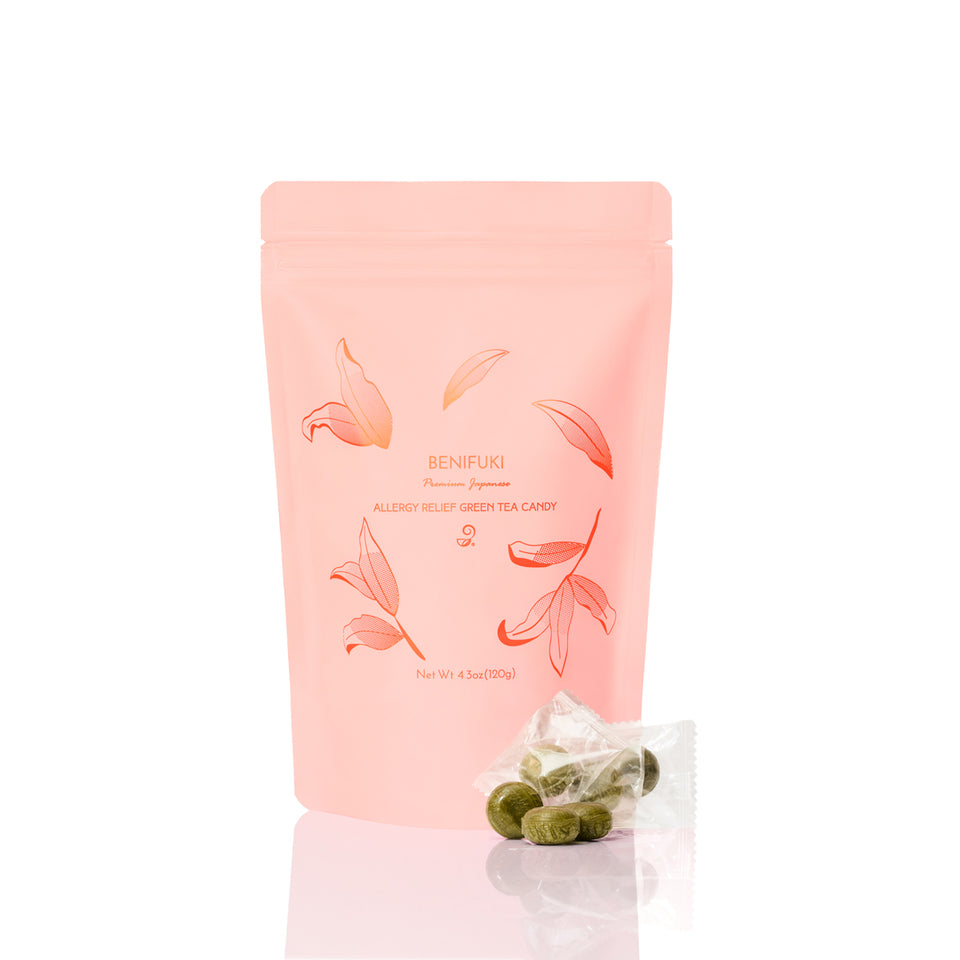
If you're in D.C., look for us on the tea shelf in the lower-level market.
They carry a nice range of matcha and Japanese teas, so you'll find us among good company — which is exactly where we like to be.
Which of our products, exactly?
I'll leave that as a shelf surprise.
Lineups grow and change, and I'd rather you go look than read a list here.
Ask the staff — they're the kind who walk you to the shelf.
And remember the ceramics corner: the chawan and chasen to prepare matcha properly are a few steps away in the same room.
One basement, complete tea setup.
Can't make it to Logan Circle?
Everything we make is in our online store, shipped directly from us.
And if you spot our products in the store, take a photo and tag us — it would genuinely make our day to see them on that shelf.
Thank You, Rice Market
Let me end where I started.
Thank you, Rice Market.
For putting our products on your shelves.
But there's a bigger reason this store matters to me, and it's worth saying plainly.
Stores like Rice Market are how a culture actually arrives in a neighborhood.
Not through restaurants alone — through the grocery shelf.
A market founded on a Thai childhood memory, stocked with Japanese fish, Korean kimchi, and Chinese cookbooks, staffed by people who walk you to the ingredient you saw on Instagram.
That's an immigrant's gift to a city.
Here is what we eat, here is how we make it, come in and talk.
The neighborhood gets richer for it — not in a grand way, just dinner by dinner, class by class, one bottle of sake carried to one friend's party.
I came to this country from Japan and built my business here, so maybe I notice this more than most.
When I see a store like Rice — a Thai founder, a Japanese fish importer who left the World Bank for this, a kimchi maker teaching classes upstairs — I see people doing the quiet work of making their food everyone's food.
Our products sitting on that shelf mean we get to be a small part of that work in D.C. That's the honor.
I'm based in California, and our business lives mostly online — which is exactly why a real shelf, in a real store, chosen by real curators, means so much.
And next time I'm anywhere near D.C., I know exactly how the visit goes:
Down the stairs first and say hello to our products on the shelf, stand in front of that fish case, pick out a bottle of sake and probably a rice bowl I don't need.
Then a green curry upstairs at the restaurant.
And if the timing works out, a seat at whatever the Taste Kitchen is doing that night.
Until then, I'm the neighbor waving from the other side of the country.
If you live in or around D.C., you should go.
Have lunch, take the class, buy the bottle.
The best way to thank a store like this is to use it the way it was built to be used.
Rice Market, thank you for having us.
See you soon.
Quick Reference: Rice Market at a Glance
| Address | 1608 14th Street NW, Washington, DC 20009 (Google Maps) |
| Neighborhood | Logan Circle / U Street Corridor |
| Floors | Lower level: Rice Market (grocery, wagyu, sashimi, sake) · 1st: Rice Restaurant · 2nd: Rice Taste Kitchen (events) |
| Phone | Market: (202) 234-2737 · Restaurant: (202) 234-2400 |
| Metro | U Street station (Green/Yellow lines), about a 7-minute walk |
| Website | ricedc.com |
| @ricemarketdc @keita_sashimi_dc (fish) | |
| Events | events.ticketleap.com/events/ricemarket |
| Our products there | On the shelves in the lower-level market — ask the staff, and tag us when you spot them |
Visit Rice Market
Rice Market
1608 14th Street NW
Washington, DC 20009
1-202-234-2737
Related products



Get Free Bonus Books

Sign up for free to the Green Tea Club to get advice and exclusive articles about how to choose Japanese Tea, and tips, tricks, and recipes for enjoying Japanese tea.
About the author
Kei Nishida
Author, CEO Dream of Japan
Certification: PMP, BS in Computer Science
Education: Western Washington University