Skip to content

Mother's Day Sale Ending Soon!

Treat her to something truly special.

0 days
0 hours
0 minutes
0 seconds
Shop Sale

Gyokuro vs Tencha – What are they and what are the differences?

What do you really know about Gyokuro and Tencha? A quick quiz!

In part, this is a test of what you really know about green tea production and some of the subtle yet important differences out there. Before we dive into the article’s topic, I want to present a quick question: What do you know about tencha? Do you know what the difference is between tencha and gyokuro? Have you even heard of tencha? Where, without giving a hint, does matcha come from? Chances are you have either come across of enjoyed gyokuro. And perhaps you understand some of the differences that make gyokuro unique. This article is a reply to some of these questions and a challenge for you to expand the world of tea that you currently enjoy. Let’s take a few moments to dive into gyokuro and tencha and find out what differences and similarities are out there! 

What is gyokuro?

Yes, gyokuro is that often higher priced yet darker green tea that leaves a brighter green look in your mug. While gyokuro tea comes from the same plant, camellia sinesis, as tencha and sencha, etc. it is often distinguished by the way the plants are altered pre-harvest. Approx. 3 weeks prior to the plucking of the leaves, the tea plants are covered to prevent most of the sunlight from reaching its leaves. Why? This process of blocking the sunlight alters the biochemical composition of the plants. Theanine moves from the root to the stem and leaves of the plants. Catechins normally would neutralize the bitterness that comes from theanine via sunlight, however, in gyokuro the theanine remains with its subsequent bitterness. Blocking the sunshine also produces dimethyl sulfite which cements the smell of seaweed found in gyokuro. Lastly, gyokuro’s color as noted above is particularly dark. This is because chlorophyll, which is normally limited by sunlight, is allowed to flourish as the tea plants are shaded.

Gyokuro leaves are then steamed and kneaded soon after the leaves are harvest. This process is replicated in the production of sencha. The kneading helps break down the cell walls of the original leaves and allows the leaves to be fused into water much easier.
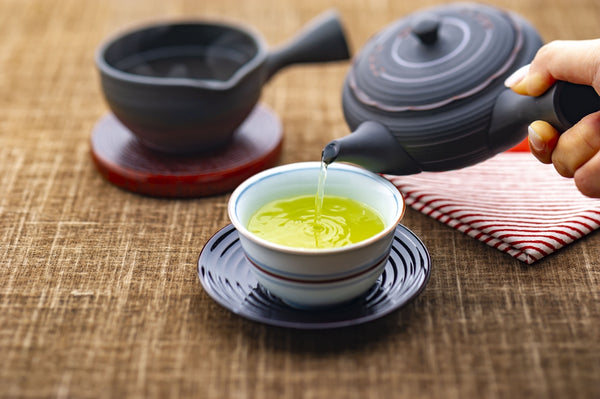
Hot tea

Tencha, I’ve never heard of that before.

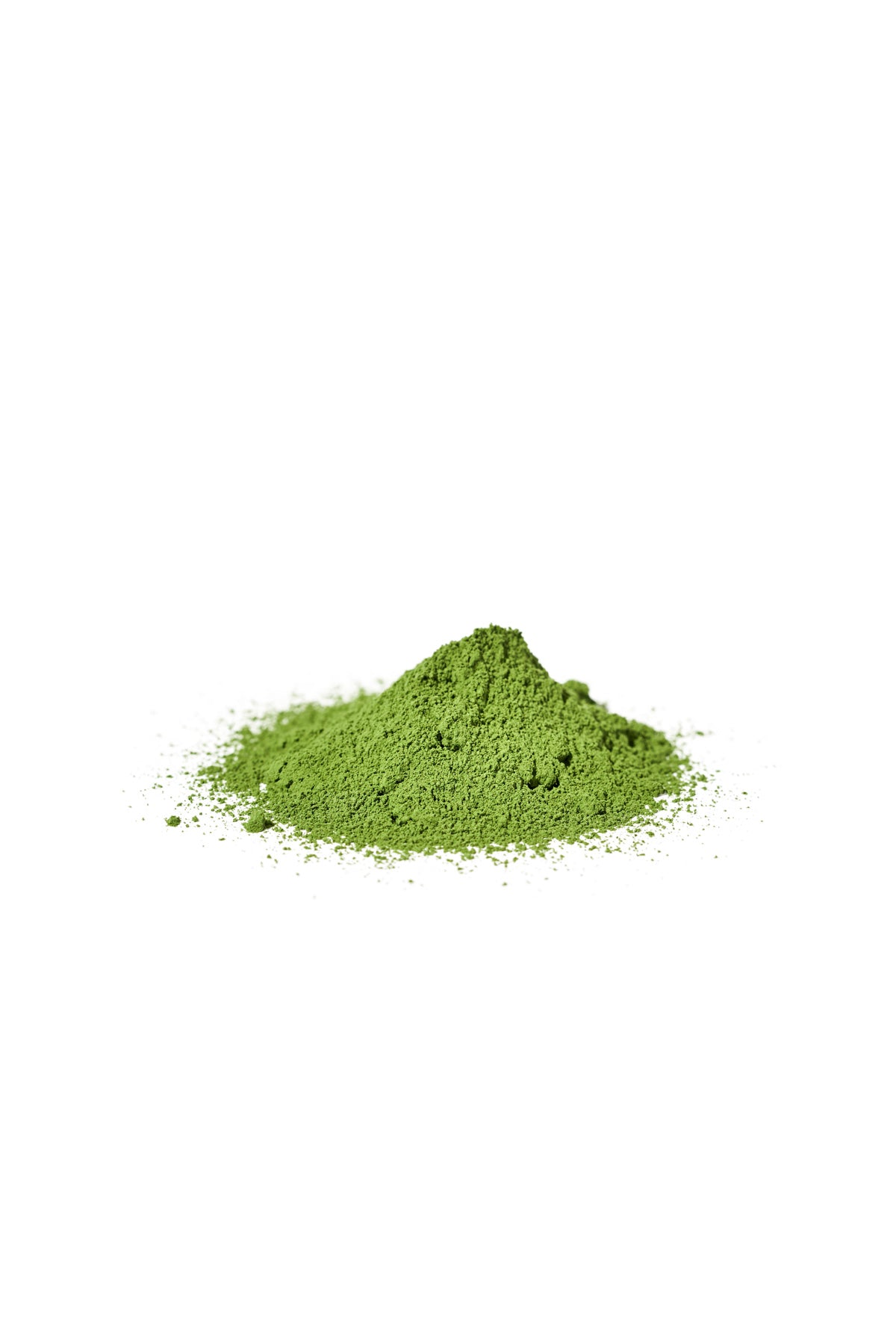
Tencha are the leaves used to making matcha. Ten means “mortar” and cha, of course, refers to “tea” (genmaicha, sencha, etc.). Tencha has a strong connection with gyokuro in both the way its grown and its flavor profile. In terms of growing, tencha is also shaded for approx. 3 weeks and then harvested. The theanine leaves are similar and help give both tencha and gyokuro the smooth and mellow taste. Once harvested, tencha leaves are stemmed like gyokuro. However, tencha leaves are then dried and not kneaded. This is primarily to ease the removal of steams and to help attain a flat leave for matcha production. If one were to make matcha out of the recently picked tencha leaves, the tencha is then de-stemmed and graded. This process includes deveining and destemming the leaves in order to ensure quality. The remaining leaves are graded and grounded slowly on a stone mill, which of course is where the name “matcha” is derived, meaning “ground tea”.

Can I brew tencha leaves?

Beyond the creation of matcha, tencha leaves can also be brewed. In fact, tencha maintains its freshness longer than matcha which may be a brewing consideration. Unfortunately, unlike gyokuro, it is not as easy to extract the tencha flavor profile. Higher grade and higher quality tencha must be selected. The color is pale green and echoes a similar gyokuro-style. Surprisingly is has a stark difference vs matcha. Oddly enough as well, tencha leaves are substantially lighter than gyokuro leaves. This means when steeping this type of tea, you may notice floating leaves, and its recommended you press those leaves down and perhaps add additional leaves. Additionally, tencha is not a tea ceremony tea. This may be, for some even more of a reason to try it out!

Yes, there's more to add to your tea collection!

We began with a series of questions and journeyed our way through two popular production teas. There are some quite unique similarities and differences between the two teas. If you are ever in Japan and see fields covered in semi see-through coverings then chances are it's one of these two teas. More immediately, next time you are in search of matcha or gyokuro, perhaps it may be time to pick up some tencha as well. The differences are noticeable and who knows, maybe these teas are simply an added bonus to your collection.

Buy Premium Gyokuro Tea


Related products
97 reviews

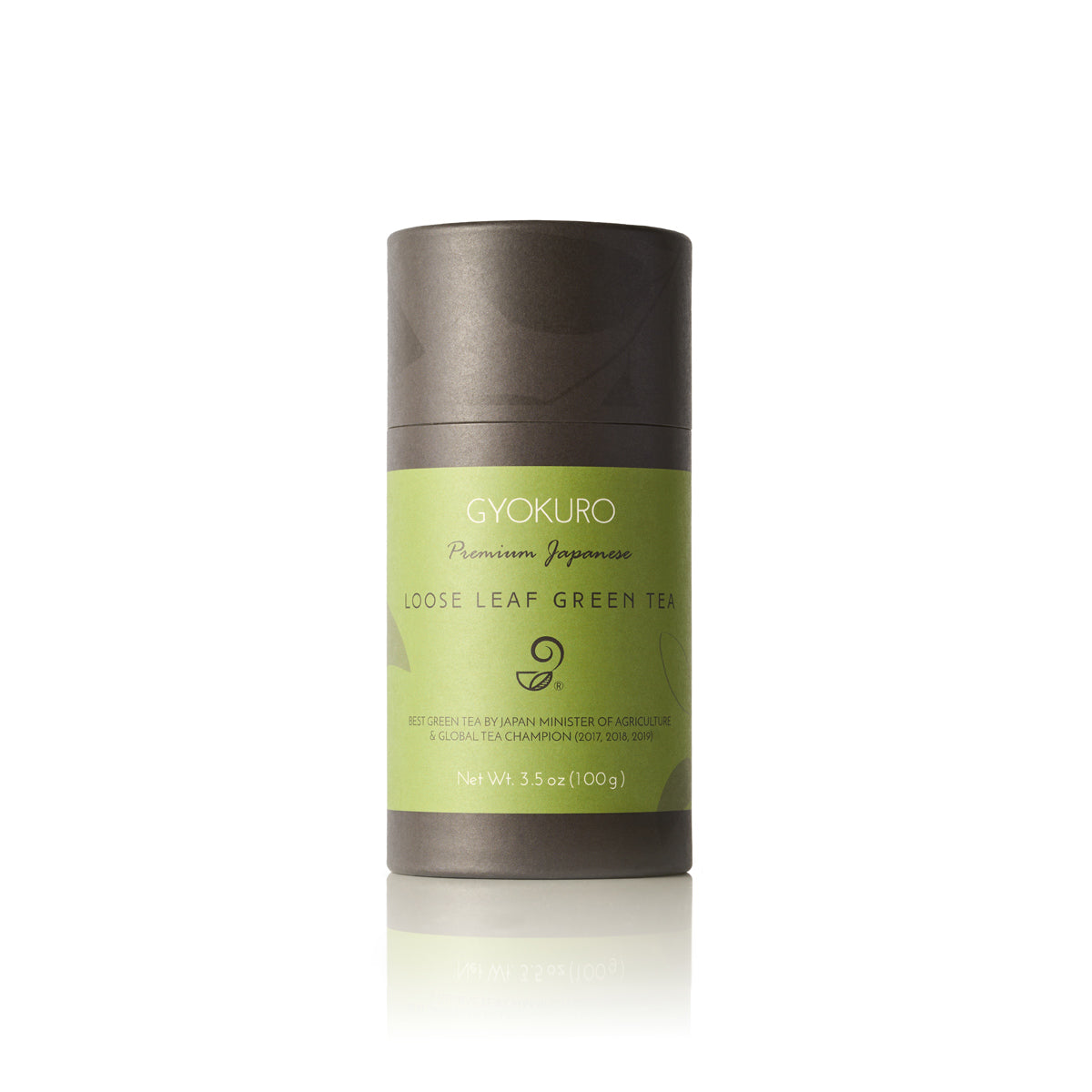
Gyokuro - Shaded Imperial Premium Green Tea

$65.00
Quick view

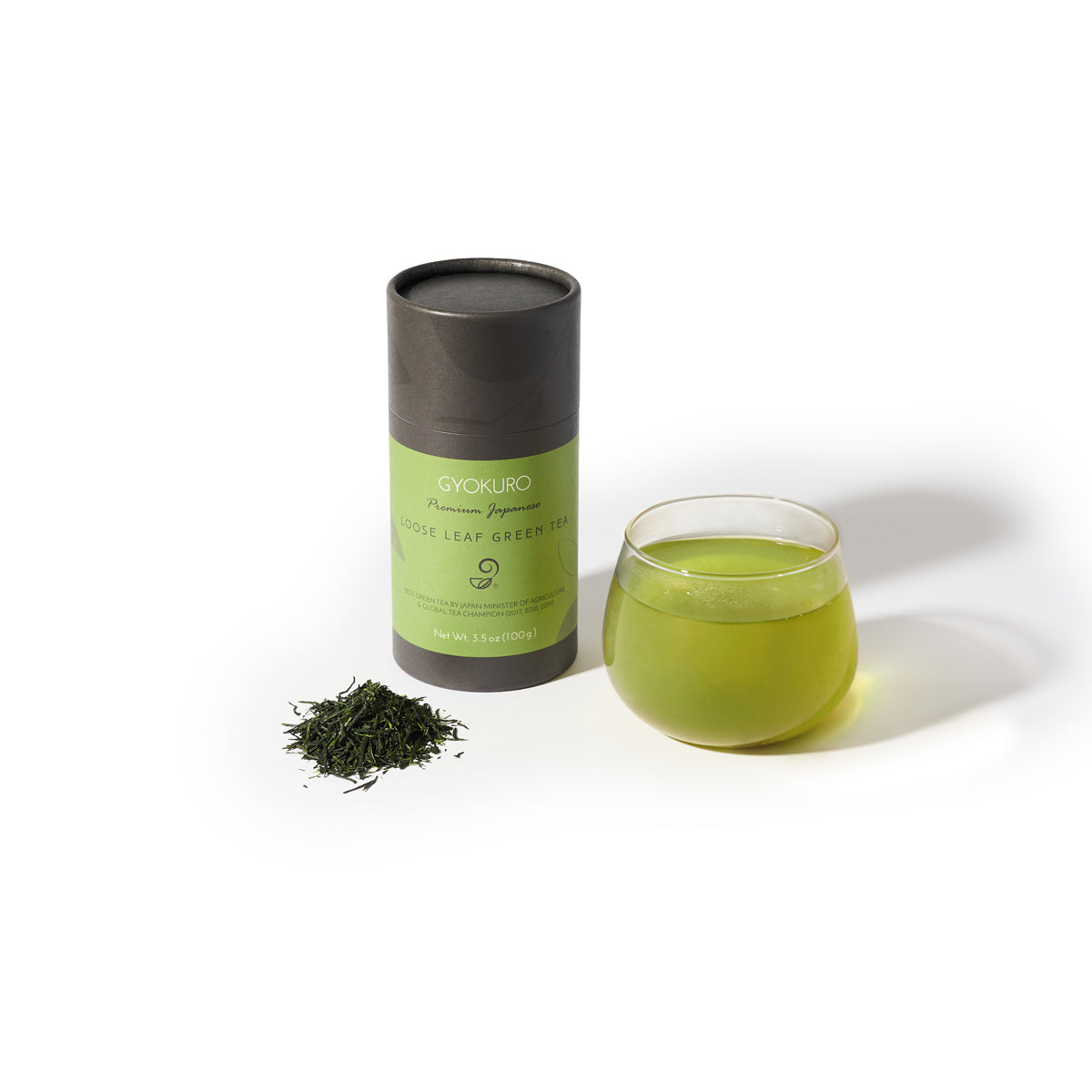
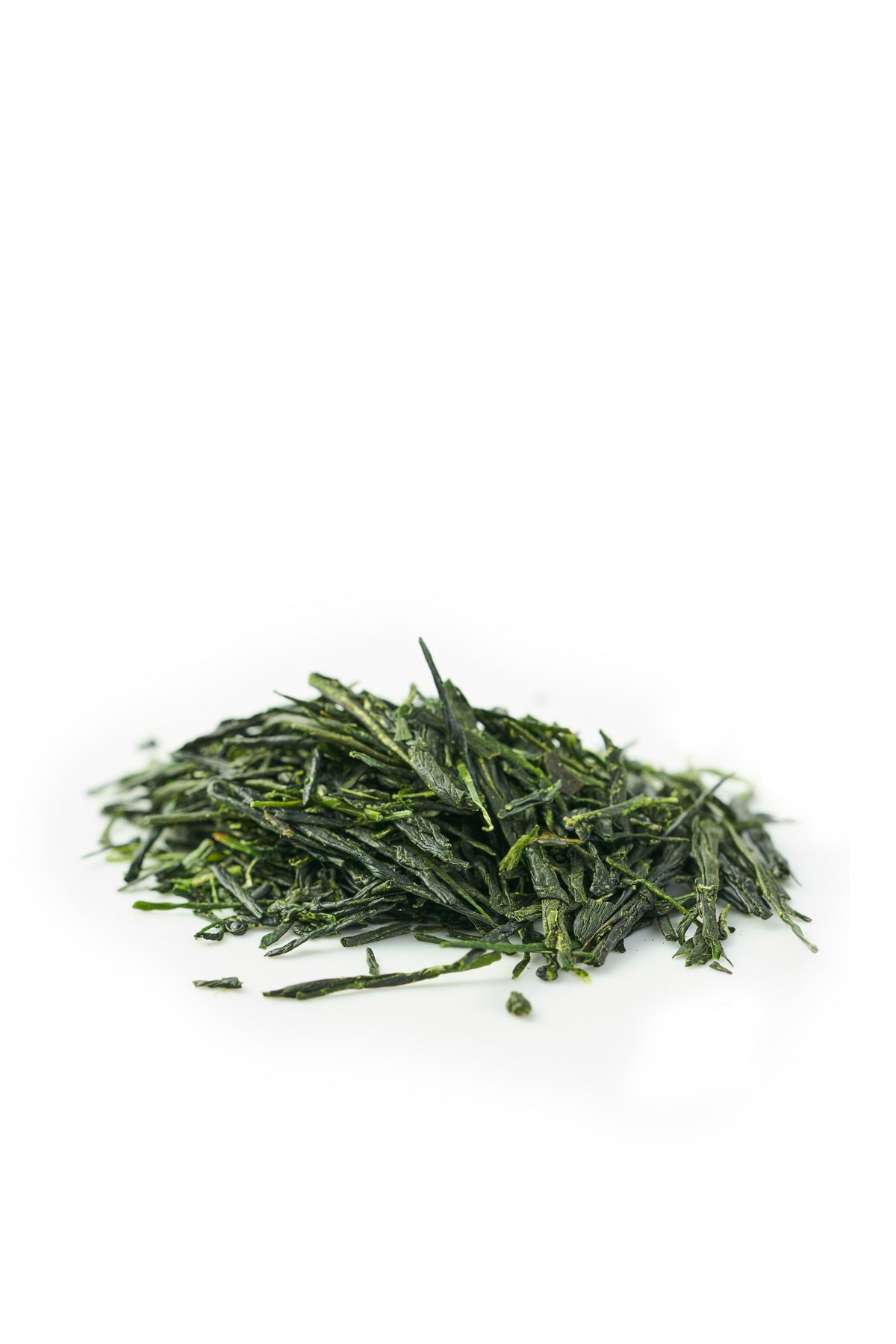
Gyokuro, also known as "jade dew" or "jewel dew tea," is a premium Japanese green tea shaded from the sun for 20 days using specially made mats, a method that boosts caffeine levels and strengthens amino acids to create a sweeter, richer flavor. This extended shading process results in dark, mossy green leaves with an unmistakable aroma and a complex taste that is layered yet balanced. Cultivated by the Chagusaba method in nutrient-rich sugarcane soil and made from the Yabukita cultivar, this loose-leaf authentic Gyokuro is offered in a high-quality, air-tight paper tube canister (chyazutsu) to preserve its exceptional freshness and flavor. Each 3.5 oz (100g) full-size package steeps 30–40 cups, and a convenient single-serve sample is also available.

4 reviews

The Covered Trio Gift Set - Ceremonial Matcha, Gyokuro, and Nozomi Japanese Green Tea Set Package
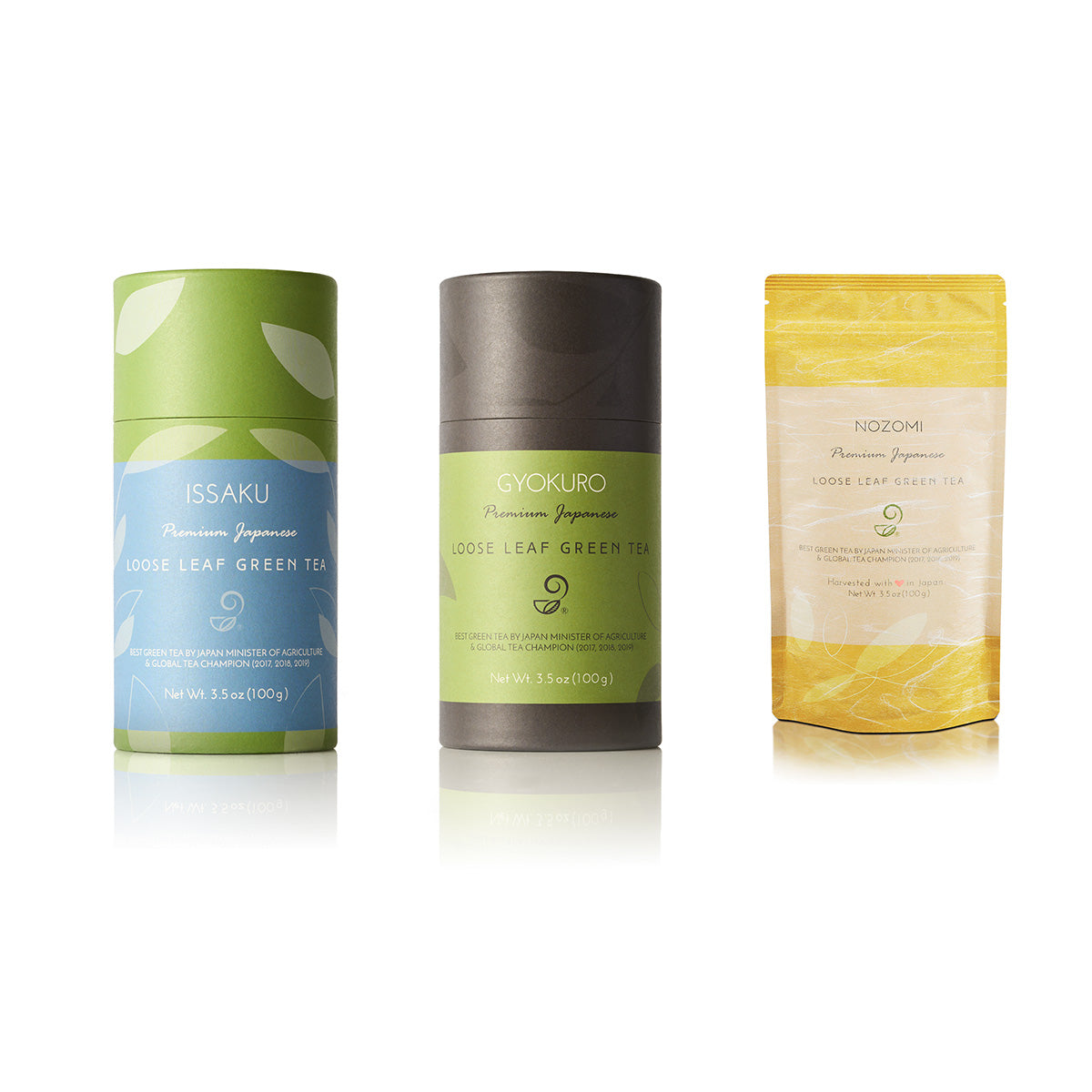
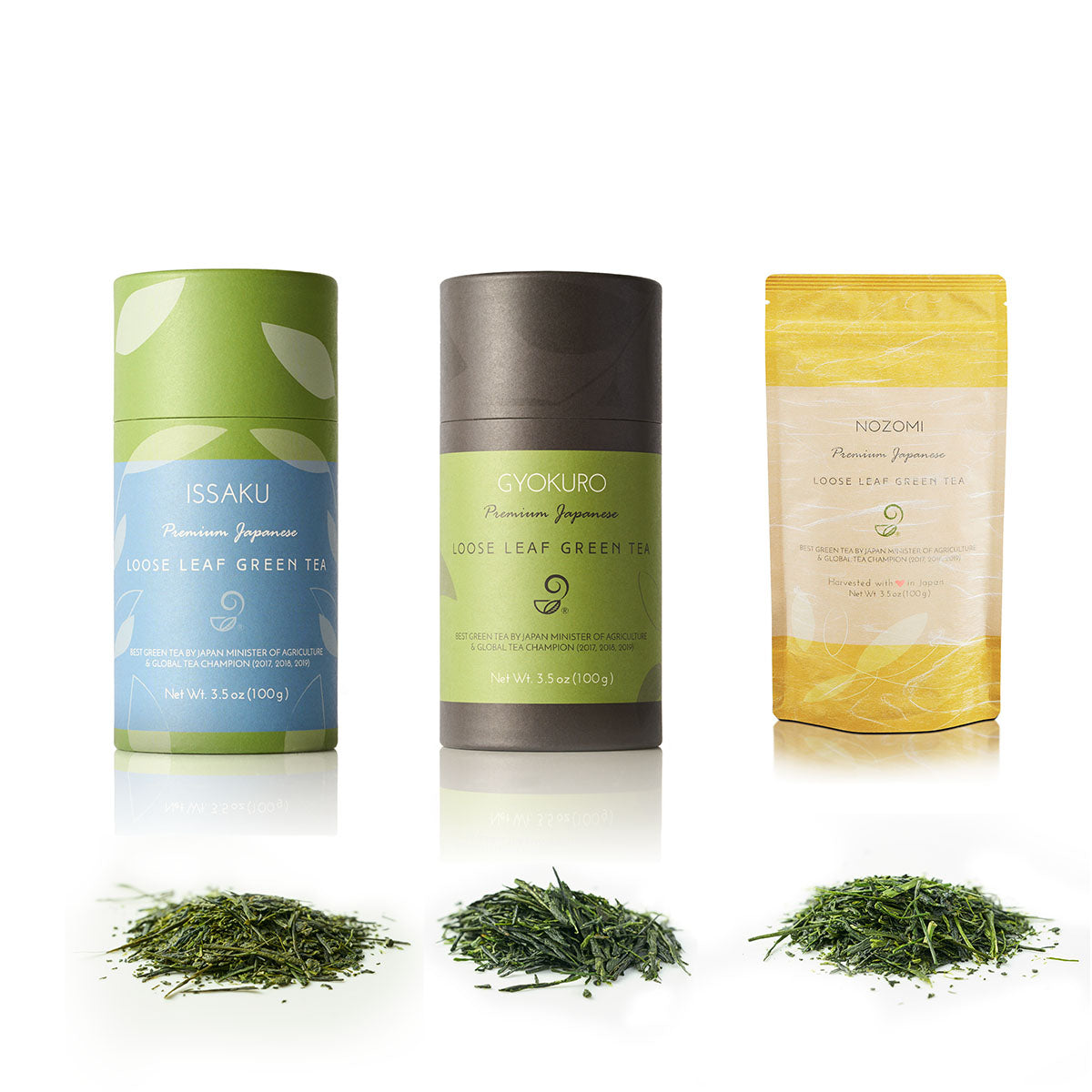
$143.00 $128.00
Quick view

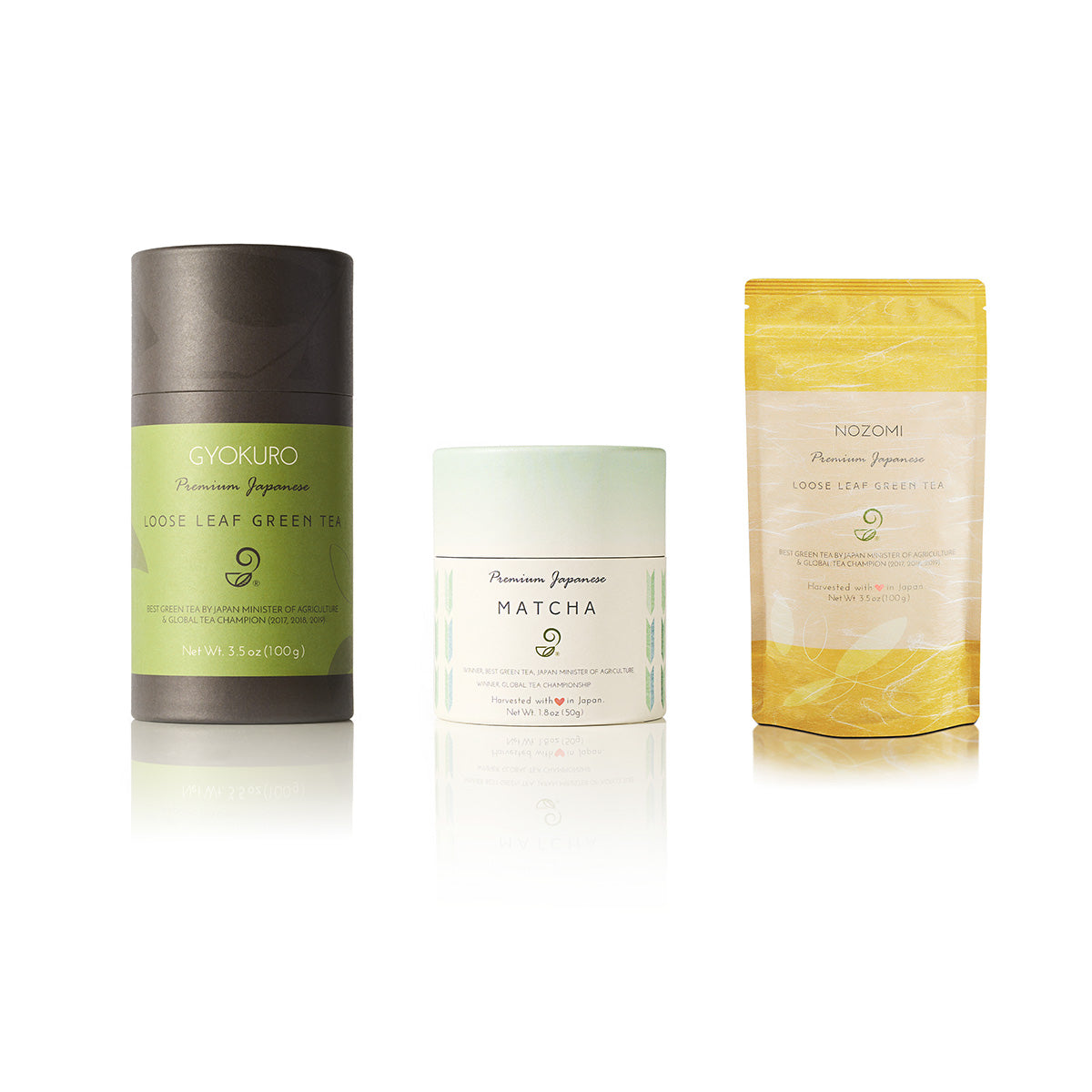
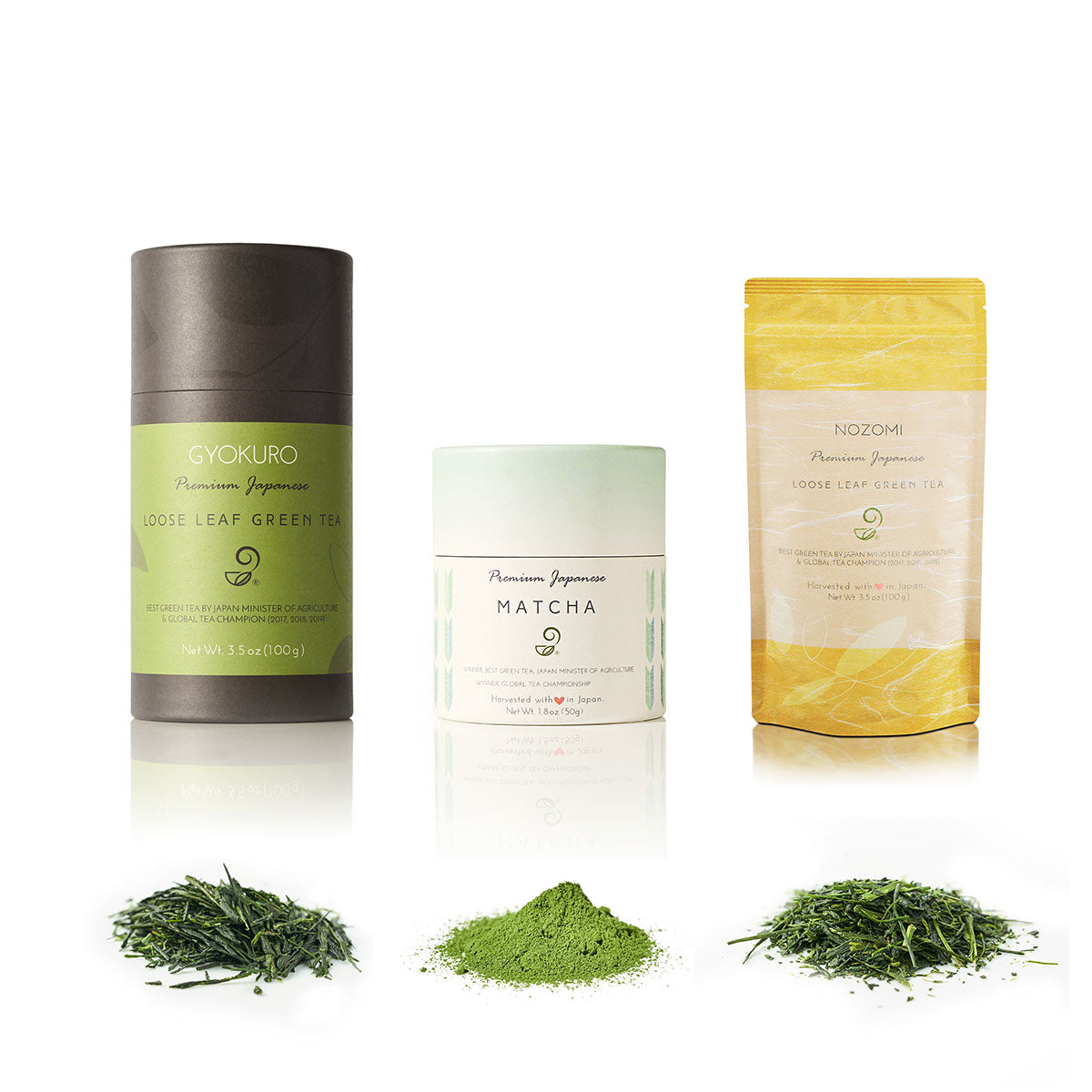
This tea set features three premium Japanese green teas, all cultivated in nutrient-rich sugarcane soil to enhance their flavor and natural sweetness. Gyokuro, a prized shaded green tea, is grown under special mats for 20 days to increase caffeine and amino acid levels, resulting in a rich, sweet taste and deep mossy green color. The set also includes a luxurious matcha, crafted from carefully shaded, hand-processed leaves and renowned for its smooth, aromatic flavor, developed in collaboration with researchers from Shizuoka University to maximize the benefits of the enriched soil. Completing the collection is Nozomi, a fine Kabuse-cha or "Covered Green Tea," where young tea leaves are gently shaded just before sprouting, producing a soft, refined flavor perfect for tea enthusiasts.

8 reviews

The Sencha Lover Gift Set - Premium Japanese Green Tea Set Package
$179.00 $159.99
Quick view

This tea set features three exceptional Japanese green teas, each crafted with care and traditional techniques. Issaku Reserve, a Global Tea Champion winner in 2017 and 2019, is a rare masterpiece created by Farm Master Mr. Arahata at Arahataen Green Tea Farm. Handpicked once a year from the first flush and processed with advanced methods, Issaku represents the highest-grade deep-steamed green tea, available only in limited quantities even in Japan.

The set also includes Gyokuro, a premium shaded green tea known for its rich, sweet flavor and deep mossy green color. Grown under special mats for 20 days to increase caffeine and amino acid levels, Gyokuro offers a layered, smooth taste unlike any other. Completing the collection is Nozomi, a fine Kabuse-cha, or "Covered Green Tea," carefully grown under nets to gently shade the leaves just before new sprouts emerge, resulting in a soft, rich, and refined flavor profile.

45 reviews

Hojicha - Roasted Green Tea

$25.00 $21.99
Quick view

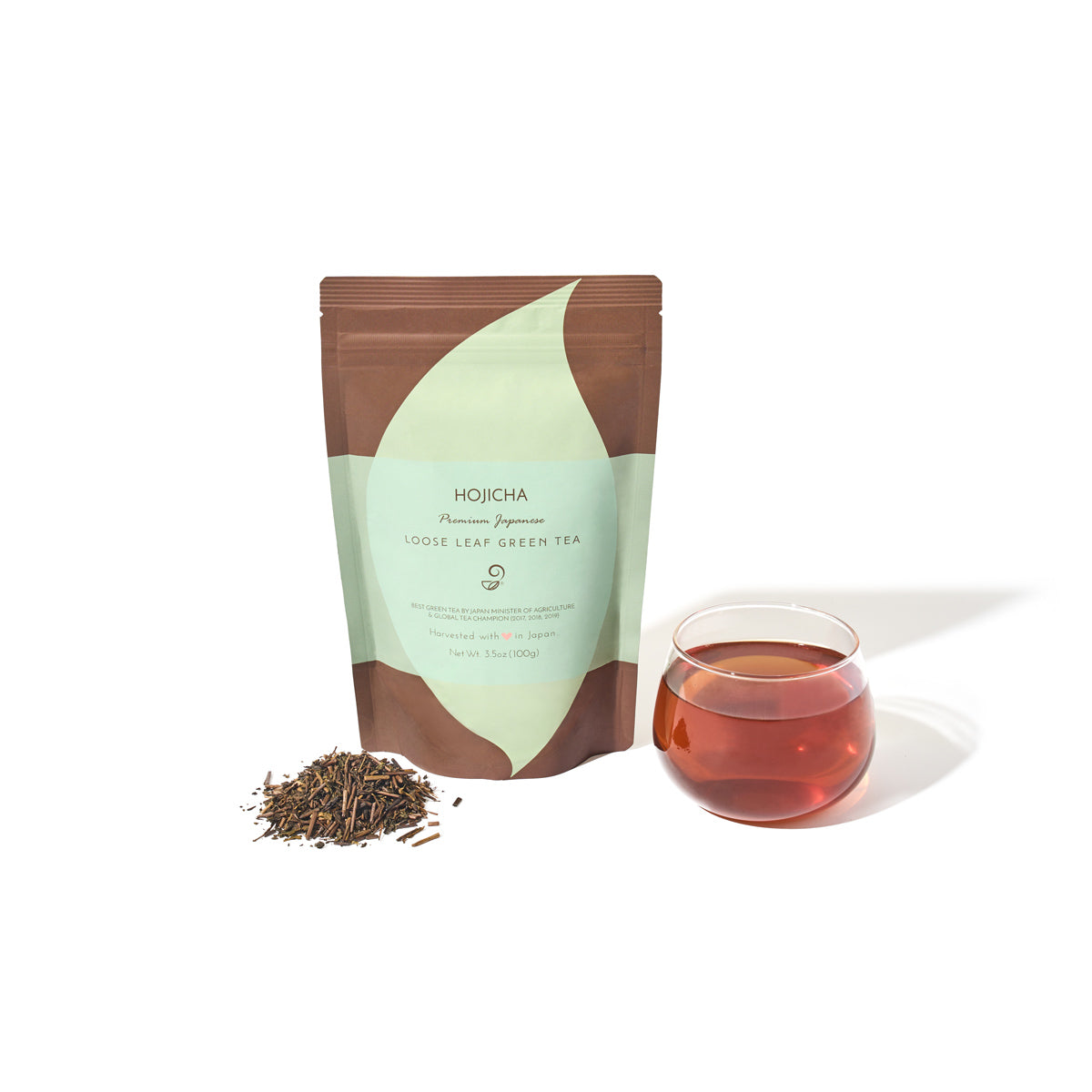
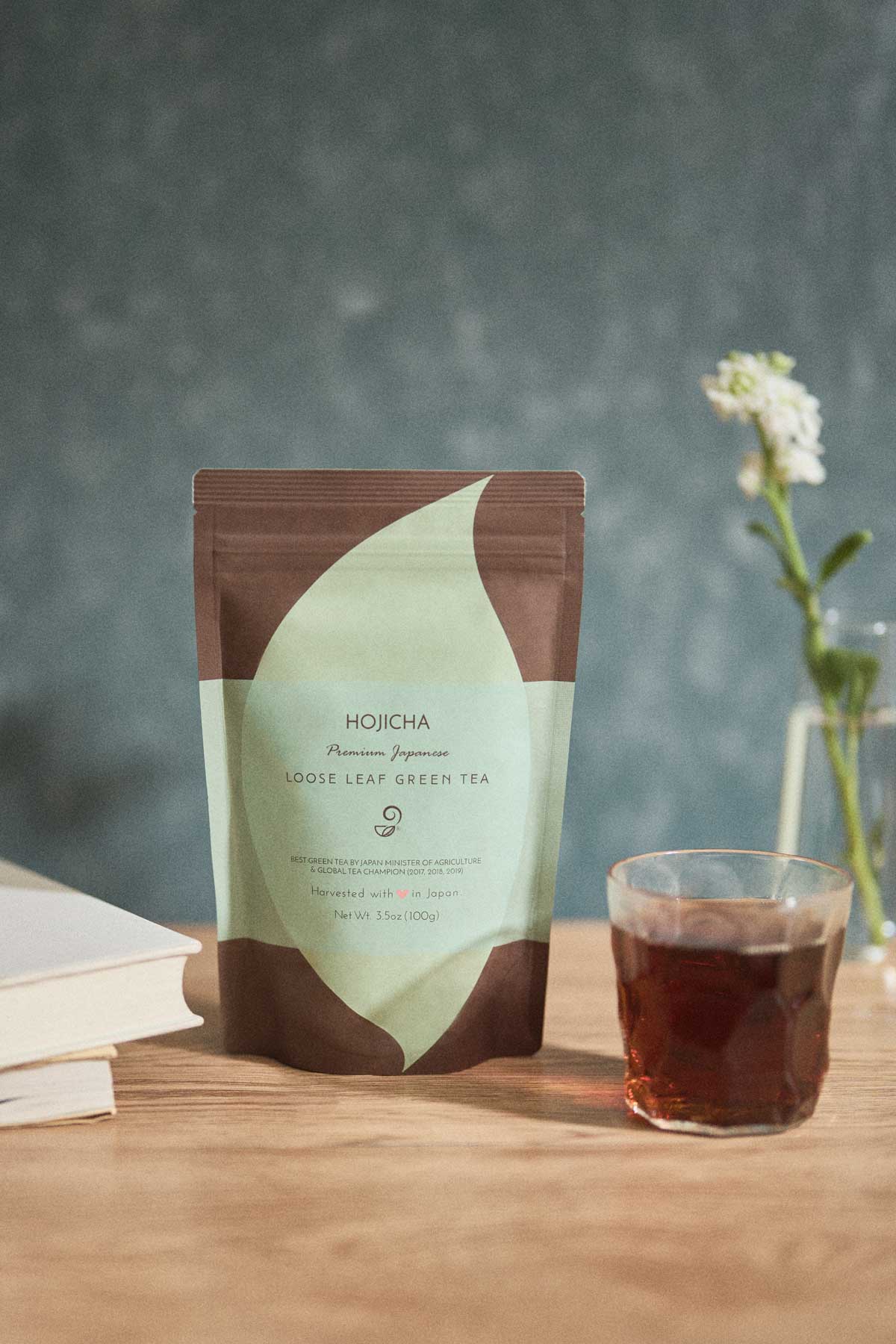
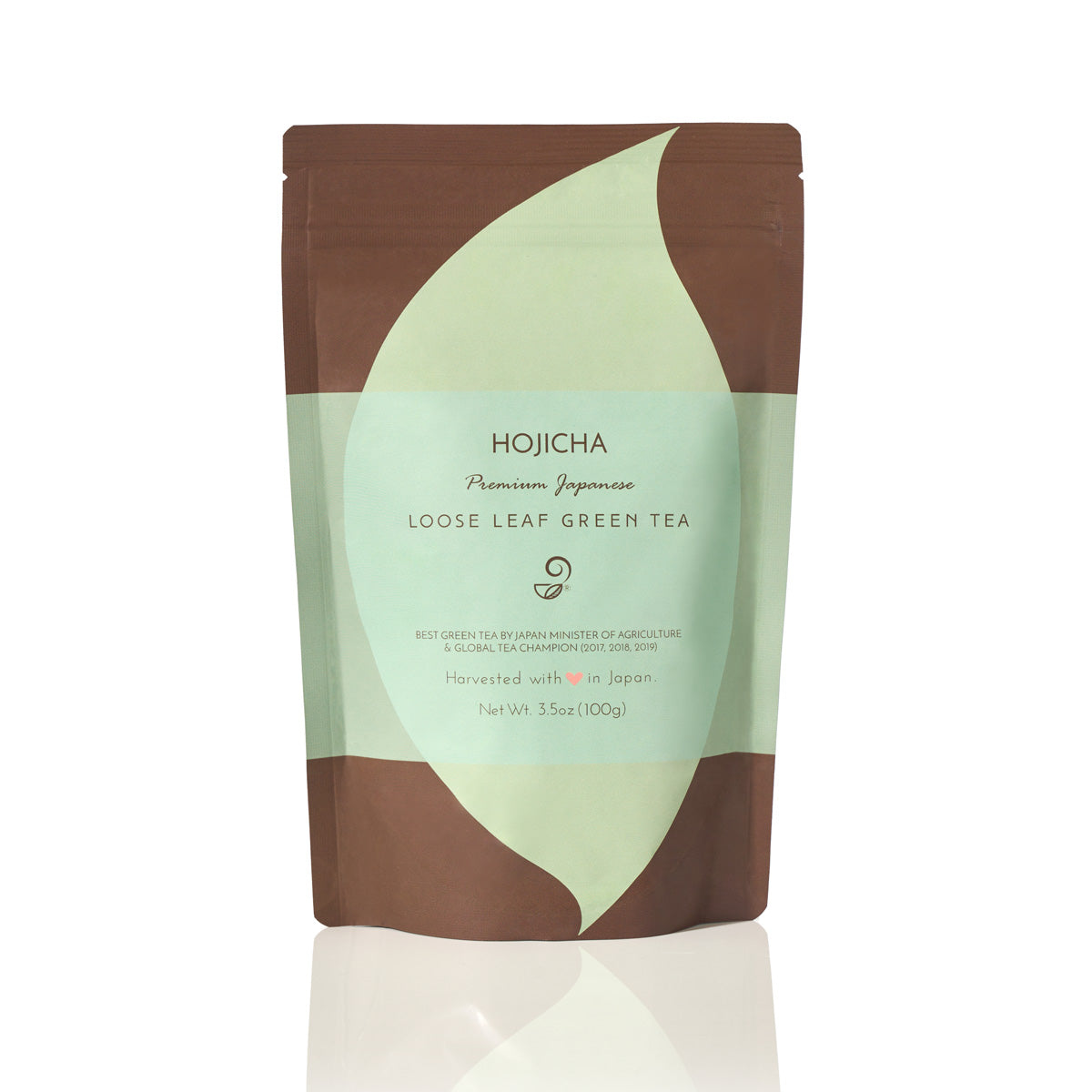
Our roasted green tea, known as hojicha (ほうじ茶), is crafted from freshly harvested premium green tea carefully roasted in porcelain over charcoal to maximize flavor while retaining more catechins than typical hojicha on the market. With lower caffeine and a smoother, less bitter taste compared to steamed green tea, it is an ideal choice for evening relaxation and is gentle enough for kids and pregnant women. Cultivated using the Chagusaba method in nutrient-rich sugarcane soil, this loose-leaf authentic Japanese roasted green tea, made from the Yabukita cultivar, also pairs beautifully with oily foods. Each eco-friendly resealable package contains 3.5 oz (100g) of tea, enough to steep 30–40 comforting cups.

78 reviews

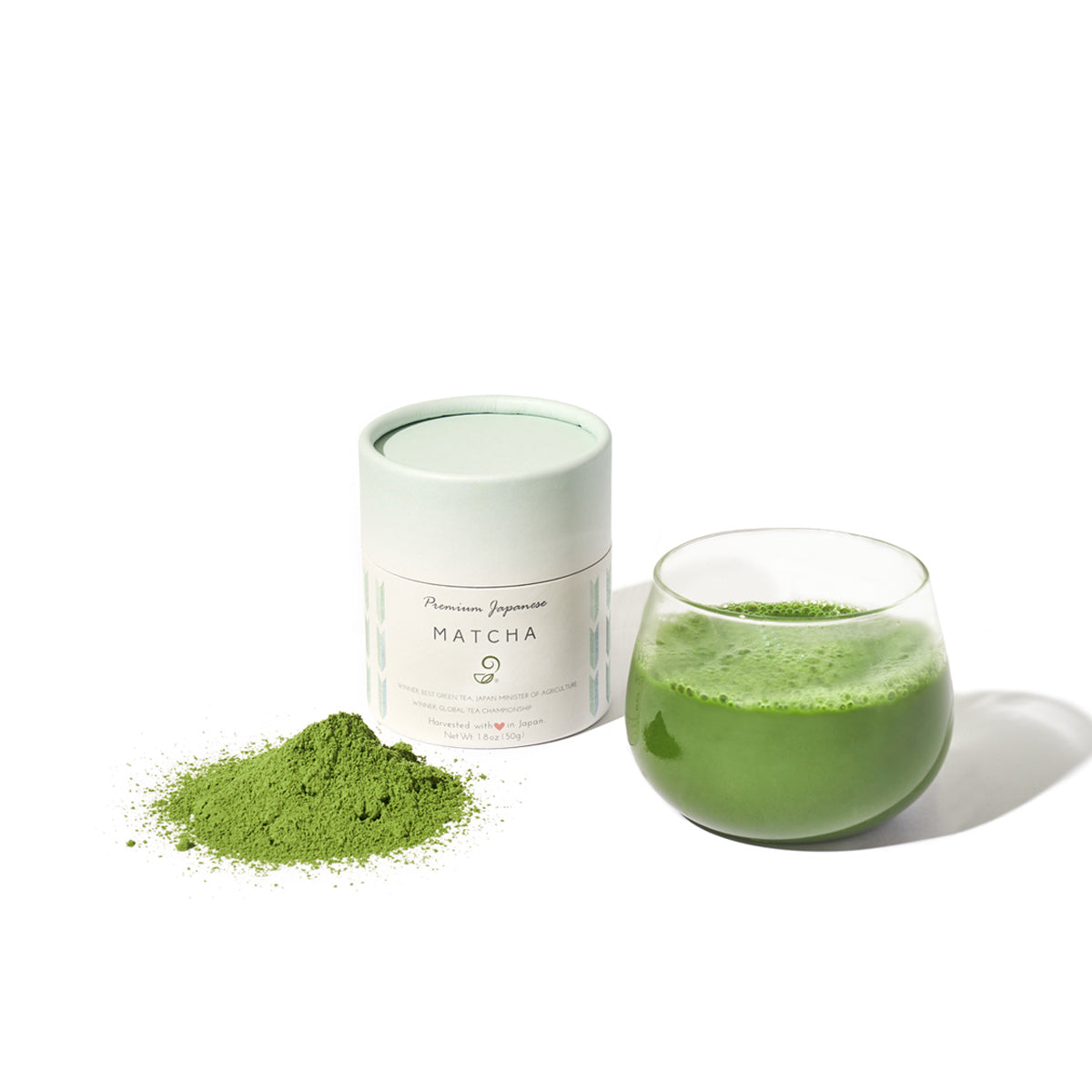
Matcha - Ceremonial Japanese Powdered Green Tea

$39.00 $34.99
Quick view

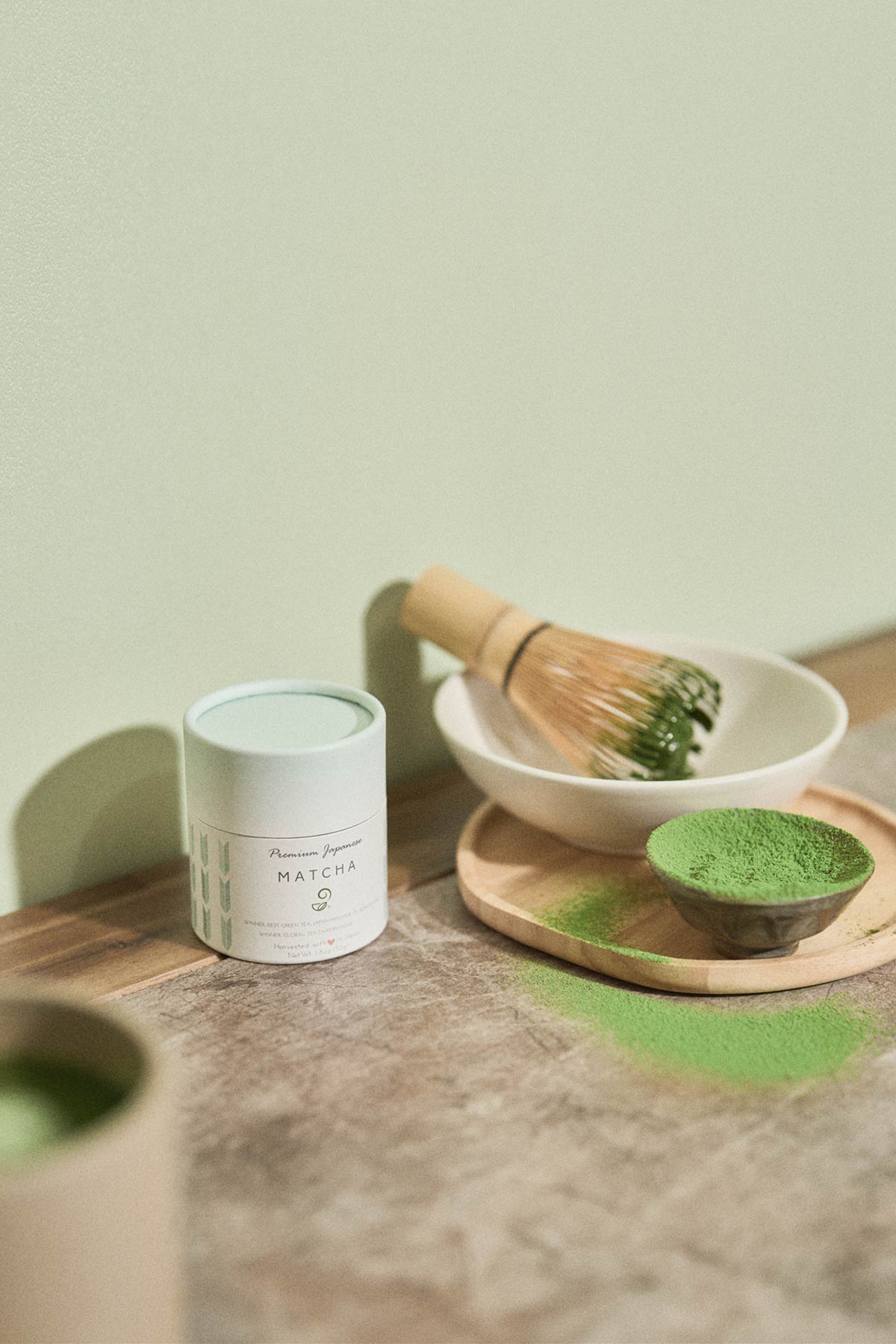
This ceremonial matcha is crafted from the finest Japanese green tea, grown in nutrient-rich soil enhanced with compostable grasses and sugarcane through the Chagusaba method, which gives the tea a natural sweetness and exceptional flavor. In collaboration with researchers from Shizuoka University, farmers ensure that the soil quality consistently produces tea of the highest standard.

Renowned among top Japanese chefs for its unmatched aroma, this matcha is made by carefully shading the plants before harvest to boost caffeine and amino acids, then meticulously drying, de-stemming, and grinding the leaves into a fine powder. Made from the Yabukita cultivar, this 1.8 oz (50g) matcha comes in a high-quality, air-tight paper tube canister, providing a luxurious and authentic Japanese tea experience.

FAQs about Gyokuro vs Tencha

What's the difference between gyokuro and tencha?

Both are shaded teas — both come from plants that spend the final 20-40 days before harvest under cover, accumulating L-theanine and chlorophyll the same way. The split happens after harvest. Gyokuro (玉露) leaves are steamed and then rolled into needles, the way sencha is, and dried whole. You brew gyokuro by steeping the rolled needles in cool water and drinking the infusion. Tencha (碾茶) leaves are steamed but NOT rolled — they're dried flat, the stems and veins are removed, and what's left is then stone-ground into the fine powder we call matcha (抹茶).

So the relationship is: tencha is unground matcha, and matcha is ground tencha. Gyokuro is a parallel path — same shading, but different post-harvest processing. They're cousins on the family tree of shaded Japanese tea.

The flavor outcomes diverge because of the processing. Gyokuro brewed gently is delicate, almost dashi-like, with intense umami and a sweet finish. Matcha (the ground tencha) is denser and more concentrated because you're consuming the whole leaf rather than extracting from it.

If tencha becomes matcha, do people ever buy tencha directly?

Rarely outside Japan, and not commonly even within Japan. Tencha — the unground form — is mostly an intermediate product that tea shops grind on demand or in batches before selling as matcha. Some specialty Japanese tea shops do sell tencha leaves directly to people who want to grind their own matcha at home, often using a dedicated stone mill. It's a tiny market, mostly for purists.

The reason tencha-direct is rare is that grinding matcha well is harder than it looks. The traditional stone mills (chausu) grind at specific RPMs and temperatures to avoid heating the powder, which would oxidize and dull the flavor. Home-grinding tencha in an ordinary spice grinder produces matcha that's coarser and oxidizes faster than properly stone-ground matcha. The freshness gain rarely justifies the quality loss.

If you're curious about the comparison, drinking properly-ground matcha and tencha brewed like sencha (an unusual treatment, but it works) lets you taste what the same leaves do in two completely different forms. Most drinkers find matcha more satisfying for daily use.

Why does shading matter for both gyokuro and tencha?

Because shading is what makes both teas premium in the first place. By blocking sunlight for the final weeks before harvest, the plants stop converting their amino acids (especially L-theanine) into catechins, and they produce more chlorophyll to compensate for the reduced sun. The result is a leaf that's higher in umami compounds, lower in astringency, and more vivid green. Both gyokuro and tencha rely on this shading-induced biochemistry. Without it, the leaves would taste more like sencha (煎茶) — bright, slightly grassy, less dense. Our matcha vs sencha breakdown walks through how that shaded chemistry shows up in the cup.

The shading is also why both teas are expensive. The covers cost money, the labor is intense, and yield drops because shaded plants grow more slowly. So gyokuro and matcha are both premium teas, and the labor going into them is comparable.

The difference between gyokuro and tencha-as-matcha is purely what happens after the shaded leaf is harvested. The shading itself is the same investment.

Is gyokuro or matcha better — and how do I choose between them at home?

Honestly, neither is better — they're different drinks. Gyokuro is a brewed leaf tea, so it's about the steeping ritual and the broth-like cup. Matcha (抹茶) is a whisked powder, so it's about the bowl and the foam and consuming the whole leaf. Choosing depends on what you want from the experience. Gyokuro is closer to the discipline of brewing fine sencha at the right temperature; matcha is closer to the ritual of preparing a single, dense bowl. Our Limited Reserve Ceremonial matcha and a high-grade gyokuro side by side is the easiest way to feel which one fits your daily rhythm.

Practically, matcha is easier to drink consistently — one bowl, two minutes, you're done. Gyokuro requires careful temperature control and patience; if you brew it like ordinary sencha, you'll waste it. So for people short on time, matcha tends to win as a daily ritual. For people who like the brewing process itself, gyokuro tends to win.

My honest answer: try both occasionally. Matcha for daily, gyokuro for slower weekend mornings. The matcha card below is the everyday option; gyokuro is what you reach for when you want to slow down.

Are gyokuro and matcha basically the same nutritionally, since they come from shaded plants?

Close, but not identical. Both are higher in L-theanine and lower in catechins than unshaded teas, so both produce the calm-alert mental state shaded teas are known for. The big nutritional difference is that with matcha you consume the whole leaf, while with gyokuro you only consume what extracts into water.

That means matcha delivers significantly higher absolute amounts of catechins, fiber, chlorophyll, and several other compounds than gyokuro per serving — because the leaf material is in the cup. Gyokuro extracts efficiently for L-theanine and amino acids, but most of the catechin and antioxidant load stays in the spent leaves. So a daily bowl of matcha and a daily cup of gyokuro give you different nutrient profiles even though the source plant is similarly shaded.

If you're choosing for health benefits specifically, matcha is the more efficient delivery system. If you're choosing for flavor and ritual, that decision depends on what you enjoy more.


Related Articles You May Be Interested

What is Gyokuro? Explained in One Minute
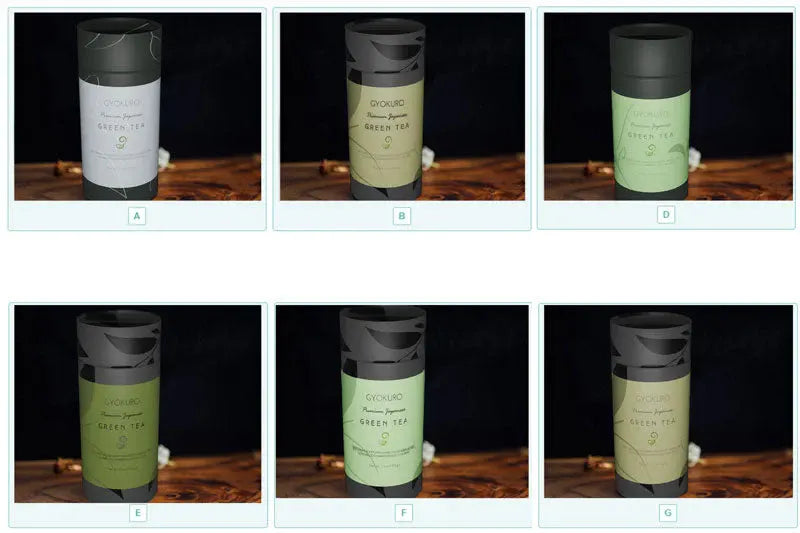
Gyokuro Package Design Contest Result
Japanese Green Tea vs Red Bull - 10 Battles You Don’t Want to Miss
Yerba Mate Tea (マテ茶) vs Japanese Green Tea
Everything You Need to Know about Covering Process for Matcha and Gyokuro

Get Free Bonus Books

Join Green Tea Club

Sign up for free to the Green Tea Club to get advice and exclusive articles about how to choose Japanese Tea, and tips, tricks, and recipes for enjoying Japanese tea.

Unsubscribe anytime. It’s free!

About the author

Kei Nishida

Author, CEO Dream of Japan

info@japanesegreenteain.com

Certification: PMP, BS in Computer Science

Education: Western Washington University

Kei Nishida is a passionate Japanese green tea connoisseur, writer, and the founder and CEO of Japanese Green Tea Co., a Dream of Japan Company.

Driven by a deep desire to share the rich flavors of his homeland, he established the only company that sources premium tea grown in nutrient-rich sugarcane soil—earning multiple Global Tea Champion awards.

Expanding his mission of introducing Japan’s finest to the world, Kei pioneered the launch of the first-ever Sumiyaki charcoal-roasted coffee through Japanese Coffee Co. He also brought the artistry of traditional Japanese craftsmanship to the global market by making katana-style handmade knives—crafted by a renowned katana maker—available outside Japan for the first time through Japanese Knife Co.

Kei’s journey continues as he uncovers and shares Japan’s hidden treasures with the world.

Learn more about Kei

Related Posts

Behold: Balmuda's "The MoonKettle" — Where Boiling Water Becomes Art

We were privileged to be invited by Balmuda's Private MoonKettle Launch Event. Here are videos of it and everything you

Read More
OC Japan Fair April 2026 — Visit Us at Booth #A8!
OC Japan Fair Spring 2026 Recap (April 3 - 5 2026)

We were at OC Japan Fair again! April 3-5 2026 with new products, Miki Pon's art debut and more. Here is a recap video f

Read More
Super Mario and Japanese Green Tea

Super Mario and green tea share a hometown! Watch our Yoshi Matcha Cookies video recipe + discover how Nintendo and matc

Read More
Leave a comment

Your email address will not be published..

Cart

Your cart is currently empty.

Start Shopping

Select options