View video in different languages: Spanish, Chinese
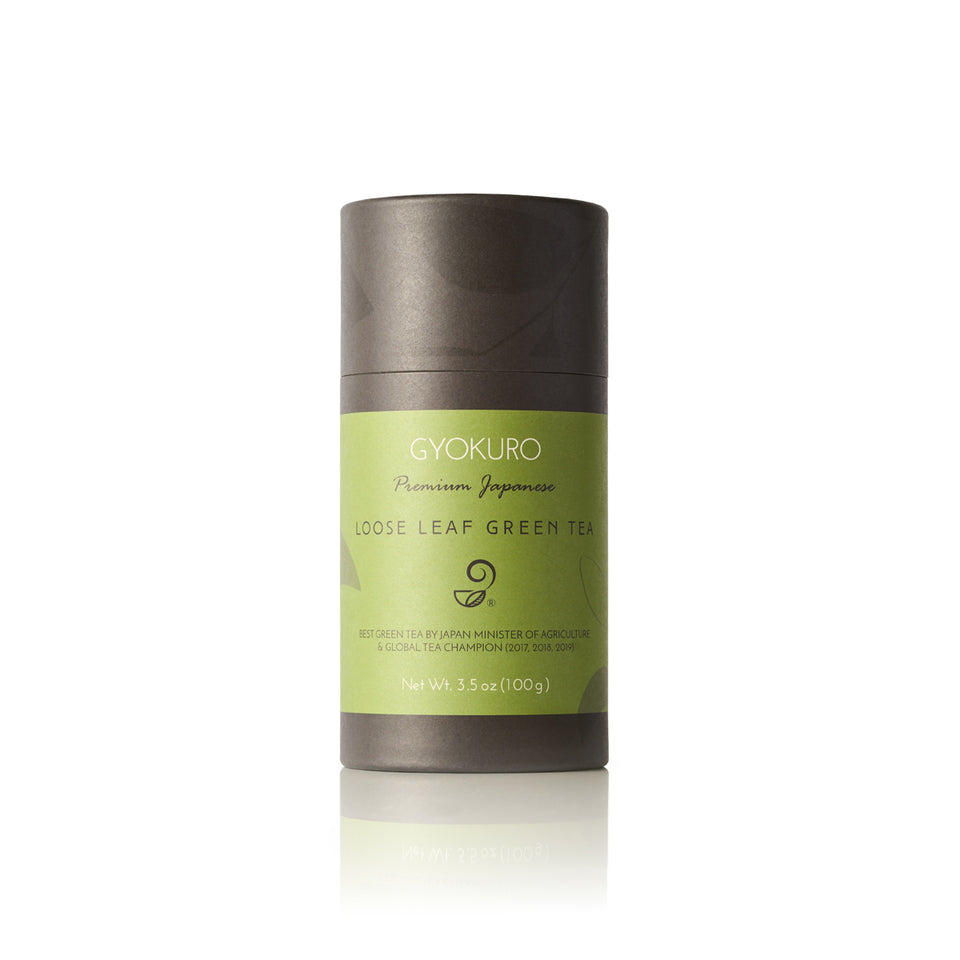
Gyokuro is a special type of green tea shaded from the sun for 20 days with specially made mats, which allows the caffeine levels to increase in the leaves in addition to allowing the amino acids to get stronger, producing a sweeter and stronger flavor. Because of the cultivation process, the leaves have a very particular odor that is impossible to confuse.
Since the leaves are covered for such a long period of time throughout the cultivation process, the tea leaves are dark, creating a dark tea that is almost mossy green. Its richness in color translates to a richness in taste as well, with layers of flavors that never overpower one another.
Transcript in English
The Japanese Green Tea Company is proud to bring you another piece of Japan. Our Gyokuro-shaded Imperial Japanese premium green tea is both a healthy and delicious. Gyokuro is a special type of green tea shaded from the sun for 20 days, which allows the caffeine levels to increase in the leaves. It also allows the amino acids to get stronger, producing a sweeter and stronger flavor. The shaded tea leaves have a beautiful dark green color and have a unique smell and taste. All of our award-winning green teas are grown in sugarcane soil, making them naturally sweet and healthy. Enjoy the authentic taste and benefits of our premium Gyokuro-shaded Imperial Japanese green tea! The Japanese Green Tea Company – Harvested with Love in Japan
Click to Buy Gyokuro on Amazon
FAQs about Gyokuro — Japanese Shade-Grown Tea
What is gyokuro (玉露), and why is it considered a premium green tea?
Gyokuro (玉露) is a shade-grown Japanese green tea — the plants are covered for about 20 days before harvest, which dramatically changes the leaf's chemistry. The shading slows the conversion of L-theanine (the umami amino acid) into catechins (the bitter ones), so the leaf accumulates an unusually high concentration of L-theanine and a relatively low concentration of bitter compounds. The result is a tea that tastes more like a savory broth than like ordinary green tea — sweet, umami-rich, with almost no astringency.
It's premium because the labor and yield economics are demanding. Shading requires infrastructure (covers, frames, daily monitoring), reduces leaf yield because the plants grow more slowly under cover, and demands careful harvest timing. All of that translates into a per-kilo cost several times higher than ordinary sencha.
In Japan, gyokuro has historically been the tea of formal hospitality — what you'd serve a respected guest. Its delicacy and the precision required to brew it well are part of why it carries that role.
How is gyokuro different from sencha and matcha — they're all Japanese green tea?
Sencha (煎茶) is unshaded; gyokuro (玉露) is shaded for ~20 days; matcha (抹茶) comes from leaves shaded for 30+ days. So shading is on a spectrum: sencha at zero, gyokuro in the middle, matcha at the high end. The longer the shading, the more L-theanine, the less astringency, and the deeper the umami. Our matcha vs sencha breakdown walks through where gyokuro sits in that spectrum.
Processing also differs. Sencha and gyokuro are both steamed and rolled — you brew the leaves and discard them. Matcha is steamed but not rolled; the leaves (after stems are removed) are stone-ground into powder, which you whisk and consume whole. So gyokuro is closer to sencha in how you drink it, closer to matcha in how it's grown.
Practically: sencha is the everyday tea, gyokuro is the special-occasion brewed tea, matcha is the focused single-bowl ceremony or daily ritual. Each has its place.
Why is gyokuro so expensive — what justifies the price?
Three things stack to drive cost up. First, shading itself is labor-intensive — covers have to be installed before the right window in spring, monitored daily, removed at harvest. Second, yields drop because shaded plants grow more slowly; you get less leaf per plant per harvest. Third, the leaves are usually hand-picked from the youngest shoots only, which adds labor. Some farms also have to let plants rest a year or two between shading cycles, which further reduces effective annual yield.
Add up the labor, the lower yield, and the premium positioning, and gyokuro typically runs 2-5x the cost of comparable-quality sencha from the same farm. That cost gets passed through to the buyer.
That said, the price difference shrinks if you compare gyokuro to ceremonial matcha — gyokuro is usually cheaper than top-grade matcha because the processing isn't as labor-intensive (no stem removal, no stone-grinding). So in the premium-Japanese-tea spectrum, gyokuro sits between sencha and matcha in cost as well as flavor.
How do I brew gyokuro correctly — what makes it different from sencha?
Cooler water, smaller pots, more leaf-to-water ratio. Standard gyokuro brewing is about 4-5g of leaf in a 100ml kyusu, with water at 130-150°F (55-65°C), steeped for 2-3 minutes for the first infusion. That's significantly cooler than sencha (which uses 160-175°F) and slightly longer, because at low temperatures the umami compounds extract slowly but the bitter ones don't.
If you brew gyokuro with sencha-temperature water (175°F+), the L-theanine extracts too fast and the bitter compounds also start coming out, defeating the entire reason gyokuro exists. The cup tastes like an expensive but mediocre sencha. So temperature precision matters more here than for any other Japanese green tea.
Most gyokuro can be re-steeped 3-5 times. Each successive steep uses slightly hotter water and slightly shorter time. By the third or fourth steep, you're effectively brewing it like a sencha. Gyokuro spoils people for ordinary sencha because the umami density is hard to go back from.
Is gyokuro worth the price for daily drinking?
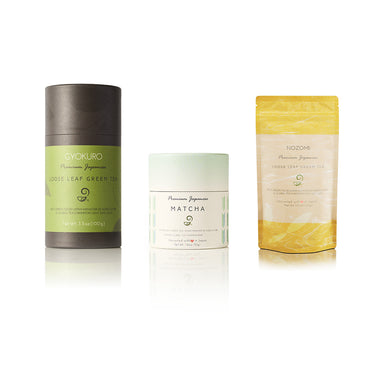
Honestly, no — for most people. Gyokuro is best as an occasional special-occasion tea, partly because it's expensive and partly because the flavor is so concentrated that drinking it every day would dull your sensitivity to it. Daily drinking is what sencha is built for; gyokuro is what you reach for when you have time and attention. The Covered Trio Gift Set includes gyokuro alongside matcha and lightly-shaded kabusecha if you want to compare them all without committing to a full gyokuro tin.
That said, if your green tea consumption is small (one cup a day) and your budget allows, gyokuro can be a daily drink. It's the kind of tea where one focused 100ml cup feels more substantive than three sencha cups.
For most people, the move is: sencha for daily, gyokuro for weekend mornings or when guests come over. That's how the Japanese market generally treats it too.
Related products
Gyokuro - Shaded Imperial Premium Green Tea
Gyokuro, also known as "jade dew" or "jewel dew tea," is a premium Japanese green tea shaded from the sun for 20 days using specially made mats, a method that boosts caffeine levels and strengthens amino acids to create a sweeter, richer flavor. This extended shading process results in dark, mossy green leaves with an unmistakable aroma and a complex taste that is layered yet balanced. Cultivated by the Chagusaba method in nutrient-rich sugarcane soil and made from the Yabukita cultivar, this loose-leaf authentic Gyokuro is offered in a high-quality, air-tight paper tube canister (chyazutsu) to preserve its exceptional freshness and flavor. Each 3.5 oz (100g) full-size package steeps 30–40 cups, and a convenient single-serve sample is also available.
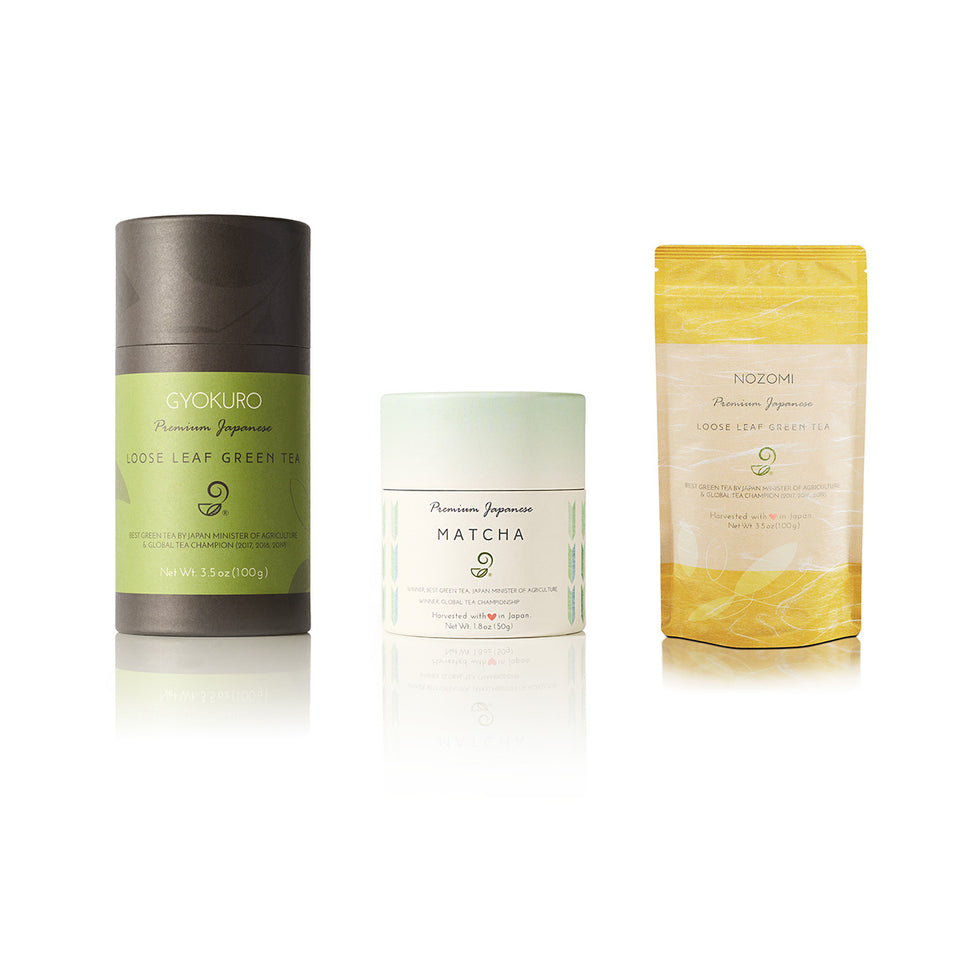
The Covered Trio Gift Set - Ceremonial Matcha, Gyokuro, and Nozomi Japanese Green Tea Set Package
This tea set features three premium Japanese green teas, all cultivated in nutrient-rich sugarcane soil to enhance their flavor and natural sweetness. Gyokuro, a prized shaded green tea, is grown under special mats for 20 days to increase caffeine and amino acid levels, resulting in a rich, sweet taste and deep mossy green color. The set also includes a luxurious matcha, crafted from carefully shaded, hand-processed leaves and renowned for its smooth, aromatic flavor, developed in collaboration with researchers from Shizuoka University to maximize the benefits of the enriched soil. Completing the collection is Nozomi, a fine Kabuse-cha or "Covered Green Tea," where young tea leaves are gently shaded just before sprouting, producing a soft, refined flavor perfect for tea enthusiasts.
The Sencha Lover Gift Set - Premium Japanese Green Tea Set Package
This tea set features three exceptional Japanese green teas, each crafted with care and traditional techniques. Issaku Reserve, a Global Tea Champion winner in 2017 and 2019, is a rare masterpiece created by Farm Master Mr. Arahata at Arahataen Green Tea Farm. Handpicked once a year from the first flush and processed with advanced methods, Issaku represents the highest-grade deep-steamed green tea, available only in limited quantities even in Japan.
The set also includes Gyokuro, a premium shaded green tea known for its rich, sweet flavor and deep mossy green color. Grown under special mats for 20 days to increase caffeine and amino acid levels, Gyokuro offers a layered, smooth taste unlike any other. Completing the collection is Nozomi, a fine Kabuse-cha, or "Covered Green Tea," carefully grown under nets to gently shade the leaves just before new sprouts emerge, resulting in a soft, rich, and refined flavor profile.
Hojicha - Roasted Green Tea
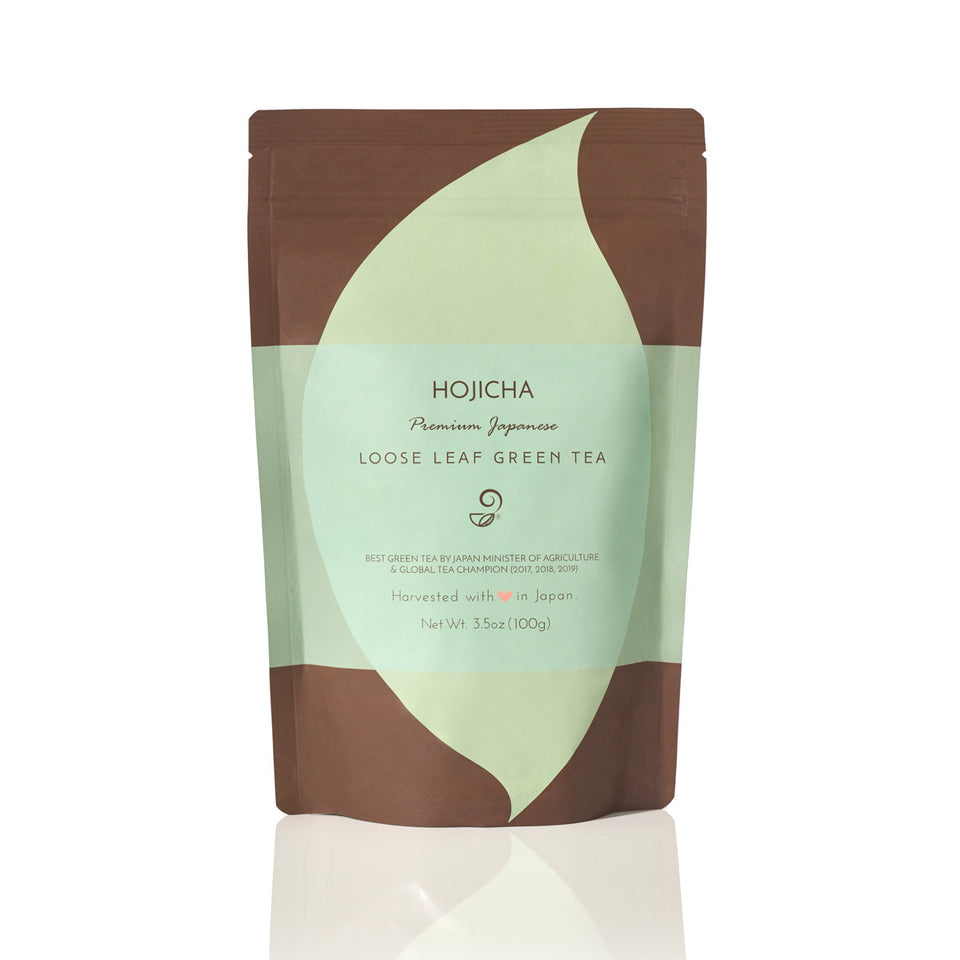
Our roasted green tea, known as hojicha (ほうじ茶), is crafted from freshly harvested premium green tea carefully roasted in porcelain over charcoal to maximize flavor while retaining more catechins than typical hojicha on the market. With lower caffeine and a smoother, less bitter taste compared to steamed green tea, it is an ideal choice for evening relaxation and is gentle enough for kids and pregnant women. Cultivated using the Chagusaba method in nutrient-rich sugarcane soil, this loose-leaf authentic Japanese roasted green tea, made from the Yabukita cultivar, also pairs beautifully with oily foods. Each eco-friendly resealable package contains 3.5 oz (100g) of tea, enough to steep 30–40 comforting cups.
Matcha - Ceremonial Japanese Powdered Green Tea
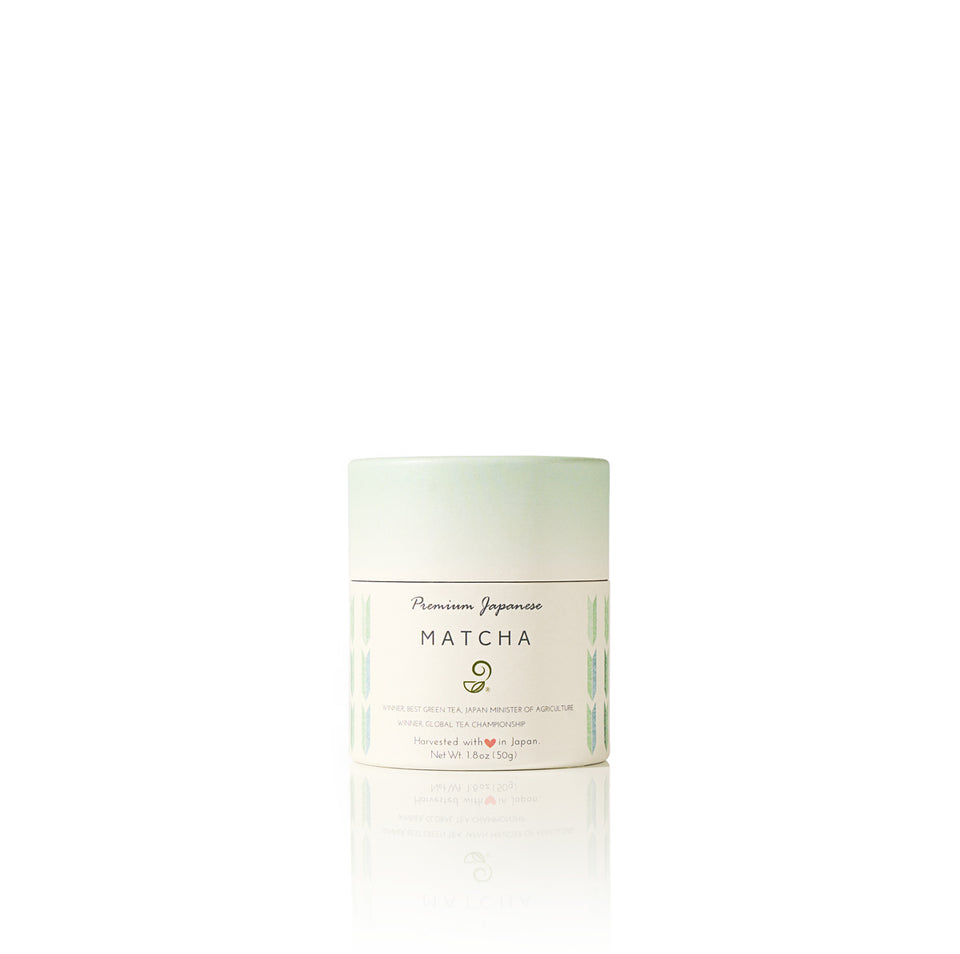
This ceremonial matcha is crafted from the finest Japanese green tea, grown in nutrient-rich soil enhanced with compostable grasses and sugarcane through the Chagusaba method, which gives the tea a natural sweetness and exceptional flavor. In collaboration with researchers from Shizuoka University, farmers ensure that the soil quality consistently produces tea of the highest standard.
Renowned among top Japanese chefs for its unmatched aroma, this matcha is made by carefully shading the plants before harvest to boost caffeine and amino acids, then meticulously drying, de-stemming, and grinding the leaves into a fine powder. Made from the Yabukita cultivar, this 1.8 oz (50g) matcha comes in a high-quality, air-tight paper tube canister, providing a luxurious and authentic Japanese tea experience.
Related Articles You May Be Interested
Get Free Bonus Books
Sign up for free to the Green Tea Club to get advice and exclusive articles about how to choose Japanese Tea, and tips, tricks, and recipes for enjoying Japanese tea.
Unsubscribe anytime. It’s free!
About the author
Kei Nishida
Author, CEO Dream of Japan
Certification: PMP, BS in Computer Science
Education: Western Washington University
Kei Nishida is a passionate Japanese green tea connoisseur, writer, and the founder and CEO of Japanese Green Tea Co., a Dream of Japan Company.
Driven by a deep desire to share the rich flavors of his homeland, he established the only company that sources premium tea grown in nutrient-rich sugarcane soil—earning multiple Global Tea Champion awards.
Expanding his mission of introducing Japan’s finest to the world, Kei pioneered the launch of the first-ever Sumiyaki charcoal-roasted coffee through Japanese Coffee Co. He also brought the artistry of traditional Japanese craftsmanship to the global market by making katana-style handmade knives—crafted by a renowned katana maker—available outside Japan for the first time through Japanese Knife Co.
Kei’s journey continues as he uncovers and shares Japan’s hidden treasures with the world.