Skip to content

The First Ever Japanese Chai in the USA: Wa-Kocha Spiced Black Tea

Table of contents

The first ever Japanese Chai in the USA: watercolor illustration of the Japanese Chai pouch and a glass of chai latte on a wooden table by a snowy window

Have you tried Japanese chai?

If you haven't, I understand. Wa-kocha (和紅茶), Japanese black tea, is hard to find outside Japan, and no one in the USA sold a chai made from it. Today, I am very happy to tell you that the first ever Japanese chai in the USA is finally here. It is our Japanese Chai, made with wa-kocha and spices that are almost all grown in Japan.

This summer, many of you voted for its package design (thank you!). So here is the final product, and everything you need to know about it.

By the way, how do you like the title image of this post? It was drawn by our Miki, our Chief Branding Officer. Doesn't it make you feel warm and want to drink a cup of chai? (^^)

The First Ever Japanese Chai in the USA Is Here

The first ever Japanese Chai in the USA, a 3.5 oz (100g) pouch with a glass of chai latte and a pile of the loose leaf spiced black tea

Our Japanese Chai is a loose leaf spiced black tea in a 3.5 oz (100g) resealable pouch. One bag makes about 10 to 12 pots of 2 to 3 cups each. It has no sugar and no added flavoring, so you can sweeten it the way you like.

We brought a box of Japanese Chai to Takumi Alley (Neko Shopping Center) in Anaheim on Saturday, November 14, and it sold out! Everyone loved it.

How This Chai Started

The idea came from Lauren-san, Lauren Shannon, Partner and General Manager of Arigato Travel. She has called Japan home for close to 30 years, and she noticed two things. Wa-kocha is hard to find outside Japan. And she had never seen a Japanese chai anywhere.

That stuck with me, because I used to work in Chandigarh, India. I love India, the food, the people and of course, the chai. So this tea is personal for me. It is a marriage of Japan and India.

If you want the full story, please read my package design contest post.

The Final Package

Front of the Japanese Chai pouch, loose leaf wa-kocha spiced black tea, 3.5 oz (100g)

The final bag uses the cinnamon and clove illustration from the left design in the vote. We printed it on the same washi paper pouch as Nozomi and Gokuzyo Aracha, so Japanese Chai now sits in the same premium line.

What Is in the Blend

Japanese Chai loose leaf blend of wa-kocha black tea and spices on a white background

The base is wa-kocha from a blend of Japanese tea cultivars, including Benifuuki (べにふうき). As you may know, Benifuuki is the cultivar behind our Benifuuki green tea, but it was first bred for black tea. It gives the gentle wa-kocha enough body to carry the spices.

Here is the full blend:

  • Japanese black tea (wa-kocha)
  • Japanese ginger
  • Japanese cinnamon leaf
  • Japanese dried mandarin peel (chinpi)
  • Japanese roasted green tea (hojicha)
  • Japanese coriander
  • Japanese sansho pepper
  • Clove
  • Ceylon cinnamon

Only the clove and the Ceylon cinnamon come from overseas, because Japan does not grow them.

Why Wa-Kocha Works for Chai

Most tea in Japan becomes green tea, and wa-kocha is grown differently. Growers keep the umami low, and the leaves are picked later in the season than green tea leaves, so they take in more minerals. The result is a smooth, mellow black tea with very little astringency.

Classic masala chai uses strong Indian black tea such as Assam. Wa-kocha is much gentler, so with regular chai spices the tea disappears. It took many trials to get the balance right. In the end, we increased the clove and added Ceylon cinnamon to push the spice through.

The chai is blended for us in Saga by Mr. Okamoto of Kureha (紅葉). In 2001 he opened Japan's first shop for wa-kocha only, and he wrote Japan's first book on wa-kocha. He buys directly from small farms, including award winners. One of them, Toshihiro Kajihara of Ocha no Kajihara in Ashikita, Kumamoto, won Best in Show at The Leafies 2022 (the UK Tea Academy's International Tea Awards) with his summer Benifuuki wa-kocha.

How to Make Japanese Chai (2 to 3 Cups)

Japanese Chai brewing guide to make 2-3 cups of chai latte

  1. Bring 2 cups (16 oz / 480 ml) of water to a boil.
  2. Add 2 tablespoons (0.28-0.35 oz / 8-10 g) of Japanese Chai, plus your sweetener.
  3. Lower the heat to a gentle simmer and brew for 4 to 6 minutes.
  4. Add 1 cup (8 oz / 240 ml) of milk or a milk alternative. Warm it for 1 to 2 minutes until steaming. Please do not boil it.
  5. Take it off the heat, cover, and let it rest for 1 minute.
  6. Strain into cups and enjoy.

You can also drink it without milk. Steep 1 teaspoon (about 2 g) in 8 oz (240 ml) of just-boiled water for 3 to 4 minutes and strain.

Make It a Chai Latte

Mug of Japanese Chai latte topped with cinnamon, a dish of the loose leaf blend, a cinnamon stick, cloves and a milk pitcher on a wooden table

For a cafe-style cup, froth a little of the warm milk and pour it on top. Then add a pinch of cinnamon. Dairy milk or your favorite milk alternative, such as oat milk, both work.

For iced chai, simmer 2 tablespoons (8-10 g) in 1 cup (8 oz / 240 ml) of water for 5 to 6 minutes. Sweeten it while it is hot, strain, and let it cool. Then pour it over ice and top with cold milk.

How to Sweeten Japanese Chai

Japanese Chai has no sugar in it, so you can make it as sweet as you like. Here are some ideas:

  • Honey. It goes very well with the ginger and the cinnamon. Please stir it in after you take the pot off the heat.
  • Brown sugar. It gives the chai a deeper, caramel-like taste.
  • Kokuto (黒糖). This is Okinawan black sugar, a Japanese choice with a rich, molasses-like taste.
  • Maple syrup. It mixes easily into cold milk, so it is good for iced chai.
  • Jaggery. In India, many people sweeten their chai with it.

For 2 to 3 cups, I suggest starting with 1 to 2 tablespoons of sweetener and adjusting from there. Of course, you can also drink it without any sweetener. Wa-kocha is naturally smooth, so it is still nice on its own.

Make a Dirty Chai with Our Sumiyaki Coffee

Have you heard of a dirty chai? It is a chai latte with a shot of coffee in it.

Make Japanese Chai with milk as usual. Then add a shot of espresso, or about 2 tablespoons (1 oz / 30 ml) of strong brewed coffee, to each cup.

For the coffee, a dark roast such as our charcoal-roasted French Roast Blend from Japanese Coffee Co. is a good match for the spices.

Where to Get the First Ever Japanese Chai in the USA

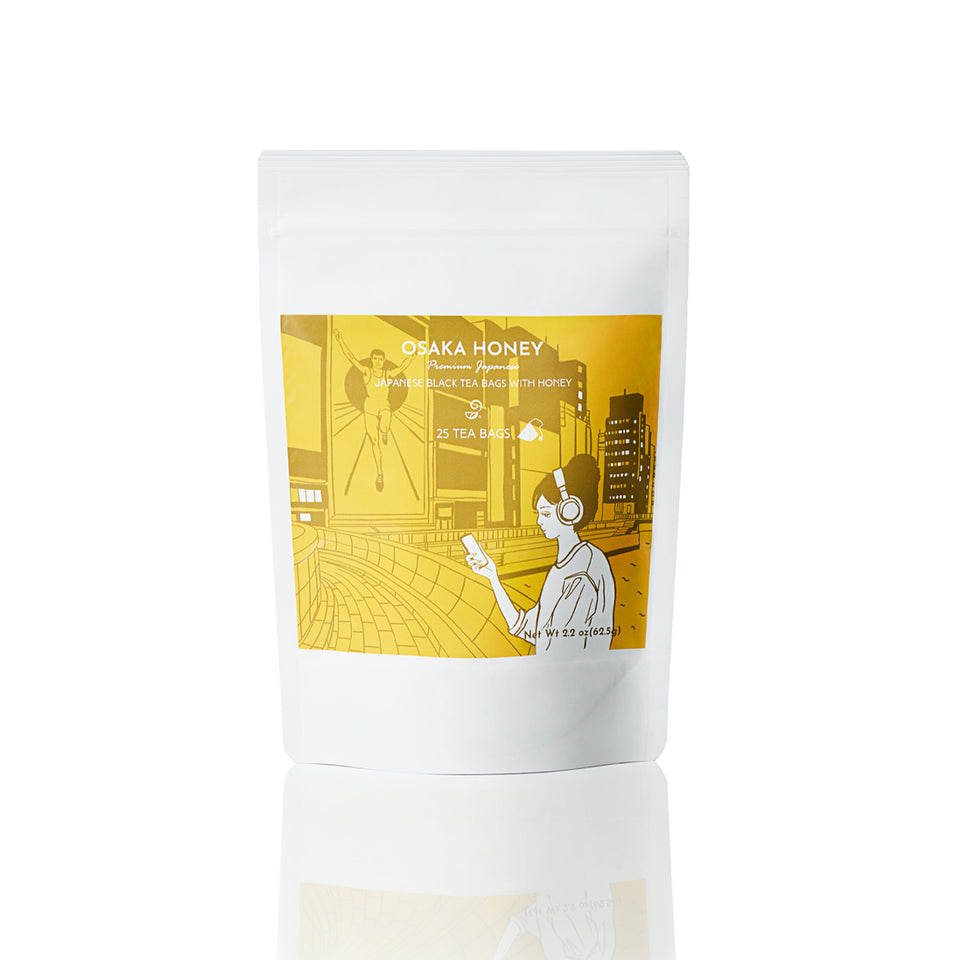
Japanese Chai is available now on our Japanese Chai page. If you like black tea with a gentle sweetness, please try our Osaka Honey too.

One 3.5 oz (100g) bag makes about 25 to 30 chai lattes, so each cup costs about $1.30 to $1.60, compared with about $5 to $6 for a chai latte at a café.

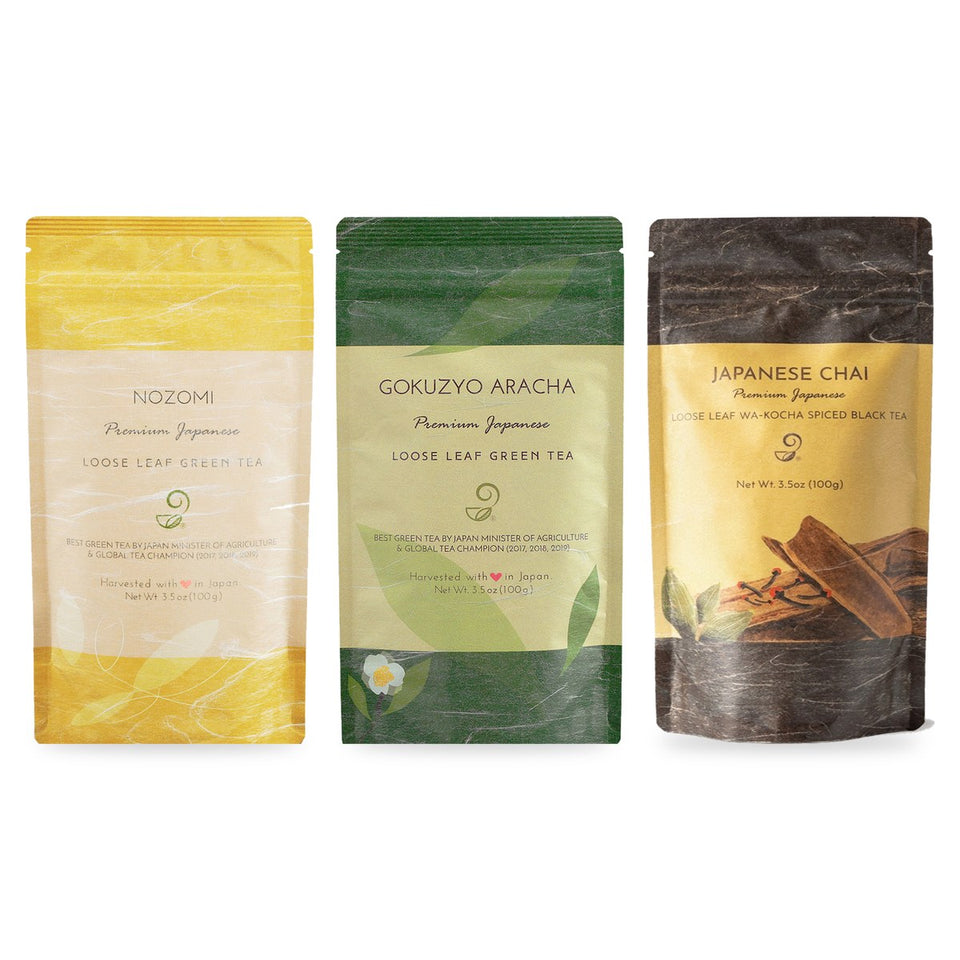
If you are looking for a gift, we also made a gift set with Nozomi, Gokuzyo Aracha and Japanese Chai.

So, how does Japanese chai compare with the chai you know?

Please let me know in the comments. I read every one of them. Thank you very much for your support, as always!

FAQs About Japanese Chai

What is Japanese Chai, and how is it different from Indian masala chai?

Japanese Chai is our Japanese take on masala chai. Instead of a strong Assam base, it uses wa-kocha (和紅茶), a smooth Japanese black tea made from Japanese cultivars including Benifuuki. The spices are Japanese ginger, cinnamon leaf, mandarin peel (chinpi), roasted hojicha, coriander and sansho pepper, with clove and Ceylon cinnamon.

The result is gentler than most chai: warm spice and citrus without the harsh bitterness, so it makes a rich chai latte that stays smooth.

How do I make a chai latte with Japanese Chai?

For 2-3 cups: bring 2 cups (16 oz / 480 ml) of water to a boil, add 2 tablespoons (0.28-0.35 oz / 8-10 g) of Japanese Chai and your sweetener, then simmer gently for 4-6 minutes.

Add 1 cup (8 oz / 240 ml) of milk or a milk alternative and warm it for 1-2 minutes until steaming. Do not boil. Remove from the heat, cover, rest for 1 minute, then strain into cups.

Is Japanese Chai sweetened?

No. The blend has no sugar and no added flavorings (0 g sugars), so you can sweeten it the way you like: sugar, honey, maple syrup, or nothing at all.

Does Japanese Chai contain caffeine?

Yes. The base is black tea, so it contains caffeine. It also includes a little roasted hojicha, which is naturally lower in caffeine. If you are sensitive to caffeine, enjoy it earlier in the day.

What is the difference between Japanese Black Tea and Other Black Tea in the market?

Honestly, I get this question a lot, and the difference is way bigger than it sounds on paper. Wakocha (和紅茶) is just "Japanese black tea" — same Camellia sinensis plant as any other tea, but made from cultivars Japan originally bred for green tea, not for black. That sounds like a small thing, but it changes pretty much everything about how the final cup tastes.

Most of the world's black teas — Assam, Darjeeling, Ceylon — come from cultivars that have been selected over generations for boldness and bite. They're built to stand up to milk and sugar. Wakocha came at the same problem from the other direction. Japanese green tea cultivars are naturally lower in tannins, and the processing pulls back on oxidation a little, so what you end up with is a black tea that lands much softer in your mouth. The flavor leans fruity, with a clean finish and even a hint of the umami (旨味) you'd expect from green tea showing up underneath.

The closest comparison I can think of, honestly, is the difference between really good drip coffee and a shot of espresso. They're both coffee, but built for completely different moments. International black tea is the espresso side, while wakocha is the drip side — you can keep sipping it for a whole afternoon without your stomach complaining, and even if you accidentally over-brew it by a minute, it stays drinkable. Our Osaka Honey is built on this exact kind of wakocha, with a touch of domestic Japanese honey powder blended right into the bag, which softens the cup even further. It's linked below.

Products in This Article

28 reviews

Osaka Honey - Japanese Black Tea with Honey (25 tea bags)

$30.00 USD

Enjoy the smooth blend of Shizuoka-grown Japanese black tea (和紅茶) and delicately powdered Japanese honey, offering a gentle sweetness with notes of ripe fruit.

Osaka Honey brings together rich aroma and mellow depth, making it a comforting choice for both everyday sipping and special moments.

It’s an effortlessly enjoyable tea—crafted with care to deliver the warm, authentic taste of pot-brewed flavor in a simple, modern way.

63 reviews

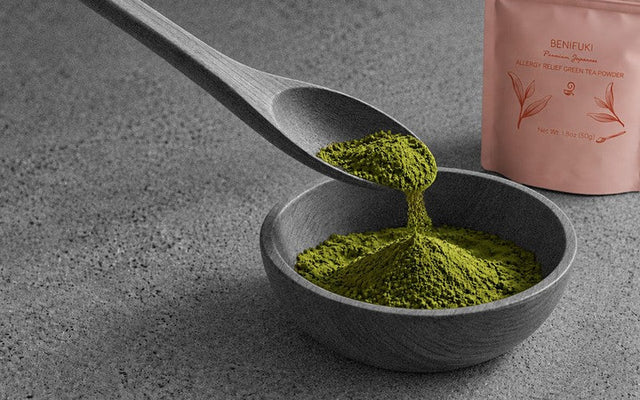
Benifuuki - Allergy Relief Japanese Green Tea Bags (30 tea bags)

$30.00 USD

Benifuuki green tea is highly regarded in Japan for its natural allergy-relief properties, helping with seasonal allergies, cedar allergies, hay fever, and even Mast Cell Activation Syndrome (MCAD). It is rich in Methylated Catechins, a potent form of EGCG that supports the inhibition of mast cell responses and reduces allergy symptoms.

This convenient teabag version uses an eco-friendly pyramid sachet and is made from authentic Japanese green tea cultivated by the Chagusaba method in nutrient-rich sugarcane soil. Featuring the Benifuki cultivar, each resealable aluminum package contains 30 tea bags, with each bag holding 3g of tea for a total of 90g (3.2 oz). A powder and candy version are also available.

49 reviews

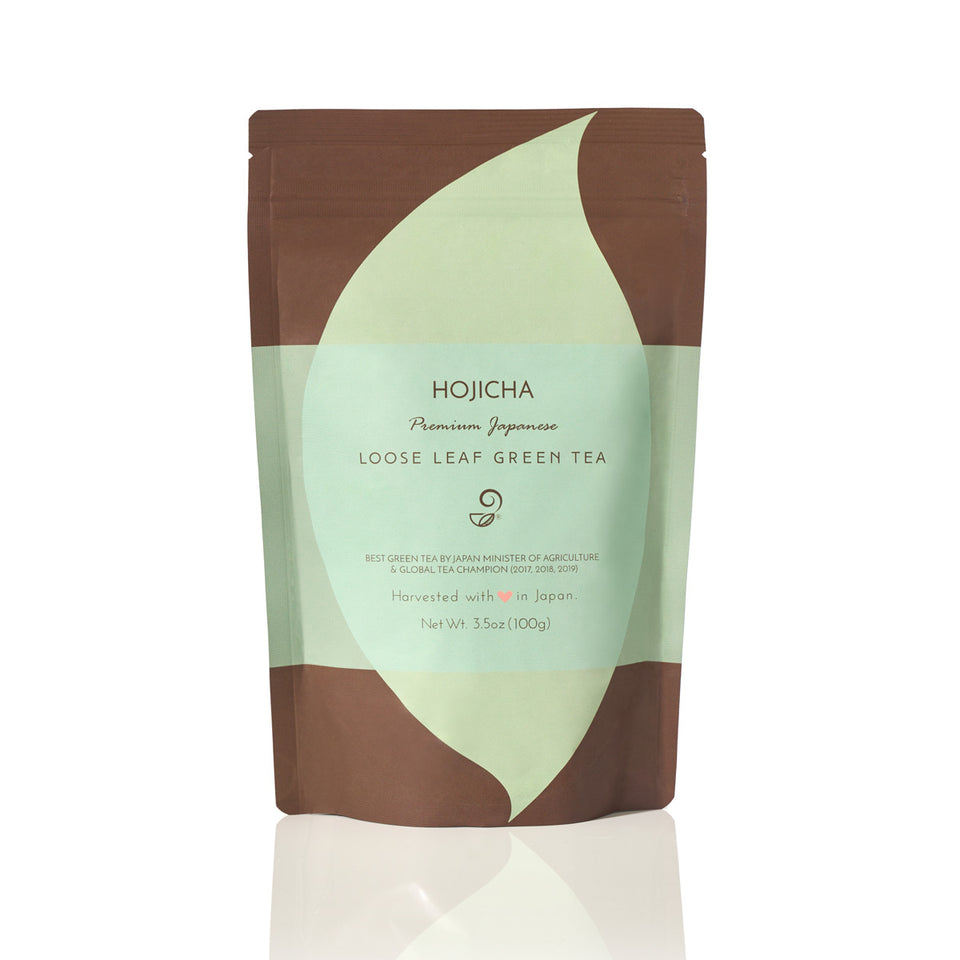
Hojicha - Roasted Green Tea

$25.00 USD

Our roasted green tea, known as hojicha (ほうじ茶), is crafted from freshly harvested premium green tea carefully roasted in porcelain over charcoal to maximize flavor while retaining more catechins than typical hojicha on the market. With lower caffeine and a smoother, less bitter taste compared to steamed green tea, it is an ideal choice for evening relaxation and is gentle enough for kids and pregnant women. Cultivated using the Chagusaba method in nutrient-rich sugarcane soil, this loose-leaf authentic Japanese roasted green tea, made from the Yabukita cultivar, also pairs beautifully with oily foods. Each eco-friendly resealable package contains 3.5 oz (100g) of tea, enough to steep 30–40 comforting cups.


Related Articles You May Be Interested

New Japanese Chai Is Coming
Help Us Pick the Package Design!
Read more: New Japanese Chai Is Coming — Help Us Pick the Package Design!
New Japanese Chai Is Coming — Help Us Pick the Package Design!
Introducing Osaka Honey (大阪ハチミツ):A Cozy Japanese Honey -Tea Blend
Read more: Introducing Osaka Honey (大阪ハチミツ):A Cozy Japanese Honey -Tea Blend
Introducing Osaka Honey (大阪ハチミツ):A Cozy Japanese Honey -Tea Blend
What is Tea Cultivar?
Read more: What is Tea Cultivar?
What is Tea Cultivar
Japanese Tea vs Indian Tea - 10 Battles You Don't Want to Miss
Read more: Japanese Tea vs Indian Tea - 10 Battles You Don't Want to Miss
Japanese Tea vs Indian Tea - 10 Battles You Don't Want to Miss

Get Free Bonus Books

Join Green Tea Club

Sign up for free to the Green Tea Club to get advice and exclusive articles about how to choose Japanese Tea, and tips, tricks, and recipes for enjoying Japanese tea.

Unsubscribe anytime. It’s free!

About the author

Kei Nishida

Kei Nishida

Author, CEO Dream of Japan

info@japanesegreenteain.com

Certification: PMP, BS in Computer Science

Education: Western Washington University
Kei Nishida is a passionate Japanese green tea connoisseur, writer, and the founder and CEO of Japanese Green Tea Co., a Dream of Japan Company.

Driven by a deep desire to share the rich flavors of his homeland, he established the only company that sources premium tea grown in nutrient-rich sugarcane soil—earning multiple Global Tea Champion awards.

Expanding his mission of introducing Japan’s finest to the world, Kei pioneered the launch of the first-ever Sumiyaki charcoal-roasted coffee through Japanese Coffee Co. He also brought the artistry of traditional Japanese craftsmanship to the global market by making katana-style handmade knives—crafted by a renowned katana maker—available outside Japan for the first time through Japanese Knife Co.

Kei’s journey continues as he uncovers and shares Japan’s hidden treasures with the world.

Learn more about Kei Nishida

Related Posts

Leave a comment

Your email address will not be published..

Cart

Your cart is currently empty.

Start Shopping

Select options