

Table of contents
Cultivar? What is a cultivar? How does it pertain to the tea I am currently drinking? Does the kind of cultivar matter? Is it something worth considering when purchasing tea? In some respects, this is not the easiest topic when it comes to tea, but it can be simplified, broken down, and an important consideration when learning about or purchasing tea.
What is “cultivar”? Cultivar is a type of plant that has been specifically bred and grown by humans. It means “cultivated variety”. Plants have variations in terms of yield or susceptibility to the cold for example, in other words, plants display or have specific traits. These traits can be cultivated and established as cultivars. For example, the most common Japanese cultivar known as Yabukita cultivar is maintains a particularly high yield and is considered “hardier” than many other tea cultivars. Cultivars extend beyond the world of tea. For example, Agronomist Norman Borlaug helped develop wheat-rust-resistance wheat varieties in Mexico throughout the 1950s and 60s. Looking at qualities beyond disease resistance, Borlaug’s fields also looked at yield and nutrients among other qualities in his wheat cultivars. In fact, his advances helped fuel the Green Revolution.
Let’s take a deeper look into the world of tea: All tea is produced from a single plant, the Camellia Sinensis. (Check this video about this) The plant has two main varieties: The Camellia sinensis sinensis or “small leaf” variety that is often found in China. This variety is also more tolerant of cold weather and has smaller leaves. The second main variety is the Camellia sinensis assamica. If you’re familiar with Assam tea then you will immediately recognize this second variety. In fact, it is native to the Assam region in India. Generally, you’ll find this tea in tropical areas and in lower elevation. The leaves are much larger and the plants tend to be taller (30-60 feet in height). This variety has been widely cultivated for thousands of years reaching beyond India in the 19th century.
While tea starts with the two noted varieties, it is important to understand and discuss the branches of tea that have come from these varieties. Hint: We call the subsequent variation “cultivars”.
What is Tea Cultivar?
Tea only has two main varieties, but surprisingly, there are thousands of different and unique cultivars. The strain is taken from the Camellia sinensis tea plant and bred and cultivated with specific practices to get the desired characteristics in a plant.
Think of a plant, it perhaps has larger leaves or thick stems. Perhaps leaves bunch closer together. These all constitute traits of the plant as briefed on earlier with respect to Norman Borlaug’s experiments. The cultivation process finalizes the desired traits. Some tea plants once finalized end up with resistance to frost or pests. Others may be taller or produce thicker stems. Also, in these plants, contain varying flavor profiles, different aromas with some being especially unique!
How are cultivars produced in the world of tea? There are a few methods of producing a “new” cultivar: Many existing cultivars have been produced by mixing existing “native” cultivars. As a side note, camellia sinensis is not native to Japan and when we speak of “native” cultivars, we are discussing cultivars created in Japan from a non-native plant. When it comes to the mixing of cultivars, it is possible to trace the origin of many cultivars. Another method of establishing new cultivars is through natural processes within a given plant. Sometimes, oddly enough, plants grow a new branch that is genetically different than the rest of the plant. In the research world, researchers look at the given qualities of a tea plant and select desired characteristics. The genes of the “father” and “mother” plants are blended to create a new cultivar.
It is important to remember that a cultivar does not always or necessarily determine the type of tea (black, white, oolong, green for example). Generally speaking, the processing method after plucking the leaves from the plant determines the type of tea. Another way of thinking about this is that the cultivar is the characteristics of the plant and often the type of tea is how you process the leaves after harvest.
Cultivars in Japan
Tea farming has become relatively more complex in our age. In fact, there is an entire science industry across Japan that helps support this famed and important export. Virtually all tea across Japan was propagated by seed. This meant that farmers would have a given amount of seed that had various properties. Some seeds may have ultimately produced higher yield than others, while the remaining seeds may have produced plants that were more resistant to cold weather or pests. It was a mixed bag of qualities.
The most common cultivar noted earlier as the Yabukita cultivar started in 1908 by Hikosaburo Sugiyama in Shizuoka. He grew a plant in a bamboo grove and eventually named it Yabukita. The name was a combination of two words, Yabu, meaning grove, and Kita meaning north. Tea was a relatively larger part of the Japanese export market in the 1930s, 40s, and 50s. In fact, its importance was recognized by the Japanese government in the 1950s with the creation of a cultivar registry and the establishment of cultivar research funding. These research centers became important process centers for new cultivars. These cultivars would be released to farmers and then subsequently grown. Most tea fields are now tea plant clones, so to speak, with the same DNA found in each plant.
Oddly enough, single cultivar popularity caught in with black tea in Kagoshima in the 1970s. The 1980s and 1990s saw consistent growth of single cultivars across Japanese farms. It has only been until very recently that single cultivars drew demand amongst consumers. Beyond single cultivars, most consumers are presented with tea bags that often contain a mix of cultivars. Why is this the case? Tea manufacturers generally buy large amounts of aracha or “crude tea” with a make up of different cultivars from different farms. This aracha is blended and often produced and sold as sencha. Sometimes the ratio of cultivars and farm sources change from year to year. In fact, most consumers may not recognize the flavor changes if in fact the manufacturer’s ratios have been altered. Most tea farmers select a cultivar, likely Yabukita with only 3% of production coming from seed or natural tea plants found in Shikoku.
Kyoto Prefecture Cultivars
The Kyoto cultivars have three notable cultivars i.e., Gokou, Uji Hikari, and Samidori, which are not officially registered but are still well known. These are used to make varieties of matcha, kukicha, and tencha.
Gokou: Gokou has its particular sweet aroma and creamy texture. It is derived from the same word gokou from Chinese, meaning halo or nimbus. These plants are picked just after Yabukita cultivation during spring.
Uji Hikari: Hikari has the same Chinese character as gokou, which means "light" and combined, Uji Hikari means "the light of Uji." It is famous for Hikari matcha, which has a rich and savory flavor.
Samidori: Samidori means “early green” and has a lower yield than Yabukita cultivar. Its cold resistance helps it grows earlier in the spring. It is in fact a mix of Yabukita and Asatsuyu cultivars. It is commonly used for matcha but you will also find samidori cultivars in gyokuro and tencha.
Benifuuki Cultivar
Japan, of course, is in part known for the relatively large amount of green tea it produces. At the moment, black tea comprises about 1% of national production. Benifuki tea stands out in this respect as Japan slowly boosts its black tea production. Benifuki is renowned as a black tea but oddly enough, it is often processed in the same way as green tea. Combining Indian Assamica and Japanese tea, Benifuki was established.

One of the best ways to learn about cultivars is to compare them. Compared to the Yabukita cultivar, Benifuki is likely more resistant to diseases. This is, again, the way the cultivar has been produced picking specific qualities. Unlike most culvars, Benifuki can be planted in any region of Japan due to 30% more yielding than Yabukita and does not have environmental limitations related to temperature and/or light.
In terms of processing, Benifuki is unique. Most green tea leaves are processed immediately after plucking for very specific reasons. Whereas, when it comes to this cultivar of black tea, farmers let the leaves sit for at least half a day and wither naturally. Effectively, the moisture in the leaves evaporates, and a unique and strong aroma develops, which is a signature quality of black tea. Later, tea leaves are kept in a special container to keep certain moisture and temperature level, thus enhancing the flavor and aroma.
The result is a light and smooth tea with a bright color and a mellow taste. You can drink this tea hot with the addition of milk and sugar, or chill it with ice and enjoy it in summer.
Click here to read more about Benifuki Tea and Its benefit for allergy and MCAD.
Different Types of Cultivars Around the World
Nowadays, thousands of cultivar types, both natural and cultivated, are being used in tea production globally. China, for apparent reasons, ranks as the top cultivator due to large scale production and Japan ranks second due to large scale green tea cultivation. Also, it has the widest cultivar range, which allows farmers to produce a wide variety of every type of tea. Those varieties made from original cultivars are high in price due to the years-old method. However, farmers do experiments to achieve certain characteristics in tea and make variations in methods to get the desired result.
These practices are not only limited to one country now but also have gone worldwide. Below are the noteworthy names of cultivars around the world.
-
Yabukita (Japan)
Yabukita is known as the most popular cultivar in Japan, responsible for making sencha tea plants, especially in Shizuoka province. Hikosaburo Sugiyama first bred it in 1908. Yabukita was grown in a testing field first as an experiment to achieve particular qualities in a tea. It was sampled from Hikosaburo from the north, and upon successful cultivation in Shizuoka, it was named Yabukita. Eventually, it was registered in the national Japanese tea directory in 1956. This plant maintains immense popularity for several reasons: Developed frost resistance and high yield. It is also hardy against pests. On the flavor front, its popularity is also defined by its strong umami flavor and perfect for matcha tea. Today, Yabukita is responsible for nearly three-quarters of tea plants all across Japan. Yabukita is often considered a shizuoka “native” cultivar.

-
Shizu (Japan)
Shizu 7132 cultivar was originally developed at a tea research center in Shizuoka in the late 60s and 70s. Yes, it doesn’t have a specified name beyond Shizu 7132, in fact many cultivars do not. It is sometimes referred to “sakurai kaori” or cherry blossom scent due to is powerful cherry blossom scent. This cultivar has high resistance to frost but due to the very thick stems, it is a more difficult tea to mass manufacture. A rarer cultivar, it is nonetheless a unique offering in the world of tea cultivars.
-
Asatsuyu (Japan)
Asatsuyu was originally cut from a plant and planted in the ground in Kyoto sometime in the 1920s. This cultivar is known as a Kyoto “native” cultivar. Often this cultivar is known as being a “natural” gyokuro without the traditional gyokuro shading process. Meaning morning dew, it produced a bright, sencha-looking color. This cultivar may be a bit more expensive than its Yabukita counter-part and is highly susceptible to frost damage. In fact, more cultivars other than Yabukita include lower yields and Asatsuyu is no different in this respect.
-
Qing Xin (Taiwan)
In Chinese, Qing Xin means "green heart" and has another name, Ruan Zhi, meaning soft stem. These cultivar plants are commonly processed into bao Zhong or oolong tea. It is also a common parent or sample plant for many of the tea cultivars created by Taiwan. Qing Xin is famous for its light and orchid-like aroma. Small and dense bush-like Qing Xin was once responsible for 40% of Taiwanese tea plantation and production.
-
Jin Xuan (Taiwan)
Jin Xuan is a relatively new cultivar developed by Taiwan in 1980. It is popular due to the light and creamy flavor and some label it as "milk oolong". This plant is grown and yielded at much higher altitudes as compared to other Taiwanese cultivars.
-
Tie Guanyin (China)
It means, "Iron Goddess of Mercy" and is considered a premium Chinese cultivar due to its origin nearly two centuries ago. It was developed in the 19th century in Fujian province. This cultivar is strongly associated with processing style and makes it into oolong tea. The Bodhisattva of Compassion gifted the Tie Guanyin, and you can buy it from the open market but at a high price.
-
Long Jing #43 (China)
Long Jing #43 is the most famous cultivar and known for making Dragon Well tea. The plant is grown and cultivated around Hangzhou's West Lake in Zhejiang province of China. Like many other Chinese tea varieties, its origin is only in legends with no written history proof. This particular green tea plant has many variations, grades, and even multiple cultivars. To this day, it is mostly grown in the West lake area. Long Jing's popularity is due to the early budding in plants and the ability to tolerate cold weather. Tea from this cultivar is famous for the light and fruity aroma.
-
Qi Dan (China)
Qi Dan is another famous Chinese cultivar, but the original is no longer cultivated. However, cutting from the original plant developed into a new plant allows the same subtle flour of oolong tea due to this cultivar. Qi Dan makes another variety known as Dan Da Hong Pao at the Wuyi mountains. The said mountains are a host of at least six different cultivars, which are at least 300 years old and also a birthplace of the oolong tea plant.
-
AV2 (India)
In AV2 cultivar, the same cloning mechanism is used as in apples and roses or the new processes as in vegetative propagation. It is mostly produced in Darjeeling, India, known for the cold, high altitude with beautiful scenery. This particular cultivar is famous for giving the tea a complex and floral aroma.
-
TRFK 306/1 (Kenya)
TRFK 306/1 is also known as purple tea due to its leaves' reddish hue and the famous African cultivar. This cultivar is developed from the Assam variety of tea plants. For the past 25 years, Kenya sold its 96% black tea blended with purple tea labeled as low-grade leaves. It has high resistance and yield, also rich in antioxidant anthocyanin, which gives the leaves its purplish color. This particular oxidant is also found in blueberries and has plenty of health benefits.
-
Meiryoku (Japan)
This cultivar is similar to Yabukita. It is known for its robustness against colder weather and certain diseases. Typically, it has a higher yield than many other cultivars. Caffeine and amino acids are generally higher than Yabukita for exactly however the catechin count is lower.
-
CA278 (Japan)
This is a cross between two other lesser-known cultivars, it is also a brand-new cultivar. It's more of a mellow taste focusing on the freshness of the leaves. More of a moderate astringency. It's focus is on taste and not on any weather-resistant compounds.
-
Yamanoebuki (Japan)
Generally, quite high in amino acids but lower in catechins. It is less astringent than many Japanese green teas. It retains some resistance to cold but is typically known to be picked much earlier than other teas. The buds tend to be smaller than Yabukita, for example, but it is a solid green leaf given its earlier maturity.
-
Z1 (Japan)
Was established through government funding and the National Tea Industry Experiment Station. It is very difficult to grow, incredibly difficult to find in most farms. It came originally from Tamamidori cultivar where researchers allowed the tea plant to breed on its own. It's a bit of a sweeter tea generally.
-
Fujieda Kawori (Japan)
It is also quite rare; it is a cross between Yabukita and another lesser-known cultivar. It's jasmine-like as noted earlier. Very strong smell and distinct flavor. Particularly astringent in taste, with many amino acids and catechins. It is also quite high in caffeine relative to Japanese teas.
-
Saemidori (Japan)
It is brighter in color and used more in the southern parts of Japan, notably Kyushu. It contains more amino acids over Yabukita and retains a very strong sencha-like flavor over Yabukita.
-
Yutaka midori (Japan)
Notably rich in flavor, it's quite popular in Kyushu, Japan. It has particularly dark leaves and makes a darker green tea. It is not particularly sweet, more mellow in astringency.
-
Okuhikari (Japan)
This is also a lessor know cultivar. It produces a lighter green colored tea than most green teas. It has a "soft" aroma, however it's often quite sweet and more distinct in flavor. It grows quite well in colder temperature as well.
FAQs about Tea Cultivars
What's special about premium cultivars like Saemidori, Okumidori, and Asatsuyu?
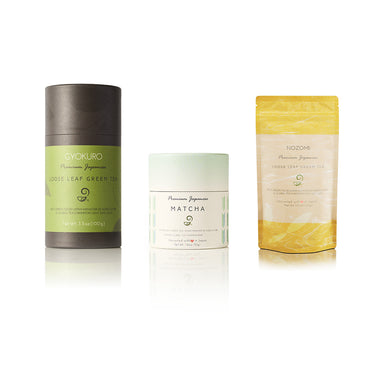 The Covered Trio Gift Set - Ceremonial Matcha, Gyokuro, and Nozomi Japanese Green Tea Set Package
Related products

10 reviews
$179.00 USD
$159.99 USD
USD
/
The Sencha Lover Gift Set - Premium Japanese Green Tea Set Package


Get Free Bonus Books

Sign up for free to the Green Tea Club to get advice and exclusive articles about how to choose Japanese Tea, and tips, tricks, and recipes for enjoying Japanese tea.
About the author
Kei Nishida
Author, CEO Dream of Japan
Certification: PMP, BS in Computer Science
Education: Western Washington University

Thank you very much, Hachisuka-san. I am glad the explanation was easy to follow. Tokushima is a wonderful place, and I hope more people discover it (^^)
Thank you for your concise, easily understood explanation about Japanese green tea
Great service rendered.
In my very modest, tiny way, I have been trying to get Tokushima-ken recognised.
For example, I would like to introduce the dangerous Naruto ipponzuri fishing to the world, but how?