Skip to content

What is Tokoname Japanese Teapot? 🍵 Yunomi Kyusu Made of Clay to Enhance the Taste of Japanese Green Tea

Subscribe to Youtube See all videos

Kei answers questions from an interviewer at the International Virtual Tea Festival 2020. Here are the questions Kei answers in the video: 

  1. Could you please tell me more about the Tokoname teapot?
  2. Does the handle of the teapot get hot?
  3. Does the clay retain the heat well?
  4. Is it bad to leave tea in a teapot for too long? The answer is yes, but Kei explains in the video about the exception, which is cold brewing.

Video Script:

- [Interviewer] The teapots that they reference in the video, do you guys sell those?

- Yeah, is it, this one, right? This one you saw?

- [Interviewer] Oh, yeah, that's the one that I saw, yeah.

- Yes we do sell them. This is the teapot that you get, this the size you can see.

- [Interviewer] Okay.

- And actually, and handmade.

- [Interviewer] Oh really?

- As you can see this has a finer mesh filter here. And this is the red clay that I'm talking about in the video.

- [Interviewer] Oh, okay. I thought that was interesting when the in the video, seeing that mesh being bigger in the teapot. I have one tea pot that has a mesh strainer but it kind of looks like a little cup that you just drop into the tea pot.

- Yep.

- [Interviewer] But it's kind of small.

- Yep. And it's kind of like a blind spot that the tealeaves doesn't open up if it's a little wet. So this gives you the gives the tealeaves enough space to open up. And that's main reason for it. And yeah, the mesh is also good because it filters it very well as well. And you already watched the video so you know, but yeah, the clay is really the differentiation. In Japan, it's actually pretty popular. It has been popular historically. But it's not too wellknown in outside of Japan.

- [Interviewer] Okay.

- We have two types. This is the, we've two types, this is another one. It looks a little more modern but it's even it is actually the same Tokoname clay pot even if it looks different. And this one has the, the one that you can detach and it's easier to clean.

- [Interviewer] Right.

- Yeah. So that's the difference between the two and this is the size.

- [Interviewer] Does the handle get really hot?

- Nope, that's the reason why there is a handle, you hold like that and then you usually hold and then pour.

- [Interviewer] Okay.

- Does not get hot this party gets hot.

- [Interviewer] Yeah, my my regular tea pot that I just use for black teason and such, you know, 'cause it has that curved handle because it's just a standard tea pot. Some sometimes my my knuckles will hit the tea pot and it's kind of hot.

- Yes. Yeah, the traditional Yunomi, this is called Yunomi. Usually has this because of the purpose is to keep the teapot cool. And, cool.

- [Interviewer] Does the clay retain the heat better?

- Not really. That's why it gets hot with emitting the heat. So it does not, but usually the Japanese tea, you steep it for about one minute or so. So within that one minute, it does not get too cool, right? It's because it's only one minute. And the best way to do the tea is boil the water all the way to 100 degrees Celsius or boiling point. And then you cool it down to about 85 degrees c. And that technique is called "Yusamashi". What it does is that, first of all by boiling the tea, it removes the chemical component of something like chlorine and stuffs. And then by cooling that down to about 75 degree c, it 75 to 85 degrees is the best temperature for Japanese, most the Japanese tea. And that is how the actual tea is being served and for instance, for the tea ceremony and so forth. That time to wait is kind of like a meditation time as well. You know-

- [Interviewer] Yeah.

- So there is a history about that as well but it's okay for the teapot to emit the heat. But you don't wanna be keeping it for long because you know, especially Japanese tea. It gets pretty bitter if you keep it for like more than five minutes, so.

- [Interviewer] Good to know. Yeah, I've I have accidentally left black tea and so I got distracted and then the next thing you know, I realized, "Oh, it's been in there a little too long!" And it didn't taste good at all.

- Yes. The exception to that is a cold brewing. If you put the water in a tea, like let's see, this is from HarioI don't know if you've seen this.  And it has, the filter on the back.  Click here of image below to get Hario on Amazon.

Hario 

- [Interviewer] Ah, okay.

- And and you can do it with a regular jar as well. But you put the cold water and you put the tea probably about this much and leave it overnight. That makes very good cold brewing green tea. And for that it, because it's cold, it doesn't get bitter and it actually tastes very good. So you might want to try cold brewing.

- [Interviewer] Oh, I love that idea because I love, why I love green tea hot but I also love it cold too. I actually find it find it refreshing and I drink more when I have the cold green tea. So some sometimes when I'm working I don't always think to drink water because I get involved in what I'm doing. And then when I start getting dehydrated, I realized that when I drink the the cold green tea, I'm better about drinking it.

- Yep. Even if you don't have it, all you have to do is just filter out with a mesh and when you drink it so you don't need a special equipment. And overnight tends to be about the right timing. So you put it at night and in the morning you have a nice fresh cold brewing tea.

- [Interviewer] So something that sighs if you put the tea in it and then put the water over top and basically put it in the refrigerator, you're filling that whole thing up, right?

- Yep, water all the way here and about this much green tea.

- [Interviewer] Okay.

- In our blog, I have a very specific instruction. There is a measurement probably about this much to this.

- [Interviewer] Okay, okay, good, good, excellent. I like that idea.

This teapot looks better so my tea taste better

Buy Tokoname Teapot (mentioned in the video)

FAQs about the Tokoname Japanese Teapot (Yunomi Kyusu)

What makes a Tokoname Japanese teapot different from any other teapot?

Tokoname (常滑) is a region in Aichi Prefecture, Japan, with one of the longest continuous pottery traditions in the country — over 900 years of ceramic production. Tokoname kyusu (急須) are typically made from local iron-rich red clay (called shudei 朱泥), often left unglazed on the inside. The combination of this specific clay and the traditional shaping techniques (often featuring side-handles and integrated mesh strainers in the spout) produces teapots that are functionally and aesthetically distinct from teapots made elsewhere.

The functional claim is that the iron-rich unglazed clay subtly alters the chemistry of green tea brewed inside — softening tannins, removing slight off-flavors from the water, and rounding the cup. Whether this is significant enough to taste varies by drinker; some serious Japanese tea drinkers swear by Tokoname for sencha specifically, while others view the difference as small relative to leaf quality and brewing technique.

Aesthetically, Tokoname kyusu have a distinctive earthy red-brown color, often with subtle texture variations from the firing process. They're functional objects but also collectible — top-tier Tokoname kyusu by named artisans run into the hundreds or thousands of dollars.

Does the unglazed clay really change how tea tastes?

Modestly, yes — and the effect grows over time. The iron in shudei clay reacts faintly with tannins and minerals in the water, slightly rounding harsher notes. Unglazed clay also absorbs trace amounts of tea oils with each use, which over months and years of use "seasons" the pot — meaning future brews carry trace residue of past brews. After a year of regular use with sencha, a Tokoname kyusu develops a deeper, slightly mellower brew profile than a brand-new identical pot would produce.

Whether this seasoning is desirable depends on your relationship with tea. Many Japanese drinkers value it as the kyusu "learning" the tea over time. Others see it as a contamination concern — once seasoned, you can't really switch the kyusu to a different style of tea (e.g., from sencha to hojicha) without ghost flavors carrying through.

The practical advice is to dedicate a kyusu to one type of tea (sencha for one, hojicha for another) and let each season into its purpose. Seasoned kyusu are more flavorful in their dedicated role; mixed-use kyusu stay more neutral but never develop the same depth.

How does Tokoname compare to Banko or other Japanese teapot regions?

Banko-yaki (萬古焼) is the other major Japanese kyusu tradition, from Mie Prefecture. Banko clay is similarly iron-rich but slightly different chemistry, often producing lighter-colored pots (more brown-tan than Tokoname's deep red). Many Japanese tea drinkers consider Banko slightly more elegant or refined; Tokoname slightly more rustic and traditional. Both are functional for green tea brewing; the differences are subtle.

Beyond Tokoname and Banko, smaller traditions exist in Mashiko, Kyoto (kyoyaki), and Hagi. Each produces kyusu with slightly different clay properties and aesthetic. For non-collectors, the differences mostly don't matter — any traditional Japanese kyusu will produce excellent tea.

The one teapot region to actively avoid is generic mass-produced ceramic teapots from outside the traditional regions. Those don't have the integrated strainer designs or the careful balance of well-made kyusu, and they often don't pour properly or strain the leaves correctly. Worth paying for the regional version.

Is a Tokoname kyusu worth the cost vs. cheaper teapot options?

It depends on how often you brew Japanese green tea. A genuine Tokoname kyusu runs $40-150 for a quality everyday pot, more for collectibles. A Western-style ceramic teapot with infuser runs $15-40. So you're paying 2-5x for the Tokoname version. The benefit is real but incremental — slightly better pour, slightly better strain, slightly better flavor over time.

If you brew Japanese green tea daily, the Tokoname is worth it — the quality-of-life improvement and the slow seasoning effect compound over years of use. If you brew once a week or less, the Western teapot is fine and the upgrade has diminishing returns.

If you're just starting out and not sure how committed you'll be, get a basic ceramic teapot first. After 6-12 months of daily drinking, upgrade to a Tokoname if the habit has stuck. Don't make the upgrade purchase until you know you'll use it.

How do I choose and maintain a Tokoname kyusu?

For choosing: pick a size (100-300ml is typical; smaller is better for premium teas, larger for everyday sencha), check the pour (water should flow cleanly without dribbling — try if you can in person; check reviews if buying online), and confirm there's an integrated mesh strainer in the spout (some cheaper Tokoname-style kyusu skip this). Side-handle (yokode) is the traditional Japanese style; back-handle is also common for Western markets.

For maintenance: rinse with hot water after each use (no soap on the inside — soap residues affect future brews and damage the seasoning). Dry thoroughly before storing; mold can grow on damp clay. Don't put it in the dishwasher. Don't put it on direct heat (the clay can crack). If it cracks anyway, it's repairable through the kintsugi tradition (gold-lacquer repair) but expensive — most users replace.

With reasonable care, a quality Tokoname kyusu lasts decades. Many serious Japanese tea drinkers have kyusu they've used for 20+ years. The seasoning compounds; the pot becomes irreplaceable to its owner.

Related products

18 reviews

Tokoname Yaki - Kyusu - 9 fl Oz (270cc) Teapot for Fukamushi tea

$130.00
Quick view

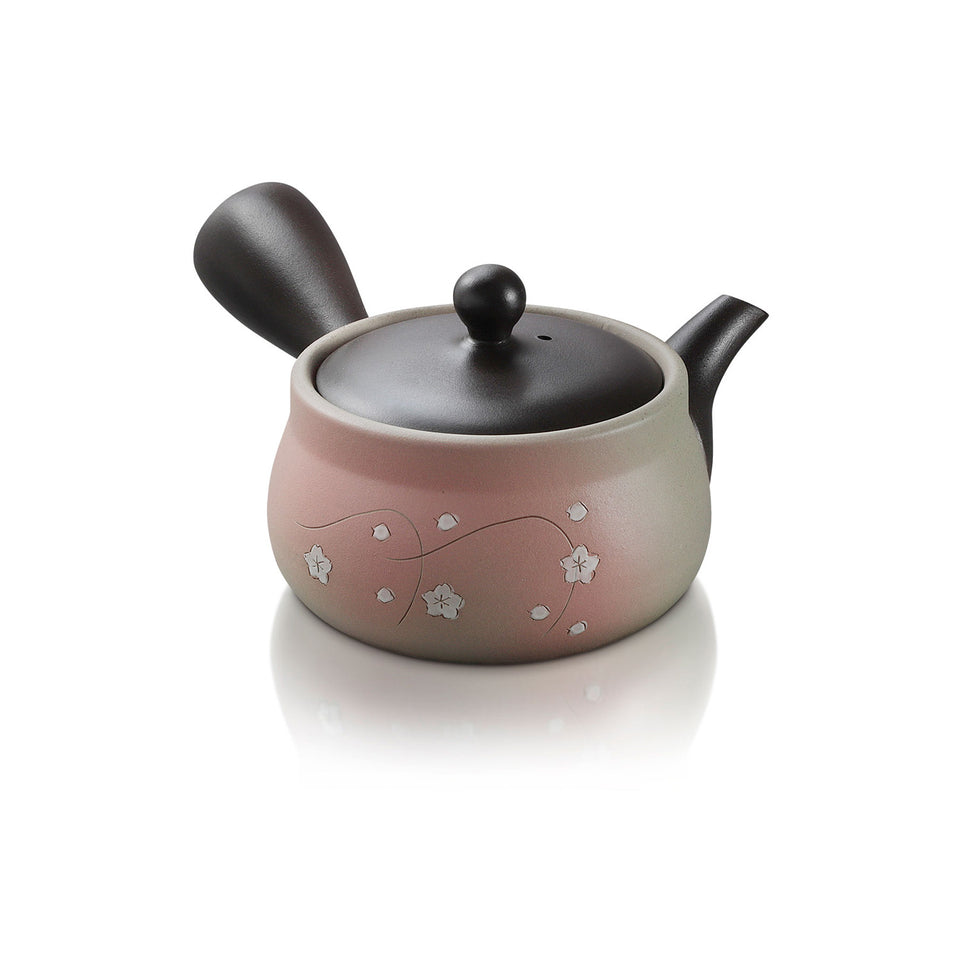
This high-quality teapot, handmade in Tokoname City, Japan, is specially designed for deep-steamed (Fukamushi) tea, featuring an ultra-fine mesh perfect for brewing fine tea leaves. It steeps 9 oz (270cc) and is thoughtfully crafted with a wide opening for easy cleaning, an easy-to-hold handle, and a broader surface area to enhance the tea’s flavor extraction. Made from natural red clay rich in iron, the unglazed interior absorbs some of the tea’s bitterness by pulling out excess catechins, creating a smoother and more pleasant-tasting green tea without sacrificing the health benefits of green tea’s powerful antioxidants. A Tokoname Yaki teapot offers the best of both worlds: a deliciously refined flavor and the full vitality of green tea’s natural goodness.

7 reviews

The Beginner Gift Set - Premium Japanese Green Tea and Japanese Tokoname Kyusu Teapot

$195.00 $156.00
Quick view

This set includes our Premium Gyokuro, a shaded loose-leaf Japanese green tea known for its deep, rich flavor and smooth sweetness. Grown under specially made mats for 20 days, Gyokuro’s cultivation increases caffeine and amino acid levels, giving the leaves their distinctive mossy green color and a unique, layered taste. The careful shading process also imparts a particular aroma that sets this tea apart from all others.

Paired with the tea is a high-quality Tokoname Yaki Kyusu teapot, crafted in Tokoname City, Japan. Designed specifically for deep-steamed Fukamushi tea, this 9 oz (270cc) teapot features a fine mesh strainer, a wide opening for easy cleaning, and an optimal shape to enhance the tea's flavor by allowing better contact between the tea leaves and hot water.

8 reviews

The Sencha Lover Gift Set - Premium Japanese Green Tea Set Package
$179.00 $159.99
Quick view

This tea set features three exceptional Japanese green teas, each crafted with care and traditional techniques. Issaku Reserve, a Global Tea Champion winner in 2017 and 2019, is a rare masterpiece created by Farm Master Mr. Arahata at Arahataen Green Tea Farm. Handpicked once a year from the first flush and processed with advanced methods, Issaku represents the highest-grade deep-steamed green tea, available only in limited quantities even in Japan.

The set also includes Gyokuro, a premium shaded green tea known for its rich, sweet flavor and deep mossy green color. Grown under special mats for 20 days to increase caffeine and amino acid levels, Gyokuro offers a layered, smooth taste unlike any other. Completing the collection is Nozomi, a fine Kabuse-cha, or "Covered Green Tea," carefully grown under nets to gently shade the leaves just before new sprouts emerge, resulting in a soft, rich, and refined flavor profile.

97 reviews

Gyokuro - Shaded Imperial Premium Green Tea

$65.00
Quick view

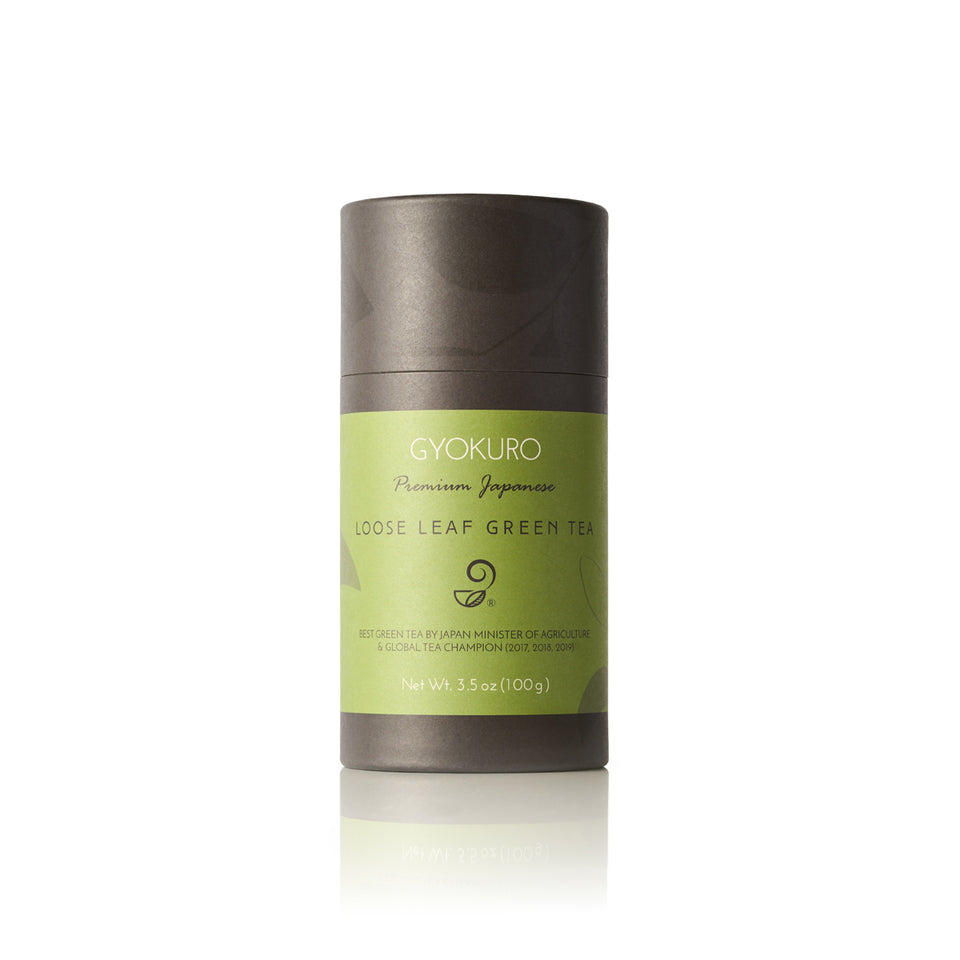
Gyokuro, also known as "jade dew" or "jewel dew tea," is a premium Japanese green tea shaded from the sun for 20 days using specially made mats, a method that boosts caffeine levels and strengthens amino acids to create a sweeter, richer flavor. This extended shading process results in dark, mossy green leaves with an unmistakable aroma and a complex taste that is layered yet balanced. Cultivated by the Chagusaba method in nutrient-rich sugarcane soil and made from the Yabukita cultivar, this loose-leaf authentic Gyokuro is offered in a high-quality, air-tight paper tube canister (chyazutsu) to preserve its exceptional freshness and flavor. Each 3.5 oz (100g) full-size package steeps 30–40 cups, and a convenient single-serve sample is also available.

45 reviews

Hojicha - Roasted Green Tea

$25.00
Quick view

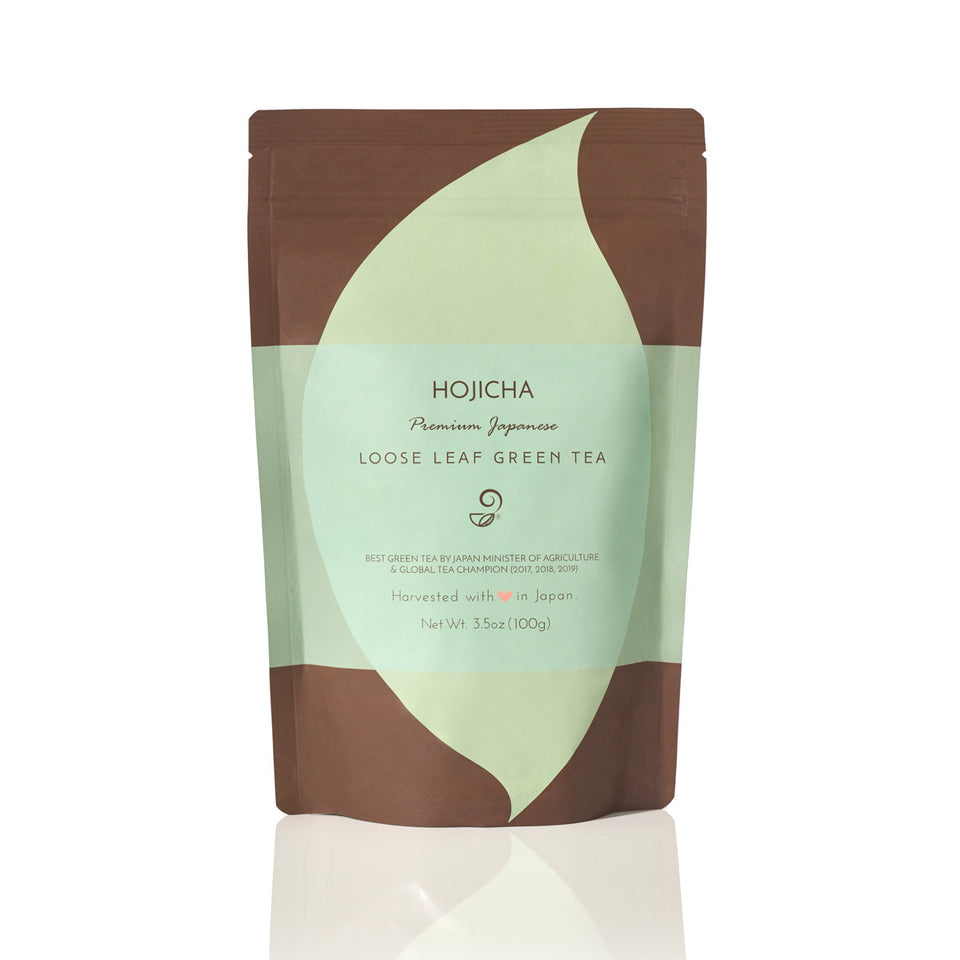
Our roasted green tea, known as hojicha (ほうじ茶), is crafted from freshly harvested premium green tea carefully roasted in porcelain over charcoal to maximize flavor while retaining more catechins than typical hojicha on the market. With lower caffeine and a smoother, less bitter taste compared to steamed green tea, it is an ideal choice for evening relaxation and is gentle enough for kids and pregnant women. Cultivated using the Chagusaba method in nutrient-rich sugarcane soil, this loose-leaf authentic Japanese roasted green tea, made from the Yabukita cultivar, also pairs beautifully with oily foods. Each eco-friendly resealable package contains 3.5 oz (100g) of tea, enough to steep 30–40 comforting cups.


Related Articles You May Be Interested

Do You Know How To Prepare And Serve Green Tea Correctly?
Matcha vs Sencha (Loose-leaf) Green Tea: What Are the Differences?
Is Using The Microwave Good For Green Tea? - The Answer May Surprise You
Everything You Need To Know About Water And Japanese Green Tea
Can Teapot Make Your Green Tea Taste Better? - Facts About Tokoname Teapot (常滑急須)
Can Teapot Make Your  Green Tea Taste Better?  - Facts About  Tokoname Teapot (常滑急須)

Get Free Bonus Books

Join Green Tea Club

Sign up for free to the Green Tea Club to get advice and exclusive articles about how to choose Japanese Tea, and tips, tricks, and recipes for enjoying Japanese tea.

Unsubscribe anytime. It’s free!

About the author

Kei Nishida

Kei Nishida

Author, CEO Dream of Japan

info@japanesegreenteain.com

Certification: PMP, BS in Computer Science

Education: Western Washington University
Kei Nishida is a passionate Japanese green tea connoisseur, writer, and the founder and CEO of Japanese Green Tea Co., a Dream of Japan Company.

Driven by a deep desire to share the rich flavors of his homeland, he established the only company that sources premium tea grown in nutrient-rich sugarcane soil—earning multiple Global Tea Champion awards.

Expanding his mission of introducing Japan’s finest to the world, Kei pioneered the launch of the first-ever Sumiyaki charcoal-roasted coffee through Japanese Coffee Co. He also brought the artistry of traditional Japanese craftsmanship to the global market by making katana-style handmade knives—crafted by a renowned katana maker—available outside Japan for the first time through Japanese Knife Co.

Kei’s journey continues as he uncovers and shares Japan’s hidden treasures with the world.

Learn more about Kei Nishida

Related Posts

Behold: Balmuda's "The MoonKettle" — Where Boiling Water Becomes Art

We were privileged to be invited by Balmuda's Private MoonKettle Launch Event. Here are videos of it and everything you

Read More
OC Japan Fair April 2026 — Visit Us at Booth #A8!
OC Japan Fair Spring 2026 Recap (April 3 - 5 2026)

We were at OC Japan Fair again! April 3-5 2026 with new products, Miki Pon's art debut and more. Here is a recap video f

Read More
Super Mario and Japanese Green Tea

Super Mario and green tea share a hometown! Watch our Yoshi Matcha Cookies video recipe + discover how Nintendo and matc

Read More
Leave a comment

Your email address will not be published..

Cart

Your cart is currently empty.

Start Shopping

Select options