

A great time to enjoy Japanese green tea is, well, always! And that means when you live a busy lifestyle, you may not have access to a teapot and stove to heat the water for the perfect green tea infusion.
Whether you’re commuting, working at your desk, or relaxing after a long day, having a reliable cold-brew setup makes it effortless to enjoy authentic Japanese green tea wherever you are. The growing popularity of cold-brewing isn’t just about convenience—it’s about unlocking a new dimension of flavor. Cold water extraction brings out the natural sweetness and subtle umami of premium sencha or gyokuro, offering a smooth and refreshing taste without bitterness. With the right equipment, even beginners can enjoy a café-quality tea experience at home or on the go.
If you could brew on the go, you would never have to be without your favorite beverage. So today we are looking at the Hario Cold Brew Filter-In Tea Bottle, manufactured by Hario Co., Ltd.

An "On-The-Go" Lifestyle Needs Japanese Green Tea on the Go!
One great option for making tasty Japanese green tea is cold brewing. Conceivably the best benefit of cold-brewing Japanese green tea is that you can be on the go and still enjoy a fresh cup anytime.
When cold-brewing green tea is done correctly, it results in a smoother and sweeter beverage compared to a hot-brewing process. This mellower green tea beverage is the result of fewer bitter tannins. Tannins are naturally released when brewing green tea, but few tannins are released during the cold brew process.
And if you’re concerned about caffeine levels, cold-brewed Japanese green tea contains less caffeine than its hot-brewed counterpart.
Another advantage of cold-brewing is how forgiving and simple the process can be. There’s no need to measure water temperature or worry about over-steeping—just add loose-leaf tea, fill the bottle with cold water, and let time do the rest. This method preserves the tea’s delicate aroma and enhances the umami flavor that Japanese green tea is known for. It’s the perfect way to stay hydrated throughout the day, providing a gentle energy boost without the jitters of coffee, and making your daily routine both refreshing and healthful.

The Hario Cold Brew Filter-In a Tea Bottle
Since we’re focused on cold-brewed Japanese green tea, I thought it might be fun and helpful to give a review of a product you can utilize for cold-brewed green tea. The Hario Cold Brew Filter-In Tea Bottle lets you have freshly brewed Japanese green tea on the go.
What makes this bottle stand out is its thoughtful Japanese design philosophy — simple, functional, and elegant. The Hario Filter-In Tea Bottle combines a modern aesthetic with practical features that suit everyday use. Its durable glass body allows you to appreciate the natural color of the brewed tea, while the built-in silicone filter cap ensures a smooth pour without loose leaves escaping. This sleek combination of form and function reflects the Japanese dedication to craftsmanship and mindful living, turning even a quick cold-brew session into a small, calming ritual.
Here is some relevant information on the Hario Cold Brew Filter-In Tea Bottle product for Japanese green tea cold brewing:
Hario Product specifications:
Product Manufacturer: Hario Co., Ltd.
Product Size: 750 ml
Product Color: Olive Green *
Product Dimensions: 22 x 15 x 13 inches
Product Weight: 1.09 lbs.
Product Model Number: FIB-75-OG
Amazon Price: $21.99
Comparative Price: $21.00 to $40.90
*also comes in red, white, and black.

Japanese Green Tea Lovers will Benefit From the Hario
There are few products exactly like the Hario for cold-brewing Japanese green tea. Most of the cold-brew tea canisters have spouts for pouring, so they won’t be as easy to travel with as the Hario. The snug-fitting plastic dome cap lets you carry the canister on the go.
The Hario is simple to use and is specifically designed for cold-brewing green tea. Its canister is made of glass, which allows for a clean-tasting green tea beverage. The mesh filter keeps tea particles from floating in the brewed tea. Cleanup is simple because of the wide-mouthed lid.
Another reason tea enthusiasts love the Hario is its versatility. It’s not limited to sencha or gyokuro—you can experiment with genmaicha, hojicha, or even floral green tea blends. Some users like to infuse fruits such as yuzu, lemon, or cucumber slices to create a refreshing, spa-like drink. Because the bottle maintains flavor purity, each brew highlights the unique aroma and sweetness of the leaves. For anyone seeking a convenient yet authentic way to appreciate Japanese green tea’s subtle nuances, the Hario truly bridges traditional tea culture with modern, on-the-go living.

This is My Personal Favorite
I use Hario every day and also at trade shows. More than functionality, I like this product for the look of it too. It looks so modern on the kitchen counter, and the simplicity of the design is just lovely.
I go to many tea trade shows and events, and I notice that many of the vendors use this product.
I am Japanese, so I am a bit biased about Japanese products (sorry!), but I think they did a pretty good job!
What I appreciate most about the Hario is how it turns a simple act—brewing tea—into a mindful moment. Every time I prepare a batch, I feel connected to Japan’s long tradition of tea craftsmanship, yet with a modern twist that fits seamlessly into daily life. The quiet satisfaction of watching the green tea leaves gently swirl in cool water is both calming and beautiful. It reminds me that good design doesn’t just serve a purpose—it elevates an experience. Whether at home, in a booth surrounded by fellow tea enthusiasts, or on the road, the Hario adds a little piece of Japanese elegance to every cup.

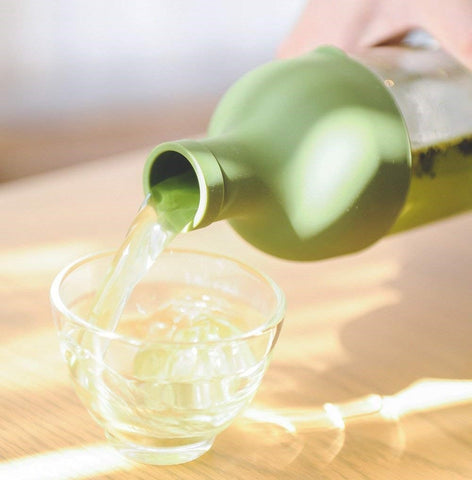
Famous Blue Bottle Coffee also collaborated with Hario and sold this product as a cold brew bottle. Here is a picture of the Hario version of the same product. (picture 1, picture 2)
Customers Have Had a Good Experience With the Hario
Aside from me personally using it and loving it, I reviewed all the product reviews on Amazon. Most customer reviews were very favorable about the Hario, with the product receiving about an 88% positive rating. The following are the ratings I found:
What truly stands out in these reviews is the consistency of praise across different types of users. From casual tea drinkers trying cold brew for the first time to seasoned green tea enthusiasts, many highlight how the Hario delivers both flavor and convenience without compromise. Several reviewers mentioned that it quickly became a daily-use item in their homes because of its sleek look, ease of cleaning, and ability to make café-quality tea with minimal effort. Others appreciated that the Hario’s glass construction doesn’t alter the taste, preserving the delicate sweetness and umami that define Japanese green tea. This broad satisfaction reflects not just a good product—it shows that Hario has created something that fits effortlessly into modern tea culture around the world.
5 star – 82%
4 star – 6%
3 star – 7%
2 star – 4%
1 star – 1%
Product Pros
Most comments about the Hario were favorable. Here are some of the product pros I discovered:
- Customers liked the convenient access to fresh, cold-brewed green tea.
- Customers liked the quality of the green tea flavor the Hario brewed.
- Customers liked the ease of use.
- Customers liked the glass container, saying it gave the green tea a better flavor.
- Customers liked the cold brewing that made the green tea smoother and sweeter.
- Customers liked the quality of the glass container.
- Customers liked the style and appearance of the product.
- Customers liked the glass container size.
- Customers liked the plastic dome lid, as it had a snug fit.
- Customers liked the wide-mouth lid, as it made the Hario easy to clean.
- Customers liked the wide-mouth lid, as it was easy to add ice cubes and fruits for herbal infusions.
Product Cons
Only a few negative comments about the Hario were made. Here are some of the product cons I discovered:
- Customers disliked that the recommended brew time of 5 hours was inconvenient.
- Customers disliked the glass container due to its risk of breaking.
- Customers disliked the plastic cap that was loosely fitted to the filter.
- Customers disliked the plastic cap, which got an unpleasant odor after a few washings.
- Customers disliked that the filter became a little loose, allowing tea particles to get in the tea.
What Alternatives to the Hario Are Available?
A thorough search revealed comparable products to the Hario, although most of them have a spout for pouring. Many products specifically for cold brew travel are available for coffee, but not so much for brewing green tea. Here is a list of similar products. The prices are average online.
If you’re comparing alternatives, focus on details that matter for Japanese green tea rather than coffee. Look for a fine mesh (200–400 micron) or tightly woven filter that won’t let delicate sencha or gyokuro leaf fragments through; a glass or high-quality, BPA-free body to preserve clean taste; and a lid that seals well enough for commuting without leaks.
Pitcher-style brewers with spouts excel for fridge batches (700–1500 ml), family serving, and fruit infusions, while bottle-style brewers are better for single-serve portability. Consider filter placement (top cap vs. full-length column) for even extraction, and check that the mouth is wide enough for easy cleaning and adding ice or yuzu slices. Finally, weigh durability (silicone + borosilicate vs. thin plastic), brew time guidance, and replacement-part availability—small differences here often decide whether a brewer becomes your daily driver or sits in the cupboard.


Is the Hario Worth your Money?
The Hario Cold Brew Filter-In Tea Bottle really seems to be worth your money, both in terms of convenience and the process of brewing tasty Japanese green tea on the go. If you can find it on places like Amazon, then the price makes it even more attractive to own.
Beyond its affordability, the long-term value of the Hario comes from its durability and design efficiency. Unlike cheaper plastic infusers that can retain odors or alter the taste of tea, the Hario’s borosilicate glass ensures purity and a longer lifespan. You’re not just paying for a bottle—you’re investing in a reliable brewing companion that encourages healthier hydration habits and appreciation for authentic Japanese tea flavor. With minimal maintenance, it can last for years, easily offsetting its modest cost. For tea enthusiasts who crave both quality and simplicity, the Hario stands out as a practical and aesthetically pleasing addition to any daily routine.
Conclusion
Cold-brewing Japanese green tea is more than just a convenient trend—it’s a refreshing way to savor the delicate balance of sweetness, umami, and smoothness that defines authentic Japanese tea. The Hario Cold Brew Filter-In Tea Bottle captures that experience perfectly, combining Japanese craftsmanship with modern practicality. It allows tea lovers to enjoy a flavorful, low-caffeine brew anytime, anywhere—whether at home, at work, or on the go. With its elegant design, ease of use, and reliable performance, the Hario truly stands out as the best companion for anyone looking to make cold-brewed green tea part of their daily ritual.
Click Here to Get Yours!
This article was originally published on T-ching, where my work is featured

Related products
8 reviews
$179.00
$159.99
/
Quick view
The Sencha Lover Gift Set - Premium Japanese Green Tea Set Package


18 reviews
$130.00
$99.99
/
Quick view
Tokoname Yaki - Kyusu - 9 fl Oz (270cc) Teapot for Fukamushi tea
FAQs about Cold-Brew Japanese Green Tea Equipment
What's the right tea-to-water ratio for a cold-brew pitcher?


Get Free Bonus Books

Sign up for free to the Green Tea Club to get advice and exclusive articles about how to choose Japanese Tea, and tips, tricks, and recipes for enjoying Japanese tea.
About the author

Kei Nishida
Author, CEO Dream of Japan
Certification: PMP, BS in Computer Science
Education: Western Washington University
Kei Nishida is a passionate Japanese green tea connoisseur, writer, and the founder and CEO of Japanese Green Tea Co., a Dream of Japan Company.
Driven by a deep desire to share the rich flavors of his homeland, he established the only company that sources premium tea grown in nutrient-rich sugarcane soil—earning multiple Global Tea Champion awards.
Expanding his mission of introducing Japan’s finest to the world, Kei pioneered the launch of the first-ever Sumiyaki charcoal-roasted coffee through Japanese Coffee Co. He also brought the artistry of traditional Japanese craftsmanship to the global market by making katana-style handmade knives—crafted by a renowned katana maker—available outside Japan for the first time through Japanese Knife Co.
Kei’s journey continues as he uncovers and shares Japan’s hidden treasures with the world.
Learn more about Kei

