Skip to content

What is Single Origin Cultivar?

In some respects, it is easy to understand that tea cultivar selection is not the biggest consideration when buying tea. Chances are, you or perhaps those you know can share very few details about cultivars in agriculture, let alone tea. In fact, it is a surprising element in the tea market that continues to flourish and expand. Regardless of how complicated the topic of cultivars can be, it is possible to break it down into several key components.

It is also important to understand the concept of 'single origin cultivar’ if you want to know how to buy good quality tea, and also just as important, to be able to buy tea suited to your personal taste and desired health benefits. 

Single origin teas are truly unique because they possess robust and unmasked characteristics. The sensory palette of a single origin tea is like a solo actor on an empty stage, where every note, every scent, every color, and every finish belongs entirely to that one variety.

When you are shopping on our site, you will come across single origin cultivar teas.  

🌿 Explore our teas, each made from a single origin cultivar:

As market demand continues to develop for specific tea cultivars, perhaps this blog’s entry will provide you with the opportunity to educate others. More specifically, this entry’s focus is on understanding "single origin cultivars" with a quick review of cultivars.

Do you know what “cultivar” is?

A cultivar, in the world of horticulture, is where specific traits are sought in a given plant and subsequently grown. Cultivating plants is not specific to the tea plant, also known as Camellia sinensis. Norman Borlaug, aka the "Father of the Green Revolution," used crossbreeding to attain desired traits to help stem off wheat rust and fuel new methods for attaining higher yields of wheat in the US and Mexico. While often attributed to the work of those on the ground, cultivars can be established, albeit rarely, in the wild as well. Click here to read more about cultivars.

Caltiver

Some unique cultivars you may not be familiar with…

For those more interested in tea cultivars, the Japanese have helped fuel this development in recent decades through national research. If you are keenly interested, some unique Japanese-created cultivars include "benifuuki" (grown often in black teas, you will also find it in green teas for its higher methalated catechin count—a great tea to help with allergies; feel free to check out our 1 minute explanation of benifuuki tea here), Yabukita, and Shizu-731 (known for its distinct cherry blossom aroma. Yes, oddly enough, it smells like cherry blossoms). The list of Japanese tea cultivars is long and continues to grow! (Please see more on cultivars and Japan here.)

Our selection of Benifuuki Allergy Relief Tea includes both green tea powder and our tea bags, as well as actual candies.

A brief look at cultivars in your everyday tea

Now that you have an understanding of cultivars generally, let's spend some time exploring why a single-origin cultivar is worth its distinction. Before we do that, however, we must get an idea of how tea is processed, particularly via modern manufacturing methods.

If you have purchased sencha at a store, for example, there is a good chance you have seen small, "folded" tea leaves that may be broken and even smaller twigs or branches in the package. Many larger manufacturers and resellers of tea purchase the leaves from farms and package them accordingly. They are often less interested in parsing out specific tea leaves, for example, and more interested in gathering what is available and selling it. Each of the farms that they purchase tea from, however, is growing tea from a given cultivar. While the most common cultivar in Japan is yabukita, this does not account for all It is entirely possible, for example, that the sencha you purchase in that store may contain several or many different cultivars.

But what exactly is a single origin cultivar?

This is precisely where "single origin cultivar" distinguishes itself in our discussion. These teas are often straight from a single farm, where a farmer has chosen a given cultivar and sold it to a reseller who is looking for that specific cultivar. To use benifuuki as a further example, resellers understand that allergies are a real concern for many and that this single cultivar is often a great solution for their customers. Single-origin cultivars are slowly becoming more popular, and it may be worth the time to understand these a bit further.

Next time you are out shopping for tea, take a second to review the packaging. Is there a cultivar listed? If so, what is the cultivar? Do you know what desirable traits are present? Here is an example below from our very own web-shop where you can buy Benifuuki allergy relief green tea

As you may have guessed, there is a lot more to learn, but one step at a time may be one of the best ways to shape your tea experience. So sip on your tea and enjoy the learning process!   

FAQs about Single-Origin Cultivar Teas

What's the difference between a single-origin cultivar tea and a blended tea?

A single-origin cultivar tea is made from one specific tea plant variety (the cultivar), grown on one farm, harvested in one season. A blended tea mixes leaves from multiple farms, multiple cultivars, sometimes multiple harvests, and even multiple countries — all combined to hit a consistent price point and flavor profile across batches.

The wine analogy holds up well here. A single-vineyard pinot noir from one specific year tastes like that vineyard and that year. A grocery-store blend tastes broadly like 'pinot noir' but loses all the specifics. Most supermarket green tea is the second category. Single-origin is the first.

Why it matters: when you drink a single-origin cultivar tea, every flavor note belongs to that one variety, that one piece of land, and that season's weather. Our Issaku Reserve is exactly this — Yabukita cultivar, single Shizuoka farm, single harvest. Two-time Global Tea Champion (2017, 2019).

Why does the cultivar of a tea plant matter for taste?

Cultivars are different genetic strains of the same plant species (Camellia sinensis), and each strain produces noticeably different leaves — different aroma compounds, different sweetness, different body, different astringency. It's the same idea as apple varieties: a Honeycrisp and a Granny Smith are both apples, but they don't taste remotely the same.

Yabukita (やぶきた) — the most-planted Japanese cultivar — gives a balanced, slightly grassy profile that's become the 'classic' Japanese green tea taste. Saemidori produces a sweeter, more umami-forward cup. Benifuuki has high methylated catechins (the allergy-relief compound). Shizu-731 produces a distinctly cherry-blossom-like aroma. Drink them side-by-side and the differences are obvious.

In Japan, prefectures even have their preferred cultivars — Yabukita in Shizuoka, Yutakamidori in Kagoshima, Saemidori in Kagoshima and Miyazaki. Knowing the cultivar tells you a lot about what to expect from the cup before you even brew it.

What's the most common Japanese green tea cultivar, and what does it taste like?
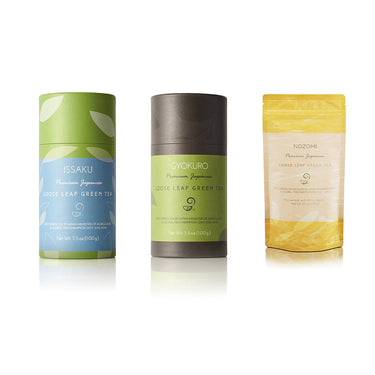
Yabukita (やぶきた). It accounts for roughly 75% of all Japanese tea plantations, which makes it the default cultivar most people are tasting when they drink generic 'Japanese green tea.' It was developed in the 1950s by Hikosaburo Sugiyama in Shizuoka and crossed two earlier varieties to produce a balance of yield, hardiness, and flavor.

Flavor-wise, Yabukita is the textbook Japanese green tea profile: vegetal, grassy, slightly umami, with a clean finish and moderate astringency. It's not the most exotic-tasting cultivar, but it's reliable, expressive, and pairs well with the standard Japanese processing methods (sencha, gyokuro, kabusecha).

Because Yabukita is the baseline, it's the perfect starting point if you're learning to taste Japanese green tea. Once your palate knows what Yabukita tastes like, comparing other cultivars becomes much more revealing. Our Sencha Lover Gift Set lets you taste different teas side-by-side, which is the fastest way to develop that calibration.

Are blended teas always lower quality than single-origin teas?

Not necessarily lower quality, but lower distinctiveness. A skilled tea blender can balance leaves from multiple farms to produce a clean, drinkable cup at a lower per-bag price than any single-origin would manage. That's a real craft and not something to dismiss. Most everyday supermarket tea — including premium brands — is blended for exactly this reason.

What blending sacrifices is character. The whole point of a blend is to even out the year-to-year and farm-to-farm variation, so the cup tastes the same regardless of when you bought it. Single-origin teas vary intentionally — a 2024 harvest tastes different from a 2025 one, and that's part of what you're paying for.

Practical guidance: blends are great for daily volume drinking when you don't want surprises. Single-origin is for the cups you actually pay attention to — when you're tasting on purpose, when you want to know what 'real Yabukita from Shizuoka' tastes like, or when you're comparing harvests. Both have a place.

How can I tell if a green tea is genuinely single-origin?

Real single-origin tea will tell you specifics on the package: the cultivar name (Yabukita, Saemidori, Benifuuki, Shizu-731, etc.), the farm or region (Shizuoka, Kagoshima, Uji, Yame), and ideally the harvest year and which flush (first/spring is the most prized). If a tea just says 'Japanese Green Tea' or 'Premium Sencha' without any of those details, it's almost certainly a blend.

Our Benifuuki tea bags specify the Benifuuki cultivar — single origin in the strictest sense, since this cultivar is so rare it's grown in only a small number of farms. Same with our Issaku Reserve, where the package names the Yabukita cultivar and the Shizuoka farm. The label transparency is part of what 'single origin' actually means.

Worth knowing: 'Japan' on the package is not the same as 'single-origin.' A lot of teas marketed as 'Japanese green tea' are blends across multiple Japanese prefectures, or worse, are blends with non-Japanese leaves. Read the cultivar field, not the country field.

Related products

8 reviews

The Sencha Lover Gift Set - Premium Japanese Green Tea Set Package
$179.00 $159.99
Quick view

This tea set features three exceptional Japanese green teas, each crafted with care and traditional techniques. Issaku Reserve, a Global Tea Champion winner in 2017 and 2019, is a rare masterpiece created by Farm Master Mr. Arahata at Arahataen Green Tea Farm. Handpicked once a year from the first flush and processed with advanced methods, Issaku represents the highest-grade deep-steamed green tea, available only in limited quantities even in Japan.

The set also includes Gyokuro, a premium shaded green tea known for its rich, sweet flavor and deep mossy green color. Grown under special mats for 20 days to increase caffeine and amino acid levels, Gyokuro offers a layered, smooth taste unlike any other. Completing the collection is Nozomi, a fine Kabuse-cha, or "Covered Green Tea," carefully grown under nets to gently shade the leaves just before new sprouts emerge, resulting in a soft, rich, and refined flavor profile.

97 reviews

Gyokuro - Shaded Imperial Premium Green Tea

$65.00
Quick view

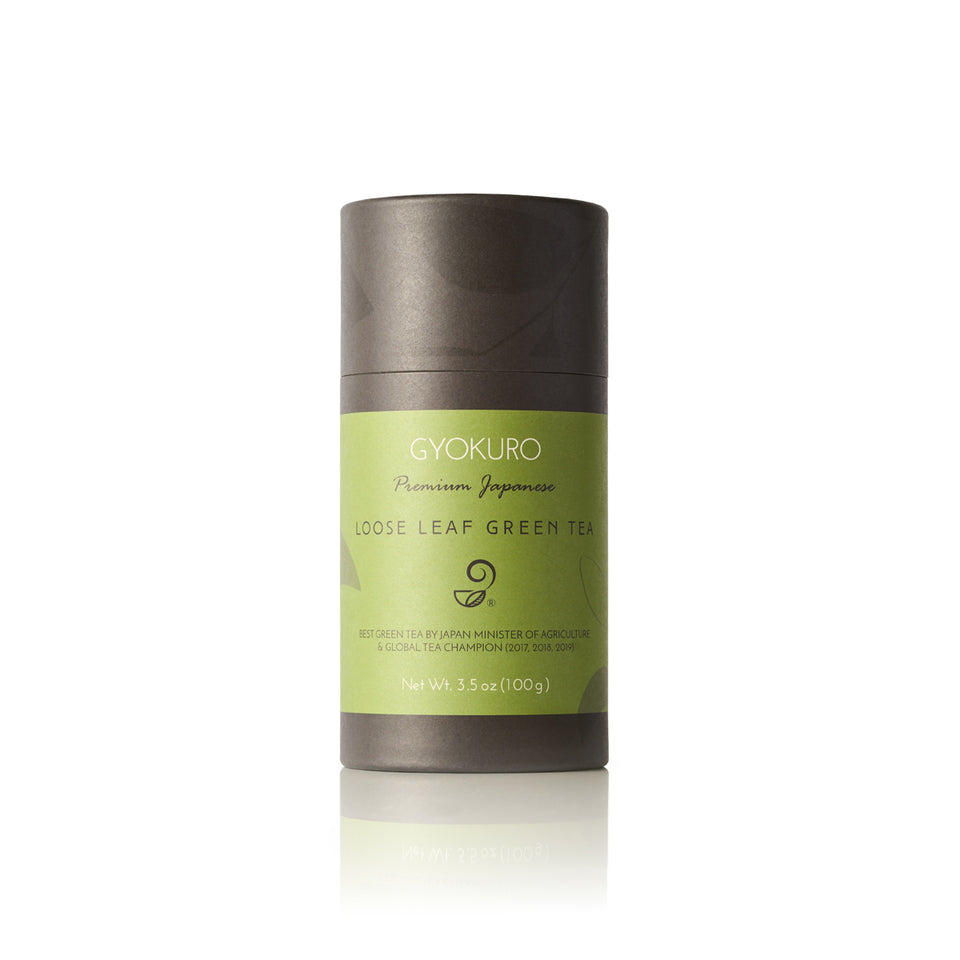
Gyokuro, also known as "jade dew" or "jewel dew tea," is a premium Japanese green tea shaded from the sun for 20 days using specially made mats, a method that boosts caffeine levels and strengthens amino acids to create a sweeter, richer flavor. This extended shading process results in dark, mossy green leaves with an unmistakable aroma and a complex taste that is layered yet balanced. Cultivated by the Chagusaba method in nutrient-rich sugarcane soil and made from the Yabukita cultivar, this loose-leaf authentic Gyokuro is offered in a high-quality, air-tight paper tube canister (chyazutsu) to preserve its exceptional freshness and flavor. Each 3.5 oz (100g) full-size package steeps 30–40 cups, and a convenient single-serve sample is also available.

45 reviews

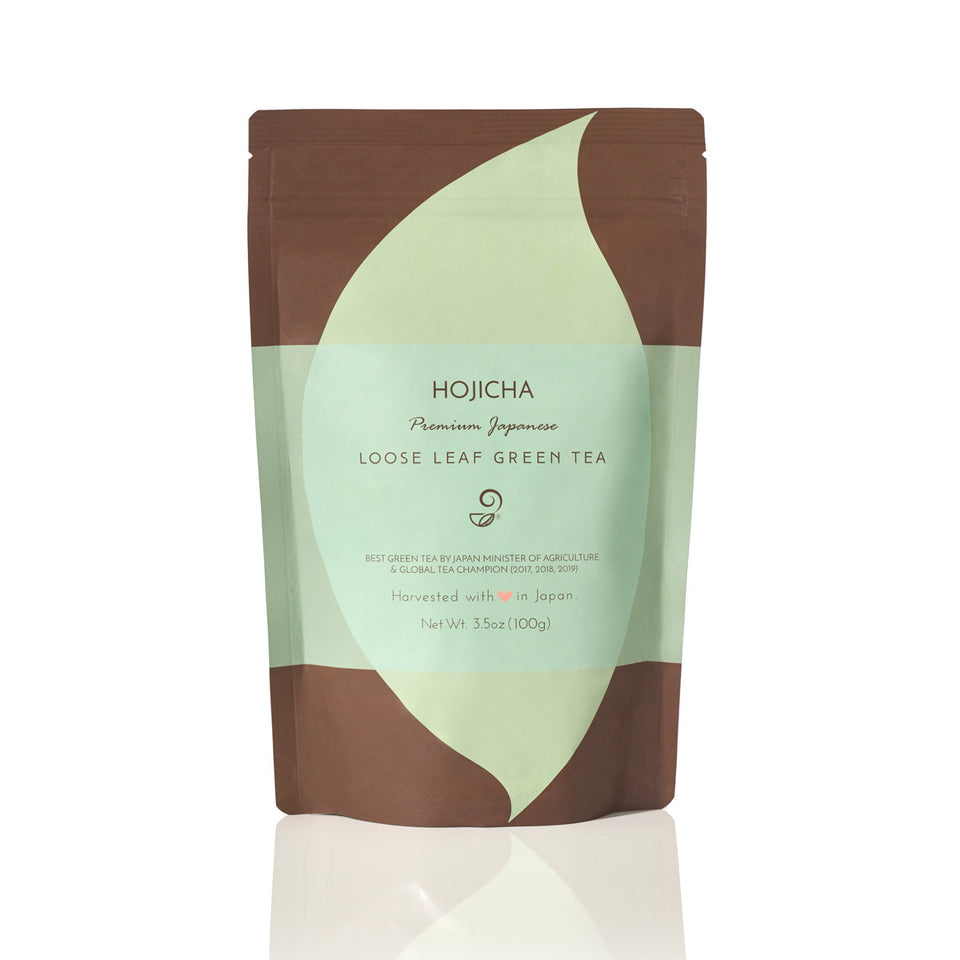
Hojicha - Roasted Green Tea

$25.00
Quick view

Our roasted green tea, known as hojicha (ほうじ茶), is crafted from freshly harvested premium green tea carefully roasted in porcelain over charcoal to maximize flavor while retaining more catechins than typical hojicha on the market. With lower caffeine and a smoother, less bitter taste compared to steamed green tea, it is an ideal choice for evening relaxation and is gentle enough for kids and pregnant women. Cultivated using the Chagusaba method in nutrient-rich sugarcane soil, this loose-leaf authentic Japanese roasted green tea, made from the Yabukita cultivar, also pairs beautifully with oily foods. Each eco-friendly resealable package contains 3.5 oz (100g) of tea, enough to steep 30–40 comforting cups.

80 reviews

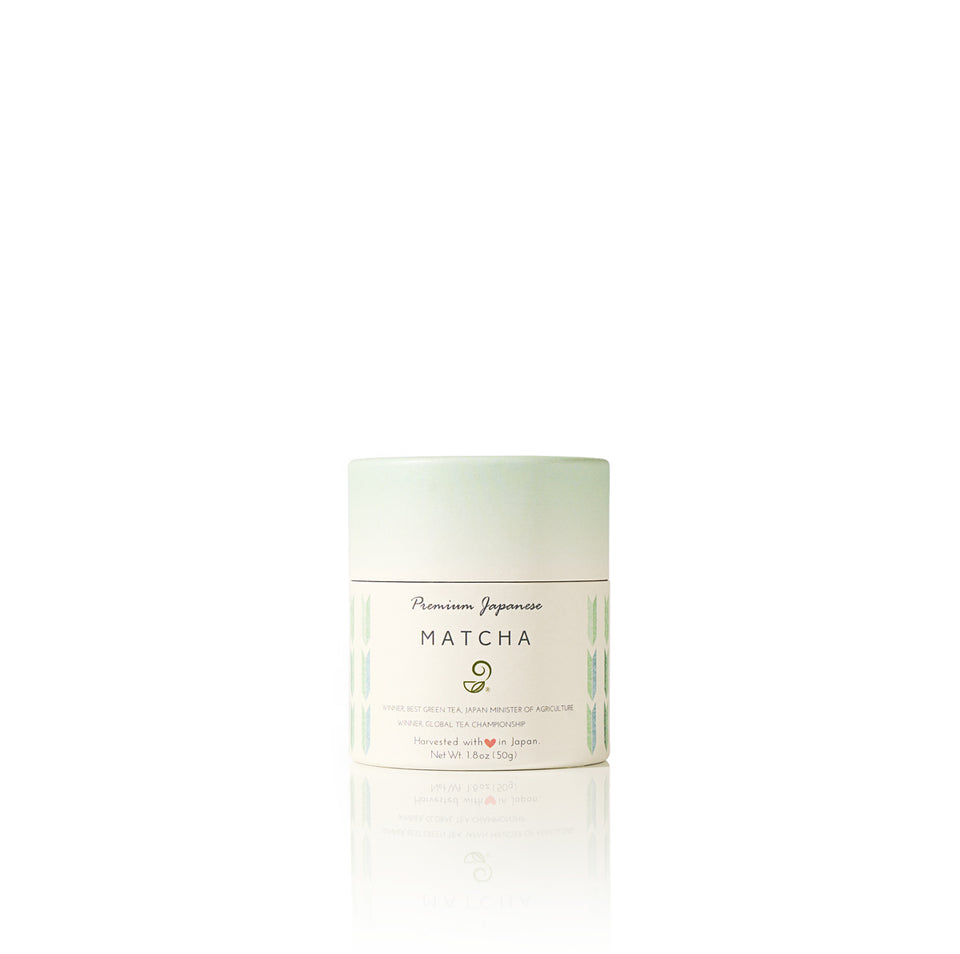
Matcha - Ceremonial Japanese Powdered Green Tea

$39.00
Quick view

This ceremonial matcha is crafted from the finest Japanese green tea, grown in nutrient-rich soil enhanced with compostable grasses and sugarcane through the Chagusaba method, which gives the tea a natural sweetness and exceptional flavor. In collaboration with researchers from Shizuoka University, farmers ensure that the soil quality consistently produces tea of the highest standard.

Renowned among top Japanese chefs for its unmatched aroma, this matcha is made by carefully shading the plants before harvest to boost caffeine and amino acids, then meticulously drying, de-stemming, and grinding the leaves into a fine powder. Made from the Yabukita cultivar, this 1.8 oz (50g) matcha comes in a high-quality, air-tight paper tube canister, providing a luxurious and authentic Japanese tea experience.

42 reviews

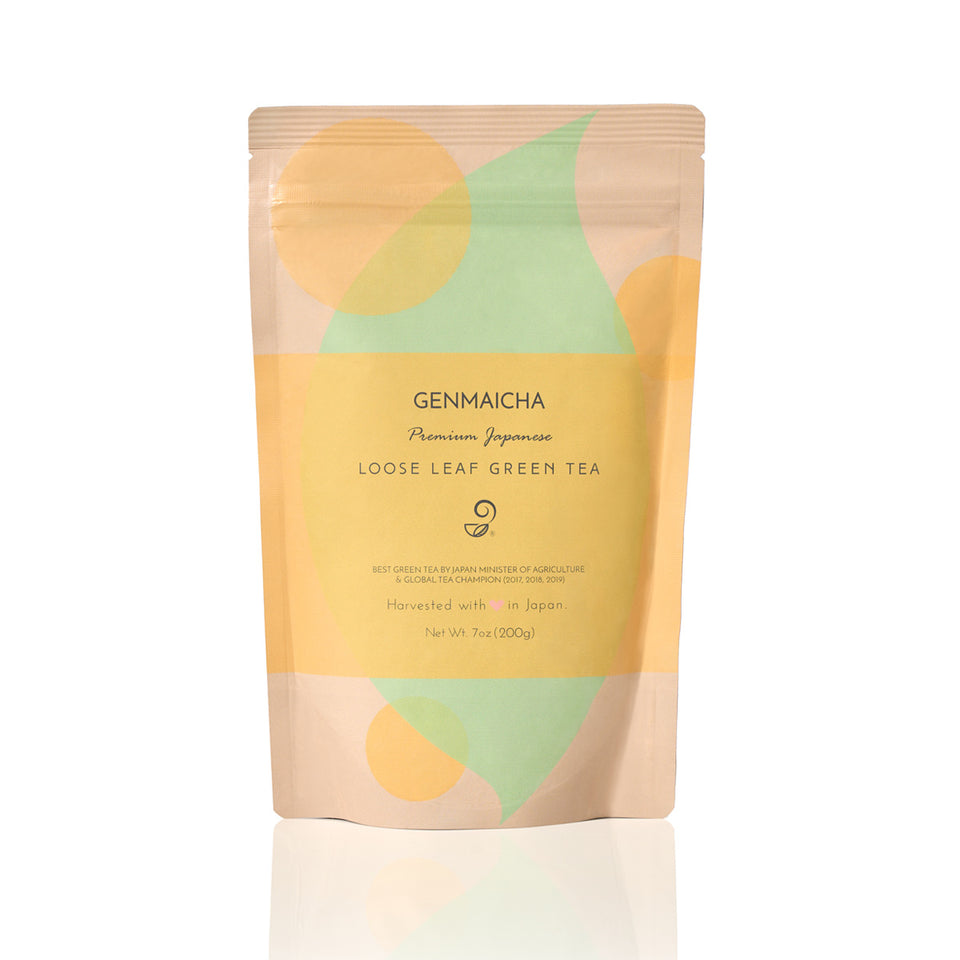
Genmaicha - Green Tea with Roasted Brown Rice

$30.00
Quick view

Our premium Japanese Genmaicha blends high-quality green tea with roasted popped brown rice (genmai 玄米), often nicknamed "popcorn tea" because the roasting process sounds like popcorn popping. Popular especially among the older generation in Japan for its mild flavor and lower caffeine content, this tea is easier on the stomach while still offering a rich, comforting taste. The brown rice used is premium Japanese mochi-gome (もち米) sticky rice, enhancing the tea’s nutty, aromatic profile. Made from Fukamushi Sencha and cultivated using the Chagusaba method in nutrient-rich sugarcane soil, this Genmaicha features the Yabukita cultivar and comes in a 7.0 oz (200g) eco-friendly resealable package, enough to steep 50–60 cups.


Related Articles You May Be Interested

Cultivars: Why You Should Think Twice About Them
What is Yabukita (やぶきた)
Benefits Of Steeping Green Tea Over Boiling Or Simmering
Will I Lose Weight Faster if I had Lemon or Ginger to Green Tea? - Green Tea Quiz
Can You Put Oat Milk in Tea? Yes — Here's How (Matcha + Hojicha Recipes)

Get Free Bonus Books

Join Green Tea Club

Sign up for free to the Green Tea Club to get advice and exclusive articles about how to choose Japanese Tea, and tips, tricks, and recipes for enjoying Japanese tea.

Unsubscribe anytime. It’s free!

About the author

Kei Nishida

Kei Nishida

Author, CEO Dream of Japan

info@japanesegreenteain.com

Certification: PMP, BS in Computer Science

Education: Western Washington University

Kei Nishida is a passionate Japanese green tea connoisseur, writer, and the founder and CEO of Japanese Green Tea Co., a Dream of Japan Company.

Driven by a deep desire to share the rich flavors of his homeland, he established the only company that sources premium tea grown in nutrient-rich sugarcane soil—earning multiple Global Tea Champion awards.

Expanding his mission of introducing Japan’s finest to the world, Kei pioneered the launch of the first-ever Sumiyaki charcoal-roasted coffee through Japanese Coffee Co. He also brought the artistry of traditional Japanese craftsmanship to the global market by making katana-style handmade knives—crafted by a renowned katana maker—available outside Japan for the first time through Japanese Knife Co.

Kei’s journey continues as he uncovers and shares Japan’s hidden treasures with the world.

Learn more about Kei Nishida

Related Posts

Simply Donabe — New Cookbook from TOIRO's Naoko-san Is Out!

Simply Donabe is here! We celebrated TOIRO's Naoko-san's new cookbook at a special dinner at Camélia in DTLA — see our p

Read More
Introducing New Product - Meet Hojicha Powder
Introducing A New Product - Meet Hojicha Powder

Discover the game-changing Hojicha powder your kitchen has been waiting for — richer flavor, easier recipes, and surpris

Read More
Yokohama Peach is offered as a regular menu at Okayama Kobo Cafe!
Yokohama Peach is offered as a regular menu at Okayama Kobo Cafe! + Recap Video of Pop-up on 2/8/2026 at Anaheim, CA

We are excited to announce that our Yokohama Peach is now available on the regular menu at the popular Japanese Bakery,

Read More
Leave a comment

Your email address will not be published..

Cart

Your cart is currently empty.

Start Shopping

Select options