

Back in June 2025, we asked you to pick the new matcha package design.
Yes, that was June... time flies. :0
I want to thank you all again for voting for the design.
I wanted to wait to report the winner to you until the actual product was available. I did not realize it would take us 5 months to make it a reality. :0
I'm sorry, but now we have it finally - in time for the holiday season. We just got the first shipment last week!
Before I reveal the answer, here is a recall of the design survey.
What the Survey Was (June 2025)
Here is a screenshot of the actual survey that you voted.

The Result of the Survey and Statistics
And the winner is...
(drumroll sound goes here)
The Black Washi Paper! (You will see the actual one below - please keep reading!)
And here are the actual statistics of which one people voted for.

As you can see, it was a close game, but the winner was the black washi paper.
What People Said About the Design
I really appreciate all the comments people put on the survey. It was a lot, but we read every one of them.
Here is a summary of what people said about the Black Washi design.
Black Washi Paper – What People Like:
- Elegant, classy, and refined: Many found it to look high-end, sophisticated, and suitable for ceremonial matcha.
- Unique and traditional: The washi paper and darker tone were seen as more in line with Japanese tradition and artisanal aesthetics.
- Tactile appeal: The texture of washi paper adds sensory richness and uniqueness.
- Minimalist beauty: Simplicity and subtlety were appreciated.
- Environmental friendliness: A few preferred paper over metal due to sustainability concerns.
- Emotional value: It reminded some of cherished tea tins from Japan.
Black Washi Paper – Dislikes or Suggestions:
- Too dark or serious: A few thought the black tone could be too heavy or plain.
- Needs contrast: Several suggested adding a touch of gold or color to enhance visibility and appeal.
-
Uncertainty about material: Some didn’t know what washi paper was or questioned its durability.
(Note: We ensured that the washi package is durable based on these comments)
Tin Gold Design - Summary:
The Tin with Gold design was praised for its bright, elegant, modern, and eye-catching feel, with many appreciating its celebratory aesthetic, feminine appeal, and reusable tin format. Some also connected its gold accents to kintsugi (金継ぎ), giving it a meaningful Japanese touch. However, a few felt the light color made it look less distinctive, less traditional, and less artisanal than the washi paper option.
Design Iteration By Miki Pon - Our Chief Design Officer
It is pretty amazing to see the effort that goes into creating these designs.
You may already know that Miki Pon, our Chief Design Officer, has been at the core of our branding and packaging, and you can read more about her here. She has put months of effort into completing this package design. So I want to mention a bit about the process that went into this design.
Design Inspiration
She started by drawing inspiration from other people's designs, collecting images for her own. Here are just some of her inspirations.
Note: We are always cautious about copyright, as we honor artists' efforts and never use unauthorized materials anywhere. However, this time we include a disclaimer that sharing this may fall into the gray zone. If anyone does not like or agree with what I am sharing here, please contact me, and I will remove it.
I chose to share this to take a chance, so that you can see the real effort and what went through the designer's mind visually.

And she also looked at all the different matcha packages out there to see if we can design something that is most unique.
As you know, we won the Global Tea Champion multiple times with this matcha, so we intended to create "the best matcha package in the world" to suit "the best matcha in the world".

As you can see, many high-end products use the Kiri box, so later we decided to also offer it (more about this below).
Mood Board
If you studied graphic design, you know that one of the most important parts of the design is to create a mood board. (I did not know.)
And here is the final mood board that she came up with. (I am not sharing all the other mood boards before the final one)

And here is what she came up with at this point:
-
SHAPE
Luxury feel — preferably a traditional cylindrical tea-can shape or a uniquely modern silhouette.
Would like to apply the black label onto the surface, ideally with a refined finish.
-
COLOR
Only two colors: black and silver.
Silver should feel premium, achieved through foil stamping if possible.
Black should preferably have a matte texture for an elegant presence.
-
BOX
A wooden box like those used for jewelry — or a premium paper box with similar sophistication.
The feeling should convey quality, ceremony, and elegance.
Design Iteration - Black Washi Tube
Based on the mood board and concept, various designs were made.
Here are "some" of the designs.
I feel it is a shame to let go of many of these designs.
If you are one of our wholesale customers and would like to use any of these designs, please let Gwen, our Wholesale Concierge, know, and we would be glad to share the design with you.
We do OEM of matcha and help design the packages as well. Please contact us if you are interested. Click here to learn about our Wholesale program.

Even in coming to the kintsugi pattern, various patterns were explored. Here are some of them.

She even did some logo variations to match with the design.

And here are variations for washi tubes.

Decided About Washi (和紙)
With your vote, we decided on washi.
As many people mentioned, it is also a more eco-friendly option than tin.
For Washi paper, we decided to use the same Japanese manufacturer who makes our Ceremonial Matcha tube, and to keep the same size, since people already like this size and know the tube material is durable.
We were very particular about which washi paper to use and also used the latest embossing and debossing technology to add elegance to the paper.
You may notice that after pressing the washi paper, a transparent coating is applied to the pressed part to give it a little shine. People may overlook, but a very high-end printing technique is actually used here.
Not only design, but heavy carting is being used to actually make this tube.

Brief History and Backstory about Washi (和紙) and Why It is So Special
If you don't know much about Washi, here's why it is so special. (If you already know about this, you can skip to the next section, but I thought I'd share this with you.)
Using washi symbolizes this product as true Japanese.
-
Washi is made by hand from long plant fibers, not wood pulp.
Traditional washi uses the inner bark of plants like kōzo (mulberry), mitsumata and gampi. Its fibers are beaten and spread on screens to form sheets, rather than chopped up like modern paper. The result is paper of exceptional strength and flexibility: pure-fiber washi can even be sewn or once lined samurai armor. Unlike mass-produced paper, washi has no grain and resists tearing, creasing or yellowing. It feels soft to the touch and is lightly translucent, giving it a warm, luxurious quality.
-
Washi-making is a cultural treasure.
Japanese papermaking dates back to at least 610 AD, when Buddhist monks introduced the craft for sutra manuscripts. By the Heian period (9th–10th c.) Japan’s washi rivaled any paper in the world. At its peak there were over 100,000 washi-making families nationwide. Today only a few hundred masters remain, but their skill is honored: in 2014 “Washi, craftsmanship of traditional Japanese hand-made paper” was inscribed on UNESCO’s Intangible Cultural Heritage list. Three historic regions (Mino, Sekishu, Ogawa) keep these ancient techniques alive for modern art and design.
-
Washi quietly preserves tea and wraps gifts in a refined style.
In a Japanese tea caddy, a lining of washi paper serves as an extra moisture buffer. The paper gently absorbs humidity without passing it on to the leaves, so green tea or matcha stays perfectly fresh. Similarly, gifts and documents wrapped in crisp washi (often pure white) are said to be “sealed from impurities.” The act of folding washi around an object became a pledge of purity and protection. Every matcha tin or utensil wrapped in washi thus feels both thoughtful and ceremonial – its contents literally and symbolically guarded by centuries of tradition.
Using Kiri Box
After we completed the survey you helped us with, we thought it would be a good idea to use the Kiri box.
As mentioned above, we noticed that many high-end products in Japan use the Kiri box.
This is one reason why it took us 5 months to process. :0
We did not know any kiri manufacturers, so we contacted many kiri companies in Japan and the USA and learned a lot about Kiri along the way, and realized how special Kiri is.
Brief History and Backstory about Why Kiribako (桐箱) is Why It Is So Special
Again, if you know this, please skip this part, but here is a brief of what I learned, why this material is very special and perfect for our signature product as well.
-
Paulownia (Kiri 桐) is Japan’s celebrated “princess tree.”
Centuries ago in Japan, Paulownia (kiri 桐), long regarded as the gentle “princess tree,” carried a deep and quiet tradition.
In earlier times, families planted a kiri sapling to celebrate a daughter’s birth, believing the fast-growing tree would mature just as she did. When she reached adulthood, its wood could be fashioned into her bridal chests—vessels for textiles, keepsakes, and the possessions accompanying her into a new household.
Over time, kiri came to symbolize refinement and good fortune in Japan, its presence woven quietly into the country’s aesthetic and daily life.
-
Traditional kiri chests (桐の箪笥) preserve kimono (着物) with natural care.
A kiridansu (桐箪笥) is a roomy chest woven entirely of kiri wood. Kiri’s natural oils repel insects, and its long fibers absorb excess moisture. In humid weather, the wood absorbs water vapor, then releases it as the air dries. This moisture-regulation keeps delicate silks from mildew or discoloration. The result is clothing storage that is both lightweight and durable, guarding fine textiles for generations.
-
Kiribako protects tea utensils and signals refined quality.
In the tea ceremony, every precious implement – tea bowls, scoops, caddies – is ensconced in a custom paulownia box. Kiri’s humidity-control and insect-resistance shield ceramics and wood from warping or pest damage. Each box often bears the artisan’s or tea-master’s signature (箱書き), certifying the authenticity and pedigree of the tea ware. A sparkling Kiribako instantly marks its contents as special: in Japan, even a gift in a paulownia box is understood to be valuable and exquisite.
Kiri Box - A Box Design that You Can Keep for a Decade
One thing we wanted to make sure of is that our customers can use the Kiri box after they finish the matcha inside.
Especially, I have to say it is not a cheap box; we searched for one of the most authentic and highest-quality Kiri vendors in Japan.
As noted above, many people voted for the tin tube over the washi tube so that they can keep the tin. With the Kiri box, we thought it could serve the needs even better than the tin.
We did not want a huge logo on the Kiri box (as some other companies do), which would be an advertisement to keep the box; we wanted a design that is pleasant enough for people to keep using the Kiri box for decades, if not longer, after they are done.
Our favorite coffee shop, Nemesis Coffee in Vancouver, Canada, inspired this package design.
Please check out their package here:

Though the inverted heartmark is their logo, this box is so lovely that we are still using it, putting some small items inside after a year.
We wanted the same experience for people who buy our matcha.
Oh, and just a mention: including myself, many people still keep a box of iPhones. : ) I wonder what I will do with it, but I still have it, you know...
Design Iteration - Kiri Box
And, of course, Miki has to do design iterations for the Kiri box.
Here are some inspirations and design iterations that she went through.

Designing Inside the Box
We did not realize that there were a few ways to put the tubes inside the Kiribako.
The most common approach is to make the box just large enough to fit the product (a tube) inside. Some people use fillers, but the one that attracted us the most was using a material to fill the product.
The option we selected is suede-laminated urethane (ウレタンにスエード貼り), which we thought gives the most authentic premium look.
“Urethane with suede covering” refers to a structure in which a soft urethane base—often used for cushioning or shaping—is wrapped, laminated, or bonded with a layer of suede on the outside. The urethane provides firmness, durability, and shock absorption, while the suede adds a refined texture, a smooth hand-feel, and an elegant appearance. This combination is commonly used in items that require both supportive padding and a high-quality finish, such as gift boxes, jewelry cases, interior linings, and premium packaging.

As you noted above, the tube is made by one manufacturer and the Kiribako box is made by another; both specialize in their respective categories. That is great, but now we need logistics to send the prototyping tube to the Kiribako vendor to make this urethane molding.
People may think that "oh, we just got a box", but so many logistics and work went into making it happen, you know. :0
Thinking Outside the Box
There are, of course, different options outside the box as well.
The most common and cheapest is printing on the wood. It is called Silk Screen Printing (シルクスクリーン印刷), which is a printing method in which ink is pushed through a fine mesh screen to transfer a design onto a surface.
Another option was yakiin (焼き印), which is a traditional method of imprinting a design, logo, or characters by heating a metal stamp and pressing it onto a material.
As you would imagine by now, we did not want the "cheapest" option; instead, we selected hakuoshi (箔押し), a decorative printing technique in which a thin metallic or pigmented foil is transferred onto a surface using heat and pressure.
And we used gold - Kinpaku (金箔).
Brief History and Backstory about Kinpaku (金箔) and Why it is So Special
I explained about Washi and Kiri;, now let me explain what Kinpuaku is.
-
Kinpaku gold leaf is hammered to paper-thin perfection.
Kanazawa (金沢) – literally “golden marsh” – is Japan’s gold-leaf capital, producing over 99% of the nation’s kinpaku. Artisans repeatedly hammer pure gold into sheets only a few micrometers thick (about 0.1 micron, or 1/10,000 mm). This extreme thinness makes kinpaku extraordinarily delicate – a breath of air could lift a sheet! Because the craft is so demanding, Kanazawa’s gold-beating technique is even listed as UNESCO Intangible Cultural Heritage. -
Gold has adorned Japan’s most sacred arts and architecture.
Since ancient times kinpaku signified the divine and eternal. Archeologists have found gilded ornaments in 3rd–7th-century Kofun-period tombs. Temple halls and shrines are often half- or fully-gilded: the famed Kinkaku-ji (金閣寺 “Golden Pavilion”) is a classic example of gold symbolizing harmony and the impermanence of beauty. Gold leaf is also applied to lacquerware, folding screens, paintings, and calligraphy as a luxury accent. Even today, applying kinpaku in art, crafts, or cosmetics conveys auspiciousness, opulence, and purity. -
Kiri and Kinpaku in Edo-Period Sacred Craftsmanship
In some Edo-period ceremonial furnishings, artisans crafted kiri wood altarpieces and ritual stands whose pale surfaces were then accented with kinpaku patterns—often phoenixes, paulownia crests, or flowing arabesques associated with imperial symbolism. The combination of kiri’s calm, fire-resistant qualities and gold leaf’s sacred brilliance made these objects suitable for both courtly rituals and temple offerings, reflecting a harmony of humility and splendor unique to Japanese aesthetics.
Final Answer - the Best Matcha in the World
Did you really read all the way here, or did you skim through to see the final design?
Either way, thank you for reaching this far. I am ready to reveal the final design here.
The 6 months of work and craftsmanship from so many talents...
I hope you enjoy it as much as we enjoyed making it.
I am proud to represent the world's best matcha, the winner of multiple Global Tea Champions, in a historic package filled with traditional Washi in a Kiribako with Kinpaku.
Please be one of the first to own this masterpiece.


Be the First to Own the Masterpiece
FAQs about the Best Matcha and Our New Washi Package
What actually makes a matcha "the best"?

How long does matcha stay fresh, and how should I store it?
Related products


4 reviews
$143.00
$128.00
/
Quick view
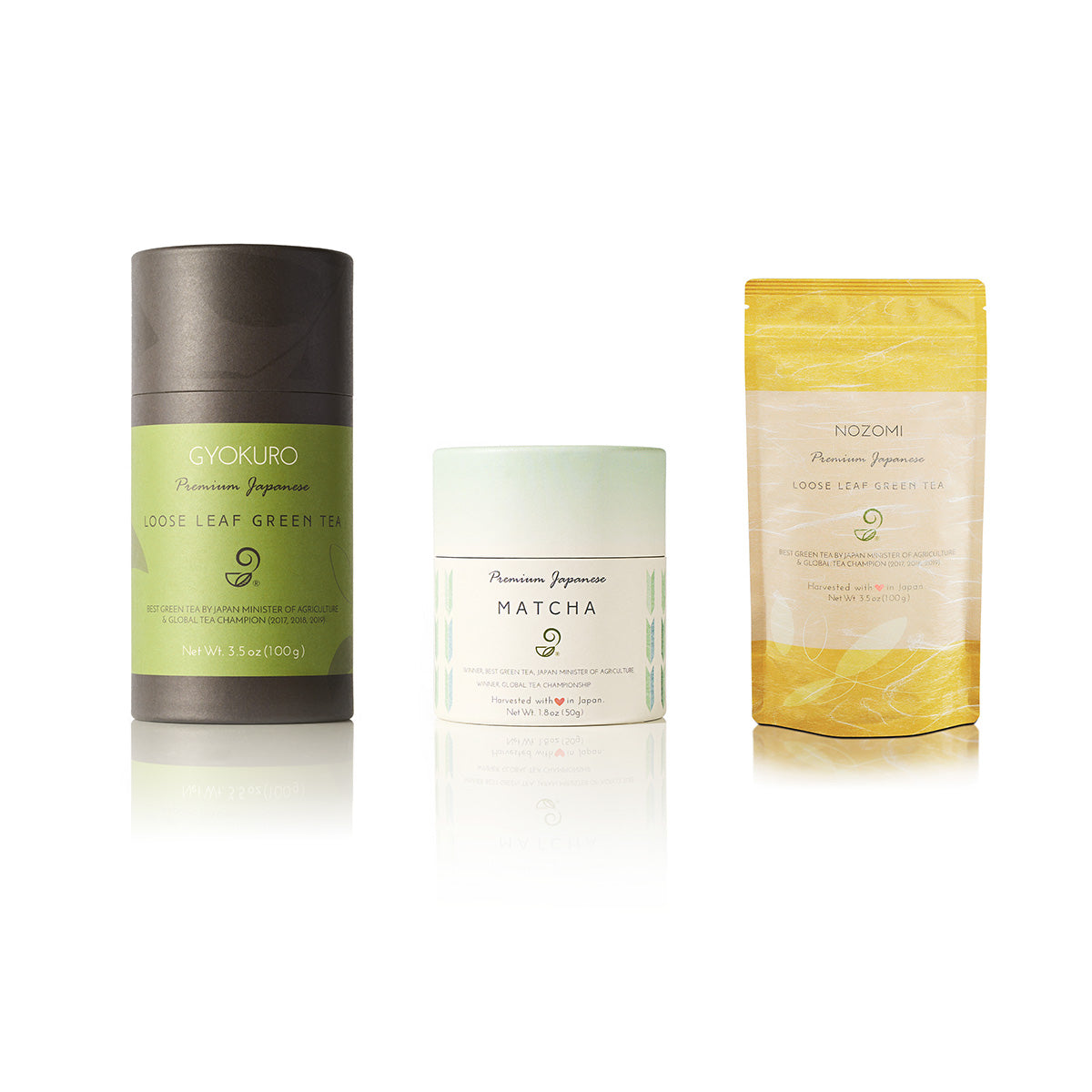
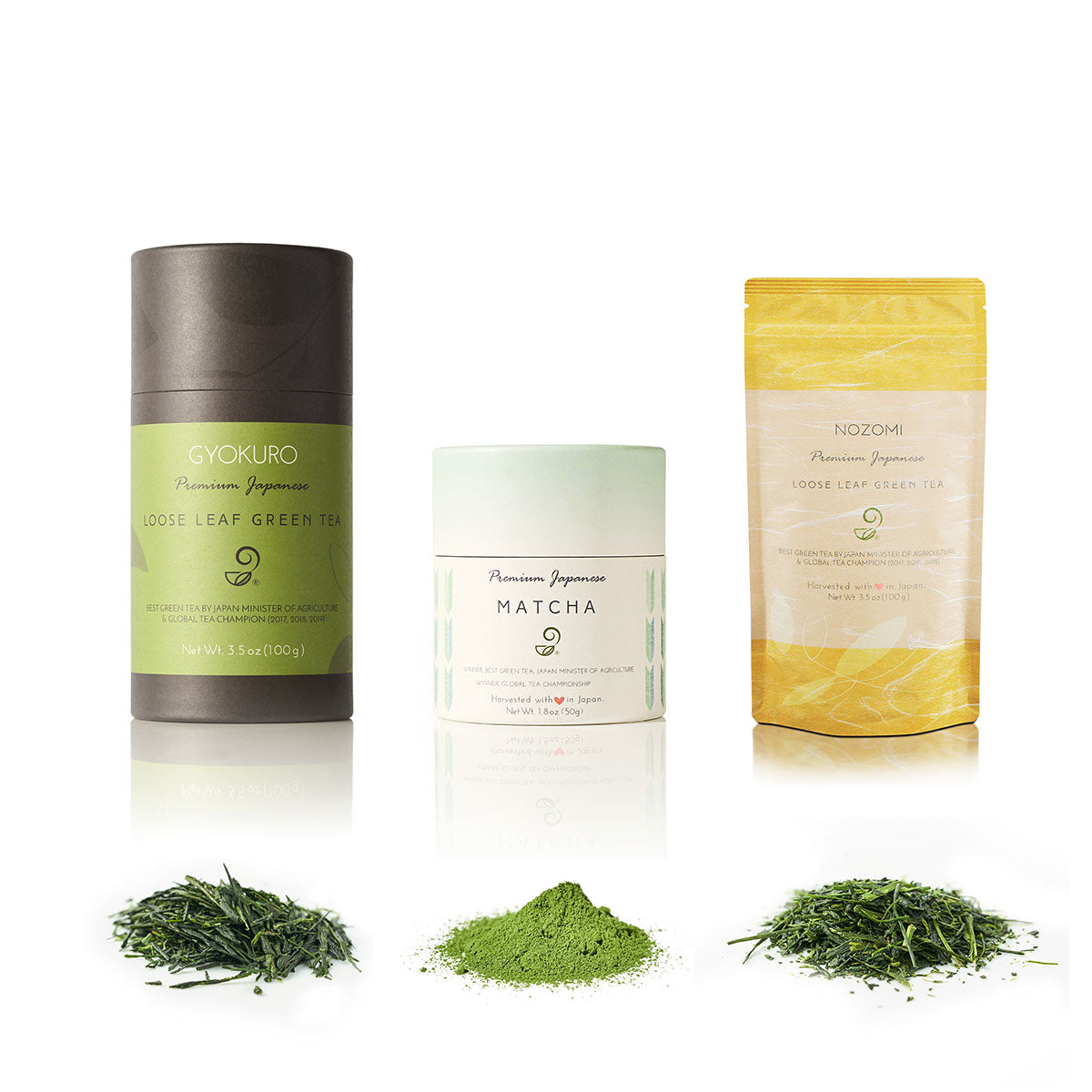
The Covered Trio Gift Set - Ceremonial Matcha, Gyokuro, and Nozomi Japanese Green Tea Set Package


Get Free Bonus Books
Sign up for free to the Green Tea Club to get advice and exclusive articles about how to choose Japanese Tea, and tips, tricks, and recipes for enjoying Japanese tea.
About the author
Kei Nishida
Author, CEO Dream of Japan
Certification: PMP, BS in Computer Science
Education: Western Washington University


