

Table of contents
When you enter the Dream of Japan website, you are welcomed by a video that transports you on a virtual journey through the enchanting streets and captivating sights of Japan, with mesmerizing shots of Japanese chef knives, Japanese green tea, etc.
"Hold on a second," you might muse, "how on Earth did a US-based company shoot authentic scenes from Japan?”
Here at Dream of Japan, we cherish our audience—you're not just visitors but our esteemed companions. And today, it will be no different.
I would like you to be my companion on the journey of how we created this video.
With transparency being one of our guiding principles, we will give you backstage access to the creative process, and share with you all the behind-the-scenes details of the incredible people I have met, the places I have been, the challenges along the way, and some not-so-funny 'oops' moments that taught me valuable lessons during the video-making process.
Real Japan, Real Footage – Going (Flying?) the extra mile beyond Stocks and Shortcuts
One of the biggest goals of this video was to bring you the real Japan – raw and unfiltered. Our artisanal Japanese products are all about stories – stories of artistry, culture, and craft that deserve more than imitation.
Therefore, we said goodbye to stock photos and online resources this time. Instead of settling for images, clips, and scenes available online or relying on green screens to mimic Japan inside a studio at home, we went the extra mile (quite literally).
“Every scene you see in the video was shot in Japan on the spot. We did not use any online or stock resources to create this video.”
No shortcuts, No compromises.
videoid="HnHmTr5PzyA"
Our videographers are preparing to hit the streets of Kyoto with their numerous heavy equipment. It was certainly no easy task. But it was not about convenience. It was about being authentic. As you can see in the video, our creative team traveled to Kyoto, the very nucleus of Japanese culture and heritage, to capture the scenes showing the essence of a Japanese restaurant, knife-making artistry, and a dynamic cityscape.
 The team after shooting the knife-making scenes at a renowned Japanese bladesmiths workshop
Look at those energetic smiles! Beating jet lag, heavy-gears-induced back pain, and hours of intense creative work through sheer passion and dedication. That’s the DreamofJapan spirit!
8 Months in the making: The art of patiently telling myself that Rome wasn’t built in a day!
The final video on our welcome page is less than 2 minutes long. However, the amount of time it took us to make it? That's a staggering eight months! Eight months and counting, to be honest, as we are always trying to make things better, and if we see that it needs a little more tweaking, me and my team will be working on that again.
During these eight months, I've picked up a neat trick for those stress-coaster moments.
Step one: hit pause. Brew a cup of zen-like Japanese tea. Then, marvel at how far we've come (high-five, past self!). Step two: Returning to work on it only when I felt ready. Oh, and bonus – meditation was my secret weapon for staying sane through all this! 🧘♂️
Tea-pocalypse: Our Teapot to be featured in the video broke during transit!
I learned the hard way while making this video that,
“You have to expect the unexpected."
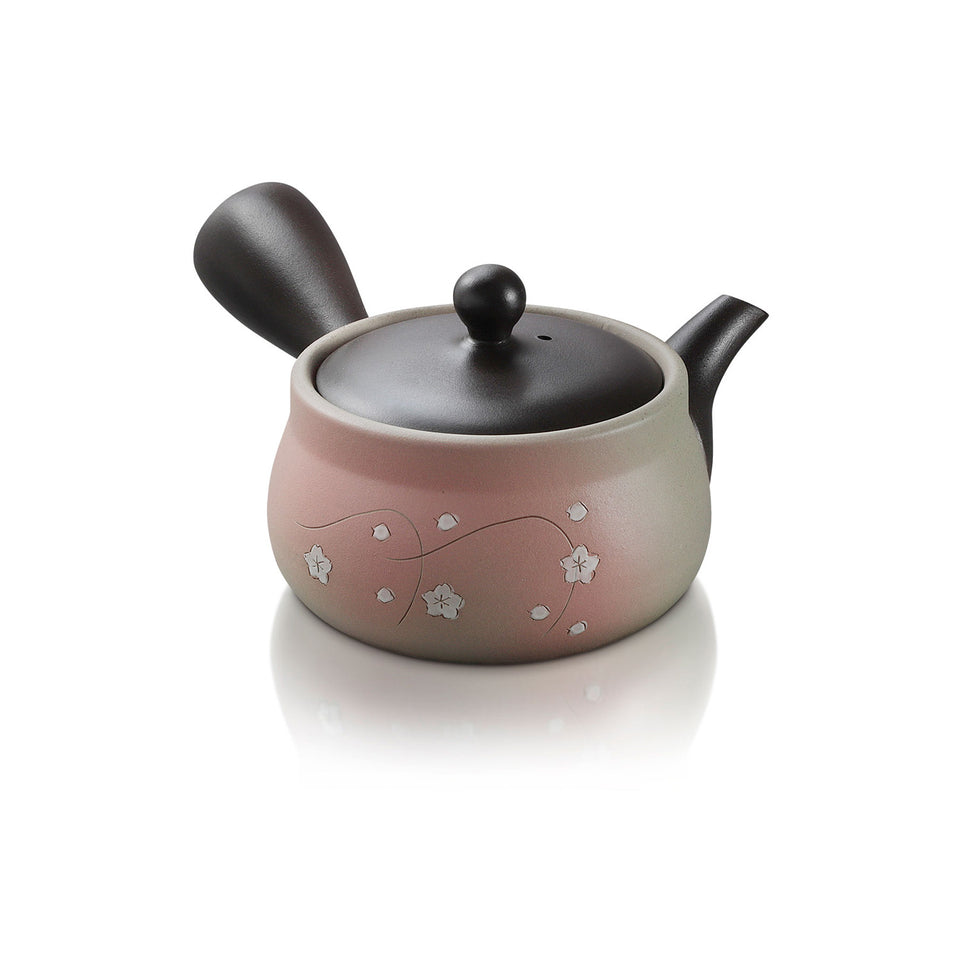
The product that met an unlucky fate was the Tokonomeyaki teapot for Fukamushi tea, one of my personal favorites from our company.
When it comes to customer orders, when we have a product that got damaged during shipping, we send a replacement straight away, of course, with no additional costs.
However, the clock was ticking for the photo shoot, and the new replacement did not make it in time.
 The handle that came off
Since there was no way for the replacement to reach the photoshoot location in time, we tried our best to put the handle back together.


While feeling down over the broken teapot, a Japanese philosophy comforted me – the concept behind the art of “Kintsugi (金継ぎ, golden joinery).
Kintsugi is an ancient Japanese art of repairing pottery using gold. It is rooted in the belief that flaws are not to be hidden but highlighted, and broken pottery is pieced together using lacquer mixed with powdered gold.
The philosophy of Kintsugi can be applied to life itself, as a reminder that our scars and experiences, rather than diminishing our worth, contribute to our individuality and strength.
videoid="3ms26nT4KpA"
Partnering up with various key players in the Japanese artisan industries to create breath-taking shots
Since the very beginning of this project, my mission has been to discover high-end Japanese restaurants and artisan companies that align with our values. While I could have taken a shortcut by wearing an apron and playing a Japanese chef, that wouldn't stay true to DreamofJapan's message of authenticity.
Remarkably, two companies enthusiastically joined us on this collaborative journey. One is an upscale restaurant in Ikebukuro, and the other is a skilled knife artisan based in Japan. Together, we could shoot scenes capturing Japanese gastronomy and craftsmanship's true essence and spirit.
How we shot the restaurant scenes
Helping us to shoot the restaurant scenes was the restaurant Cheval de Hyoutan, a one-of-a-kind fine dining restaurant in Ikebukuro, Tokyo, where the flavors of Japan meet the finesse of French cuisine.
(On a side note, since I grew up in Nerima, Ikebukuro was my childhood go-to place, so I have a lot of personal memory and when I think of Japan, I almost always think ok Ikebukuro in my mind first. Back then Sunshine City in Ikebukuro was the tallest building in Japan and Asia. Sunshine City building was designed by the same architect, Minoru Yamasaki, who architected World Trade Center, so it looks very similar.)
With Chef Ai Kawazoe in charge, the magic happens. She takes locally sourced Japanese ingredients from nearby artisan producers and transforms them into exquisite dishes using her mastery of French techniques.
Below are some scenes from our teamwork with the restaurant Cheval de Hyoutan.

 Restaurant front and interior
You can see the scenes capture the beauty of contemporary Japanese aesthetics like minimalistic design, warmth from wood, and clever lighting.
You can see Chef Ai Kawazoe in action using our Japanese knives.
 Here she is cutting fresh local ingredients using our Premium Gyuto Knife.


You can make Japanese knives last for years by taking proper care of them


The Japanese concept of “こだわり(Kodawari)" - the relentless pursuit of perfection, attention to the smallest details, unwavering persistence, and commitment driven by passion.

The Japanese concept of “こだわり(Kodawari)" - the relentless pursuit of perfection, attention to the smallest details, unwavering persistence, and commitment driven by passion.

A marriage between Japanese farm-to-table ingredients and French culinary techniques
Before collaborating with Cheval de Hyoutan, I sought a deeper understanding of their essence—their philosophy, concept, and vision.
Through direct conversations with their team, I discovered the profound message they are trying to convey through their restaurant.
We have asked the Chef and the owner, Aki-san, to share about the concept and about the restaurant. Here is what she shared with us.
What are the concept and unique features of Cheval de Hyoutan?
Concept:
In picturesque Chiba Prefecture lies a quaint fishing village called Isumi City. It is a coastal city, and at this coast is the meeting point of the Kuroshio and Oyashio ocean currents.
- Oyashio (親潮, "Parental Tide") = Cold ocean current,
- Kuroshio (黒潮 “Black Current”) =North-flowing, warm ocean current
The meeting of cold and warm currents at the coast of Isumi City creates a unique geographical location graced with a temperate climate and fertile soil. In Isumi City and the surrounding nature, the mountains help make the ocean rich, and the ocean gives back by providing delicious food for nearby people.
Cheval de Hyoutan is a doorway to explore this wonderful spot, Isumi, on the Boso Peninsula. They strive to show you what makes Isumi so amazing: its rich climate, the stories and emotions of the local farmers and producers, and the small but beautiful changes that happen throughout the year. We do this through a shared chef’s table dining experience that expresses Isumi’s 72 microseasons.
Could you kindly explain the origin and meaning behind the name "Cheval de Hyotan"?
The name is a wordplay based on an old Japanese proverb, -「瓢箪から駒」(Hyoutan kara Koma), which means "A horse from a gourd." (Hyoutan is a Japanese Calabash or gourd, and it would not make sense for a large thing such as a horse to come out of a Hyoutan gourd.) They added the French word for horse or horse meat, "Cheval," which makes sense, as they are a Japanese fine dining restaurant that uses French culinary techniques.
The saying carries the allure of unexpected wonders sprouting from the unlikeliest origins. With a deliberate purpose, they have embraced this name to echo their desire to create surprising dishes you would never expect to find in a place like Nishi-Ikebukuro.
We would like to hear your impressions of the promotional video shoot for this occasion.
The shoot was handled with great care, taking into consideration both our valued customers and kitchen staff, resulting in a very positive outcome.
Finally, if you could provide a brief message for our international customers?
Yes, For sure.
Message from Chef Ai Kawazoe:

Being one, together with nature, is a blessing, and we at Cheval de Hyotan want to help people understand the wonders of the mountains, seas, and local villages through the food we serve. I want to pass the baton, from producer to chef to diner, with the aim of sharing terroir, history, and culture through a flavorful dining experience.
If you are in Tokyo, I highly recommend visiting Cheval de Hyoutan restaurant for a unique Japanese fine dining experience.
Restaurant: Cheval de Hyoutan
Chef: Chef Aoi Kawazoe
Website: https://cdhyotan.tokyo/
Address: Will Court Bldg 1F, 3-5-7 Nishiikebukuro, Toshima-ku, Tokyo
More behind-the-scene shots of Japanese professional chef knife in action
 A seasoned Japanese chef is using one of our knives to cut fresh ingredients
 Appreciating the beauty of the knife’s blade and wiping it to make the knife last a lifetime
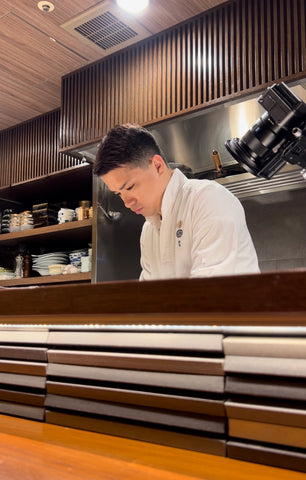 The razor-sharp focus of a Japanese professional chef
How we shot the Knife-Making Scenes
After the restaurant scenes, we hit the road again to shoot the scenes of knife-making, featuring a Japanese artisan bladesmith’s workshop.
 Inside the bladesmith's workshop.

You can see that the lighting was quite tricky as we were trying to capture the beauty of the mesmerizing sparks from the fire, but we had to do that without adding artificial studio lights, which would have taken away from the real mood inside the workshop.

videoid="o9dTBZDaoPI"
videoid="Ek-4h-HGbxY"
What worked best, in the end, was using natural light sources, such as the real daylight coming from the workshop's window, and shooting things just as they were.
Another thing that worked during our collaborative work with our partners in this project was "clear communication."
You can see below that sometimes we paused during shooting to have a quick ‘team discussion’ and communicate our visions for the scenes to each other.


 Video making is not only about cameras and recording. Communication and 'talking' are just as important!
Another important scene of the video is where the knife is being sharpened on a whetstone by the artisan bladesmith.
videoid="t93_n0j6toQ"
videoid="GDzS8mTxxyo"
Also, for this scene, the natural light was minimal, and we really tried to capture the beautiful gleam of the light on the knife's blade, which took quite the effort and time but was worth it in the end.
 Otsukaresamadeshita! Well done, team!
Japan in a box, delivered to your doorstep: How we shot the scenes about the joy of receiving a package from Dream of Japan
When our clients receive a delivery from Dream of Japan, it is like receiving a piece of Japan at their doorstep. We wanted to capture this essence in our homepage video.
Here are some shots we took:


What is the story behind your product? Creating a Storyboard – an important step in the video-making process 🖼️ ✏️ 📋
Creating a storyboard is an important step in the video-making process. Without a storyboard, no matter how great your individual shots are, they are like disconnected dots. Creating a storyboard helps to connect those dots and helps you to tell the story behind your brand and your products. (Interested in our story? Read the story behind Dream of Japan here).
A well-structured storyboard serves as the blueprint, guiding every visual and narrative element of your video. Below, you can see the storyboard that helped us tell our story.


In conclusion, our Dream of Japan video journey has been an extraordinary quest to encapsulate Japan's essence and the artistry of our Japanese artisanal products. Every scene was filmed on location in Japan, avoiding stock footage or shortcuts, reflecting our commitment to authenticity.
Facing unexpected challenges like a broken teapot, we learned the beauty of imperfection, akin to the Japanese art of 'Kintsugi.' Collaborations with Japanese artisans and chefs further enriched our video, capturing the true spirit of Japanese culture. A well-structured storyboard played a crucial role, connecting the dots and helping us convey our brand's story.
We invite you to enjoy our labor of love, a taste of Japan delivered to your doorstep through our products.
P.S. Have you ever worked on a creative project for your brand? Do you have any suggestions to make our video better?
Let me know your thoughts in a comment or send us an e-mail to 💌Info@DreamofJapan.com!
FAQs about Making a Tea Brand Homepage Video
What's the most filmable moment in tea preparation?
Related products


Get Free Bonus Books

Sign up for free to the Green Tea Club to get advice and exclusive articles about how to choose Japanese Tea, and tips, tricks, and recipes for enjoying Japanese tea.
About the author
Kei Nishida
Author, CEO Dream of Japan
Certification: PMP, BS in Computer Science
Education: Western Washington University


