Skip to content

Can Teapot Make Your Green Tea Taste Better? - Facts About Tokoname Teapot (常滑急須)

Subscribe to Youtube See all videos

If you’re a lover of tea, then you might have heard of the term “kyusu” which means “teapot” in Japanese. The Takoname Yaki (常滑焼) is both a remarkable and historic teapot that dates back to the 12th century. Because of the way the teapot is made, it gives the tea a distinguishable flavor, making it well-liked amongst green tea enthusiasts.   

Here is a short video that we made about Tokonameyaki. Scroll down for more detail information about the topic.  

The Unparalleled Craftsmanship in Tokoname

Tokoname is a city (常滑市) located in central Japan (on the coast of the Chita Peninsula) and is known to contain Japan’s oldest and largest kiln.

Tokoname-shiLocation of Tokoname City

At one point, it was estimated that there were as many as 3,000 kilns in Tokoname; the five other ancient kilns were known as Shigaraki, Tanba, Seto, Echizen, and Bizen.

Tokoname City

Picture of Tokoname City with Wall of Clay

The pottery made in Tokoname is created with unmatched craftsmanship and artistry. The very first teapot created was by Inaba Takamichi (稲葉尊通) and was made with white or rough clay.
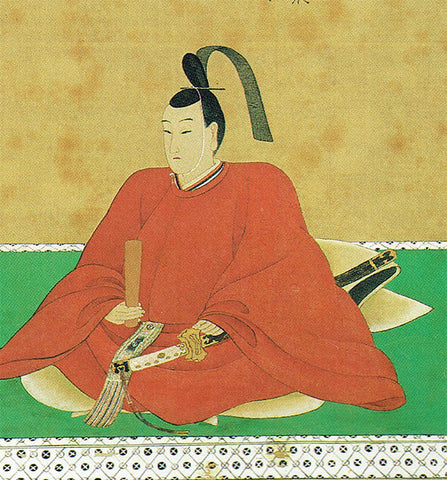
Inabata

Image of Inaba Takamichi (稲葉尊通) who created the first clay pot

The creator of the first red clay teapot, Sugie Jyumon, worked with a doctor named Hirano Chuji, and eventually launched the Red Clay Tokoname Teapot.

With its notable capabilities, the Red Clay Tokoname Teapot received recognition for its ability to withhold water without the use of a glaze on the pot.

Tokonameyaki

Red Clay of Tokonome Teapot without glaze inside

Keeping the Tradition Alive

The hand-crafted works of art of the Tokoname Yaki are carried on through future generations of potters who keep the tradition alive.

Today, potters who create ceramics now incorporate different types of clays to create truly exceptional works of art.

Although there are many kinds of Japanese ceramics to choose from, the Tokoname Yaki stands out from the rest because of the distinct artistry and craftsmanship that goes into making it.

Tokoname Yaki is well-known for making various types of products ranging from teapots to bonsai vases.

Tokoname Yaki Flower BaseTokoname Yaki Flower Base

Tokoname Yaki Tsubo
Tokoname Yaki Pottery used to store food (tsubo)


A Unique Flavoring

Although the Tokoname Yaki is known for many types of sculptured pottery, it is renowned for its noteworthy teapots.

The reason why the Tokoname Yaki teapot is so favorable amongst tea enthusiasts is because of the way it sweetens the flavor of the tea, giving it more a pleasant and smooth taste.

Because clay is the material that is used to make the teapot, it is recognized to intensify the umami of the tea.

This is because the clay used to make the teapot is infused with iron-rich minerals which contribute to the overall taste of the green tea. More specifically, this teapot separates the flavors individually and allows the drinker to taste each distinct note of the tea.

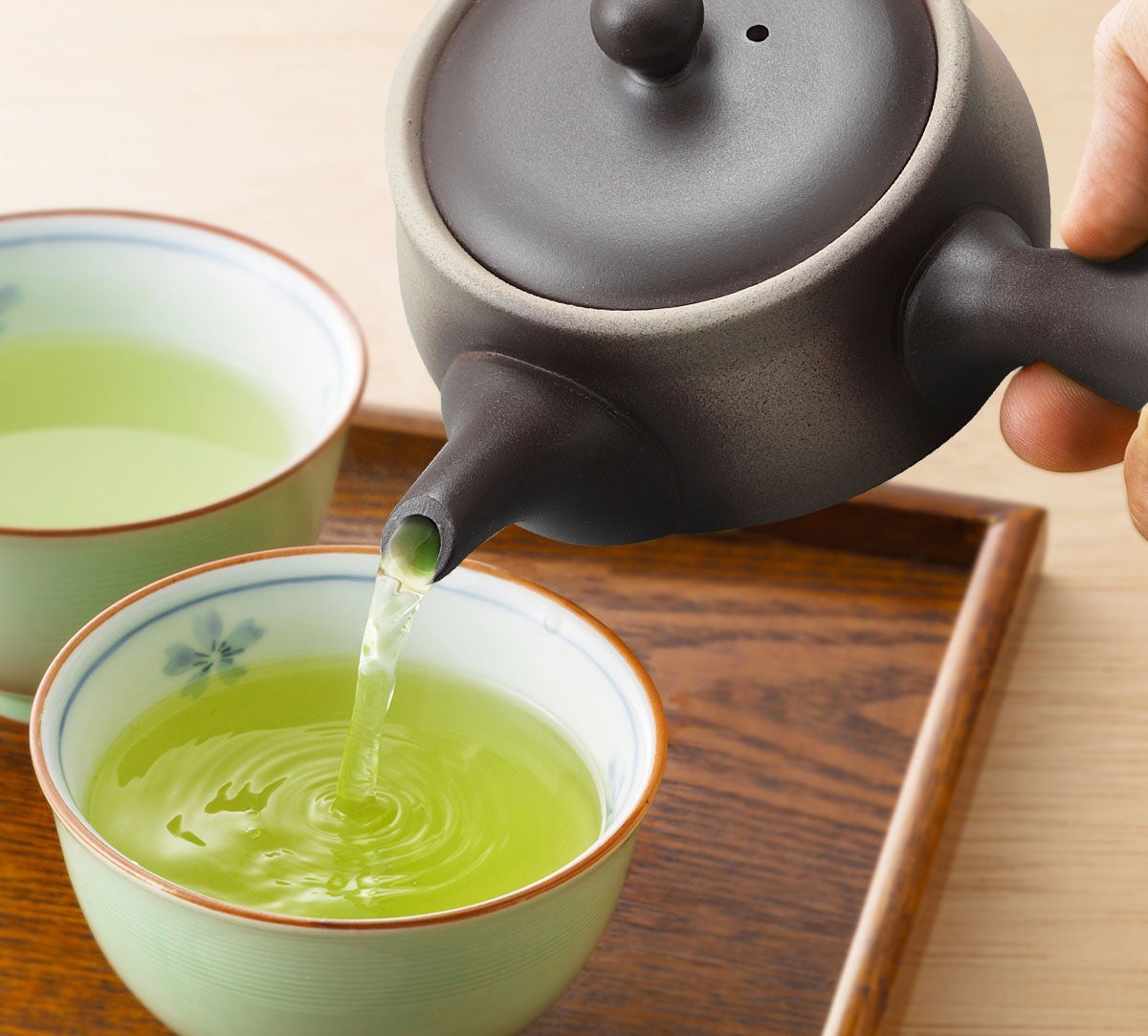
Green tea pouringIron-rich mineral in teapot intensify the umami of tea

There is a reaction that occurs with the tea and minerals in the clay that minimizes the harshness of the tea, and instead emphasizes the tea’s unique flavor.

Because of the teapot’s porous surface, allows the fragrance of the tea to be integrated.

Tokoname Yaki pottery is known to have a combination of iron-infused clays and the pots are usually finished with an unglazed surface. In the instance of a Tokoname teapot, the porous surface of the pot allows the drink to be absorbed into the pores giving the tea a unique flavor.

Tokonameyaki Teapot

iron-infused clays give the tea a unique flavor

The Tokoname Yaki’s surface is usually not glossed, and has a built-in strainer, and an easy-to-grip handle.

The built-in strainer allows you to steep the leaves without getting any of the tea leaves in your drink while allowing you to skip the hassle of brewing.

The design of the Tokoname Yaki Teapot stands out from others with its detailed features standing out in its handle, spout, and lid.

teapot

Although you can steep different kinds of teas with the Tokoname Yaki Teapot, the best and most known tea to pair it with is green tea (including Sencha). Because of its design, this teapot is an extraordinary take on the cliché, “I’m a little teapot, short and stout”.

The Tokoname Yaki Teapot’s ability to bring out the richness in the flavor of the tea is intriguing and is definitely something worth trying. 

This article was originally published on T-Ching where my article is featured.

Buying Tokoname Pottery Online


FAQs about Teapots and Tokoname Kyusu for Green Tea

Does the teapot actually change how green tea tastes?

Meaningfully, yes. The kyusu (急須) — Japan's traditional teapot for green tea — affects the cup in three ways. First, the strainer design (built-in mesh, not a basket) gives the leaves room to expand fully. Second, the wall thickness regulates brewing temperature evenly. Third, the clay (especially Tokoname-yaki) actually absorbs trace amounts of catechins over time and seasons the pot, smoothing future cups.

The difference between brewing the same sencha in a Western teapot vs a proper kyusu is small but consistent — most regular drinkers can taste it after a few side-by-side tests. The kyusu cup tastes fuller, less papery, and has more layered umami. The Western pot cup tastes a little flatter, slightly more astringent, less complete.

So: yes, the teapot matters. Probably less than the leaf quality and brewing temperature, but more than people often expect.

What makes Tokoname-yaki specifically good for tea — is it just the clay?

Tokoname (常滑, in Aichi prefecture) has been making pottery for over 900 years and developed a clay specifically suited to tea. The local clay contains iron oxide that interacts with tea catechins to soften astringency — quantitatively measurable in side-by-side tests with non-iron-bearing clays. Banko-yaki and Hagi-yaki are the other Japanese clay traditions used for tea, each with their own subtle effect.

The Tokoname clay also fires at a temperature that produces a slightly porous interior surface — the pot "breathes" in a way that smooth glazed surfaces don't. Over years of use, the porosity absorbs subtle aromatic and tannin compounds, which is why an older Tokoname kyusu often makes better tea than a brand-new one. This is the seasoning effect that's similar in concept (though different in chemistry) to a well-seasoned cast-iron pan.

Imitation Tokoname (mass-produced ceramic teapots in similar shape but different clay) doesn't have these properties. Pay attention to whether a kyusu actually says "Tokoname-yaki" or "made in Tokoname" — many "Japanese-style" kyusu sold cheaply are made elsewhere and don't have the clay characteristics that matter.

What size kyusu should I buy as a beginner?
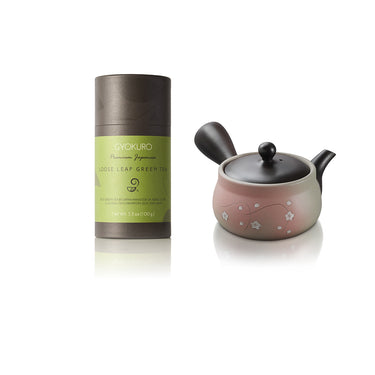
180-360ml (6-12oz) is the sweet spot. The Beginner Gift Set includes a 200ml kyusu specifically because that's the size that works best for one or two cups of sencha at a time. Going smaller (under 180ml) gets fiddly; going larger (over 360ml) requires re-learning the leaf-water ratios and steep times for each brew.

Common beginner mistake: buying a 500ml or 700ml kyusu thinking it's more flexible. The opposite is true — bigger pots are harder to brew well because the leaf-to-water ratio gets imprecise, the temperature varies more, and you end up making more tea than you actually drink. A small kyusu produces consistently better tea than a large one for solo or two-person drinking.

If you regularly host four or more people, a second larger kyusu (around 400-500ml) makes sense for those occasions. But your daily-driver kyusu should be the smaller one.

How do I take care of a Tokoname kyusu so it lasts?

Two rules: rinse only with hot water, never use soap. Air-dry upside-down with the lid off. That's most of the maintenance.

Soap is the most common mistake. The clay is porous and absorbs detergent residue, which then taints every future cup with a faint chemical aftertaste. Hot water alone removes any residue from normal use; for stubborn buildup, fill the pot with hot water and a teaspoon of cooked rice (the starch lifts oils without scratching) and leave it overnight, then rinse.

For the mesh strainer, flush water backward through it (from inside the pot out through the spout) right after each use to prevent leaf buildup. If the mesh gets clogged, a soft toothbrush with hot water clears it. Never use steel wool, never soak in vinegar — both damage the mesh over time.

Are there situations where a Western teapot or infuser actually works better than a kyusu?

Two specifically. First, large-volume brewing for parties — a 600ml+ Western pot or a glass infuser pot scales better than a kyusu for serving 4+ people simultaneously. The kyusu is built for the intimate 1-2-person experience and gets awkward at scale.

Second, cold-brewing — a tall glass pitcher with a removable infuser basket is genuinely better for cold-brewing sencha overnight than a kyusu is. The kyusu's design assumes hot brewing with quick steeps; cold brewing wants more leaf surface area and a larger water volume, and a Western infuser pot delivers that more cleanly.

For the standard 1-2 person hot sencha experience, the kyusu wins. For everything else, the Western pot is reasonable. Most committed daily drinkers end up owning both: a small kyusu for quality solo brewing and a larger Western pot for serving guests.

Related products

18 reviews

Tokoname Yaki - Kyusu - 9 fl Oz (270cc) Teapot for Fukamushi tea

$130.00
Quick view

This high-quality teapot, handmade in Tokoname City, Japan, is specially designed for deep-steamed (Fukamushi) tea, featuring an ultra-fine mesh perfect for brewing fine tea leaves. It steeps 9 oz (270cc) and is thoughtfully crafted with a wide opening for easy cleaning, an easy-to-hold handle, and a broader surface area to enhance the tea’s flavor extraction. Made from natural red clay rich in iron, the unglazed interior absorbs some of the tea’s bitterness by pulling out excess catechins, creating a smoother and more pleasant-tasting green tea without sacrificing the health benefits of green tea’s powerful antioxidants. A Tokoname Yaki teapot offers the best of both worlds: a deliciously refined flavor and the full vitality of green tea’s natural goodness.

7 reviews

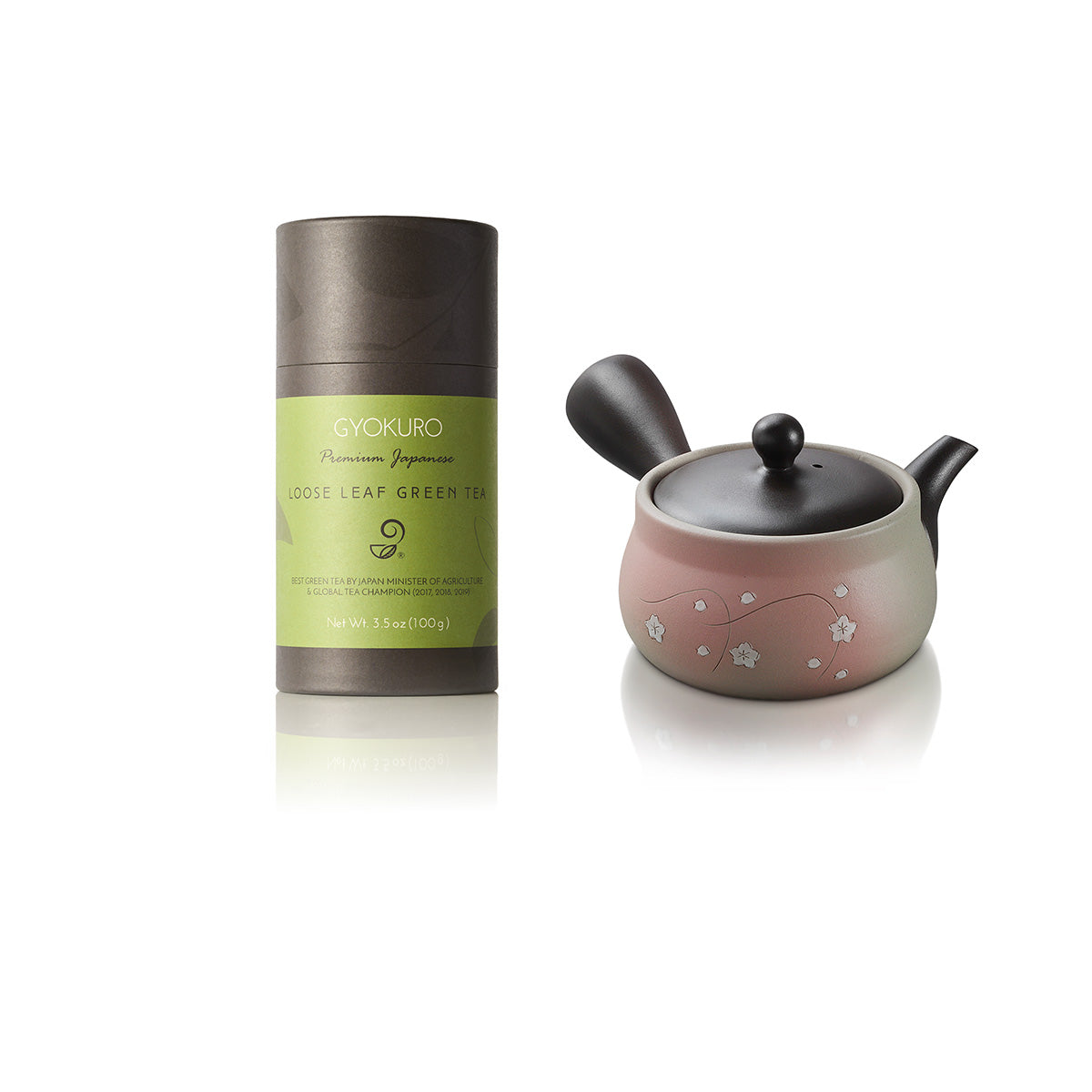
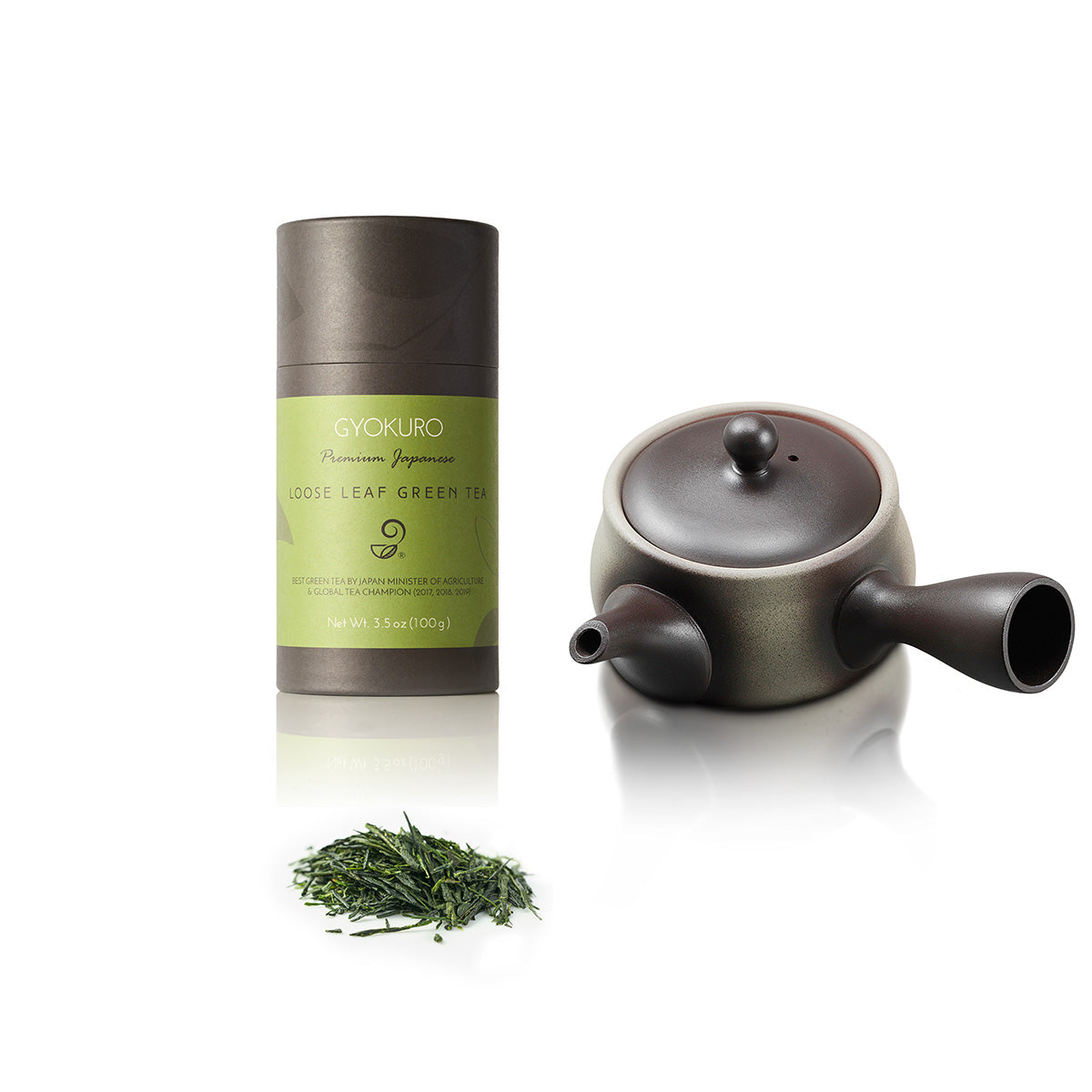
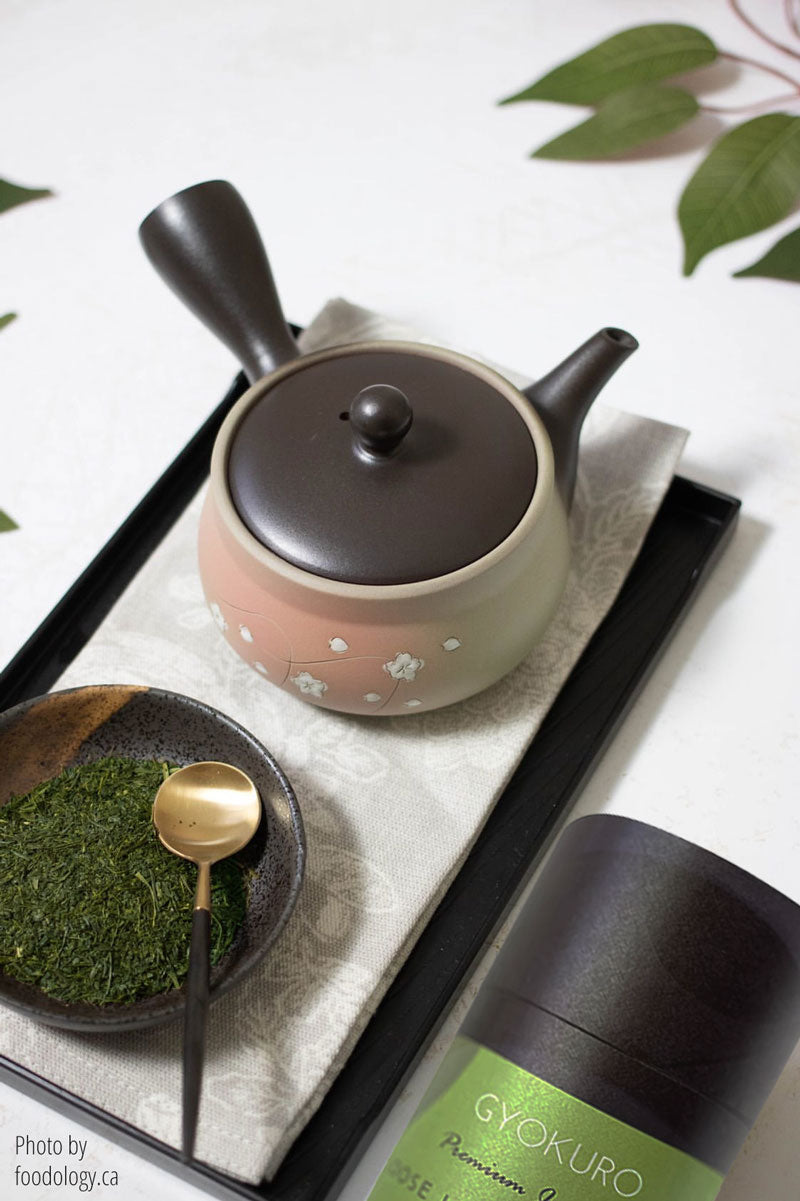
The Beginner Gift Set - Premium Japanese Green Tea and Japanese Tokoname Kyusu Teapot
$195.00 $156.00
Quick view

This set includes our Premium Gyokuro, a shaded loose-leaf Japanese green tea known for its deep, rich flavor and smooth sweetness. Grown under specially made mats for 20 days, Gyokuro’s cultivation increases caffeine and amino acid levels, giving the leaves their distinctive mossy green color and a unique, layered taste. The careful shading process also imparts a particular aroma that sets this tea apart from all others.

Paired with the tea is a high-quality Tokoname Yaki Kyusu teapot, crafted in Tokoname City, Japan. Designed specifically for deep-steamed Fukamushi tea, this 9 oz (270cc) teapot features a fine mesh strainer, a wide opening for easy cleaning, and an optimal shape to enhance the tea's flavor by allowing better contact between the tea leaves and hot water.

8 reviews

The Sencha Lover Gift Set - Premium Japanese Green Tea Set Package
$179.00 $159.99
Quick view

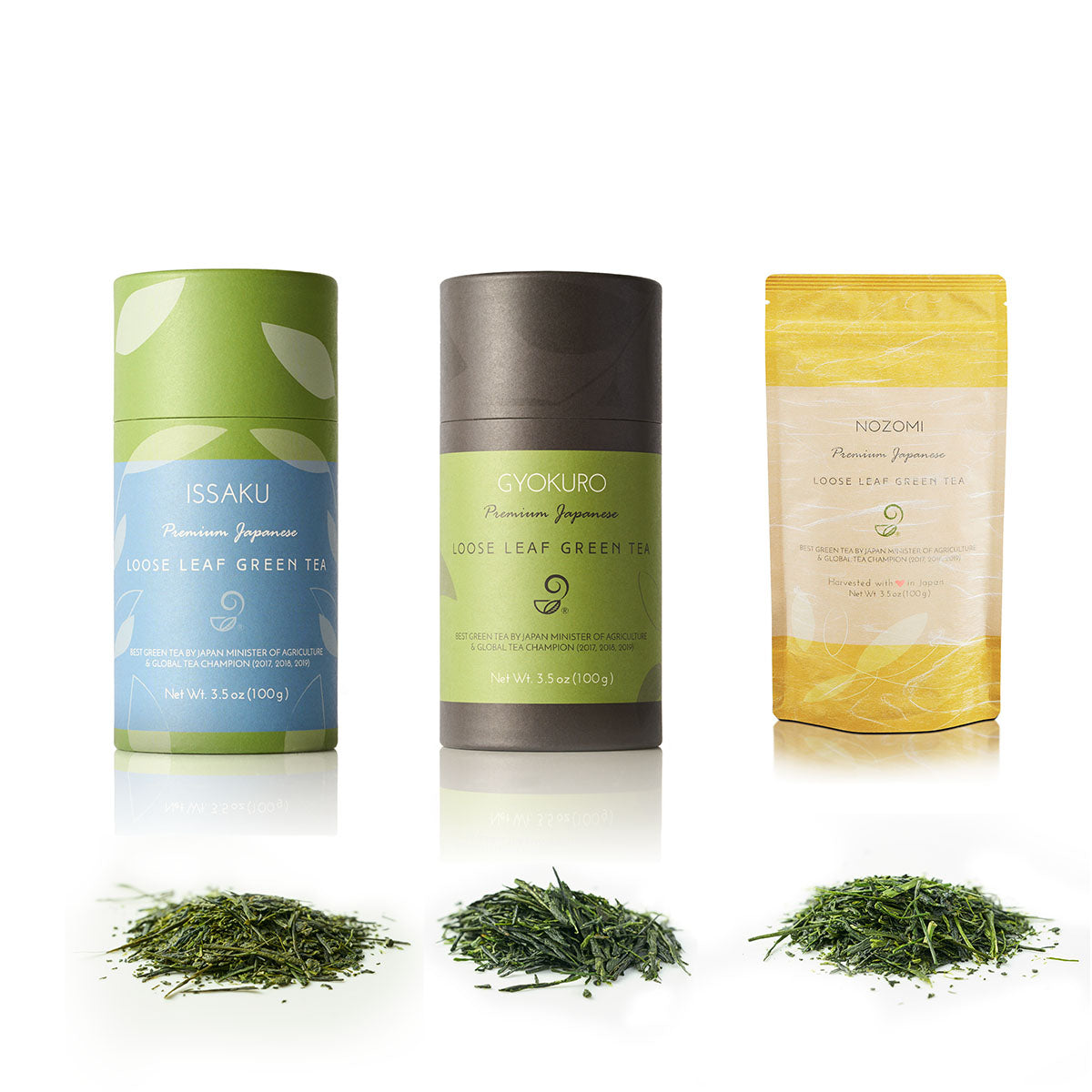
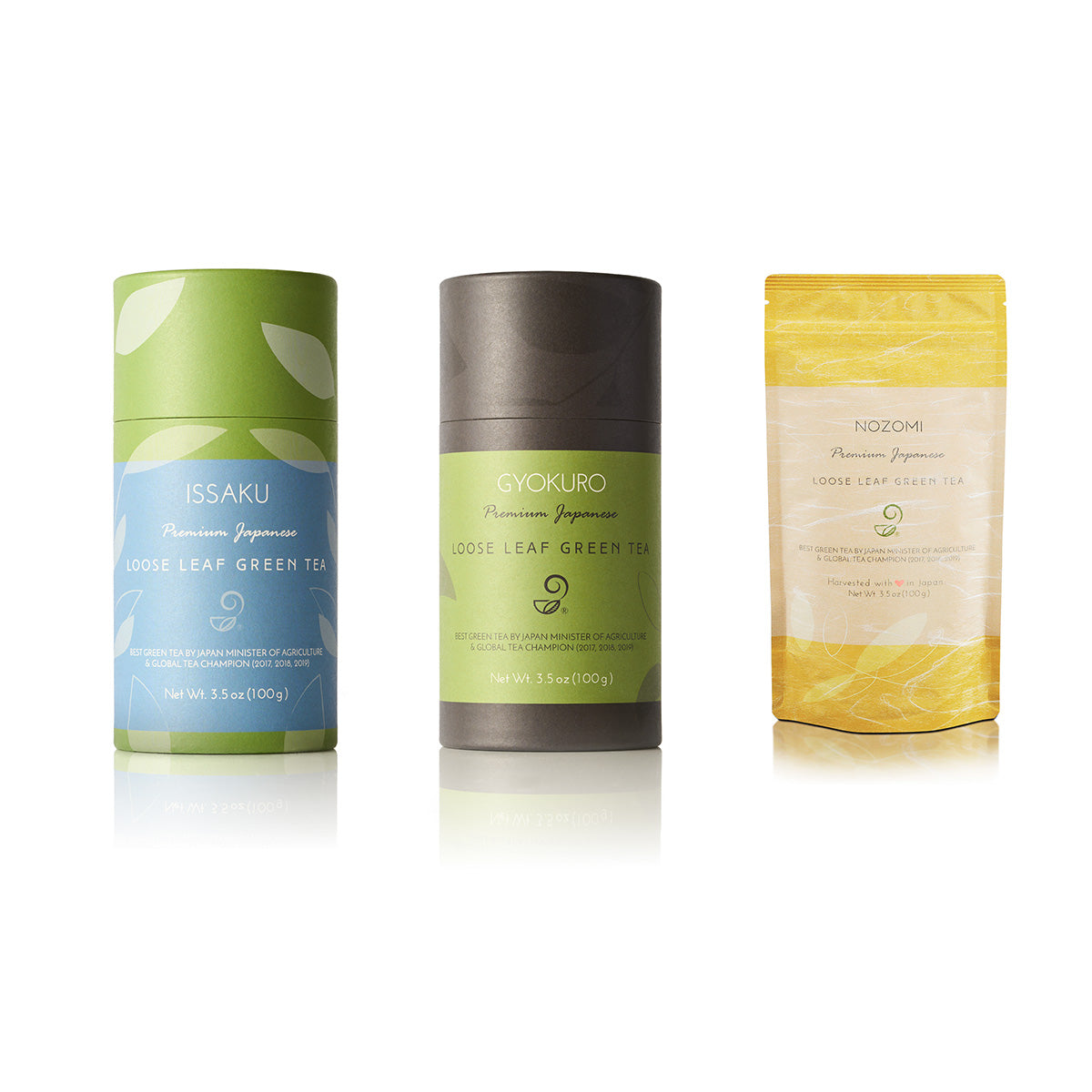
This tea set features three exceptional Japanese green teas, each crafted with care and traditional techniques. Issaku Reserve, a Global Tea Champion winner in 2017 and 2019, is a rare masterpiece created by Farm Master Mr. Arahata at Arahataen Green Tea Farm. Handpicked once a year from the first flush and processed with advanced methods, Issaku represents the highest-grade deep-steamed green tea, available only in limited quantities even in Japan.

The set also includes Gyokuro, a premium shaded green tea known for its rich, sweet flavor and deep mossy green color. Grown under special mats for 20 days to increase caffeine and amino acid levels, Gyokuro offers a layered, smooth taste unlike any other. Completing the collection is Nozomi, a fine Kabuse-cha, or "Covered Green Tea," carefully grown under nets to gently shade the leaves just before new sprouts emerge, resulting in a soft, rich, and refined flavor profile.

97 reviews

Gyokuro - Shaded Imperial Premium Green Tea

$65.00
Quick view

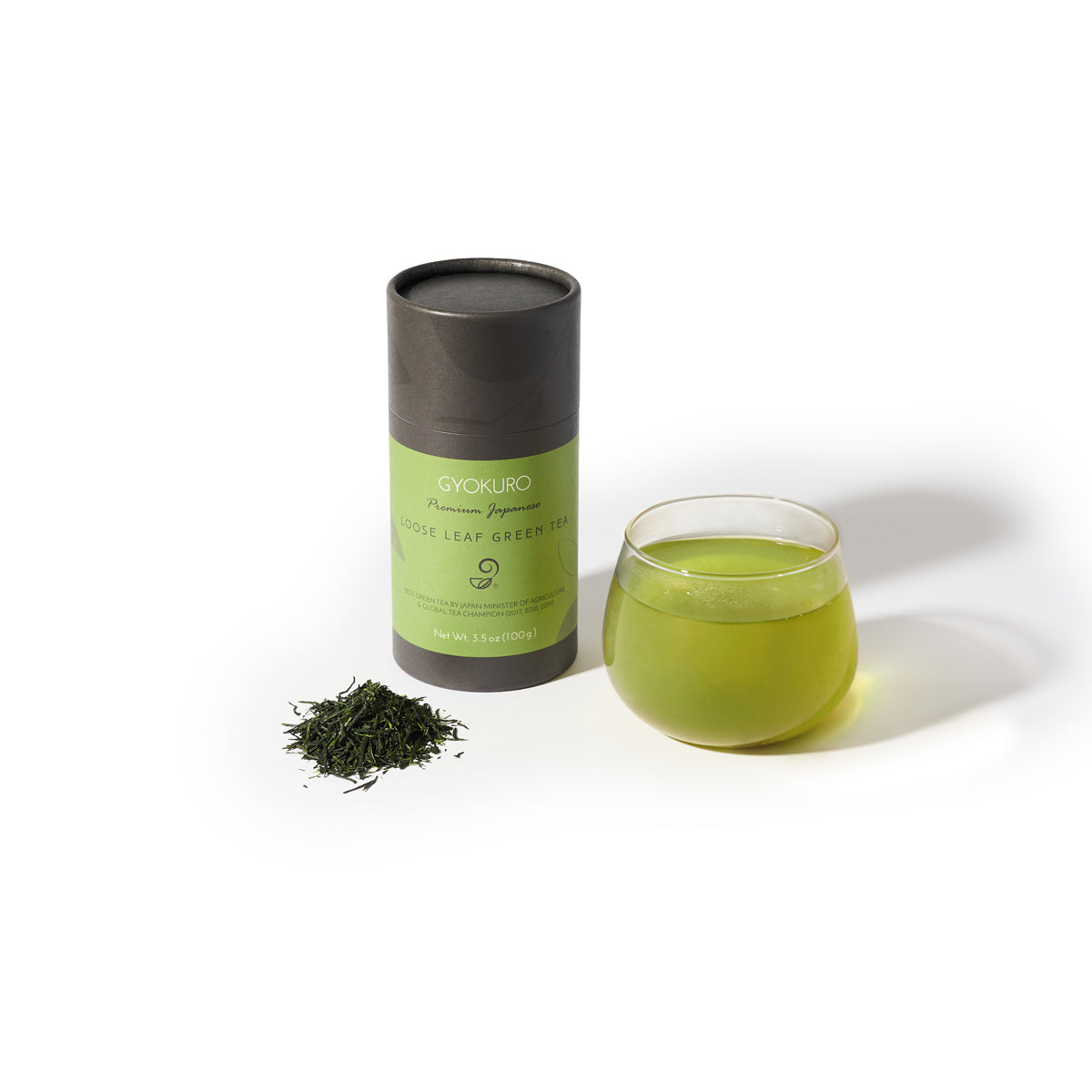
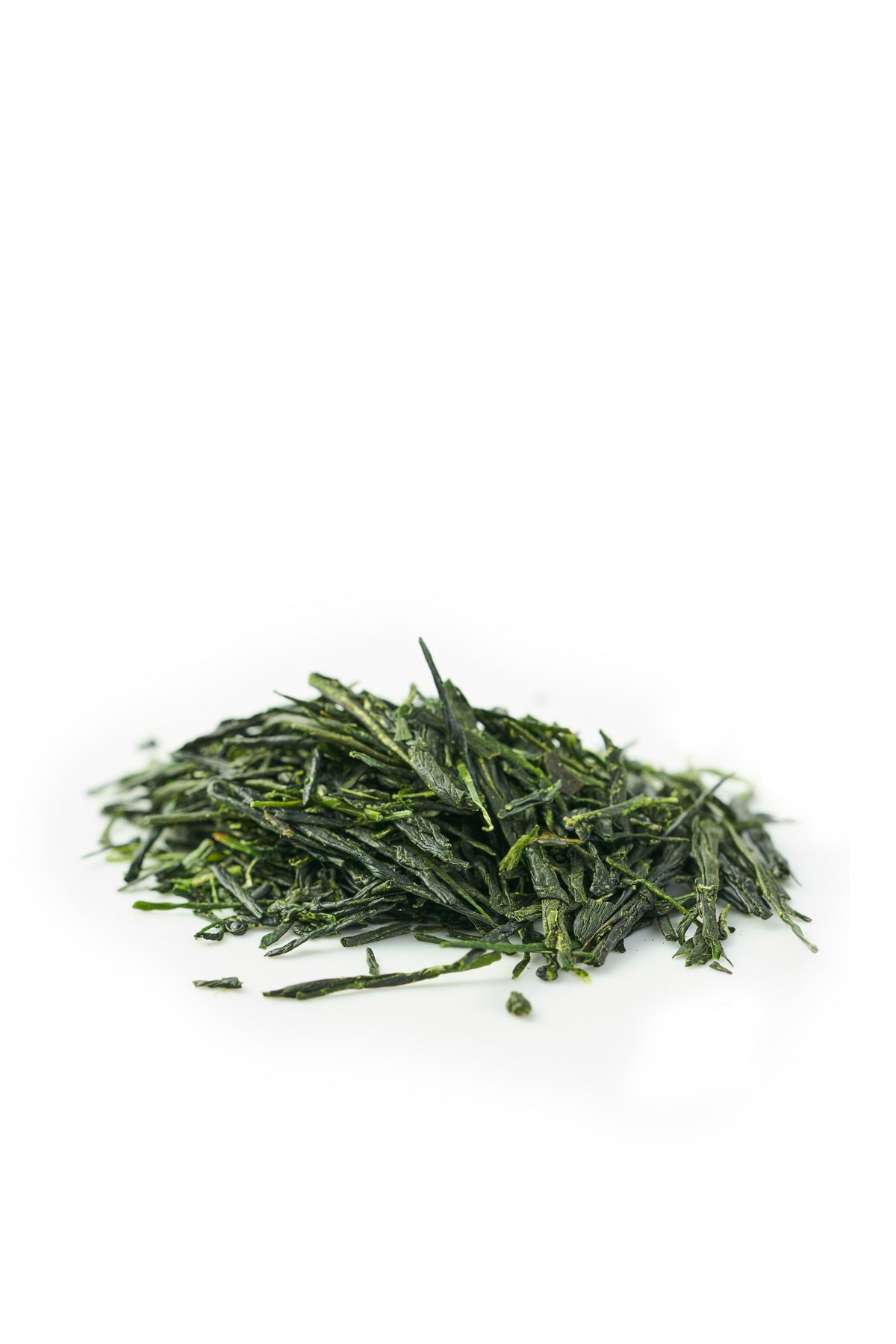
Gyokuro, also known as "jade dew" or "jewel dew tea," is a premium Japanese green tea shaded from the sun for 20 days using specially made mats, a method that boosts caffeine levels and strengthens amino acids to create a sweeter, richer flavor. This extended shading process results in dark, mossy green leaves with an unmistakable aroma and a complex taste that is layered yet balanced. Cultivated by the Chagusaba method in nutrient-rich sugarcane soil and made from the Yabukita cultivar, this loose-leaf authentic Gyokuro is offered in a high-quality, air-tight paper tube canister (chyazutsu) to preserve its exceptional freshness and flavor. Each 3.5 oz (100g) full-size package steeps 30–40 cups, and a convenient single-serve sample is also available.

45 reviews

Hojicha - Roasted Green Tea

$25.00
Quick view

Our roasted green tea, known as hojicha (ほうじ茶), is crafted from freshly harvested premium green tea carefully roasted in porcelain over charcoal to maximize flavor while retaining more catechins than typical hojicha on the market. With lower caffeine and a smoother, less bitter taste compared to steamed green tea, it is an ideal choice for evening relaxation and is gentle enough for kids and pregnant women. Cultivated using the Chagusaba method in nutrient-rich sugarcane soil, this loose-leaf authentic Japanese roasted green tea, made from the Yabukita cultivar, also pairs beautifully with oily foods. Each eco-friendly resealable package contains 3.5 oz (100g) of tea, enough to steep 30–40 comforting cups.

• Disclosure: I only recommend products I would use myself, and all opinions expressed here are my own. This post may contain affiliate links that I may earn a small commission at no additional cost to you.
The commission also supports us in producing better content when you buy through our site links.
Thanks for your support.
- Kei and Team at Japanese Green Tea Co.


Related Articles You May Be Interested

What is Tokoname Japanese Teapot? 🍵 Yunomi Kyusu Made of Clay to Enhance the Taste of Japanese Green Tea
Do You Know How To Prepare And Serve Green Tea Correctly?
Matcha vs Sencha (Loose-leaf) Green Tea: What Are the Differences?
Is Using The Microwave Good For Green Tea? - The Answer May Surprise You
Everything You Need To Know About Water And Japanese Green Tea
10 Green Tea Mistakes: Don’t Do These Mistakes When Brewing Green Tea

Get Free Bonus Books

Join Green Tea Club

Sign up for free to the Green Tea Club to get advice and exclusive articles about how to choose Japanese Tea, and tips, tricks, and recipes for enjoying Japanese tea.

Unsubscribe anytime. It’s free!

About the author

Kei Nishida

Kei Nishida

Author, CEO Dream of Japan

info@japanesegreenteain.com

Certification: PMP, BS in Computer Science

Education: Western Washington University

Kei Nishida is a passionate Japanese green tea connoisseur, writer, and the founder and CEO of Japanese Green Tea Co., a Dream of Japan Company.

Driven by a deep desire to share the rich flavors of his homeland, he established the only company that sources premium tea grown in nutrient-rich sugarcane soil—earning multiple Global Tea Champion awards.

Expanding his mission of introducing Japan’s finest to the world, Kei pioneered the launch of the first-ever Sumiyaki charcoal-roasted coffee through Japanese Coffee Co. He also brought the artistry of traditional Japanese craftsmanship to the global market by making katana-style handmade knives—crafted by a renowned katana maker—available outside Japan for the first time through Japanese Knife Co.

Kei’s journey continues as he uncovers and shares Japan’s hidden treasures with the world.

Learn more about Kei Nishida

Related Posts

Simply Donabe — New Cookbook from TOIRO's Naoko-san Is Out!

Simply Donabe is here! We celebrated TOIRO's Naoko-san's new cookbook at a special dinner at Camélia in DTLA — see our p

Read More
Introducing New Product - Meet Hojicha Powder
Introducing A New Product - Meet Hojicha Powder

Discover the game-changing Hojicha powder your kitchen has been waiting for — richer flavor, easier recipes, and surpris

Read More
Yokohama Peach is offered as a regular menu at Okayama Kobo Cafe!
Yokohama Peach is offered as a regular menu at Okayama Kobo Cafe! + Recap Video of Pop-up on 2/8/2026 at Anaheim, CA

We are excited to announce that our Yokohama Peach is now available on the regular menu at the popular Japanese Bakery,

Read More
Leave a comment

Your email address will not be published..

Cart

Your cart is currently empty.

Start Shopping

Select options