Table of contents
We just released our Japanese Chai last week, and so many people are trying it (thank you very much!). I wanted to share who is behind it and how we feel so lucky to partner with such an amazing craftsman. So I decided to write a dedicated article about him.
Who makes our Japanese Chai?
It is blended for us in Saga (佐賀), on the island of Kyushu (九州), by Mr. Hiroshi Okamoto (岡本啓) of Kureha (紅葉), a shop that sells only black tea grown in Japan. I wrote a short paragraph about him in our Japanese Chai article. This time I would like to tell you more about him and his shop.
From Truck Driver to Tea Shop Owner
Mr. Okamoto was born in Fukuoka (福岡) in 1973. Before tea, he was a truck driver. In 2001 he opened a tea shop, and in the same year he decided to sell only black tea grown in Japan, called wa-kocha (和紅茶). It was the first shop in Japan to sell only wa-kocha.
To find the teas, he went around Japan to meet the growers and learned how they make tea on their farms. He has been running the shop for more than 20 years now, and he travels all over Japan to give talks on how to brew and enjoy wa-kocha.

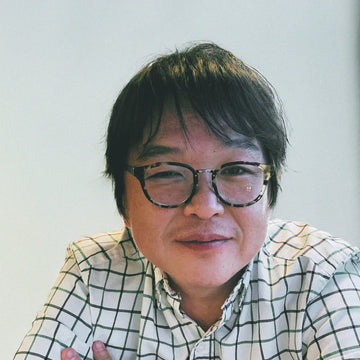
Mr. Hiroshi Okamoto, who blends our Japanese Chai.
A Tea Shop in a 100-Year-Old Kimono Shop
Kureha is in Yanagimachi (柳町), an old part of Saga City on the Nagasaki Kaido (長崎街道), the old road that started in Nagasaki. The shop is in a building about 100 years old that used to be a kimono shop, across the street from the Saga City Historical Folk Museum (佐賀市歴史民俗館).
Inside, there is a small tea room where you can sit down with a pot of tea and a Japanese sweet. The shop is open Tuesday to Sunday, from 11:00 to 17:00.

The front of Kureha in Yanagimachi, Saga.
By the way, in October 2026 the TV station KBC (九州朝日放送) in Fukuoka visited Kureha for its morning show Asadesu (アサデス). In the short video below, you can see the shop and its milk tea, where you can choose from about 30 kinds of wa-kocha. It is in Japanese, with English captions.
videoid="jYuejET5Tic", ccTranslate="en", cover="https://cdn.shopify.com/s/files/1/1423/7286/files/kureha-kbc-tv-video-cover-okamoto.jpg?v=1795471943"
Kureha on KBC's morning show Asadesu, October 14, 2026 (in Japanese, with English captions).
He Visits the Farms Himself
His website lists 14 tea growers from all over Japan, and he writes about his farm visits on his blog. Here are a couple of images from his blog (with permission from Mr Okamoto)

Mr. Hanamizu (花水), one of his growers, in his tea field in Sashima (猿島), Ibaraki (茨城).

The red soil at Mr. Amano's (天野) tea farm in Ishitobi (石飛), Minamata (水俣), Kumamoto (熊本).
Otoso Chai: Japanese New Year Spices in a Milk Tea
As you may know, many families in Japan drink otoso (お屠蘇) on New Year's Day. It is sake with a small bag of herbs and spices steeped in it. On his blog in 2021, Mr. Okamoto pointed out that otoso has sansho (山椒), mandarin peel (陳皮), clove, cinnamon and ginger, which is very close to the spices in chai. So he made a chai with an otoso bag.

His otoso chai with black mirin (黒みりん) and Kusanagi (草薙), a black tea that goes well with milk.
Here is his recipe.
This post may contain affiliate links at no additional cost to you. I may earn a small commission.
- Put 2 heaped teaspoons of black tea that is good with milk, 1 otoso bag and 160 ml (5.4 fl oz) of water in a small pan. Mr. Okamoto uses a Japanese yukihira pan (雪平鍋).
- Add a natural sweetener if you like, such as mirin (みりん), kokuto (黒糖, Okinawan black sugar) or honey, and bring it to a boil.
- When the tea leaves open, add 160 ml (5.4 fl oz) of milk and heat it again. Stop when small bubbles start to appear.
- Strain it into a mug with a fine tea strainer. Soy milk or amazake (甘酒) also works in place of milk.

The milk goes in after the tea leaves open.

The otoso chai is strained into a glass pot before it goes into a mug.
Our Japanese Chai is built on the same idea. It has all the otoso spices, Japanese ginger, cinnamon, mandarin peel, sansho and clove, together with wa-kocha, hojicha (ほうじ茶) and coriander. So you can enjoy a Japanese chai any day of the year, not only at New Year.
Starting from his original otoso chai, we went back and forth with Mr. Okamoto quite a few times to get to a blend that we think people in America will like. The same recipe still works with our Japanese Chai. Just use 2 heaped teaspoons of Japanese Chai in place of the black tea and the otoso bag.
You can download the recipe below and keep it in your kitchen.
Download Printable Recipe PDF Now
Mr. Okamoto on Benifuuki (2012 TV)
This clip is from a Japanese TV show in 2012. It starts where Mr. Okamoto explains Benifuuki, one of the tea cultivars in our Japanese Chai. He says Benifuuki was bred as a last card for Japan's black tea exports. Then Japanese black tea almost disappeared, so this good cultivar did not get much attention for a long time. He recommends drinking Benifuuki black tea straight to enjoy its aroma.
videoid="7IkKf2LacHA", videoStartAt="96", ccTranslate="ja", cover="https://cdn.shopify.com/s/files/1/1423/7286/files/okamoto-benifuuki-2012-tv-video-cover.jpg?v=1795471945"
Mr. Okamoto explains Benifuuki on Japanese TV in 2012 (in Japanese, with English captions). The video starts at 1:36.
His Books and His Work
Mr. Okamoto has also written two books, both in Japanese. Wakocha no Hon (和紅茶の本) covers how to choose and brew wa-kocha, stories from the growers, tea recipes, and pairing with Japanese sweets. Wakocha Pairing (和紅茶ペアリング) came out in 2023 and is about pairing wa-kocha with food, and how to think about aroma and taste.
I bought one of his books from his shop, and he kindly sent me another tea book as a gift (thank you, Mr. Okamoto). Both are wonderful, beautiful books, and I could feel the passion that Mr. Okamoto and his team have for wa-kocha. When I think about how many teas they collected from all over Japan, and how many farms they visited to put it all into one book, I can only imagine how much time and work it took.
As I told him in an email, Wakocha no Hon was very easy to read. The pages are not packed with text, each page has a comfortable amount of white space, and the photos made it fun to keep reading.

Wakocha Pairing came out in 2023. See it on Amazon Japan.

Wakocha no Hon is sold out at Kureha for now.
He has done a lot of other work too. He blended a wa-kocha to go with yokan (羊羹) for Toraya (虎屋), a Japanese sweets maker with more than 500 years of history. He hosted the wa-kocha table at an international tea gathering at Cambridge University in the UK, and he has taught at the Tea Talk Academy (講茶学院) in Taiwan.
In 2026 he changed his title from wa-kocha blender to wa-kocha shiageshi (和紅茶仕上げ師), or wa-kocha finisher. He now spends more of his time aging, selecting and roasting tea to bring out the best in each one.

Mr. Okamoto inside Kureha, with tins of wa-kocha behind him.
Where to Buy Our Japanese Chai
Our Japanese Chai, blended by Mr. Okamoto in Saga, is available now on our Japanese Chai page. One 3.5 oz (100 g) bag is $39 and makes about 25 to 30 chai lattes.

Our Japanese Chai, 3.5 oz (100 g), blended by Mr. Okamoto in Saga.
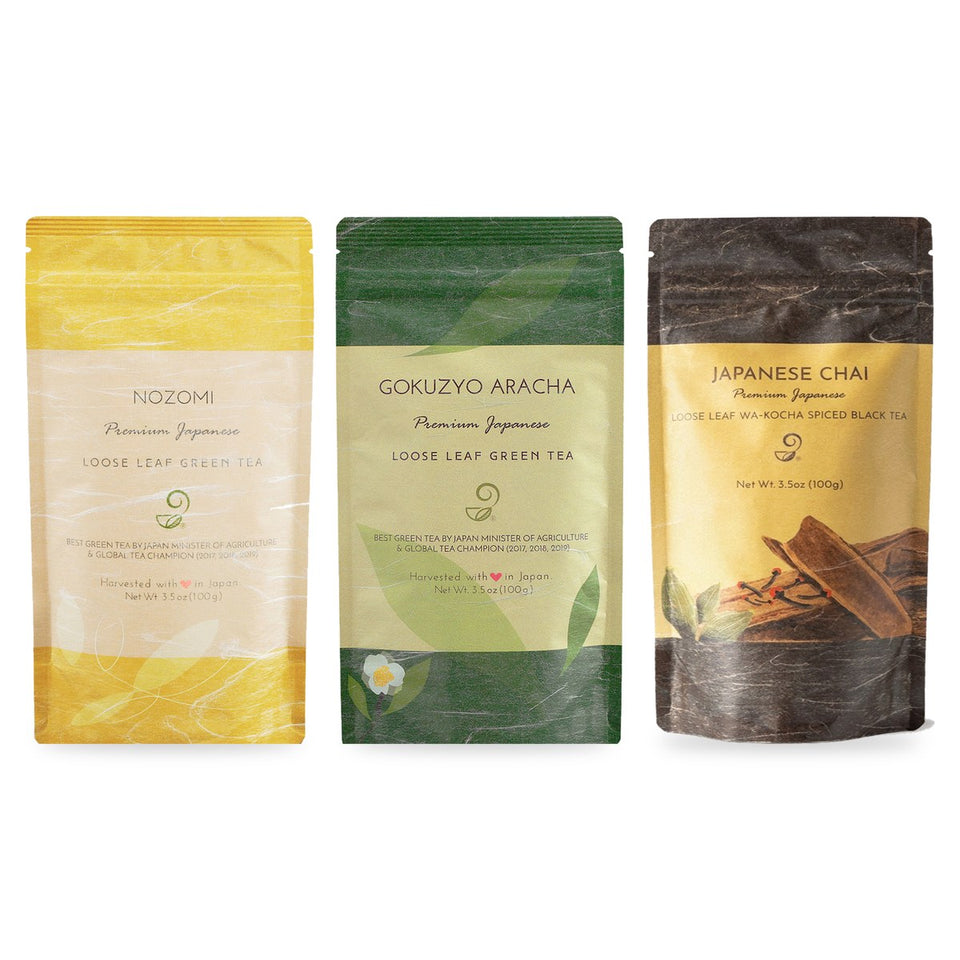
You can brew it as a chai latte, or turn it into a chai syrup. If you are looking for a gift, we also have a gift set with Nozomi, Gokuzyo Aracha and Japanese Chai.
Thank you, Mr. Okamoto, for letting us share your photos and your story.
Have you tried wa-kocha before? Please let me know in the comments. I read every one of them.
Photos courtesy of Kureha (紅葉).
FAQs About Kureha and Our Japanese Chai
What is wa-kocha?
Shop Japanese Chai



Get Free Bonus Books

Sign up for free to the Green Tea Club to get advice and exclusive articles about how to choose Japanese Tea, and tips, tricks, and recipes for enjoying Japanese tea.
About the author
Kei Nishida
Author, CEO Dream of Japan
Certification: PMP, BS in Computer Science
Education: Western Washington University