Skip to content

What is the Green Tea Steaming Process?

Every kind of tea leaf goes through a steaming process, and in the case of green tea leaves, it happens right after picking. Green tea leaves, when picked, are sent right away to a crude tea factory, where the process goes through high heat. The steaming process is crucial, as it is responsible for stopping oxidation in tea leaves. However, if the process is skipped, then the enzymes present in tea leaves change the original components by oxidizing polyphenols, resulting in the oxidation of catechin. 

Catechins are the main and vital nutrients in green tea leaves and are responsible for many health benefits. They also give the tea an astringent taste. It works as an antioxidant agent and frees your body from any harmful radicals. Therefore, it is essential to drink green tea, which has gone through each processing step. The steaming process gives your tea a proper taste and keeps the catechins in their original form so you can get their health benefits.

The steaming process was made important and frequently used to eliminate the smell of leaves, enhance aroma, inactivate enzymes, and make the tea leaves softer, making them easier to break down in later processing.

green tea leaves steamed

In Japan, the steaming process was introduced long ago, but in recent years, it has gained popularity due to an increase in massive-scale exports. Kobo Daishi, a Japanese monk, learned this method during his visit to China in 804 A.D., and on his return, he taught the technique to other tea vendors. Now every green tea sold in Japan and exported goes through the steaming process.

Nowadays, streaming is done through a tea steaming machine in a properly made factory. The device is made up of a string shaft and a net drum, and both of these parts are covered with steaming drums. When leaves go through this machine, oxidizing enzymes present in fresh leaves are killed due to steam heat. Steamed leaves get a new, fresh green color and contain 75% water. Then it immediately goes through other steps, such as rolling and drying.

The steaming process's length varies in green teas, as the time determines the flavor, aroma, and color of a tea. Each green tea has a specific timed steaming process that varies depending on the growing condition of the tea, the region of cultivation, the elevation, etc. The timing determines most of the results of brewing tea and should be taken seriously for each type of green tea. In the following table, you will see how steaming time changes the fragrance, taste, and color of a tea.

Green Tea steaming time and characteristics

Method

Light Steaming

Normal Steaming

Deep Steaming

Special Streaming

Extra Deep Steaming

Steaming Time

20-30 sec

Short time

30-40 sec

Short time

40-60 sec

Short time

90-120 sec

Long time

140-160 sec

Two-step steaming

Taste

Clear

(astringency)

Slightly rich

(astringency) 

Rich

(astringency) 

Deep rich

(smoothness)

Strong

Low astringency

Fragnance

Strong

Fresh

Fresh

Weak

Light

Leaf Shape

Long, narrow and uniform

Long, narrow and uniform

Long, narrow and uniform

Broken and fine

Coarse

Tea Color

Clear light-green

Clear light-green

Clear light-green

Darkish green

Deep green

FAQs about the Green Tea Steaming Process

Why is Japanese green tea steamed when Chinese green tea is pan-fired?

The split happened historically in the 8th-9th centuries when tea processing methods were evolving in parallel. Japan adopted steaming because it produced a brighter, more vivid green color and preserved the leaf's amino acid content (especially L-theanine) more effectively than pan-firing. Chinese green tea producers — working with different cultivars in different climates — found that pan-firing produced flavors they preferred, including the toasted, slightly nutty character of Chinese teas like Long Jing.

The chemistry is the difference. Steaming is fast (30-90 seconds), at 100°C, and stops the enzymes that would otherwise oxidize the leaf. The amino acids and chlorophyll are largely preserved; the leaf comes out vivid green. Pan-firing is slower (5-10 minutes), at higher metal-contact temperatures, and produces more Maillard reactions — which means more nutty, toasted flavors but less vivid color.

Japan's tea aesthetic prizes umami and fresh greenness; China's prizes complex roasted notes. The processing methods follow the cultural preferences. Both are valid; they just produce different teas.

How does steaming time change the flavor of Japanese green tea?

Significantly — and it's actually a primary axis of variation in Japanese green tea. Standard sencha (asamushi 浅蒸し, "light-steamed") is steamed for about 30-40 seconds. The leaf comes out partially intact, brews a clear bright green liquid, and tastes more delicate and complex. Deep-steamed sencha (fukamushi 深蒸し) is steamed 60-90 seconds, the leaves break apart more during processing, and brew a cloudier, deeper green liquid with bolder, sweeter, more vegetal flavor.

Asamushi is closer to a high-end Uji-style traditional sencha — refined, restrained, more aromatic complexity. Fukamushi is more typical of Shizuoka and Kagoshima — bolder, easier to drink for newcomers, more forgiving on brewing.

If you've found Japanese green tea "too subtle" or hard to taste, you may have been drinking asamushi when fukamushi would suit your palate better. Conversely, if you find Japanese green tea "too vegetal" or cloudy, asamushi is what you want.

What's actually changing chemically during the steaming?

Several things at once. The heat denatures the enzymes (especially polyphenol oxidase) that would otherwise turn the green leaf brown through oxidation — this is the same enzyme that makes a cut apple turn brown. Stopping that reaction within minutes of harvest is what preserves the green color and the L-theanine concentration.

Steam also triggers a slight Maillard browning at the cell wall level, which produces some of the cooked-vegetable notes that distinguish Japanese green tea. And it begins breaking down some of the cellulose structure, which makes subsequent rolling and drying more efficient. So steaming isn't just preservation — it's the first active step in shaping the finished tea's flavor.

The chlorophyll concentration is also stabilized by the heat treatment. Without steaming, chlorophyll would degrade more rapidly during subsequent processing and storage; the heat treatment locks it in.

Can you taste the difference between asamushi and fukamushi in a finished cup?
Easily, once you've had them side by side. Asamushi (浅蒸し) brews a clear, bright lime-green cup with a delicate, almost floral aroma. Fukamushi (深蒸し) brews a cloudier, darker forest-green cup with a deeper, almost vegetal, more umami-forward flavor. Asamushi tends to be slightly more astringent on the finish; fukamushi is rounder. The Sencha Lover Gift Set usually includes both styles so you can taste the contrast directly.

For most newer drinkers, fukamushi is more immediately enjoyable — the bigger flavor signal, the rounder finish, the easier brewing tolerance. Asamushi rewards a palate that's been calibrated to Japanese green tea over time and can pick up subtler notes.

Both are widely available in Japan; outside Japan, fukamushi is more common because it suits Western palates better. If you can find an asamushi, try it specifically to broaden your sense of what "sencha" means.

Can I replicate Japanese green tea steaming at home with fresh tea leaves?

Theoretically yes, practically no. If you have access to fresh-picked tea leaves (which is rare unless you have a tea plant in your yard or live near a working tea farm), you can steam them in a basic stovetop steamer for 30-60 seconds, then roll them by hand and dry them slowly. The result is technically Japanese-style green tea, but the quality will be far below commercial production because consistency at the leaf-by-leaf level is hard to achieve manually.

Commercial steaming uses precisely calibrated steam injectors, optimized leaf-to-steam ratios, and continuous conveyor systems that produce consistent leaves. Home production usually under-steams the inside and over-steams the outside, leading to uneven flavor in the finished tea. It's a craft worth experiencing once if you have the leaves, but not a path to drinkable daily tea.

If you're curious about the process, several tea farms in Japan and the US (a handful in Hawaii, North Carolina, and California) offer tour days where you can pick and process leaves under guidance. That's a more accessible way to experience the steaming process than trying to do it yourself with no infrastructure.

Related products

8 reviews

The Sencha Lover Gift Set - Premium Japanese Green Tea Set Package
$179.00 $159.99
Quick view

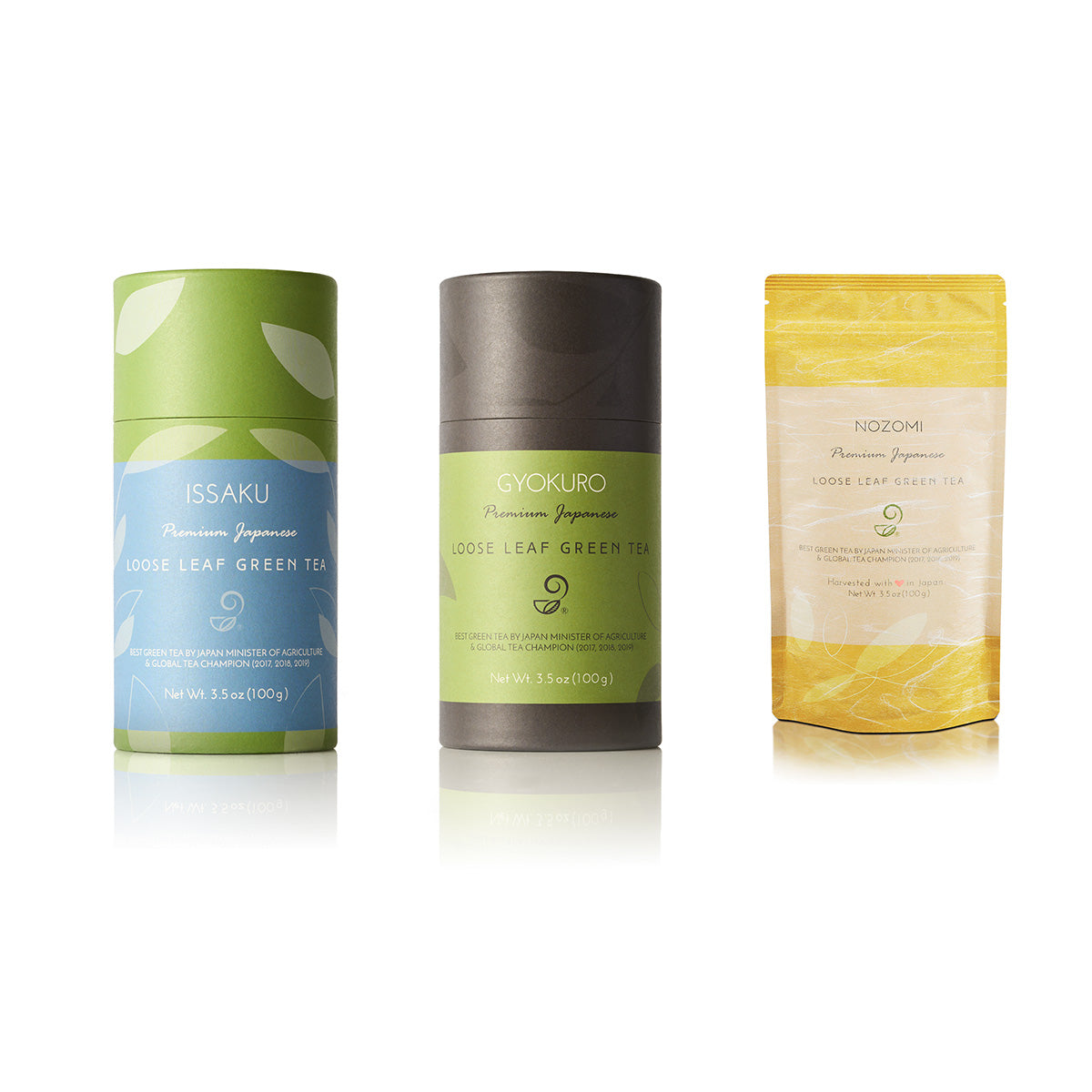
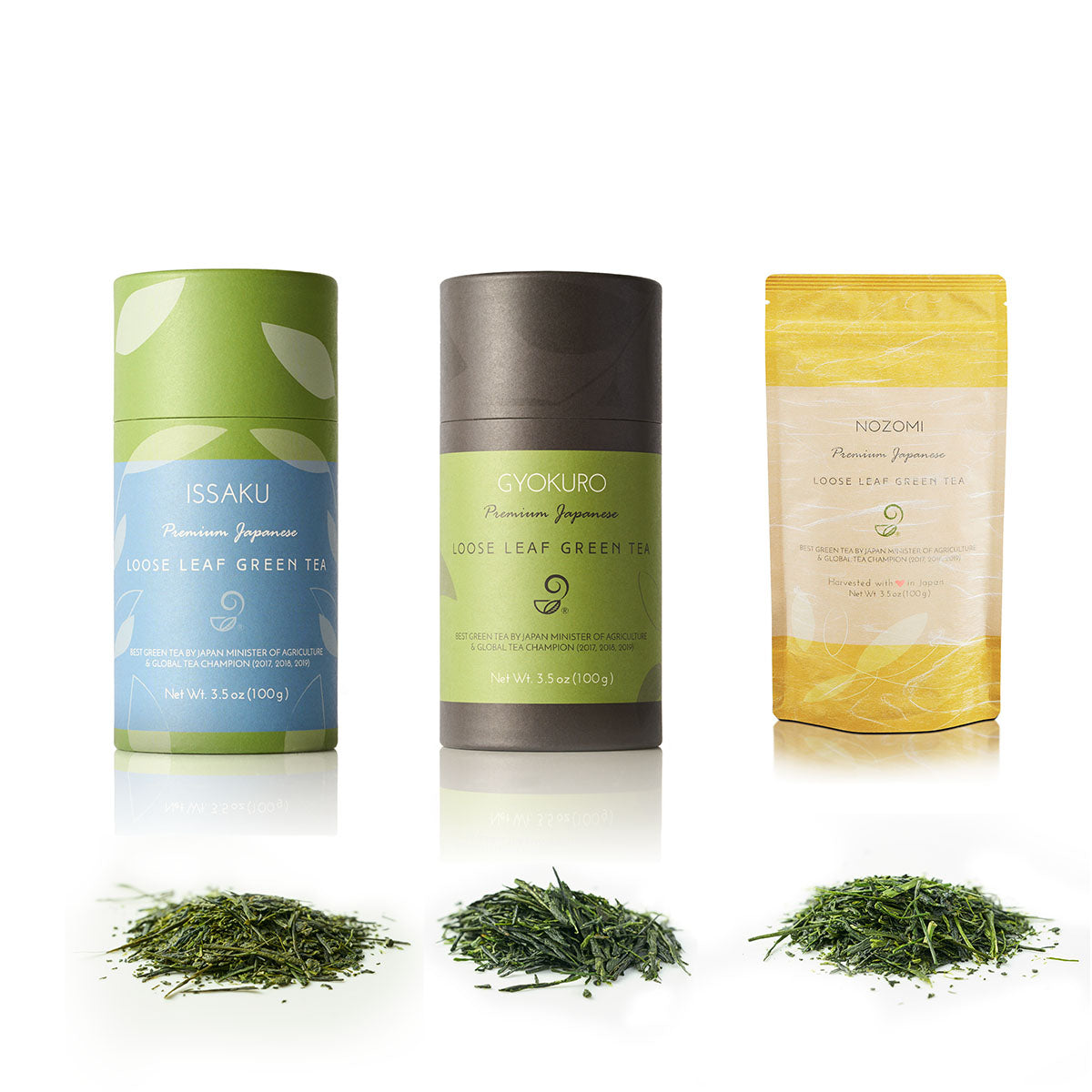
This tea set features three exceptional Japanese green teas, each crafted with care and traditional techniques. Issaku Reserve, a Global Tea Champion winner in 2017 and 2019, is a rare masterpiece created by Farm Master Mr. Arahata at Arahataen Green Tea Farm. Handpicked once a year from the first flush and processed with advanced methods, Issaku represents the highest-grade deep-steamed green tea, available only in limited quantities even in Japan.

The set also includes Gyokuro, a premium shaded green tea known for its rich, sweet flavor and deep mossy green color. Grown under special mats for 20 days to increase caffeine and amino acid levels, Gyokuro offers a layered, smooth taste unlike any other. Completing the collection is Nozomi, a fine Kabuse-cha, or "Covered Green Tea," carefully grown under nets to gently shade the leaves just before new sprouts emerge, resulting in a soft, rich, and refined flavor profile.

97 reviews

Gyokuro - Shaded Imperial Premium Green Tea

$65.00
Quick view

Gyokuro, also known as "jade dew" or "jewel dew tea," is a premium Japanese green tea shaded from the sun for 20 days using specially made mats, a method that boosts caffeine levels and strengthens amino acids to create a sweeter, richer flavor. This extended shading process results in dark, mossy green leaves with an unmistakable aroma and a complex taste that is layered yet balanced. Cultivated by the Chagusaba method in nutrient-rich sugarcane soil and made from the Yabukita cultivar, this loose-leaf authentic Gyokuro is offered in a high-quality, air-tight paper tube canister (chyazutsu) to preserve its exceptional freshness and flavor. Each 3.5 oz (100g) full-size package steeps 30–40 cups, and a convenient single-serve sample is also available.

45 reviews

Hojicha - Roasted Green Tea

$25.00
Quick view

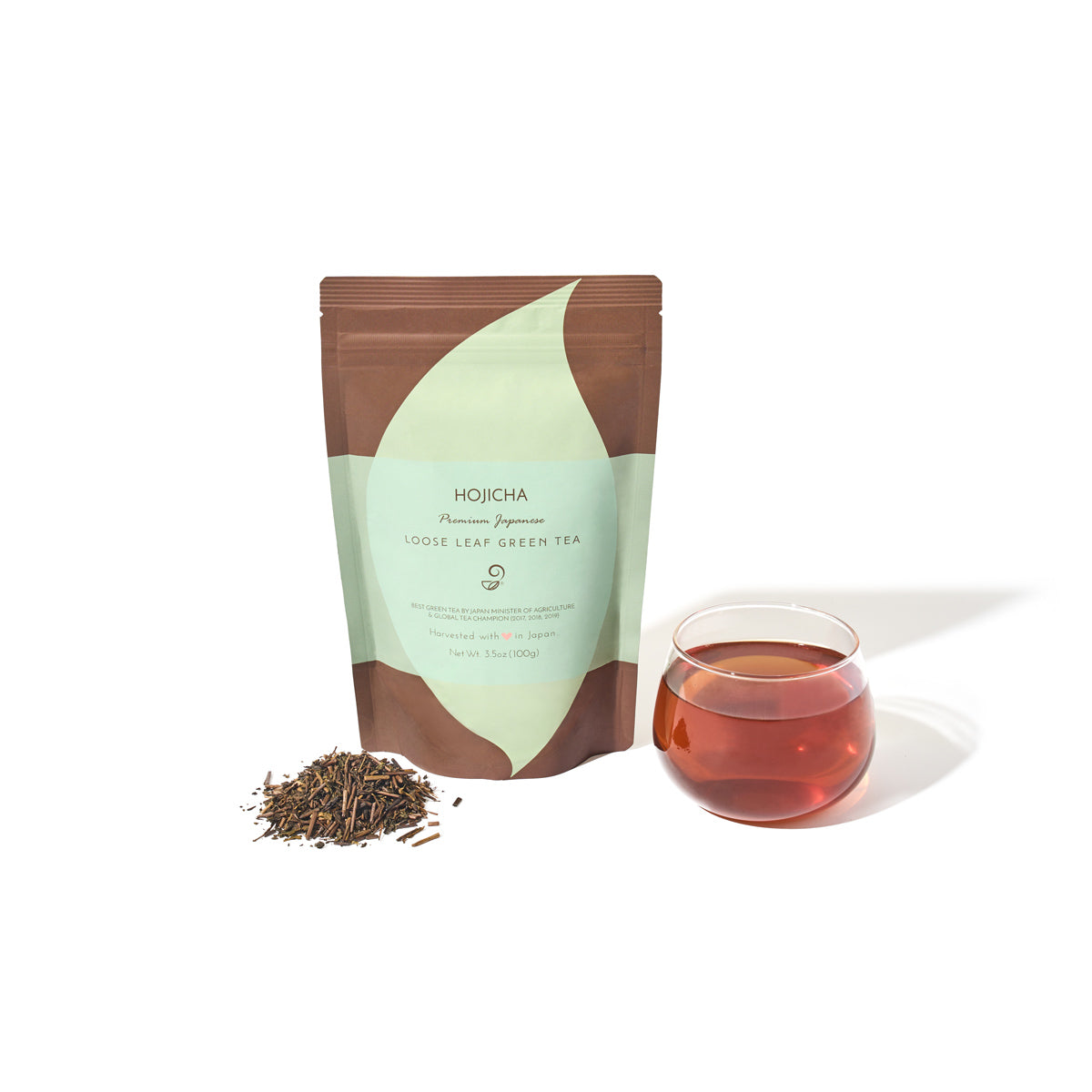
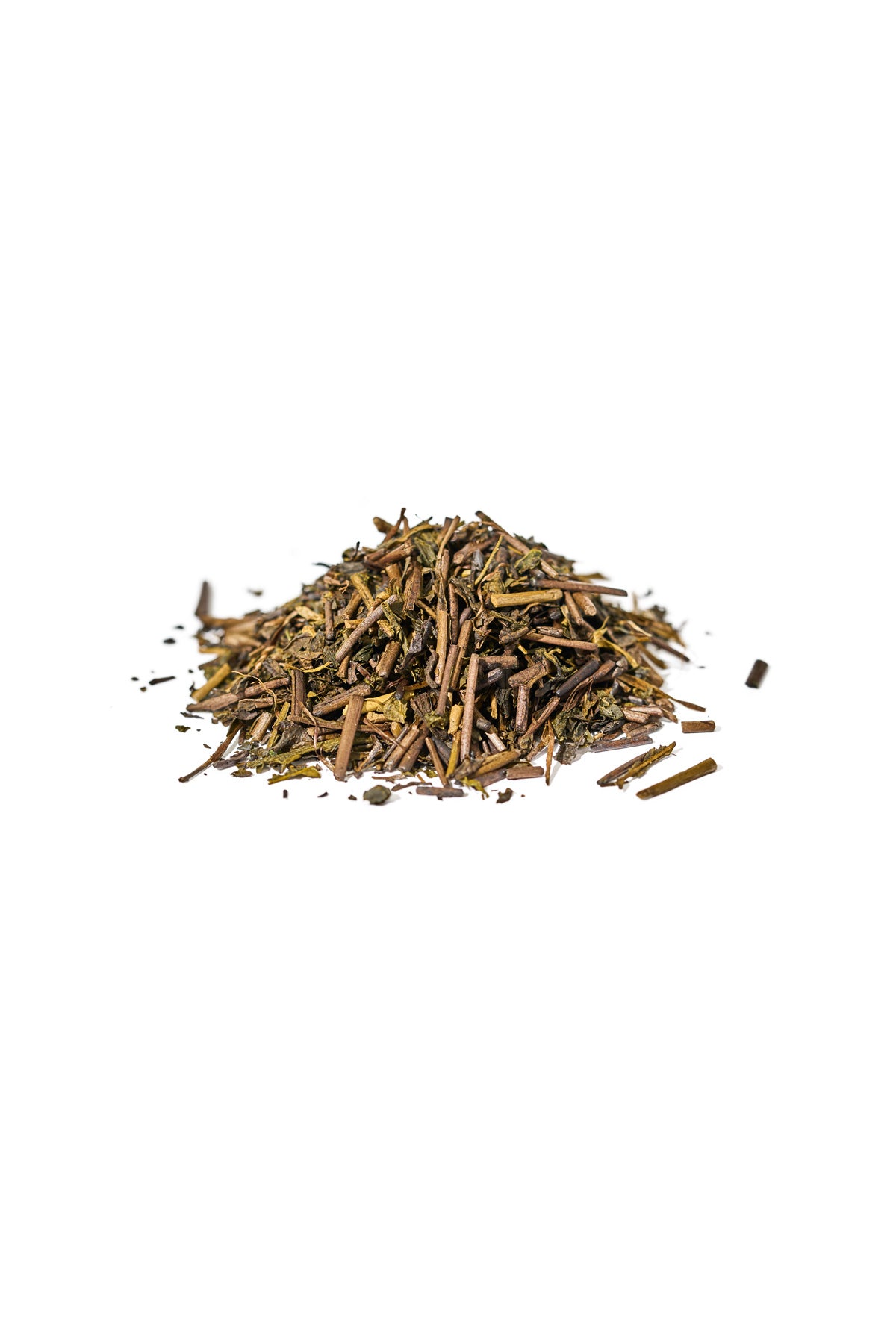
Our roasted green tea, known as hojicha (ほうじ茶), is crafted from freshly harvested premium green tea carefully roasted in porcelain over charcoal to maximize flavor while retaining more catechins than typical hojicha on the market. With lower caffeine and a smoother, less bitter taste compared to steamed green tea, it is an ideal choice for evening relaxation and is gentle enough for kids and pregnant women. Cultivated using the Chagusaba method in nutrient-rich sugarcane soil, this loose-leaf authentic Japanese roasted green tea, made from the Yabukita cultivar, also pairs beautifully with oily foods. Each eco-friendly resealable package contains 3.5 oz (100g) of tea, enough to steep 30–40 comforting cups.

80 reviews

Matcha - Ceremonial Japanese Powdered Green Tea

$39.00
Quick view

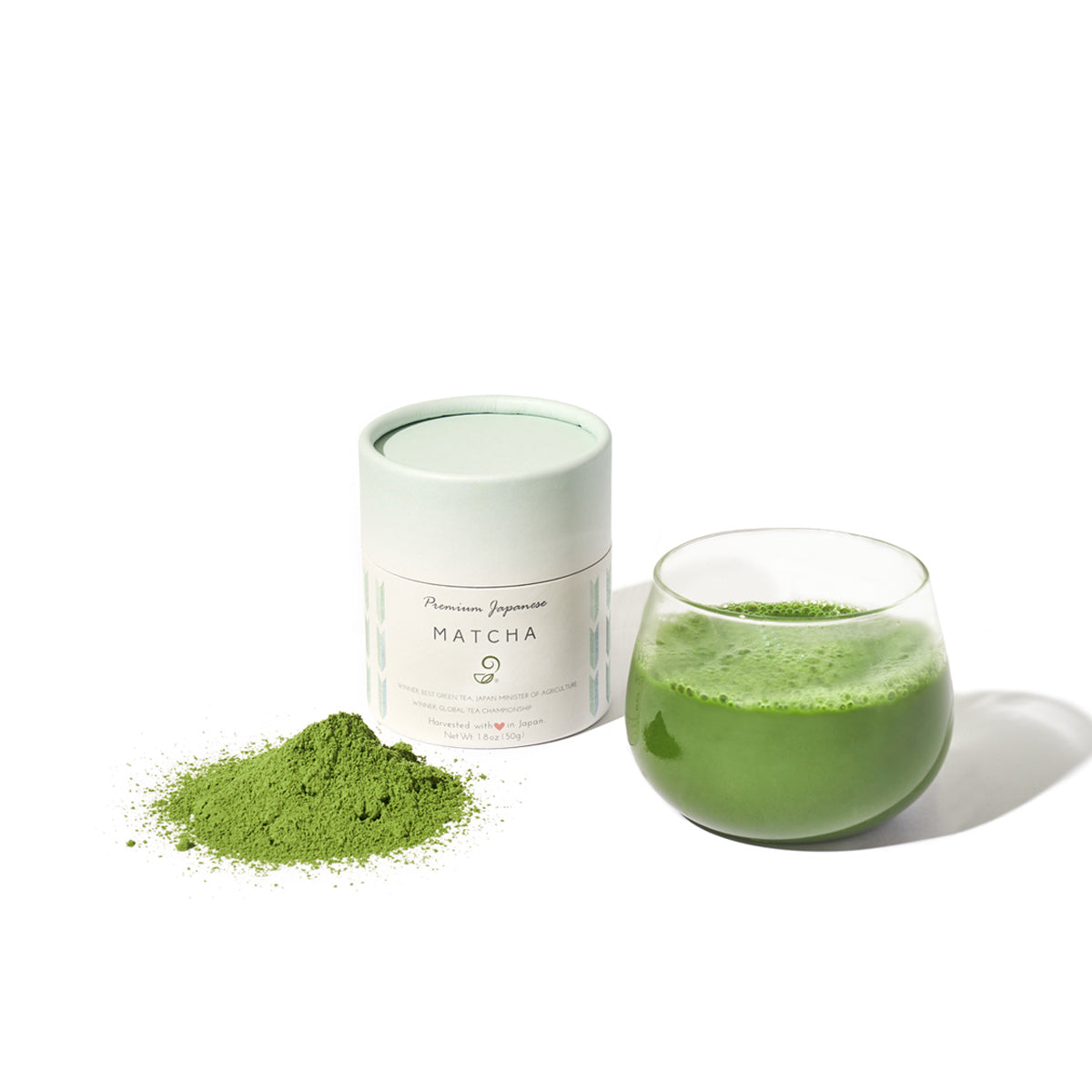
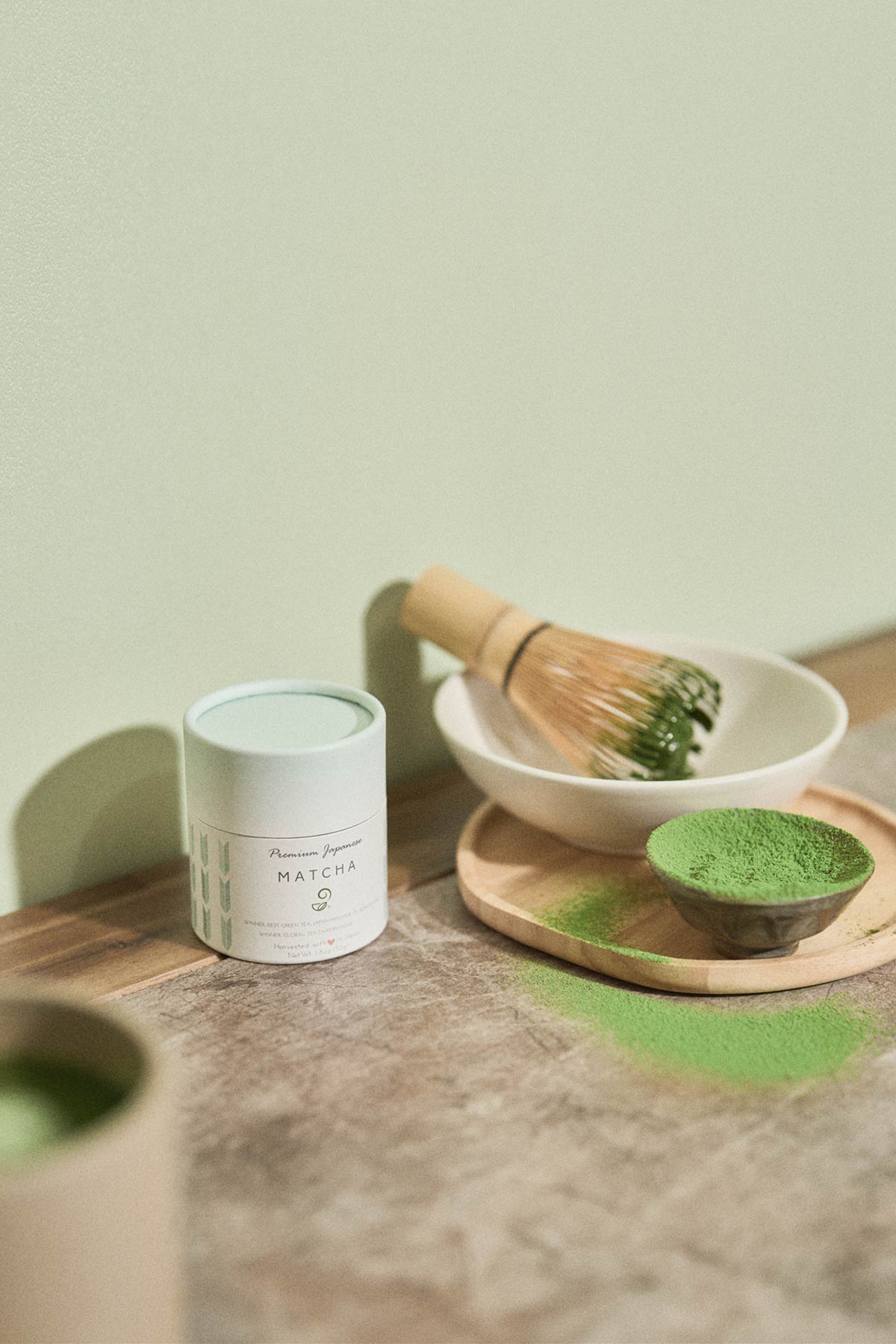
This ceremonial matcha is crafted from the finest Japanese green tea, grown in nutrient-rich soil enhanced with compostable grasses and sugarcane through the Chagusaba method, which gives the tea a natural sweetness and exceptional flavor. In collaboration with researchers from Shizuoka University, farmers ensure that the soil quality consistently produces tea of the highest standard.

Renowned among top Japanese chefs for its unmatched aroma, this matcha is made by carefully shading the plants before harvest to boost caffeine and amino acids, then meticulously drying, de-stemming, and grinding the leaves into a fine powder. Made from the Yabukita cultivar, this 1.8 oz (50g) matcha comes in a high-quality, air-tight paper tube canister, providing a luxurious and authentic Japanese tea experience.

42 reviews

Genmaicha - Green Tea with Roasted Brown Rice

$30.00
Quick view

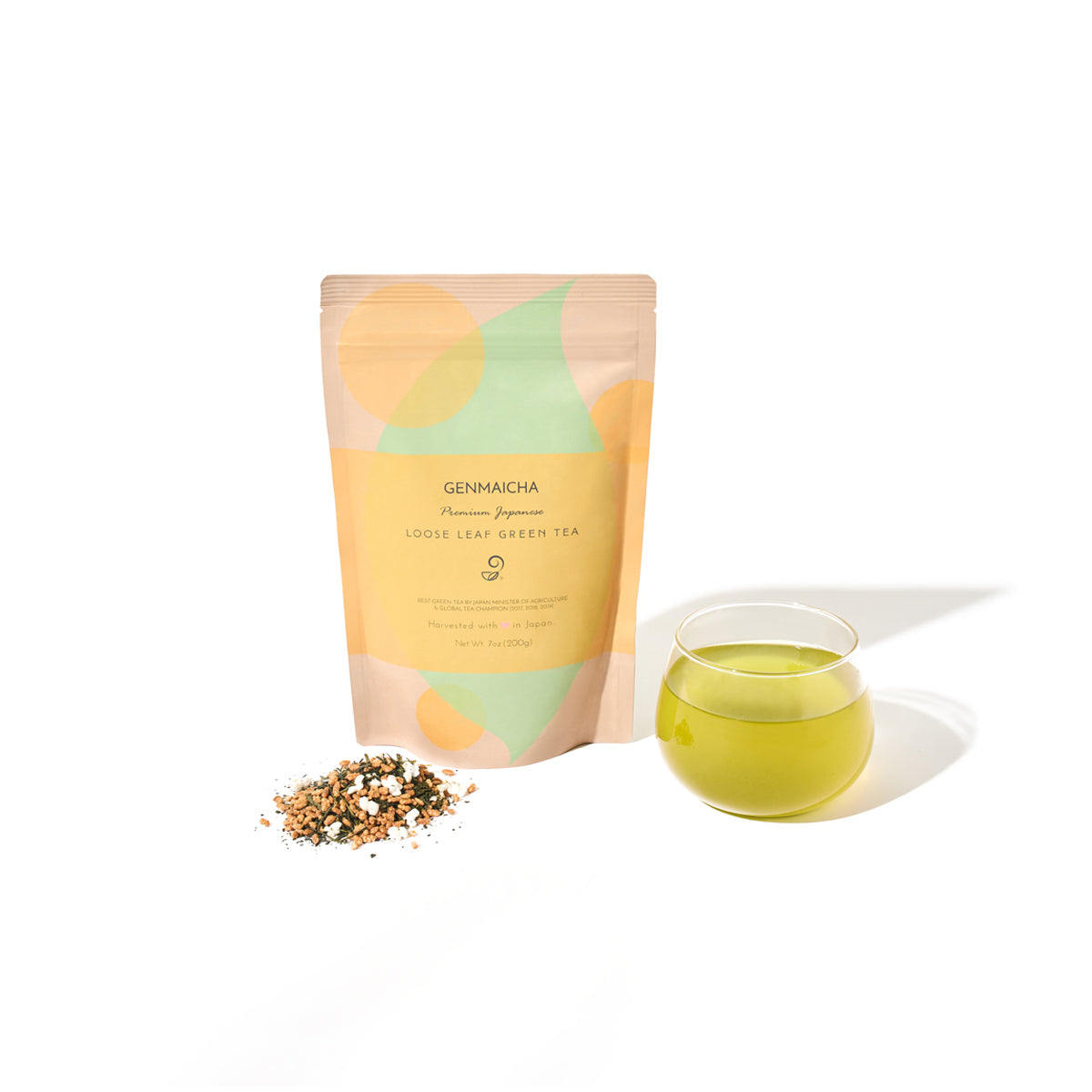
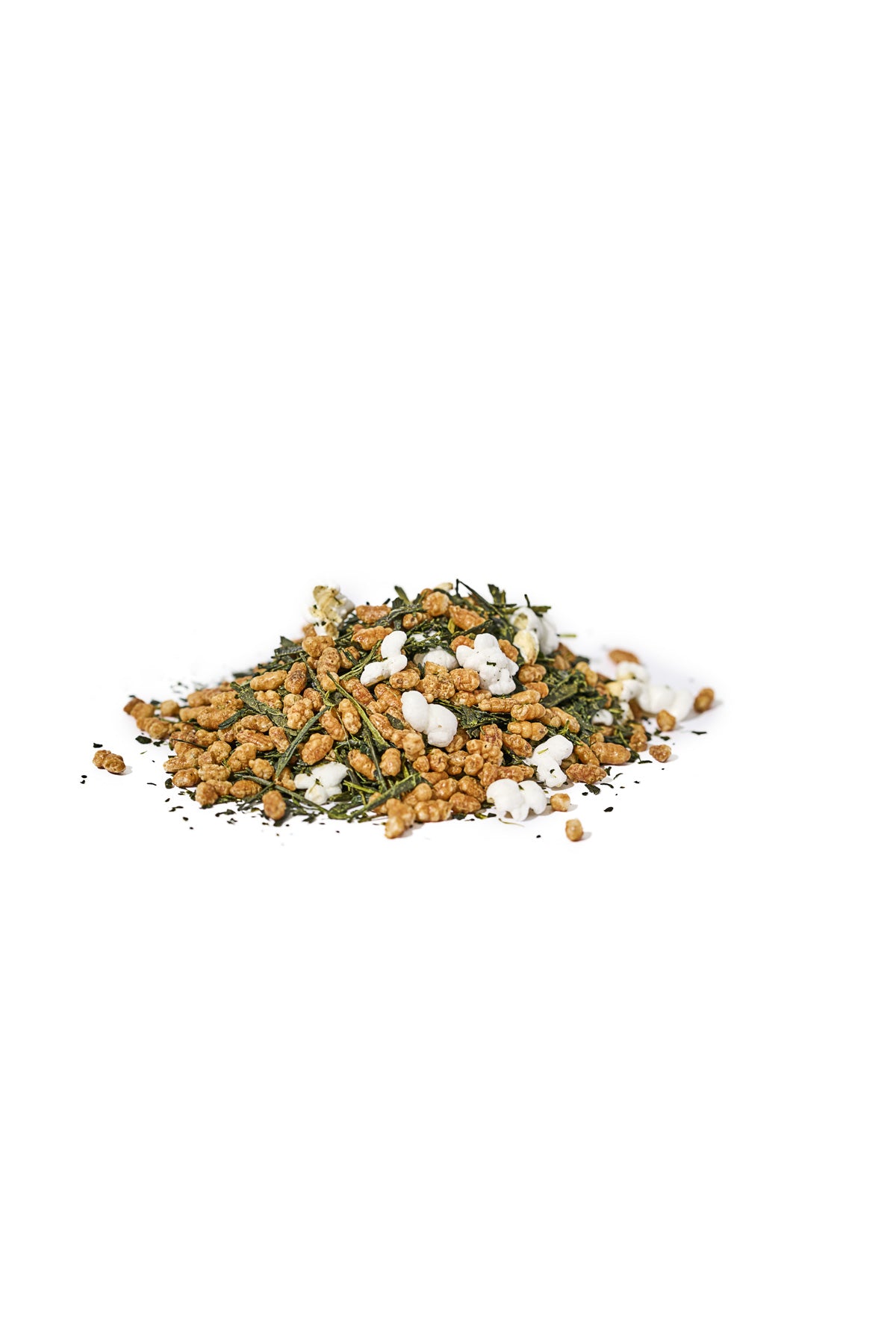
Our premium Japanese Genmaicha blends high-quality green tea with roasted popped brown rice (genmai 玄米), often nicknamed "popcorn tea" because the roasting process sounds like popcorn popping. Popular especially among the older generation in Japan for its mild flavor and lower caffeine content, this tea is easier on the stomach while still offering a rich, comforting taste. The brown rice used is premium Japanese mochi-gome (もち米) sticky rice, enhancing the tea’s nutty, aromatic profile. Made from Fukamushi Sencha and cultivated using the Chagusaba method in nutrient-rich sugarcane soil, this Genmaicha features the Yabukita cultivar and comes in a 7.0 oz (200g) eco-friendly resealable package, enough to steep 50–60 cups.


Related Articles You May Be Interested

Fukamushi-Cha (Deep Steam) Green Tea - 5 Reasons Why They Taste Better Than Other Types of Japanese Green Tea
How to Brew Tasty Japanese Green Tea
Which Tea Kettle Should I Use to Brew Japanese Green Tea?
Brewing Up Perfection with the Breville BTM800XL One-Touch Teapot
How to Cold Brew Japanese Green Tea - The Expert Advice

Get Free Bonus Books

Join Green Tea Club

Sign up for free to the Green Tea Club to get advice and exclusive articles about how to choose Japanese Tea, and tips, tricks, and recipes for enjoying Japanese tea.

Unsubscribe anytime. It’s free!

About the author

Kei Nishida

Kei Nishida

Author, CEO Dream of Japan

info@japanesegreenteain.com

Certification: PMP, BS in Computer Science

Education: Western Washington University

Kei Nishida is a passionate Japanese green tea connoisseur, writer, and the founder and CEO of Japanese Green Tea Co., a Dream of Japan Company.

Driven by a deep desire to share the rich flavors of his homeland, he established the only company that sources premium tea grown in nutrient-rich sugarcane soil—earning multiple Global Tea Champion awards.

Expanding his mission of introducing Japan’s finest to the world, Kei pioneered the launch of the first-ever Sumiyaki charcoal-roasted coffee through Japanese Coffee Co. He also brought the artistry of traditional Japanese craftsmanship to the global market by making katana-style handmade knives—crafted by a renowned katana maker—available outside Japan for the first time through Japanese Knife Co.

Kei’s journey continues as he uncovers and shares Japan’s hidden treasures with the world.

Learn more about Kei Nishida

Related Posts

Meet Eijiro Tsukada (塚田英次郎): The Charismatic Businessman Behind Cuzen Matcha — Now Available at Japanese Green Tea Co.

Meet Eijiro Tsukada — the man behind Cuzen Matcha. Full guide to the award-winning Matcha Maker, the Pro, and why we're

Read More
Behold: Balmuda's "The MoonKettle" — Where Boiling Water Becomes Art

We were privileged to be invited by Balmuda's Private MoonKettle Launch Event. Here are videos of it and everything you

Read More
OC Japan Fair April 2026 — Visit Us at Booth #A8!
OC Japan Fair Spring 2026 Recap (April 3 - 5 2026)

We were at OC Japan Fair again! April 3-5 2026 with new products, Miki Pon's art debut and more. Here is a recap video f

Read More
Leave a comment

Your email address will not be published..

Cart

Your cart is currently empty.

Start Shopping

Select options