View video in different languages: Spanish, Chinese, French, German, Italian
An exceptional choice for tea brewing enthusiasts, these clever filter bags are an ideal way to get the most out of your loose leaf teas! They are strategically oversized so that your tea leaves are able to fully unfurl, giving them the ability to release maximum flavor and aroma! Each pack comes with 144 high-quality filters that are 100% biodegradable.
The bottom of the bag is widened to allow the tea leaves to spread and brew well. It can also be used for brewing black tea, making herbal medicines, and making soup.

Transcript in English
The Japanese Green Tea Company can make your loose-leaf tea even better. Our Japanese tea filters enhance your brewing experience and allow you to convert any loose-leaf tea into a teabag.
These clever bags are an ideal way to get more out of your favorite tea and are excellent for both hot and cold brew. Our teabags are strategically oversized so that your tea leaves are able to fully unfurl, giving them the ability to release both maximum flavor and aroma.
Each pack comes with 144 high-quality filters that are 100% biodegradable. Japanese people often use these bags because many Japanese teas are not available in teabag form, and the steeping process is also much quicker.
Enjoy your favorite loose-leaf tea in a more comfortable way with our easy-to-use teabags.
The Japanese Green Tea Company harvested with love in Japan.
FAQs about Loose Leaf Tea Filters
What are loose-leaf tea filters and when would I use one?
Loose-leaf tea filters are mesh, paper, or silicone vessels designed to hold loose tea inside a regular cup or mug, allowing you to brew tea without a dedicated teapot. They're the bridge between teabag convenience and loose-leaf quality — you get to choose your own tea, control the leaf-to-water ratio, but you don't need to invest in a kyusu or wash a teapot.
They're useful when you're at the office, traveling, brewing single cups, or trying a new tea you don't want to commit a full pot to. They're less useful for serious daily drinking where a proper kyusu produces a measurably better cup. Most home tea drinkers end up with both — a kyusu for ritual brewing and filters for casual single cups.
They also work well as a starter step before buying a teapot. If you're new to loose-leaf and not sure how often you'll drink it, filters let you try without the equipment investment.
What's the difference between paper, mesh, and silicone filters?
Paper filters (like T-Sac or large empty teabags you fill yourself) are single-use, cheap, and produce the cleanest cup — no metal taste, no residual flavors from previous brews. The downside is environmental waste and the slight paper flavor some sensitive drinkers can detect. Best for travel and disposable contexts.
Mesh stainless-steel filters (the basket-style or ball-style) are reusable, produce no taste contamination if good quality, and let leaves expand fully. The cheap ones can have small holes that let fines through, producing cloudy tea. Best for daily reuse if you have a moderate budget.
Silicone filters are reusable, dishwasher-safe, durable, and often the most leaf-friendly (giving leaves full room to expand). They can retain food odors over time if not cleaned well. Best for someone who wants longevity and easy cleaning.
Do filters affect the flavor of Japanese green tea compared to brewing in a kyusu?
Slightly, yes. A traditional kyusu has a built-in mesh strainer in the spout that catches large leaves but lets fines through to the cup, contributing to the cloudy character of properly-brewed sencha. Most loose-leaf filters trap more of those fines, producing a clearer but slightly thinner cup. The flavor is still good but not quite the same. Our Japanese green tea brewing guide goes deeper on what kyusu brewing optimizes for.
The bigger flavor difference is leaf expansion. A kyusu has lots of room for leaves to unfurl fully; a small filter constrains them. Constrained leaves don't extract as completely, so a filter cup has slightly less flavor per gram of leaf than a kyusu cup. The fix is to use slightly more leaves to compensate.
For everyday casual drinking, the difference is small enough that filter brewing is genuinely fine. For serious tasting or ceremonial-grade tea, use the kyusu.
When should I use a kyusu vs. just a filter?
Use a kyusu when: you're brewing premium tea (gyokuro, ceremonial grades, single-cultivar sencha), you're brewing for multiple cups or steeps, you have time and attention for the brewing process, or you want the ritual element of traditional brewing. The kyusu rewards careful technique and reveals nuance that filters smooth over.
Use a filter when: you're at work or traveling, you want a quick single cup, you're trying a new tea you don't want to commit a kyusu to, or you're sharing tea with non-tea-drinkers who don't need the ritual. Filters meet you where you are.
Many serious drinkers have both: kyusu for weekend mornings and ceremonial occasions, filters for weekday office drinking. They're complementary tools, not competing ones.
Are filters a downgrade from the traditional Japanese teapot, or just different?
They're a real but small downgrade for premium tea, and basically equivalent for everyday tea. A kyusu produces a measurably more nuanced cup — better extraction, better fines management, better pour control. But the difference is most visible with high-grade tea where nuance matters. With mid-range loose leaf, the difference is small enough that filters are perfectly acceptable.
More importantly, a filter that gets used daily is better than a kyusu that sits in the cupboard. The best brewing equipment is the one you'll actually use. Many people find kyusu brewing intimidating or impractical for their lifestyle and never get around to drinking the loose leaf they bought; a filter would have served them better.
Choose based on your actual drinking patterns, not on theoretical optimization. If you'll use a kyusu twice a year and a filter daily, get the filter. If you'll use a kyusu daily for the ritual, get the kyusu. Both produce good tea.
Related products
Loose Leaf Tea Filters | 144 or 504 Filter Bags
Enjoy brewing your favorite loose-leaf teas with these easy-to-use filter bags (お茶パック), designed for tea lovers who want a simple and effective way to get the most flavor from their tea. Each oversized bag allows tea leaves to fully expand, enhancing the release of rich flavors and aromas, while the widened bottom ensures thorough brewing.
Perfect not only for green tea but also for black tea, herbal blends, and even soups, these versatile pouches measure 3.5" x 2.8" (9cm x 7cm). Each pack includes 144 or 504 high-quality filters, proudly made in Japan.
The Sencha Lover Gift Set - Premium Japanese Green Tea Set Package
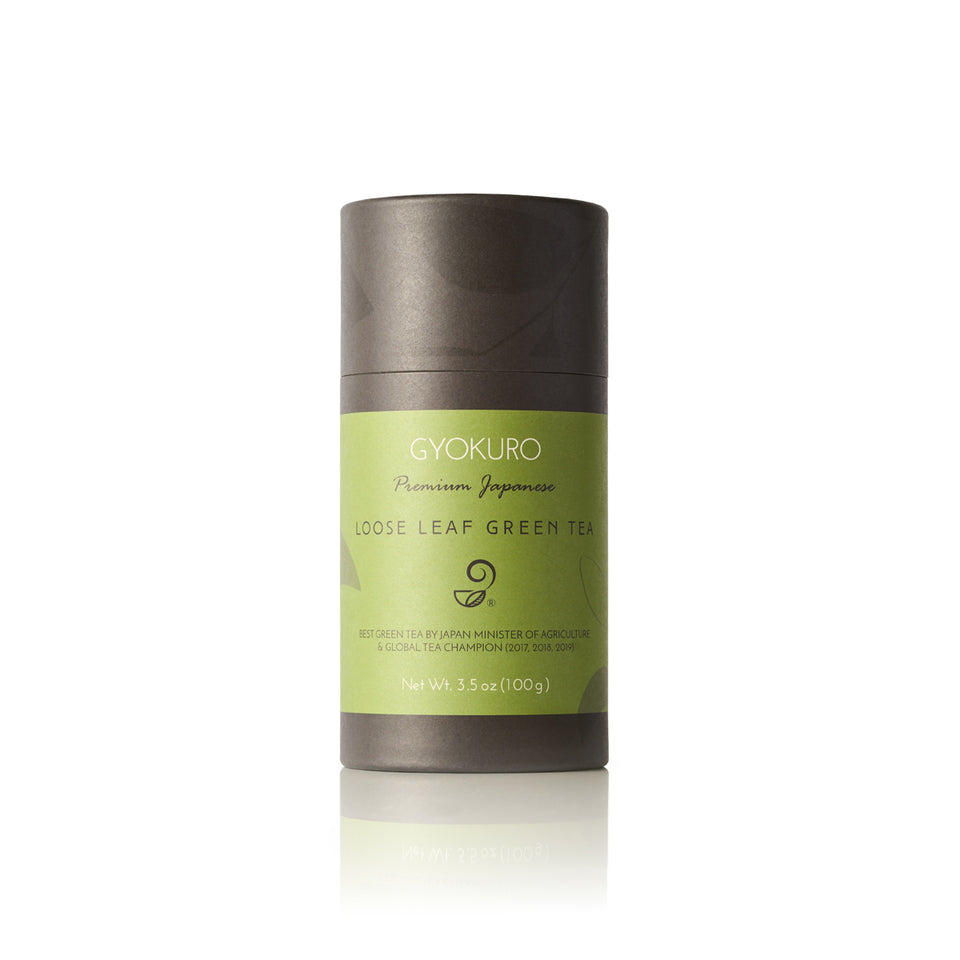
This tea set features three exceptional Japanese green teas, each crafted with care and traditional techniques. Issaku Reserve, a Global Tea Champion winner in 2017 and 2019, is a rare masterpiece created by Farm Master Mr. Arahata at Arahataen Green Tea Farm. Handpicked once a year from the first flush and processed with advanced methods, Issaku represents the highest-grade deep-steamed green tea, available only in limited quantities even in Japan.
The set also includes Gyokuro, a premium shaded green tea known for its rich, sweet flavor and deep mossy green color. Grown under special mats for 20 days to increase caffeine and amino acid levels, Gyokuro offers a layered, smooth taste unlike any other. Completing the collection is Nozomi, a fine Kabuse-cha, or "Covered Green Tea," carefully grown under nets to gently shade the leaves just before new sprouts emerge, resulting in a soft, rich, and refined flavor profile.
Gyokuro - Shaded Imperial Premium Green Tea
Gyokuro, also known as "jade dew" or "jewel dew tea," is a premium Japanese green tea shaded from the sun for 20 days using specially made mats, a method that boosts caffeine levels and strengthens amino acids to create a sweeter, richer flavor. This extended shading process results in dark, mossy green leaves with an unmistakable aroma and a complex taste that is layered yet balanced. Cultivated by the Chagusaba method in nutrient-rich sugarcane soil and made from the Yabukita cultivar, this loose-leaf authentic Gyokuro is offered in a high-quality, air-tight paper tube canister (chyazutsu) to preserve its exceptional freshness and flavor. Each 3.5 oz (100g) full-size package steeps 30–40 cups, and a convenient single-serve sample is also available.
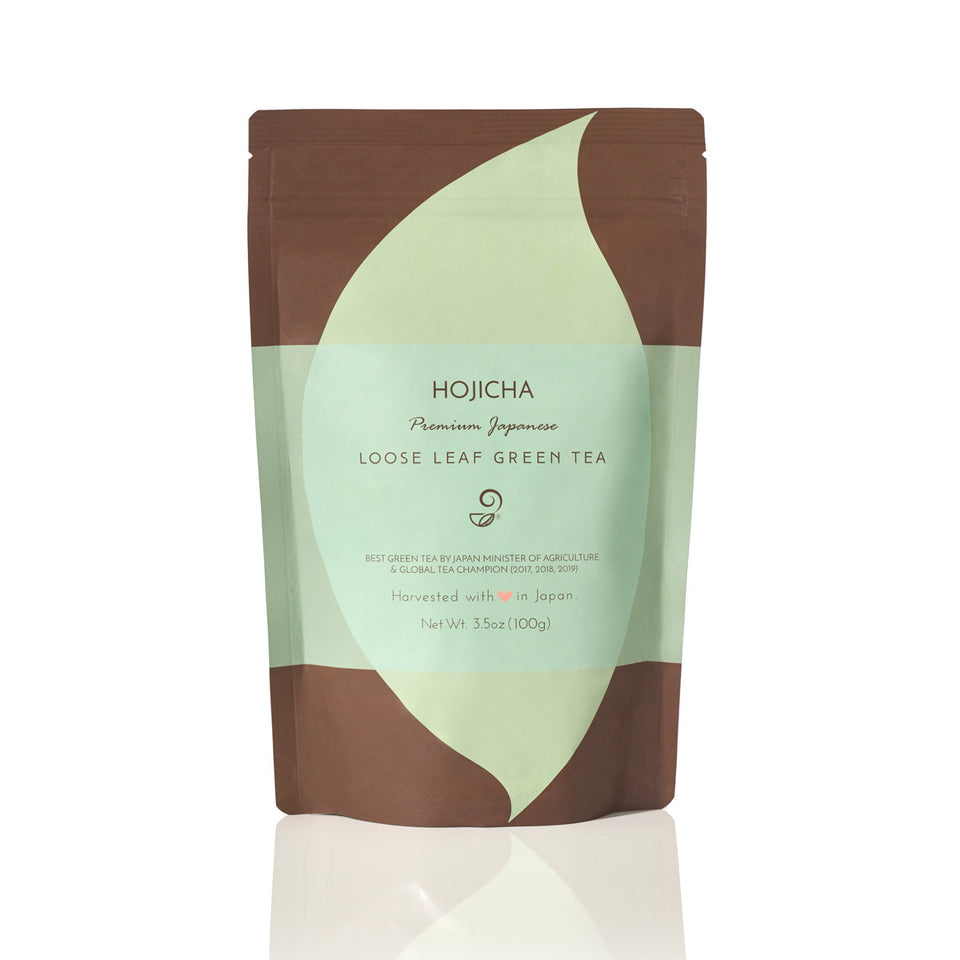
Hojicha - Roasted Green Tea
Our roasted green tea, known as hojicha (ほうじ茶), is crafted from freshly harvested premium green tea carefully roasted in porcelain over charcoal to maximize flavor while retaining more catechins than typical hojicha on the market. With lower caffeine and a smoother, less bitter taste compared to steamed green tea, it is an ideal choice for evening relaxation and is gentle enough for kids and pregnant women. Cultivated using the Chagusaba method in nutrient-rich sugarcane soil, this loose-leaf authentic Japanese roasted green tea, made from the Yabukita cultivar, also pairs beautifully with oily foods. Each eco-friendly resealable package contains 3.5 oz (100g) of tea, enough to steep 30–40 comforting cups.
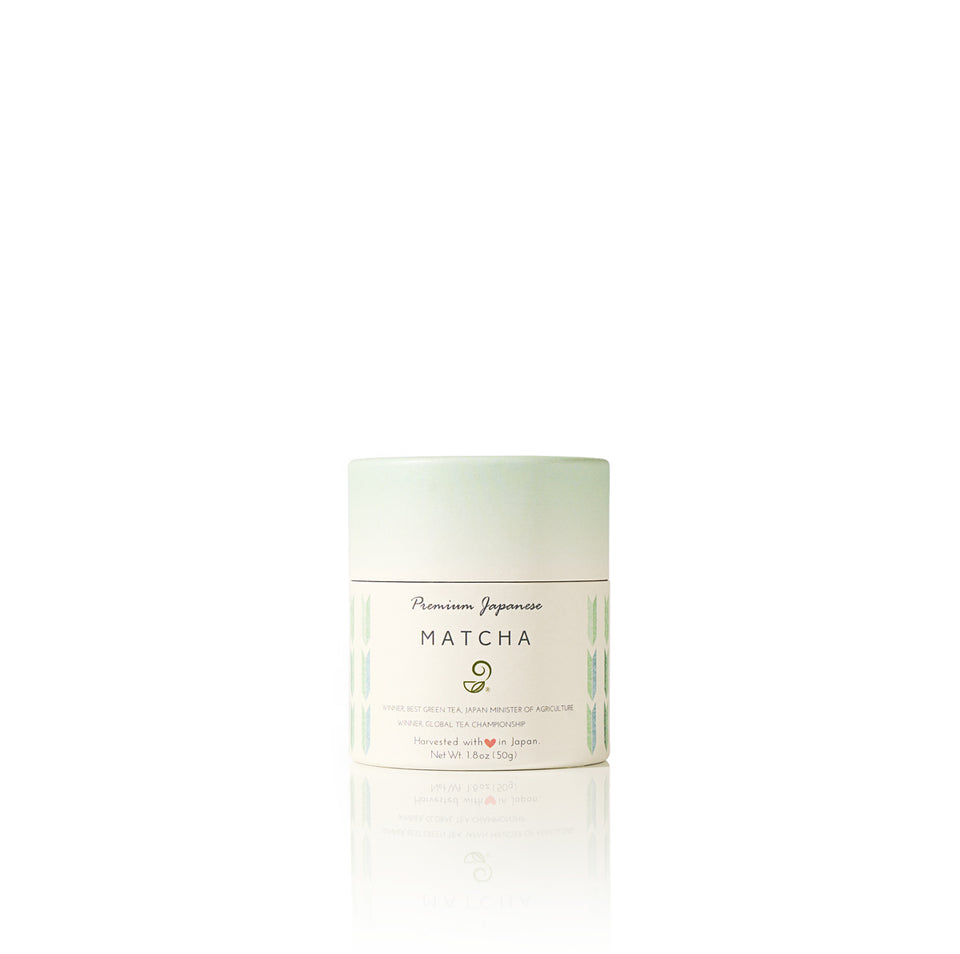
Matcha - Ceremonial Japanese Powdered Green Tea
This ceremonial matcha is crafted from the finest Japanese green tea, grown in nutrient-rich soil enhanced with compostable grasses and sugarcane through the Chagusaba method, which gives the tea a natural sweetness and exceptional flavor. In collaboration with researchers from Shizuoka University, farmers ensure that the soil quality consistently produces tea of the highest standard.
Renowned among top Japanese chefs for its unmatched aroma, this matcha is made by carefully shading the plants before harvest to boost caffeine and amino acids, then meticulously drying, de-stemming, and grinding the leaves into a fine powder. Made from the Yabukita cultivar, this 1.8 oz (50g) matcha comes in a high-quality, air-tight paper tube canister, providing a luxurious and authentic Japanese tea experience.
Related Articles You May Be Interested
Get Free Bonus Books
Sign up for free to the Green Tea Club to get advice and exclusive articles about how to choose Japanese Tea, and tips, tricks, and recipes for enjoying Japanese tea.
Unsubscribe anytime. It’s free!
About the author
Kei Nishida
Author, CEO Dream of Japan
Certification: PMP, BS in Computer Science
Education: Western Washington University
Kei Nishida is a passionate Japanese green tea connoisseur, writer, and the founder and CEO of Japanese Green Tea Co., a Dream of Japan Company.
Driven by a deep desire to share the rich flavors of his homeland, he established the only company that sources premium tea grown in nutrient-rich sugarcane soil—earning multiple Global Tea Champion awards.
Expanding his mission of introducing Japan’s finest to the world, Kei pioneered the launch of the first-ever Sumiyaki charcoal-roasted coffee through Japanese Coffee Co. He also brought the artistry of traditional Japanese craftsmanship to the global market by making katana-style handmade knives—crafted by a renowned katana maker—available outside Japan for the first time through Japanese Knife Co.
Kei’s journey continues as he uncovers and shares Japan’s hidden treasures with the world.