Skip to content

What is Issaku Reserve? - An award-winning masterpiece from Japanese Green Tea Co.

Subscribe to Youtube See all videos

Issaku Reserve is no ordinary green tea—it is an award-winning masterpiece that showcases the artistry and dedication behind Arahataen Tea Farm in Shizuoka Prefecture, Japan. Having won the prestigious Global Tea Championships in both 2017 and 2019, this exceptional tea stands as a testament to its creators' unwavering passion, hard work, and innovative techniques. From the meticulously cared-for soil to the expert harvesting process, every step in crafting Issaku Reserve celebrates tradition and sustainability. Whether you're a seasoned tea lover or a newcomer, discovering Issaku Reserve promises an unparalleled experience in both flavour and health benefits.

What is ISSAKU Reserve?

Issaku Reserve is an extraordinary green tea that won the Global Tea Championships in 2017 and 2019. This tea isn't just a drink—it's a testament to decades of dedication, passion, and innovation from Arahataen Tea Farm in Shizuoka Prefecture. If I could only drink one Japanese green tea for the rest of my life, Issaku Reserve would undoubtedly be my choice.

This exceptional tea is crafted by Arahataen, a farm that focuses on Tsuchi-zukuri or soil-making, ensuring the soil is rich, biodiverse, and sustainable. The farm also practices the Chagusaba method, a centuries-old tea farming technique that preserves natural grasslands and nurtures over 300 endangered species.

Mr. Eizo Arahata, the mastermind behind this tea, poured his heart and soul into creating a blend that is truly unique. His dedication to tea-making resulted in a tea that will not be found anywhere else, which is how Issaku Reserve came to be.

If someone were to ask me, 

"If you could only drink one Japanese green tea for the rest of your life, what would it be?" 

My answer will undoubtedly be our cherished ISSAKU Reserve

You might say I'm biased because it's crafted by our trusted tea supplier, Arahataen. And perhaps I am. Yet, my bias is rooted in all the right reasons - a deep appreciation for the countless years, boundless passion, relentless hard work, and unwavering dedication that go into creating this extraordinary tea.
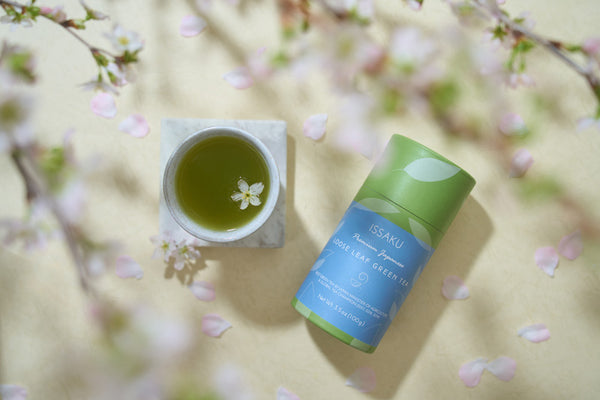
Issaku Reserve - Japanese Green Tea

What Makes ISSAKU Reserve So Special?

The most surface-level answer to the question will be that it has won Global Tea Championships in two different years - 2017 and 2019. After these years, the championship has been halted due to COVID-19. But this is just the 'lid' of the whole story. When you reach deeper into the roots, we go all the way back to the soil and the farm creating this tea - Arahataen Tea Farm in Shizuoka prefecture. 

Tasting Notes: What to Expect

Once brewed, Issaku Reserve presents a flavor profile that’s both delicate and rich. Here’s what you can expect from each sip:

  • Initial Sip: A mild, refreshing sweetness with floral and grassy notes.
  • Mid-Palate: A deep, umami flavor that makes it incredibly satisfying.
  • Finish: A clean and slightly astringent aftertaste, with a lingering sweetness that invites another sip.

This tea has been crafted with precision, ensuring that every cup reveals layers of flavor, from the first sip to the last drop.

Health Benefits of Issaku Reserve

Besides its delicious taste, Issaku Reserve offers numerous health benefits that enhance your well-being with every sip:

  • Weight Management: Packed with catechins, polyphenols, and EGCG, which help boost metabolism.
  • Skin Health: High in Taedenol, promoting radiant and smooth skin.
  • Vitamins: Rich in Vitamin C and Vitamin E for immunity and skin health.
  • Low Caffeine: At 34 mg per cup, it’s a great choice for those who are sensitive to caffeine.
  • Digestive Aid: The Gallic acid in the tea helps reduce stomach absorption, improving digestion

How to Enjoy Issaku Reserve: Brewing Tips for a Champion Tea

Now that you know the rich history and tradition behind Issaku Reserve, let’s delve into how to brew this champion tea toHow to Enjoy Issaku Reserve: Brewing Tips for a Champion Tea

Now that you know the rich history and tradition behind Issaku Reserve, let’s delve into how to brew this champion tea to perfection. The brewing process is key to unlocking its full, unique flavor. Here’s your step-by-step guide to brewing Issaku Reserve like a true tea connoisseur.

  1. Water Temperature: The Perfect Balance

To fully appreciate the tea’s delicate flavor, you should aim for a water temperature of 75°C (167°F). Too hot, and the tea might become bitter; too cool, and you won’t extract its full richness. The right balance brings out its sweetness and complexity.

  1. Brewing Time: Let the Tea Unfold

Allow your tea to brew for 1 to 1.5 minutes. Issaku Reserve is best enjoyed when brewed quickly, as this preserves its smooth, sweet profile without the bitter aftertaste that might develop with longer steeping.

  1. The Vessel: Optimal Brewing Setup

For optimal brewing, a kyusu (traditional Japanese teapot) is preferred. Its design allows the tea leaves to expand, ensuring a fuller infusion. If you don’t have a kyusu, a ceramic or glass teapot will do just fine. The key is ensuring even heat distribution.

  1. Tea to Water Ratio

Use 1 gram of tea for every 30 ml of water for the perfect balance of flavor and body. perfection. The brewing process is key to unlocking its full, unique flavor. Here’s your step-by-step guide to brewing Issaku Reserve like a true tea connoisseur.

1. Water Temperature: The Perfect Balance

To fully appreciate the tea’s delicate flavor, you should aim for a water temperature of 75°C (167°F). Too hot, and the tea might become bitter; too cool, and you won’t extract its full richness. The right balance brings out its sweetness and complexity.

2. Brewing Time: Let the Tea Unfold

Allow your tea to brew for 1 to 1.5 minutes. Issaku Reserve is best enjoyed when brewed quickly, as this preserves its smooth, sweet profile without the bitter aftertaste that might develop with longer steeping.

3. The Vessel: Optimal Brewing Setup

For optimal brewing, a kyusu (traditional Japanese teapot) is preferred. Its design allows the tea leaves to expand, ensuring a fuller infusion. If you don’t have a kyusu, a ceramic or glass teapot will do just fine. The key is ensuring even heat distribution.

4. Tea to Water Ratio

Use 1 gram of tea for every 30 ml of water for the perfect balance of flavor and body

Pairing Suggestions for Issaku Reserve

For the perfect tea experience, consider pairing Issaku Reserve with the following foods that complement its natural sweetness and rich umami flavor:

  • Cheeses: Soft cheeses like Brie or Camembert.
  • Seafood: Pair it with fresh sushi or sashimi for an ideal flavor match.
  • Desserts: Fruity desserts like matcha-flavored cakes or fruit tarts.

Arahataen’s tea-making starts with ‘Tsuchi-zukuri (Soil - making)’ (土づくり)

Since the founder Eizo Arahata, started cultivating tea in Makinohara Plateau, Arahataen's foundational principle has been to start tea production with 'Soil-making.' What does this mean? It means they put a massive amount of effort and thought into improving and maintaining soil quality, natural biodiversity, and natural ecosystems instead of exploiting nature to harvest tea. In return, nature rewards us a thousandfold by growing tea plants with leaves that brew into cups of tea with extraordinary flavor and sweetness that cannot be found in other places. 

Arahataen has also been committed to using the traditional tea farming method called the 'Chagusaba method,' which was recognized by FAO (United Nations Food and Agricultural Organization) as GIAHS (Globally Important Agricultural Heritage System) in 2013. 

The Chagusaba method is a labor-intensive ancient Japanese tea farming method that maintains semi-natural grasslands around the tea-growing area and uses the grass as mulch in the tea field to produce high-quality tea. This method protects more than 300 ecologically important endangered species living in the tea-growing area and is one of the most sustainable agricultural practices in the world. 
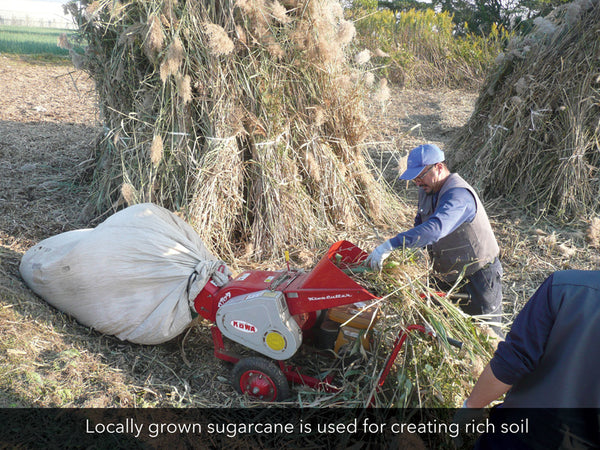
Locally grown sugarcane is used for creating rich soil

(Read more about how Arahataen is fighting one of Japan’s biggest social problems here.) 

Mr. Arahata and his masterpiece tea 

Mr. Arahata, the owner of Arahataen green tea farm, had this thought when he was giving his all to work on creating 'ISSAKU': 

“他のどこにもない特別なお茶を作ってみたい。そして茶づくり人生の中で、お世話になった方々にぜひ味わっていただきたい…。”

"A tea that you will not find anywhere else. That's what I want to make. Many people have been a part of my Ocha-zukuri (tea-making life), and I want these people to enjoy this tea."

Mr. Arahata poured his all - his years of experience, his tea-making wisdom, and his passion for tea, into creating this masterpiece. That was how Issaku was born. 

Revolutionary Natural Fertilization: The Sweet Secret of Local Sugarcane
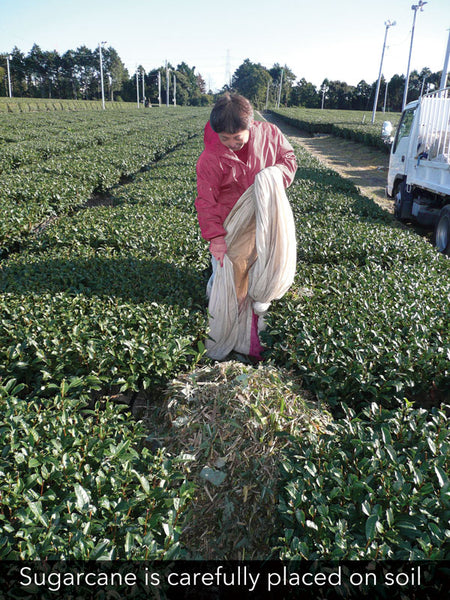
Sugarcane is carefully placed on soil

This exclusive green tea is nurtured using a natural fertilizer created from locally sourced Japanese sugarcane, rich in amino acids. Fresh sugar liquid is meticulously incorporated into the soil, infusing each sip with a distinctive sweetness. This innovative fertilization method, combined with the use of homegrown sugarcane to enrich the soil, results in a tea with a naturally sweet flavor profile.

The Freshest Top Leaves. Picked Only Once a Year. By Human Hands. 
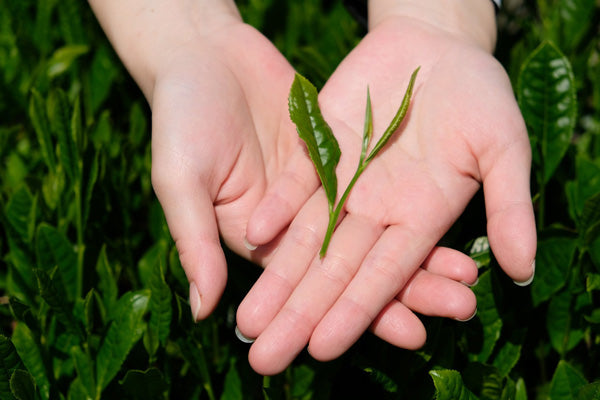
Hand-picked Japanese Green Tea

With meticulous care, the tea crop is harvested just once a year. Highly trained farmers delicately handpick only the tender, newly sprouted tea leaf buds. This stringent selection process ensures that only the freshest and most delicate leaves make their way into ISSAKU Reserve. 

Crafting Tradition with Modern Precision
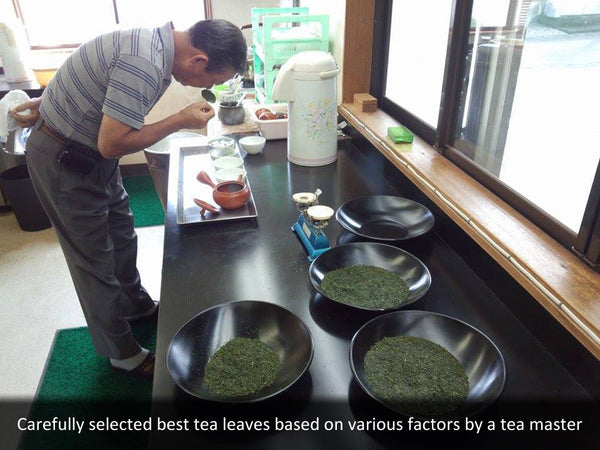
Carefully selected best tea leaves based on various factors by a tea master

The journey of the tea leaves, once plucked, combines tradition with modern precision. Stored in a specialized refrigerator, they are exposed to temperatures and humidity levels reminiscent of the traditional soil layer where Japanese tea leaves aged for centuries. This aging process imparts the perfect balance of depth and flavor. After a precise duration of aging, the leaves undergo calibrated heating, resulting in Kuradashi Cha (Kuradashi Tea), translated as "tea taken out from the granary."

The Art of Aging Tea and the Richness of Kuradashi Green Tea

ISSAKU Reserve is the culmination of aging freshly picked tea leaves for half a year under carefully controlled conditions at -15 degrees Celsius. Before aging, the tea reaches the Aracha state (crude tea), identical to the tea at this stage. However, the distinction lies in the mellow taste, robust body, and slightly increased astringency of Kuradashi Tea, making it richer than freshly picked tea.

If you are interested in knowing more about the ins and outs of Japanese tea harvesting, you can do so here. 

Issaku Reserve


Health Benefits: A Bonus with Every Sip

Beyond its exquisite flavor, ISSAKU Reserve provides an array of health benefits, including:

  • Facilitating weight management (High in Polyphenol, Catechin, and EGCG)
  • Reducing stomach absorption activity (High in Gallic acid)
  • Promoting smooth, radiant skin (High in Taedenol Element)
  • Abundant in vitamins C and E
  • Free from cholesterol and sodium
  • Low in caffeine (34 mg per cup, akin to one-third of a coffee cup)

Ready to Experience the Champion’s Brew?

Now that you’ve learned how to brew Issaku Reserve to perfection, why not give it a try? Experience the unique flavors and health benefits that make this tea an award-winning masterpiece. Don’t miss out on the chance to taste the tea that has captivated tea lovers worldwide.

Try Issaku Reserve today and elevate your tea experience to a champion level!

Conclusion

Issaku Reserve isn't just a tea; it's a carefully crafted journey that combines the richness of tradition with the precision of modern techniques. From its exceptional flavor profile to its numerous health benefits, each sip offers something unique. Whether you're seeking to indulge in a championship-quality tea or reap the rewards of its health-promoting properties, Issaku Reserve provides a truly remarkable experience. Elevate your tea rituals with this exceptional brew and savor a taste of excellence that can only come from the dedication and expertise of Arahataen Tea Farm. Try Issaku Reserve today and discover why it is the tea of champions.

FAQs about Issaku Reserve — JPCo Award-Winning Tea

What is Issaku Reserve, and why has it won so many awards?

Issaku Reserve is a premium single-cultivar Japanese green tea produced by Japanese Green Tea Co. (JPCo). It's grown in Shizuoka Prefecture, harvested as a first-flush single-cultivar tea (typically Yabukita or a select premium cultivar), and processed with extra care relative to standard sencha. The result has won the Global Tea Championship multiple times — 2018 and 2025 are the most recent — placing it among the highest-rated green teas in international competition.

The awards reflect both the leaf quality and the processing precision. Competition tea is judged on aroma, flavor, infusion color, and finish — all of which require everything from cultivar choice to steaming time to be calibrated correctly. Issaku Reserve hits each of those marks consistently.

The reputation matters because Global Tea Championship is one of the more reputable international competitions — winning is genuinely difficult, and consistent winning over multiple years is rare. So the awards aren't marketing fluff; they're peer-judged recognition.

Who is Issaku, and where does the name come from?

Issaku (一作) is a Japanese name meaning roughly "the first creation" or "first work" — it carries connotations of foundational or singular craftsmanship. The Reserve line is named in honor of a tea master in JPCo's lineage whose contributions to the farm's tea production technique shaped what the company makes today. So the name is both honorific and aspirational — a tea that aims to live up to a tradition.

Naming a premium tea after a master is common in Japanese tea — Uji's heritage farms have similar naming traditions (e.g., teas named after specific tea masters or cultivar pioneers). It signals that the tea isn't generic but tied to a specific person's standards and judgment.

If you've drunk Issaku Reserve and felt it was a more thoughtful tea than ordinary sencha, that's the intent — it's calibrated to be a flagship rather than a volume product.

What makes Issaku Reserve different from regular sencha?

Three things. First, leaf grade — only the youngest, highest-quality first-flush leaves go into Issaku, where regular sencha can include later harvests or mixed-grade leaves. Second, single-cultivar production — most regular sencha is blended across cultivars to manage cost and consistency, while Issaku is single-cultivar, which means more distinct flavor character. Third, careful processing — slower steaming, longer rolling, more attention at each stage than mass-produced sencha receives.

Tasting the difference: Issaku Reserve has noticeably more umami concentration, a longer finish, more complex aroma, and a smoother mouthfeel than ordinary sencha. The cup color is also typically more vibrant. None of this is night-and-day if you're new to Japanese green tea, but for someone with calibrated tasting, the difference is clear.

It costs roughly 2-3x what mid-grade sencha costs. Whether that's worth it depends on whether you can taste the difference and whether you'll appreciate it daily.

Is Issaku Reserve worth the premium for daily drinking, or is it special-occasion only?

Honestly, special-occasion. Premium sencha at this level rewards focused attention — careful temperature, careful steeping, palate awareness. If you're drinking it absent-mindedly during a phone call or while answering email, you're missing what you paid for. The flavor is there, but the appreciation isn't.

Many Japanese tea connoisseurs treat tea this caliber as a weekend morning or special-guest tea, not a daily drink. The economics also reinforce this — daily Issaku consumption gets expensive, and the per-cup quality leap from mid-grade sencha to Issaku Reserve is small relative to the price jump if you're drinking it casually.

The middle path many drinkers take: mid-grade sencha (or kabusecha) for daily, Issaku or similar premium for weekend mornings or when sharing tea with someone who'll appreciate it. That's how the leaf gets the attention it was made for.

How should I brew Issaku Reserve to get the most out of it?

Treat it like a high-grade single-cultivar sencha. Brewing parameters: 4-5g of leaf in a 100-150ml kyusu, water at 160-170°F (70-75°C), first steep 60-90 seconds. Don't go cooler than 160°F — Issaku has enough leaf complexity that lower temperatures leave flavor on the table. Don't go hotter than 175°F — you'll over-extract the catechins and turn the cup astringent. The Japanese green tea brewing guide walks through the technique.

Re-steep at slightly hotter water (180°F) and slightly shorter time (45 seconds) for the second cup. By the third steep, you're at 190°F for 30 seconds. Premium teas like Issaku reward 3-4 careful steeps with progressively warmer water — each cup has a different character and the last cups are not just thinner, they're differently expressed.

Use cleaner water than usual. Filtered tap water is the minimum; low-mineral spring water is ideal. The leaf is delicate enough that water mineral content shows up in the cup more than it does with mid-range sencha. Don't waste premium leaves on hard water from your tap.

Buy Japanese Issaku Premium Tea

149 reviews

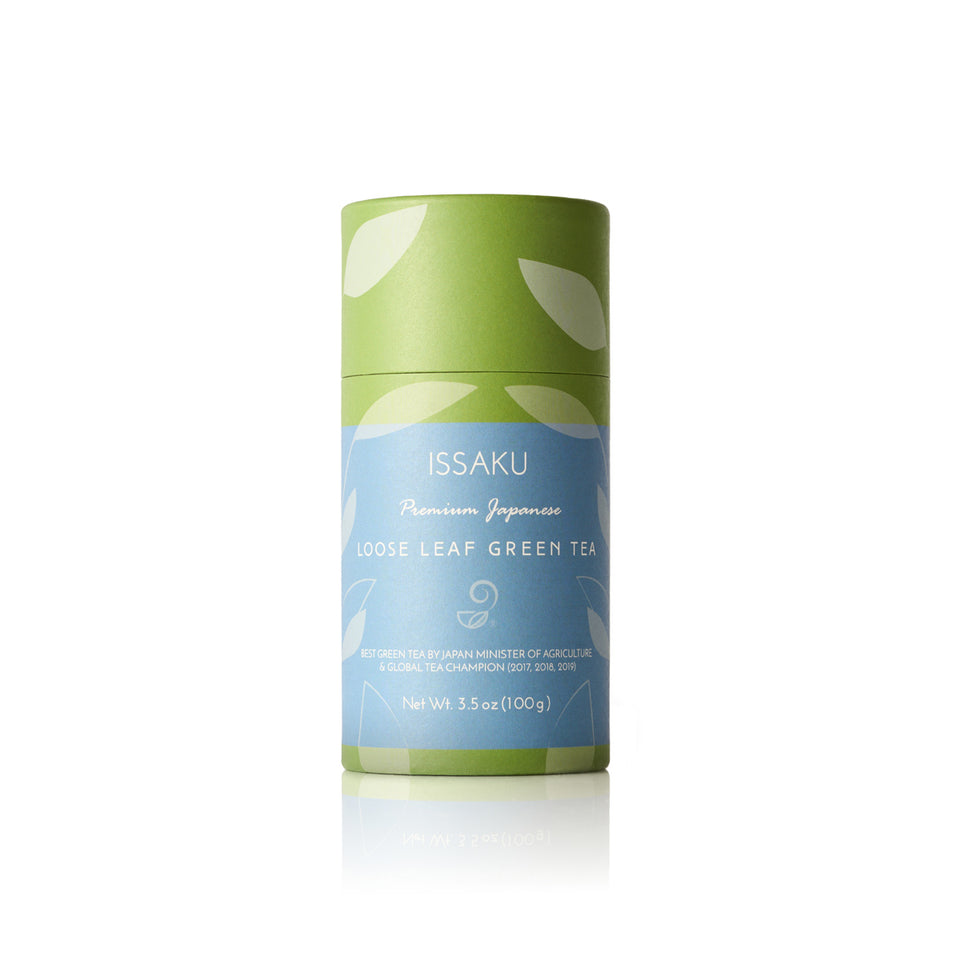
Issaku Reserve - Limited Premium Green Tea (Global Tea Champion 2017, 2019)

$80.00
Quick view

Issaku Reserve is a premium green tea masterpiece created by Mr. Arahata at Arahataen Green Tea Farm, offering a truly authentic and traditional Japanese tea experience. Handpicked once a year from new crops and crafted through a meticulous, complex process, Issaku Reserve is the farm’s highest-grade tea, produced in limited quantities and prized even in Japan. Winner of the Global Tea Championship in 2017 and 2019, this exceptional tea is made from the Yabukita cultivar and cultivated using the Chagusaba method in nutrient-rich sugarcane soil. It comes in a high-quality, air-tight paper tube canister containing 3.5 oz (100g), enough to steep 30–40 cups, with a single-serve 0.3 oz (10g) sample also available to preserve its rich flavor and outstanding freshness.

8 reviews

The Sencha Lover Gift Set - Premium Japanese Green Tea Set Package
$179.00 $159.99
Quick view

This tea set features three exceptional Japanese green teas, each crafted with care and traditional techniques. Issaku Reserve, a Global Tea Champion winner in 2017 and 2019, is a rare masterpiece created by Farm Master Mr. Arahata at Arahataen Green Tea Farm. Handpicked once a year from the first flush and processed with advanced methods, Issaku represents the highest-grade deep-steamed green tea, available only in limited quantities even in Japan.

The set also includes Gyokuro, a premium shaded green tea known for its rich, sweet flavor and deep mossy green color. Grown under special mats for 20 days to increase caffeine and amino acid levels, Gyokuro offers a layered, smooth taste unlike any other. Completing the collection is Nozomi, a fine Kabuse-cha, or "Covered Green Tea," carefully grown under nets to gently shade the leaves just before new sprouts emerge, resulting in a soft, rich, and refined flavor profile.

22 reviews

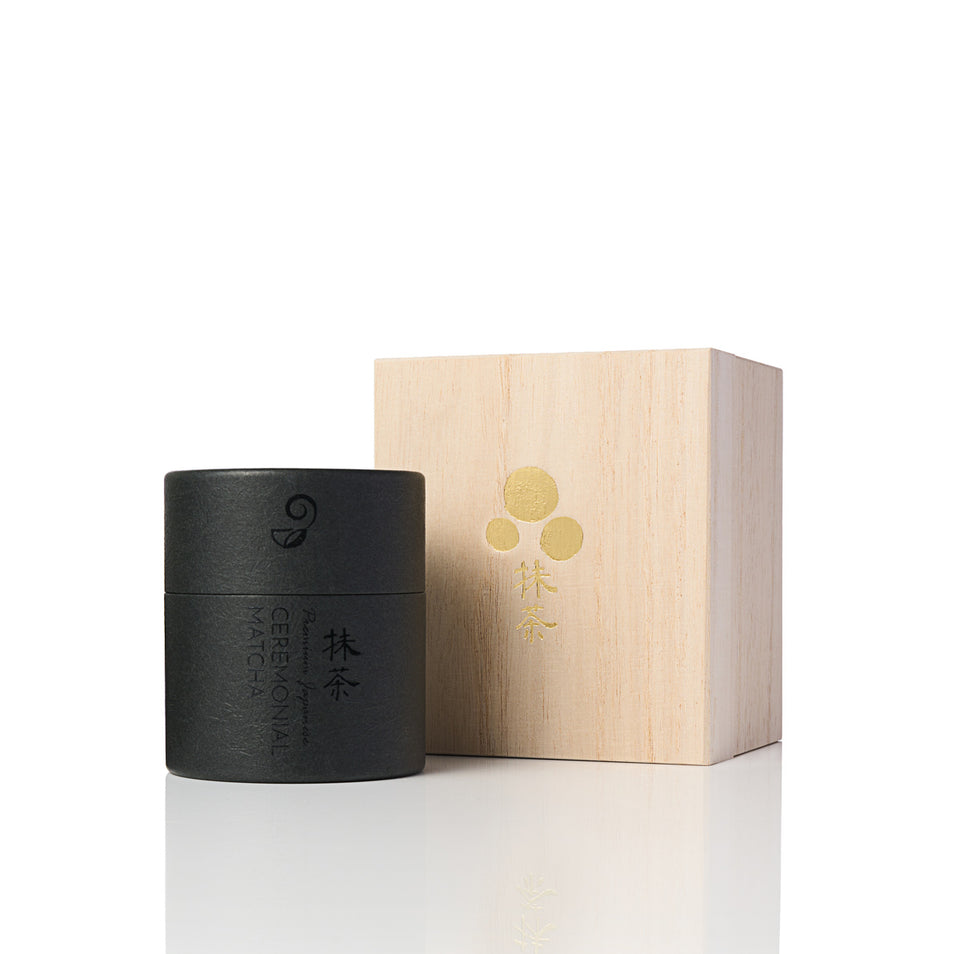
Matcha - Japanese Limited Reserve Ceremonial Green Tea - (Global Tea Champion 2018, 2025)

$300.00
Quick view

This Premium Ceremonial Grade Matcha is one of the most luxurious matcha teas available, crafted from carefully cultivated Japanese green tea grown in nutrient-rich sugarcane soil using the Chagusaba method. Traditionally reserved for high-end tea ceremonies in Japan and loved by many tea masters, this matcha was once unavailable outside of Japan and is now finally accessible to U.S. consumers. Every step of its production, from shading the tea plants to increase caffeine and amino acid levels to the meticulous removal of stems and veins before grinding into a fine powder, is handled with a blend of advanced technology and time-honored tradition. Made from the Yabukita cultivar, this 30g (1.05 oz) ceremonial matcha offers a vivid color, unforgettable aroma, and the highest standard of flavor, earning recognition as a Global Tea Champion in 2018 and 2025.

97 reviews

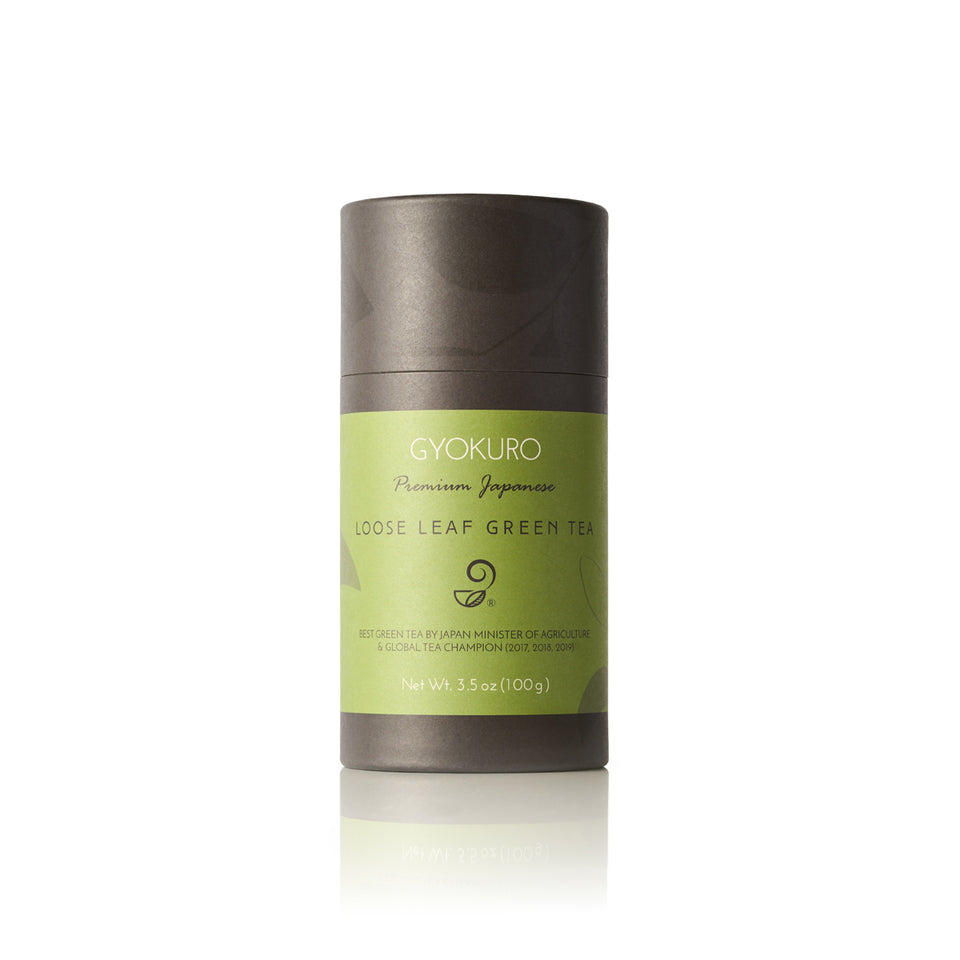
Gyokuro - Shaded Imperial Premium Green Tea

$65.00
Quick view

Gyokuro, also known as "jade dew" or "jewel dew tea," is a premium Japanese green tea shaded from the sun for 20 days using specially made mats, a method that boosts caffeine levels and strengthens amino acids to create a sweeter, richer flavor. This extended shading process results in dark, mossy green leaves with an unmistakable aroma and a complex taste that is layered yet balanced. Cultivated by the Chagusaba method in nutrient-rich sugarcane soil and made from the Yabukita cultivar, this loose-leaf authentic Gyokuro is offered in a high-quality, air-tight paper tube canister (chyazutsu) to preserve its exceptional freshness and flavor. Each 3.5 oz (100g) full-size package steeps 30–40 cups, and a convenient single-serve sample is also available.

45 reviews

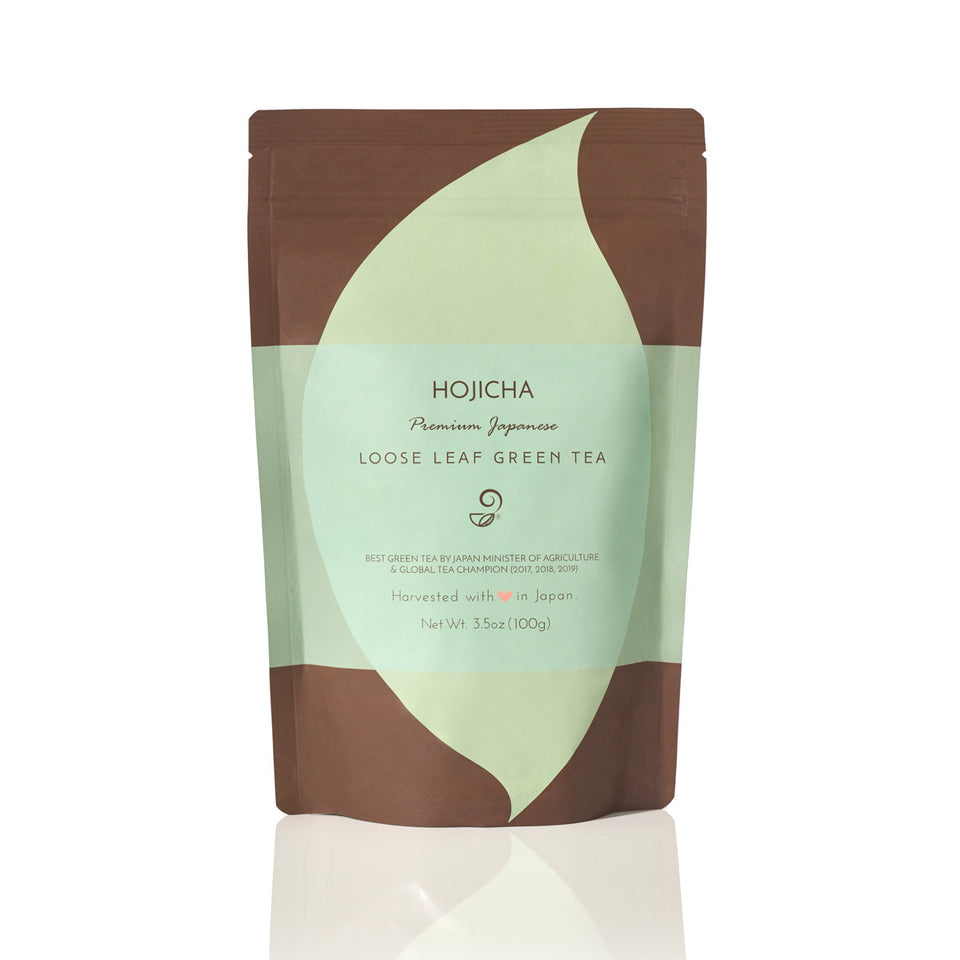
Hojicha - Roasted Green Tea

$25.00
Quick view

Our roasted green tea, known as hojicha (ほうじ茶), is crafted from freshly harvested premium green tea carefully roasted in porcelain over charcoal to maximize flavor while retaining more catechins than typical hojicha on the market. With lower caffeine and a smoother, less bitter taste compared to steamed green tea, it is an ideal choice for evening relaxation and is gentle enough for kids and pregnant women. Cultivated using the Chagusaba method in nutrient-rich sugarcane soil, this loose-leaf authentic Japanese roasted green tea, made from the Yabukita cultivar, also pairs beautifully with oily foods. Each eco-friendly resealable package contains 3.5 oz (100g) of tea, enough to steep 30–40 comforting cups.


Related Articles You May Be Interested

How to Select Japanese Green Tea? - The Expert Advice
How to Select Japanese Green Tea?  - The Expert Advice
The History of Japanese Green Tea
How To Tell If Japanese Green Tea Is Good Quality Or Not
What is Japanese Diet Pu-erh Tea? Explained in One Minute
What is Benifuki Tea? Explained in One Minute

Get Free Bonus Books

Join Green Tea Club

Sign up for free to the Green Tea Club to get advice and exclusive articles about how to choose Japanese Tea, and tips, tricks, and recipes for enjoying Japanese tea.

Unsubscribe anytime. It’s free!

About the author

Kei Nishida

Kei Nishida

Author, CEO Dream of Japan

info@japanesegreenteain.com

Certification: PMP, BS in Computer Science

Education: Western Washington University

Kei Nishida is a passionate Japanese green tea connoisseur, writer, and the founder and CEO of Japanese Green Tea Co., a Dream of Japan Company.

Driven by a deep desire to share the rich flavors of his homeland, he established the only company that sources premium tea grown in nutrient-rich sugarcane soil—earning multiple Global Tea Champion awards.

Expanding his mission of introducing Japan’s finest to the world, Kei pioneered the launch of the first-ever Sumiyaki charcoal-roasted coffee through Japanese Coffee Co. He also brought the artistry of traditional Japanese craftsmanship to the global market by making katana-style handmade knives—crafted by a renowned katana maker—available outside Japan for the first time through Japanese Knife Co.

Kei’s journey continues as he uncovers and shares Japan’s hidden treasures with the world.

Learn more about Kei Nishida

Related Posts

Simply Donabe — New Cookbook from TOIRO's Naoko-san Is Out!

Simply Donabe is here! We celebrated TOIRO's Naoko-san's new cookbook at a special dinner at Camélia in DTLA — see our p

Read More
Introducing New Product - Meet Hojicha Powder
Introducing A New Product - Meet Hojicha Powder

Discover the game-changing Hojicha powder your kitchen has been waiting for — richer flavor, easier recipes, and surpris

Read More
Yokohama Peach is offered as a regular menu at Okayama Kobo Cafe!
Yokohama Peach is offered as a regular menu at Okayama Kobo Cafe! + Recap Video of Pop-up on 2/8/2026 at Anaheim, CA

We are excited to announce that our Yokohama Peach is now available on the regular menu at the popular Japanese Bakery,

Read More
Leave a comment

Your email address will not be published..

Cart

Your cart is currently empty.

Start Shopping

Select options