Skip to content

Is Tea Bag Tea Lower Quality Than Loose Leaf Tea? - Green Tea Quiz

Subscribe to Youtube See all videos


Tea is by far one of the world’s most popular drinks. All around the globe, you’ll find countless people who love nothing more than a good cup of tea, and almost everyone has their own unique method of preparing the “perfect” cup. Of course, much of this is completely subjective since everyone has their own specific tastes. In fact, this is exactly why there are so many debates surrounding tea.    

Some people only drink black tea, while others prefer green or even white. Some people only drink their tea plain, and some prefer it with milk, lemon, sugar or honey. Nonetheless, this article will focus on one of the other big debates about tea, and that is whether loose leaf tea is truly always better than bagged tea as some people claim. Unfortunately, the truth is this answer isn’t always as simple or as straightforward as you might think. With this in mind, here are five important factors that influence the overall quality of bagged teas and how they compare to loose leaf.


1. Some Companies use low quality tea in their tea bags, but not all.

tea bags

In addition to the brewing method, the quality of the tea leaves themselves are obviously the most important factor in the overall quality and thus the taste of the tea after it has been brewed. How the tea is grown, where it is grown, how it is processed, and how old it is will all impact the overall quality and flavor. Nonetheless, the biggest issue that usually lowers the quality of bagged tea is the fact that many companies use the leftover pieces of tea instead of putting whole leaves inside the bag.

Whole leaves almost always impart more flavor than the dust and broken up leaves, leftover pieces of tea leaves are used in many tea bags, and this is one of the main reasons that most tea bags are of lower quality. However, it is important to note that not all companies employ this practice, so you can definitely find high-quality bagged teas if you know what to look for.


2. The quality of the tea bag also makes a huge difference in overall taste.

Quality Tea Bag

Another important factor in how a bagged tea tastes is the quality of the tea bag itself. Some companies attempt to save money by making their bags out of cheap, heavily bleached or processed paper, and this can impart a bad taste to your cup of tea when you brew it. In theory, you should only ever be able to taste the tea and not the paper from the tea bag. Unfortunately, this isn’t always the case, which is why it’s also important to focus on the quality of the bag itself when choosing bagged teas.

Another issue is that many companies use fairly stiff bags that prevent water from properly circulating around the tea leaves. This is why you often have to continuously swirl and stir bagged teas around to fully unlock their potential. In comparison, many companies have now switched over to loosely woven bags or sachets designed to maximize the water following in and around the leaves.

I don’t tell my tea friends that I sometimes use teabags...


3. Larger tea bags almost always equal better flavor

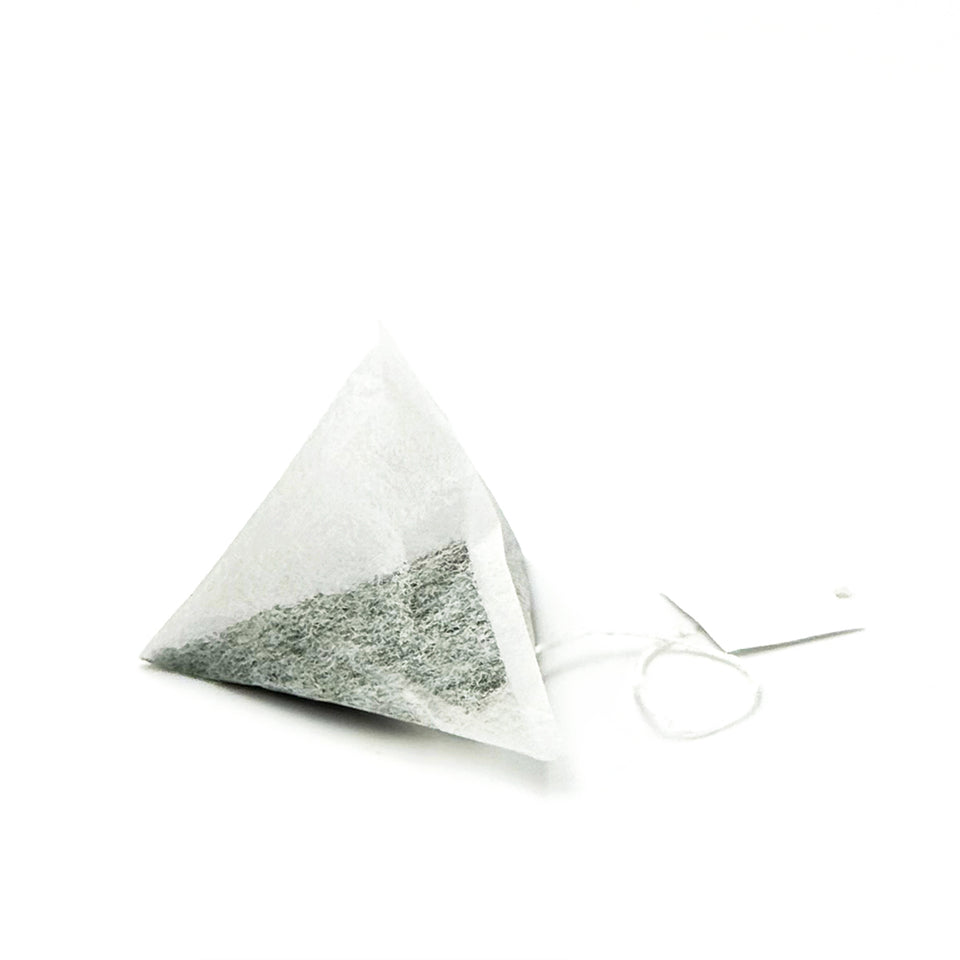
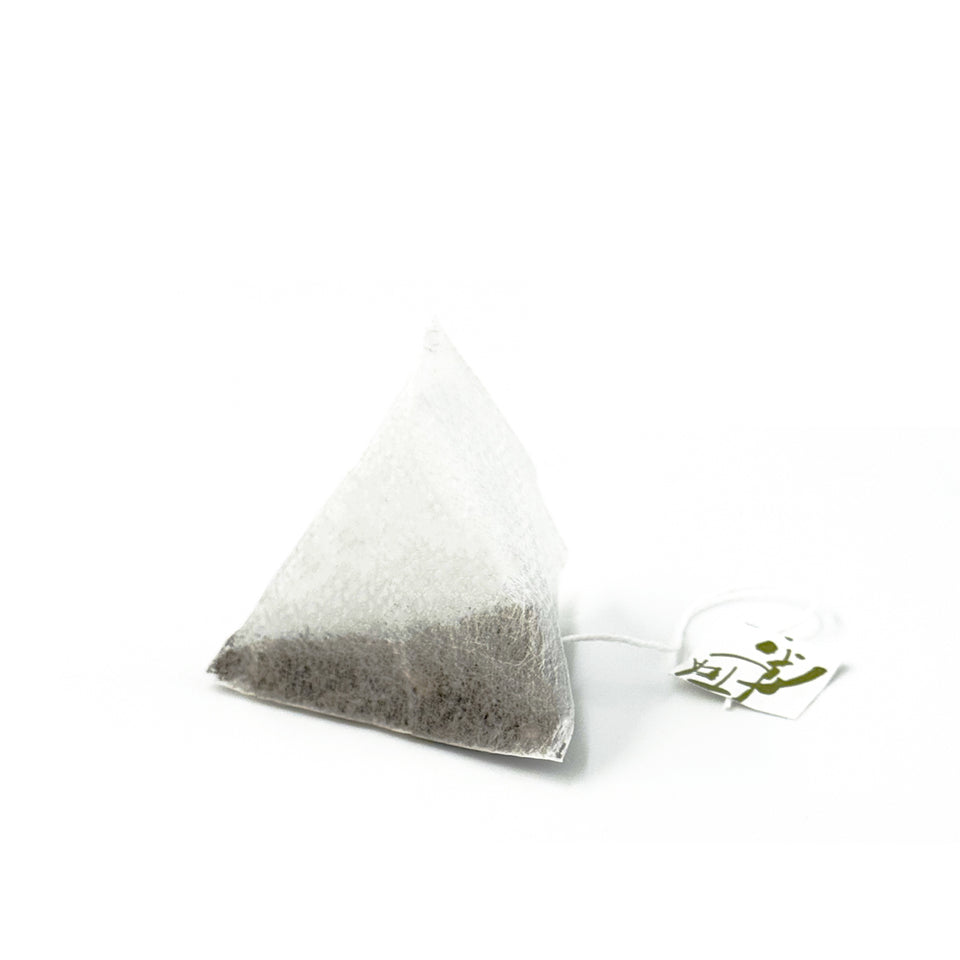
Pyramid Tea Bag

In addition to the quality of the tea bag, its shape and size are also important factors. Tea leaves need to fully expand in order to release their maximum flavor. Unfortunately, this usually isn’t possible with most cheap, paper tea bags. Not only are these bags usually too small to allow the leaves to fully expand, they also have a tendency to collapse in on themselves once wet, further decreasing the room the leaves have to expand.

The fact that tea leaves need so much room to expand is actually one of the reasons why loose leaf teas aren’t always the best choice. This is especially true if you attempt to use one of those metal tea balls since these often don’t have enough room to allow the leaves to fully expand either. On the other hand, the bigger pyramid sachets and various other styles of larger tea bags tend to allow much more room for expansion and thus impart better flavor to the finished brew.


4. It is easily possible to find extremely high-quality tea bags as long as you know where to look.

Quality Tea Bags

Considering all of the above information, it should be fairly obvious that there are huge differences in bagged teas. In fact, the difference in the overall quality and flavor from one brand of tea bag to another can be much greater than the difference between a high-quality tea bag and loose-leaf tea. This simply means that there are plenty of extremely high quality bagged teas on the market, just as there are plenty of low quality loose-leaf teas. In this sense, it is all about knowing what separates a good quality bag of tea from a bad one, and then using this information to guide you when making a purchase.


5. Much of the bag vs. loose leaf tea debate centers around personal taste.

Enjoy tea

As mentioned previously, tea is very much a matter of personal taste. In fact, your own personal taste is probably the biggest factor in whether you prefer loose-leaf or bagged tea. For some people, there is nothing better than drinking a cup of their favorite bag of tea, and there are many people who even stick to one single brand, never drinking anything else.

At the same time, there are many places in the world where anything other than loose leaf tea is almost completely unheard of. In this sense, it really depends on what you prefer, which is a way of saying that there is definitely nothing wrong with enjoying bagged tea more. As long as you take the time to choose a high quality tea, whether it is in a bag or loose really shouldn’t make much of a difference to the finished taste. This is especially true since you know that is fully possible to find outstanding bags of tea now that you know what to look for.

FAQs about Tea Bags vs Loose Leaf Tea

Are tea bags actually lower quality than loose leaf, or is that snobbery?

Honestly, mostly accurate, but with important nuance. Most mass-market tea bags use "fannings" and "dust" — small broken leaf pieces and powder that result from processing whole leaves. These extract too quickly, over-extract bitter compounds, and don't have the surface-area dynamics that whole leaves do. So the cup is generally inferior even with the same source tea.

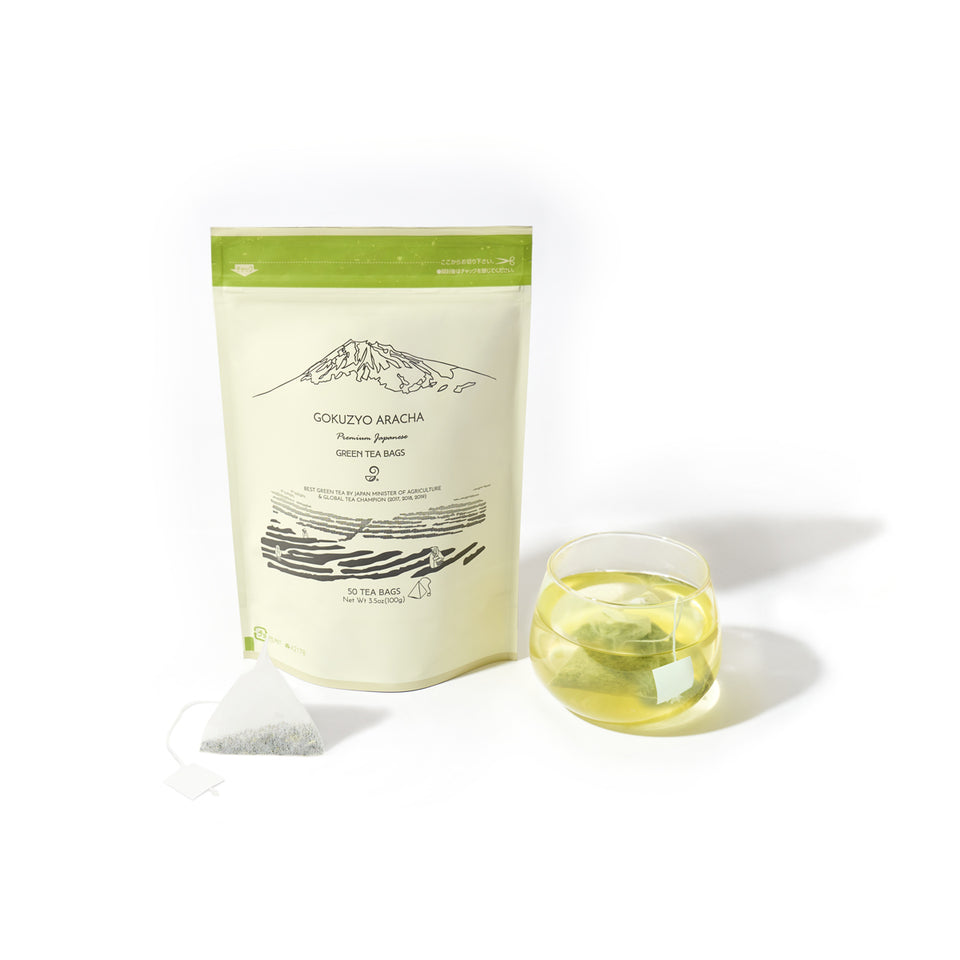
But the format isn't inherently bad. High-quality pyramid tea bags filled with whole-leaf tea (like our Gokuzyo Aracha 50-bag pack) use real loose-leaf inside a Soilon mesh bag that lets the leaves expand fully. Brewed properly, the cup is 90-95% of what loose-leaf in a kyusu would deliver. The format constrains the quality less than the leaf grade does.

So: cheap supermarket teabag = clearly worse than loose-leaf. Premium pyramid teabag with whole-leaf contents = roughly equivalent to good loose-leaf. The format-vs-leaf-quality question matters; don't just judge by tea bag vs loose label.

Can a teabag actually contain whole-leaf tea, or is it always broken pieces?

Pyramid teabags can absolutely contain whole-leaf tea. The pyramid shape was specifically designed to allow whole leaves to expand during brewing — flat teabags constrain the leaves and can't accommodate proper-grade loose tea, but pyramid bags have enough internal volume for whole sencha or oolong leaves.

Most pyramid teabags don't actually contain whole leaves though. The pyramid shape is sometimes used as marketing while the contents are still broken-leaf or fannings — the format is misleading without checking what's actually inside. Premium pyramid teabag brands disclose their contents (whole-leaf vs broken-leaf); cheap pyramid teabags often don't.

The reliable signal: open a pyramid teabag and look inside. If you see actual leaf pieces (recognizable as leaves, with some intact length), you have a real whole-leaf product. If you see uniform small particles or powder, that's still fannings and the pyramid shape is doing less work than the marketing suggests.

Does the mesh material in pyramid teabags matter?
Yes, significantly. Nylon and PET mesh teabags release microplastics into the cup at brewing temperature — a 2019 McGill study found billions of plastic particles per cup at 95°C. Plant-based mesh (PLA, often labeled Soilon) doesn't have that problem. So a "premium pyramid teabag" with nylon mesh has a real environmental and possibly health concern that PLA mesh doesn't.

All JPCo teabags use plant-based PLA mesh (Soilon) — the change from nylon was made when the microplastic research came out and we haven't gone back. Most other premium tea brands have made the same switch over the past 5 years; mass-market brands often still use nylon.

Read the label. "Plant-based mesh," "PLA," "corn-derived," or "Soilon" indicates the safe option. "Silken," "silk-like," "nylon," or unspecified mesh is usually plastic. The cost difference is small enough that there's no real reason to keep buying nylon teabags.

Is loose-leaf actually more economical than tea bags long-term?

Slightly, depending on what you compare. Premium loose-leaf and premium pyramid teabags are roughly equivalent per gram. Mass-market supermarket teabags are cheaper per cup than loose-leaf, but the cup quality is also dramatically lower — so the comparison isn't really apples-to-apples.

Where loose-leaf is clearly economical: multi-infusion. Premium loose-leaf sencha can give 2-3 cups per gram of leaf (re-steeping the same leaves), which dramatically reduces per-cup cost. Pyramid teabags can also be re-steeped but typically only give 1-2 cups before exhausting. So for committed daily drinkers, loose-leaf math works out better.

Equipment cost is the offset. A kyusu, a kettle, and a few tins of loose-leaf require an upfront investment that teabags don't. Most committed drinkers eventually hit the breakeven point and find loose-leaf cheaper, but it takes 6-12 months of daily drinking to recoup the equipment cost.

When are tea bags actually the right choice over loose leaf?

Several scenarios. Travel — pyramid teabags pack flat, don't need brewing equipment, work with hotel kettles and disposable cups. Office — same logic; you don't need to bring a kyusu and tin to your desk. Beginner-stage — until you've decided whether you'll drink tea daily, the equipment investment for loose-leaf is hard to justify.

Speed-of-brewing: a pyramid teabag in a mug with hot water from a kettle is faster than measuring loose-leaf into a kyusu, controlling temperature, and timing the steep. For mid-meeting tea or late-evening quick cup, the time savings matter more than the marginal quality difference.

Bulk-serving: brewing tea for 6+ guests is more efficient with teabags (one bag per person, controlled steep) than with loose-leaf (one large pot, leaf-to-water ratio harder to control across volume). Tea bags have legitimate use cases; the snobbery is dismissing them entirely. Loose-leaf is better when you have time and equipment; teabags are better when you don't.

TRY OUR GREEN TEA BAGS

31 reviews

Diet Green Tea Bags – Tappuri Catechin (30 tea bags)

$25.00
Quick view

Support your weight loss journey with Tappuri Catechin (たっぷりカテキン), our award-winning green tea packed with 400mg of catechins per cup—over three times more than traditional green tea. These powerful, all-natural antioxidants are known to aid in weight management, protect cells from damage, and promote longevity. Combined with L-theanine, which enhances focus, energy, and brain function, this tea helps boost metabolism and energy burn naturally.

Tappuri Catechin is a loose-leaf authentic Japanese green tea teabag, made from deep-steamed Fukamushi Sencha cultivated using the Chagusaba method in nutrient-rich sugarcane soil. Featuring the Yabukita cultivar, each resealable aluminum bag includes 30 pyramid-shaped tea bags (2g each), offering a convenient and refreshing way to support your health goals.

85 reviews

Japanese Diet Pu-Erh Tea - Saryu Soso (30 tea bags)

$35.00
Quick view

Japanese Diet Pu-Erh Tea—Saryu Soso is a nationally award-winning tea from Japan, celebrated for its dietary and skincare benefits and containing 1.7 times more tannic acid than traditional Chinese Pu-Erh tea. Developed in collaboration with Shizuoka University and utilizing patented bacteria by Mr. Denbei Kawamura, this tea produces Teadenol, a natural component that promotes healthy skin. Fermented for 80 hours in a High-Tech Clean Room using semiconductor-level technology, Saryu Soso offers an exceptionally pure and refined experience. Cultivated by the Chagusaba method in nutrient-rich sugarcane soil and made from the Yabukita cultivar, each resealable aluminum bag contains 30 pyramid-shaped tea bags, delivering a perfect balance of tradition, innovation, and health benefits.

28 reviews

Loose Leaf Tea Filters | 144 or 504 Filter Bags

$15.00
Quick view

Enjoy brewing your favorite loose-leaf teas with these easy-to-use filter bags (お茶パック), designed for tea lovers who want a simple and effective way to get the most flavor from their tea. Each oversized bag allows tea leaves to fully expand, enhancing the release of rich flavors and aromas, while the widened bottom ensures thorough brewing.

Perfect not only for green tea but also for black tea, herbal blends, and even soups, these versatile pouches measure 3.5" x 2.8" (9cm x 7cm). Each pack includes 144 or 504 high-quality filters, proudly made in Japan.

8 reviews

The Sencha Lover Gift Set - Premium Japanese Green Tea Set Package

$179.00 $159.99
Quick view

This tea set features three exceptional Japanese green teas, each crafted with care and traditional techniques. Issaku Reserve, a Global Tea Champion winner in 2017 and 2019, is a rare masterpiece created by Farm Master Mr. Arahata at Arahataen Green Tea Farm. Handpicked once a year from the first flush and processed with advanced methods, Issaku represents the highest-grade deep-steamed green tea, available only in limited quantities even in Japan.

The set also includes Gyokuro, a premium shaded green tea known for its rich, sweet flavor and deep mossy green color. Grown under special mats for 20 days to increase caffeine and amino acid levels, Gyokuro offers a layered, smooth taste unlike any other. Completing the collection is Nozomi, a fine Kabuse-cha, or "Covered Green Tea," carefully grown under nets to gently shade the leaves just before new sprouts emerge, resulting in a soft, rich, and refined flavor profile.

74 reviews

Tea Bag - High-Grade Unrefined Tea - Gokuzyo Aracha (50 tea bags)

$35.00
Quick view

Gokyuzyo 極上, meaning "The Highest Grade," brings the rustic charm of Aracha 荒茶, or "wild tea," into a convenient teabag form, offering a taste as close to freshly picked leaves as possible. Unlike fully processed green teas, this unrefined Fukamushi Sencha preserves its natural shape and texture, blending soft sprouts, twig tea, coarse leaves, and powdered tea for an intense aroma and rich, vibrant flavor. Cultivated by the Chagusaba method in nutrient-rich sugarcane soil and made from the Yabukita cultivar, this tea captures the traditional, nourishing quality enjoyed by generations of tea farmers. Available in a resealable aluminum bag with 50 pyramid-shaped teabags or as a single-serve sample, it is perfect for enjoying authentic Japanese green tea anytime, anywhere.


Related Articles You May Be Interested

Soilon: The Eco-Friendly, Biodegradable Tea Bag Revolution
Can I Throw Away Used Green Tea Leaves in My Garden?
What is the Best Way to Store your Matcha & Japanese Green Tea?
Can Teapot Make Your Green Tea Taste Better? - Facts About Tokoname Teapot (常滑急須)
Can Teapot Make Your  Green Tea Taste Better?  - Facts About  Tokoname Teapot (常滑急須)
Does a Cup of Tea count as Water Intake? - Green Tea Quiz

Get Free Bonus Books

Join Green Tea Club

Sign up for free to the Green Tea Club to get advice and exclusive articles about how to choose Japanese Tea, and tips, tricks, and recipes for enjoying Japanese tea.

Unsubscribe anytime. It’s free!

About the author

Kei Nishida

Kei Nishida

Author, CEO Dream of Japan

info@japanesegreenteain.com

Certification: PMP, BS in Computer Science

Education: Western Washington University

Kei Nishida is a passionate Japanese green tea connoisseur, writer, and the founder and CEO of Japanese Green Tea Co., a Dream of Japan Company.

Driven by a deep desire to share the rich flavors of his homeland, he established the only company that sources premium tea grown in nutrient-rich sugarcane soil—earning multiple Global Tea Champion awards.

Expanding his mission of introducing Japan’s finest to the world, Kei pioneered the launch of the first-ever Sumiyaki charcoal-roasted coffee through Japanese Coffee Co. He also brought the artistry of traditional Japanese craftsmanship to the global market by making katana-style handmade knives—crafted by a renowned katana maker—available outside Japan for the first time through Japanese Knife Co.

Kei’s journey continues as he uncovers and shares Japan’s hidden treasures with the world.

Learn more about Kei Nishida

Related Posts

Our Matcha Is Now at Pillow Talk Cafe in Pasadena — Master Japanese-Inspired Cake Makers

Our matcha is now at Pillow Talk Cafe Pasadena! Meet the cafe, try the Egg Heaven sando & Matchamisu, and see how th

Read More
Simply Donabe — New Cookbook from TOIRO's Naoko-san Is Out!

Simply Donabe is here! We celebrated TOIRO's Naoko-san's new cookbook at a special dinner at Camélia in DTLA — see our p

Read More
Introducing New Product - Meet Hojicha Powder
Introducing A New Product - Meet Hojicha Powder

Discover the game-changing Hojicha powder your kitchen has been waiting for — richer flavor, easier recipes, and surpris

Read More
Leave a comment

Your email address will not be published..

Cart

Your cart is currently empty.

Start Shopping

Select options