Skip to content

Everything You Need To Know About Aracha

What is Aracha?

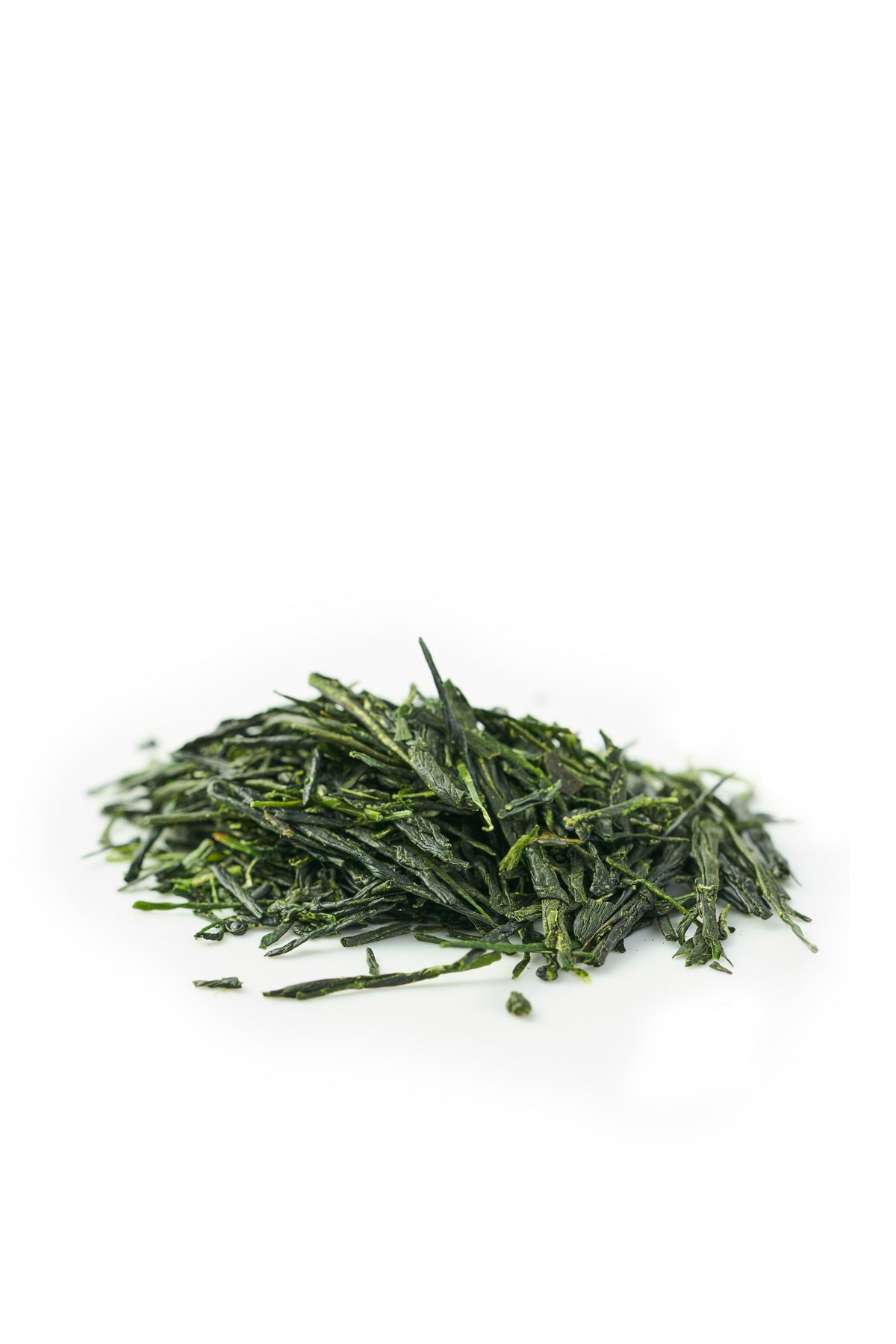
Also called “farmer’s tea”, “raw tea”, or just unrefined tea, Aracha is the base tea for the tea we drink everyday. It has a bold, but sweet grassy taste, with a infusion of deep green colour.

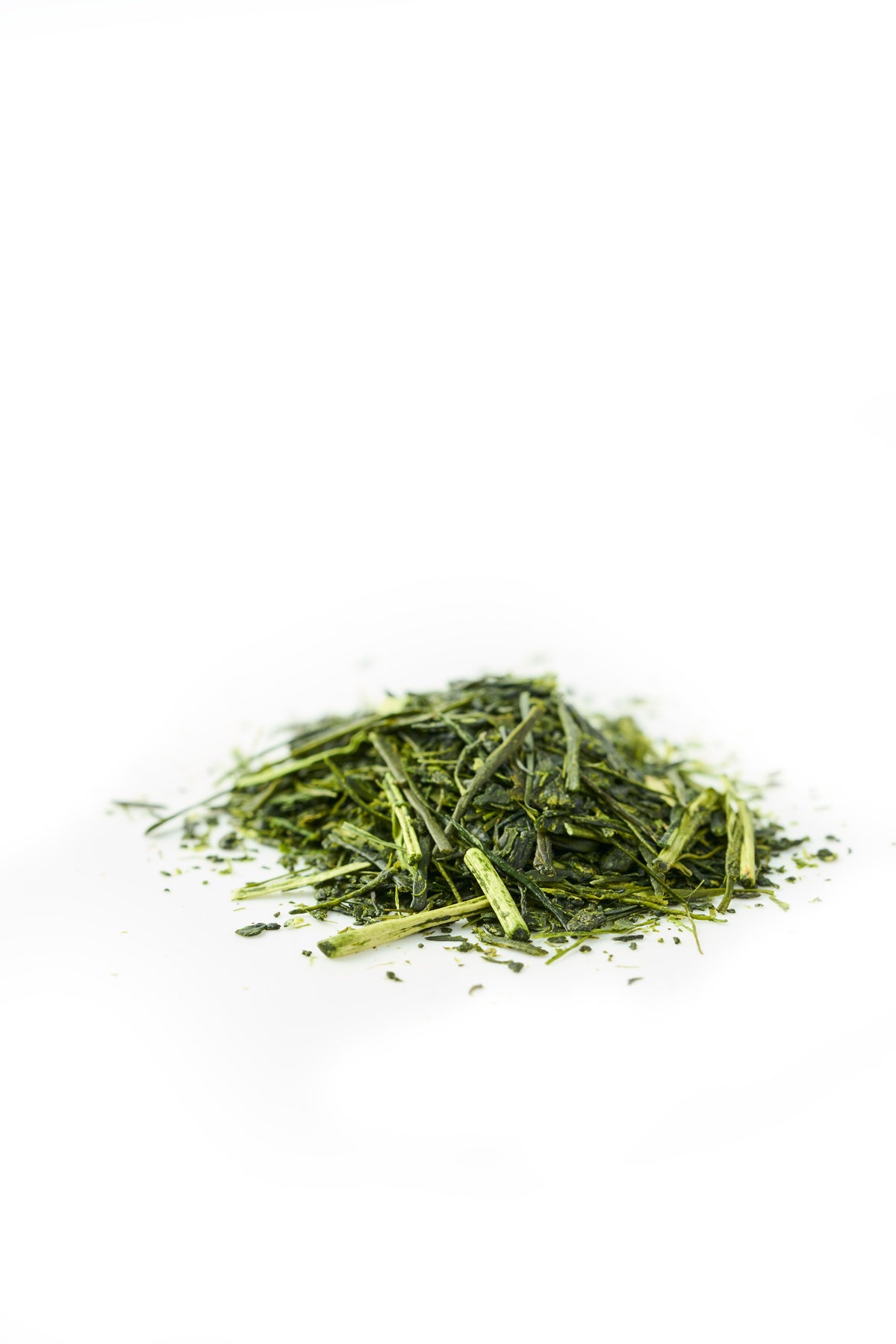
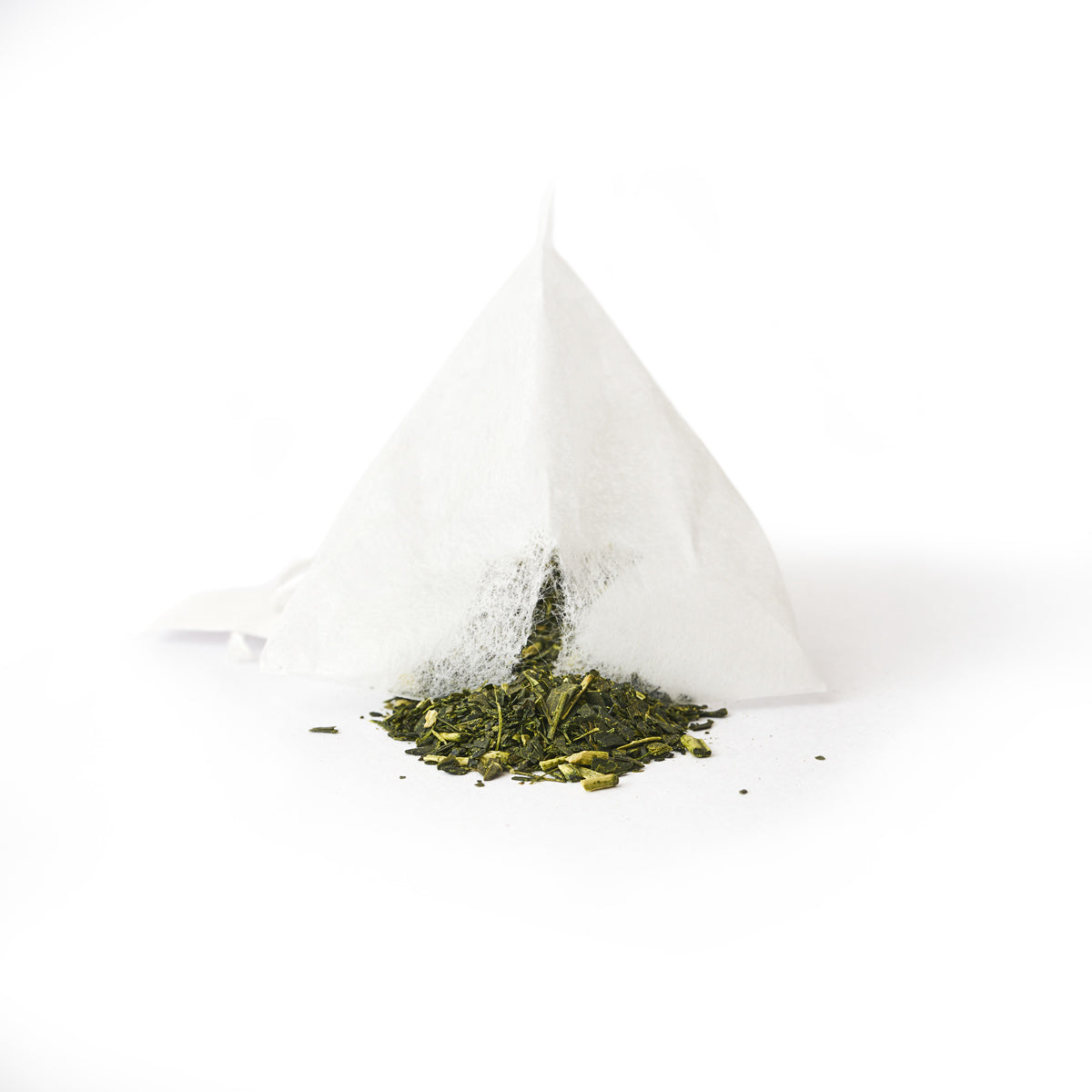
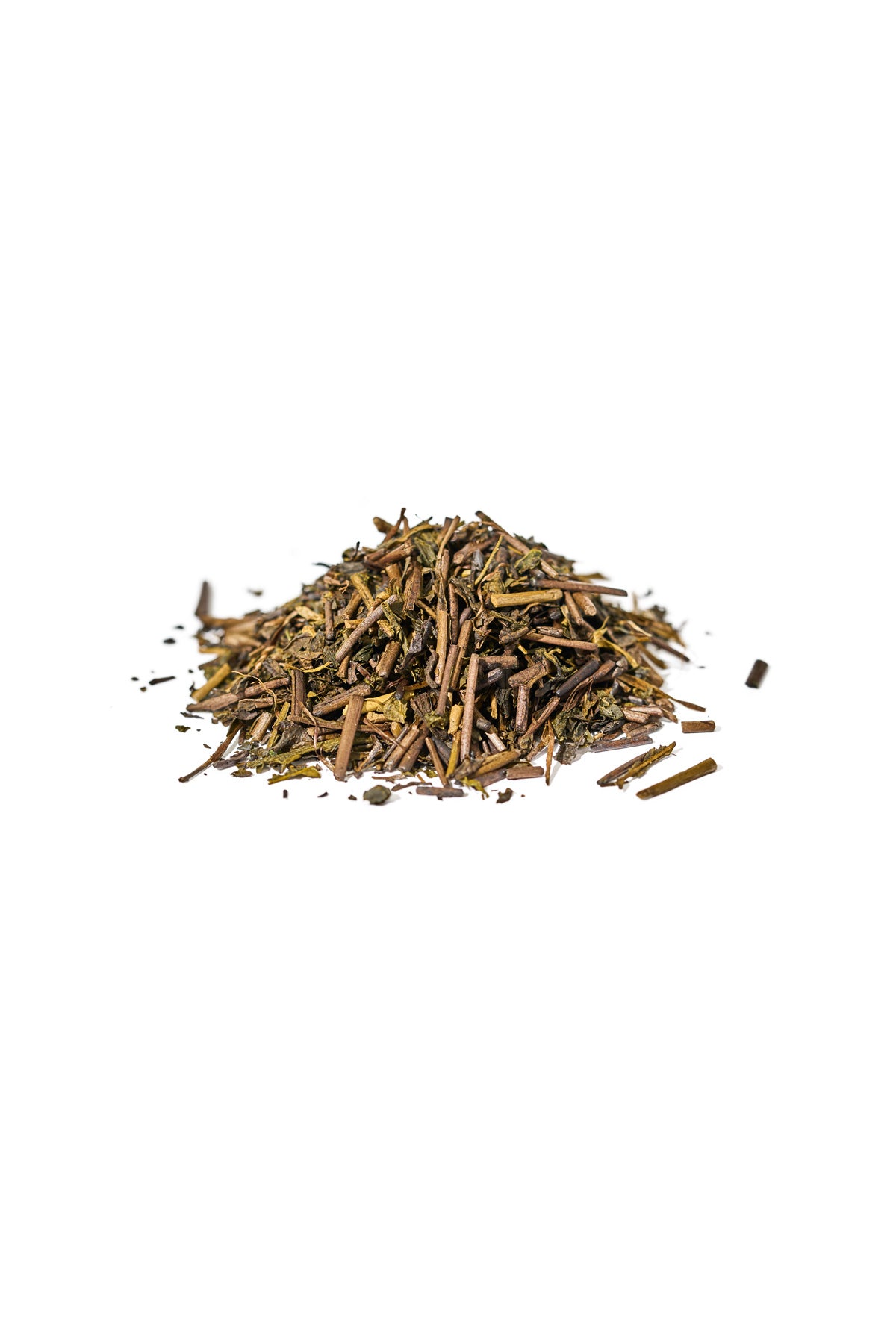
It is the result of the first tea processing stage: steaming, rolling and drying. Ara  in Japanese means crude, rough, or raw, while cha is the Japanese translation for tea; hence, translated as "raw tea". Aracha encompasses all parts of the leaf - the stems, veins, baby hairs and bits of broken down leaf. 

Processing is usually carried out by farmers themselves, or in shared local factories. The first step in the processing, as mentioned above, is steaming. This is carried out to prevent the freshly picked tea leaves from oxidizing, or in other words, to prevent it from turning brown. The purpose of this first step is to preserve the quality in flavor and aroma that is specific to green tea. After this is done, the leaves are rolled and dried by farmers themselves, or in shared local factories.

Aracha is made from Camellia Sinensis, where Sancha and Matcha, the most popular green teas are also made from.


Aracha, Japanese Wild Green Tea


Where Can We Find Aracha?

Although Aracha is ready-to-drink as-is by following the brewing instructions provided, since it is usually sold to brokers first then to different tea companies and distributors to be processed, Aracha itself is usually not directly distributed to consumers. However, they do make its way through to local tea shops for the fans who enjoy its rich and natural taste and flavor!


Processing of Aracha Tea

Fresh tea leaves are first processed into Aracha first; therefore, Aracha is actually the first step in every green tea production. The leaves are steamed while they are still fresh, in which the enzymes are inactivated during the process. Finally, the leaves are pressed and heated through a series of treatments, including primary rolling, rolling, secondary rolling, and final rolling before they are dried to be produced as needle-shaped tea leaves.

Freshly picked green tea leaves


More Detail About Aracha Processing

The process of making crude tea is divided into 6 sub-processes.   As it was just mentioned above, steaming is the first step, and the process usually lasts for about 30 seconds to 2 minutes to kill the oxidizing enzymes in the fresh leaves. However, this also adds fragrance to the smell and increase the flexibility of the leaves, which helps the operation of the making process to be easier and smoother. After the leaves are steamed evenly, they are cooled down rapidly.

Primary Drying and Rolling are done by twisting and drying the leaves in a machine with press arms and stir arms that hold the temperature of about 35 centigrade. The drying process lasts for about 45 minutes, and it helps the leaves to dry off effectively; giving the leaves higher quality as a result of.  The next step, rolling, consists of twisting the leaves and pressing them without heat. This allows the leaves to have uniform moisture, and usually takes about 20 minutes.

A direct-fired furnace carries out the Secondary Drying and Rolling, in which the main shaft with press arms in a rotary drum presses and dries the leaves, gradually giving them a longer shape.  This process takes about 40 minutes, and the final drying and rolling is then done to reduce the leaves` moisture, after which the leaves are made to be needle-shaped by being pressed as a burner dries them. This also takes about 40 minutes to complete.

Drying of the leaves is the final process. This process consists of putting the leaves in a drying chamber heated to 80 degrees centigrade for about 30 minutes, during which the water content of the leaves is gradually reduced to about 5%.

Well, here it is – what we now have is Aracha! Farmers then distribute these leaves to several tea companies that label the final products as their own.

And now, last but not least - there is another exciting health fact for tea lovers!

During the process of manufacturing this crude green tea, chlorophyll changes to pheophytin, while the contents of glycolipids and phospholipids decrease. Without a doubt, Aracha is full of good stuff.

Aracha processing


Health Benefits of Aracha Tea

Aracha contains more nutrients compared to other refined teas due to its "natural" state. There are four types of catechins (tannins) that produce astringent components in unprocessed tea leaves: Epicatechin, Epigallocatechin, Epicatechin gallate, and Epigallocatechin gallate. These catechnins work o reduce the absorption of fat and cholesterol, but here is a rather exciting fact - After being steam processed in the factory, four new catechins are further created!

There are so many types of Japanese green tea, but there is one thing they all have in common: most come from the tea plant, Camellia Sinensis; although there are some exceptions of Japanese green teas that are not derived from this plant.

A lady drinking tea - health benefits of tea


Caffeine content:

Aracha typicall has 34mg of caffeine (1/3 of a cup) per cup, while Matcha has 30mg. Sencha and Hojicha have lower caffeine contents than Matcha and Aracha.


Affordability:

Aracha is more affordable than Sencha, Gyokuro, and Matcha, making it not only a very healthy drink, but also budget-friendly and economical.

Yes, Aracha is just perfect for daily consumption!


What Does Aracha Taste Like?

As you already know, the whole leaf is used for producing Aracha. This includes the stems, veins, baby hairs, and bits of broken-down leaf; all of which are left fresh and undried to give it a bolder taste and deeper green color. However, this all depends on the quality of the cultivation and the production process. Some tea companies take the leaves through a second processing to separate the leaf and the stem, sift and remove the fine hair on the leaf, and finally cut them to attain same sized leaves for their final product. Other tea companies sort the tea leaves based on its grade by separating the leaves into low-grade, medium-grade, and high-grade leaves before selling it to the market. There are also companies that even blend Aracha to process Shiagecha, or refined tea, which are also supplied to consumers.

What does Aracha taste like?


Heating Aracha

For its longer shelf life and improvement in taste and flavor, some tea companies also heat this crude green tea at 110 – 1300 degrees Celsius, through Hire, or firing. However, this is said to reduce amino acids, vitamin C, free reducing sugars, glycolipids, phospholipids, and some other beneficial compounds. The resulting product is called Hire cha or fired green tea, which is generally sold on the market as well.

Note: Our Premium Aracha (sold below) does not go through this.


Storing Aracha at Home

To preserve Aracha`s freshess, make sure to store it in an opaque, airtight container and keep it at room temperature. You can store it in a cupboard, but should a longer shelf life be needed, it is advised to store the Aracha at a reduced temperature, usually below 10 or 5 degrees Celsius.

How to store green tea at home


Making Hojicha from to Aracha

When making Hojicha from Aracha, tea companies roast the Aracha at 150°-170 degrees Celsius, typically using an oven that combines microwave and far-infrared heating.  However, in order to produce Hojicha, or roasted green tea, with a strong roasted flavor though this process, most compounds such as amino acids, vitamin C, and glucose are reduced up to 20 to 40 percent,.

  Click here to learn more about hojicha


Aracha, the All-Rounder of Teas

To further acquaint you with this rustic but scrumptious tea, Aracha can also be used as a base tea for manufacturing premium quality teas! It is as though nothing goes to waste with this tea, and I`m sure that the production of Aracha has its role in contributing to reducing waste through its numerous ways it can be used. When this almighty tea is used to produce premium quality tea, they are usually referred to as  Gokuzyo Aracha – with Gokuzyo, meaning `the finest` in Japanese. Way to go Aracha!

Heart Shaped Green Tea Leaves


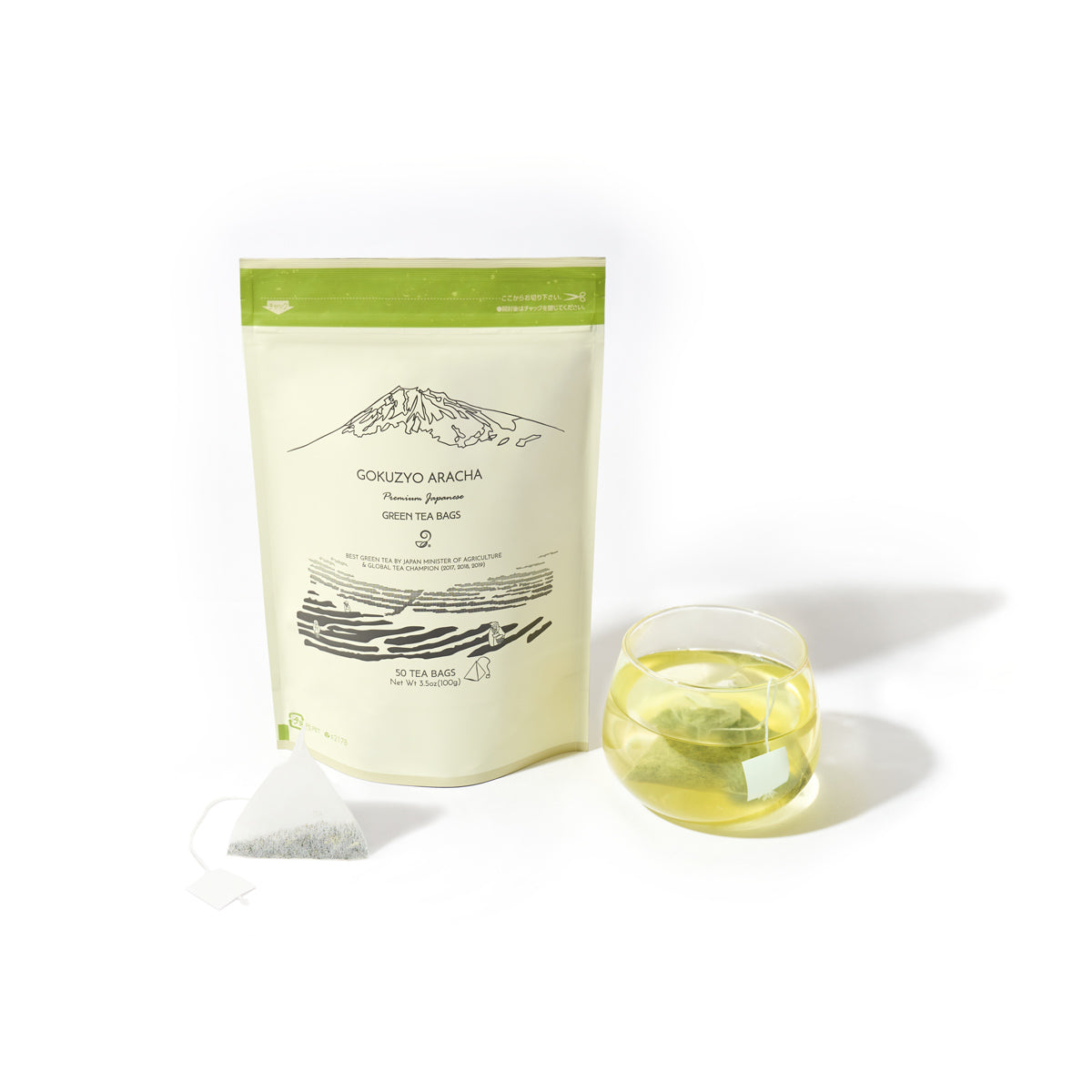
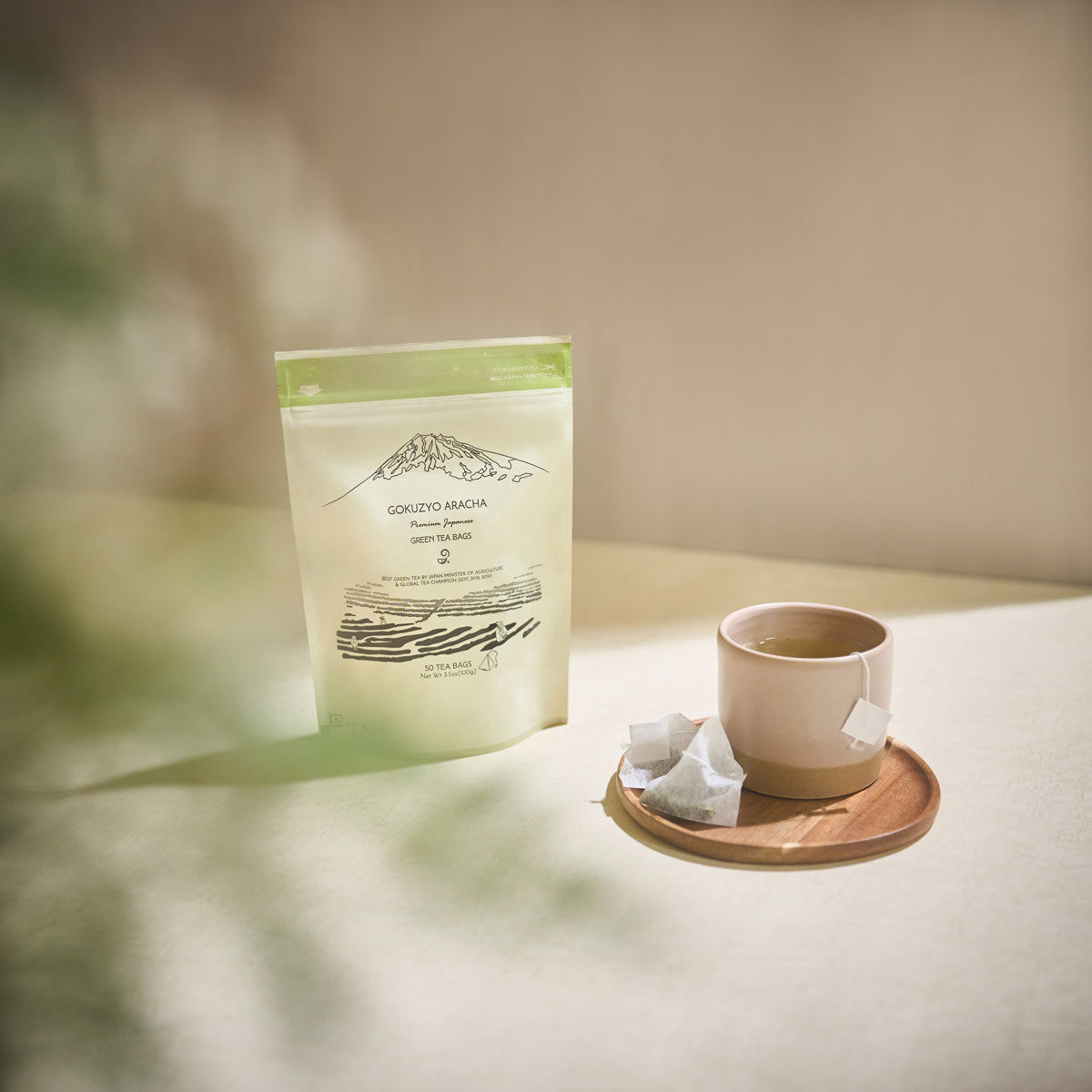
Our Premium Aracha (50 tea bags)

Gokyuzyo Aracha is considered to be one of the best crude green tea, based on its taste, water level, aroma, and the quality of the leaf itself. 

Frequently Asked Questions About Aracha

Where can I buy Aracha?

It is easy to find in stores in Japan. For the best Aracha, you can buy it at tea specialty stores or even online. Remember to check if the online store is legit before buying.

Is consuming Aracha that has passed its expiration date safe?

Consuming Aracha is safe as long as the tea still smells and tastes good. When in doubt, throw it away for your safety. The best-before date on the package indicates when the tea is surely still fresh. To prolong the Aracha's freshness, store it in an airtight, opaque container in a cupboard.

How is Aracha used as a 'base tea'?

Sencha, Hojicha, and other green teas are sometimes added to Aracha to make a unique taste and produce the best tea for everyday drinks.

What does aracha actually taste like compared to sencha?

Aracha (荒茶) tastes more intense, more rounded, and slightly more astringent than refined sencha. The cup has a fuller body — there's more going on across your palate, partly because aracha includes stems, twigs, broken leaf, and powder that all contribute different flavor notes simultaneously. The classic Japanese description is that aracha tastes 'wilder' or 'more honest' than sencha, in the same way that natural wine tastes wilder than commercial wine.

Sencha (煎茶) tastes cleaner, more uniform, and more delicate. The leaves have been sorted to keep only the prized leaf flesh, so the cup is more focused and elegant — but also more one-dimensional. Many tea farmers actually prefer aracha for daily drinking because it has more character. Try our Gokuzyo Aracha side-by-side with a refined sencha and the difference is obvious in the first sip.

Should I brew aracha differently than refined sencha?

Slightly. The basic parameters are similar — about 5g leaf per 6-8oz cup, water around 175°F (80°C), 60-second steep — but aracha brews faster than uniform sencha because of the powder and broken leaf inside. Mentally subtract 15-20 seconds from your usual sencha timing for the first cup. Steeping aracha for the same time as sencha can take a balanced cup into bitter territory.

The teapot matters too. A kyusu (急須) with a fine internal mesh works best because aracha's smaller particles can slip through wider strainers. Western infusers vary — most cheap mesh balls let too much sediment through. If you only have a coarse strainer, the workaround is to pour through a paper filter or a piece of cheesecloth on the way to the cup.

For second steeps, hot water (slightly hotter than the first steep, by 5-10°F) and a shorter pour (30-45 seconds) usually works better than the same parameters as the first cup.

Buy Premium Aracha

Gokyuzyo aracha is considered one of the best crude green tea based on taste, water level, aroma, and the quality of the leaf itself. Gokuzyo translates literally to "The Highest Grade" in Japanese.


Related products
85 reviews

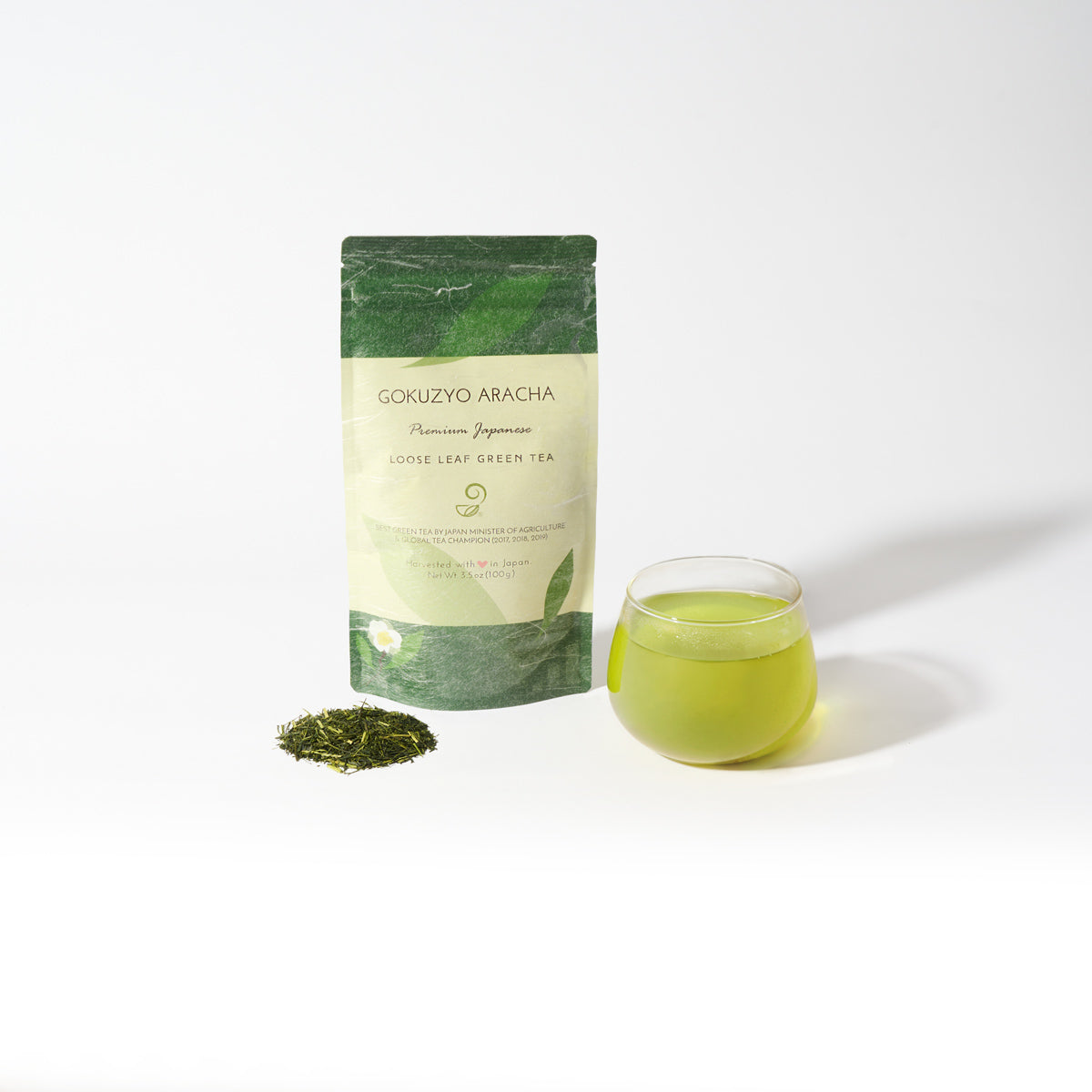
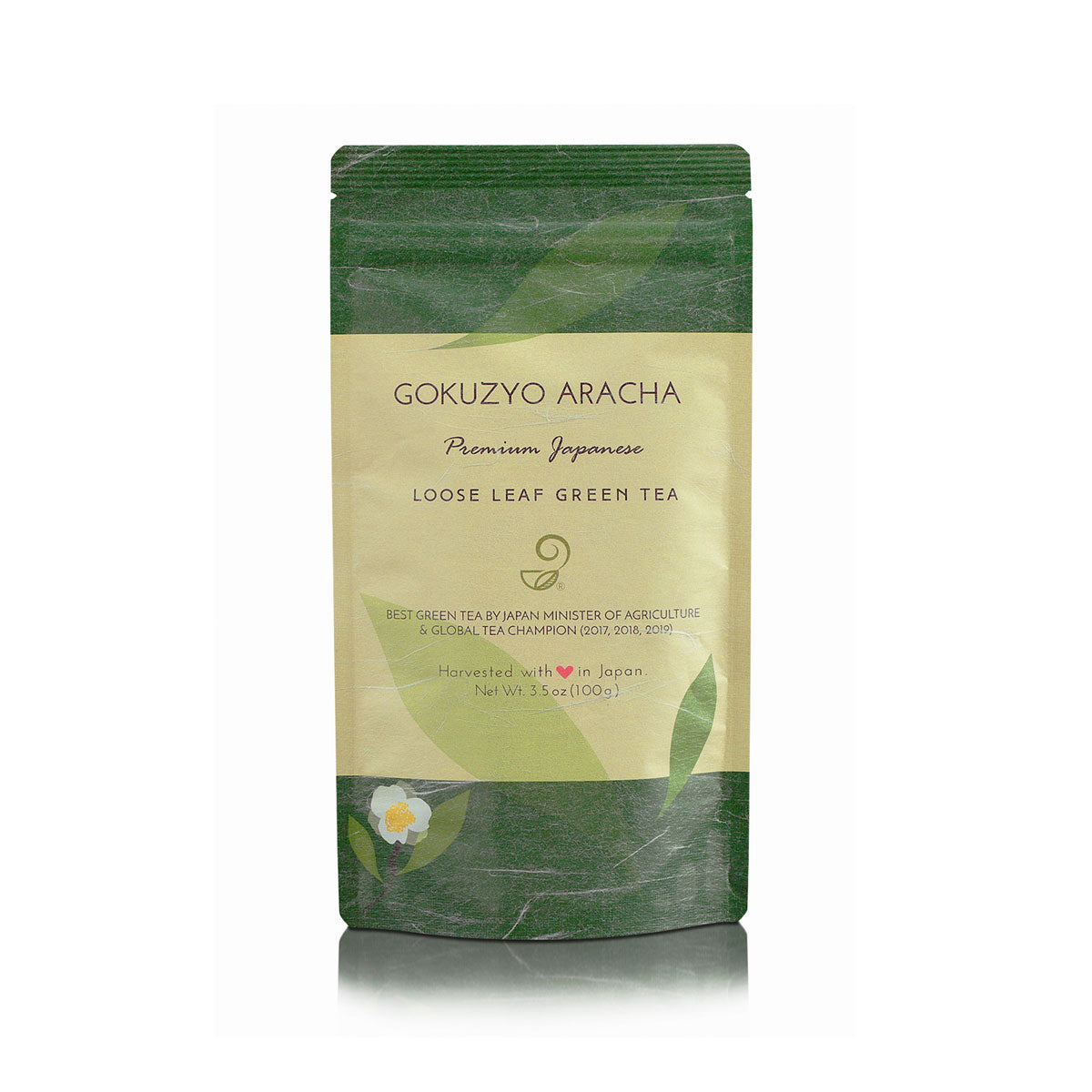
Gokuzyo Aracha - High-Grade Unrefined Green Tea

$39.00
Quick view

Gokyuzyo 極上, meaning "The Highest Grade," and Aracha 荒茶, meaning "wild tea" or "crude tea," offer a rare opportunity to enjoy green tea in its most natural, unrefined state. Unlike most green teas that undergo further processing, Aracha retains its original shape and includes twig tea, coarse leaves, and powdered tea, producing a beautifully colored drink with a mild, unique taste and higher nutrient content. Traditionally enjoyed by tea farmers for generations, this authentic Fukamushi Sencha is cultivated using the Chagusaba method in nutrient-rich sugarcane soil and made from the Yabukita cultivar. Available in a 3.5 oz (100g) eco-friendly resealable package or as a convenient 0.3 oz (10g) single-serve sample, it offers a truly traditional Japanese tea experience.

74 reviews

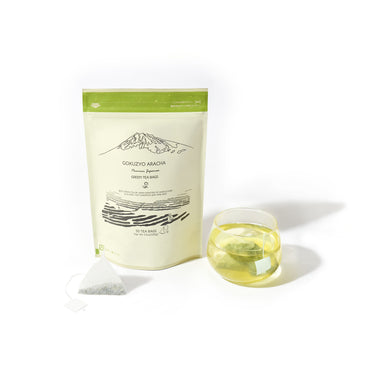
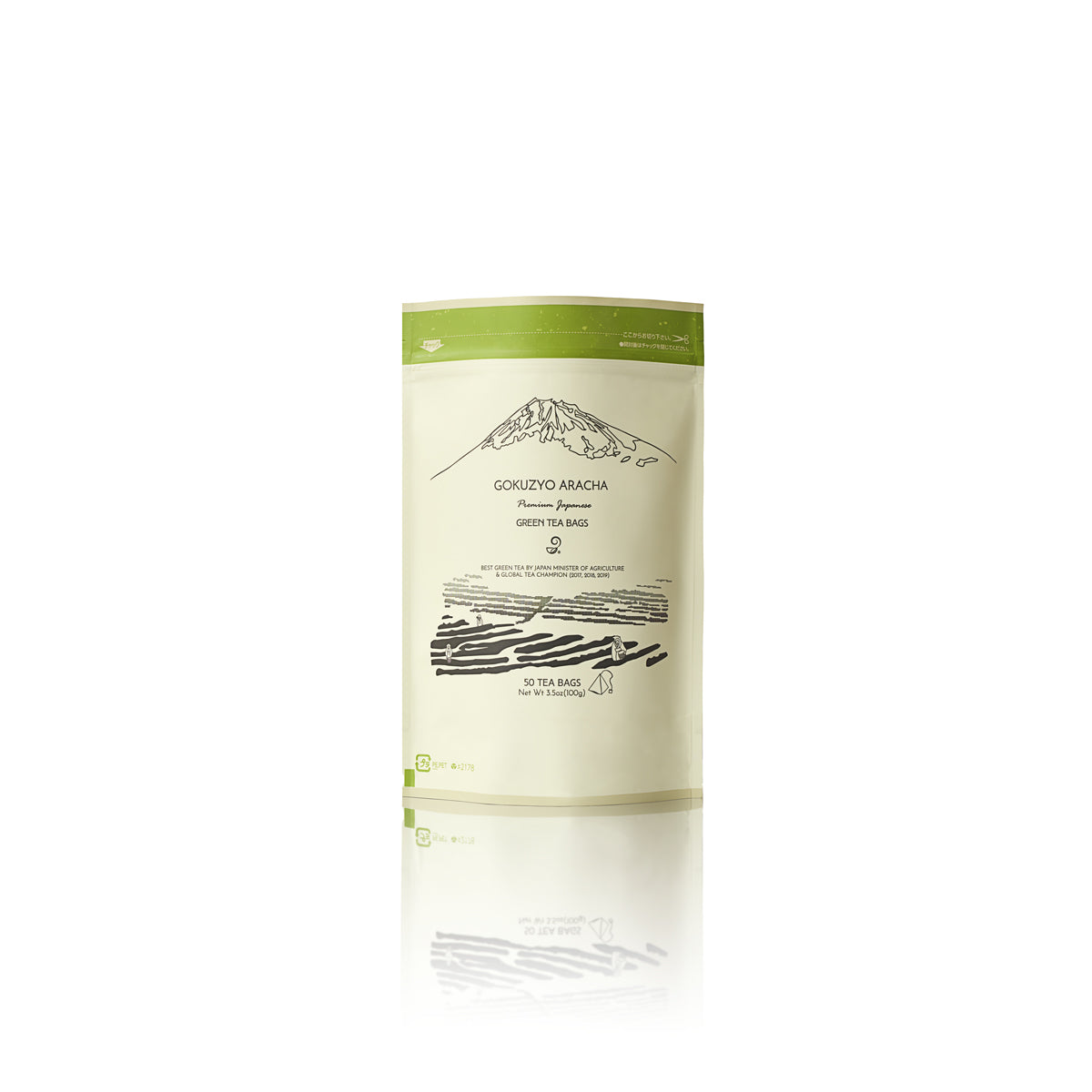
Tea Bag - High-Grade Unrefined Tea - Gokuzyo Aracha (50 tea bags)

$35.00
Quick view

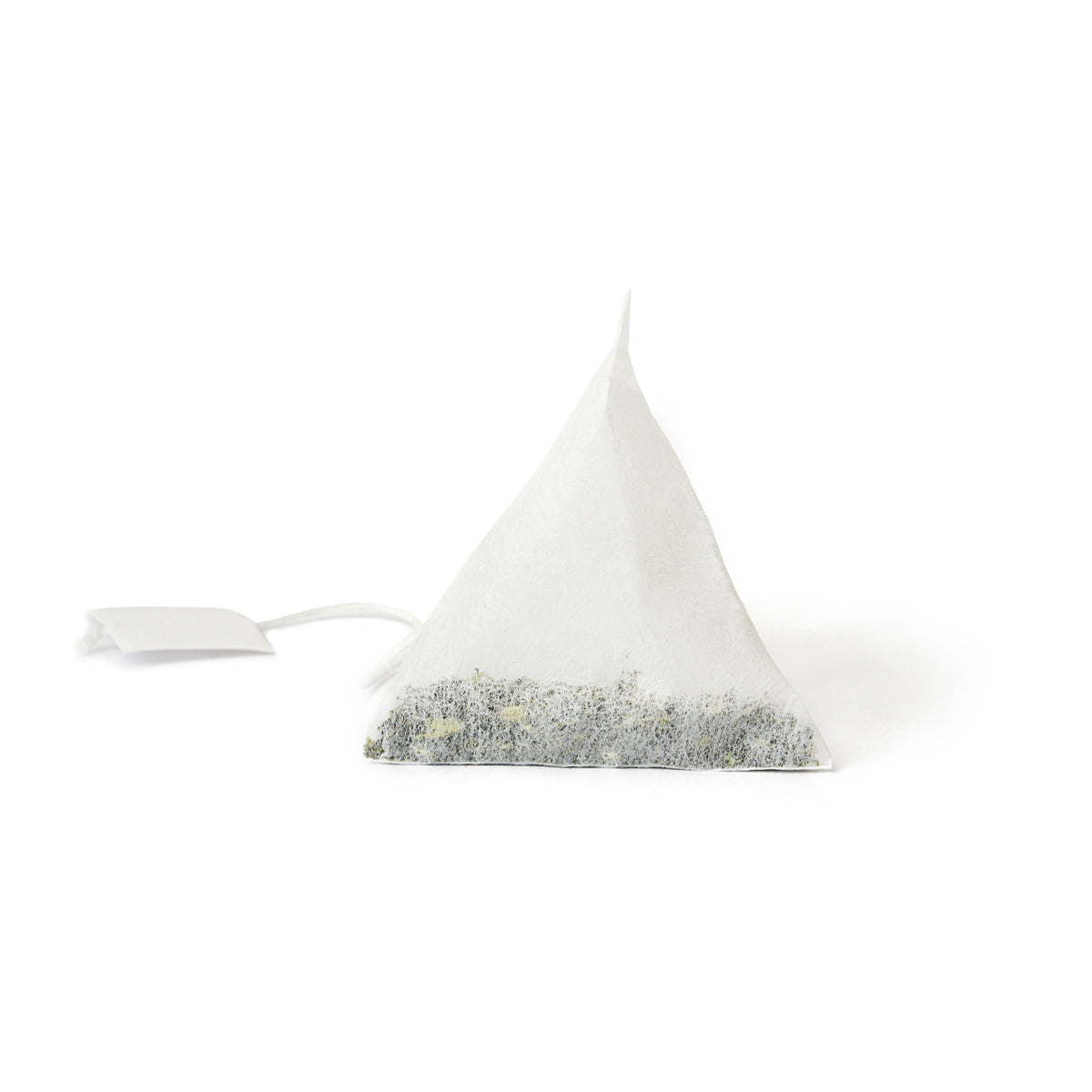
Gokyuzyo 極上, meaning "The Highest Grade," brings the rustic charm of Aracha 荒茶, or "wild tea," into a convenient teabag form, offering a taste as close to freshly picked leaves as possible. Unlike fully processed green teas, this unrefined Fukamushi Sencha preserves its natural shape and texture, blending soft sprouts, twig tea, coarse leaves, and powdered tea for an intense aroma and rich, vibrant flavor. Cultivated by the Chagusaba method in nutrient-rich sugarcane soil and made from the Yabukita cultivar, this tea captures the traditional, nourishing quality enjoyed by generations of tea farmers. Available in a resealable aluminum bag with 50 pyramid-shaped teabags or as a single-serve sample, it is perfect for enjoying authentic Japanese green tea anytime, anywhere.

8 reviews

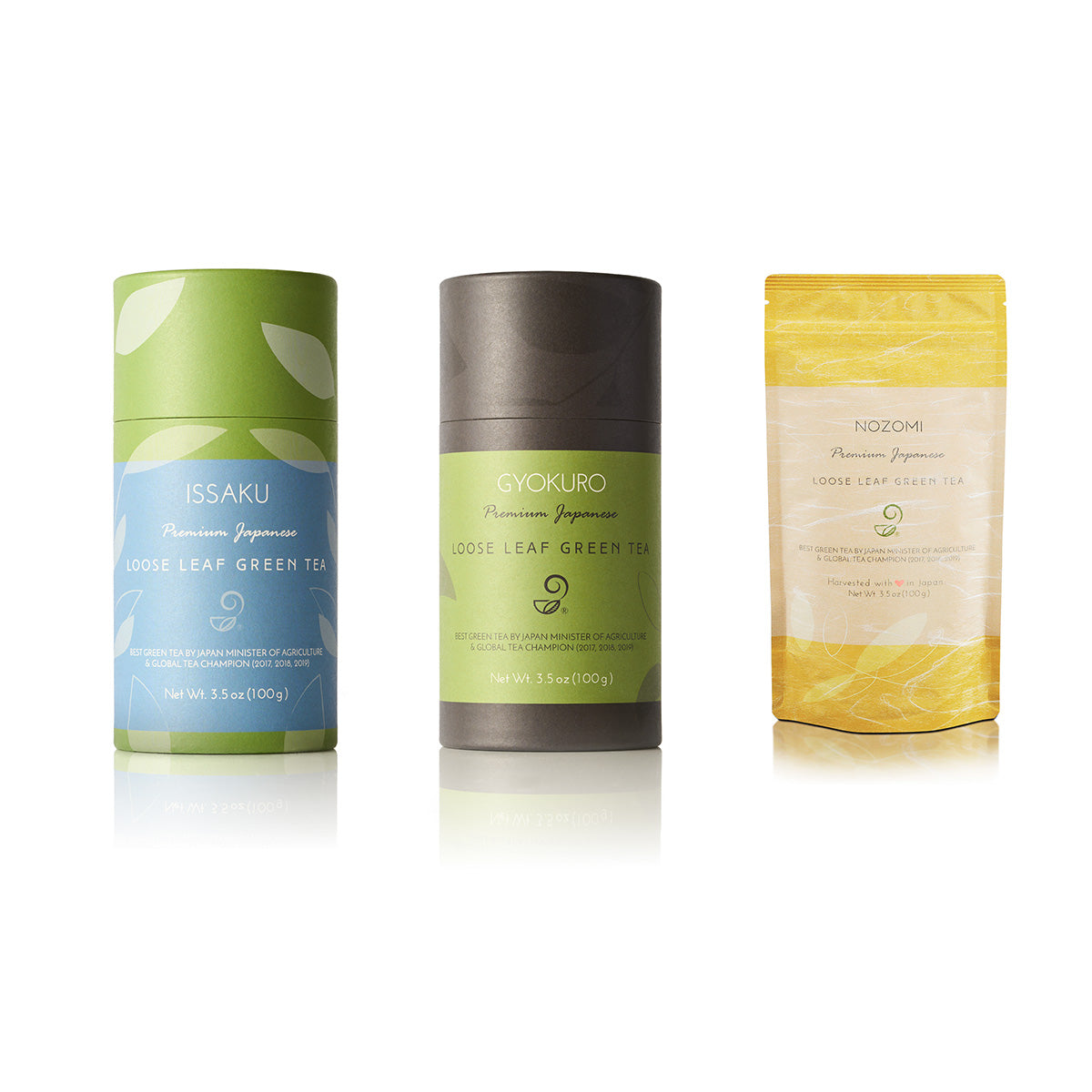
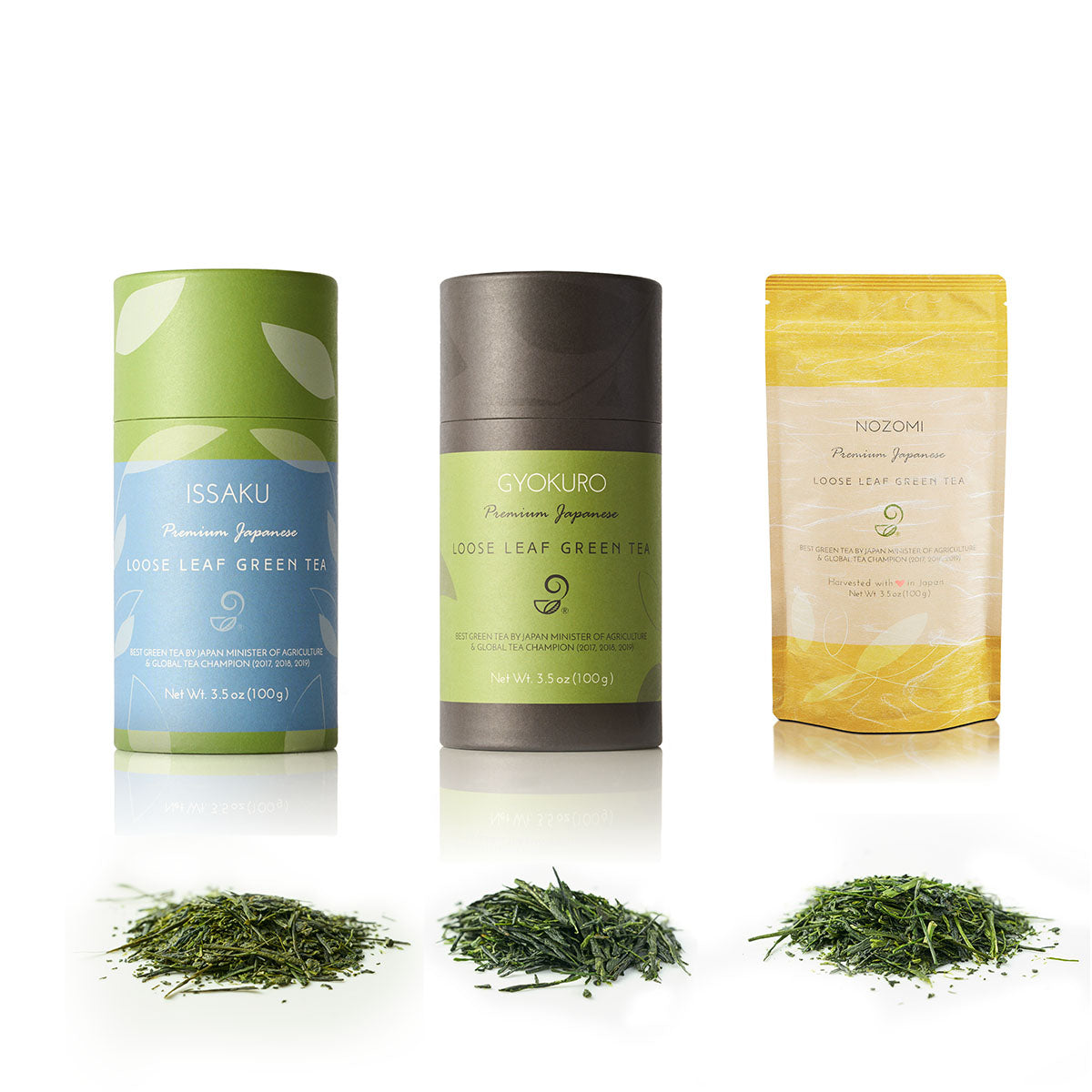
The Sencha Lover Gift Set - Premium Japanese Green Tea Set Package
$179.00 $159.99
Quick view

This tea set features three exceptional Japanese green teas, each crafted with care and traditional techniques. Issaku Reserve, a Global Tea Champion winner in 2017 and 2019, is a rare masterpiece created by Farm Master Mr. Arahata at Arahataen Green Tea Farm. Handpicked once a year from the first flush and processed with advanced methods, Issaku represents the highest-grade deep-steamed green tea, available only in limited quantities even in Japan.

The set also includes Gyokuro, a premium shaded green tea known for its rich, sweet flavor and deep mossy green color. Grown under special mats for 20 days to increase caffeine and amino acid levels, Gyokuro offers a layered, smooth taste unlike any other. Completing the collection is Nozomi, a fine Kabuse-cha, or "Covered Green Tea," carefully grown under nets to gently shade the leaves just before new sprouts emerge, resulting in a soft, rich, and refined flavor profile.

97 reviews

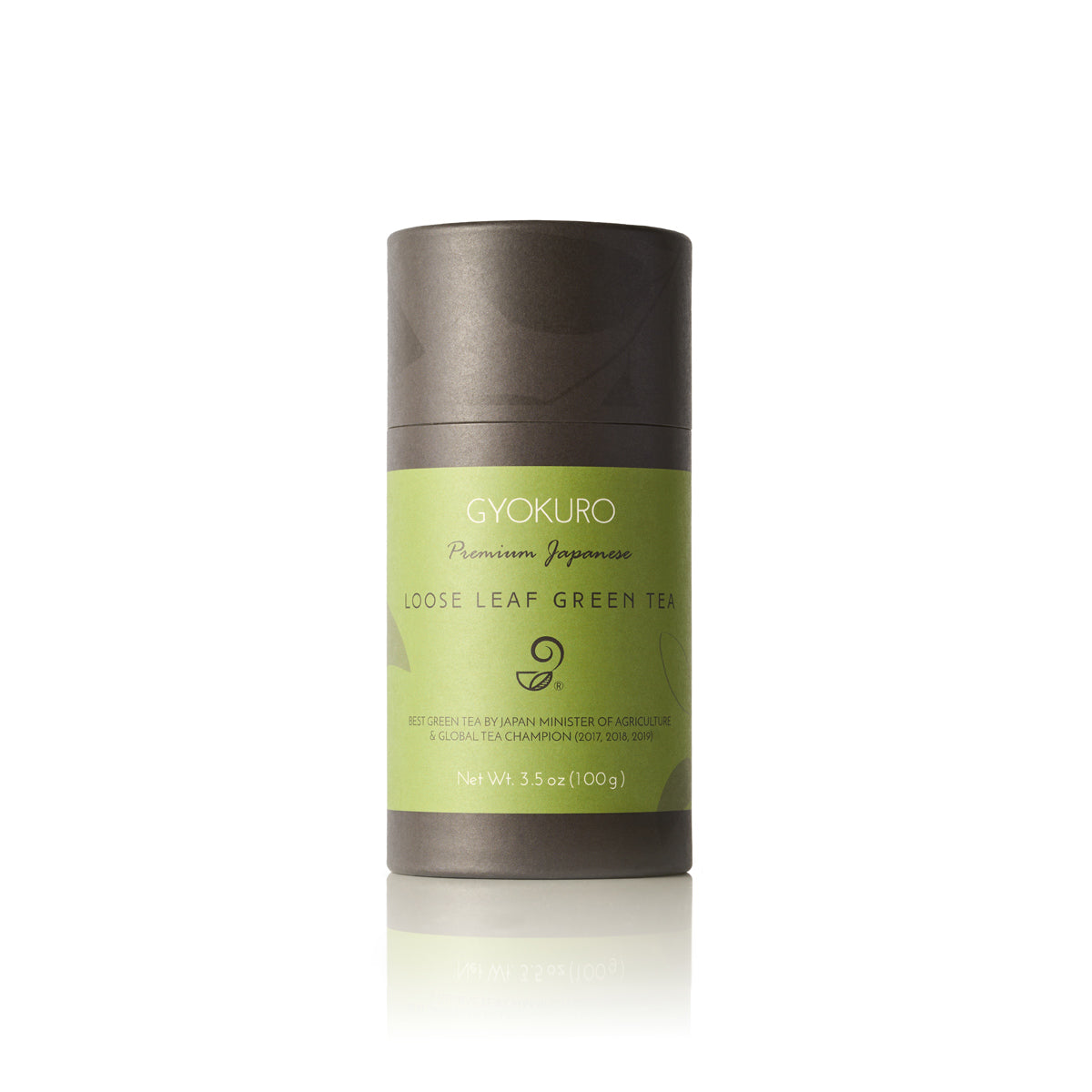
Gyokuro - Shaded Imperial Premium Green Tea

$65.00
Quick view

Gyokuro, also known as "jade dew" or "jewel dew tea," is a premium Japanese green tea shaded from the sun for 20 days using specially made mats, a method that boosts caffeine levels and strengthens amino acids to create a sweeter, richer flavor. This extended shading process results in dark, mossy green leaves with an unmistakable aroma and a complex taste that is layered yet balanced. Cultivated by the Chagusaba method in nutrient-rich sugarcane soil and made from the Yabukita cultivar, this loose-leaf authentic Gyokuro is offered in a high-quality, air-tight paper tube canister (chyazutsu) to preserve its exceptional freshness and flavor. Each 3.5 oz (100g) full-size package steeps 30–40 cups, and a convenient single-serve sample is also available.

45 reviews

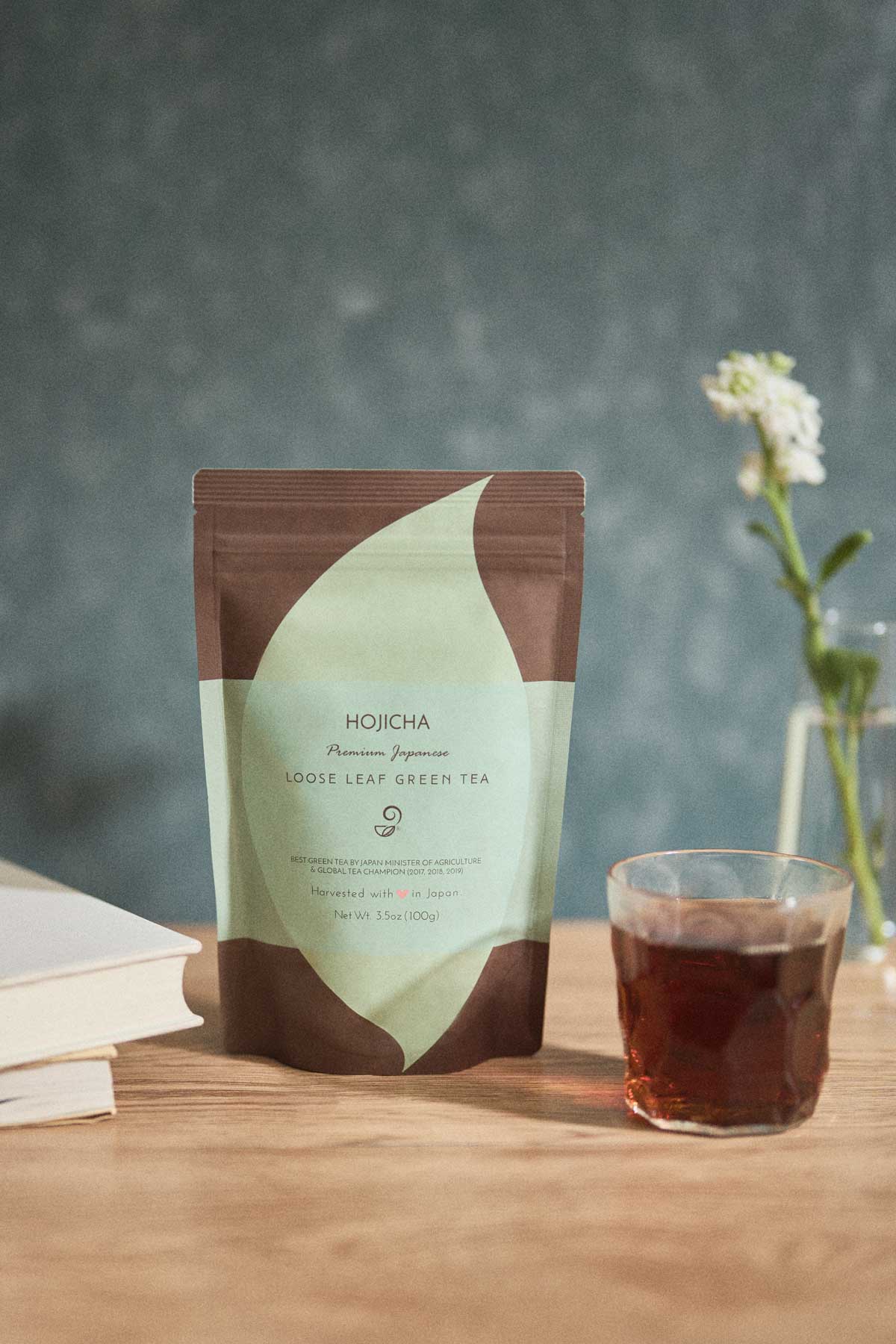
Hojicha - Roasted Green Tea

$25.00
Quick view

Our roasted green tea, known as hojicha (ほうじ茶), is crafted from freshly harvested premium green tea carefully roasted in porcelain over charcoal to maximize flavor while retaining more catechins than typical hojicha on the market. With lower caffeine and a smoother, less bitter taste compared to steamed green tea, it is an ideal choice for evening relaxation and is gentle enough for kids and pregnant women. Cultivated using the Chagusaba method in nutrient-rich sugarcane soil, this loose-leaf authentic Japanese roasted green tea, made from the Yabukita cultivar, also pairs beautifully with oily foods. Each eco-friendly resealable package contains 3.5 oz (100g) of tea, enough to steep 30–40 comforting cups.


Related Articles You May Be Interested

Everything You Need to Know About Different Types of Japanese tea
Everything You Need To Know About Japanese Hojicha Tea
Everything You Need To Know About Water And Japanese Green Tea
Where Different Types of Japanese Tea are Grown
What is Gokuzyo Aracha Tea Bag? Explained in One Minute

Get Free Bonus Books

Join Green Tea Club

Sign up for free to the Green Tea Club to get advice and exclusive articles about how to choose Japanese Tea, and tips, tricks, and recipes for enjoying Japanese tea.

Unsubscribe anytime. It’s free!

About the author

Kei Nishida

Kei Nishida

Author, CEO Dream of Japan

info@japanesegreenteain.com

Certification: PMP, BS in Computer Science

Education: Western Washington University

Kei Nishida is a passionate Japanese green tea connoisseur, writer, and the founder and CEO of Japanese Green Tea Co., a Dream of Japan Company.

Driven by a deep desire to share the rich flavors of his homeland, he established the only company that sources premium tea grown in nutrient-rich sugarcane soil—earning multiple Global Tea Champion awards.

Expanding his mission of introducing Japan’s finest to the world, Kei pioneered the launch of the first-ever Sumiyaki charcoal-roasted coffee through Japanese Coffee Co. He also brought the artistry of traditional Japanese craftsmanship to the global market by making katana-style handmade knives—crafted by a renowned katana maker—available outside Japan for the first time through Japanese Knife Co.

Kei’s journey continues as he uncovers and shares Japan’s hidden treasures with the world.

Learn more about Kei Nishida

Related Posts

Super Mario and Japanese Green Tea

Super Mario and green tea share a hometown! Watch our Yoshi Matcha Cookies video recipe + discover how Nintendo and matc

Read More
Our Matcha Is Now at Pillow Talk Cafe in Pasadena — Master Japanese-Inspired Cake Makers

Our matcha is now at Pillow Talk Cafe Pasadena! Meet the cafe, try the Egg Heaven sando & Matchamisu, and see how th

Read More
Simply Donabe — New Cookbook from TOIRO's Naoko-san Is Out!

Simply Donabe is here! We celebrated TOIRO's Naoko-san's new cookbook at a special dinner at Camélia in DTLA — see our p

Read More
Leave a comment

Your email address will not be published..

Cart

Your cart is currently empty.

Start Shopping

Select options