

- Introduction
- Yama Sushi Marketplace — Trusted for Over 40 Years
- The Famous California Roll — One of the Best in Los Angeles
- A Roll with Two Mysterious Origins — and What Yama Says
- West Coast vs East Coast — Not the Same Roll
- Beyond the California Roll — Other Popular Items to Try
- The Sake Selection (and a Certified Sake Sommelier!)
- Learn From a Master — Yama's Master Chef Classes
- Visiting Yama Sushi Marketplace — All Locations
- Yama Sushi Marketplace — San Gabriel
- Yama Sushi Marketplace — West LA
- Yama Sushi Marketplace — Koreatown
- Coming Soon — Yama Sushi Marketplace Sherman Oaks
- How to Order: Pickup, Delivery & Party Platters
- A Window to Japan — Our Shared Mission
- Our Benifūki and Other Products Are Now at Yama — What It Means to Be on Their Shelf
- Conclusion
- Quick Reference: All Yama Sushi Marketplace Locations
Introduction
Big news on our end — one of the most established Japanese marketplaces in Los Angeles, Yama Sushi Marketplace, is now stocking our products.
We didn't want to just drop an announcement and walk away. Yama matters too much for that. So we figured we'd actually write something — about who they are, where they came from, and what they've meant to LA for the last 40-plus years.
Yama Sushi Marketplace has been one of the most trusted Japanese markets in Los Angeles since 1984.
Being on their shelves means something real to us.
Let me tell you about Yama — and as you read and find out more about them, you will know why we are so excited.

Miki in front of Yama Sushi Marketplace, San Gabriel

Yama Sushi Marketplace — Trusted for Over 40 Years
The Story of Mr. Yama
Yama Sushi Marketplace was founded in 1984 by Kenzo Yamada — known to everyone as "Mr. Yama."
Before opening his store, he was a fish broker in Los Angeles.
A very good one.
After years of working at the heart of LA's fish trade, he knew exactly what quality looked like — and how to get it. Every morning, he went to the fish market and came back with the best cuts available. That was the foundation he built everything on.
A Note on History — Fish, Los Angeles, and the Japanese Community
To really appreciate what Mr. Yama built, it helps to know a little history.
Japanese Americans and the Los Angeles seafood industry go back a long, long way. In the early 20th century, Japanese immigrant fishermen settled on Terminal Island in San Pedro Bay and helped launch Southern California's tuna fishing industry — pioneering techniques that turned canned tuna into an American household staple. (Tuna even appears on the official seal of Los Angeles County.) By the early 1940s, nearly 3,000 Japanese and Japanese Americans lived in that fishing village.
That community was torn apart during World War II, when its residents became the first Japanese Americans forcibly removed to internment camps, and the village itself was demolished. It's a painful chapter — but the deep connection between the Japanese community and LA's seafood trade never disappeared.
So when Kenzo Yamada — a fish broker — opened Yama Seafood in 1984, he was continuing a thread that stretched back generations.
And his timing was remarkable. The 1980s were exactly when sushi went mainstream in America — when sushi bars began appearing in strip malls across the country. It was the same era that Little Tokyo, the historic heart of Japanese Los Angeles downtown, was being recognized as a National Historic District. Mr. Yama opened his own doors out in San Gabriel right at the start of that wave.
In a way, Yama Sushi Marketplace sits at the meeting point of two long stories: the Japanese community's deep roots in Los Angeles seafood, and America's growing love of Japanese food. Forty years later, Yama is still standing right at that intersection.
In 1984, he opened Yama Seafood on Las Tunas Drive in San Gabriel. The idea was simple: bring the freshest, highest-quality fish directly to his community, at prices that didn't require a special occasion. It was, for years, one of the only family-run Japanese fish markets in the San Gabriel area.

The San Gabriel storefront
The original store was famously humble — no-frills, a little shabby even. Mr. Yama never competed on decor. He competed on the one thing that mattered: the fish. He personally sliced sashimi for his customers, and every customer left with a bag of ice to keep their fish cold on the way home.
That kind of care — quality, accessibility, authenticity — is how you build 40 years of trust.
Here's a detail I love: the famous California roll wasn't there from day one. Yama Seafood spent its first two decades as a fish market. The California roll came later — it was Mr. Yama's idea to help grow the business beyond the fish counter. (More on that roll soon.)
Mr. Yama has since retired and passed the business to the Kohno family and their partner, Alex Soto. The Kohnos have deep roots in Japanese culture and retail. Under their leadership, Yama has grown to three locations across Los Angeles and now employs more than 130 team members — all while staying true to everything Mr. Yama built.
Scott Kohno, who now runs the business, said it well: "People couldn't imagine eating raw fish back then. So Yamada made it more Americanized, and I saw this happen. I do a lot of business in Japan. For us, it was the California Roll that became the entry to the US."
That's exactly what Yama has always done. Meet people where they are. Introduce them to something genuinely Japanese. Build trust, one customer at a time.
More Than a Sushi Shop — The Full Marketplace Experience
Here's the thing about Yama.
It's not just a sushi counter.
Walk into any location, and you'll find a refrigerated fish counter where staff slices fresh sashimi to order, a grab-and-go case replenished with sushi throughout the day, bento boxes, Japanese pantry items, artisanal sauces, rare snacks, stationery, and kitchen goods — sourced from across Japan's prefectures, from dashi soy sauce to ceremonial matcha.
The fish counter, by the way, kind of runs on its own logic. You pull a paper ticket, hang around until your number comes up, tell them what you're after, and watch as the cuts come off the block in front of you. If I'm being honest, the smart move is to roll in early. Around 3 pm or so, half the sushi case has usually disappeared.

Fish counter at Yama Sushi Marketplace, San Gabriel
Walking through Yama always reminds me of two very different places.
The first is Tokyu Hands (東急ハンズ) — that's the comparison the Los Angeles Times reached for, describing Yama as "a Japanese Trader Joe's meets Tokyu Hands." Tokyu Hands is a beloved Japanese lifestyle store known for stocking everything from craft supplies to kitchenware — the kind of place where you go in for one thing and walk out two hours later with a cart full of things you didn't know existed. It's like Hobby Lobby and Home Depot for people who love creating, but in a Japanese way.
I have a soft spot for Tokyu Hands. I used to go there with my mother when I was young. She was an artist, and we would wander the aisles together, imagining all the things we could make. I think I enjoy writing these blog posts for the same reason — there's a quiet joy in creating something out of nothing. Yama gives me a little of that same feeling.
The second place it reminds me of is Don Quijote (ドン・キホーテ) — "Donki," as everyone in Japan calls it. Donki built its whole identity around the pleasure of exploration: aisles packed floor to ceiling, where half the fun is stumbling on something you never knew you wanted. Every time I visit Yama, I get that same treasure-hunting feeling. Always find something new on the shelf.
(In the interest of being straightforward: the Don Quijote group also operates Tokyo Central, another Japanese market in the area — so in that sense, they're a Yama competitor. I mention them anyway because I think it's only fair, and because each store genuinely has its own strengths.)
What gets me about Yama is the curation. Walk down any aisle. You'll spot maybe two versions of a sauce, maybe three — never twelve. Each bottle is sitting there because a human put it there with intent. Costco does this too, sort of, and after a while you stop checking ingredient labels because you trust the buyer did. Same goes here.
That's a big part of why being chosen for those shelves means so much to us — but more on that later.

Inside the West LA Store
The Famous California Roll — One of the Best in Los Angeles
Ask anyone in Los Angeles about Yama, and the first thing they mention is the California roll.
It's consistently ranked among the best in the city. And there's a reason for that — one rooted in something very Japanese.
Kaizen (改善).
In Japanese, kaizen means continuous improvement — the philosophy of never settling, of refining something again and again until it reaches its best possible form. Small adjustments, made with care, over a long time.
That is exactly how Yama makes their California roll.
As Betty Hallock, Deputy Food Editor at the Los Angeles Times, noted in her feature on Yama, perfecting the roll has been a decades-long evolution. Luis Enrique "Kike" Moreno Diaz — Mr. Yama's very first employee, who has worked at Yama for nearly 40 years — described it this way: "Over time we had to craft it until we came out with that particular size because we were adjusting either the rice, the amount of mayo, the amount of kani [crab], avocado."
Decade after decade. Adjustment after adjustment. Until the ratio was exactly right.
Victor Humay, the assistant manager who now oversees every single roll made at Yama, has earned the nickname "Mr. California Roll." That title didn't come from a single good day. It came from years of the same relentless attention.
One reviewer described the result this way: "Each piece is massive, which means you might pause mid-chopstick grab, wondering how to bite it. The crab inside is creamy and packed snugly with a thin layer of rice around the edges."
That's kaizen on a plate.

The famous California Roll at Yama Sushi Marketplace
A Roll with Two Mysterious Origins — and What Yama Says
I'm going a bit sideways here as I want to tell you something most people don't know: nobody can agree on who actually invented the California roll. (follow me on my rabbit hole : )
There are two main stories — and both have serious supporters.
The first points to Ichiro Mashita (真下一郎), a Japanese chef working at Tokyo Kaikan in LA's Little Tokyo in the early 1970s. Facing unpredictable availability of sashimi-grade tuna, he substituted creamy avocado — and flipped the roll inside-out so the rice faced outward, hiding the nori from American diners who kept peeling it off.
The second points to Hidekazu Tojo (東條英員), a Japanese chef who moved to Vancouver, Canada, in 1971. He too made the roll inside-out to hide the seaweed from Western customers unfamiliar with it, using crab and avocado. His version — the "Tojo Maki" — is still served at his Vancouver restaurant today. Tojo received official recognition from Japan's Ministry of Agriculture for his contribution to spreading Japanese food culture.
Both stories land in the early '70s. Both chefs were wrestling with the same problem — how do you serve sushi to folks who'd never touched raw fish or seaweed before? Working an ocean apart, the two of them landed on more or less the same idea.
Who was first? Nobody knows for certain. The debate continues.
And here's a little mame-chishiki (豆知識 — a fun tidbit) for your next walk through Little Tokyo: Tokyo Kaikan, the restaurant tied to the Mashita story, is no longer there. The space is now home to a clothing shop called Delinquent Bros (341 E 1st St, Los Angeles). Right across from Okayama Kobo, where you can get our tea (check out Okayama Kobo here).
Next time you're in the neighborhood, you'll know exactly what once stood on that spot and get some yummy Japanese bread (and our tea, please : ).
What matters most, though, is what the roll did next.
Scott Kohno put it simply: "The original California Roll was like, 'Okay, it's cooked.' It's not really raw, it's avocado, cucumber and a little mayo. For us it was the California Roll that became the entry to the US."
That's exactly right. The California roll was the door that opened American sushi culture to the world. Whether it was born in LA or Vancouver, it found its home on the West Coast — and Yama has been making one of the finest versions of it since 1984.
West Coast vs East Coast — Not the Same Roll
Follow me on yet another rabbit hole! One more thing worth knowing — especially if you're reading from the East Coast or from outside the US entirely.
Did you know? - The California roll is not the same everywhere.
Yama makes theirs the classic West Coast style — imitation crab flakes mixed with mayo, rolled inside-out with rice on the outside. Creamy, generous, and satisfying.
On the East Coast, "California rolls" often use a whole imitation crab stick instead and skip the mayo entirely. The result is firmer, less creamy, and noticeably different in texture and taste.
The California roll was born on the West Coast, and as it traveled east, the interpretation quietly shifted. Crab stick replaced crab flake. Mayo disappeared. The name stayed; the character changed.
So if you've only ever had the East Coast version and wondered what all the fuss is about, now you know. Yama's is the original West Coast way.

New York Style California Roll
Which one is your favorite?
Beyond the California Roll — Other Popular Items to Try
The California roll may be the headliner, but Yama's regulars have plenty of other favorites. If you're visiting for the first time, here's where I'd start:
- Chicken Karaage — This is my personal favorite — their Karaage is a bit sweeter than other Karaage you find elsewhere, and goes very well with white wine.
- Spicy Tuna Roll — A Yama staple. Fresh and full of flavor, without being overwhelmingly spicy.
- Salmon Avocado Roll — Simple, clean, and consistently good. A great one for anyone easing into sushi.
- Nigiri Assortment — A rotating mix of salmon, tuna, and albacore, each piece with a generous slab of fish. Reviewers say it holds its own against neighborhood sushi restaurants.
- Chirashi Bowl — Fresh fish over seasoned sushi rice. Simple and satisfying.
- Fresh-Cut Sashimi — Choose your fish at the counter and have it sliced to order. The salmon, yellowtail, and tuna are what built Yama's reputation.
- Spam Musubi — A beloved local comfort food, and a fun grab-and-go option.
- Seaweed Salad — A refreshing, light side that rounds out any order.
Selection rotates and varies a little by location, so it's always worth seeing what's fresh that day. If I missed your favorite, please let me know, as I want to try them!!

Enjoying the food at the West LA store
The Sake Selection (and a Certified Sake Sommelier!)
Something that surprises a lot of first-timers: tucked inside this sushi marketplace is one of the biggest sake selections in all of Southern California.
Wendy Kohno, who runs Yama alongside her husband Scott, is a certified kikisake-shi (利き酒師) — a professional sake sommelier. The sake selection at Yama reflects that expertise. It's not just stocked — it's thoughtfully chosen.
Whether you're a serious sake enthusiast or just beginning to explore, Yama's shelves are worth spending real time with.

Sake selection at Yama Sushi Marketplace San Gabriel
Learn From a Master — Yama's Master Chef Classes
Here's something that truly sets Yama apart from a regular sushi market: they teach.
Yama runs Master Chef Classes — hands-on sessions led by their own master chefs and Japanese culture experts. And these aren't quick demos. The instructors are the real thing.
There's maki sushi with Shu Takizawa, a master sushi chef with 25 years of experience at Hide Sushi and Asakuma — in his class, you make both Spicy Tuna and Salmon Avocado rolls yourself. There's traditional Edomae sushi with Kotaro Sunagawa, who spent more than 20 years at top Los Angeles sushi restaurants, where you learn to season the rice, slice sashimi properly, and form fresh nigiri. There's a sake class led by Narumi, a fourth-generation Japanese American and certified kikisake-shi, who walks you through a curated tasting and the art of brewing. And there's even a fermentation class — "HAKKO" — with Yoko, originally from Nara (奈良), Japan, who shares the quiet magic of kōji (麹) and miso.
It's a genuine way to take a real piece of Japan home with you — not a souvenir, but a skill.
How to sign up: The classes are popular — Yama calls them "the hottest ticket in town" — and they do sell out. New classes are released at 11:00 AM on the first of every month, and you book your spot online in advance through Tock (you reserve ahead; this isn't a walk-up). The current schedule and sign-up links live on Yama's website at yamasushimarketplace.com, and they announce each month's lineup on Instagram at @yamasushimarketplace.
If you've ever wanted to learn sushi from someone who has spent decades behind a real sushi counter, this is your chance.
Visiting Yama Sushi Marketplace — All Locations
Yama Sushi Marketplace currently has three locations across Los Angeles, with a fourth on the way. Each one carries the full Yama experience — the fish counter, grab-and-go sushi, the sake selection, and the curated Japanese marketplace.
Yama Sushi Marketplace — San Gabriel
This is where it all began. The San Gabriel location has been on Las Tunas Drive since 1984. It's a small store split into two rooms — the front holds Japanese groceries, grab-and-go sushi, and drinks, and the back room holds the fish counter, the heart of the whole operation. One thing to know before you go: enter from the back, through the parking lot. The front door isn't used — there's a sign, but first-time visitors almost always try the front first! The vibe here is calm, deeply local, and unhurried.
Visit Yama Sushi Marketplace San Gabriel
Address: 911 W Las Tunas Dr., San Gabriel, CA 91776
Phone: (626) 250-6203
Yama Sushi Marketplace — West LA
The West LA location opened in 2022 on National Boulevard, bringing Yama to the Westside. It's a sleeker, slightly more modern follow-up to the original. This is the location where I most often visit — and yes, the line here can be long. It's closer to the popular spot on Sawtelle Blvd, where you find a bunch of Japanese cool shops, so I often go to Yama Sushi after or before I visit Sawtelle Blvd. (If you are at Sawtelle Blvd, check out our friends Tsugu-san and Nozomi-san's record shop We Share Records, where you find rare and cool Japanese vinyl.)
When I went, there was a wait just to get inside. But the line moves much faster than you'd expect, and it is absolutely worth it. There are outdoor tables out front, so you can sit down and enjoy your sushi right there.
If you drink, you can actually get alcohol and drink it with their food. The seats are limited, so on the weekend it is difficult to get a spot, but it's much better than other restaurant settings in my opinion.
Visit Yama Sushi Marketplace West LA
Address: 11709 National Blvd., Los Angeles, CA 90064
Phone: (310) 954-0805
Yama Sushi Marketplace — Koreatown
The Koreatown location opened in early 2025 on Olympic Boulevard — the newest of the three so far. Its grand opening featured a live bluefin tuna cutting demonstration by Chef Andy Matsuda of the Sushi Institute, and from the photos and videos, the energy was incredible. Being the newest, it may have slightly shorter lines than the others — though I imagine that won't last long.
Visit Yama Sushi Marketplace Koreatown
Address: 3178 W. Olympic Blvd., Los Angeles, CA 90006
Phone: (323) 795-0003
Coming Soon — Yama Sushi Marketplace Sherman Oaks
Yama's fourth — and largest — location is on the way to Ventura Boulevard in Sherman Oaks, targeting a late summer 2026 opening. Scott Kohno has described Ventura Boulevard as "ground zero for sushi in Los Angeles," and the new space is set to bring an even bigger version of the Yama experience to the San Fernando Valley.
Visit Yama Sushi Marketplace Sherman Oaks (Coming Late Summer 2026)
Address: 15300 Ventura Blvd #102G, Sherman Oaks, CA
How to Order: Pickup, Delivery & Party Platters
The simplest way to enjoy Yama is to walk in and grab what looks good — the cases are restocked throughout the day.
Want to order ahead? You can put in a pickup order right through Yama's website. The major delivery apps carry them too, though fees and availability shift a lot depending on the app and how far you live from the store — so do a quick check across a few before picking one.
One genuinely useful tip: Yama offers party platters — generous trays of maki and assorted sushi that are perfect for gatherings. Platter orders need to be placed by 6:30 PM the day before, so plan ahead if you're feeding a crowd.
For current details, visit yamasushimarketplace.com or follow them on Instagram at @yamasushimarketplace.
A Window to Japan — Our Shared Mission
Yama calls itself "a window to Japan."
That phrase really stayed with me.
Forty-plus years in, Yama still does this same thing. They quietly haul real Japan into Southern California neighborhoods — the sake on the rack, the snacks people grew up on, hand-picked groceries, the morning fish. It's never been about novelty or theme-park Japan. It's just life. The kind your aunt in Osaka would recognize.
At Japanese Green Tea Co., we've been doing the same thing — just from a different direction.
We are a window to Japan for anyone, anywhere in the world. Our readers and customers come from across the US, from Europe, from Australia, and from Japan itself. Through our teas, our coffee, and our knives, we share what is genuinely, carefully Japanese with people who might never have encountered it otherwise.
Two companies. Different forms. The same mission.
Bringing Japan — its quality, its care, its culture — to the people around us.
Our Benifūki and Other Products Are Now at Yama — What It Means to Be on Their Shelf
When I walked into Yama and saw our products on their shelves, that connection was immediate.
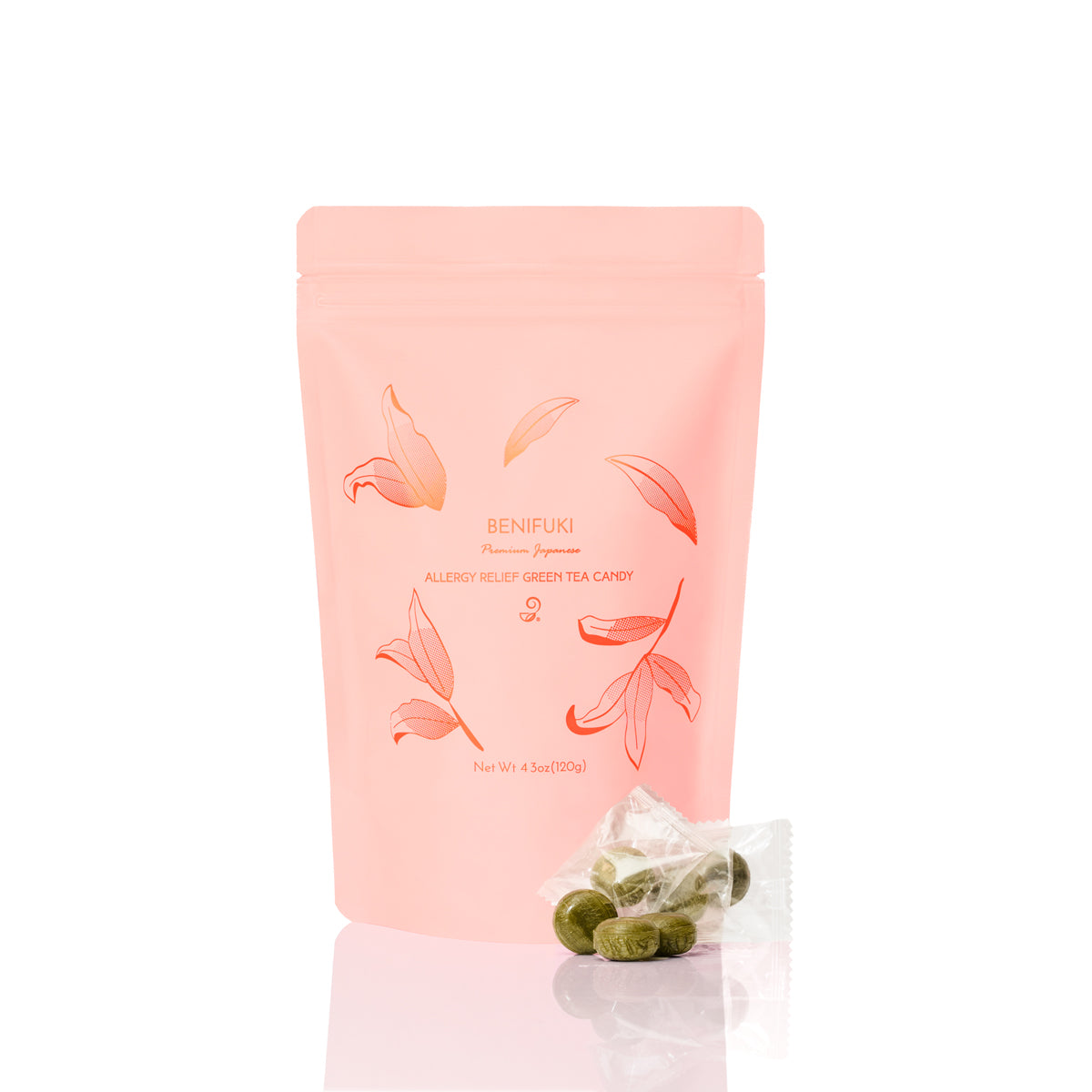
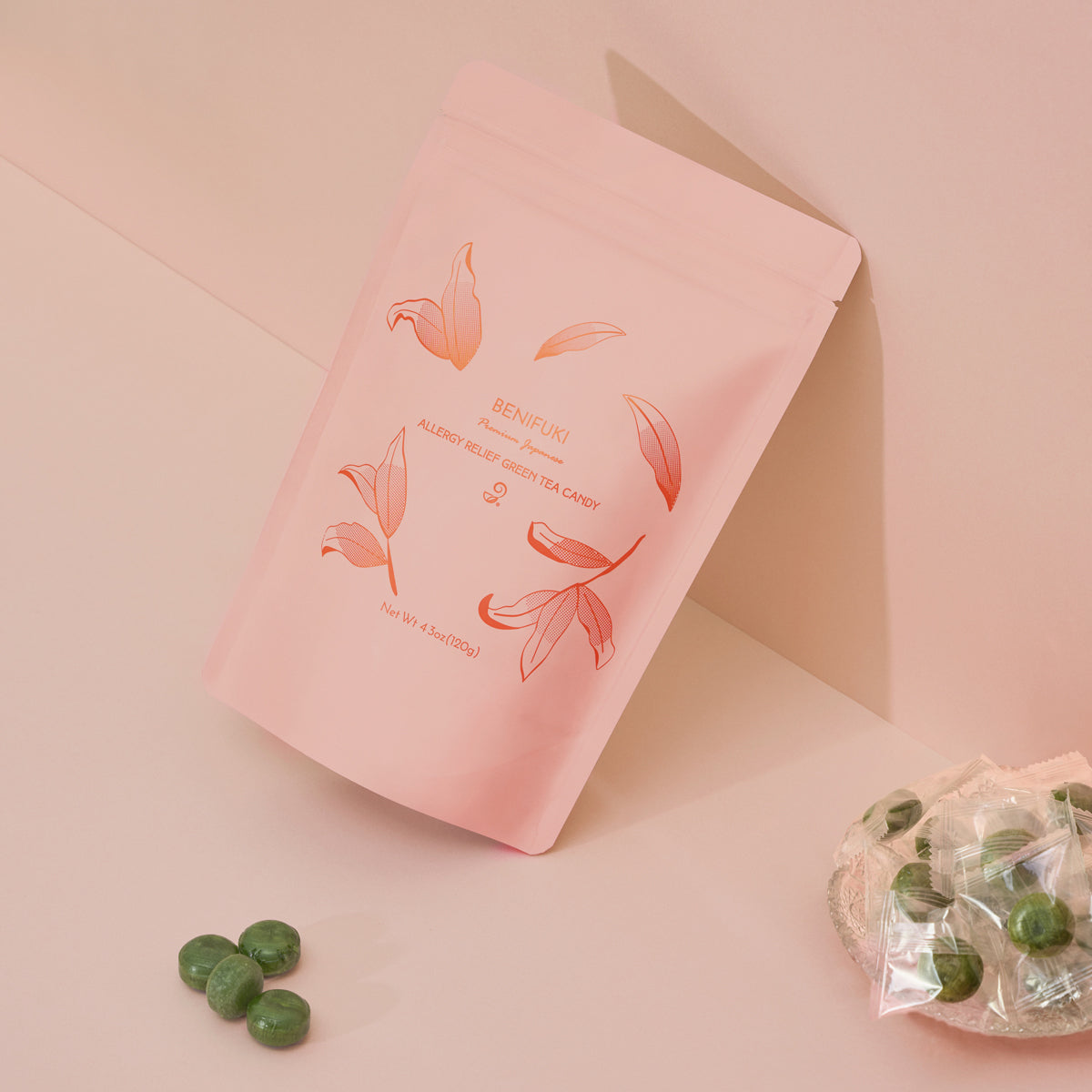
Our Allergy Relief Tea - Benifūki (べにふうき) Candy — a delicious, convenient way to enjoy the natural allergy-relief properties of one of Japan's most unique tea cultivars. Benifūki (紅富貴) contains exceptionally high levels of methylated catechins, a rare antioxidant found in almost no other tea, scientifically recognized for naturally easing seasonal allergies, hay fever, and cedar allergies. Each piece is individually wrapped, low-calorie, and easy to carry anywhere.

Allergy Relief Tea - Benifuki Candy on the shelf at Yama
And here's a little secret — shhh, I can't say this too loudly — you can actually get our Benifūki Candy at Yama for a little less than you'd pay buying it online. Just don't tell anyone. :)
You'll also find the Cuzen Matcha Maker on their shelves. Now, I should be clear about this one — the Cuzen Matcha Maker isn't our own product. It's made by our lovely partner, Cuzen, and we're proud to be an authorized reseller. It's a home matcha machine that uses a ceramic stone mill to slowly grind fresh tencha into matcha, without heat damage, exactly the way it's been done in Japan for centuries — fresh-ground matcha at home, whenever you want it. (Read more about Cuzen and its founder, Eijiro Tsukada (塚田英次郎), in our full article here.)

Cuzen Matcha Maker on the shelf at Yama Sushi Marketplace
Along with a selection of other items, too. Their stock evolves over time — please stop by and discover what's currently available!
Yama Sushi Marketplace does not put just anything on its shelves.
Their sake is chosen by a certified sake sommelier. Their Japanese groceries are curated with care. Their fish is delivered fresh every single day from the same trusted suppliers Mr. Yama built relationships with 41 years ago. The people who shop at Yama have high standards — because Yama has been setting that standard since 1984.
When Yama chose to carry our products, it said something.
It said that after all the work we've put into sourcing genuine Japanese products and bringing them to people outside Japan, a place that has spent four decades earning the trust of its community, sees us as a trusted, quality Japanese brand.
We are so honored. And we are so excited to be partners — and friends — in this mission.
Conclusion
Yama Sushi Marketplace is more than a place to get great sushi — though it absolutely, definitely is that.
It's 41 years of a family building something real for their neighbors. Of Japanese and Japanese American entrepreneurs choosing quality every single day. Of a fish broker who believed his community deserved the best — and a family that picked up that mission and carried it forward.
We are proud to be on their shelves. Proud to share this mission. And proud to call Yama our partners and our friends.
Next time you're in San Gabriel, West LA, or Koreatown — please visit Yama. Try the California roll. Explore the fish counter. Browse the shelves. And if you find our Benifūki Candy or Cuzen Matcha Maker, we would love to hear what you think!
Quick Reference: All Yama Sushi Marketplace Locations
| Location | Address | Phone |
|---|---|---|
| San Gabriel (Original, Est. 1984) | 911 W Las Tunas Dr., San Gabriel, CA 91776 | (626) 250-6203 |
| West LA | 11709 National Blvd., Los Angeles, CA 90064 | (310) 954-0805 |
| Koreatown | 3178 W. Olympic Blvd., Los Angeles, CA 90006 | (323) 795-0003 |
| Sherman Oaks (Coming Late Summer 2026!) | 15300 Ventura Blvd #102G, Sherman Oaks, CA | — |
Website: yamasushimarketplace.com | Instagram: @yamasushimarketplace
Related products





Get Free Bonus Books

Sign up for free to the Green Tea Club to get advice and exclusive articles about how to choose Japanese Tea, and tips, tricks, and recipes for enjoying Japanese tea.
About the author
Kei Nishida
Author, CEO Dream of Japan
Certification: PMP, BS in Computer Science
Education: Western Washington University


