Skip to content

Japanese Green Tea and Meditation


Asia is credited with the origins of both green tea and Zen meditation. While these two entities technically had their beginnings in China, they managed to intertwine their paths thanks to a 12th-century Japanese Zen monk named Eisai Zenji.

Like many Zen practitioners at that time, Eisai Zenji traveled to China; however, he stood out as the one who was responsible for bringing Camellia sinensis, or tea plant seeds, to Japan and adding this distinct element to Japanese culture.

Today, we recognize the pairing of green tea with meditation as a Japanese concept. While green tea ceremonies had already been present in Chinese Buddhism, the use of green tea, particularly matcha, in harmony with meditation as a Zen Buddhism practice began in Japan.  

japanese green tea

Japanese Zen monks realized how much matcha supported mindfulness whenever they drank it before long meditation sessions. It helped them maintain focus and enhanced their ability to contemplate and stay awake. That's why monks or meditation masters were also tea masters, and tea gardens were often found in monasteries. It wasn't long before commoners began drinking matcha in their tea ceremonies as well.

These days, sado (the way of the tea), as the traditional tea ceremony is called, is considered a ritual of moving meditation, a practice of presentness, grace, and respect carried out in a series of very precise movements. There are two main kinds of sado: chaji, which can take as long as five hours with a meal or some sweet treats, and chakai, a simpler and shorter ritual that doesn't involve a meal.

What Are the Benefits of Meditation?

If you're thinking, "I'm not a monk. I'm not even a Zen Buddhist. Why would I meditate?" mindfulness isn't limited to a specific religion. It just so happens that it's more popularly associated with Buddhism. For instance, Christians meditate too often during their daily devotion session. The focus may be different, but the results of peace and relaxation are the same.

Nonetheless, you don't have to subscribe to any particular persuasion to practice mindfulness. Through meditation, you can gain better self-control, mental clarity, mental flexibility, emotional intelligence, and objectivity. This can result in stronger relationships, better work performance, improved self-esteem, and a generally kinder, more accepting, and more compassionate version of yourself.

japanese green tea

How Does Drinking Green Tea Help You Meditate?

Green tea and meditation both elicit a calming, balancing, and focusing effect. It's pretty easy to see what the two together can do for a person. So, you have to ask, "What exactly is in green tea that makes it so perfect for meditation?"

Let's start with tea in general. All kinds of tea offer health benefits and have a soothing quality to them. In addition, tea has a certain grace and finesse to it. Throughout history, it has been ennobled as an elegant concept of aestheticism mixed with some insight into ethics and even metaphysics.

There are clearly depths to tea that the casual drinker doesn't really get to plumb. In fact, in "The Book of Tea" by Okakura Kakuzo, he coined the word "teaism" for the art of tea. It refers to a sense of concentration and focus that transpires while one is enjoying great-tasting tea. Some cultures, like the Japanese, Chinese, and Koreans, have a more developed degree of teaism.

Since teaism is apparently present in Sado and Japanese culture in general, the result also manifests in the people. There is such a thing as "Japanese Calm." Despite having their fair share of calamities and crises, the Japanese people have displayed a propensity for facing them with dignified calm.

While many Japanese wouldn't claim religiosity, the values of Buddhism and Shintoism are ever-present in the culture. That's why the tea ceremony is still very much ingrained in society and continues to shape contemporary Japanese mentality and behavior. Seeing this remarkable quality, many other people are eager to emulate it and have adopted some of the practices that promote it, with teaism and meditation being two of the most common, with Japanese green tea being the tea of choice.

What Are Green Tea’s Benefits That Aid Meditation?

Green tea is deemed the healthiest variety from the Camellia sinensis plant. It helps you maintain wellness, feel rested, and stay in top mental shape. Incidentally, matcha is pretty much a concentrated kind of green tea because you're consuming the actual leaves and not just their infusion. So it's no wonder it's often the preferred variety among Zen monks.

japanese ceremony

Both drinking green tea and meditating are known to promote the production of a brainwave linked to inner peace and clarity, so it really does make sense for people to drink green tea as a helpful tool in meditation. What specific benefits does it offer, allowing it to aid in achieving mindfulness?

  • Relaxation: Green tea has theanine, which has a relaxing effect that aids in stress reduction. This is important in meditation, which calls for the adjustment of one's mind and one's breathing.
  • Better immunity: It has catechins that boost the immune system, protecting the body from illness and improving general health. This addresses the need for body adjustments necessary for achieving the state of being free and present.
  • Increased stamina: It has caffeine that promotes staying power, especially in sessions that last hours.
  • Focused calm: The caffeine in a cup of matcha could be as much as three times the caffeine content in a regular cup of coffee, but the relaxing compound L-theanine slows down the body's caffeine absorption. This combination leads to a kind of calm concentration that is perfect for meditating, burning the midnight oil, studying, or working.

    How Can You Include Green Tea in Your Meditation?

    If you want to complement your meditation practice with green tea, here is one example of green tea meditation I often do.

    • Close your eyes and start by focusing on breathing and picking up on the sensations you experience while breathing.
    • Deliberately open your eyes but keep a soft gaze as you prepare your green tea—matcha, preferably.
    • Delicately go through the steps of serving yourself green tea, taking note of the emotions that the different elements of the experience are making you feel.
    • Stay in the present and keep your focus on the task at hand. Don't let your mind wander. Continue to concentrate on your breathing as you go through the mindless portions of the process, such as steeping or whisking.
    • Take a moment to appreciate how the green tea looks and smells.
    • Thoughtfully make additions to the tea based on your preference. As you add each ingredient, ponder the effort, energy, and will it will take for it to end up in your drink.
    • Sip your tea and observe the sensations evoked by the liquid sloshing around your mouth. Identify the different nuances of the flavor and mouthfeel. Allow the experience to conjure images, but don't let your mind wander. Reel your mind back to your breathing and your tea if it does.
    • Take the time to feel grateful toward your tea and to all those involved in its production.
    • Let the sense of gratitude and connection wash over your entire being. Savor the feeling and visualize it filling you from your feet to the top of your head.

    Tea Ceremony as a Form of Therapy: The Art of Mindful Tea Drinking

    Another Helpful Meditation Tool

    You can also reinforce your tea and meditation habits with other tools. If you are into meditation, you may already know this one. It is an app called Balance. I use it myself and find it amazing. It's a personalized meditation program that improves stress, sleep, etc. So far, it has garnered an impressive 4.9 stars on the App Store and 4.8 stars on Google Play. The reviews have been very positive and confirm that it does help users achieve balance and better manage daily stresses so that life can be more enjoyable and peaceful.

    The meditation guide, a voice recording from Leah (who also has a podcast), is modified based on the practice-oriented choices I make every day. The app generates voices based on the conditions and choices I make, and they sound so natural that I feel like she is really talking to me. With a software engineering background, I know how difficult it is to create so many variations that are contingent on different conditions. Nonetheless, Balance has been able to achieve a seamless system that makes the guide feel very natural to users.

    And for transparency's sake, I want to state that I'm in no way affiliated with Balance. I actually reached out to the company to see if they had an affiliate program of some sort, but I was informed that they didn't. So I'm simply sharing it to potentially help out my fellow tea lovers who are interested in meditation.

    If you are interested, here is a link to download the app.

    (Again, I am not an affiliate.)

    Green Tea and Meditation Retreats

    If you are into meditation, you may have been to one or more meditation retreats. I want to mention a bit about it here. The presence and role of green tea in meditation retreats will further demonstrate how well the two go together. If the retreat center follows the famous Retreat Manual of Jamgon Kongtrul, the 19th-century Buddhist master, "black foods," such as garlic, onion, meat, eggs, radish, and coffee, are supposed to be avoided in order to minimize certain fantasies.

    A teacup next to a kettle.

    Meditation calls for a balance between excitement and lethargy. Since both stimulation and intoxication are discouraged, these tenets indicate that coffee and alcohol are out. However, there is an allowance made for tea since it has been Buddhism's companion through time. They co-evolved together, traveling from China to Japan and Korea before reaching other parts of the world.

    The deliberateness and intentionality of meditation also pair well with the rituals around tea. It has been observed that many retreat centers offer tea-oriented programs. For instance, early morning tea could be mixed with meditation to find oneself. It could be static or sitting meditation geared toward awakening the body and mind.

    There could be a tea room where tea etiquette goes hand in hand with meditation. The staff could teach participants how to be mindful of different sensations while the tea brewed. Other than gentle meditation music playing, it would be a quiet place where even the sound of tea flowing into a cup could sound clean. Participants are bound to emerge from the experience with a clear mind.

    Final Thoughts

    Nowadays, people worldwide enjoy Japanese green tea's healing and soothing properties as it helps calm their spirits, focus their minds, and improve their health. Moreover, it's a practical, cost-effective way to boost daily physical and mental health.

    When you feel like you have no minutes to spare for mindfulness, you should meditate more. It would be just the right time to slow down and find peace and rest in the present. "Ichi-go, ichi-e" is a Zen phrase meaning "one time, one meeting," and it reminds us of the beauty in every moment. (Learn a bit more about Ichi-go Ichie in part of the video we made here about Sen No Rikyu.) So make sure you don't miss out on what the present moment has to offer.

    If you find that meditating is a bit trickier to practice than expected, priming yourself for it is a very helpful way to go. Starting with the green tea ritual cited above definitely aids in easing you into the practice.

    FAQs about Japanese Tea and Meditation

    Why is Japanese tea so deeply tied to meditation?

    Tea entered Japan through Buddhist monks who used it specifically as a meditation aid — the bitter alertness of green tea was considered ideal for the long sitting sessions of zazen. For the first 300+ years of Japanese tea culture, the primary tea drinkers were monks doing serious meditation practice, not casual consumers. The mind-tea connection was foundational, not decorative.

    Sen no Rikyū's wabi-sabi tea ceremony took the meditation connection further — the ceremonial structure (slow movements, focused attention, sustained presence) is itself a form of moving meditation. The four principles (wakeiseijaku 和敬清寂, harmony-respect-purity-tranquility) read like a meditation curriculum. Modern tea-school students who practice for years often describe the experience as parallel to or interwoven with formal meditation practice.

    The chemistry supports the philosophy. L-theanine in tea genuinely produces calm-focus brain states (measured as alpha-wave EEG activity) similar to what meditation training produces over years. Tea is mechanically a meditation aid in addition to being symbolically one.

    Can I use daily green tea as a meditation tool, even without formal practice?
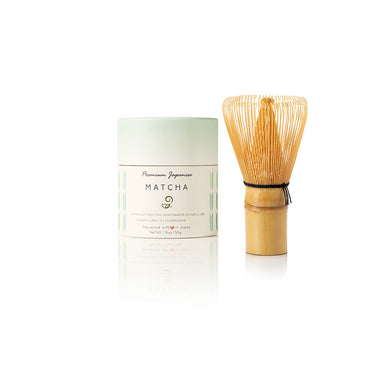
    Yes, and it's one of the most accessible mindfulness practices available. The structure: brew the tea slowly with full attention to each step (heating water, measuring leaf, watching the leaves unfurl), pour without rushing, drink with focus on the actual sensations rather than half-attending while doing other things. The matcha + chasen (茶筅) whisk set supports a more elaborate version of this if you want the matcha ceremony rather than just steeped tea.

    This kind of "tea as meditation" practice doesn't require any prior meditation training. The structure of brewing focuses attention; the L-theanine biases the brain toward present-moment awareness; the warm cup in your hands grounds you sensorily. It's simpler than meditation cushion practice and produces similar (if smaller) brain-state effects.

    Most people who develop this practice find that the morning tea ritual becomes the most focused 10 minutes of their day — and that the focus carries forward into the rest of the morning. That ripple effect is the meditation benefit, even without sitting practice.

    Is there a specific tea that works best for meditation practice?
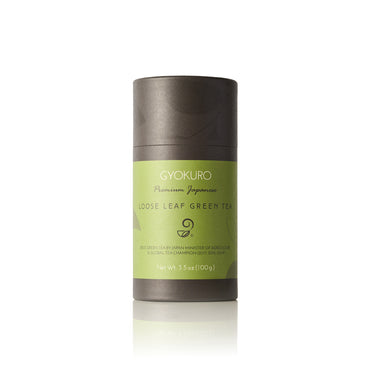
    Shaded teas (matcha, gyokuro, kabusecha) deliver the highest L-theanine concentrations and therefore the strongest calm-focus effect. Matcha specifically — because you ingest the whole leaf — gives the most concentrated dose.

    For pure meditation support without the caffeine, hojicha works well. The lower caffeine doesn't disrupt nervous system relaxation the way standard sencha can; the L-theanine is still present (slightly less than shaded teas, but meaningful). Genmaicha is similar — the brown rice dilutes the caffeine while preserving the L-theanine effect.

    For evening meditation specifically (when caffeine would interfere with sleep), hojicha is the best choice. For morning practice (where you want both calm and focus), matcha or gyokuro. The right tea depends on when you're practicing and what your nervous system needs.

    How does "tea ceremony as meditation" differ from regular meditation practice?

    Object focus vs. open attention. Most seated meditation (vipassana, zazen, mindfulness apps) trains attention on breath or body sensations — internal anchors. Tea ceremony trains attention on external objects (the bowl, the whisk, the tea, the host's movements) and the social context (the other guests, the seasonal moment). It's a more relational and embodied form of mindfulness.

    Many practitioners describe tea ceremony as easier than seated meditation in some ways (more sensory engagement keeps the mind from wandering as easily) and harder in others (you can't drift inward; you have to stay present with what's happening externally). Some people thrive in tea ceremony where formal meditation has frustrated them.

    The two practices stack well. Tea ceremony as morning grounding plus formal seated meditation as deeper inward work covers different aspects of presence. Most longtime tea practitioners eventually develop some seated meditation practice as well; they're complementary rather than substitutable.

    Are there proven mental health benefits to tea-based meditation specifically?

    Modest evidence, mostly from small studies. Regular tea ceremony practice has been shown to reduce cortisol response and improve heart-rate variability — both markers of nervous-system regulation. Anxiety and stress reactivity decrease with sustained practice in measurable ways.

    The mental health benefits are real but smaller than what's been measured for formal seated meditation in clinical contexts. So tea-meditation is a useful supportive practice, not a substitute for treatment-level mental health intervention.

    The bigger long-term value is the daily-life integration. Most people who try formal meditation struggle with sustained practice — the ritual is too separate from the rest of life to maintain. Tea-based meditation is much easier to integrate (you'd be drinking tea anyway) which means the actual sustained practice often produces more cumulative benefit than aspirational formal meditation that doesn't last past the first few weeks.

    Related products

    8 reviews

    The Sencha Lover Gift Set - Premium Japanese Green Tea Set Package

    $179.00 $159.99
    Quick view

    This tea set features three exceptional Japanese green teas, each crafted with care and traditional techniques. Issaku Reserve, a Global Tea Champion winner in 2017 and 2019, is a rare masterpiece created by Farm Master Mr. Arahata at Arahataen Green Tea Farm. Handpicked once a year from the first flush and processed with advanced methods, Issaku represents the highest-grade deep-steamed green tea, available only in limited quantities even in Japan.

    The set also includes Gyokuro, a premium shaded green tea known for its rich, sweet flavor and deep mossy green color. Grown under special mats for 20 days to increase caffeine and amino acid levels, Gyokuro offers a layered, smooth taste unlike any other. Completing the collection is Nozomi, a fine Kabuse-cha, or "Covered Green Tea," carefully grown under nets to gently shade the leaves just before new sprouts emerge, resulting in a soft, rich, and refined flavor profile.

    97 reviews

    Gyokuro - Shaded Imperial Premium Green Tea

    $65.00
    Quick view

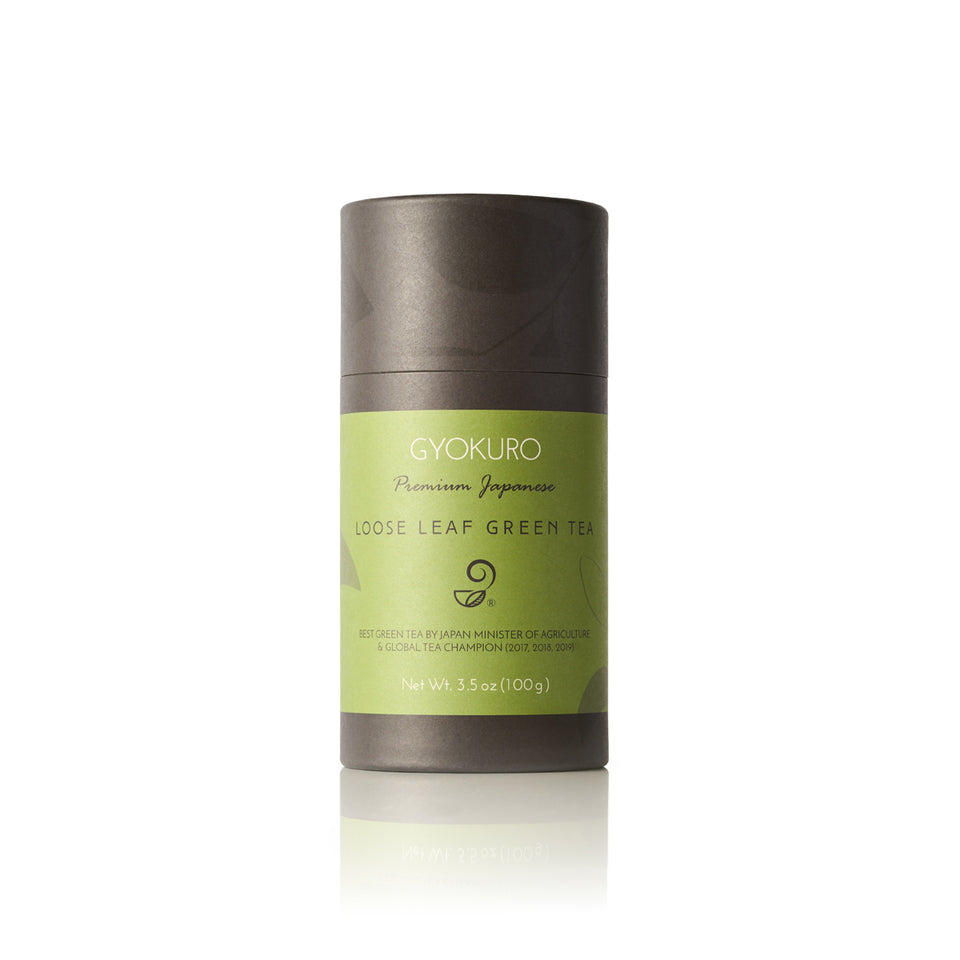
    Gyokuro, also known as "jade dew" or "jewel dew tea," is a premium Japanese green tea shaded from the sun for 20 days using specially made mats, a method that boosts caffeine levels and strengthens amino acids to create a sweeter, richer flavor. This extended shading process results in dark, mossy green leaves with an unmistakable aroma and a complex taste that is layered yet balanced. Cultivated by the Chagusaba method in nutrient-rich sugarcane soil and made from the Yabukita cultivar, this loose-leaf authentic Gyokuro is offered in a high-quality, air-tight paper tube canister (chyazutsu) to preserve its exceptional freshness and flavor. Each 3.5 oz (100g) full-size package steeps 30–40 cups, and a convenient single-serve sample is also available.

    45 reviews

    Hojicha - Roasted Green Tea

    $25.00
    Quick view

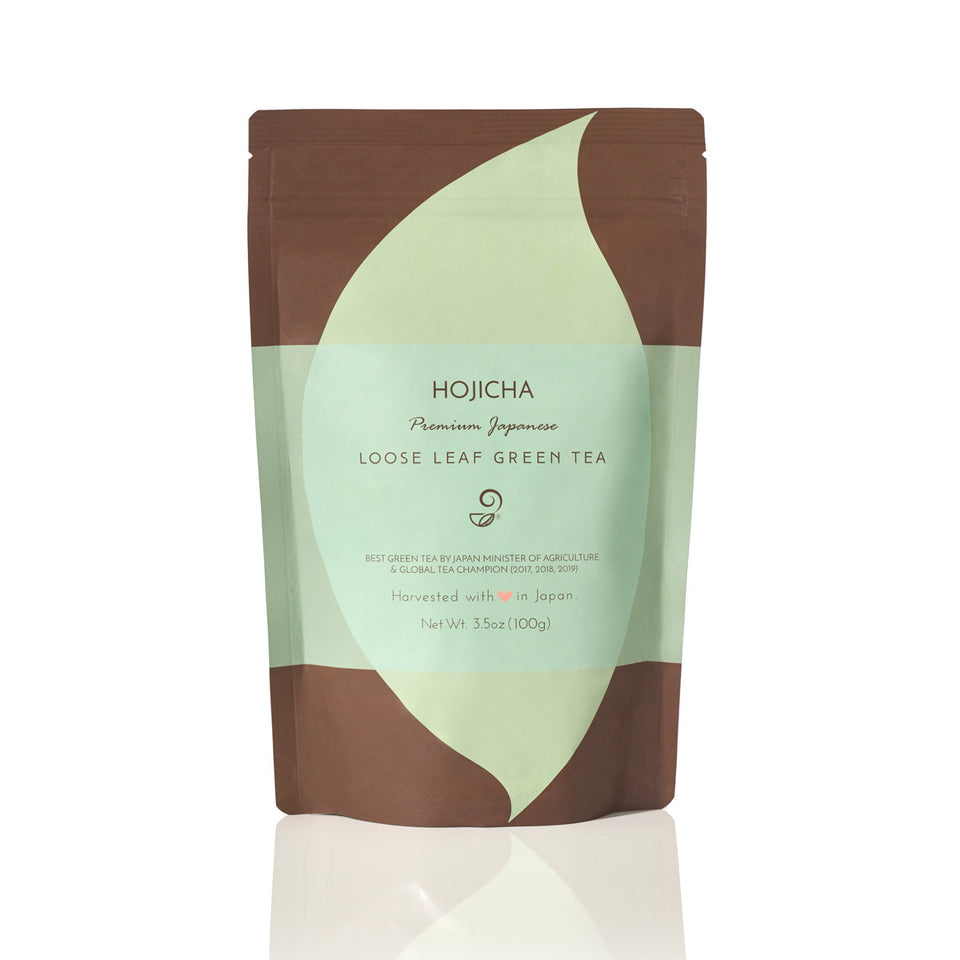
    Our roasted green tea, known as hojicha (ほうじ茶), is crafted from freshly harvested premium green tea carefully roasted in porcelain over charcoal to maximize flavor while retaining more catechins than typical hojicha on the market. With lower caffeine and a smoother, less bitter taste compared to steamed green tea, it is an ideal choice for evening relaxation and is gentle enough for kids and pregnant women. Cultivated using the Chagusaba method in nutrient-rich sugarcane soil, this loose-leaf authentic Japanese roasted green tea, made from the Yabukita cultivar, also pairs beautifully with oily foods. Each eco-friendly resealable package contains 3.5 oz (100g) of tea, enough to steep 30–40 comforting cups.

    80 reviews

    Matcha - Ceremonial Japanese Powdered Green Tea

    $39.00
    Quick view

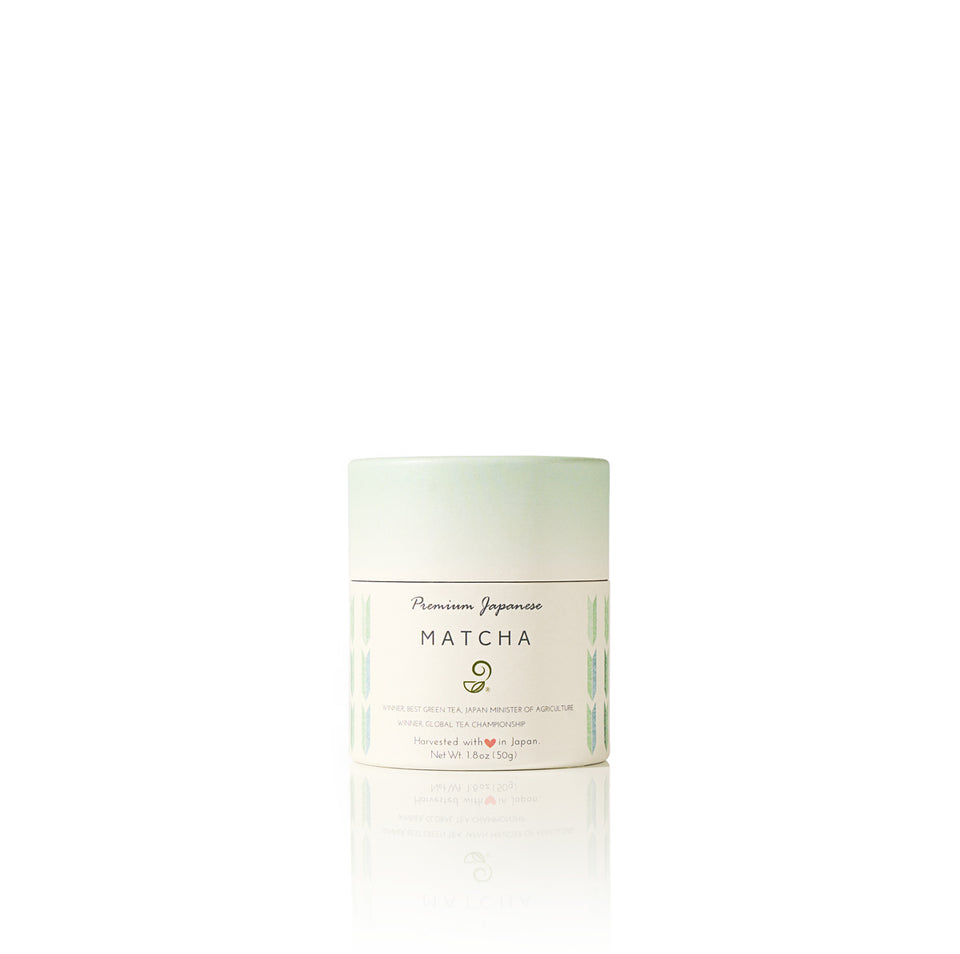
    This ceremonial matcha is crafted from the finest Japanese green tea, grown in nutrient-rich soil enhanced with compostable grasses and sugarcane through the Chagusaba method, which gives the tea a natural sweetness and exceptional flavor. In collaboration with researchers from Shizuoka University, farmers ensure that the soil quality consistently produces tea of the highest standard.

    Renowned among top Japanese chefs for its unmatched aroma, this matcha is made by carefully shading the plants before harvest to boost caffeine and amino acids, then meticulously drying, de-stemming, and grinding the leaves into a fine powder. Made from the Yabukita cultivar, this 1.8 oz (50g) matcha comes in a high-quality, air-tight paper tube canister, providing a luxurious and authentic Japanese tea experience.

    42 reviews

    Genmaicha - Green Tea with Roasted Brown Rice

    $30.00
    Quick view

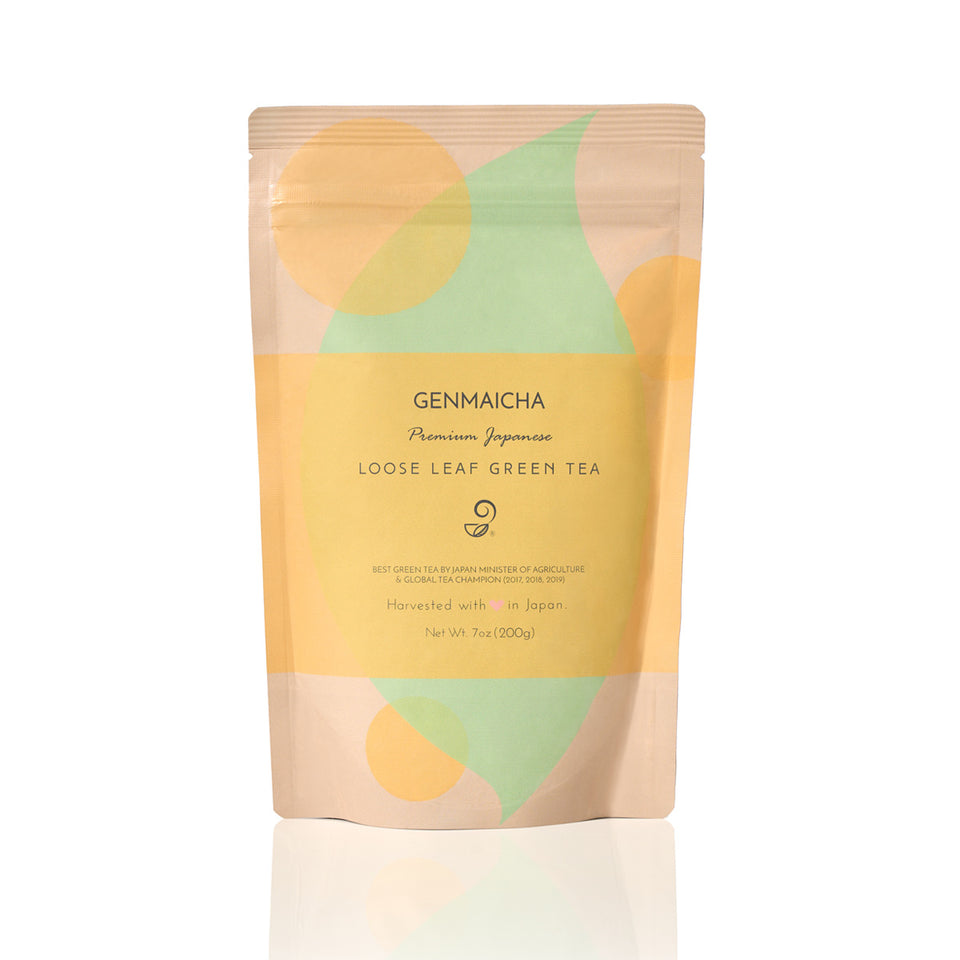
    Our premium Japanese Genmaicha blends high-quality green tea with roasted popped brown rice (genmai 玄米), often nicknamed "popcorn tea" because the roasting process sounds like popcorn popping. Popular especially among the older generation in Japan for its mild flavor and lower caffeine content, this tea is easier on the stomach while still offering a rich, comforting taste. The brown rice used is premium Japanese mochi-gome (もち米) sticky rice, enhancing the tea’s nutty, aromatic profile. Made from Fukamushi Sencha and cultivated using the Chagusaba method in nutrient-rich sugarcane soil, this Genmaicha features the Yabukita cultivar and comes in a 7.0 oz (200g) eco-friendly resealable package, enough to steep 50–60 cups.


    Related Articles You May Be Interested

    Japanese Green Tea and Meditation – Part 2: Delving into The Book of Tea by Okakura Kakuzo
    Japanese Green Tea and Meditation – Part 2: Delving into The Book of Tea by Okakura Kakuzo
    Meditation in Japanese: Why Japanese People Drink Tea in a Special Way
    Meditation in Japanese: Why Japanese People Drink Tea in a Special Way
    Tea Ceremony as a Form of Therapy: The Art of Mindful Tea Drinking
    Tea Ceremony as a Form of Therapy: The Art of Mindful Tea Drinking
    Japanese Green Tea and Yoga - 10 Surprising Facts about Two Cultures and How They Connect
    Japanese Green Tea and Yoga - 10 Surprising Facts about Two Cultures and How They Connect
    How Green Tea Can Help You Maintain Mental Health Balance
    How Green Tea Can Help You Maintain Mental Health Balance
    Tea Ceremony as a Form of Therapy: The Art of Mindful Tea Drinking
    Tea Ceremony as a Form of Therapy: The Art of Mindful Tea Drinking

    Get Free Bonus Books

    Join Green Tea Club

    Sign up for free to the Green Tea Club to get advice and exclusive articles about how to choose Japanese Tea, and tips, tricks, and recipes for enjoying Japanese tea.

    Unsubscribe anytime. It’s free!

    About the author

    Kei Nishida

    Kei Nishida

    Author, CEO Dream of Japan

    info@japanesegreenteain.com

    Certification: PMP, BS in Computer Science

    Education: Western Washington University

    Kei Nishida is a passionate Japanese green tea connoisseur, writer, and the founder and CEO of Japanese Green Tea Co., a Dream of Japan Company.

    Driven by a deep desire to share the rich flavors of his homeland, he established the only company that sources premium tea grown in nutrient-rich sugarcane soil—earning multiple Global Tea Champion awards.

    Expanding his mission of introducing Japan’s finest to the world, Kei pioneered the launch of the first-ever Sumiyaki charcoal-roasted coffee through Japanese Coffee Co. He also brought the artistry of traditional Japanese craftsmanship to the global market by making katana-style handmade knives—crafted by a renowned katana maker—available outside Japan for the first time through Japanese Knife Co.

    Kei’s journey continues as he uncovers and shares Japan’s hidden treasures with the world.

    Learn more about Kei Nishida

    Related Posts

    Behold: Balmuda's "The MoonKettle" — Where Boiling Water Becomes Art
    Behold: Balmuda's "The MoonKettle" — Where Boiling Water Becomes Art

    We were privileged to be invited by Balmuda's Private MoonKettle Launch Event. Here are videos of it and everything you

    Read More
    OC Japan Fair April 2026 — Visit Us at Booth #A8!
    OC Japan Fair Spring 2026 Recap (April 3 - 5 2026)

    We were at OC Japan Fair again! April 3-5 2026 with new products, Miki Pon's art debut and more. Here is a recap video f

    Read More
    Super Mario and Japanese Green Tea
    Super Mario and Japanese Green Tea

    Super Mario and green tea share a hometown! Watch our Yoshi Matcha Cookies video recipe + discover how Nintendo and matc

    Read More
    Leave a comment

    Your email address will not be published..

    Cart

    Your cart is currently empty.

    Start Shopping

    Select options