Table of contents

No, It's Not an April Fools' Joke
We're starting a new line of products.
Meet: Japanese Wine Co.

Why am I saying it's not a joke?
Some of you have been with us long enough to remember that Japanese Coffee Co. literally started as an April Fools' joke in 2021.
We posted it as a joke, people took it seriously, and here we are five years later, so many people love our Sumiyaki coffee. (Thank you!)
This one is real.

From Tea to Coffee to Knives... to Wine
We started as Japanese Green Tea Co. more than 10 years ago, with green tea grown in sugarcane soil.
In 2021 (April 1, 2021) came Japanese Coffee Co. — charcoal-roasted Sumiyaki coffee, for the first time ever outside Japan.
In 2023 (April 1, 2023), Japanese Knife Co. — hand-forged knives from Japanese artisans.
Each time, many of you tried the new thing simply because you already knew us from tea. I don't take that lightly. Thank you.
So here's our next chapter: wine.
One winery in Yamanashi, Japan. One Japanese-American winemaker in Napa.
Two of the best stories I've come across in years, and I get to tell you both today.
The License That Took a Whole Year
Nobody warned us about this part. (^^)
Tea, coffee, knives — you just sell them. Wine needs an alcohol license, and I assumed the application would be easy.
Well... It took a year!
We wanted to launch on April 1 as we did on Coffee and Knife, but the license took longer : )
Paperwork, waiting, more paperwork, more waiting. There were weeks where I wondered if the approval would ever come.
It finally did. And because of how alcohol laws work in this country, we can currently ship to California and Washington, D.C. only.
We'll expand state by state — if your state isn't covered yet, the newsletter at japanesewineco.com is where you'll hear about it first.
Meet Grace Wine – The Pride of Yamanashi

It Started with a Bottle from Selfridges
Back in 2021, Miki heard about Grace Koshu, a wine from a winery up in Yamanashi that had won a Decanter Platinum, the first one from Japan.
We wanted to taste it. You couldn't buy it in the United States.
Miki lived in the UK years ago, so she went to the website of Selfridges — the London department store she used to shop at — ordered a bottle, and had it shipped across the ocean. Yes, we paid international shipping on a single bottle of wine. Worth it.
It was good. More than good, actually — it was the first Japanese wine that made us sit down and pay attention.
Citrus on the nose, then mandarin and white peach as you got past the first sip, with a real mineral edge underneath.
I remember thinking — why can nobody in America buy this?
That question sat with us for five years.
The First Japanese Winery to Win Decanter Gold
Grace Wine (Chuo Budoshu Co. — 中央葡萄酒) has been making wine in Katsunuma (勝沼), Yamanashi (山梨) since 1923. Five generations of the Misawa family.
In 2014, their 2013 Cuvée Misawa Akeno Koshu won Gold at the Decanter World Wine Awards.
No Japanese winery had ever done that.
Their Grace Koshu kept collecting medals after — Platinum for the 2015 and 2016 vintages, Gold for 2014, 2017 and 2018.
The winemaker is Ayana Misawa (三澤彩奈), fifth generation. She trained in Bordeaux, Burgundy and South America before coming home to Yamanashi, and Japanese TV did a whole feature on her this spring.

The Grace Wines We Carry
We're bringing Grace Wine to the United States for the first time. Right now, our site is the only place in the USA where you can buy it online.
Typing that sentence still feels strange.
Grace Koshu — the Decanter winner. A dry white from Koshu (甲州), Japan's signature grape, grown above 400 meters (about 1,300 feet) in Katsunuma. Mandarin, white peach, and this quiet umami finish I haven't found in any other white.
My favorite detail: in autumn, the vineyard crew covers each grape bunch with a tiny umbrella to keep the rain off. Each bunch. By hand. That is the level of fussiness we're dealing with here.

Akeno — Grace's single-vineyard red: 54% Merlot, 24% Cabernet Sauvignon, 14% Petit Verdot, 8% Cabernet Franc, grown at 700 meters (about 2,300 feet) on volcanic-ash soil in Akeno (明野) village. Fifteen months in French oak, bottled unfined and unfiltered.
Grace calls it a "wine with a view" — you're supposed to taste the place it comes from. I think they pulled it off.

Meet Kazumi Wines – Japanese Craft in Napa Valley

Michelle's Story
Kazumi Wines is run by Michelle Kazumi Sakazaki in Napa Valley. Kazumi (和美) is her Japanese middle name — 和 for harmony, 美 for beauty.
Her father, Jack Sakazaki, grew grapes in a small backyard vineyard for years. A hobby vineyard — he never even made wine from it, just grew the grapes.
The 2017 Napa fires took it.
Most families would have called it there. Instead, a friend tipped Michelle off that Koshu vines — the same Japanese grape Grace grows in Yamanashi — existed at UC Davis. She bought canes from the university and planted them in Napa.
Today, Kazumi is the only American vineyard growing Koshu grapes brought from Japan, and her wines sit on Michelin-listed restaurant menus in Japan, California and New York. From a burned backyard vineyard to Michelin lists.
I love this story so much.

The Kazumi Wines We Carry
Kazumi Napa Valley Koshu — the Japanese grape under the Napa sun. Kumquat, grapefruit, lime, and a flinty edge the tech sheet calls "coastal salinity" — a fancy way of saying you can taste a little ocean air in it. 94 points from The Wine Palate.

Kazumi Napa Valley Cabernet Sauvignon — Michelle's take on a classic Napa Cabernet. Only 1,200 bottles of the 2023 vintage exist, and The Wine Palate gave it 95 points. Blackberry, currant, silky tannins.
This is the bottle I'd bring to impress a wine-loving friend.

How Michelle Brought Us to Grace
Now, my favorite part.
Remember that bottle we ordered from London in 2021? For five years we had no path to carrying Grace in the US.
The path turned out to be Michelle. She's the one who connected us to Grace Wine's US importer this year — one winemaker in Napa, growing a Japanese grape, opened the door to the winery in Yamanashi we'd been chasing since 2021.
Wine people, it turns out, help each other.
One Grape, Two Worlds
They say Koshu (甲州) has been grown in Japan for about a thousand years. Most wine lovers in America have never tasted it once.
Now you can taste it twice — Grace's Koshu from its Yamanashi homeland, and Kazumi's from the only American vineyard growing Koshu vines brought from Japan. Same grape, totally different wines.
We built a Koshu Combination Set exactly for this side-by-side tasting. If you ask me where to start, this is it.

How to Order (and Where We Ship)
Everything is at japanesewineco.com.
- We currently ship to California and Washington D.C. — more states coming, one by one.
- Limited-Time Introductory Offer: Standard Shipping Included on orders $100+. Shipping wine costs far more than shipping tea — heavy glass, and an adult has to sign for it at the door — so this deal is better than it sounds.
- All orders ship from Napa, California. 21+ only; adult signature required at delivery.
Conclusion
Ten years ago we were a small green tea company. Today I get to introduce Ayana Misawa and Michelle Sakazaki in the same blog post, which still feels a little unreal to me.
We're excited. Nervous too — it took a year just to get the license.
Please visit Japanese Wine Co., read the full stories of Grace Wine and Kazumi Wine on our new Journal, and if you're in California or D.C. — kanpai (乾杯)!
We hope you join us on our next chapter.
Thank you so much for all your support all the time.

Related products
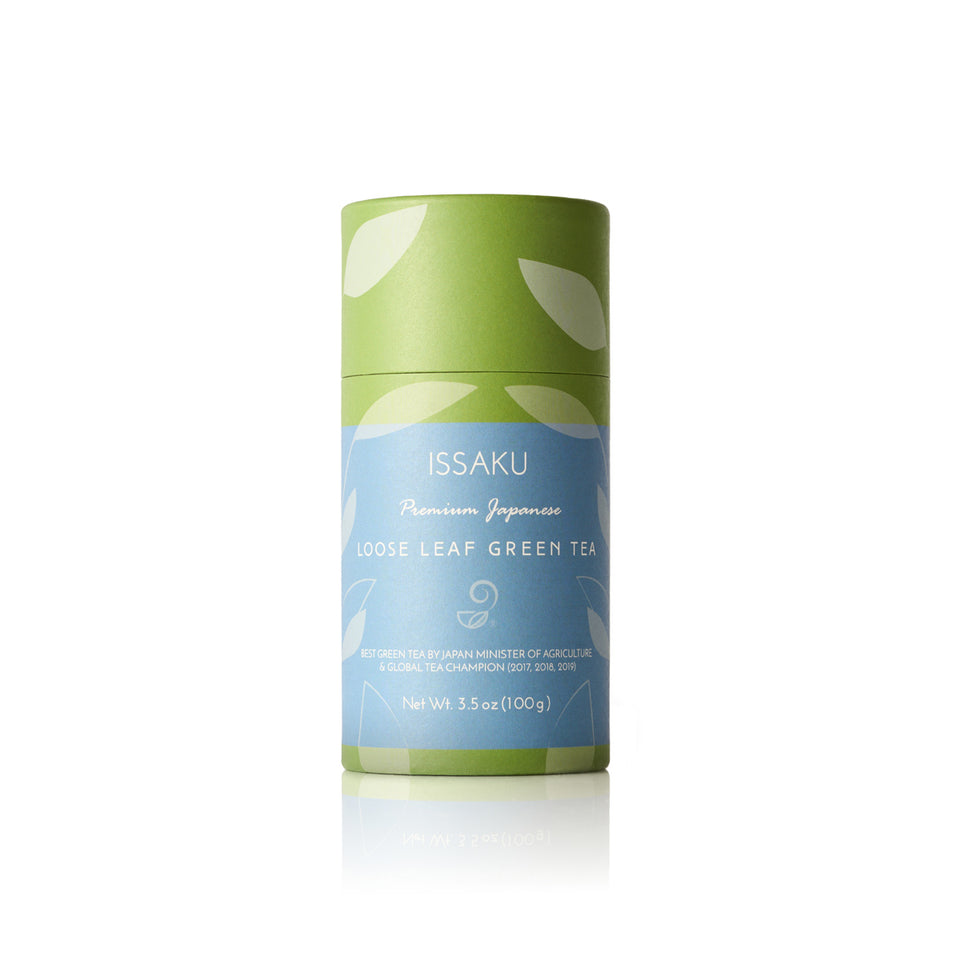

10 reviews
$179.00 USD
$159.99 USD
USD
/
The Sencha Lover Gift Set - Premium Japanese Green Tea Set Package

8 reviews
$195.00 USD
$156.00 USD
USD
/
The Beginner Gift Set - Premium Japanese Green Tea and Japanese Tokoname Kyusu Teapot
Related Articles You May Be Interested


 Liquid error (snippets/responsive-image line 69): input to image_tag must be an image_url
Liquid error (snippets/responsive-image line 69): input to image_tag must be an image_url
Liquid error (snippets/responsive-image line 69): input to image_tag must be an image_url
Liquid error (snippets/responsive-image line 69): input to image_tag must be an image_url
Liquid error (snippets/responsive-image line 69): input to image_tag must be an image_url
Get Free Bonus Books

Sign up for free to the Green Tea Club to get advice and exclusive articles about how to choose Japanese Tea, and tips, tricks, and recipes for enjoying Japanese tea.
About the author

Kei Nishida
Author, CEO Dream of Japan
Certification: PMP, BS in Computer Science
Education: Western Washington University