Skip to content

Gokuzyo Aracha Tea Package Design Contest Result

Thank you very much for participating in the Gokuzyo Aracha Japanese Green Tea Package Design Contest.

What the Contest Was

You have been helping us design packages for our tea in the past. (Please scroll down to the bottom to see the various designs you helped us with earlier.)

This time, you helped us design a package for Gokuzyo Aracha.

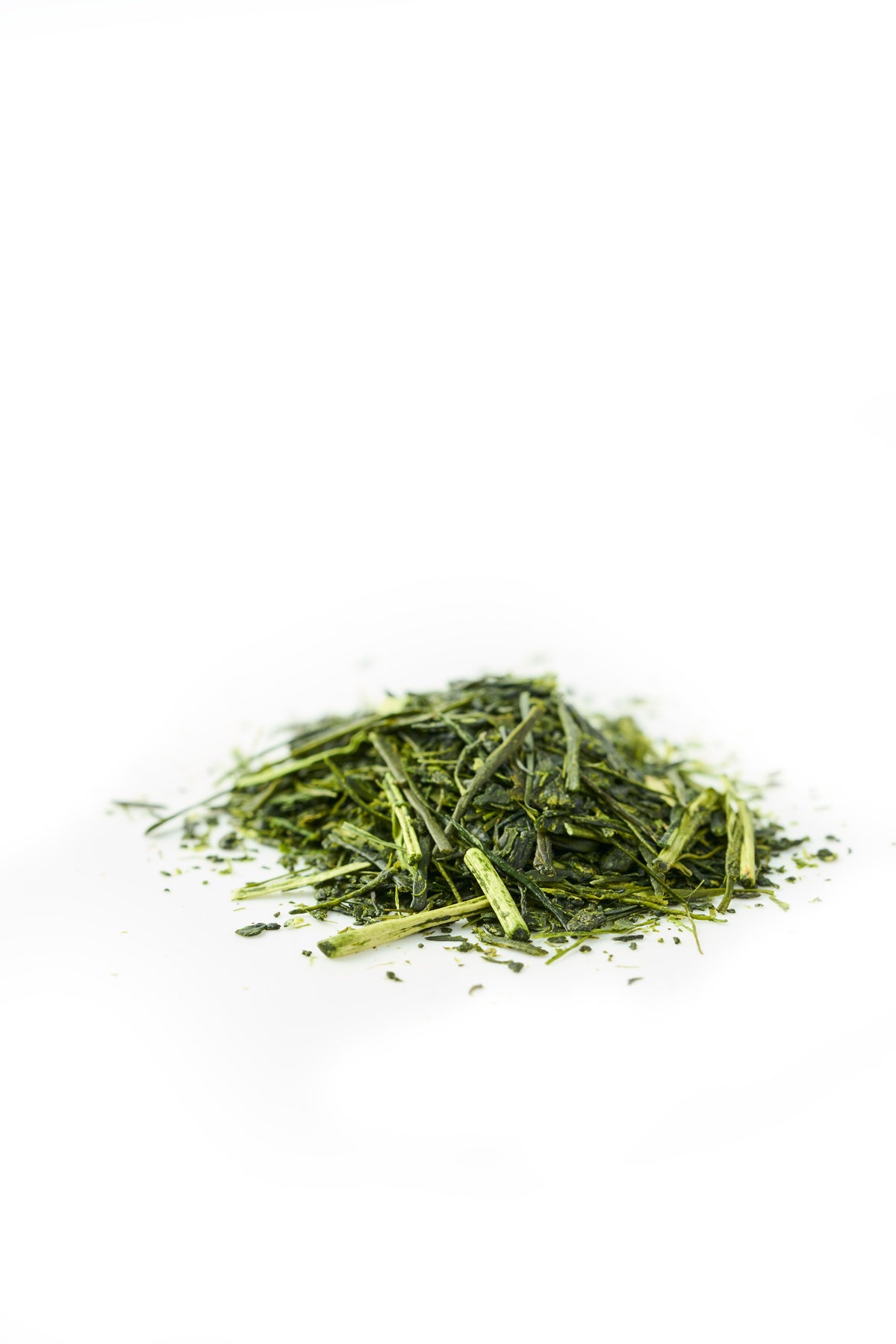
Gokuzyo Aracha is the economic line of our tea, which is popular among people who love sencha taste. The tea is in a less processed form, and it is the type of tea that tea farmers have been drinking for centuries. In other words, this tea is one of the purest forms of Japanese tea.
 
We are thinking of using the same Washi material as Nozomi. You helped me design the package earlier (thank you! : ). We received many comments saying that the Nozomi package is nice (especially with the resealable, eco-friendly part!), and thanks to all your help, we got the #1 New Release on Amazon. (Read more about it here.)

Contest First Round

Here are the questions that you are being asked for Round 1. (The actual form can be accessed here, and even though the contest is closed, you can still submit your selection if you wish.)

Gokuzyo Aracha First Round


Contest First Round - Result

Here is the result of the first round, but we ended up doing another round. Read on to see why.
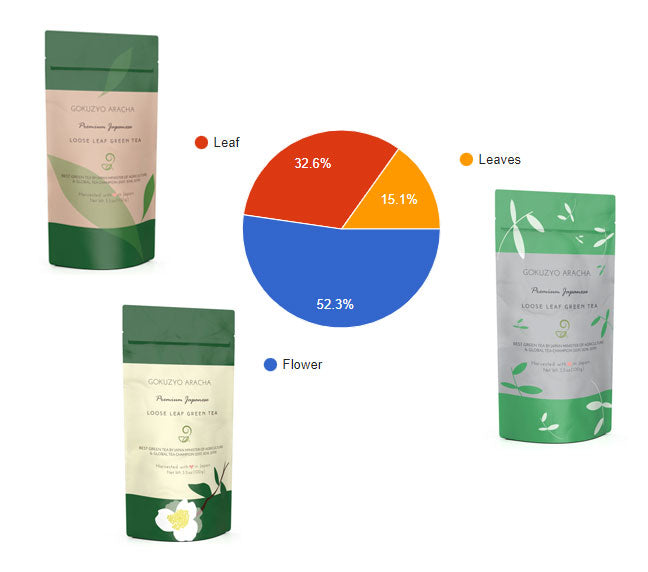
Contest Result 1

So as you can see, the winner of the result was the one with the flower on the package.


However, quite a few people commented something like this:

  • The flower is misleading, as I don’t think this type of tea includes flowers.
  • Leaf or flower. Are there flowers in the tea? If not, then I’d vote no on the flower bag.
  • I like the flowers, but is it related to Japanese culture?

There was a clear divide in the design of the flower. The flower is designed based on the tea flower, but people do not associate flowers with Japanese tea.

There were many comments also mentioning the flower being too big in the design.

So taking in many of the comments above, we created two more designs with smaller flowers and without flowers.

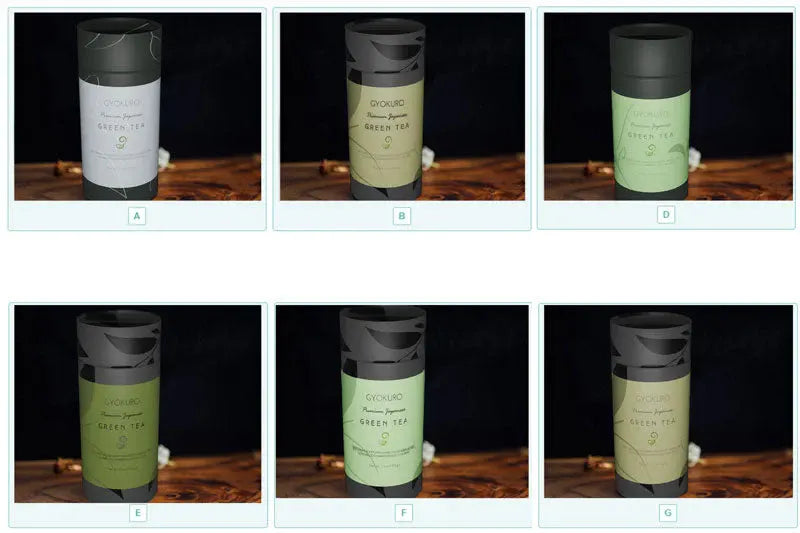
Contest Final Round


Contest 2nd Round

As you can see, the flower is not the dominant part of the design anymore, and since people loved the lighter color better, we narrowed down the design to the lighter color, which shows the text and logo design better. You can still access the original contest here.

Contest Final Round - Result

And here is the result. 

Gokuzyo Aracha Final Round Result

As you can see, people still liked the design with a flower after all. But many people commented that a smaller flower looks better as it is not overwhelming, cute, and catches the eye if it were on the store shelf.

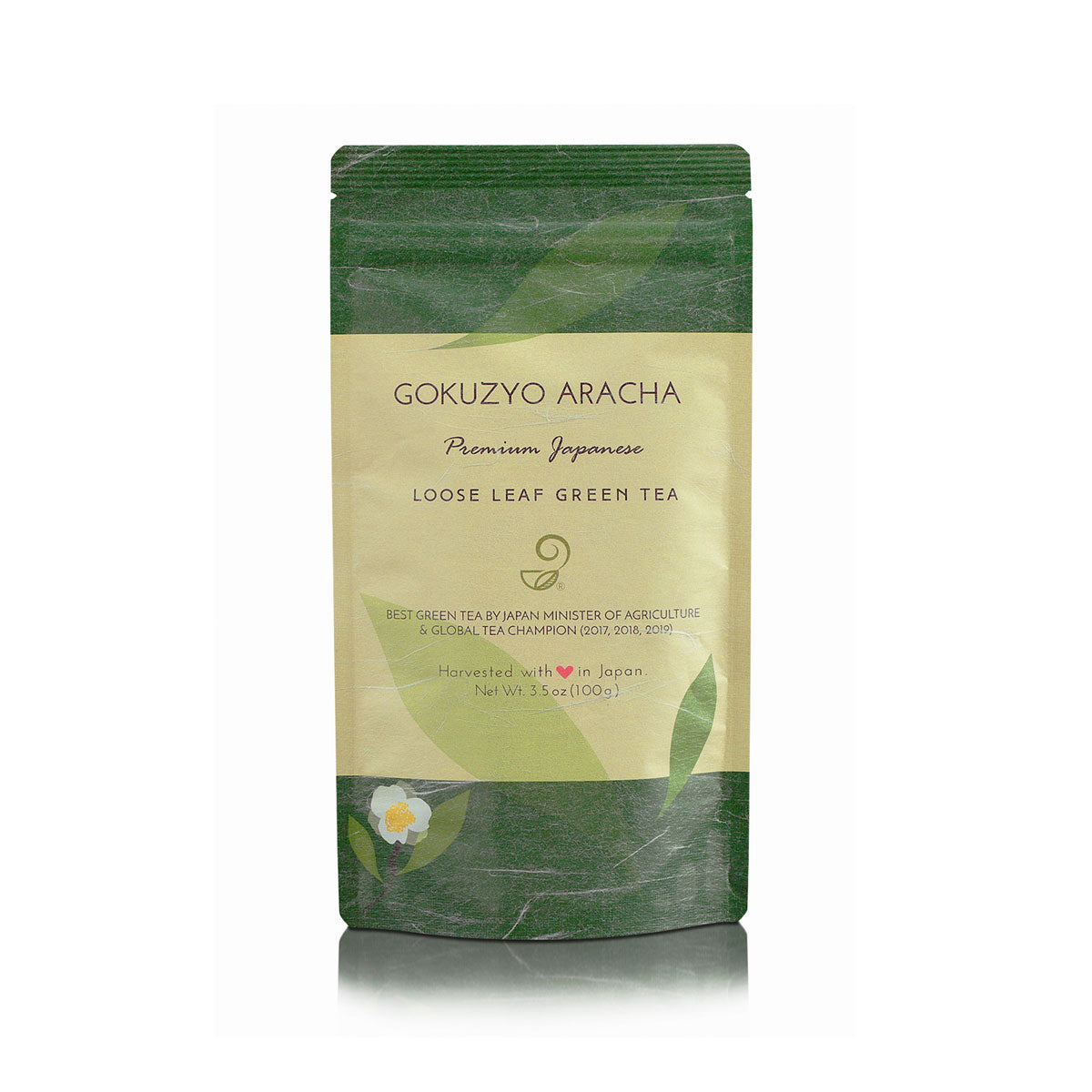
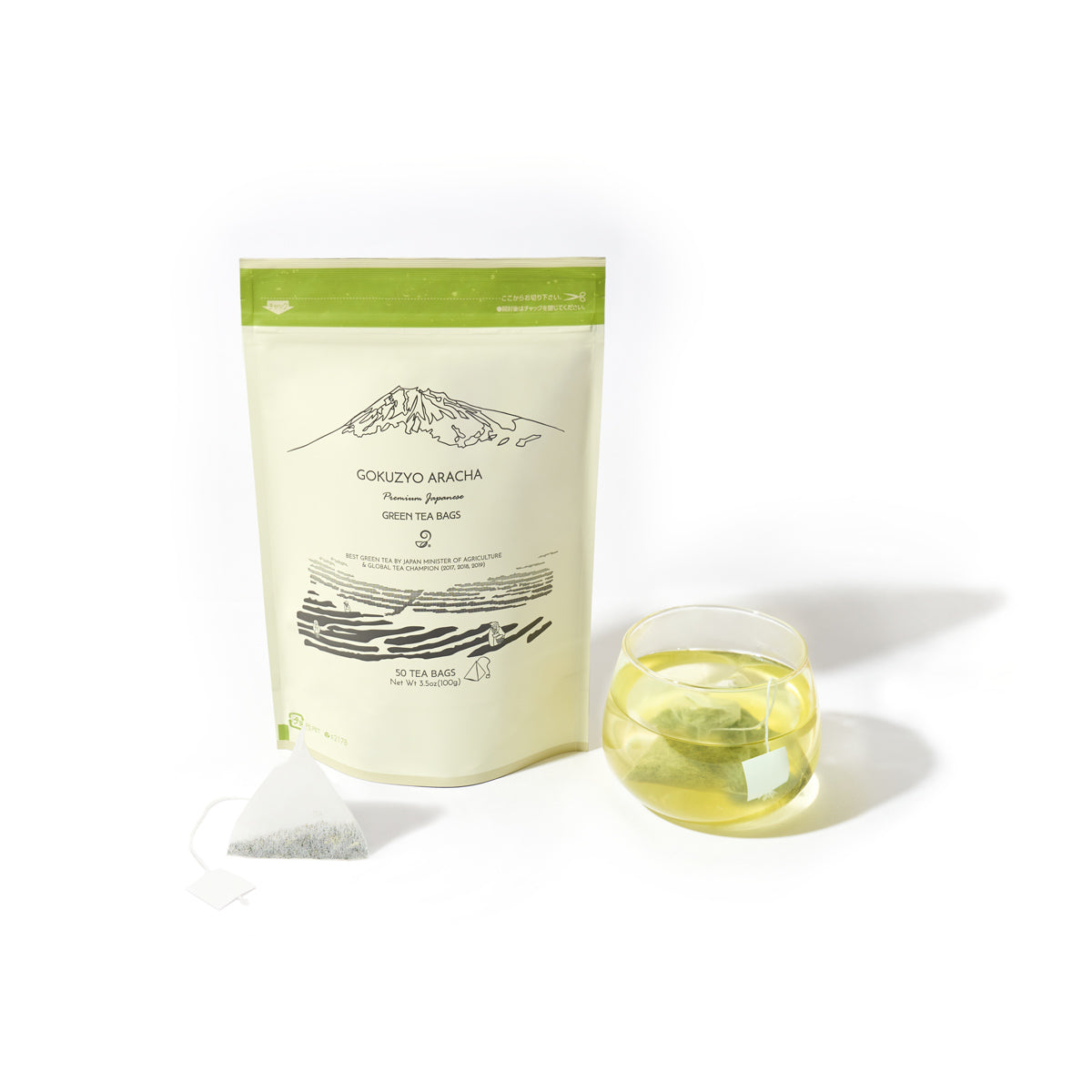
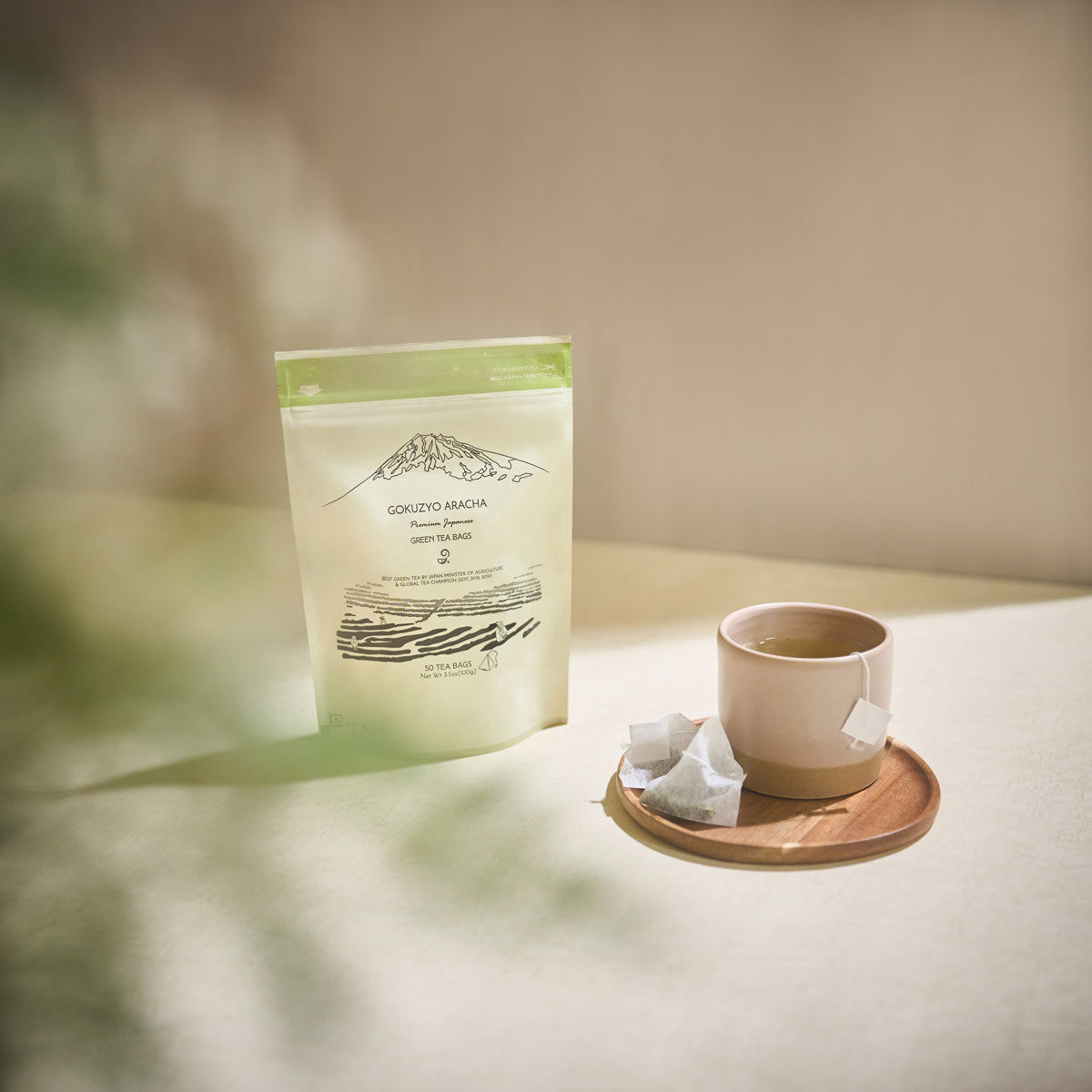
So, here is the final design for Gokuzyo Aracha!

Gokuzyo Aracha New Package

New Package is Ready Now!

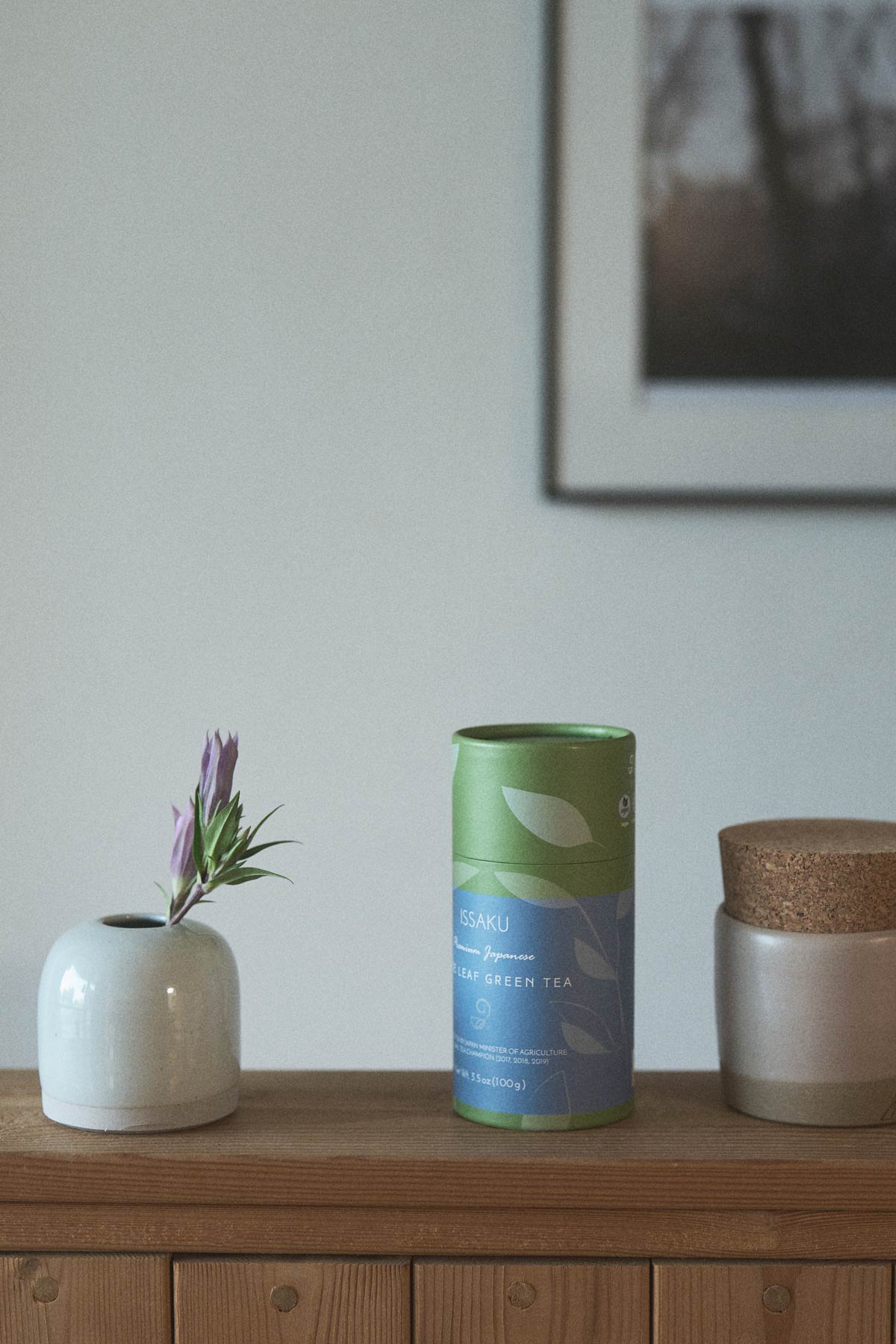
We are happy to let you know that the Issaku package, which you helped us design, is finally done.

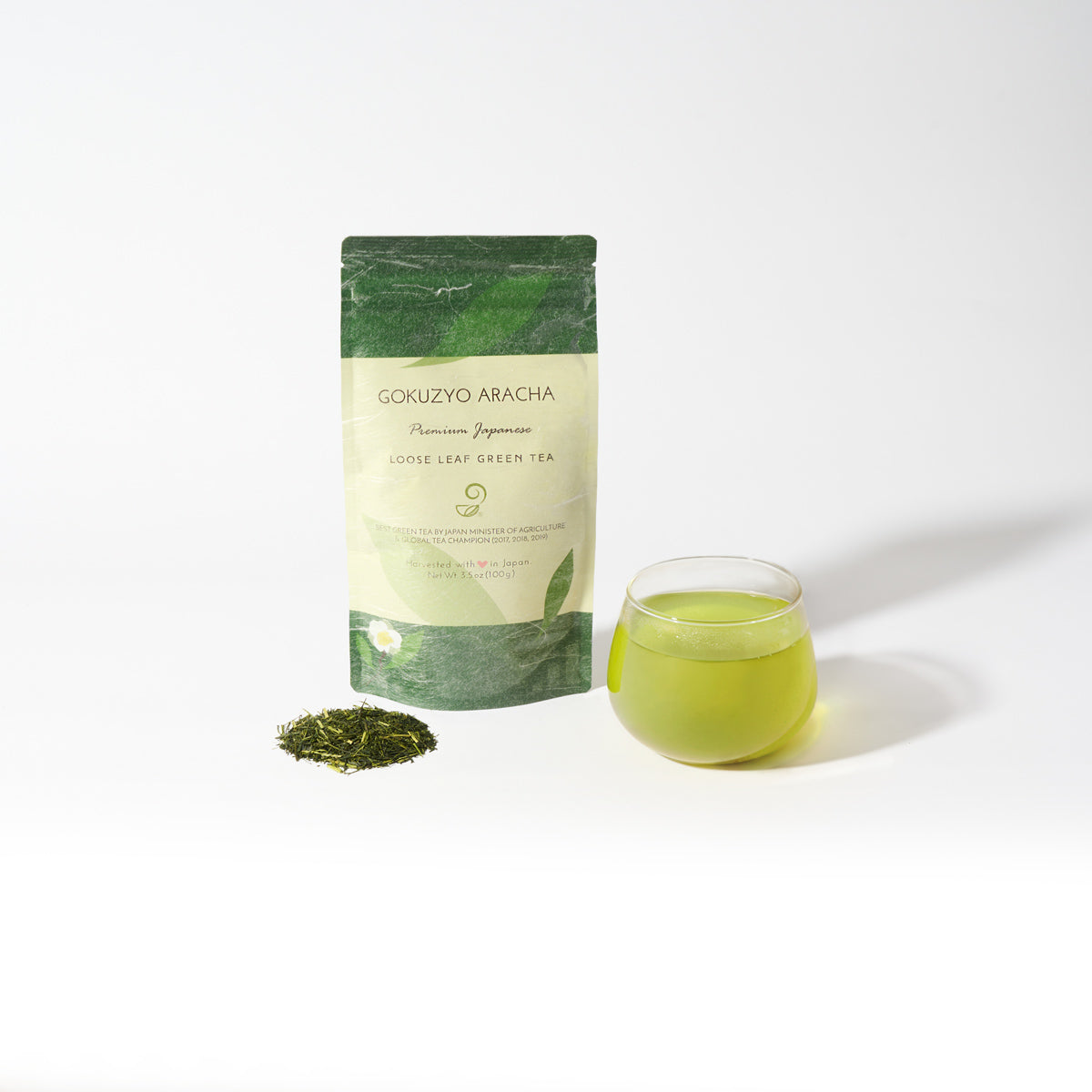
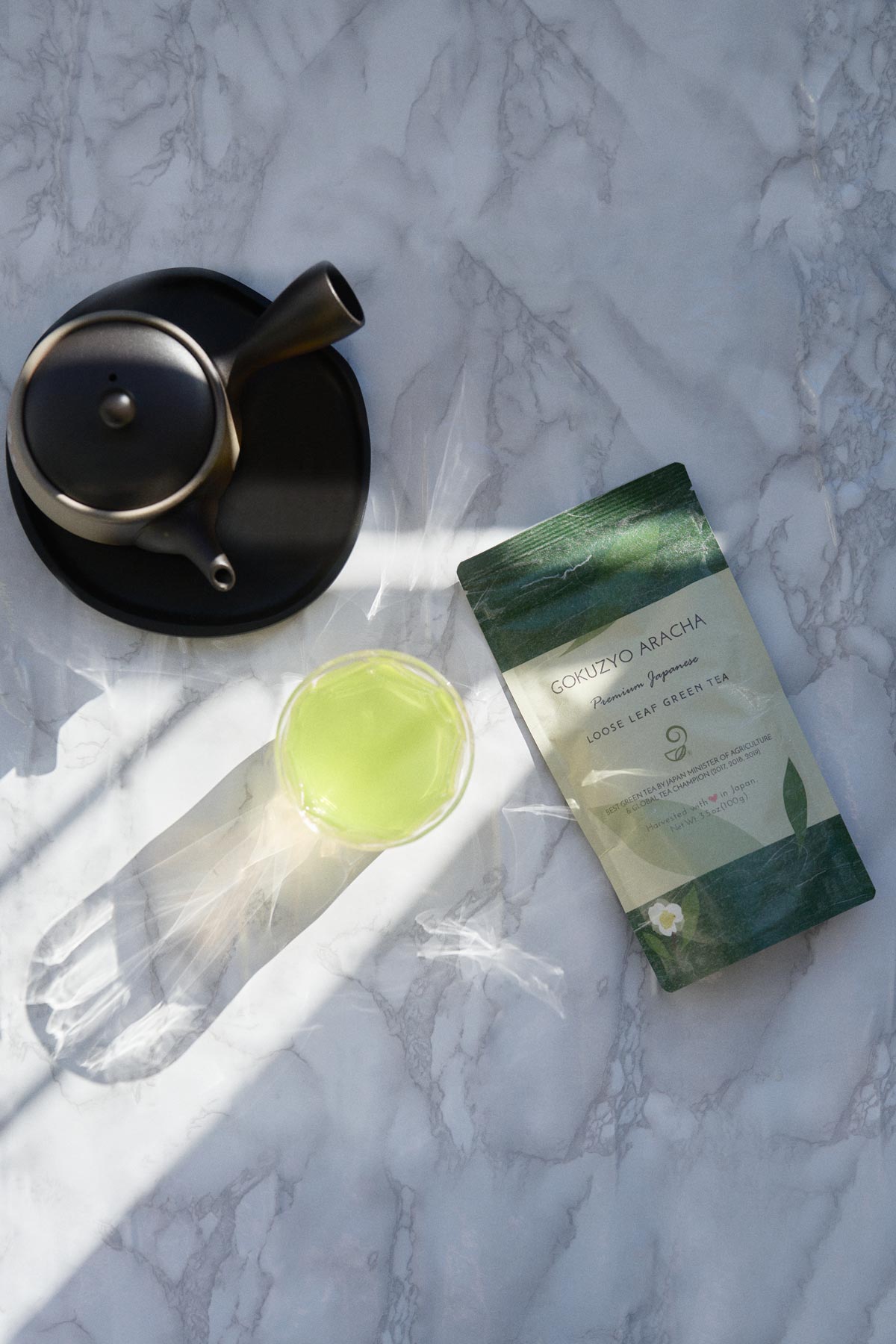
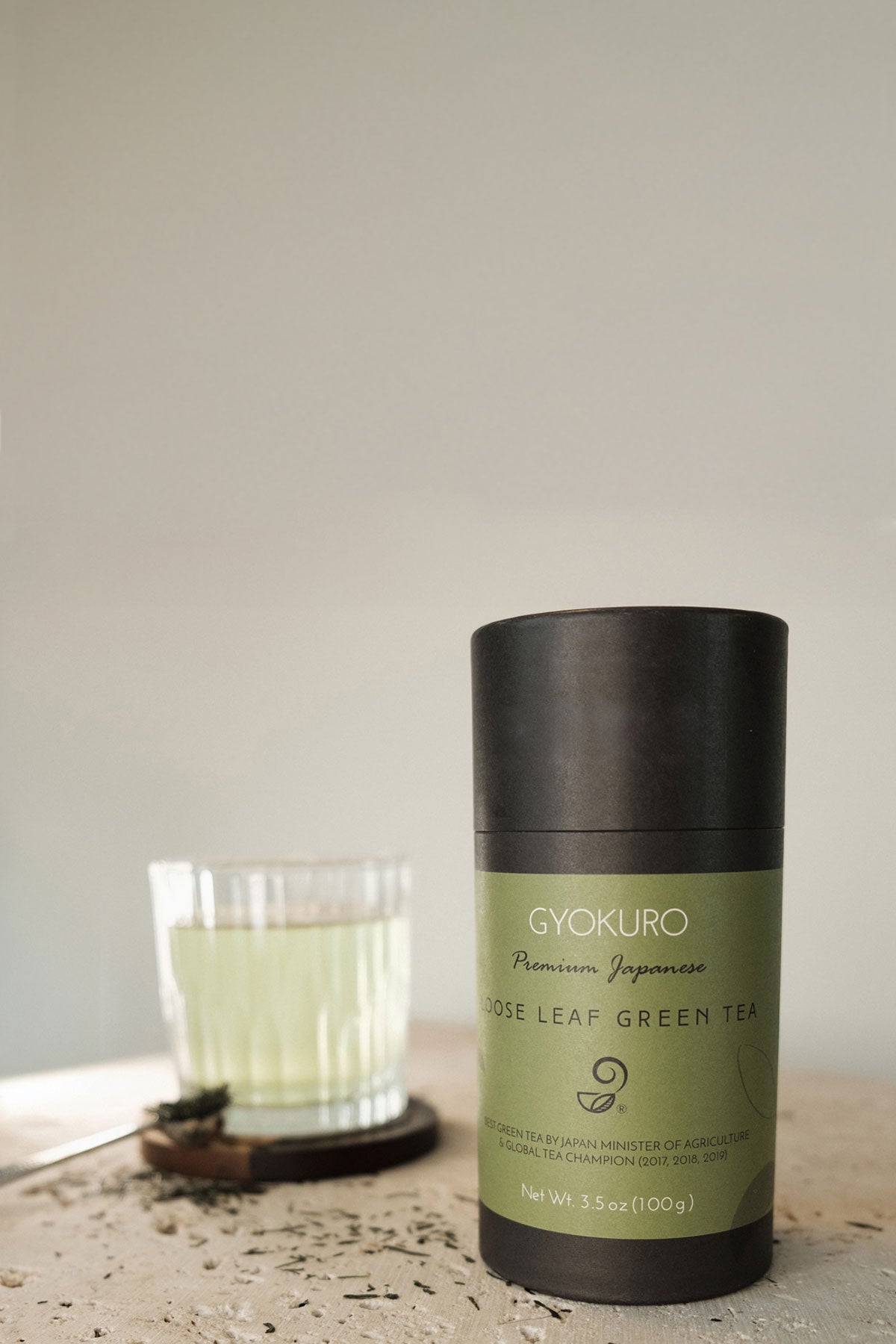
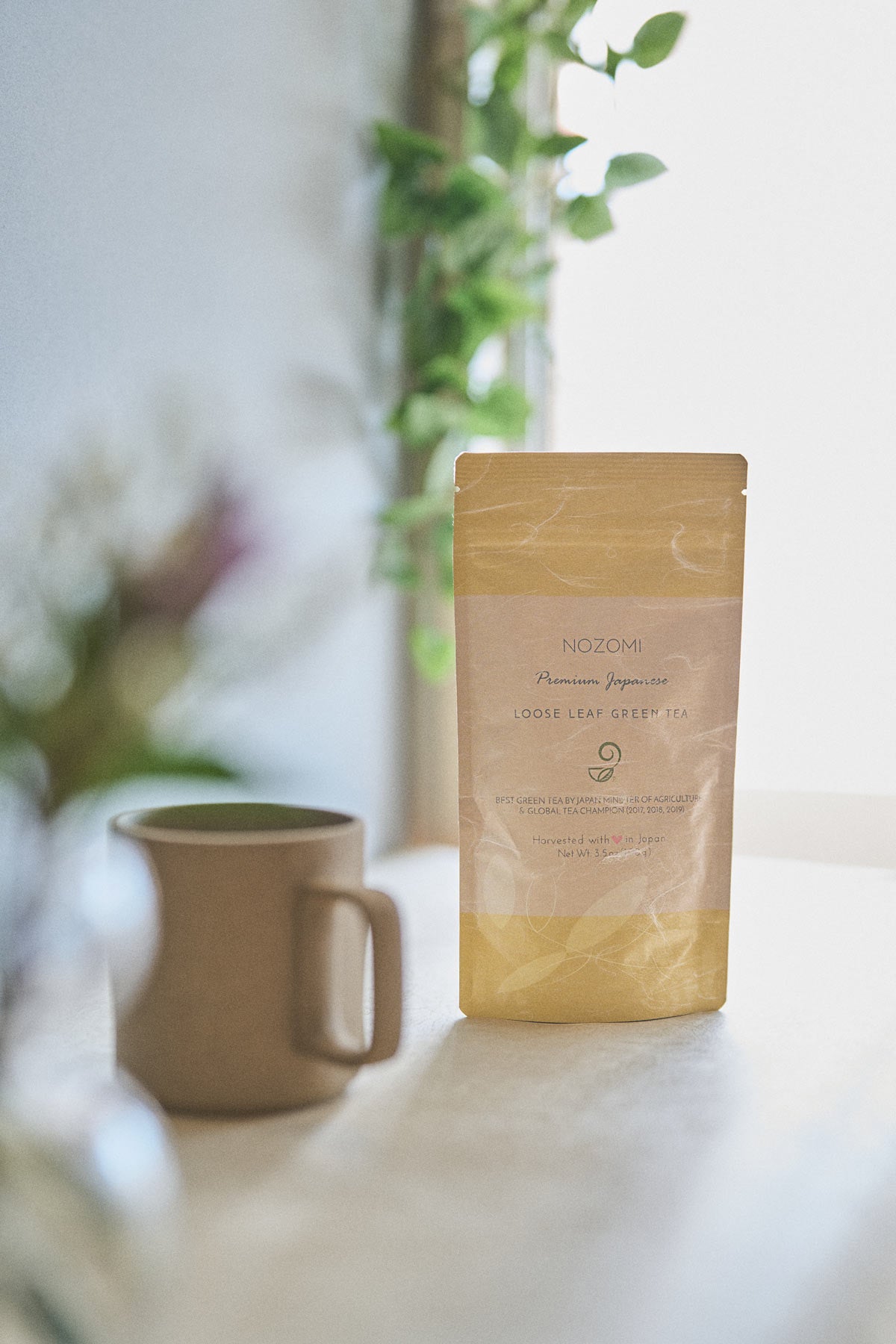
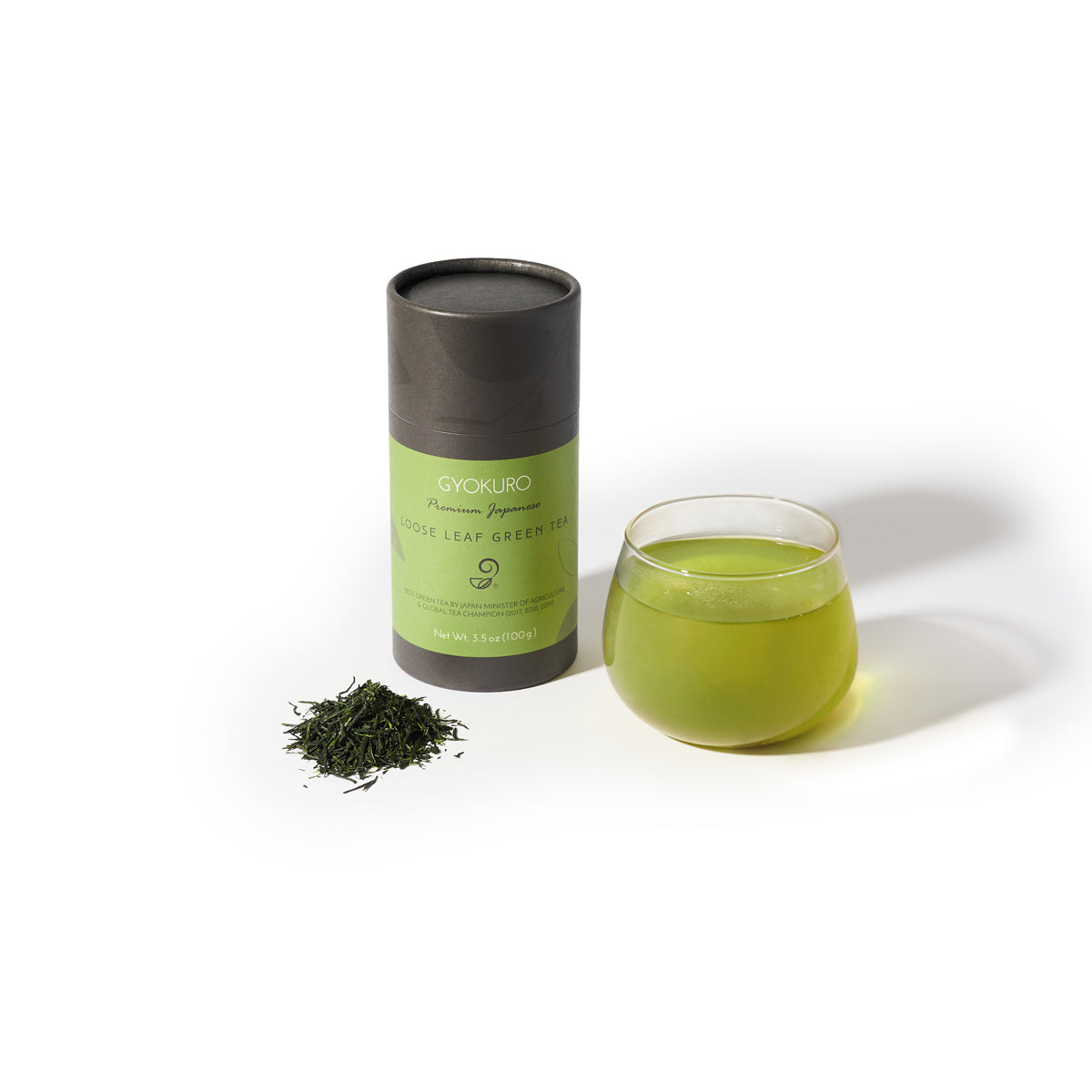
Here are some photos. Don't they look lovely?

Gokuzyo Aracha Japanese green tea package design

Gokuzyo Aracha Japanese Sencha Crude Tea - Japanese Green Tea Co.

We have created a brand new video about Gokuzyo Aracha here too. Please see: 

Thank you very much again for all your input and help!

Click here to get Gokuzyo Aracha.

Thank you so much for your help in making this design a much better one. I truly appreciate all your votes, comments, and wonderful help!


FAQs about Tea Package Design and Brand Identity

How does a tea brand approach package design?

Three considerations balance. First, functional — protecting the tea from oxygen, light, and moisture. Tin or sealed-foil-laminate packaging meets the functional requirement; pure paper doesn't preserve tea quality. Second, brand-aesthetic — visual identity that communicates the brand's positioning (traditional vs. modern, premium vs. accessible). Third, regulatory — required information (origin, ingredients, weight, expiration), which constrains design space.

Premium specialty tea brands tend to prioritize functional packaging (tins, foil pouches) with restrained-but-distinctive visual design. Mass-market brands often use simpler packaging with bolder marketing graphics. Both approaches have place; they target different customer segments.

Where good packaging design pays off: when customers can recognize the brand at a glance on a shelf, when the packaging communicates brand values quickly, and when functional protection means the tea actually tastes great when opened. Bad packaging undermines great tea; good packaging amplifies it.

Why do tea brands sometimes run customer design contests for packaging?

Customer engagement and fresh design perspective. Running a design contest engages customers in the brand at a deeper level than pure consumption — winners and participants both develop stronger brand connection through having created or supported designs. The marketing-engagement value usually exceeds the design-cost value.

The design submissions also bring fresh perspectives that internal design teams or hired agencies might not produce. Customer-designed packaging tends to capture how customers actually see and use the product, which can produce more relatable design than expert-designed packaging.

Practical: customer design contests tend to work for limited-edition or specific product launches rather than core flagship product packaging. The flagship needs design consistency that contest-driven approaches don't provide; specialty launches benefit from the engagement and freshness contests bring.

What makes tea packaging effective at communicating quality?

Specific origin disclosure, restrained design, and material choices that signal care. Premium tea packaging tends to disclose specific farm origin, cultivar, harvest date, and brewing instructions on the package — transparency communicates quality. Generic "sencha tea, product of Japan" without specifics signals lower quality regardless of how nice the design is.

Material choices: heavy-grade tin or foil pouches with proper seals communicate functional care; flimsy bags or thin tins suggest cost-cutting. The hand-feel of the packaging is part of the customer experience — well-made packaging produces a small daily-pleasure moment of opening the tin.

Restrained design tends to communicate premium more than busy graphics. Most successful specialty tea brands use minimal text + one or two strong visual elements + careful typography. Cluttered packaging suggests mass-market regardless of actual product quality.

Does packaging actually affect how tea tastes, or is it just marketing?

Real effect on freshness, real effect on perception. Functionally: airtight packaging preserves catechin and aromatic compounds; oxygen-permeable packaging lets them degrade. Tea in a properly-sealed tin stays peak quality for 4-6 months; tea in a paper bag goes stale within weeks.

Perceptually: opening a beautifully-packaged tin of premium tea creates a small ritual moment that improves the drinking experience. Opening a generic bag-of-tea has no equivalent ritual element. The cumulative experience of premium packaging across daily use makes the daily tea practice feel more substantial.

So packaging matters both functionally and perceptually. Don't dismiss packaging as just marketing — the well-designed tin actually preserves the tea better and contributes to the daily experience. Cheap packaging usually correlates with cheap tea, but premium packaging on truly mediocre tea is also wasted investment.

Gradual shift from tin toward paper-and-foil hybrid. Tin manufacturing has meaningful carbon footprint; paper-based packaging with foil interior layer has lower impact while maintaining most of the tea-preservation function. Some specialty brands have introduced fully-compostable cellulose packaging that's beautiful but doesn't preserve tea quality as long as foil-based options.

Refill programs at brick-and-mortar tea shops are an underrated sustainable approach — bring your own container, fill with tea by weight, no packaging waste at all. A handful of specialty tea shops in major cities run these programs.

For mail-order tea (where shipping protection matters), paper-tube outer + foil interior + minimal plastic in shipping is the realistic environmental compromise that most environmentally-conscious specialty brands have moved to. Glass-jar shipping isn't economical — too heavy, too breakable.

Related products

85 reviews

Gokuzyo Aracha - High-Grade Unrefined Green Tea

$39.00
Quick view

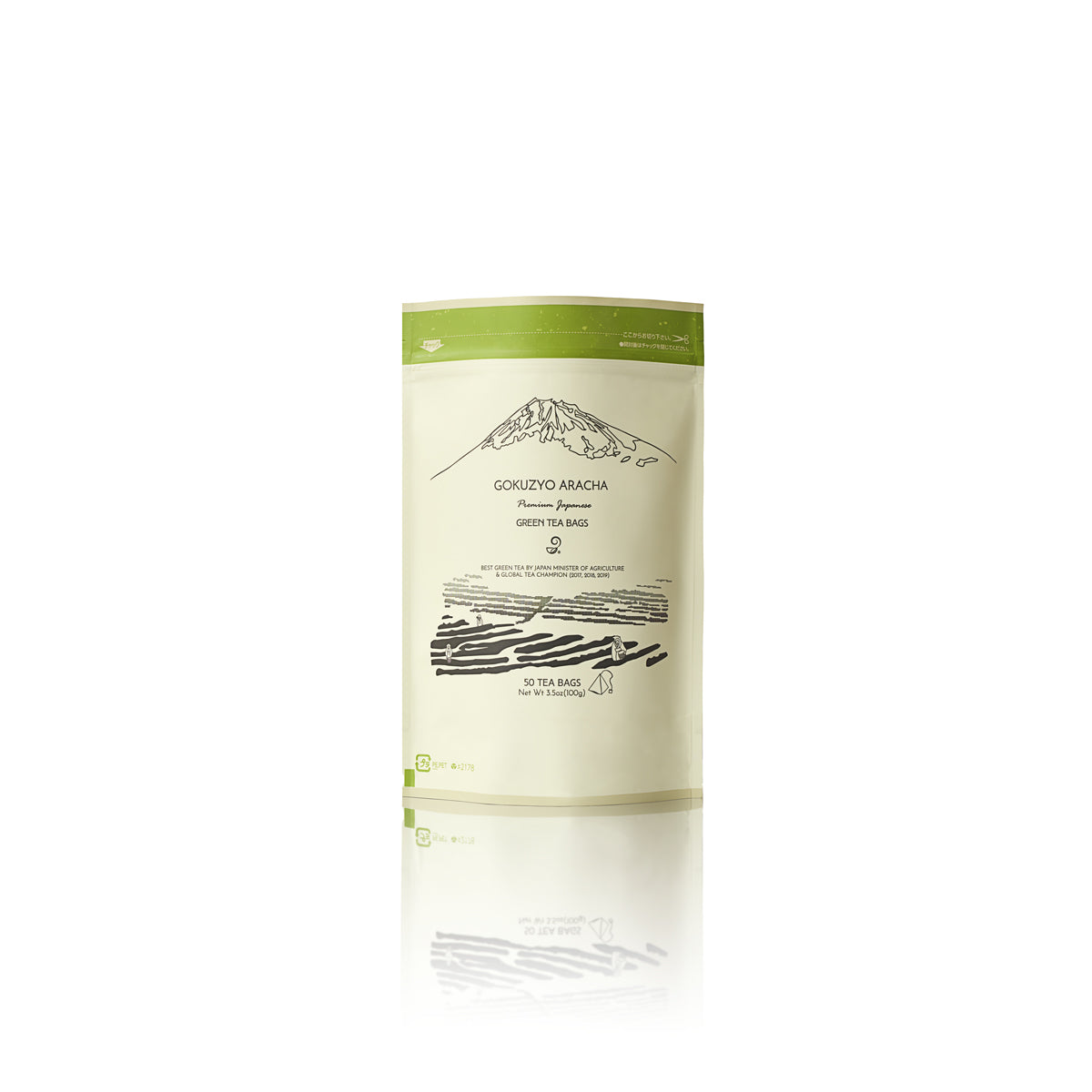
Gokyuzyo 極上, meaning "The Highest Grade," and Aracha 荒茶, meaning "wild tea" or "crude tea," offer a rare opportunity to enjoy green tea in its most natural, unrefined state. Unlike most green teas that undergo further processing, Aracha retains its original shape and includes twig tea, coarse leaves, and powdered tea, producing a beautifully colored drink with a mild, unique taste and higher nutrient content. Traditionally enjoyed by tea farmers for generations, this authentic Fukamushi Sencha is cultivated using the Chagusaba method in nutrient-rich sugarcane soil and made from the Yabukita cultivar. Available in a 3.5 oz (100g) eco-friendly resealable package or as a convenient 0.3 oz (10g) single-serve sample, it offers a truly traditional Japanese tea experience.

75 reviews

Tea Bag - High-Grade Unrefined Tea - Gokuzyo Aracha (50 tea bags)

$35.00
Quick view

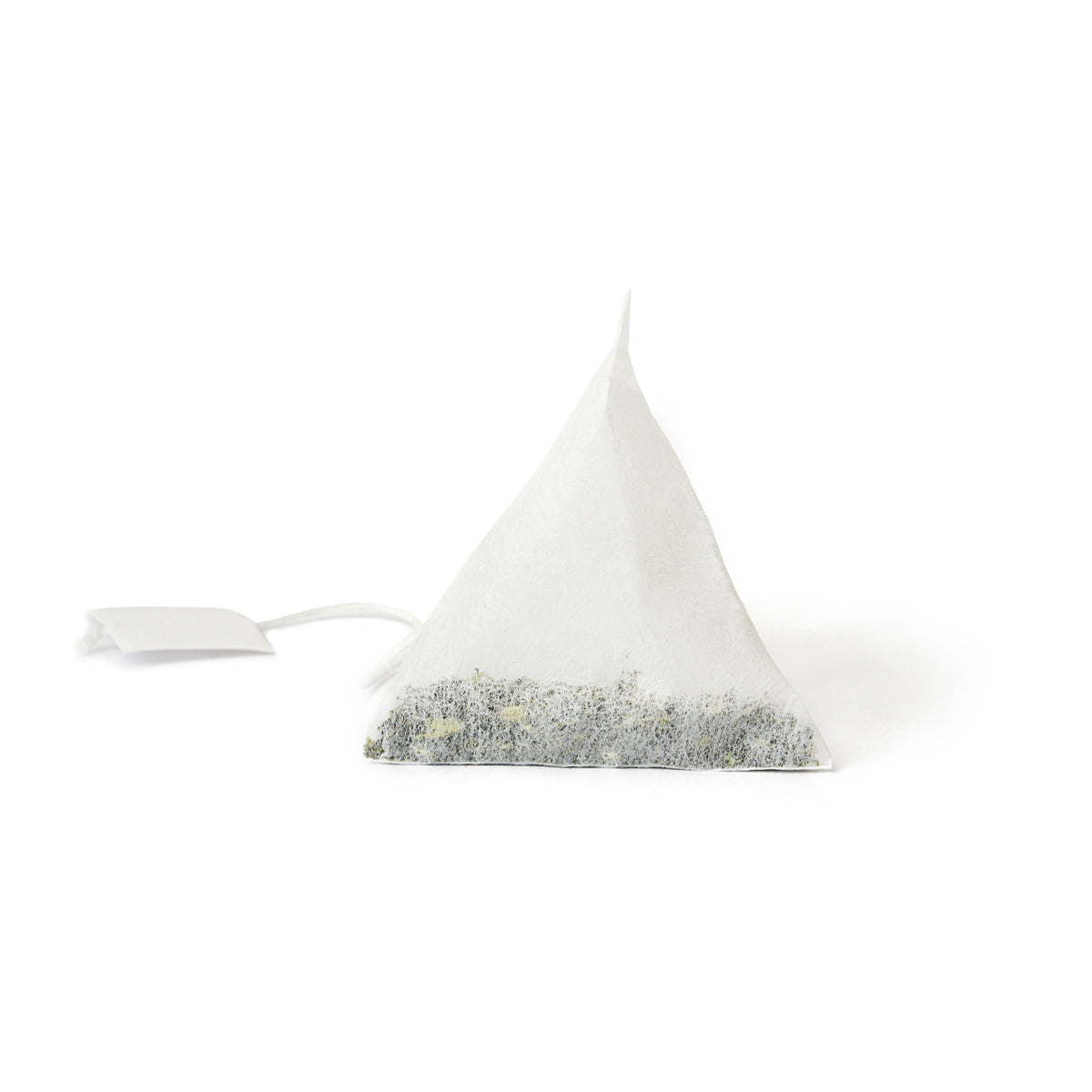
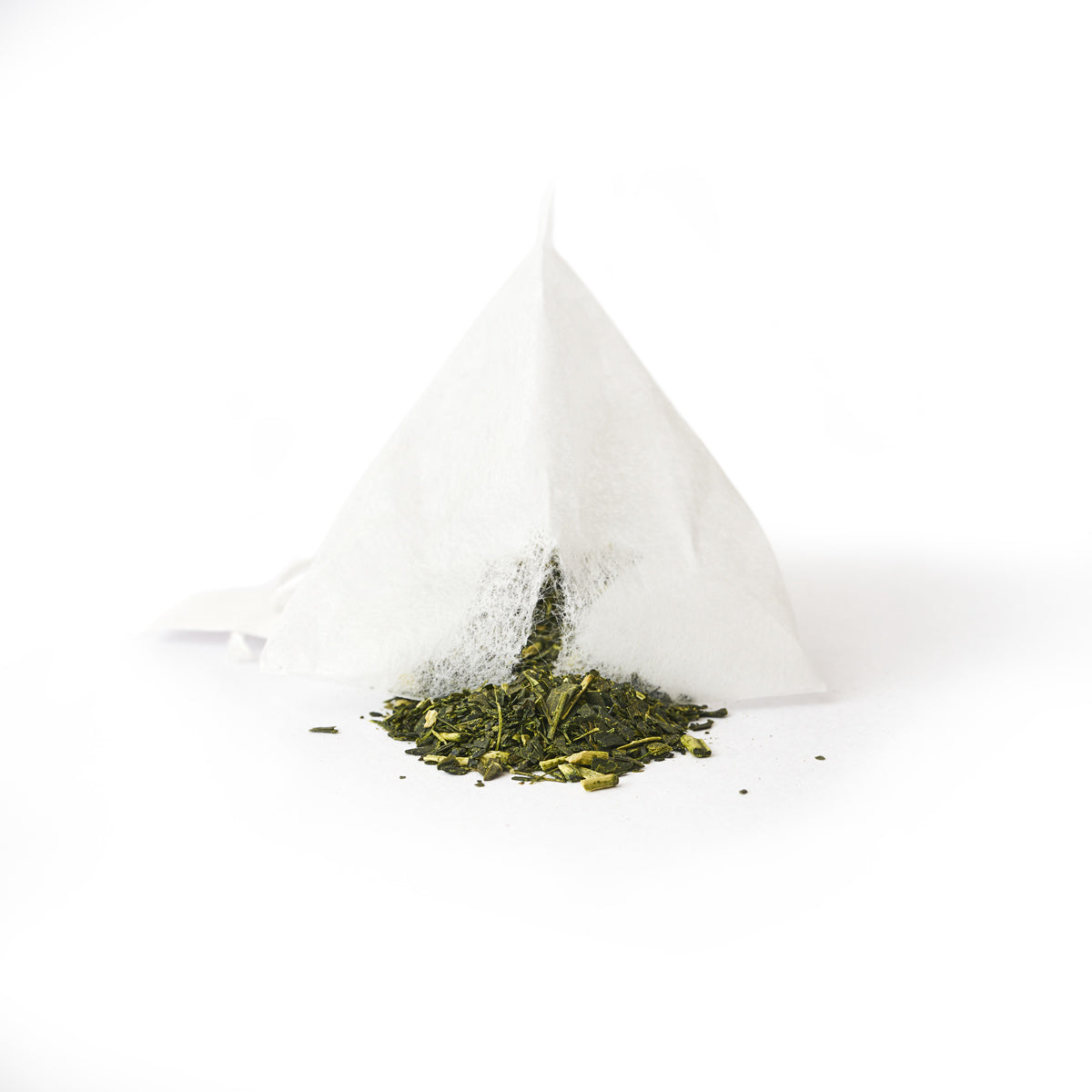
Gokyuzyo 極上, meaning "The Highest Grade," brings the rustic charm of Aracha 荒茶, or "wild tea," into a convenient teabag form, offering a taste as close to freshly picked leaves as possible. Unlike fully processed green teas, this unrefined Fukamushi Sencha preserves its natural shape and texture, blending soft sprouts, twig tea, coarse leaves, and powdered tea for an intense aroma and rich, vibrant flavor. Cultivated by the Chagusaba method in nutrient-rich sugarcane soil and made from the Yabukita cultivar, this tea captures the traditional, nourishing quality enjoyed by generations of tea farmers. Available in a resealable aluminum bag with 50 pyramid-shaped teabags or as a single-serve sample, it is perfect for enjoying authentic Japanese green tea anytime, anywhere.

8 reviews

The Sencha Lover Gift Set - Premium Japanese Green Tea Set Package
$179.00 $159.99
Quick view

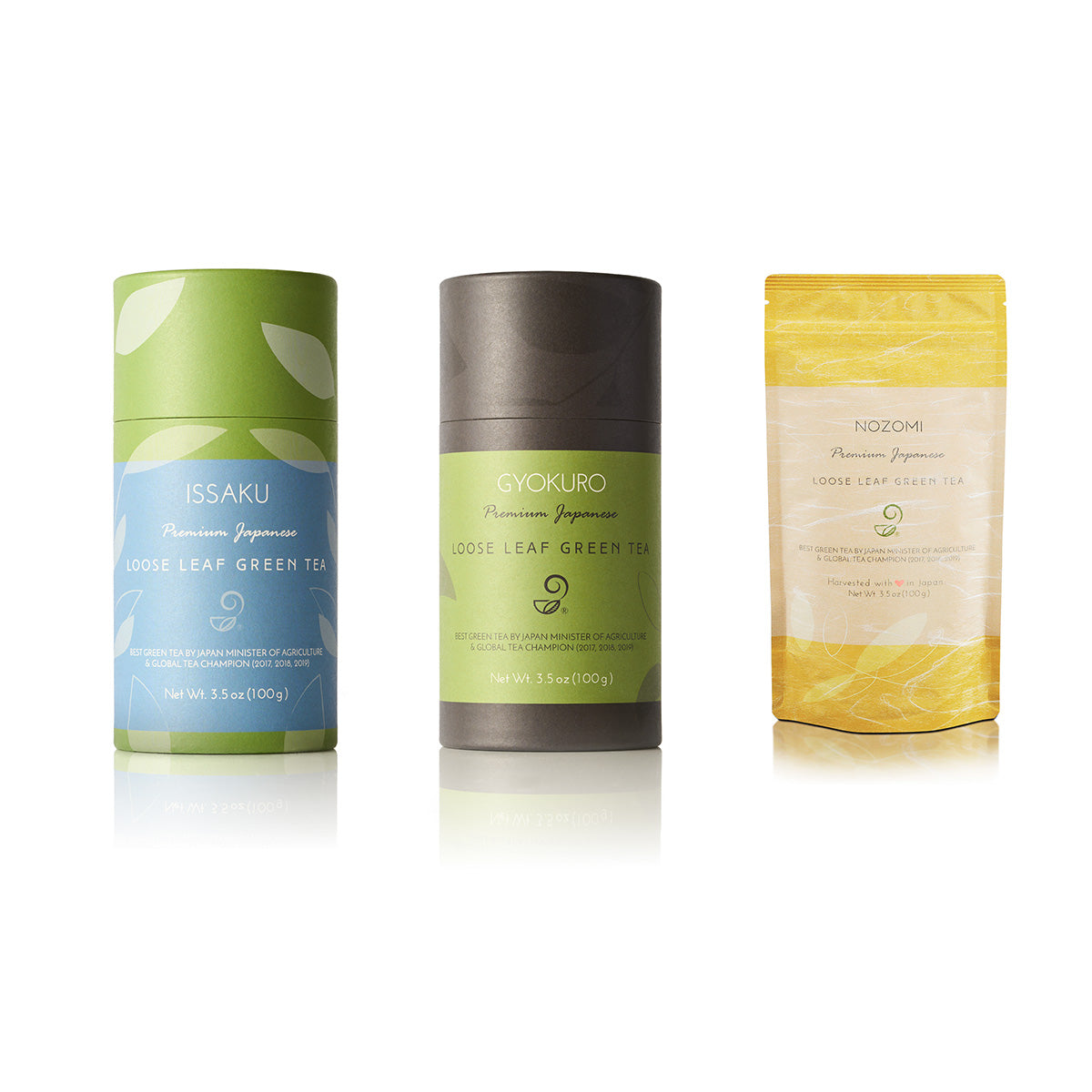
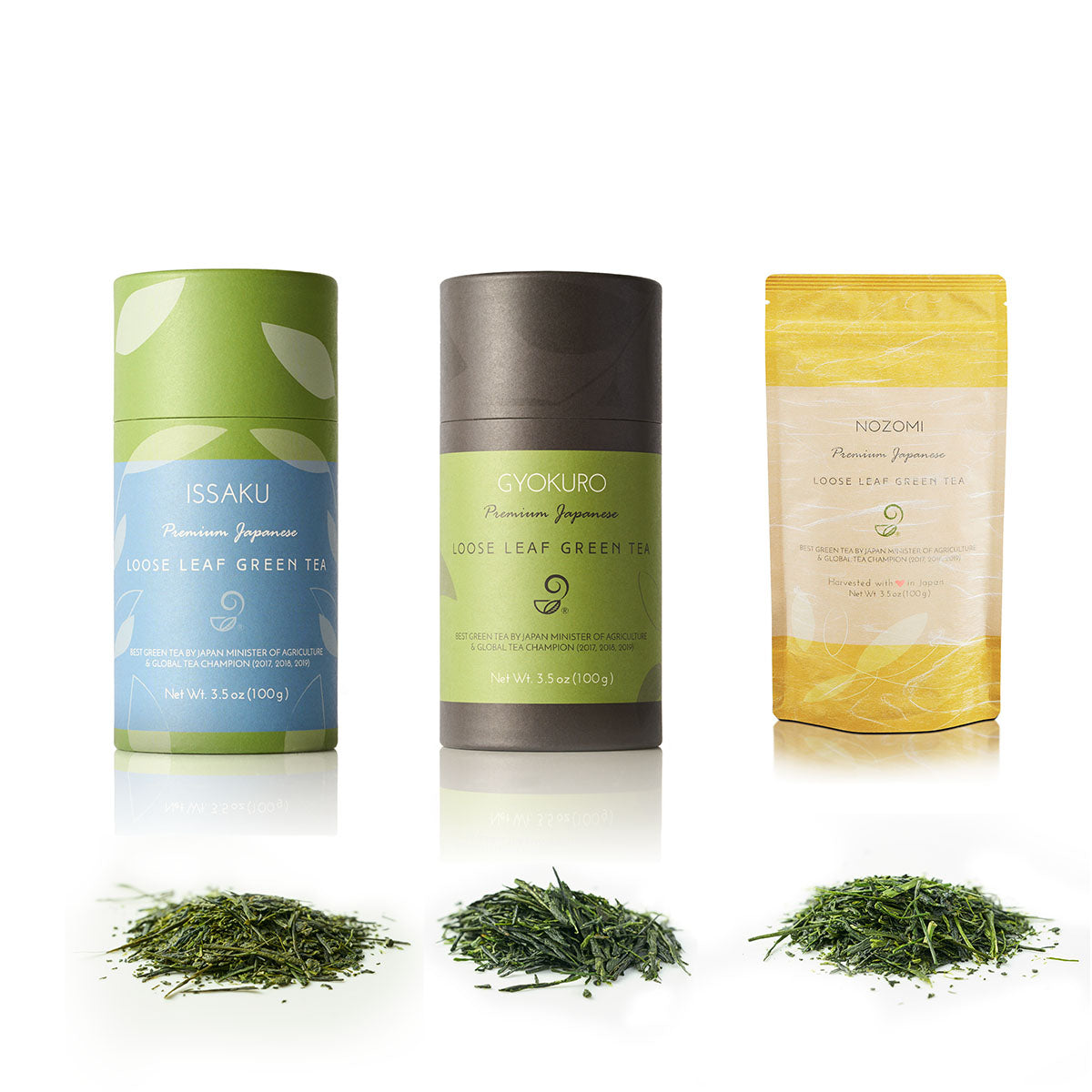
This tea set features three exceptional Japanese green teas, each crafted with care and traditional techniques. Issaku Reserve, a Global Tea Champion winner in 2017 and 2019, is a rare masterpiece created by Farm Master Mr. Arahata at Arahataen Green Tea Farm. Handpicked once a year from the first flush and processed with advanced methods, Issaku represents the highest-grade deep-steamed green tea, available only in limited quantities even in Japan.

The set also includes Gyokuro, a premium shaded green tea known for its rich, sweet flavor and deep mossy green color. Grown under special mats for 20 days to increase caffeine and amino acid levels, Gyokuro offers a layered, smooth taste unlike any other. Completing the collection is Nozomi, a fine Kabuse-cha, or "Covered Green Tea," carefully grown under nets to gently shade the leaves just before new sprouts emerge, resulting in a soft, rich, and refined flavor profile.

97 reviews

Gyokuro - Shaded Imperial Premium Green Tea

$65.00
Quick view

Gyokuro, also known as "jade dew" or "jewel dew tea," is a premium Japanese green tea shaded from the sun for 20 days using specially made mats, a method that boosts caffeine levels and strengthens amino acids to create a sweeter, richer flavor. This extended shading process results in dark, mossy green leaves with an unmistakable aroma and a complex taste that is layered yet balanced. Cultivated by the Chagusaba method in nutrient-rich sugarcane soil and made from the Yabukita cultivar, this loose-leaf authentic Gyokuro is offered in a high-quality, air-tight paper tube canister (chyazutsu) to preserve its exceptional freshness and flavor. Each 3.5 oz (100g) full-size package steeps 30–40 cups, and a convenient single-serve sample is also available.

45 reviews

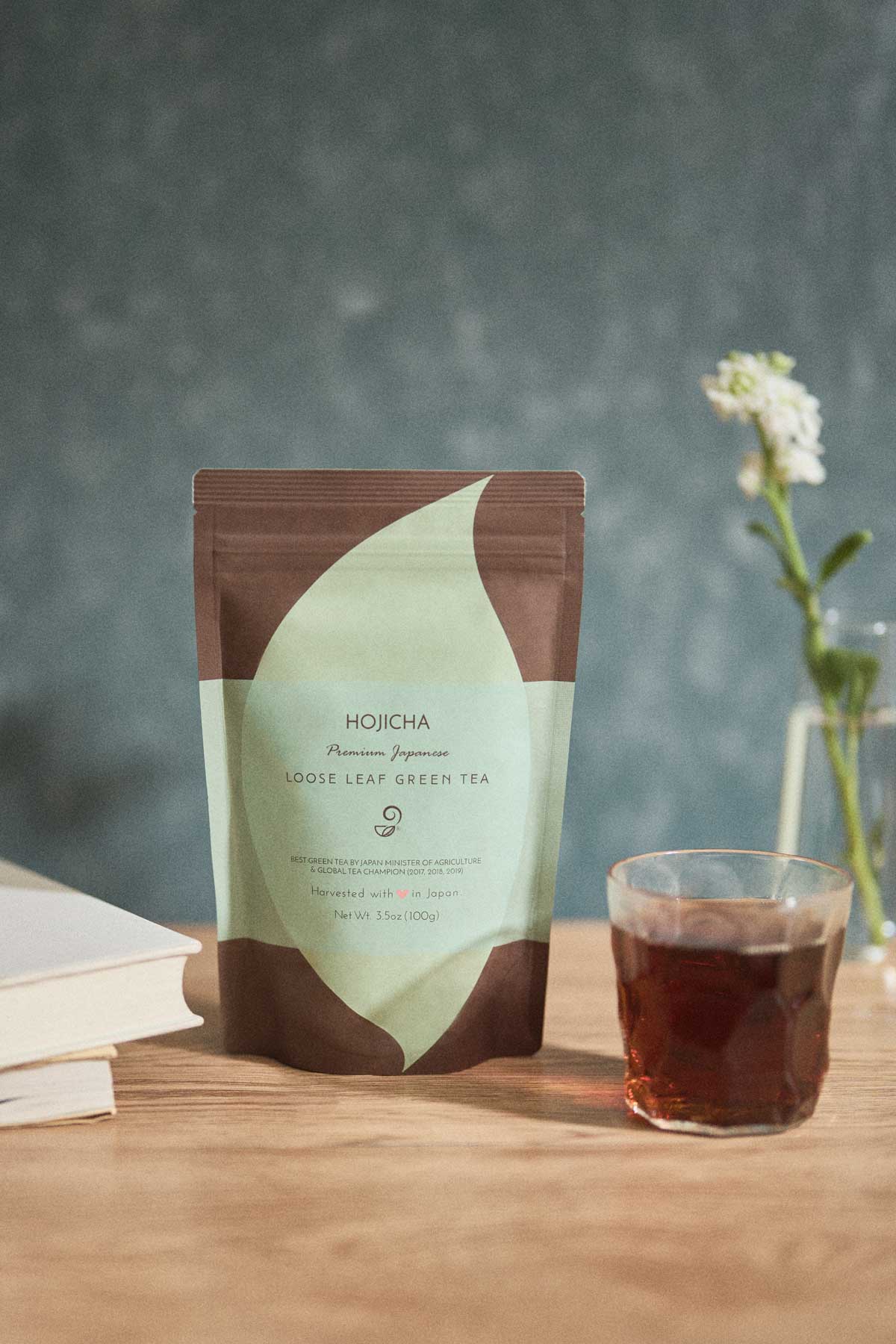
Hojicha - Roasted Green Tea

$25.00
Quick view

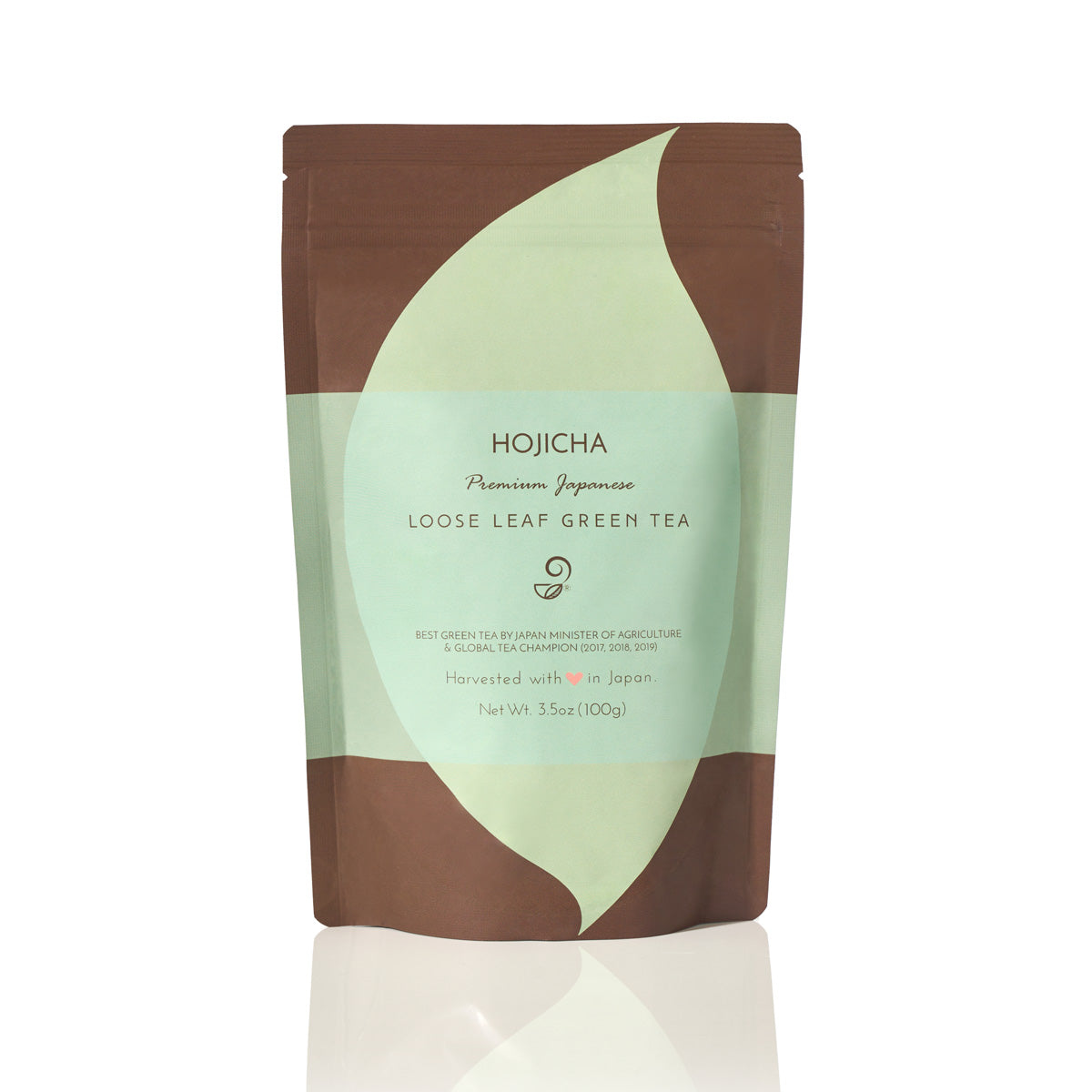
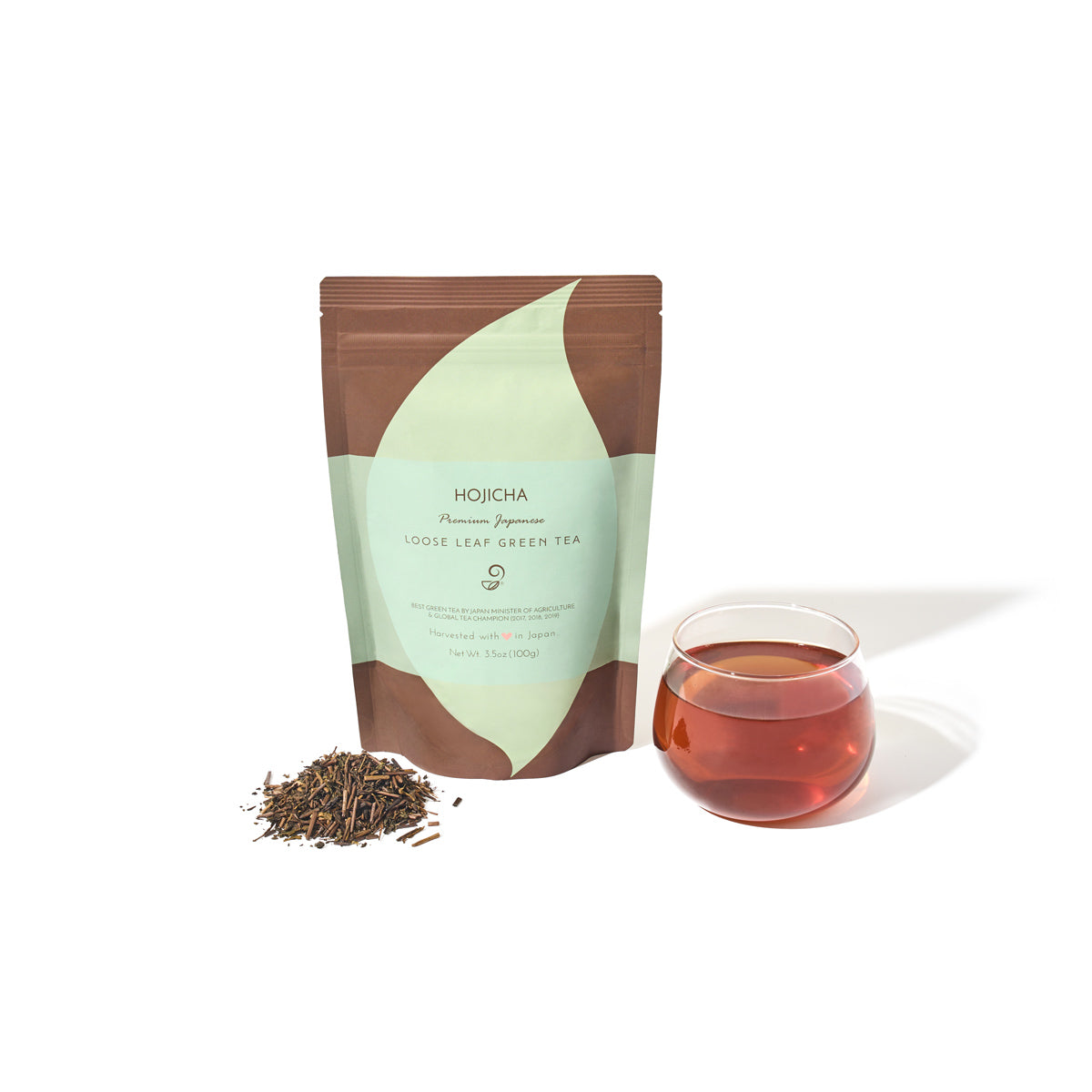
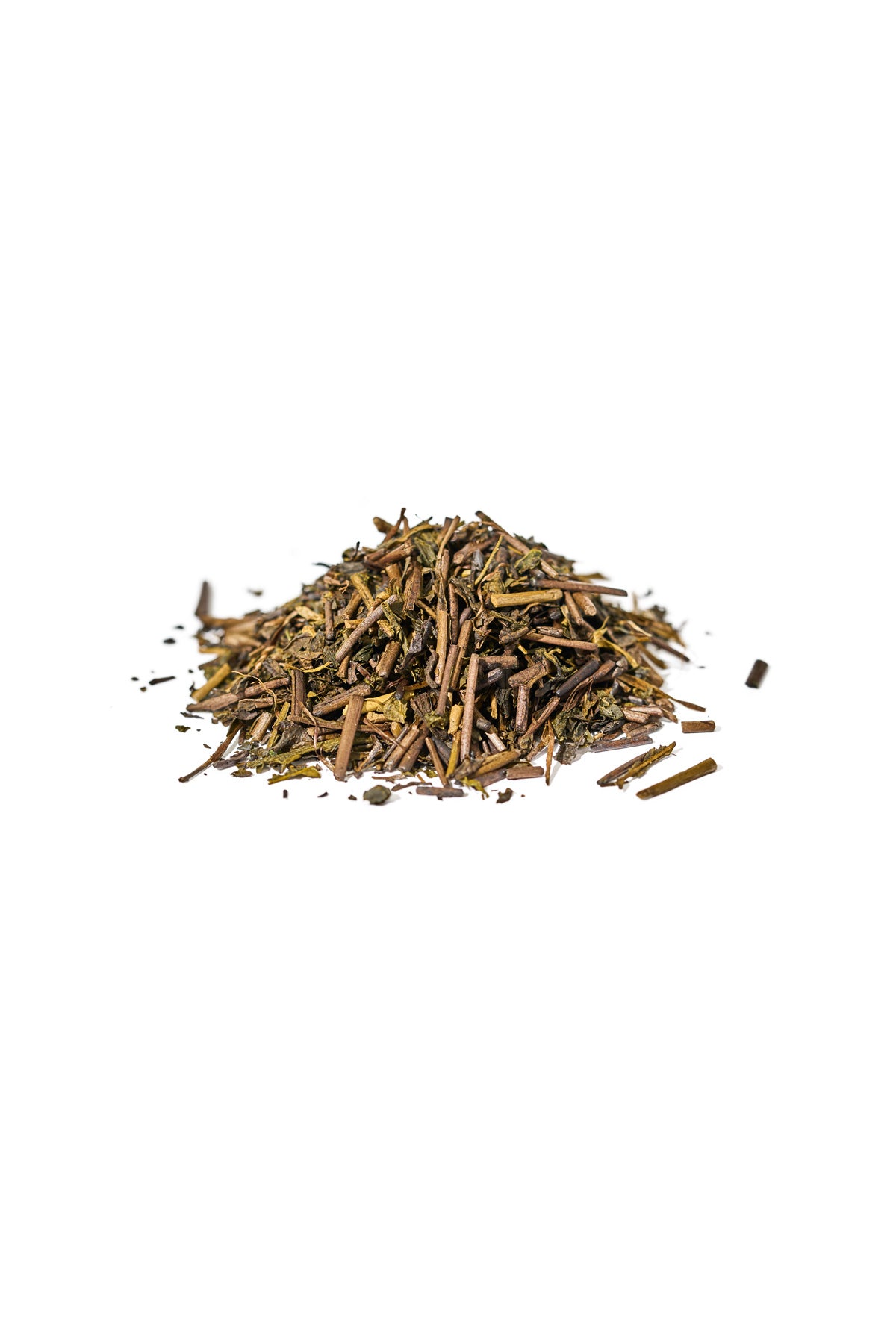
Our roasted green tea, known as hojicha (ほうじ茶), is crafted from freshly harvested premium green tea carefully roasted in porcelain over charcoal to maximize flavor while retaining more catechins than typical hojicha on the market. With lower caffeine and a smoother, less bitter taste compared to steamed green tea, it is an ideal choice for evening relaxation and is gentle enough for kids and pregnant women. Cultivated using the Chagusaba method in nutrient-rich sugarcane soil, this loose-leaf authentic Japanese roasted green tea, made from the Yabukita cultivar, also pairs beautifully with oily foods. Each eco-friendly resealable package contains 3.5 oz (100g) of tea, enough to steep 30–40 comforting cups.


Related Articles You May Be Interested

Nozomi Tea Package Design Contest Result
Matcha Box Design Contest Result Japanese Green Tea Co.'s Nozomi - Covered Tea is on Amazon Now Introducing New Packaging for our popular Mikan and Lemon Tea
Gyokuro Package Design Contest Result
9 Most Popular Japanese Tea Types - Which tea is good for me?

Get Free Bonus Books

Join Green Tea Club

Sign up for free to the Green Tea Club to get advice and exclusive articles about how to choose Japanese Tea, and tips, tricks, and recipes for enjoying Japanese tea.

Unsubscribe anytime. It’s free!

About the author

Kei Nishida

Kei Nishida

Author, CEO Dream of Japan

info@japanesegreenteain.com

Certification: PMP, BS in Computer Science

Education: Western Washington University

Kei Nishida is a passionate Japanese green tea connoisseur, writer, and the founder and CEO of Japanese Green Tea Co., a Dream of Japan Company.

Driven by a deep desire to share the rich flavors of his homeland, he established the only company that sources premium tea grown in nutrient-rich sugarcane soil—earning multiple Global Tea Champion awards.

Expanding his mission of introducing Japan’s finest to the world, Kei pioneered the launch of the first-ever Sumiyaki charcoal-roasted coffee through Japanese Coffee Co. He also brought the artistry of traditional Japanese craftsmanship to the global market by making katana-style handmade knives—crafted by a renowned katana maker—available outside Japan for the first time through Japanese Knife Co.

Kei’s journey continues as he uncovers and shares Japan’s hidden treasures with the world.

Learn more about Kei Nishida

Related Posts

Our Products are Now at Yama Sushi Marketplace — One of LA's Most Trusted Japanese Markets Since 1984!

Yama Sushi Marketplace is now carrying our products! Plus the full story of LA's beloved Japanese market — California Ro

Read More
What is Shincha - New Crop Tea and What Makes them Unique?
What is Shincha Tea and What Makes It Unique?

Discover the secrets of Shincha, Japan's acclaimed new crop tea. Explore its distinct features, flavors, and traditions.

Read More
Meet Eijiro Tsukada (塚田英次郎): The Charismatic Businessman Behind Cuzen Matcha — Now Available at Japanese Green Tea Co.

Meet Eijiro Tsukada — the man behind Cuzen Matcha. Full guide to the award-winning Matcha Maker, the Pro, and why we're

Read More
Leave a comment

Your email address will not be published..

Cart

Your cart is currently empty.

Start Shopping

Select options