Skip to content

Everything You Need to Know about Eisai - The Father of Tea

The Discovery of tea

Tea originated in China, and it dates back to the mythical emperor Shennong, who is known as the father of medicine and agriculture. To make medicine, he has tasted and eaten hundreds of herbs, including tea leaves, to understand their value and health benefits. Tea was discovered around 2700 BC, in the same era as Emperor Shennong.

The Divine Farmer's Herb-Root Classic was a book dedicated to Shennong and talks about tea at that time. It shows that tea was already discovered and drunk in the early ages. Later, in 59 B.C., Wang Bao wrote the book A Contract with a Servant. It includes instructions on buying and preparing tea, which indicated that tea was part of the diet at this point and was a commonly traded item. In that era, tea was still a luxury that only the elite of Chinese society enjoyed.

Arrival of Tea in Japan

During the Nara and Heian periods, many representatives from Japan were sent to China, and sometimes Buddhist scholars accompanied them. These Buddhists brought back tea leaves from China and marked the origin of tea in Japan.

In 1191, early Kamakura Period, Eisai visited Sung-dynasty China and brought back new tea leaves to Kyoto, and he wrote about it in 1214 in his first book, Kissa Yojoki (喫茶養生記). 

Who was Eisai?

Eisai's full name is 'Myoan Eisai' (明菴栄西), and he was commonly known as Yōsai Zenji (栄西禅師) which translates to Zen master Eisai. He was a Japanese Buddhist priest and is known for bringing green tea leaves and the Zen Buddhism religion to Japan from China. He was born in the house of a religious priest at the Kibitsu shrine in Bizen on April 20, 1141. He studied the Tendai School of Buddhism at Anyouji Temple. He began studying Buddhist verses and vows at a very young age. Near Kyoto, at Mount Hiei, he became an ordained priest when he was fourteen.

He traveled to Mount Tiantai, also called Tendai in Japanese, when he was 28 for further studies about Buddhism. Mount Tendai is where the school of Buddhism was born. When he returned to Japan, he bought sixty volumes of Tendai-related texts. Eisai can be included among those who contributed to reforming the Buddhist religion.

Plantation of Green Tea in Japan

Firstly, the seeds were planted on Mount Sefuri. According to Eisai, Sefuri Mountain looked similar to Mount Tiantai, so he assumed it would be better to sow the seeds there.

Secondly, he gave some of the seeds to Myoue Shounen, a monk from Kosanji Temple in Kyoto. And in that way, tea was brought into the land of Uji. Some of Japan's most expensive tea is still cultivated in Uji. You can also say that it was the beginning of Japanese tea cultivation for making tea. That is why Eisai is known as "the father of tea" in Japan.

Facing Criticism

Eisai faced a lot of criticism while he was actively promoting Zen. In 1194, monks from Enryakuji argued that Eisai was unconventionally occupied with establishing a new branch of Buddhism in Japan. He tried to defend his point and wrote the book 'Kozen gokokuron'. He wrote that it is not a different faith, but it has the essence of Buddhism. He explained that it is not about new teachings but is based on the basic principles of Buddhism. He faced criticism with great confidence and ensured that this would lead to the prosperity of the nation.

Stay in Tendai

He did a six-month-long stay in Tendai, where he mastered the teachings of Zen, a well-known Chinese Buddhist religion. It is a mixture of Mahayana Buddhism and Taoism, brought to China by Indian Buddhists. During his studies, he also studied philosophy. His second visit to China happened in 1187. After his second, he actively participated in promoting Zen. He built some small temples along the coast of the Inland Sea, where he studied the Zen religion. The essence of Zen religion is attempting to know the meaning of life directly without being misled by logical thought or language. He then spent four years as a disciple of Xuan Huaichang, who was the master of the Rinzai school. After that, in 1191, he received the certificate from the Zen teacher.

Introduced the Zen Rinzai Sect to Japan

Eisai demonstrated the superiority of Zen over the Buddhist disciple, producing annoyance and anger in the Tendai monks (a monk is a religious person who practices asceticism, either alone or with a group of monks) who were against the new sect. Eisai constantly faced criticism from Tendai and Shingon. But he continued to recite the Shingon magic formulas. A short time before his death, Eisai established a government and ordered a third Zen monastery. Easia was an important personality who played a significant role in the acceptance of Zen in the Japanese religious community.

Developed an Easy Method of Making Matcha

The tea that Eisai used to prepare was just loose-leaf sencha. In later years, long after Eisai, in Uji, some tea farmers invented the Tana. It is a shade roof made of straw that they put over the tea bushes. Due to which a modified amount of sunlight reached the tea leaves. It resulted in revered flavored tea that became a specialty of Uji. In modern times, it is known as matcha, and it has a unique taste and a different chemical composition due to being in the shade than the one that was prepared by Eisai. Due to this unique taste, matcha tea became more popular among the masses. Therefore, although the tea that was brought by Eisai into this region differs a lot from modern green tea, it has many benefits, and credit is still given to Eisai because he was the one who brought tea to Japan. Some of the benefits of tea are as follows:

A great benefit that is associated with drinking Japanese tea is that it helps prevent cancer. Research has shown that Japanese tea is composed of several different components, some of which help prevent cancer. Not only does it help one live a good life, but it will also help save someone's life. Many patients who had cancer saw a drastic improvement in their health by drinking green tea regularly.

Knowing the benefits of this tea, we came to the conclusion that it was a very wise and fair decision by Eisai to bring this magical tea to Japan. Now Japan has the largest number of people with the longest life span. Eisai will always be remembered when we talk about this tea and its benefits.


FAQs about Eisai, the Father of Japanese Tea

Who was Eisai (栄西), and why is he called the father of Japanese tea?

Eisai (栄西), born in 1141 and dying in 1215, was a Japanese Buddhist monk who founded the Rinzai school of Zen Buddhism in Japan. He's called the father of Japanese tea because, on his second trip back from China in 1191, he brought tea seeds and the Chinese method of preparing powdered tea — the practice that eventually evolved into matcha (抹茶) and the tea ceremony.

That's not quite the full story — tea had reached Japan earlier, around the 9th century, through other monks. But Eisai is credited because he reintroduced it at a moment when the earlier tradition had largely faded, and he made the case for tea as more than a foreign novelty. His evangelism is what stuck.

Calling someone the "father" of a 5,000-year-old plant tradition is overstated by definition. But for the specifically Japanese form of tea drinking — the powdered, whisked, ceremonial line that leads to chanoyu — Eisai is the figure who set it in motion.

What did Eisai actually bring back from China — seeds, knowledge, or the whole practice?

All three, in a sense. He brought tea seeds that he planted on the grounds of temples, which began Japan's domestic cultivation. He brought back the Chinese Song dynasty practice of preparing tea by grinding leaves into powder and whisking them with hot water — the direct precursor to matcha. And he brought the cultural framing of tea as a meditation aid for Zen practice rather than as a casual beverage.

The seeds were the practical contribution. The whisked-powder method was the technical contribution. The framing as a contemplative practice was the cultural contribution. Each of those three could have arrived separately and changed Japanese tea less profoundly than the combination did.

By the time Eisai died, his nephew and disciple Myōe was planting tea on the grounds of Kōzan-ji in Kyoto, and Uji — the area Myōe and his successors cultivated — became the heart of Japanese tea production for the next 800 years.

What is Kissa Yōjōki (喫茶養生記), and why does it matter?

Kissa Yōjōki (喫茶養生記, "Notes on the Health-Giving Nature of Tea Drinking") is a treatise Eisai wrote in 1211, presented to Shogun Minamoto no Sanetomo. It's the first Japanese book about tea — and it's structured as a defense of tea's health benefits, drawing on Chinese medicine, Buddhist scripture, and Eisai's own observations. The Shogun reportedly used it to recover from a hangover, which became a famous (and possibly apocryphal) origin story for why tea took hold among Japanese elites.

It matters because it's the document that shifted tea in Japan from a curiosity practiced by monks to something the ruling class adopted. Once the Shogun was a tea drinker, the samurai followed, and within a century tea had become embedded in Japanese aristocratic life. None of that was inevitable — Eisai's book is one of the things that made it happen.

Kissa Yōjōki also makes the case for tea as a five-flavor balance medicine and connects each flavor to organs, which feels strange to modern readers but reflects how seriously medieval Japan took tea's medical role. It wasn't just a drink. It was treatment.

What's the connection between Eisai, Zen Buddhism, and Japanese tea ceremony?
The connection is that Eisai brought back from China not just tea, but the Rinzai school of Zen Buddhism — the same trip, the same cultural import. Tea fit naturally into Zen practice because monks needed something to keep them awake during long meditation sessions, and the L-theanine in tea produces a calm-but-alert state that's almost engineered for that use. Tea didn't just survive in Japan because it was novel; it survived because Zen monasteries integrated it into daily practice and kept it alive when secular interest waned.

Tea ceremony as we know it (chanoyu, 茶の湯) developed centuries later — in the 15th and 16th centuries through tea masters like Murata Jukō, Takeno Jōō, and Sen no Rikyū — but it's deeply Zen-shaped throughout. The aesthetic of wabi (rustic simplicity), the principle of ichi-go ichi-e (one moment, one meeting), the use of silence — all of those carry forward Zen ideas Eisai planted alongside the tea seeds.

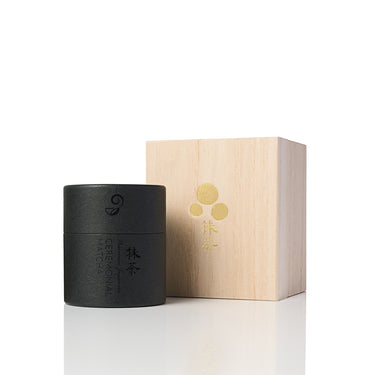
If you'd like to taste the kind of matcha that descends from this lineage, our Limited Reserve Ceremonial matcha is grown and processed in the same way the Uji tradition Eisai's successors built. Card below.

How much of the Eisai-as-father-of-tea story is myth vs. real history?

Most of the major facts are documented — Eisai was a real monk, he traveled to China twice (1168 and 1187-1191), he wrote Kissa Yōjōki in 1211, and he founded Kennin-ji and other temples that became centers for tea practice. So the basic outline is solid. Where it gets fuzzier is the specifics of "first to bring tea" — earlier monks had done so two or three centuries earlier, and the tradition had partly faded by his time.

The hangover-recovery story with Shogun Sanetomo is reported in later Kamakura-era sources but isn't independently verified. It's more legend than confirmed history. Likewise, the precise details of which seeds came from where in China and exactly which temple in Japan first cultivated them get murky in the historical record.

The honest framing is that Eisai is the most influential single figure in the establishment of Japanese tea culture, but he wasn't literally the first or only one. "Reviver and consolidator" would be more accurate than "father," though less catchy.

Related products

31 reviews

Diet Green Tea Bags – Tappuri Catechin (30 tea bags)

$25.00
Quick view

Support your weight loss journey with Tappuri Catechin (たっぷりカテキン), our award-winning green tea packed with 400mg of catechins per cup—over three times more than traditional green tea. These powerful, all-natural antioxidants are known to aid in weight management, protect cells from damage, and promote longevity. Combined with L-theanine, which enhances focus, energy, and brain function, this tea helps boost metabolism and energy burn naturally.

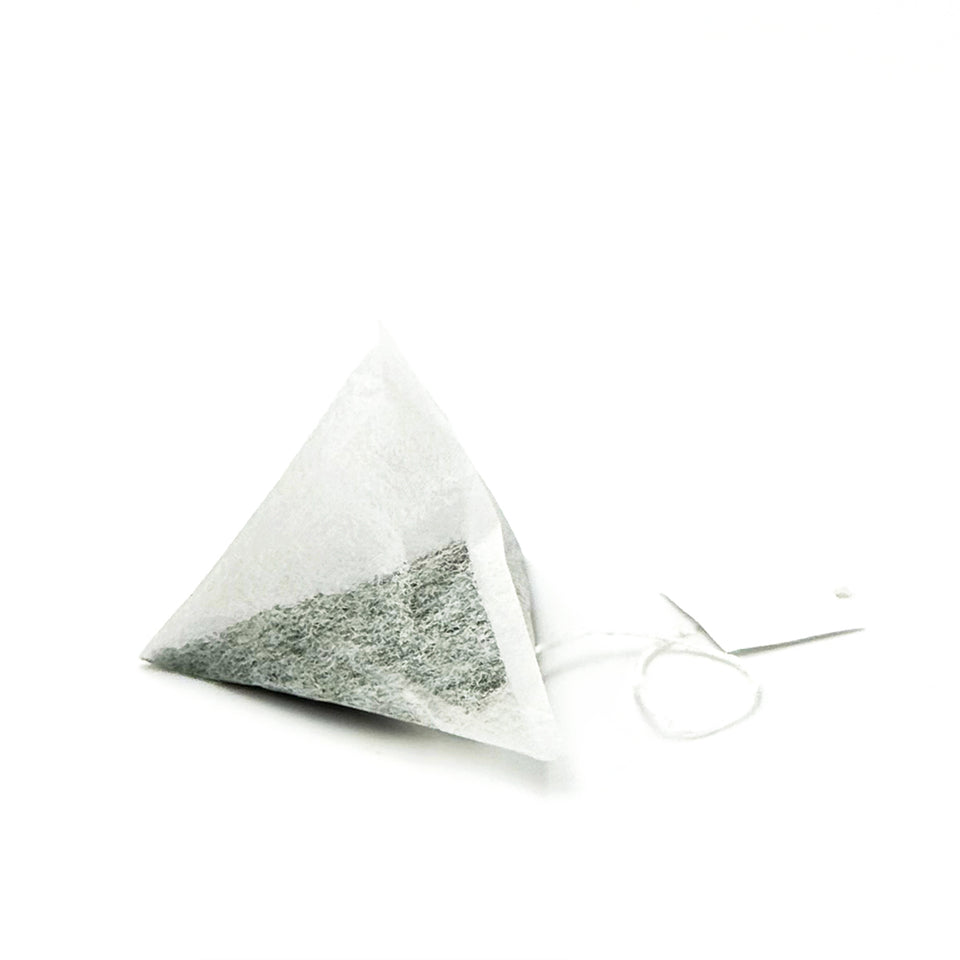
Tappuri Catechin is a loose-leaf authentic Japanese green tea teabag, made from deep-steamed Fukamushi Sencha cultivated using the Chagusaba method in nutrient-rich sugarcane soil. Featuring the Yabukita cultivar, each resealable aluminum bag includes 30 pyramid-shaped tea bags (2g each), offering a convenient and refreshing way to support your health goals.

8 reviews

The Sencha Lover Gift Set - Premium Japanese Green Tea Set Package
$179.00 $159.99
Quick view

This tea set features three exceptional Japanese green teas, each crafted with care and traditional techniques. Issaku Reserve, a Global Tea Champion winner in 2017 and 2019, is a rare masterpiece created by Farm Master Mr. Arahata at Arahataen Green Tea Farm. Handpicked once a year from the first flush and processed with advanced methods, Issaku represents the highest-grade deep-steamed green tea, available only in limited quantities even in Japan.

The set also includes Gyokuro, a premium shaded green tea known for its rich, sweet flavor and deep mossy green color. Grown under special mats for 20 days to increase caffeine and amino acid levels, Gyokuro offers a layered, smooth taste unlike any other. Completing the collection is Nozomi, a fine Kabuse-cha, or "Covered Green Tea," carefully grown under nets to gently shade the leaves just before new sprouts emerge, resulting in a soft, rich, and refined flavor profile.

97 reviews

Gyokuro - Shaded Imperial Premium Green Tea

$65.00
Quick view

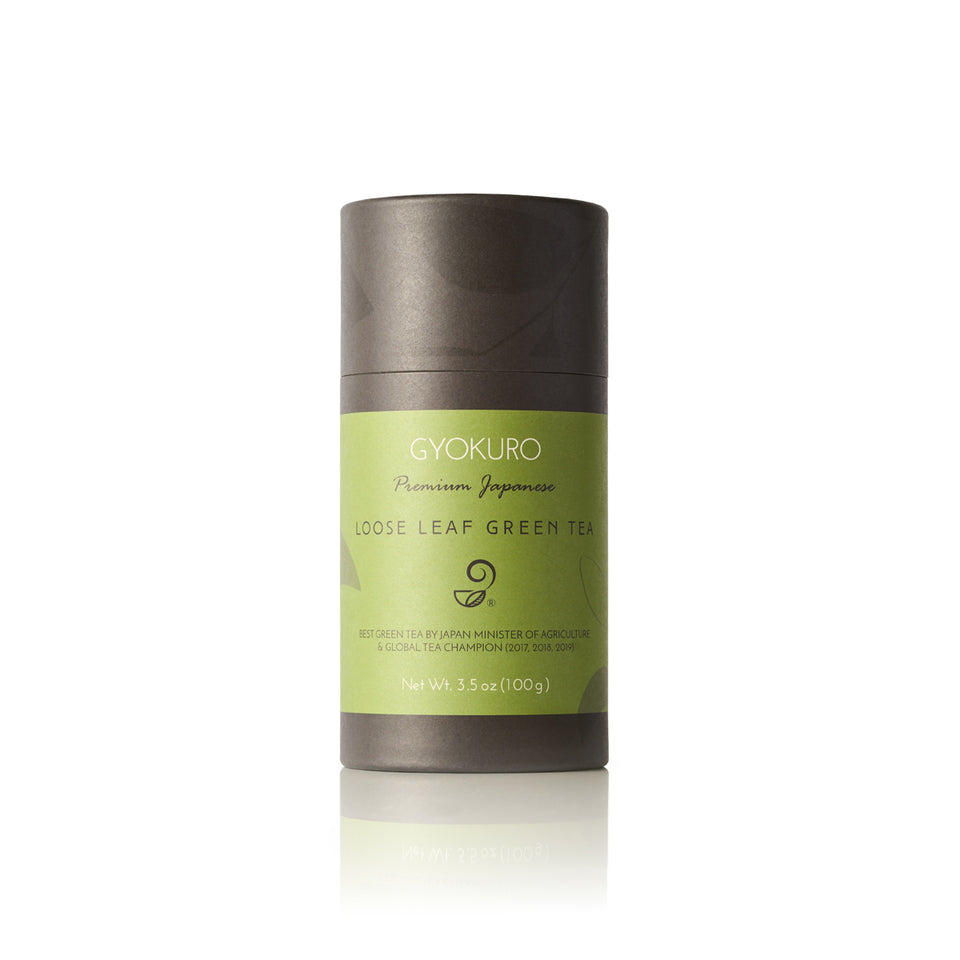
Gyokuro, also known as "jade dew" or "jewel dew tea," is a premium Japanese green tea shaded from the sun for 20 days using specially made mats, a method that boosts caffeine levels and strengthens amino acids to create a sweeter, richer flavor. This extended shading process results in dark, mossy green leaves with an unmistakable aroma and a complex taste that is layered yet balanced. Cultivated by the Chagusaba method in nutrient-rich sugarcane soil and made from the Yabukita cultivar, this loose-leaf authentic Gyokuro is offered in a high-quality, air-tight paper tube canister (chyazutsu) to preserve its exceptional freshness and flavor. Each 3.5 oz (100g) full-size package steeps 30–40 cups, and a convenient single-serve sample is also available.

45 reviews

Hojicha - Roasted Green Tea

$25.00
Quick view

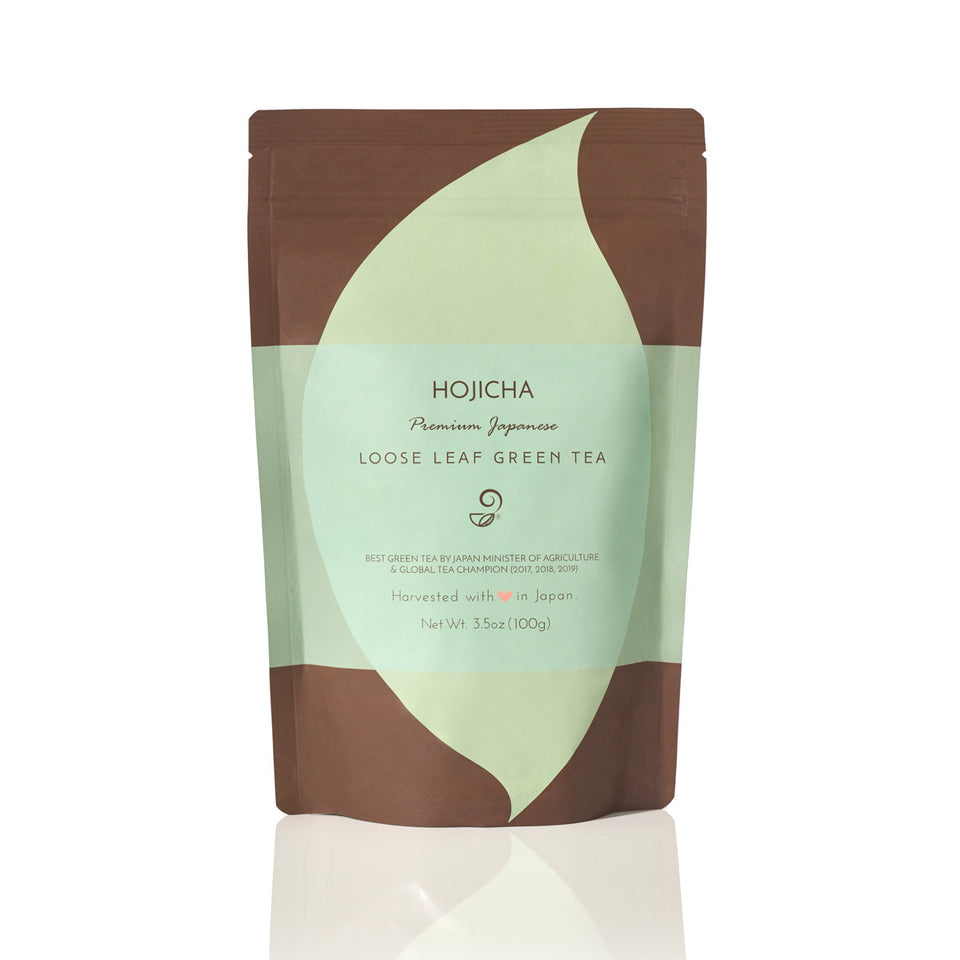
Our roasted green tea, known as hojicha (ほうじ茶), is crafted from freshly harvested premium green tea carefully roasted in porcelain over charcoal to maximize flavor while retaining more catechins than typical hojicha on the market. With lower caffeine and a smoother, less bitter taste compared to steamed green tea, it is an ideal choice for evening relaxation and is gentle enough for kids and pregnant women. Cultivated using the Chagusaba method in nutrient-rich sugarcane soil, this loose-leaf authentic Japanese roasted green tea, made from the Yabukita cultivar, also pairs beautifully with oily foods. Each eco-friendly resealable package contains 3.5 oz (100g) of tea, enough to steep 30–40 comforting cups.

80 reviews

Matcha - Ceremonial Japanese Powdered Green Tea

$39.00
Quick view

This ceremonial matcha is crafted from the finest Japanese green tea, grown in nutrient-rich soil enhanced with compostable grasses and sugarcane through the Chagusaba method, which gives the tea a natural sweetness and exceptional flavor. In collaboration with researchers from Shizuoka University, farmers ensure that the soil quality consistently produces tea of the highest standard.

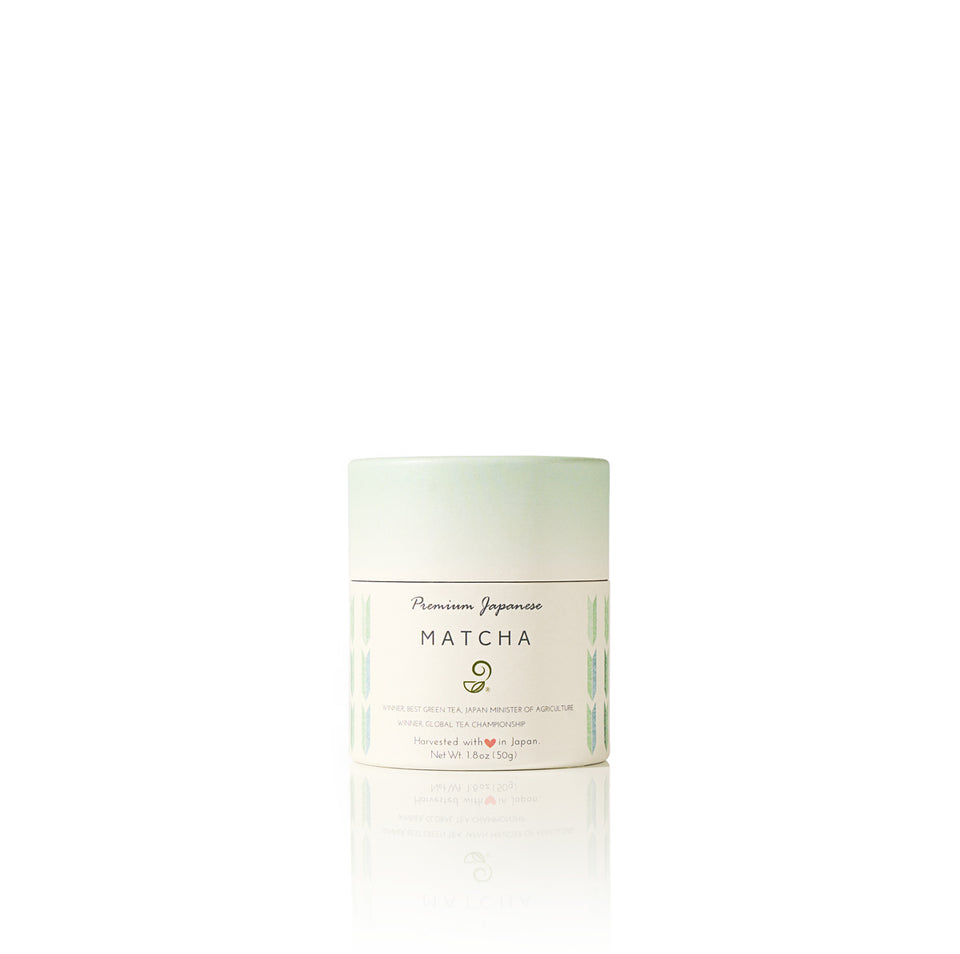
Renowned among top Japanese chefs for its unmatched aroma, this matcha is made by carefully shading the plants before harvest to boost caffeine and amino acids, then meticulously drying, de-stemming, and grinding the leaves into a fine powder. Made from the Yabukita cultivar, this 1.8 oz (50g) matcha comes in a high-quality, air-tight paper tube canister, providing a luxurious and authentic Japanese tea experience.


Related Articles You May Be Interested

Sen No Rikyu – The Tea Master that Changed Japanese Tea Culture Forever
30 Surprising History About Japanese Green Tea You (Probably) Didn't Know
10 Top Health Benefits Of Drinking Green Tea
Cultivars: Why You Should Think Twice About Them
10 Must-See Places in Uji, Kyoto for Tea Lovers

Get Free Bonus Books

Join Green Tea Club

Sign up for free to the Green Tea Club to get advice and exclusive articles about how to choose Japanese Tea, and tips, tricks, and recipes for enjoying Japanese tea.

Unsubscribe anytime. It’s free!

About the author

Kei Nishida

Kei Nishida

Author, CEO Dream of Japan

info@japanesegreenteain.com

Certification: PMP, BS in Computer Science

Education: Western Washington University

Kei Nishida is a passionate Japanese green tea connoisseur, writer, and the founder and CEO of Japanese Green Tea Co., a Dream of Japan Company.

Driven by a deep desire to share the rich flavors of his homeland, he established the only company that sources premium tea grown in nutrient-rich sugarcane soil—earning multiple Global Tea Champion awards.

Expanding his mission of introducing Japan’s finest to the world, Kei pioneered the launch of the first-ever Sumiyaki charcoal-roasted coffee through Japanese Coffee Co. He also brought the artistry of traditional Japanese craftsmanship to the global market by making katana-style handmade knives—crafted by a renowned katana maker—available outside Japan for the first time through Japanese Knife Co.

Kei’s journey continues as he uncovers and shares Japan’s hidden treasures with the world.

Learn more about Kei Nishida

Related Posts

Meet Eijiro Tsukada (塚田英次郎): The Charismatic Businessman Behind Cuzen Matcha — Now Available at Japanese Green Tea Co.

Meet Eijiro Tsukada — the man behind Cuzen Matcha. Full guide to the award-winning Matcha Maker, the Pro, and why we're

Read More
Behold: Balmuda's "The MoonKettle" — Where Boiling Water Becomes Art

We were privileged to be invited by Balmuda's Private MoonKettle Launch Event. Here are videos of it and everything you

Read More
OC Japan Fair April 2026 — Visit Us at Booth #A8!
OC Japan Fair Spring 2026 Recap (April 3 - 5 2026)

We were at OC Japan Fair again! April 3-5 2026 with new products, Miki Pon's art debut and more. Here is a recap video f

Read More
Leave a comment

Your email address will not be published..

Cart

Your cart is currently empty.

Start Shopping

Select options