Skip to content

The History of Japanese Green Tea

Subscribe to Youtube See all videos

To know more about Japanese green tea’s history, let’s explore and discuss further the full green tea journey.

Green tea became a staple drink, and we will show you how Japanese green tea turned into a worldwide sensation.

You will learn how the Matcha and tea ceremonies were created and how Samurai culture was affected by tea!
 
Let's first travel to the 8th Century in Japan.

The Year 710-784: The Origin of Tea in Japan During the Nara Period

Tea was first brought to Japan during the 8th century Nara period from Tang Dynasty China via envoy by three Buddhist monks, Saicho, Kukai, and Eichu. They often traveled with diplomatic envoys during that period, as they were the leading scholars of Buddhism and shared commonality between the two countries. They brought the seeds with them to Japan and cultivated them as medicinal herbs.

Green tea leaves were used only by priests and noblemen.

Fast forward to the 9th Century.

Tea history

The Year 809-823: Buddhism and Tea in the Reign of Emperor Saga During the Heian Period

The monk Eichu invited Emperor Saga, the 52nd Emperor of Japan, and he personally brewed the tea and served it to Emperor Saga at the Bonshakuji Temple in 815, according to the Nihon Koki, or "The Later Chronicles of Japan," which is the first document to refer to tea drinking in Japan. Emperor Saga Tea was rare and had only just been introduced, so drinking tea was limited to monks and members of the Imperial Court.

Emperor Saga played a vital role in importing tea seeds from China and the subsequent popularization of tea in the country in the 9th Century. Furthermore, his support and encouragement caused a boon in the tea plant's cultivation, thus beginning the long and illustrious history of tea in Japan.

In the early years, tea was cultivated and produced by steaming the leaves and forming them into bricks for transportation. These bricks were then roasted and ground into a powder mixed with water and salt to create the tea drink.

Unfortunately, in 823, Emperor Saga was forced to abdicate his throne because of financial troubles. One of the reasons is that he has many concubines and children. During this time, many droughts happened, and green tea growing was also affected.

Let's fast forward to…

The year 1100-1200s: Eisai and Green Tea in Japan

Eisai was a Zen Master and Buddhist monk credited with introducing Zen Buddhism to Japan and green tea. Dissatisfied with Buddhism in Japan, Eisai traveled to China numerous times in the late 12th Century and received his Zen Master certification. He was the first Japanese monk to receive it.

In 1191, he returned to Japan and founded the Rinzai sect of Zen Buddhism. He also brought the green tea seeds with him to Kyoto and promoted the tea for its many medicinal qualities, particularly heart health.

Eisai introduced tea to the samurai class. He wrote a book. Kissa Yojoki, or "How to Stay Healthy by Drinking Tea".

Kissa yōjōki

It is a book about green tea in Japan and was sent as a gift to the Shogun. It was mentioned in the book about the health effects of tea and its positive effect on vital organs. The book described tea plants and the processing of tea leaves.

Samurai were holding tea competitions and drinking tea before going to battle. They believe that tea gives them energy and presence of mind.

Green tea became a favorite drink of the upper classes in Japan, and due to the increase in demand, the production of tea was developing new techniques by simply turning green tea leaves into powder. After this, Zen Buddhist monks developed a new method for growing green tea plants in the shade.

Not only was green tea popular among the warrior class, but also Zen Buddhism.

Since the upper class enjoyed tea as a rare and expensive commodity, farmers tried to save the tea from frost damage by using a canopy called Tana leaves in the colder months. However, farmers discovered that tea grown in the shade had a more mellow taste.

This tea eventually became known as the matcha we know today.

In 1271, the Buddhist monk Kohken planted tea trees in the Ujiwara region of Kyoto. Kyoto then became the country's number-one producer of tea.

Let's continue our time travel and discover anything about green tea from the development of the tea ceremony in the 16th Century until how Matcha has become a trend today.

The year is 1500: The Birth of Tea Ceremony

In 1504, the Japanese who visited Ming Dynasty China brought ceramic pots to Japan.

During the 15th Century, Ashikaga Yoshimasa, the 8th shogun of the Ashikaga shogunate, constructed the first tea ceremony room (shoin chanoyu) to feature his collection of Chinese cultural artworks and objects. Later, there are study rooms (shoin) for Zen Buddhist monks featuring a tatami (mat) and a desk.

These were followed by Japanese traditional living rooms (chashitsu) that we often see in Zen gardens and tea ceremonies.

From 1338 to 1573, the Japanese upper class had tea cottages designed for tea enjoyment. They watch someone gracefully prepare tea, and they drink tea for relaxation. A Buddhist tea master named Rikyu, said to be responsible for the popularization of the wabi-sabi aesthetic, is largely credited with developing the enduring rituals and philosophy of the tea ceremony.

He developed many rituals and practices that became commonly accepted as vital aspects of the tea ceremony, including directly incorporating the wabi-sabi aesthetic into the tea ceremony. Rikyu made a rule that matcha must be served with candies or confections.

His personal development of aspects such as the small, rustic rooms known as So-an, the flower containers, the bamboo lid rests, the Raku technique of making bowls, and the emphasis on simple objects were instrumental in developing the tea ceremony.

Let's go to the world of the Samurai in the Edo Period!

The Edo Period (1600-1868): Samurai and the Tea Ceremony

In 1610, Japan made its first tea export when it sold tea to the Dutch East India Company in Nagasaki, and then the company shipped the tea from Nagasaki to Europe.

During Japan's Edo Period, the country was rife with civil war, and the warrior class known as the Samurai rose to great esteem and prominence. The ceremony previously dominated by the highly influential Buddhist monks became adopted by the Samurai beginning in the 17th Century and continued for hundreds of years as the Samurai refined and developed their practice.

A common misconception about the tea ceremony and the warrior class is the assumption that Samurai used the practice as a tranquilizer against the aggression of battle.

This is contrary to the Samurai view of both battle and tea ceremonies.
Samurai used the ritual of the tea ceremony as metaphorical disciplinary training to prepare them for battle.

A sudden change of weather, unforeseen event, or misstep in the tea ceremony taught them the discipline of maintaining principles of behavior and commitment despite unexpected changes or mistakes on the battlefield.

It taught them that one misstep can lead to many and that an ethic and practice rooted in discipline and careful understanding could improve martial strategy and results.

In the 1600s, the monk Kouyugai Baisao began a movement countering the strict tea ceremony rituals and advocating a looser approach to its consumption. He was instrumental in the adoption of a new tea-making technique that became known as Sencha. He believed that green tea should not be exclusive to  aristocrats, warriors, and the upper class.

In 1735, he opened his tea shop and introduced tea to ordinary folks. After his death, he was credited as one of the first sencha masters.

In 1738, Sohen Nagatani improved how sencha was processed. The people of Uji were so grateful that they built a shrine for him. Every October, people visit his grave to give thanks for his contribution to the development of the tea industry.

By this time, green tea was the drink of choice all over the country, not just for upper-class people.

Alongside the increased availability and popularity of green tea and tea consumption, the 18th-century development of Sencha led to the availability of various other types of green tea to the public. Over time, Sencha became the most widely consumed tea in Japan.

We will now go to modern times, from the 19th century forward!

The 1800s and Beyond: Machinery and Tea Production

In 1859, Japan was one of the top tea exporters since they opened their ports for trading after the Tokugawa period. As a result, 181 tons of tea were exported during the year.

At the end of the 19th Century, the practice of hand-rolling the tea leaves known as Temomi could not keep up with increased levels of production and demand.
During the Meiji era (1869–1922), rolling machines were made for faster production and improved quality control.

Because of this, tea production had grown to a yearly quantity of 24 million kilograms thanks to the mechanical shears and processing machines, allowing tea production to increase at a steady rate.

Machine automation and sensors in the 20th Century increased production capabilities.

We will now go back to the present!

Current Tea Popularity in Japan

Green tea has remained a trendy beverage throughout the centuries.
However, tea consumption has declined among the youth population. It is uncommon for young people to keep teaware in their homes, as they prefer bottled tea or other quick drinks. Read more about it here.

The consumption of coffee has also skyrocketed. Read more about Japanese Coffee History here. In some places, tea production has fallen by as much as 15% in recent years. At the same time, green tea has also become a phenomenon worldwide, especially in America, where it is viewed as nutrient-rich and a healthier source of caffeine than coffee. Like Eisai in the 12th Century, some advocate tea as medicine, and many studies have been conducted on its cancer-fighting and anti-inflammatory properties.

Eventually, matcha, a Japanese tea that has leaped from fast-produced beverages to become a trendy drink often offered as a healthier alternative to coffee, Matcha lattes or frappuccinos are widely available, as are canned and bottled Matcha tea. In Japan, Matcha-flavored sweets are also trendy, as is green tea mochi ice cream.

There is no doubt that tea has had an enormous influence on Japanese culture, from its relationship with religion and the development of tea ceremony and aesthetics to its impact on battle strategy and becoming a household beverage.
Green tea has been evolving since the beginning, and as you can see, it is still changing its shape and evolving. So, where does it go from here? Well, you may be holding the key in your hand.

What's your cup of tea today?

FAQs about the History of Japanese Green Tea

What's the single most important moment in Japanese green tea history?

1191 CE, when the Buddhist monk Eisai returned from China with tea seeds and planted them at Reisenji temple. That single act started Japanese tea cultivation. Eisai also wrote Kissa Yōjōki (喫茶養生記), the first Japanese tea book, which framed tea as medicine and gave it serious cultural standing rather than just being an exotic Chinese import.

Almost everything in Japanese tea history flows from that 1191 moment. The Zen-Buddhist origins of Japanese tea culture, the spread of tea through monasteries to samurai class, the development of tea ceremony — all of it builds on Eisai's establishment of cultivated tea in Japan.

The second-most-important moment is probably 1591 CE, when Sen no Rikyū was ordered to commit seppuku. That dramatic ending of Rikyū's life crystallized everything he'd built — the wabi aesthetic, the ceremony structure, the tea-school lineage — and his legacy continues to define Japanese tea ceremony to this day.

How did sencha become the dominant Japanese green tea?

Sencha as we know it didn't exist until 1738, when a tea merchant named Nagatani Sōen developed the steaming-and-rolling process that produces modern sencha. Before that, Japanese tea was almost exclusively powdered (matcha-style) or simple boiled tea-leaf brews. Nagatani's process produced a leaf form that could be steeped in hot water for individual cups, which was much more practical for daily drinking than ceremonial matcha.

Sencha caught on rapidly in the late 1700s as the rising merchant class wanted a tea practice that didn't require formal ceremony. By the early 1800s, sencha had displaced matcha as the everyday Japanese green tea — a position it still holds today. The sencha revolution was as significant for Japanese culture as the bottled-tea revolution would be 200 years later.

So the modern hierarchy — sencha as everyday tea, matcha as special ceremonial form — is actually only about 250 years old. For the first 500+ years of Japanese tea history, matcha was the standard and sencha didn't exist.

When did Japanese green tea reach the West, and why so late?

Japanese green tea reached Europe in small quantities through Dutch trade routes in the 1600s, but it was a curiosity rather than a category. The first major export wave was in the late 1800s — after the Meiji Restoration opened Japan to international trade — and even then, most Japanese tea exports were lower-grade for the American mass market rather than premium tea for European specialty markets.

Premium Japanese green tea in the West didn't really arrive until the 1980s-90s, when Japanese tea producers started exporting high-grade matcha and sencha to specialty importers in major Western cities. The matcha-as-superfood wave is even more recent — really a 2010s phenomenon.

The reason for the long delay: storage and shipping. Black tea travels well over months at sea; green tea goes stale within weeks of opening. Until refrigeration and air-tight packaging plus relatively fast intercontinental shipping in the 20th century, premium green tea was essentially impossible to deliver fresh to Western markets.

What's the most surprising historical fact about Japanese green tea?

Tea was used as currency in medieval Japan. Bricks of compressed tea (similar to the Chinese tea-brick form) circulated as a form of money in some regions, and famous tea bowls and tea utensils could be more politically valuable than property — Toyotomi Hideyoshi famously rewarded loyal samurai with tea bowls and ceremonial utensils that they treasured for generations as both wealth and status markers.

Another surprise: Japan briefly tried to become a black tea producer in the late 1800s, hoping to compete with British colonial tea. The experiment failed — the Japanese climate and existing cultivation expertise didn't support black tea production at competitive cost — but it left a small legacy of Japanese black-tea cultivars (wakoucha 和紅茶) that are now experiencing a niche revival.

The most-quoted surprise: tea was nearly exclusively a Buddhist monastic and warrior practice for centuries before becoming a commoner drink. The tradition we think of as "Japanese tea ceremony" is downstream of religious-and-warrior practice, not folk tradition.

How has tea consumption in Japan changed in the modern era?
Dramatically. Until the 1980s, daily Japanese tea consumption was overwhelmingly home-brewed loose-leaf — every household had a kyusu, kettle, and daily tea ritual. Itoen's launch of canned bottled green tea (Oi Ocha, 1985) started a fundamental shift: tea moved from home-brewing to vending-machine and convenience-store consumption. By 2000, more Japanese were drinking bottled green tea than home-brewed.

That shift had consequences. Premium tea consumption (loose-leaf, good sencha, anything that requires home brewing) declined as a daily practice but remained as a hobbyist/ceremonial niche. Mass-market tea drinking became more like soda culture — drink-from-a-bottle convenience rather than ritual.

In the past decade, there's been a small reverse trend — younger Japanese rediscovering home brewing as part of broader interest in artisanal and traditional crafts. Whether this becomes meaningful or stays niche is unclear, but it's at least slowed the decline of premium tea consumption.

Related products

8 reviews

The Sencha Lover Gift Set - Premium Japanese Green Tea Set Package
$179.00 $159.99
Quick view

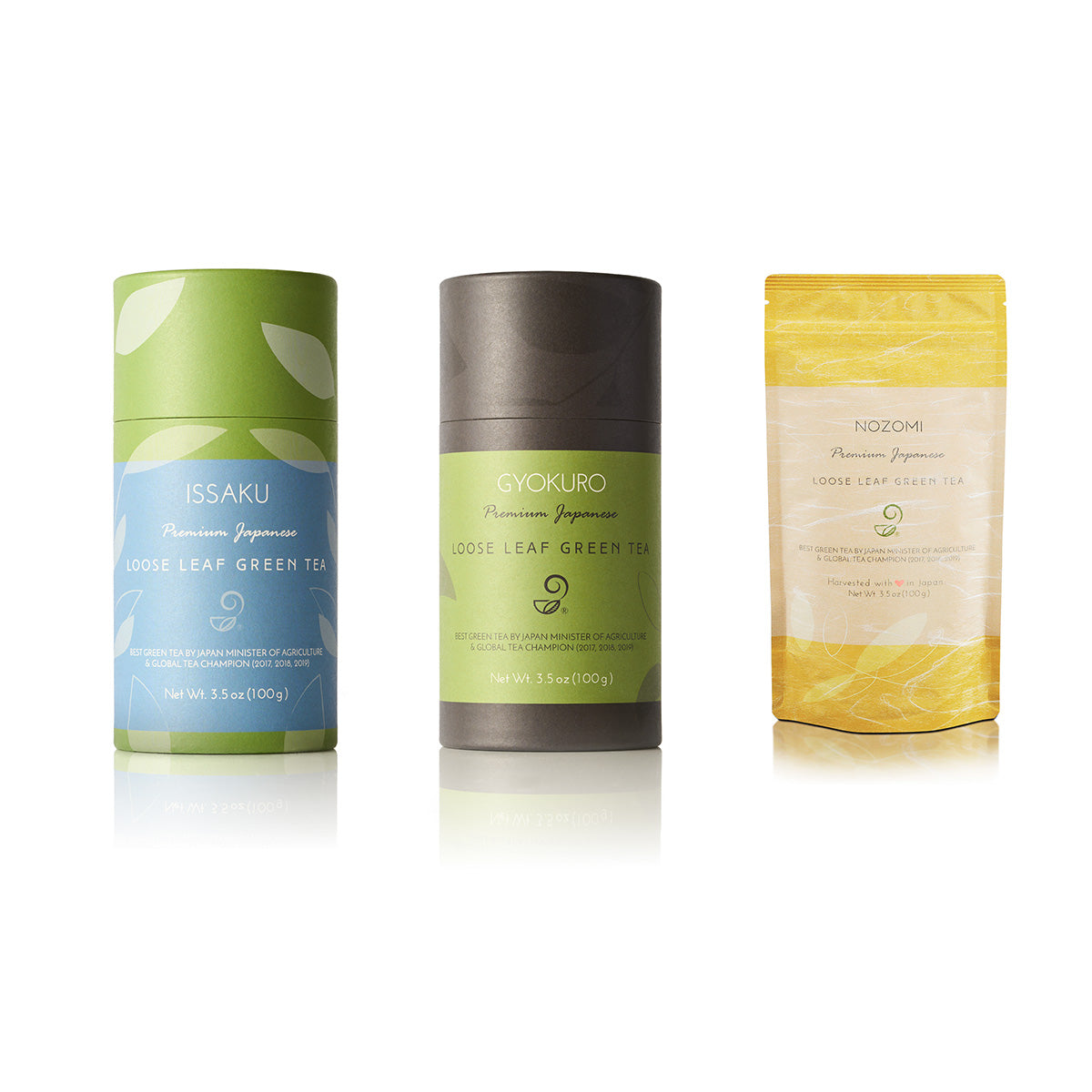
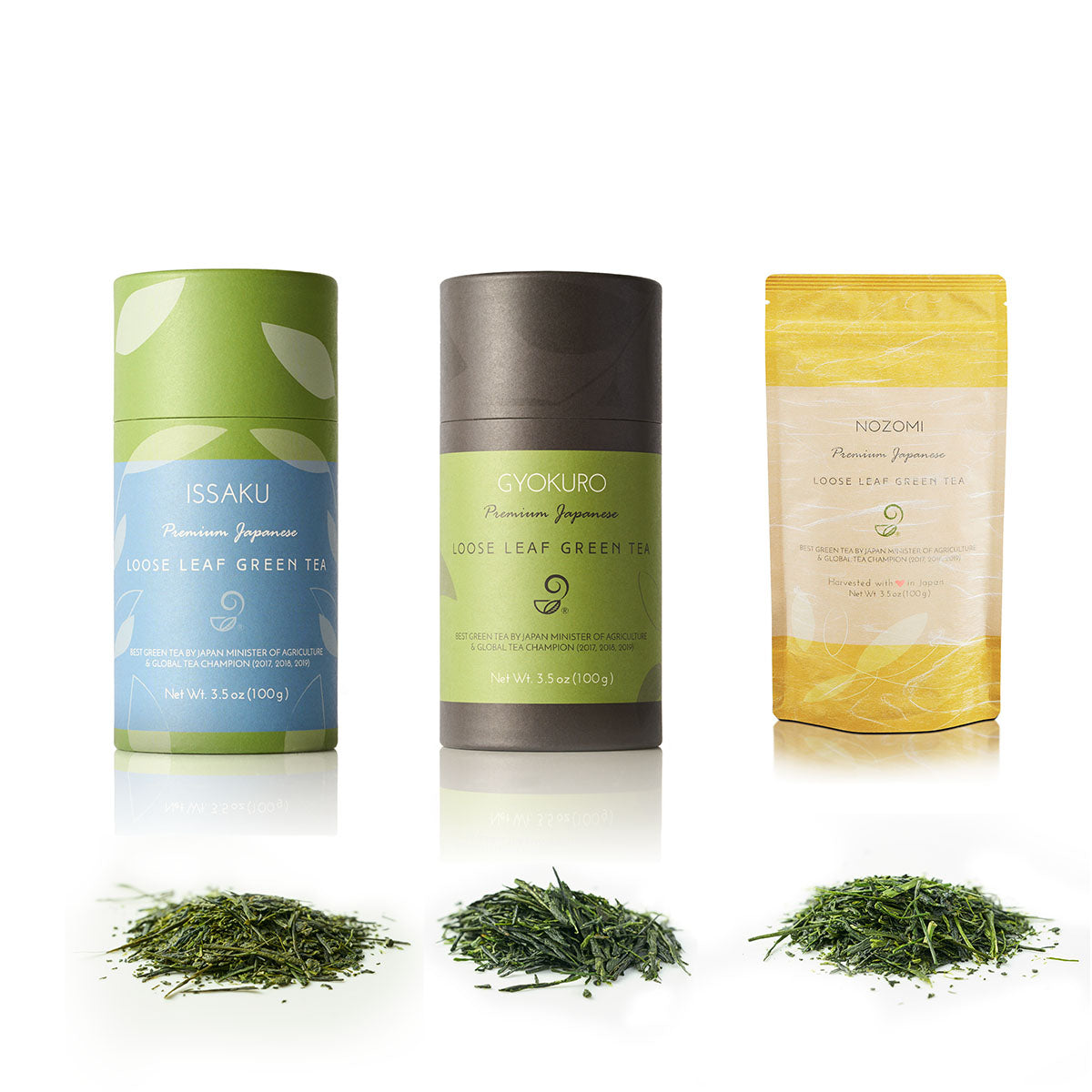
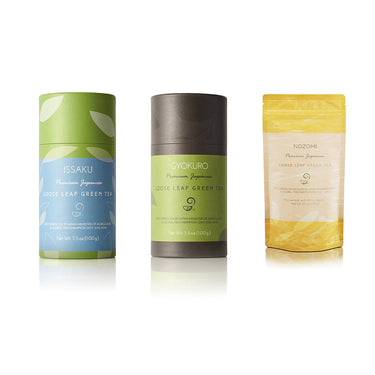
This tea set features three exceptional Japanese green teas, each crafted with care and traditional techniques. Issaku Reserve, a Global Tea Champion winner in 2017 and 2019, is a rare masterpiece created by Farm Master Mr. Arahata at Arahataen Green Tea Farm. Handpicked once a year from the first flush and processed with advanced methods, Issaku represents the highest-grade deep-steamed green tea, available only in limited quantities even in Japan.

The set also includes Gyokuro, a premium shaded green tea known for its rich, sweet flavor and deep mossy green color. Grown under special mats for 20 days to increase caffeine and amino acid levels, Gyokuro offers a layered, smooth taste unlike any other. Completing the collection is Nozomi, a fine Kabuse-cha, or "Covered Green Tea," carefully grown under nets to gently shade the leaves just before new sprouts emerge, resulting in a soft, rich, and refined flavor profile.

97 reviews

Gyokuro - Shaded Imperial Premium Green Tea

$65.00
Quick view

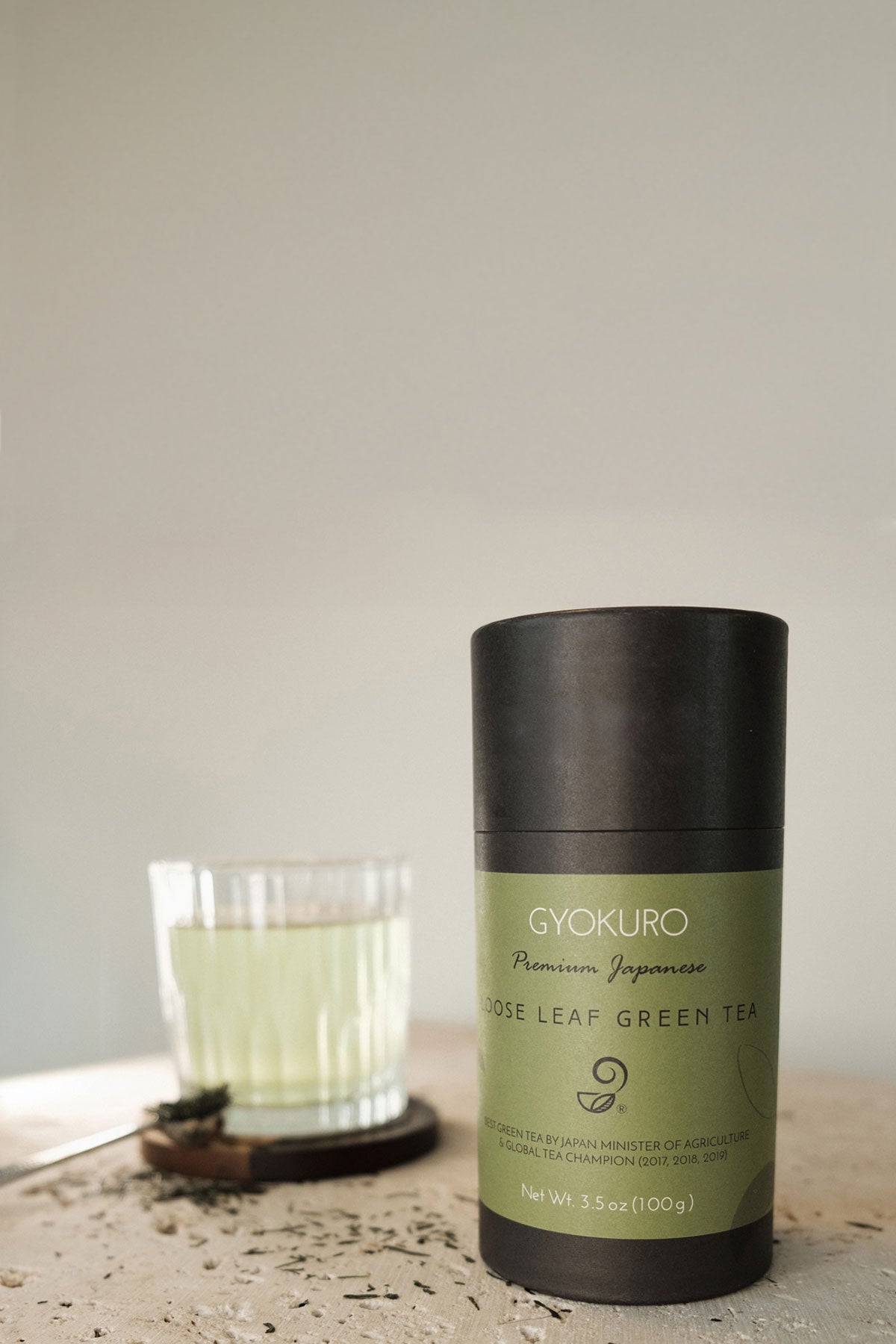
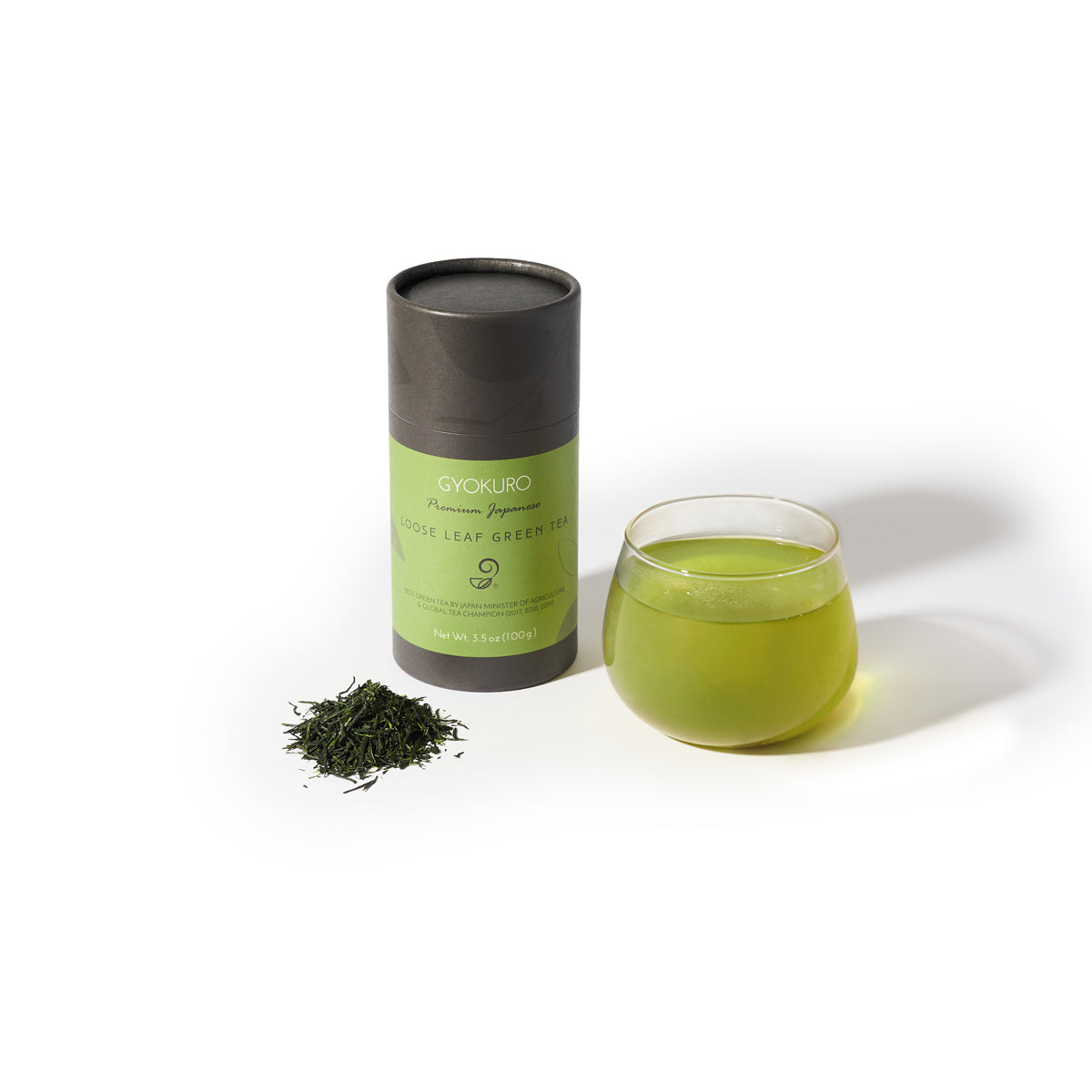
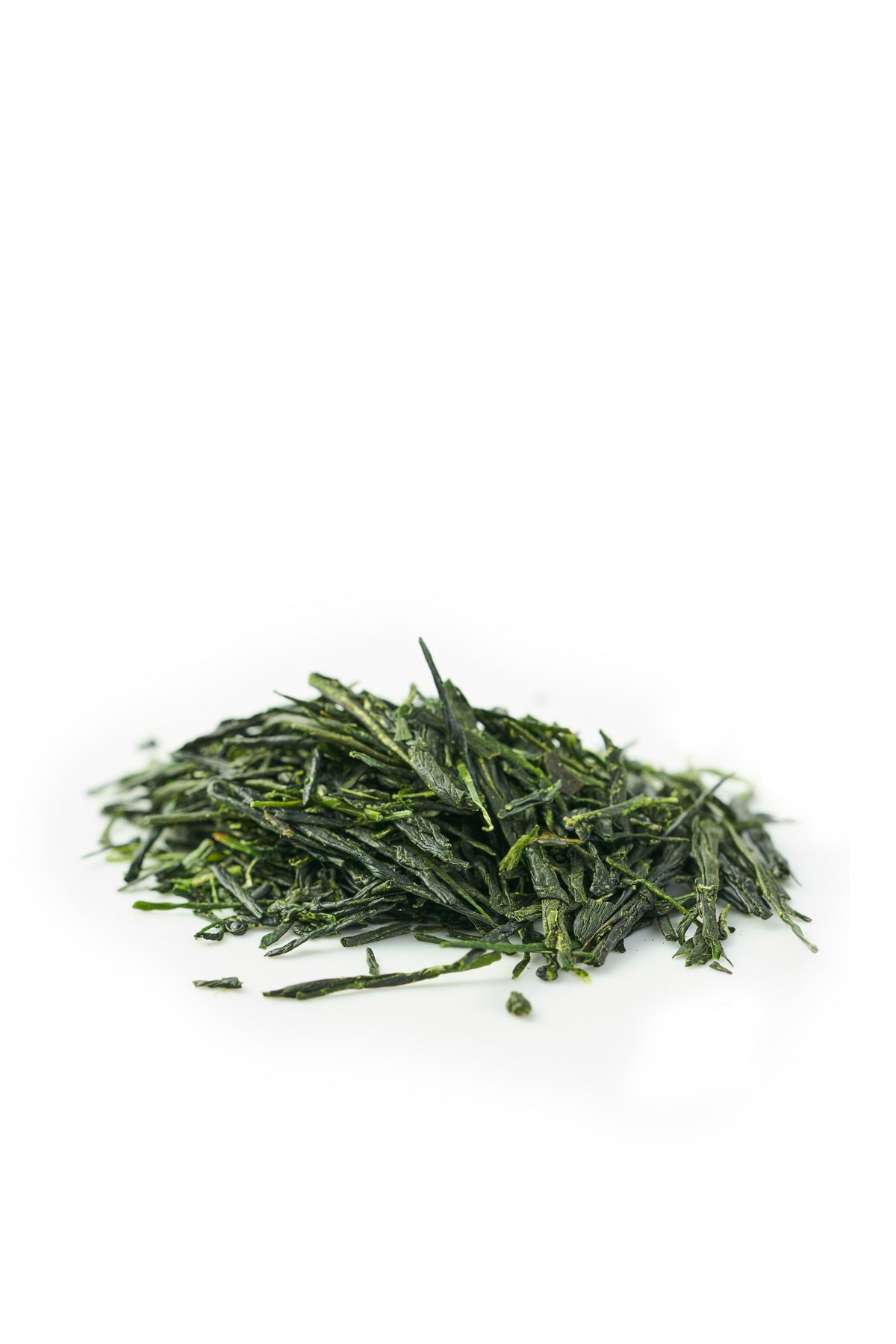
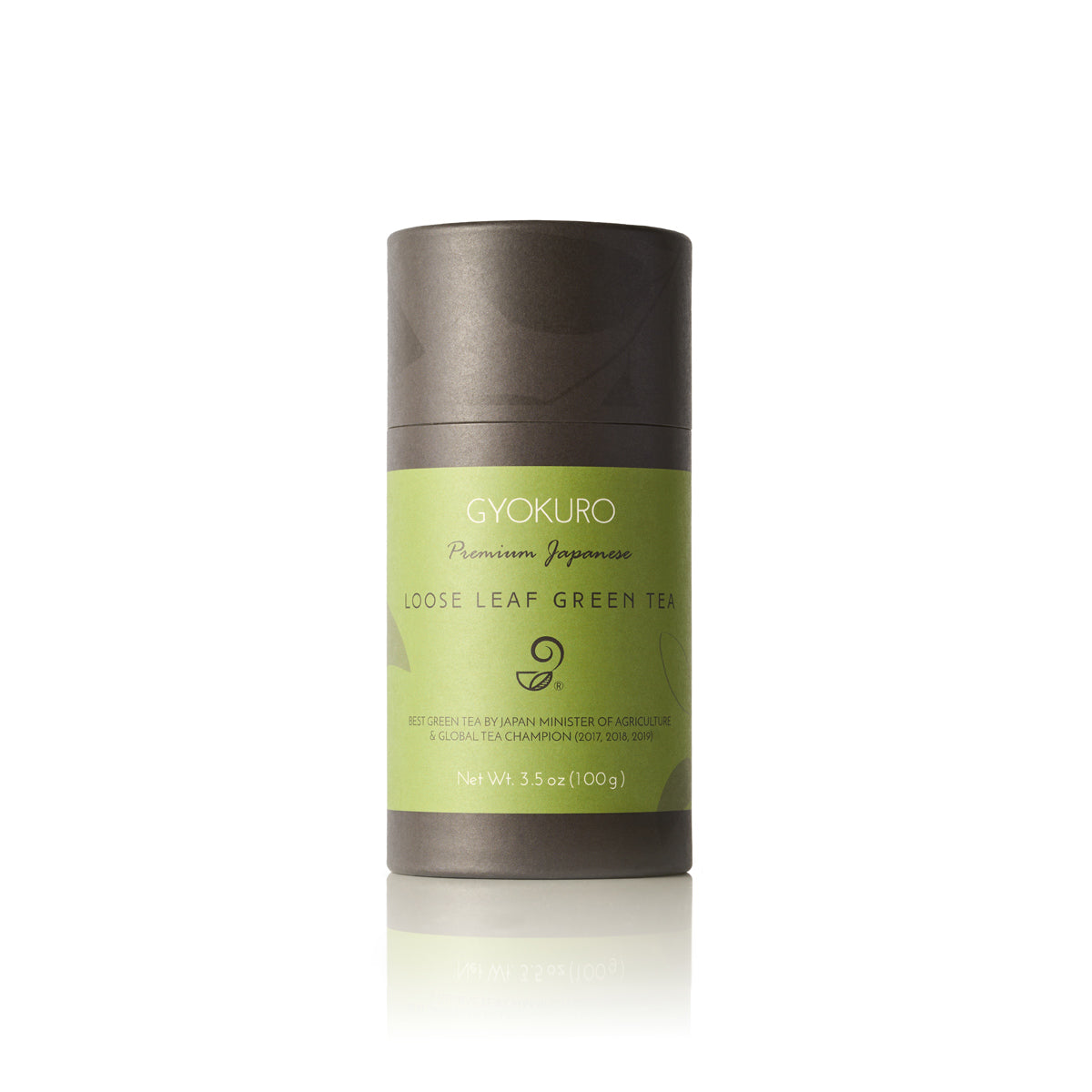
Gyokuro, also known as "jade dew" or "jewel dew tea," is a premium Japanese green tea shaded from the sun for 20 days using specially made mats, a method that boosts caffeine levels and strengthens amino acids to create a sweeter, richer flavor. This extended shading process results in dark, mossy green leaves with an unmistakable aroma and a complex taste that is layered yet balanced. Cultivated by the Chagusaba method in nutrient-rich sugarcane soil and made from the Yabukita cultivar, this loose-leaf authentic Gyokuro is offered in a high-quality, air-tight paper tube canister (chyazutsu) to preserve its exceptional freshness and flavor. Each 3.5 oz (100g) full-size package steeps 30–40 cups, and a convenient single-serve sample is also available.

45 reviews

Hojicha - Roasted Green Tea

$25.00
Quick view

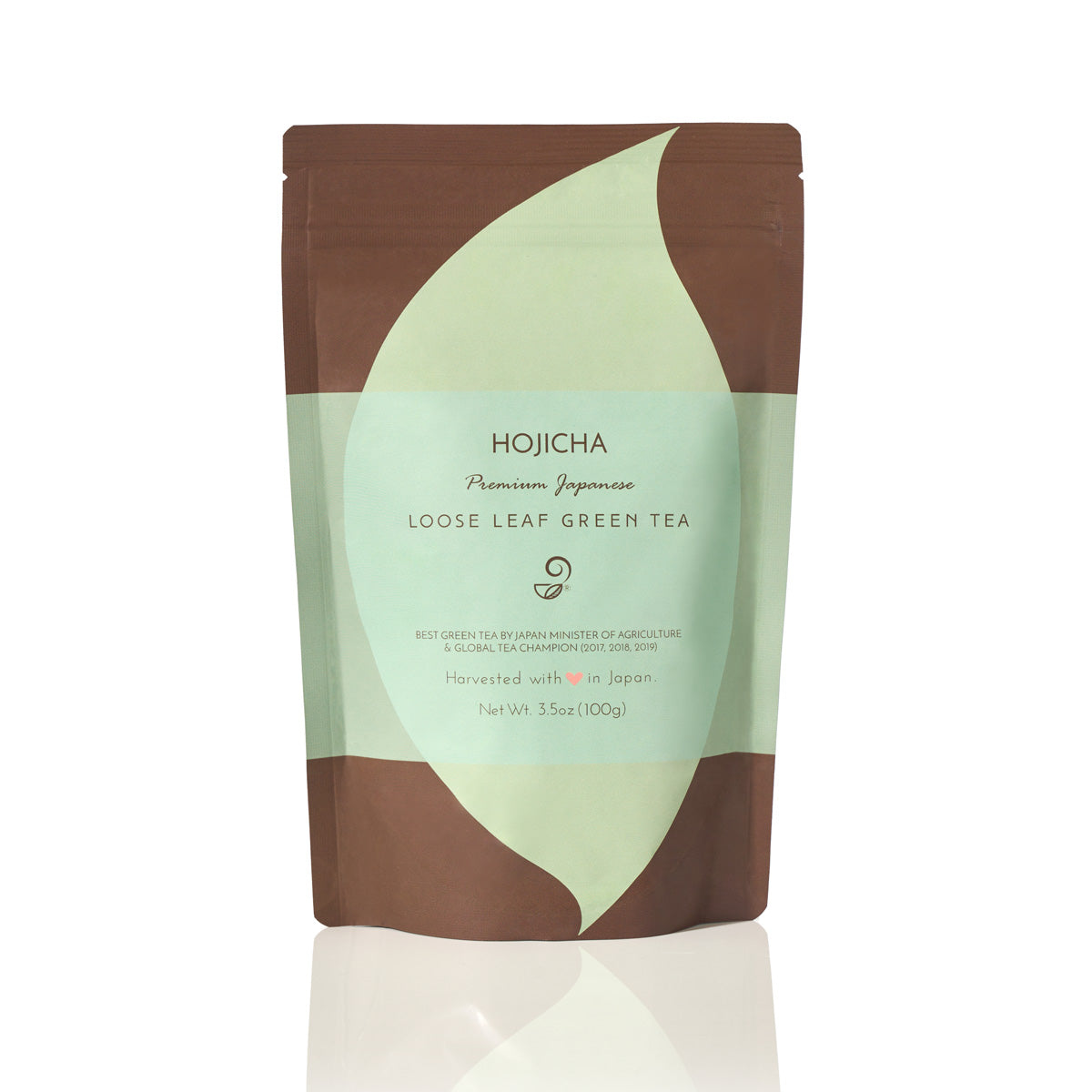
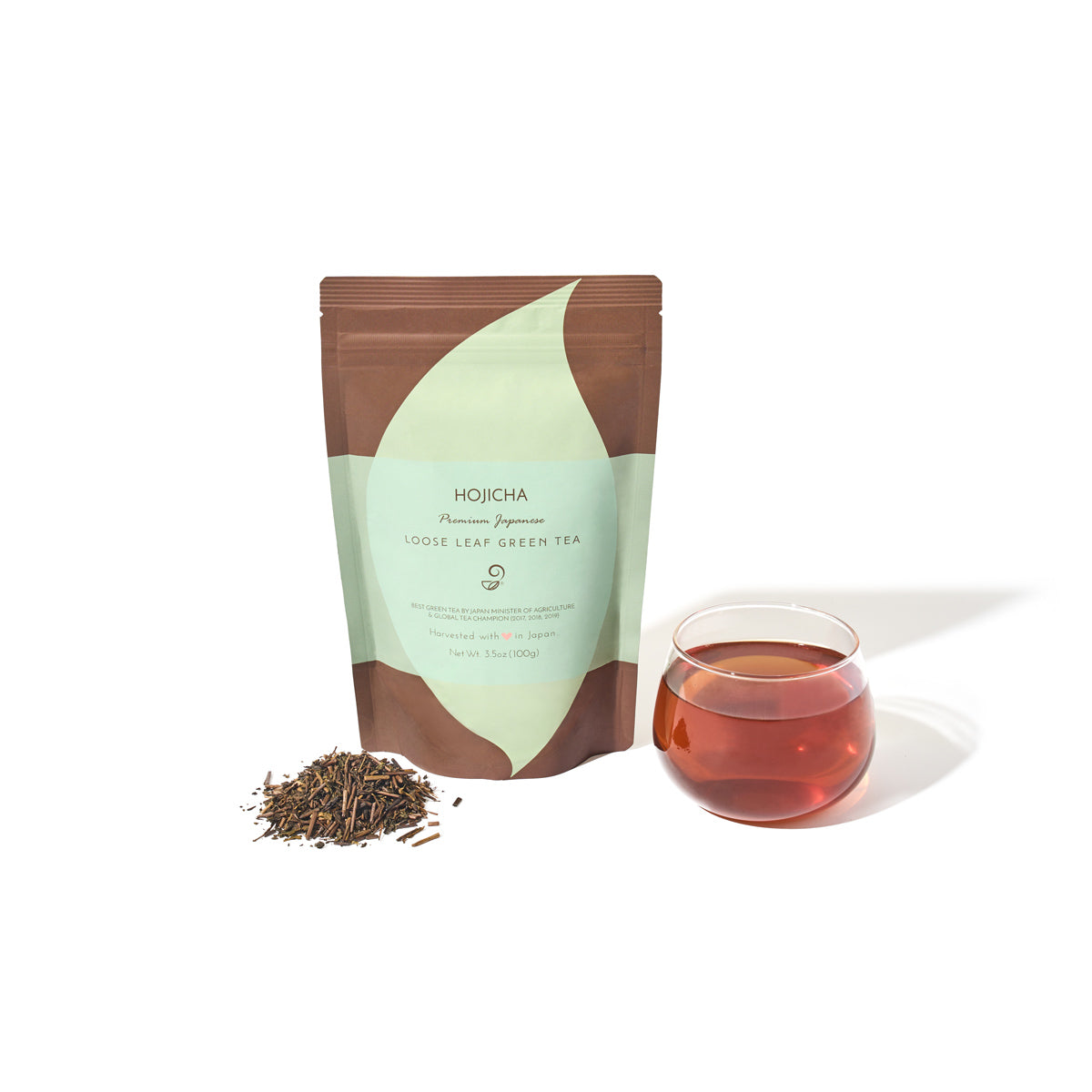
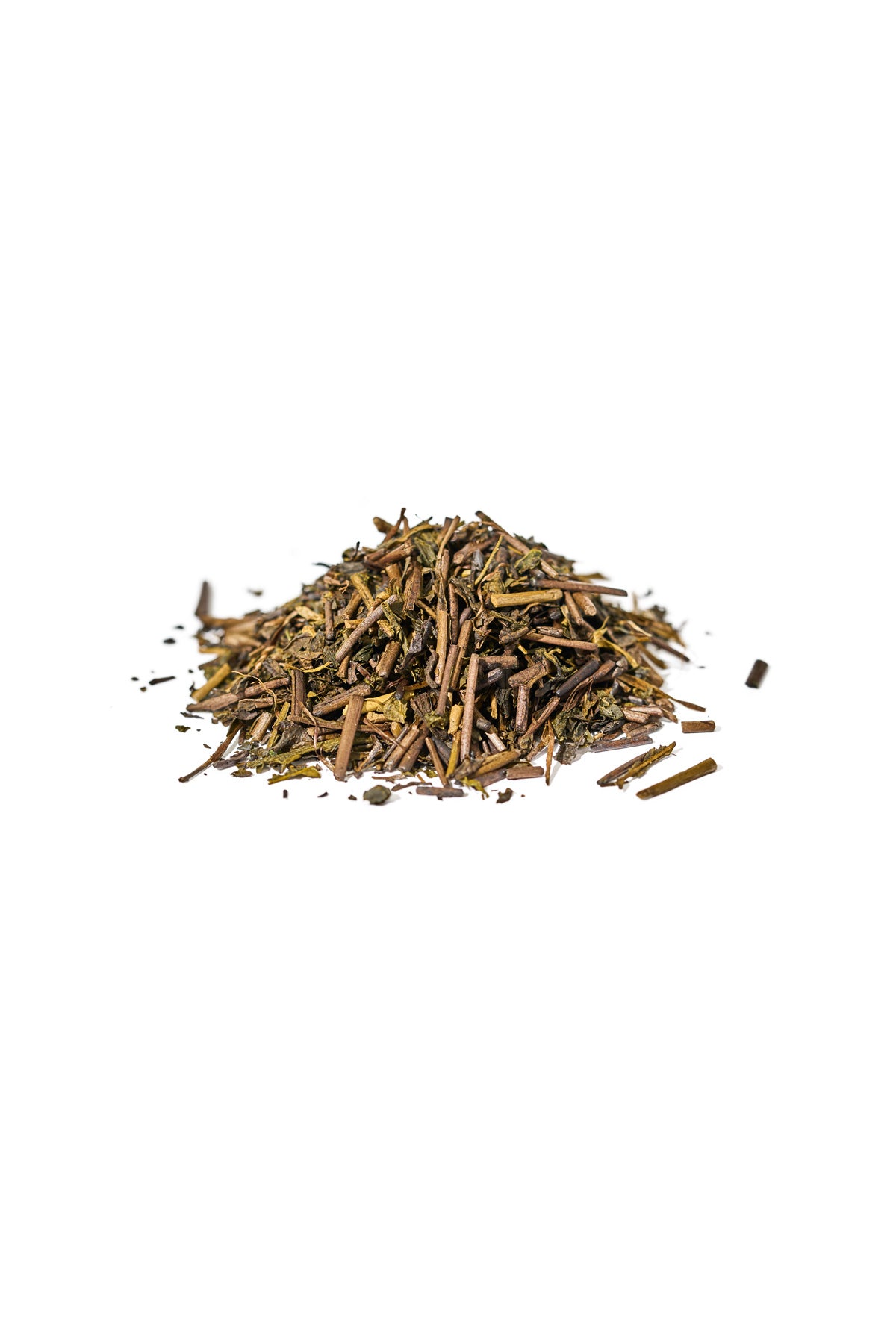
Our roasted green tea, known as hojicha (ほうじ茶), is crafted from freshly harvested premium green tea carefully roasted in porcelain over charcoal to maximize flavor while retaining more catechins than typical hojicha on the market. With lower caffeine and a smoother, less bitter taste compared to steamed green tea, it is an ideal choice for evening relaxation and is gentle enough for kids and pregnant women. Cultivated using the Chagusaba method in nutrient-rich sugarcane soil, this loose-leaf authentic Japanese roasted green tea, made from the Yabukita cultivar, also pairs beautifully with oily foods. Each eco-friendly resealable package contains 3.5 oz (100g) of tea, enough to steep 30–40 comforting cups.

80 reviews

Matcha - Ceremonial Japanese Powdered Green Tea

$39.00
Quick view

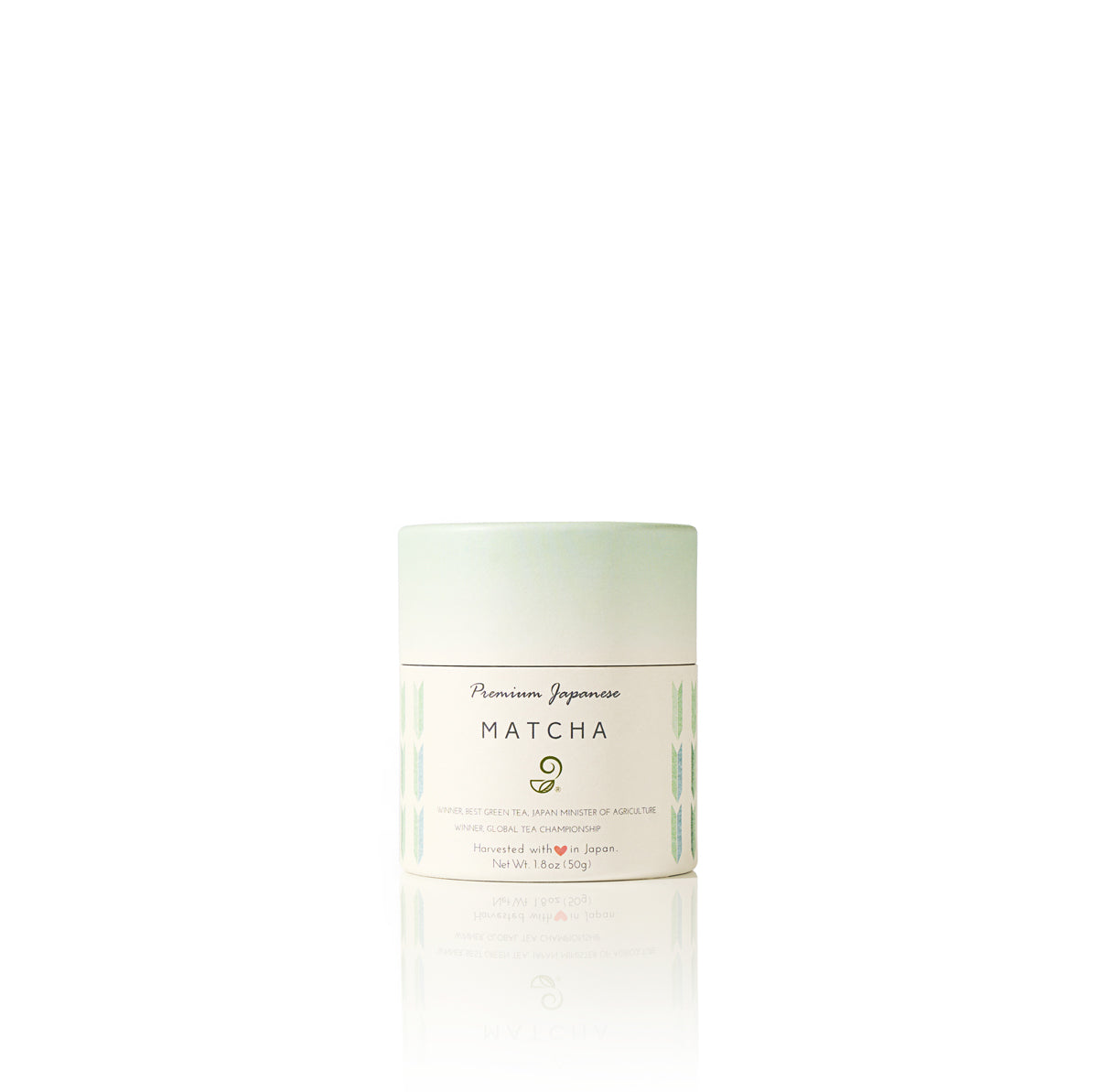
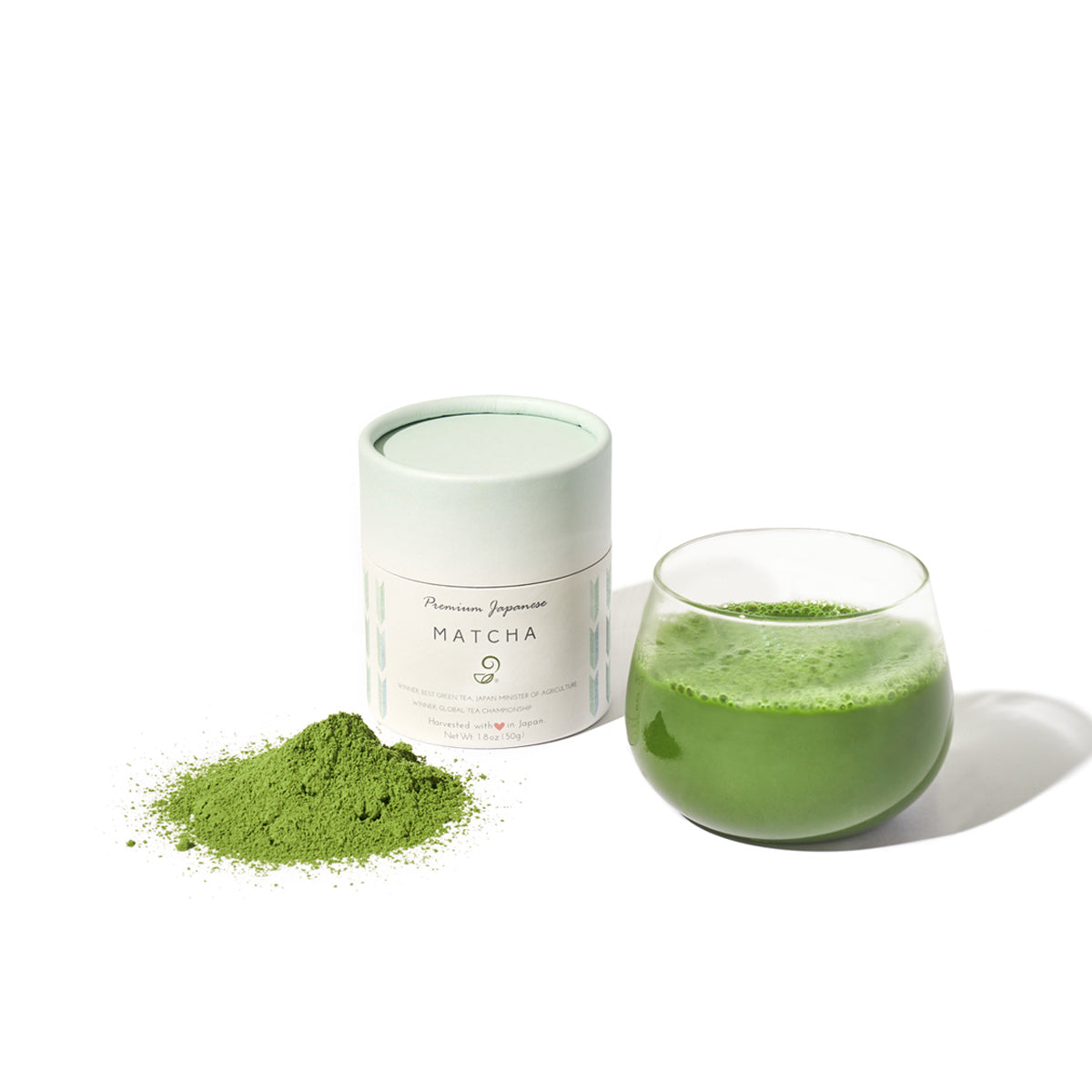
This ceremonial matcha is crafted from the finest Japanese green tea, grown in nutrient-rich soil enhanced with compostable grasses and sugarcane through the Chagusaba method, which gives the tea a natural sweetness and exceptional flavor. In collaboration with researchers from Shizuoka University, farmers ensure that the soil quality consistently produces tea of the highest standard.

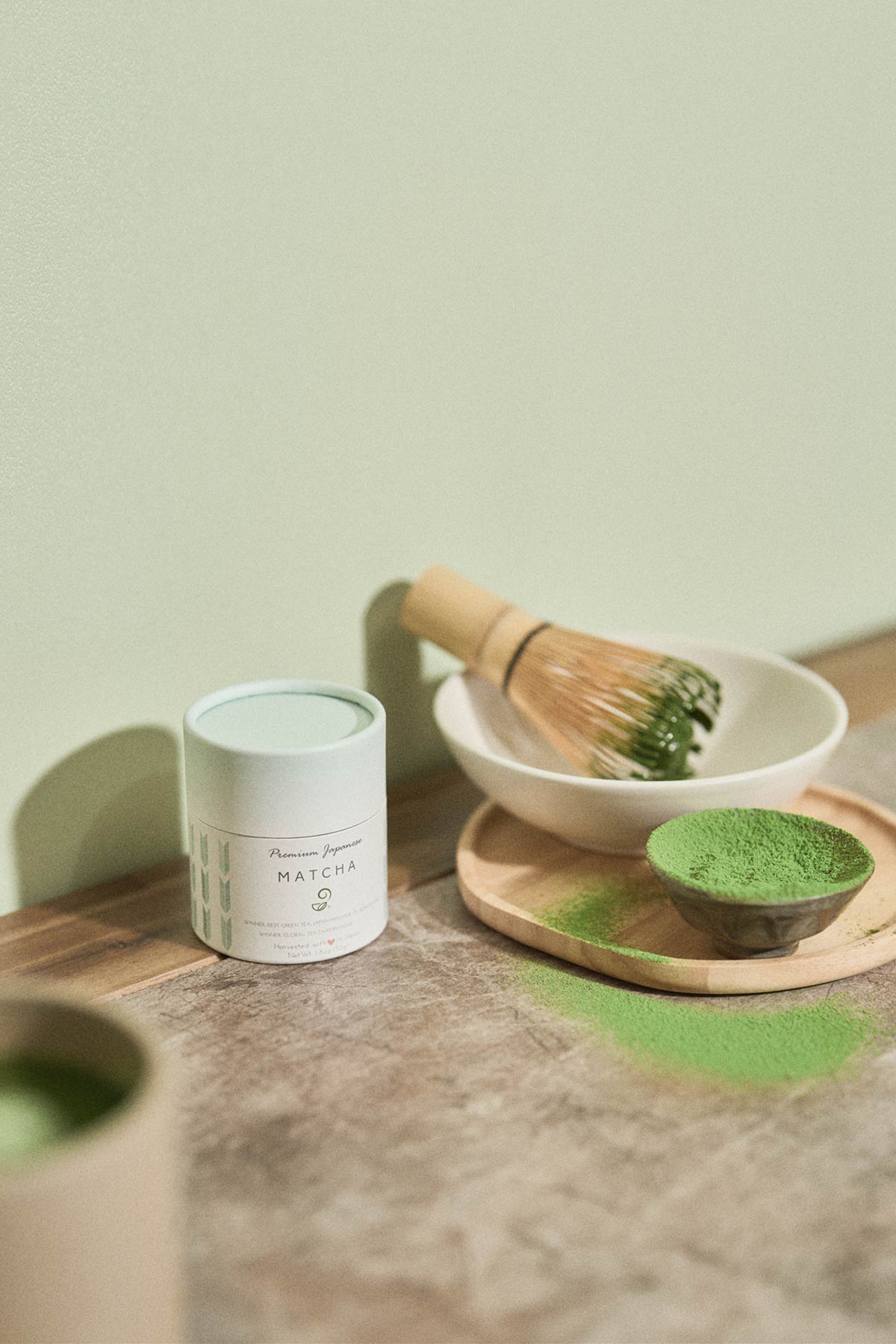
Renowned among top Japanese chefs for its unmatched aroma, this matcha is made by carefully shading the plants before harvest to boost caffeine and amino acids, then meticulously drying, de-stemming, and grinding the leaves into a fine powder. Made from the Yabukita cultivar, this 1.8 oz (50g) matcha comes in a high-quality, air-tight paper tube canister, providing a luxurious and authentic Japanese tea experience.

42 reviews

Genmaicha - Green Tea with Roasted Brown Rice

$30.00
Quick view

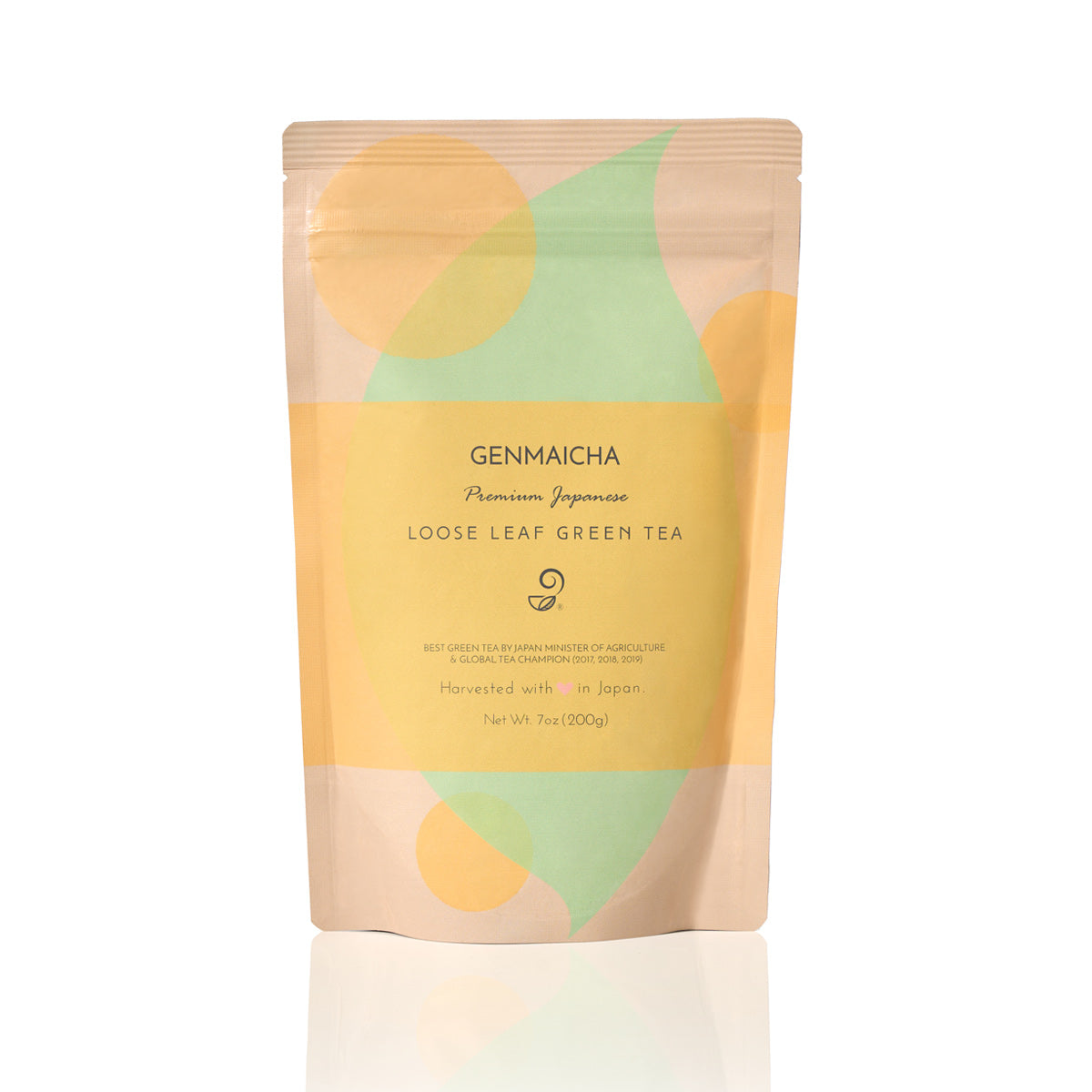
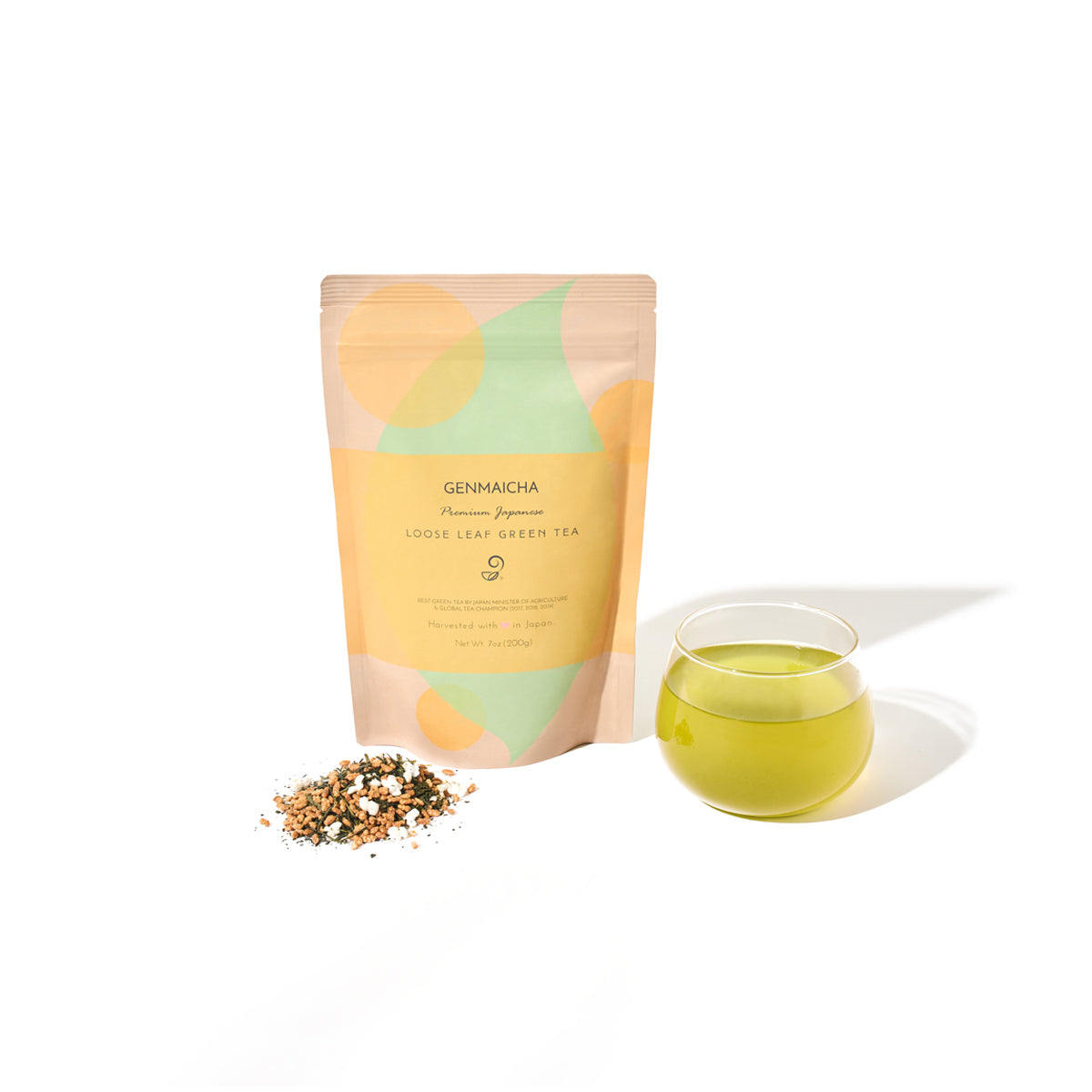
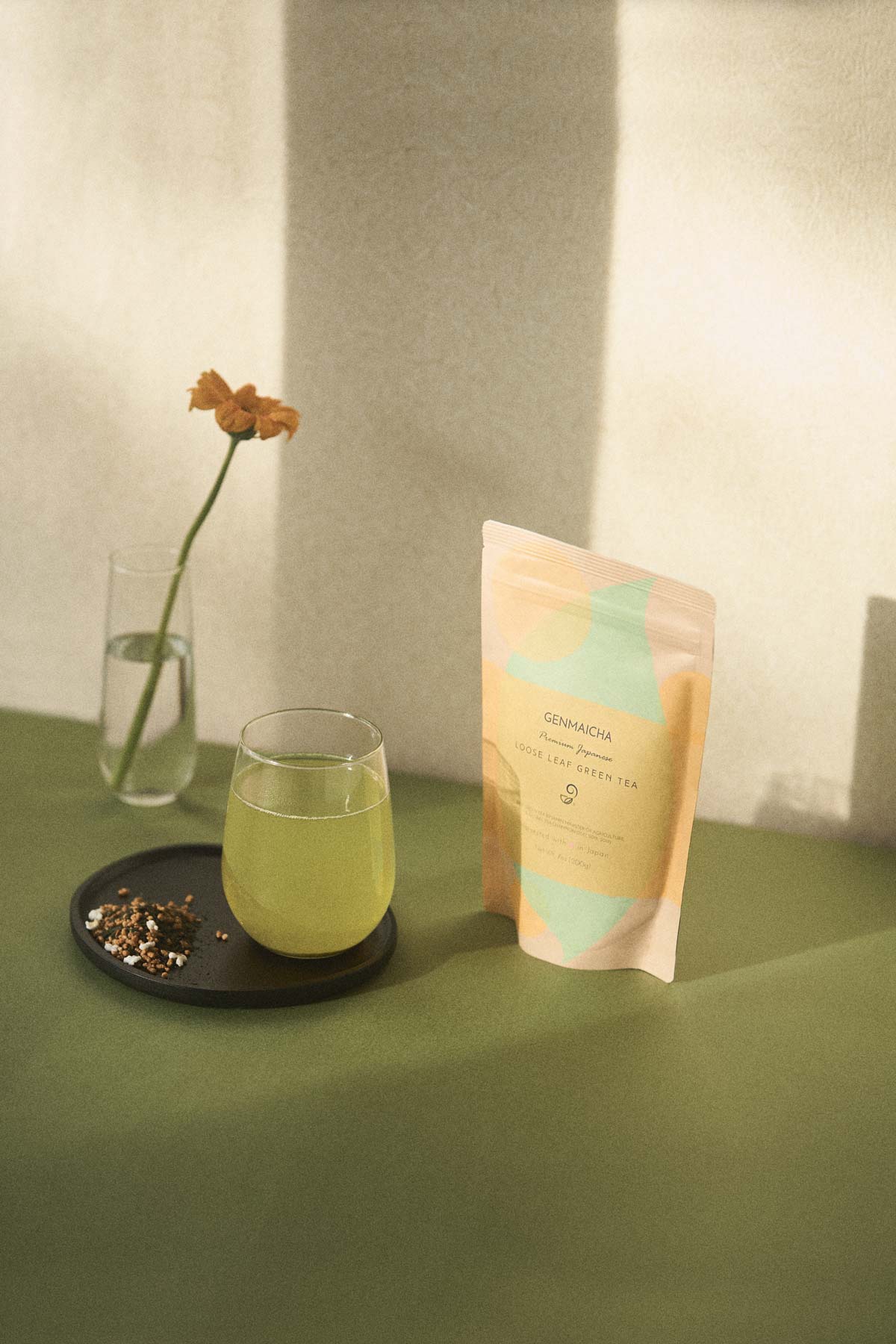
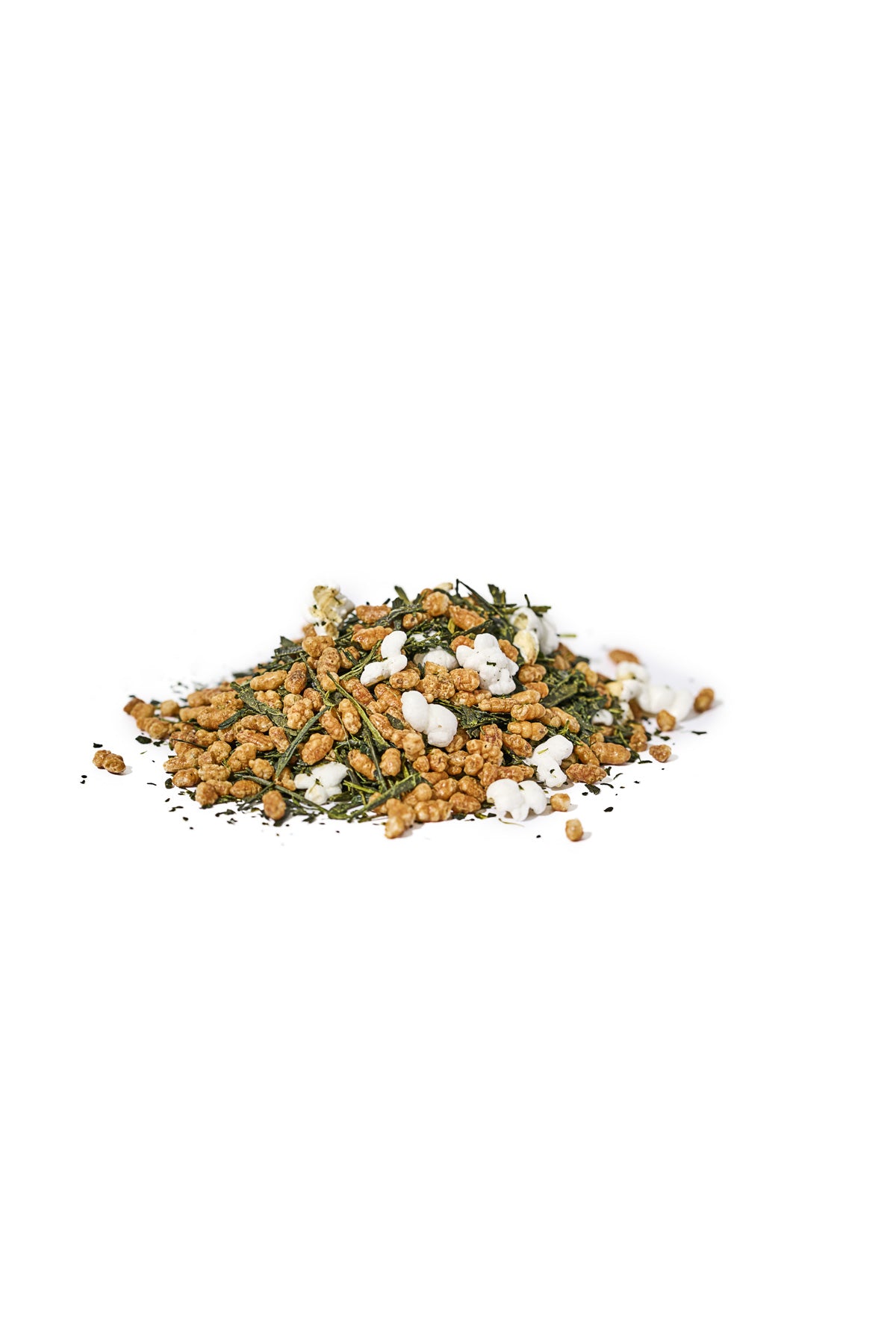
Our premium Japanese Genmaicha blends high-quality green tea with roasted popped brown rice (genmai 玄米), often nicknamed "popcorn tea" because the roasting process sounds like popcorn popping. Popular especially among the older generation in Japan for its mild flavor and lower caffeine content, this tea is easier on the stomach while still offering a rich, comforting taste. The brown rice used is premium Japanese mochi-gome (もち米) sticky rice, enhancing the tea’s nutty, aromatic profile. Made from Fukamushi Sencha and cultivated using the Chagusaba method in nutrient-rich sugarcane soil, this Genmaicha features the Yabukita cultivar and comes in a 7.0 oz (200g) eco-friendly resealable package, enough to steep 50–60 cups.


Related Articles You May Be Interested

Sen No Rikyu – The Tea Master that Changed Japanese Tea Culture Forever
10 Popular Types of Japanese Tea Ceremony - How many do you know?
Everything You Need to Know about Eisai - The Father of Tea
Samurai and Tea
A Brief History Of Japanese Green Tea
The Romance and History of Green Tea
Brief History of Japanese Green Tea: A Cup Full of History and Mystery
30 Surprising History About Japanese Green Tea You (Probably) Didn't Know
10 Must-See Places in Uji, Kyoto for Tea Lovers

Get Free Bonus Books

Join Green Tea Club

Sign up for free to the Green Tea Club to get advice and exclusive articles about how to choose Japanese Tea, and tips, tricks, and recipes for enjoying Japanese tea.

Unsubscribe anytime. It’s free!

About the author

Kei Nishida

Kei Nishida

Author, CEO Dream of Japan

info@japanesegreenteain.com

Certification: PMP, BS in Computer Science

Education: Western Washington University

Kei Nishida is a passionate Japanese green tea connoisseur, writer, and the founder and CEO of Japanese Green Tea Co., a Dream of Japan Company.

Driven by a deep desire to share the rich flavors of his homeland, he established the only company that sources premium tea grown in nutrient-rich sugarcane soil—earning multiple Global Tea Champion awards.

Expanding his mission of introducing Japan’s finest to the world, Kei pioneered the launch of the first-ever Sumiyaki charcoal-roasted coffee through Japanese Coffee Co. He also brought the artistry of traditional Japanese craftsmanship to the global market by making katana-style handmade knives—crafted by a renowned katana maker—available outside Japan for the first time through Japanese Knife Co.

Kei’s journey continues as he uncovers and shares Japan’s hidden treasures with the world.

Learn more about Kei Nishida

Related Posts

Meet Eijiro Tsukada (塚田英次郎): The Charismatic Businessman Behind Cuzen Matcha — Now Available at Japanese Green Tea Co.

Meet Eijiro Tsukada — the man behind Cuzen Matcha. Full guide to the award-winning Matcha Maker, the Pro, and why we're

Read More
Behold: Balmuda's "The MoonKettle" — Where Boiling Water Becomes Art

We were privileged to be invited by Balmuda's Private MoonKettle Launch Event. Here are videos of it and everything you

Read More
OC Japan Fair April 2026 — Visit Us at Booth #A8!
OC Japan Fair Spring 2026 Recap (April 3 - 5 2026)

We were at OC Japan Fair again! April 3-5 2026 with new products, Miki Pon's art debut and more. Here is a recap video f

Read More
1 comment on The History of Japanese Green Tea
  • unkown
    unkownFebruary 24, 2022

    OMG! This cracked me up because it’s sooooo true! T This information-packed blog covers everything from the latest tea flavor profiles Expect tips, tricks, and delicious, foolproof recipes. “Thank you so much for sharing all this wonderful info with the https://.com/collections/coffee! It is so appreciated!!!” “You always have good humor in your posts/blogs. So much fun and easy to read!

Leave a comment

Your email address will not be published..

Cart

Your cart is currently empty.

Start Shopping

Select options