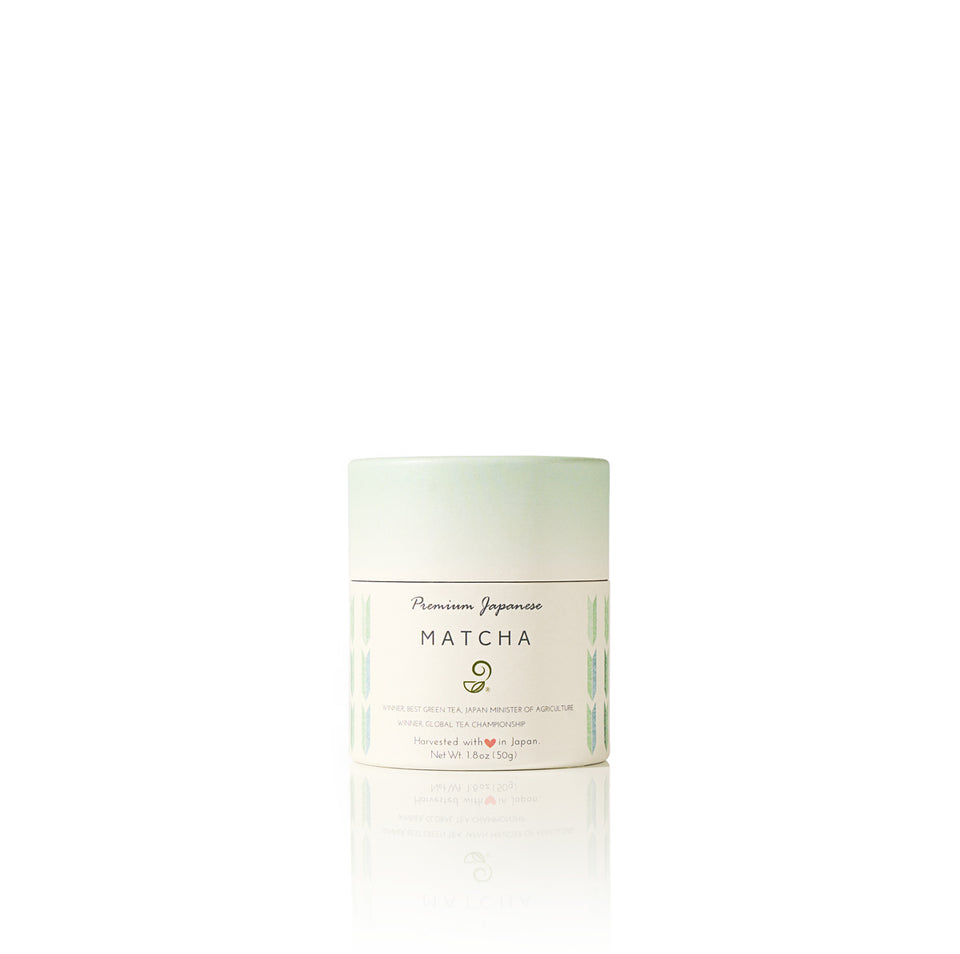
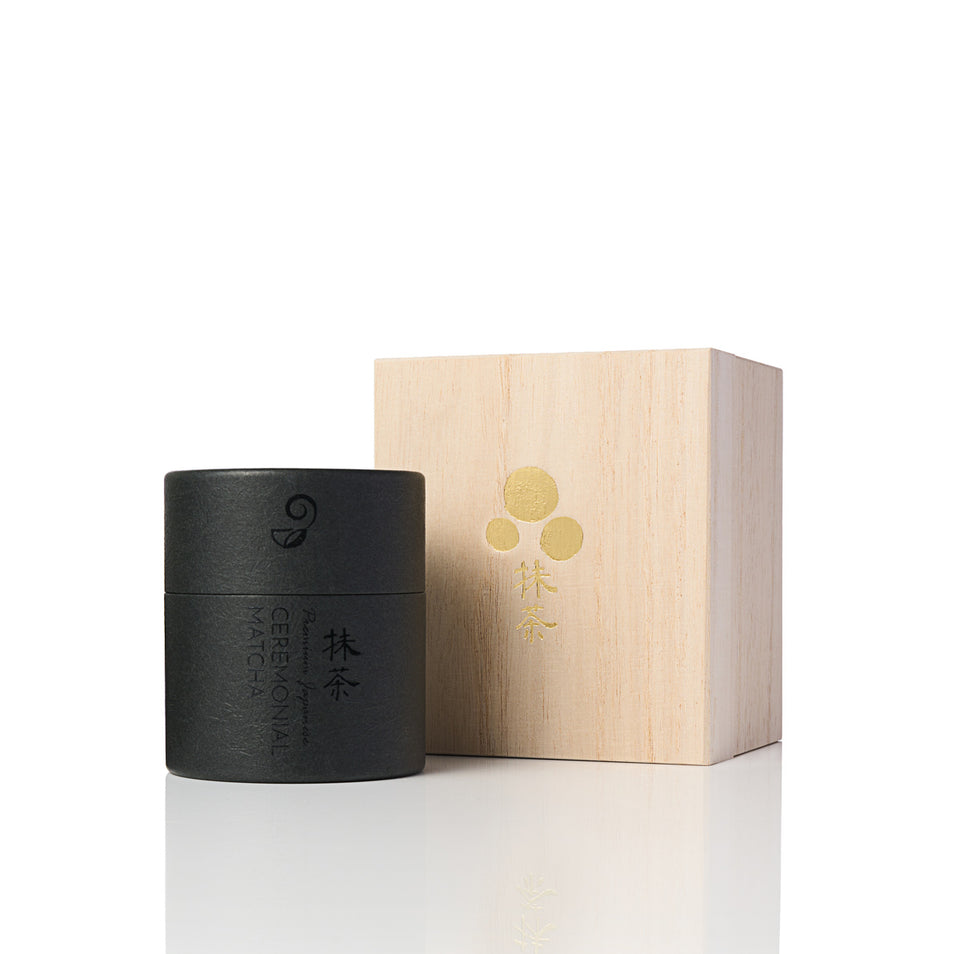
I have some hot news today that I want to share with you. We have been working on this since the spring.
We have a brand new paper package for our most popular award-winning matcha!
What do you think? Isn’t it awesome?

This means a lot to us; do you know why?
We have now completely let go of all our tin can packages to be eco-friendly.
It means a lot to me to be good to the environment.
Did you know tin cans are bad for the environment? I wrote a whole blog about it here if you want to know more…
We also created a brand-new video based on our popular blog post to celebrate this. Please check it out!

Even more, we created a combination set with bamboo and an electric whisk, so you get a 20% discount if you want to get them both.


And in case you do not want to get whisk this time, we are doing a sale on matcha today, so you can be the first to see our new eco-friendly Japanese paper package.
FAQs about Matcha Paper Tube Eco-Friendly Packaging
Why move from tin matcha containers to paper tubes?
Environmental impact, primarily. Tin manufacturing has a meaningful carbon and resource footprint — mining, energy-intensive smelting, industrial waste during production. Paper tubes (kraft paper outer with food-safe interior coating) have a much lower carbon footprint and can compost or recycle more easily than mixed-material tin cans.
The trade-off is shelf-life. Tin protects matcha from oxygen, light, and moisture better than paper alone — paper-tube packaging may need additional internal foil or wax barriers to maintain matcha freshness through storage and shipping. Most paper-tube matcha designs include a foil-laminated interior layer that gets separately recycled or composted.
For customers committed to environmental impact, the small shelf-life trade-off is acceptable. For customers prioritizing matcha freshness above all else, tin packaging remains marginally better. Different priorities, different right answers.
Does paper-tube packaging affect matcha freshness or quality?
Slight reduction in maximum shelf-life, mostly noticeable past the 2-month opened mark. Tin-packaged matcha stays peak for 4-6 weeks after opening; paper-tube matcha stays peak for about 3-5 weeks. The difference is small but real.
Practical: if you're a regular matcha drinker who finishes a 30g tin or tube within 4-6 weeks, the freshness difference is invisible — you're consuming the matcha during peak quality regardless of packaging. The difference matters mainly for occasional users who keep matcha around for months between sessions.
Storage practices matter more than packaging type. A paper tube stored in a sealed zip-lock bag in the refrigerator stays fresher longer than a tin stored in a hot pantry. Internal storage discipline outweighs the packaging choice in practice.
Can I reuse the paper tube for storage after the matcha is gone?
Yes, with limits. Paper tubes work for storing dry items that don't need extreme moisture or oxygen control — small kitchen tools, dried herbs, twine, pencils, anything similar. They're not air-tight enough for storing other tea or coffee at peak freshness, but they handle non-food storage well.
If the tube has an interior foil layer, it can hold dry food items for a while (about as well as a paper coffee bag). Without the foil, just paper, it's cleanly compostable when you're done with non-food uses.
This is part of the environmental upside of paper-tube packaging — the lifespan extends beyond the matcha contents. A reused tube reduces the overall environmental footprint per use, and at end-of-life it composts cleanly. The full cycle is more sustainable than tin even when the tea-storage performance is marginally worse.
Is the paper-tube format common for premium matcha, or is it new?
Increasingly common, still a minority of premium matcha packaging. Several Japanese tea brands have introduced paper-tube options over the past few years as environmentally-conscious customers asked for alternatives to tin. The major heritage brands (Ippodo, Maeda-en) still use mostly tin; smaller specialty brands and direct-to-consumer brands have led the paper-tube transition.
Outside Japan, the paper-tube trend is even more pronounced — Western specialty tea brands have been faster to adopt sustainable packaging because Western consumers tend to ask harder questions about packaging environmental impact than Japanese domestic customers do.
Expect the trend to continue but slowly. Tin is unlikely to disappear entirely; paper tubes will probably grow to a meaningful minority of premium matcha packaging over the next 5-10 years. Customers can expect to see both options coexisting at most premium tea retailers.
If environmental impact matters to me, what packaging should I prefer?
Glass jars in dark cabinets are the gold standard for environmental impact: indefinitely recyclable, reusable for storing other things, no chemical leaching. Paper tubes (with foil interior or compostable cellulose interior) are the second-best for most matcha purchasing.
Refill programs at brick-and-mortar tea shops are underrated when available. Bring your own container, fill it with matcha by weight, no packaging waste. A handful of specialty tea shops in major cities run these programs.
For mail-order matcha specifically (where shipping protection matters), the realistic environmental compromise is paper-tube outer packaging plus foil interior plus minimal plastic in shipping. Most environmentally-conscious matcha brands have moved to this configuration. Glass-jar shipping isn't economical for most online retailers — too heavy, too breakable.
TRY OUR MATCHA
Matcha - Ceremonial Japanese Powdered Green Tea
This ceremonial matcha is crafted from the finest Japanese green tea, grown in nutrient-rich soil enhanced with compostable grasses and sugarcane through the Chagusaba method, which gives the tea a natural sweetness and exceptional flavor. In collaboration with researchers from Shizuoka University, farmers ensure that the soil quality consistently produces tea of the highest standard.
Renowned among top Japanese chefs for its unmatched aroma, this matcha is made by carefully shading the plants before harvest to boost caffeine and amino acids, then meticulously drying, de-stemming, and grinding the leaves into a fine powder. Made from the Yabukita cultivar, this 1.8 oz (50g) matcha comes in a high-quality, air-tight paper tube canister, providing a luxurious and authentic Japanese tea experience.
Matcha and Chasen Whisk Gift Set
This set features a premium matcha made from the finest Japanese green tea, cultivated in soil enriched with compostable grasses and sugarcane to bring out a natural sweetness. In collaboration with researchers from Shizuoka University, farmers carefully study soil conditions to enhance flavor quality. The tea plants are shaded before harvest to increase caffeine and amino acid content, then skillfully dried, de-stemmed, and ground into a fine powder, creating a matcha with a luxurious aroma and taste highly regarded by top Japanese chefs.
Paired with the matcha is a traditional 100-prong bamboo chasen whisk, considered the highest-grade among matcha tools. Unlike common 40-60 prong versions, this finely crafted whisk is widely used in high-end tea ceremonies in Japan. Its balanced dimensions offer the perfect design for preparing a smooth and frothy bowl of authentic matcha.
Ceremonial Japanese Powdered Green Tea and Electric Matcha Whisk
This starter gift set brings together premium ceremonial Japanese matcha and the Elementi electric matcha whisk, giving you everything you need to prepare smooth, authentic matcha at home. The matcha is 100% made in Japan, produced from carefully shaded green tea leaves that are stone-ground into a vibrant, fine powder prized for its rich umami, natural caffeine, and amino acid content.
Paired with the matcha is the Elementi electric whisk, designed for quick and effortless preparation. Its powerful motor creates a smooth, frothy cup in seconds, while the ergonomic, soft-touch grip ensures comfortable handling. This item ships within the USA only (excluding HI and AK).
Matcha - Japanese Limited Reserve Ceremonial Green Tea - (Global Tea Champion 2018, 2025)
This Premium Ceremonial Grade Matcha is one of the most luxurious matcha teas available, crafted from carefully cultivated Japanese green tea grown in nutrient-rich sugarcane soil using the Chagusaba method. Traditionally reserved for high-end tea ceremonies in Japan and loved by many tea masters, this matcha was once unavailable outside of Japan and is now finally accessible to U.S. consumers. Every step of its production, from shading the tea plants to increase caffeine and amino acid levels to the meticulous removal of stems and veins before grinding into a fine powder, is handled with a blend of advanced technology and time-honored tradition. Made from the Yabukita cultivar, this 30g (1.05 oz) ceremonial matcha offers a vivid color, unforgettable aroma, and the highest standard of flavor, earning recognition as a Global Tea Champion in 2018 and 2025.
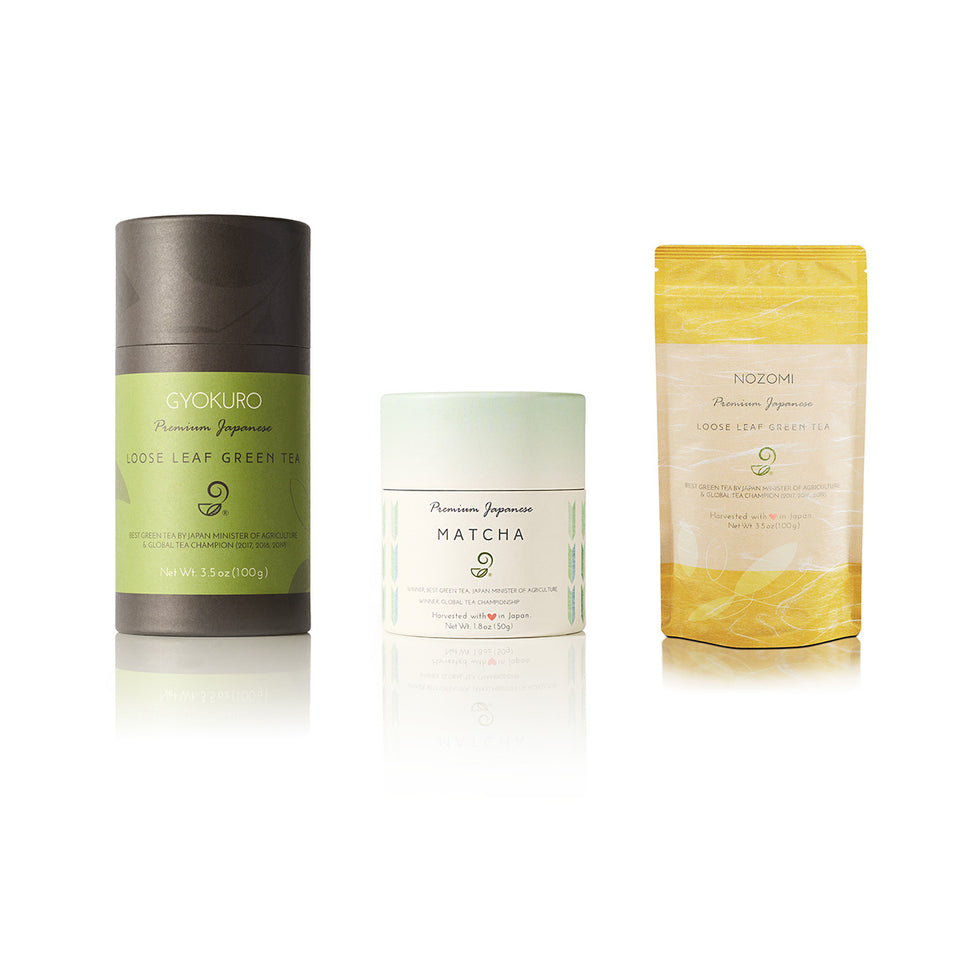
The Covered Trio Gift Set - Ceremonial Matcha, Gyokuro, and Nozomi Japanese Green Tea Set Package
This tea set features three premium Japanese green teas, all cultivated in nutrient-rich sugarcane soil to enhance their flavor and natural sweetness. Gyokuro, a prized shaded green tea, is grown under special mats for 20 days to increase caffeine and amino acid levels, resulting in a rich, sweet taste and deep mossy green color. The set also includes a luxurious matcha, crafted from carefully shaded, hand-processed leaves and renowned for its smooth, aromatic flavor, developed in collaboration with researchers from Shizuoka University to maximize the benefits of the enriched soil. Completing the collection is Nozomi, a fine Kabuse-cha or "Covered Green Tea," where young tea leaves are gently shaded just before sprouting, producing a soft, refined flavor perfect for tea enthusiasts.
Related Articles You May Be Interested
Get Free Bonus Books
Sign up for free to the Green Tea Club to get advice and exclusive articles about how to choose Japanese Tea, and tips, tricks, and recipes for enjoying Japanese tea.
Unsubscribe anytime. It’s free!
About the author
Kei Nishida
Author, CEO Dream of Japan
Certification: PMP, BS in Computer Science
Education: Western Washington University
Kei Nishida is a passionate Japanese green tea connoisseur, writer, and the founder and CEO of Japanese Green Tea Co., a Dream of Japan Company.
Driven by a deep desire to share the rich flavors of his homeland, he established the only company that sources premium tea grown in nutrient-rich sugarcane soil—earning multiple Global Tea Champion awards.
Expanding his mission of introducing Japan’s finest to the world, Kei pioneered the launch of the first-ever Sumiyaki charcoal-roasted coffee through Japanese Coffee Co. He also brought the artistry of traditional Japanese craftsmanship to the global market by making katana-style handmade knives—crafted by a renowned katana maker—available outside Japan for the first time through Japanese Knife Co.
Kei’s journey continues as he uncovers and shares Japan’s hidden treasures with the world.