Table of contents
The Japanese Tea ceremony, known as Chado (茶道 the way of tea) or Cha no yu (茶の湯 hot water tea, or hot water of tea), is part of Japanese culture. It is a tradition where they ceremonially prepare, serve, and drink matcha. Many rituals and practices turn into tea ceremonies. You might be asking about when they practice those tea ceremonies and what occasion they celebrate. We will take a journey through the types of tea ceremonies and how they appreciate the tea leaves.
Tea ceremonies are one of the most exciting parts of the Japanese cultural experience. Let’s go and learn more about them.
Kuchikiri-no-chaji (口切りの茶事)
Kuchikiri-no-chaji is the new year of tea and is held every early November. This is the most formal tea event. Kuchikiri means mouth cutting. Every year, when tea leaves are harvested in the spring, they are stored in a clay jar (chatsubo) in a cool place to dry out and become usable tea leaves.
The coming of winter is celebrated by breaking the seal of the jar. The practice is called Kuchiki. The ceremony is for the opening of the new jar of tea. After all, the fresher the tea, the better the flavor, and so if you're going to be cold, you might as well be happy enjoying tea.
The Kuchikiri-no-chaji is not only to celebrate the fresh tea but also to welcome the cold, long days of winter.

Tatami mats and the paper on sliding doors are changed. A warm cup of tea is served to guests. Then, guests will sit and wait outside. Upon entering the room, they will see the alcove called a tokonoma, a kettle, mats, a furnace, or a sunken hearth (Ro 炉) inside the tatami mat and decorations. In tokonoma, the chatsubo is displayed, and the scroll is hung on the wall. The host brings the record of contents (iri nikki) and lets the primary guest choose the tea for the ceremony. Once the chatsubo is opened, the tea pouch (where they stored the leaves) is taken into the mizuya (water room) or kitchen to grind the tea using a mortar to prepare the first thick tea serving. While grinding the tea, a Kaiseki is being served.
This tea event begins at noon and continues for around four hours with Kaiseki (a traditional multi-course Japanese dinner) and thick and thin tea.
Long ago, many families would even bury their tea leaf jars in the mountains to ensure that their tea leaves would retain the strongest flavor and aroma possible. But today, many tea producers use cellars or even special tea refrigerators.
Nagori-no-chaji (名残の茶事)
Nagori means the sorrow of parting ways. Before the end of the autumn season in October, right before the Kuchikiri-no-chaji, there is the Nagori-no-chaji to enjoy the last remaining tea leaves from last year's batch. It is a sad occasion to let go of the old to anticipate the new. The Japanese people see what is left in the warm months before the winter season comes. By enjoying happy times in life, such as the Kuchikiri-no-chaji, they must also go through difficult or burdensome times, such as the Nagori-no-chaji. Since these are the last remaining tea leaves from the previous year, the flavor is not as strong as a fresh batch.
Another set of seasonal tea ceremonies in Japan that complement each other are the Akatsuki-no-chaji and the Yuuzari-no-chaji.
Akatsuki-no-chaji (暁の茶事)
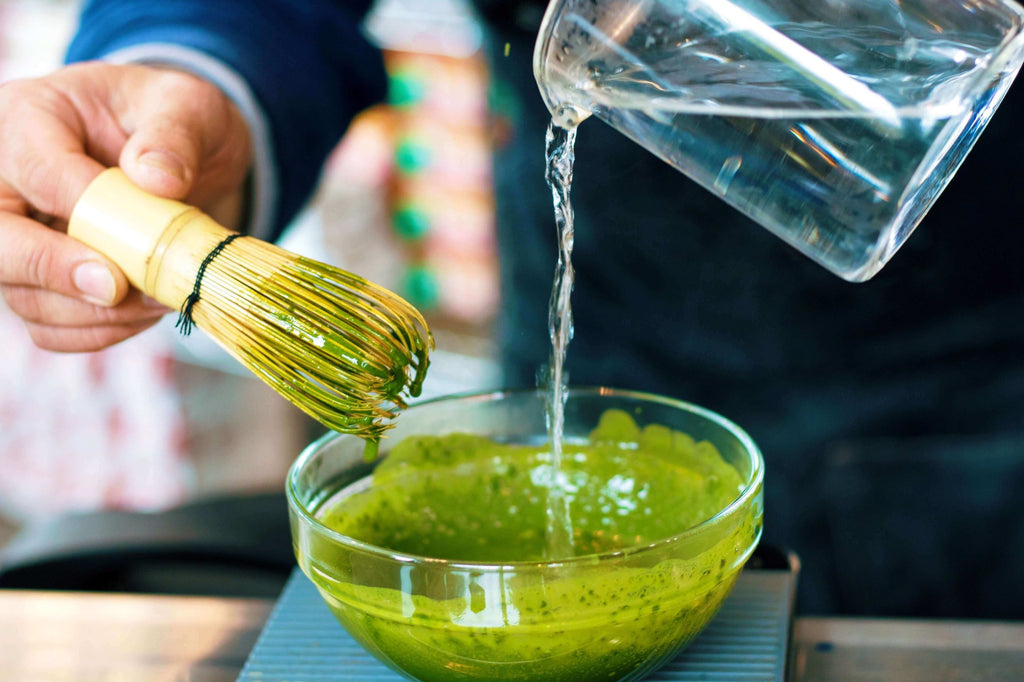
The Akatsuki-no-chaji, or dawn tea ceremony, is held in the early morning of a cold winter day, just as dawn breaks. People walk out of the tea hut to light the traditional lamps in the garden. The host and guests drink tea and have candlelight or a lamp waiting for sunrise through the small windows in the tea hut. The tea, utensils, and even people's faces look different than when you entered as light rushes when the sun slowly rises. Likewise, the Yuuzari-no-chaji.
Yuuzari-no-chaji (夕ざりの茶事)
Yuuzari-no-chaji is the opposite of Akatsuki-no-chaji. From sun to candlelight, people will drink tea to watch the sunset. It is held at dusk in the summer on a warm day, just as the sun sets.
Tea drinkers must rely on their memory to recall what the contents of the room look like. Then, they can hear the cicada noises while drinking and having a relaxing chat.
Asa-cha (朝茶)
During the summer, Asa-cha is an early cool morning tea ceremony to appreciate the cold surroundings before getting hot. Then, they light the charcoal to heat the tea kettle.
Yobanashi (夜咄 )
Yobanashi is an evening tea on a long winter night. Tea drinkers will enjoy the night with garden lanterns and candlelight in the tearoom.
Shoburo (初風炉)
Shoburo is celebrated to honor the first use of the furo (風炉 / a portable brazier) every year. They do this tea ceremony in the spring, every month of May. The ceremony is long, with lots of speeches, gestures, and formalities.
Chaji (茶事)
We are now back to describing Chaji, a formal tea gathering. Since Chaji is so long, the tea class or lesson is typically broken up into parts for students to practice. The traditional Japanese teaching style encourages them to guide their students rather than only show them tea. They are not only drinking thick tea (koicha 濃茶), but they also eat meals. They drink thin tea after eating. The whole gathering generally lasted for around 4 hours.
Hatsugama (初釜)
The Hatsugama is the boiling of the first kettle and is typically the only time that a tea host or teacher will make tea for the students, sometimes with a bit of help from some students.
Chakai (茶会)
Chakai is a Chaji but a small gathering to show hospitality to selected guests. They eat light meals with some sweets. and thin tea (usucha 薄茶).
Tea drinking is enchanting, and you will appreciate the Japanese culture more if you try to participate in a tea ceremony. In addition, you will feel less stress, which will make you rest your mind for a while.
Watch to learn more about different types of Japanese tea ceremonies with Obāchan and Kei.
If you like this video, please click here to subscribe to our YouTube Channel so that you don't miss future videos from us. Subscribe to YouTube Channel
Video Length: - 8 minutes 53 seconds
Click to Subscribe to my YouTube ChannelCharacters
Young Kei: A male student who loves all things green tea. While he is most familiar with modern adaptations of Japanese tea such as matcha, green tea cake, green tea chocolate, and even bubble tea, he is very interested in the rich tradition of Japanese tea and the culture behind it.
Obāchan: This is ChaCha’s grandmother. She is old and wise and knows all about the history of Japanese Tea. She is very happy that young people like Keiichirou are still interested in tea, and she enjoys teaching them about traditional tea. Likewise, she is fascinated by all the new types of tea and is always happy to learn from the younger generation.
Set 1: A Japanese style living room
Obāchan tells Young Kei about the various types of tea ceremony
K: *Door shuts* Tadaima! I’m home! Brrrrrr it’s freezing outside!
O: Okarinasai! Welcome back! I’ll brew a nice hot cup of tea right now to get you all warmed up!
K: Thanks Obāchan!
*Sips tea*
Ahhhhh that’s so much better! I feel all warmed up right to the bones! There’s nothing like a nice hot cup of tea on a cold winter day.
O: I completely agree! And so do many others.
K: They do?
O: Of course! It’s for that reason that there are a number of special types of tea ceremonies that are only held in the winter time.
K: Wait, wait, wait, waiiiiit a minute!?!? You mean to tell me that there are more than one type of Tea ceremony?
O: Why of course! For example, the Kuchikiri-no-chaji that is held every year in early November.
K: The whatchi kiri no chaji???
O: *Laughs* The Kuchikiri-no-chaji.
K: Say that three times fast, Obachan!
O: ….
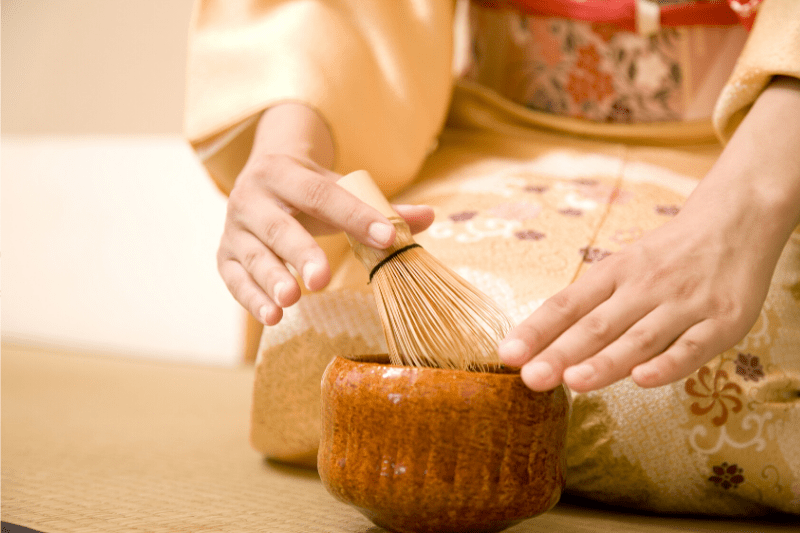
O:Every year when tea leaves are harvested in the spring, they are stored in a clay jar in a cool place so that they can dry out and become usable tea leaves. Long ago many families would even bury their tea leaf jars in the mountains in order to ensure that their tea leaves would retain the strongest flavor and aroma possible. But today many tea producers use cellars or even special tea refrigerators.
K: That makes sense, go on.
O: Just like you mentioned before, nothing beats a warm cup of tea on a cold day which is why the beginning of winter is celebrated with the opening of the new jar of tea. After all, the fresher the tea, the better the flavor and so if you’re going to be cold, you might as well be happy enjoying tea.
K: So in other words, the Kuchikiri-no-chaji is not only to celebrate the fresh tea, but also to welcome the cold, long days of winter?
O: Exactly! Or should I say, exact-Tea!
K: ….
K: So are there any other seasonal tea ceremonies in Japan
O: Why of course! For example, right before the Kuchikiri-no-chaji is the Nagori-no-chaji to enjoy the last remaining tea leaves from last year's batch.
I am not going to say this three times.
Since this is the very last remaining tea leaves from the previous year, the flavor is not quite as strong as a fresh batch.
K: It sounds kind of like a sad occasion…
O: In a way it is. The atmosphere for the Nagori-no-chaji is a bit somber but it reminds us that to enjoy the happy times in life such as the Kuchikiri-no-chaji, we must also go through difficult or burdensome times such as the Nagori-no-chaji.
K: Wow! That’s really deep! It’s almost like two types of the same coin!
O: Precisely! Another set of seasonal tea ceremonies in Japan that complement each other are the Akatsuki-no-chaji and the Yuuzari-no-chaji.
K: How are they different?
O: The Akatsuki-no-chaji is held in the early morning of a cold winter day just as dawn breaks. Likewise, the Yuuzari-no-chaji is held during dusk in the summer on a warm dau just as the sun sets.
K: But wouldn’t it be too dark for a tea ceremony if it's held either before sunrise or after sunset?
O: Not quite. These tea ceremonies are held partially by candle light. As the sun rises, you longer need the candles and then suddenly, everything about the room from the utensils, to the tea, to even peoples faces looks completely different than when you entered as light rushes in. Likewise, during the Yuuzari-no-chaji, you feel the world start to fade away as the sun sets and you must rely on your memory to recall what the contents of the room look like.
K: Wow! That sounds like an unreal experience! I cannot wait to try both tea ceremonies out for myself!

O: They are something truly special indeed. Another pair is the Asa-cha and the Yobanashi.
K: I’ve heard of these! The Asa-cha is an early morning tea in winter and the Yobanashi is a evening tea in the winter!
O: Looks like all those tea ceremony classes have been paying off! You’ve become a real “Smar-tea”!
K: Another type of ceremony we learned about in tea ceremony class is the Shoburo. This is the first use of the portable brazier in the spring. I got to attend one last May and it was very long with lots of speeches and formalities.
O: Yes. As you know, there are two categories of tea ceremonies in Japan. A Chakai, which is a small informal gathering with some sweets and such, and the Chaji, a formal ceremony such as you have described and we have been talking about today. These are typically much longer and have a lengthy process that is very precise.
K: Speaking of which, my tea ceremony sensei has said something about holding a Hatsugama sometime soon. Do you know what that is?
O: A Hatsugama? Wow, you are in for a treat! The Hatsugama is the boiling of the first kettle and is typically the only time that a teacher will perform a full Chaji for their students.
K: You mean that I get to see Sensei perform? During class, she usually just guides and instructs me on how to do whatever aspect of the Chaji we are practicing that day! I’ve never actually seen her do it though.
O: It is indeed special in that way. Since Chaji are so long, during class it is typically broken up into elements for students to practice and the traditional Japanese teaching style encourages them to guide their students rather than to show them.
K: I never thought of it like that! Speaking of which, I’ve got class in a bit but I’ve got to run! Thanks for the tea Obāchan and for teaching me all about types of tea ceremonies!
O: Oh before you run, please subscribe to my grand daughter ChaCha’s Youtube Channel. She teaches a lot about Japanese tea.
K: Yes, Obachan. Bye!
*End*

FAQs about Types of Japanese Tea Ceremony
What's koicha vs usucha — and when do you drink each?
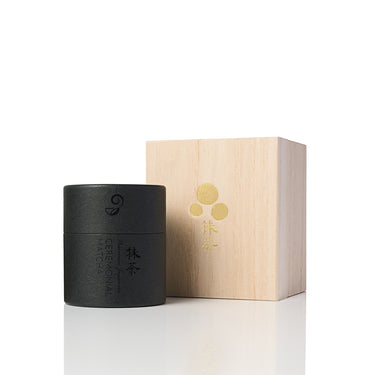 Matcha - Japanese Limited Reserve Ceremonial Green Tea - (Global Tea Champion 2018, 2025)
From $250.00 USD
USD
/
Matcha - Japanese Limited Reserve Ceremonial Green Tea - (Global Tea Champion 2018, 2025)
From $250.00 USD
USD
/
Are there modern or simplified tea ceremonies for daily life?

Related products

10 reviews
$179.00 USD
$159.99 USD
USD
/
The Sencha Lover Gift Set - Premium Japanese Green Tea Set Package


Get Free Bonus Books

Sign up for free to the Green Tea Club to get advice and exclusive articles about how to choose Japanese Tea, and tips, tricks, and recipes for enjoying Japanese tea.
About the author
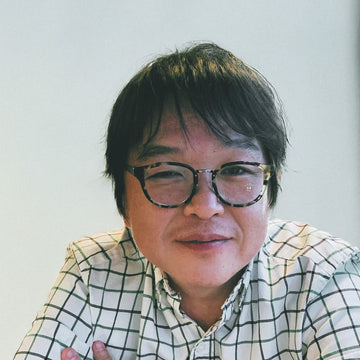
Kei Nishida
Author, CEO Dream of Japan
Certification: PMP, BS in Computer Science
Education: Western Washington University