Skip to content

What does Umami mean for Tea Drinking?

As kids, we are taught that there are four basic tastes: salty, sour, sweet, and bitter, which are represented by a map of the tongue, which we probably did memorize when we were younger.

Not to burst your bubble, but experts have debunked the theory that a certain part of our tongue specifically detects a certain taste. Also, we do not just have four basic senses of flavor; instead, we have five! Namely salty, sour, sweet, bitter, and UMAMI.

You've probably watched a YouTube video or read food-centric blogs and articles and have encountered the word umami. And you probably wondered, "What on earth is umami? Is that Asian food? Seafood? A type of beef? Is that a good thing or a bad thing?

Well, it is a great thing! And you’ve probably tasted umami, because whenever you eat, you’ll taste umami.

I will first explain exactly what umami is and then touch on how it relates to tea. Keep reading, as I also added a couple of interesting facts about umami at the end of the article.

What is Umami?

Umami (oo·maa·mee) うま味 is a Japanese term coined in the 1900s by Kikunae Ikeda, which means "rich flavor," "indescribable and intense flavor," "delicious," or "pleasant and savory taste."

Ikeda came up with the term umami when he was eating a bowl of seaweed soup (dashi) and found himself speechless since he could not describe the flavor and sensation in his tastebuds while eating the soup.

The Umami and Glutamate Connection

Glutamate is a kind of amino acid that naturally occurs in a lot of foods, such as dairy, meat, fish, and vegetables. As you cook these foods, natural glutamate breakdown takes place, which turns into L-glutamate, which makes food delicious and flavorful.

It is also responsible for giving your cooked meat, cheese, vegetables, and fish a complex and rich flavor that takes you into a flavorful dining experience. thus giving birth to monosodium glutamate, or MSG, as we all call it.

Does MSG Equate to Umami?

Sodium, the salt of glutamate, is known as the most common amino acid in our bodies and has different characteristics and tastes of savoriness than sweet, salty, sour, and bitter. Which is why you could say that MSG somehow equates to umami, since MSG, when added to any dish, will automatically be more flavorful.

However, umami is a tad bit subtler since it occurs naturally. Just like how salt is naturally readily available everywhere. And there are also naturally occurring sweeteners such as sugarcane and honey. While sour and bitter things can be found in a lot of fruits and vegetables, they perfectly balance out any dish while complementing its flavor palette.

Umami-filled Food: Everyone’s Guilty Pleasure

A lot of food and cuisine from all around the world contain some level of umami. However, some are stronger than others; cheeses, mushrooms, beef, seafood, green teas, and tomatoes are foods that are exceptionally high in umami.

Savory burgers, pizzas, tacos, pho, matcha latte, teas, and steak are such crowd favorites in terms of people who are seeking an umami-filled dining experience.

Umami and Tea Drinking

Green tea is naturally rich in glutamate, which is why it is famous for its savory and rich taste that everyone goes crazy about.

We probably know the benefits of drinking green tea and all that jazz, but let’s dive deeper into why we are so addicted to its taste. Is it its astringency? Its bitterness but rich flavor? Is it its sweetness? Well, it’s probably a mixture of them all!

And, everyone seems to not get satiated by green tea or matcha since it strikes a perfect balance of sweetness, bitterness, astringency, and, of course, UMAMI.

However, there are different levels of umami:

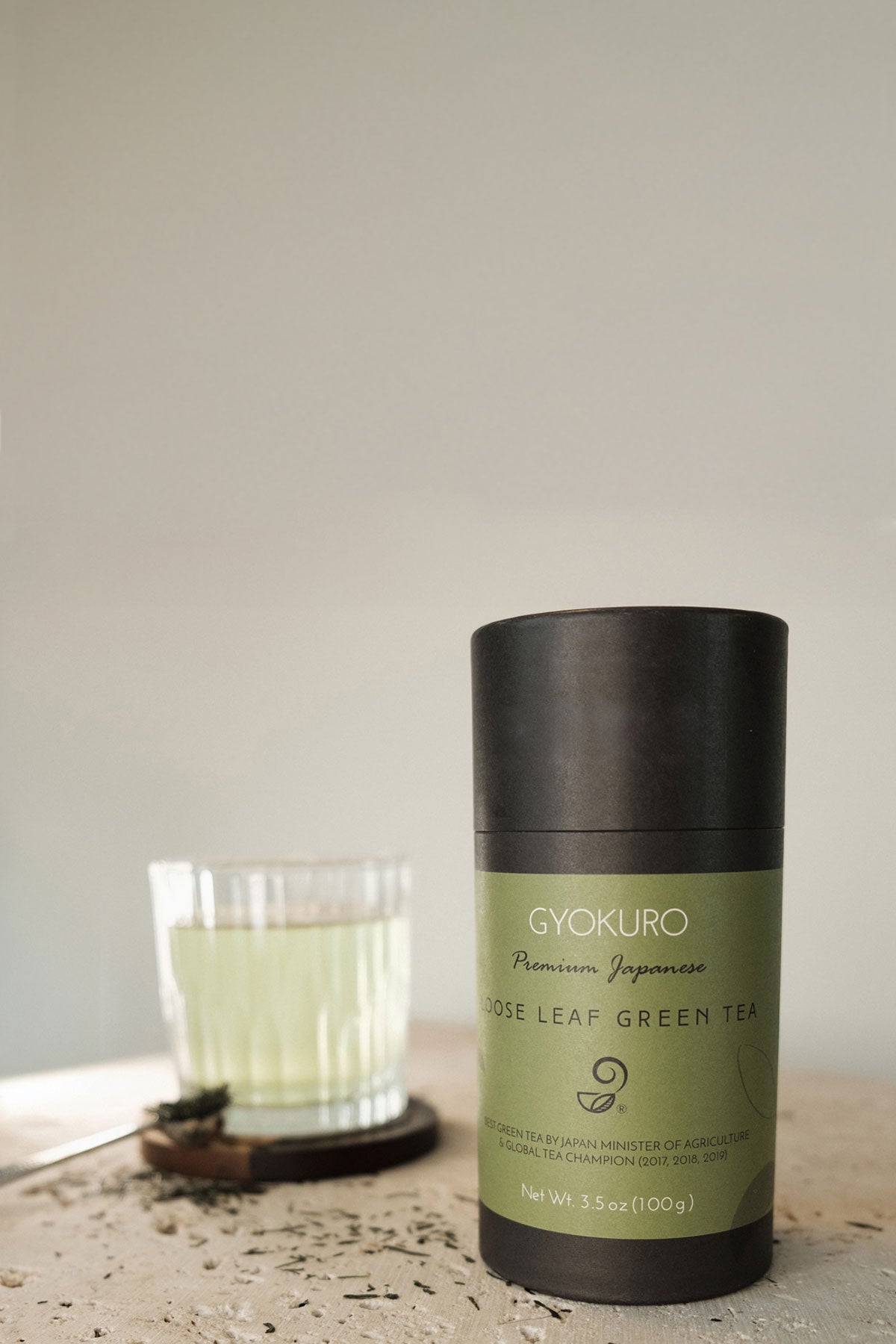
  • Gyokuro and Hojicha contain the highest level of glutamate among green tea varieties, containing a whopping 2500mg of glutamate! Which clearly explains its high level of umami.
  • Sencha, on the other hand, offers the sweetness that some people are looking for. It may be a bit mild for some, but for people who are just starting to explore green teas, this will be a perfect starting point. (Note: Gyokuro can be considered sencha but has higher glutamate.)

    Interesting Umami Facts

    Other than devouring and loving umami-centric food and beverages, here are some interesting facts about them!

  • Umami and Human Evolution

  • Just like the theory of evolution, our love for umami evolved as we humans revolutionized our dining experience. From craving sweet or savory foods to having a love-hate relationship with foods that are quite bitter.

  • Naturally Delicious

  • As we all know, we always have to season our food to taste. However, did you know that the moment you cook your meat, seafood, or vegetables, it breaks down its glutamate, which turns it into L-glutamate, which makes everything taste better? It also applies to the process of ripening fruits or vegetables as well as cheese’s aging process.

  • Umami and Breast Milk

  • Did you know that umami is basically the first thing that babies who were breastfed ever tasted? Well, breast milk contains a high concentration of umami since it is also rich in amino acids, which help boost the baby’s immune system.

    There you have it! Umami isn’t as superficial as some people make it seem. In fact, this magical fifth taste is basically found in most foods that we eat, and it definitely makes everything so much better.

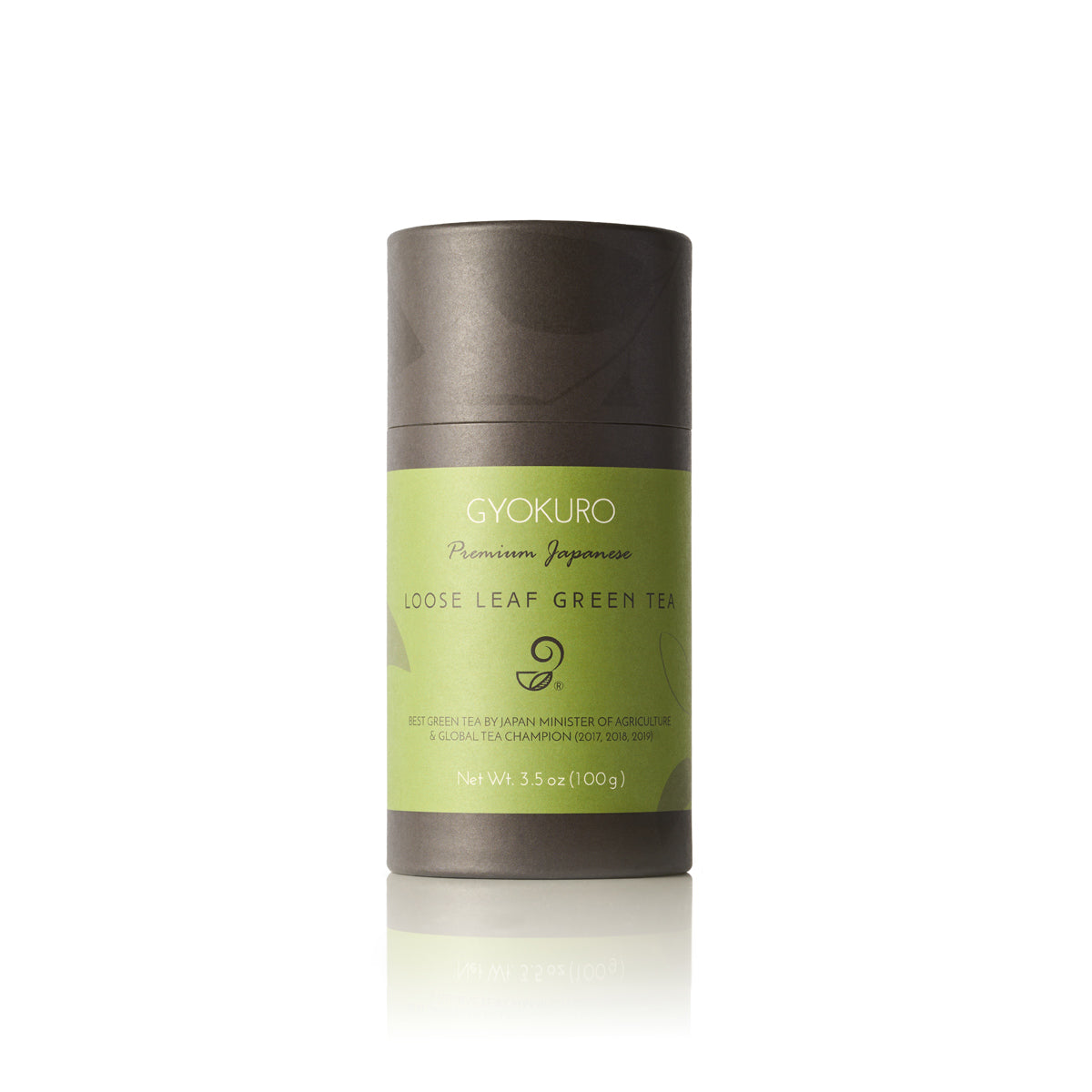
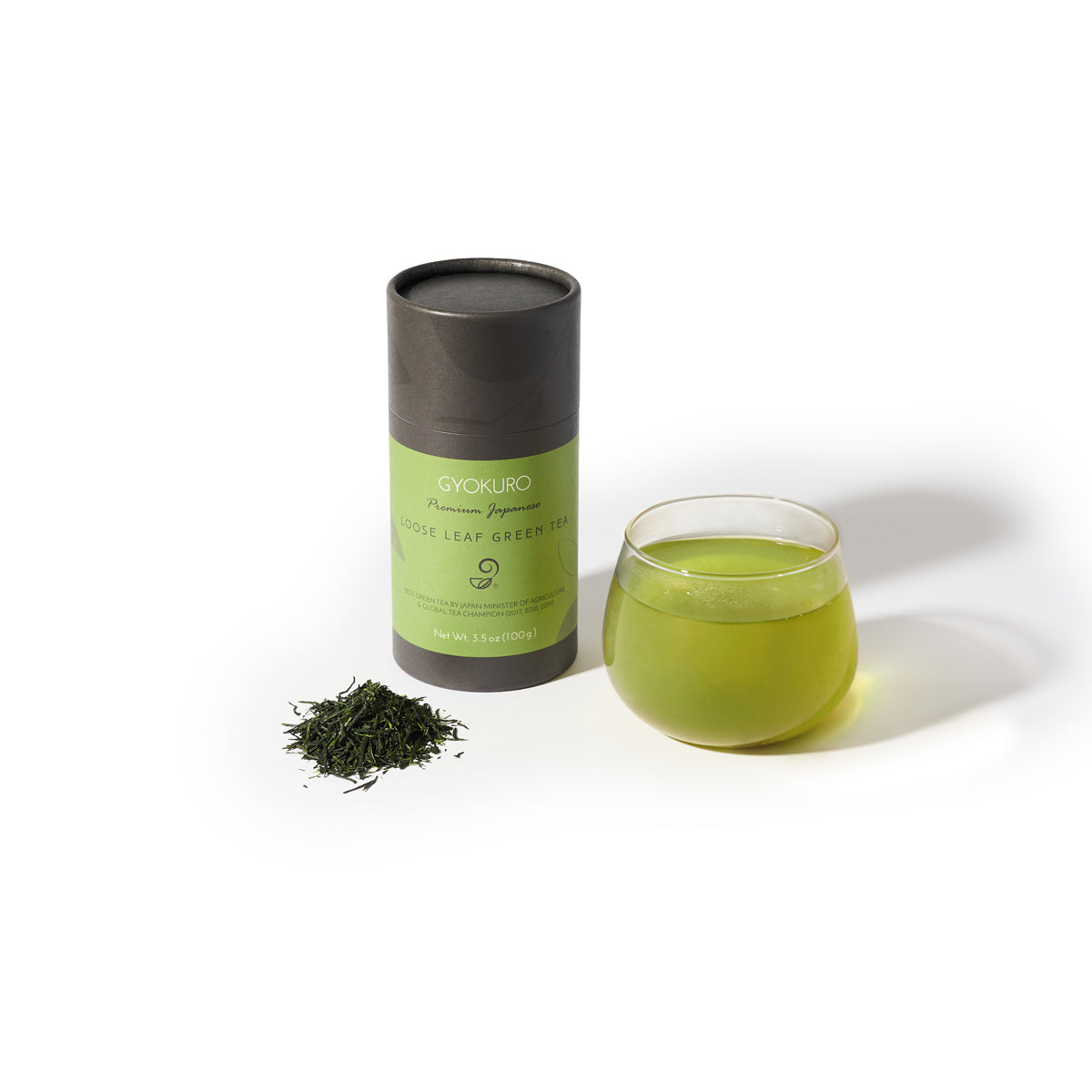
    Buy Premium Japanese Green Tea with Rich Umami

    FAQs about Umami in Tea Drinking

    What is umami in tea, exactly — and is it the same umami as in food?
    Yes, same chemistry. Umami (うま味, "savory deliciousness") is the fifth basic taste, alongside sweet/sour/salty/bitter, and it's triggered by glutamate and certain amino acids. In food, umami comes from glutamates in tomato, parmesan, mushrooms, fish sauce. In Japanese green tea, umami comes from L-theanine — an amino acid that's rare outside Camellia sinensis and accumulates especially in shaded teas.

    The reason umami is more prominent in Japanese green tea than in any other tea: Japanese cultivation tradition deliberately maximizes L-theanine through shading. Gyokuro (玉露) and matcha (抹茶) — both shaded teas — have the highest L-theanine concentrations of any tea you can buy. That's why they taste so different from sun-grown Chinese green tea or Indian black tea.

    If you've drunk Japanese green tea and noticed a savory, almost broth-like quality alongside the grassy notes, that's the umami. It's the same taste signal as a perfectly balanced miso soup — your brain reads it as "satisfying" without being able to name why.

    Why do shaded teas have so much more umami than sun-grown teas?

    Shading stresses the tea plant, and the plant responds by upregulating amino acid production — specifically L-theanine. In direct sunlight, plants typically convert L-theanine into catechins and other defensive compounds. Shading interrupts that conversion, so L-theanine accumulates in the leaf at much higher levels. Our covering process article walks through the chemistry.

    The numbers are stark. Sun-grown sencha has roughly 10-15 mg of L-theanine per gram of leaf. Properly shaded gyokuro has 30-45 mg per gram — 3x more. Matcha is similar to gyokuro because it's made from shaded leaves. The umami difference between unshaded and shaded teas is therefore not subtle; it's a fundamental flavor-character divergence.

    This is also why shaded teas are far more expensive. The shading process reduces yields (less leaf produced per acre), increases labor (setting up and maintaining shade structures), and requires careful timing (the optimal shading window is about 20-30 days). All of that compounds into a price multiplier.

    Everything You Need to Know about Covering Process for Matcha and Gyokuro
    Everything You Need to Know about Covering Process for Matcha and Gyokuro

    How do I taste umami in tea — what should I focus on?

    Three sensory cues. First, mouthfeel: umami creates a thick, almost oily coating on the tongue and roof of the mouth, distinct from sweetness or astringency. The cup feels denser than its actual liquid content. Second, finish: umami persists after you've swallowed, in a savory aftertaste that lasts 30-60 seconds — much longer than the brighter notes of grass or floral aromatics fade.

    Third, side-by-side comparison. Brew a cup of sun-grown supermarket sencha alongside a cup of properly-prepared gyokuro at lower temperature (140°F / 60°C, 90 seconds). The sencha will taste fresh-grass and slightly astringent; the gyokuro will taste broth-like, sweet, and savory. The umami difference is unmistakable when you have both in front of you.

    If you've never tasted umami in tea before, expect it to feel like "this isn't quite a flavor I have a word for" the first few times. The brain has to learn to recognize it as a distinct sensation rather than as something familiar. After a few practiced sips, it becomes obvious and you'll start picking it up in other foods you didn't notice it in before.

    Can I make non-umami teas (like Chinese green tea) taste more umami?

    Modestly, through brewing technique. Lower water temperature (155-165°F vs the standard 175°F) extracts more L-theanine and less catechin from any green tea, shifting the flavor balance toward what little umami the leaf has. Longer steeping at low temperature also helps. Cold-brewing extracts the most L-theanine of all relative to catechins, which is why cold-brewed green teas taste sweeter and more umami-forward than the same leaves brewed hot.

    The fundamental limit: if the leaf doesn't have much L-theanine to begin with, no brewing technique creates umami from nothing. Sun-grown Chinese green tea simply doesn't have the L-theanine concentration that shaded Japanese tea does. You can optimize the umami you have, but you can't manufacture umami the leaf wasn't grown with.

    If umami is what you're after, the answer is to buy shaded Japanese tea — kabusecha (lightly shaded), gyokuro (heavily shaded), or matcha. The difference is structural, not technique-dependent. Brewing tricks help you taste umami; they don't replace the cultivation that puts it there.

    Are L-theanine supplements an alternative to umami tea for the calm focus benefits?

    Sort of, but with caveats. L-theanine supplements (typically 100-200mg capsules) deliver the amino acid in concentrated form, and the cognitive effects (calm focus, slight stress reduction) are similar to drinking gyokuro or matcha — same compound, same mechanism.

    What you lose with supplements: the caffeine-L-theanine synergy that makes Japanese tea unique. The combination of caffeine and L-theanine produces an alertness profile that neither produces alone — focus without jitters, sustained without the crash. Pure L-theanine alone is calming but lacks the alert dimension; pure caffeine alone is alert but jittery. The tea naturally pairs them in roughly the right ratio.

    If you want the calm-focus effect specifically and you don't drink tea, supplements are a reasonable alternative. If you do drink tea, the supplements are redundant — gyokuro and matcha already deliver the dose you'd take a capsule for, plus the caffeine pairing, plus the catechins, plus the ritual. The whole leaf is more than the sum of its compounds.

    Related products

    97 reviews

    Gyokuro - Shaded Imperial Premium Green Tea

    $65.00
    Quick view

    Gyokuro, also known as "jade dew" or "jewel dew tea," is a premium Japanese green tea shaded from the sun for 20 days using specially made mats, a method that boosts caffeine levels and strengthens amino acids to create a sweeter, richer flavor. This extended shading process results in dark, mossy green leaves with an unmistakable aroma and a complex taste that is layered yet balanced. Cultivated by the Chagusaba method in nutrient-rich sugarcane soil and made from the Yabukita cultivar, this loose-leaf authentic Gyokuro is offered in a high-quality, air-tight paper tube canister (chyazutsu) to preserve its exceptional freshness and flavor. Each 3.5 oz (100g) full-size package steeps 30–40 cups, and a convenient single-serve sample is also available.

    8 reviews

    The Sencha Lover Gift Set - Premium Japanese Green Tea Set Package
    $179.00 $159.99
    Quick view

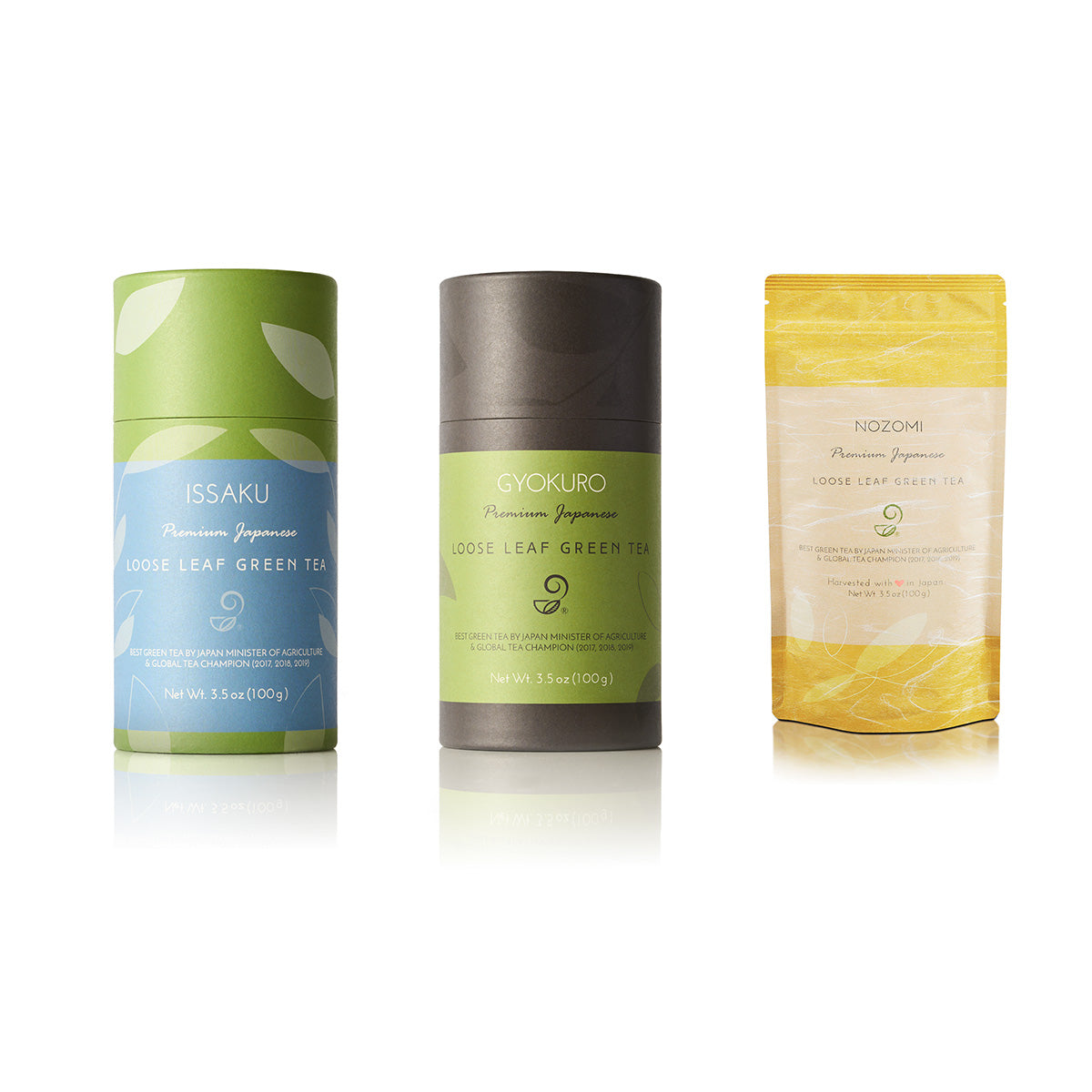
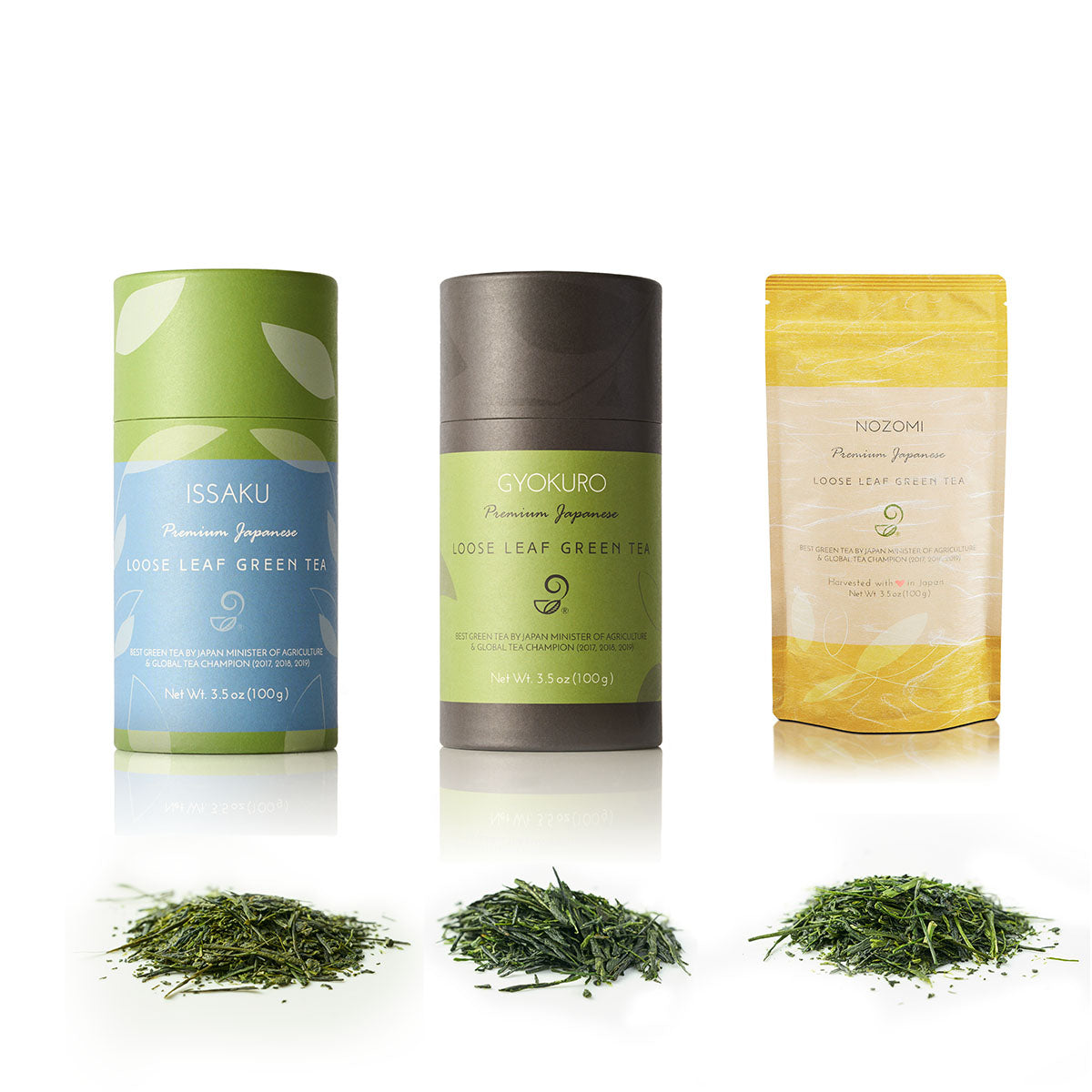
    This tea set features three exceptional Japanese green teas, each crafted with care and traditional techniques. Issaku Reserve, a Global Tea Champion winner in 2017 and 2019, is a rare masterpiece created by Farm Master Mr. Arahata at Arahataen Green Tea Farm. Handpicked once a year from the first flush and processed with advanced methods, Issaku represents the highest-grade deep-steamed green tea, available only in limited quantities even in Japan.

    The set also includes Gyokuro, a premium shaded green tea known for its rich, sweet flavor and deep mossy green color. Grown under special mats for 20 days to increase caffeine and amino acid levels, Gyokuro offers a layered, smooth taste unlike any other. Completing the collection is Nozomi, a fine Kabuse-cha, or "Covered Green Tea," carefully grown under nets to gently shade the leaves just before new sprouts emerge, resulting in a soft, rich, and refined flavor profile.

    45 reviews

    Hojicha - Roasted Green Tea

    $25.00
    Quick view

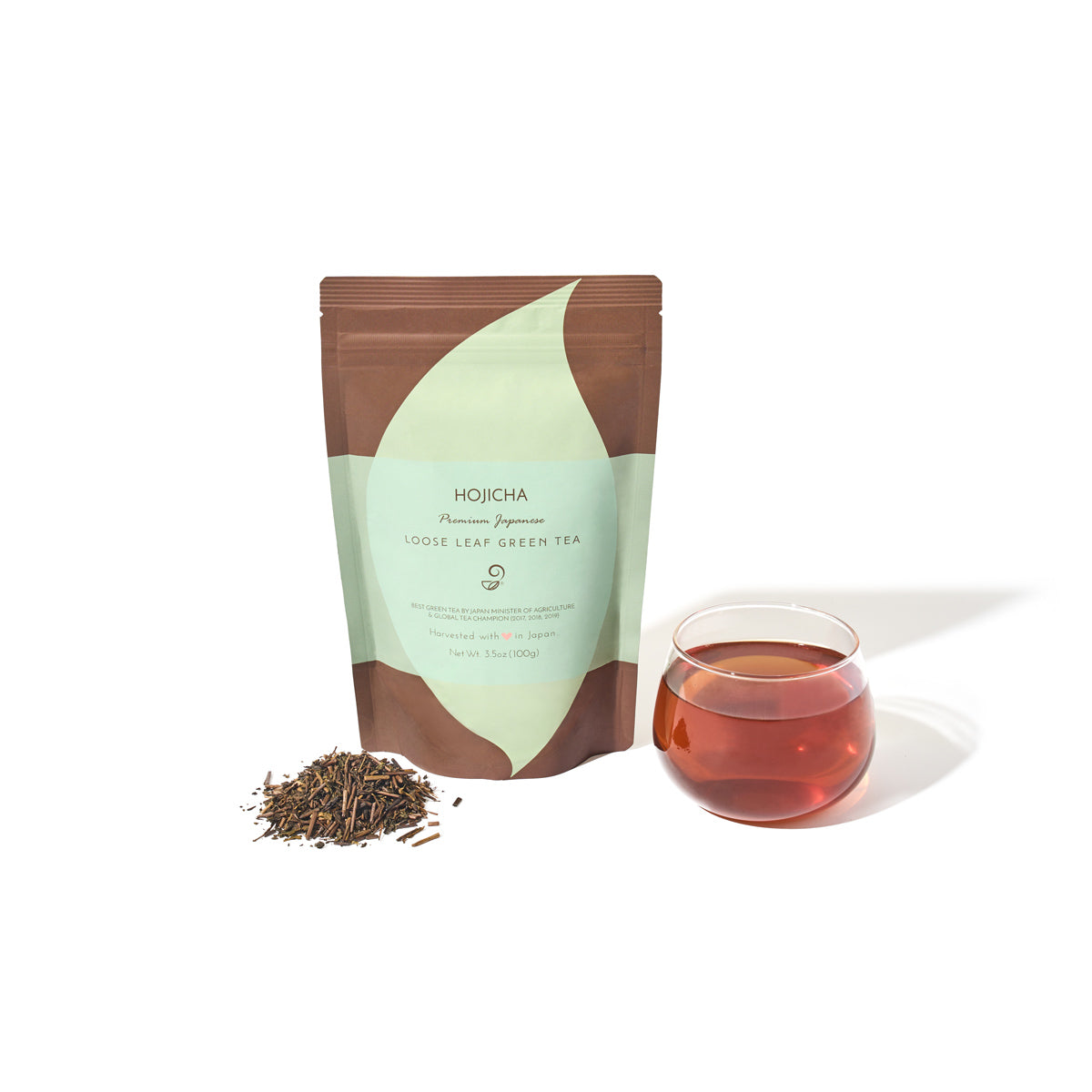
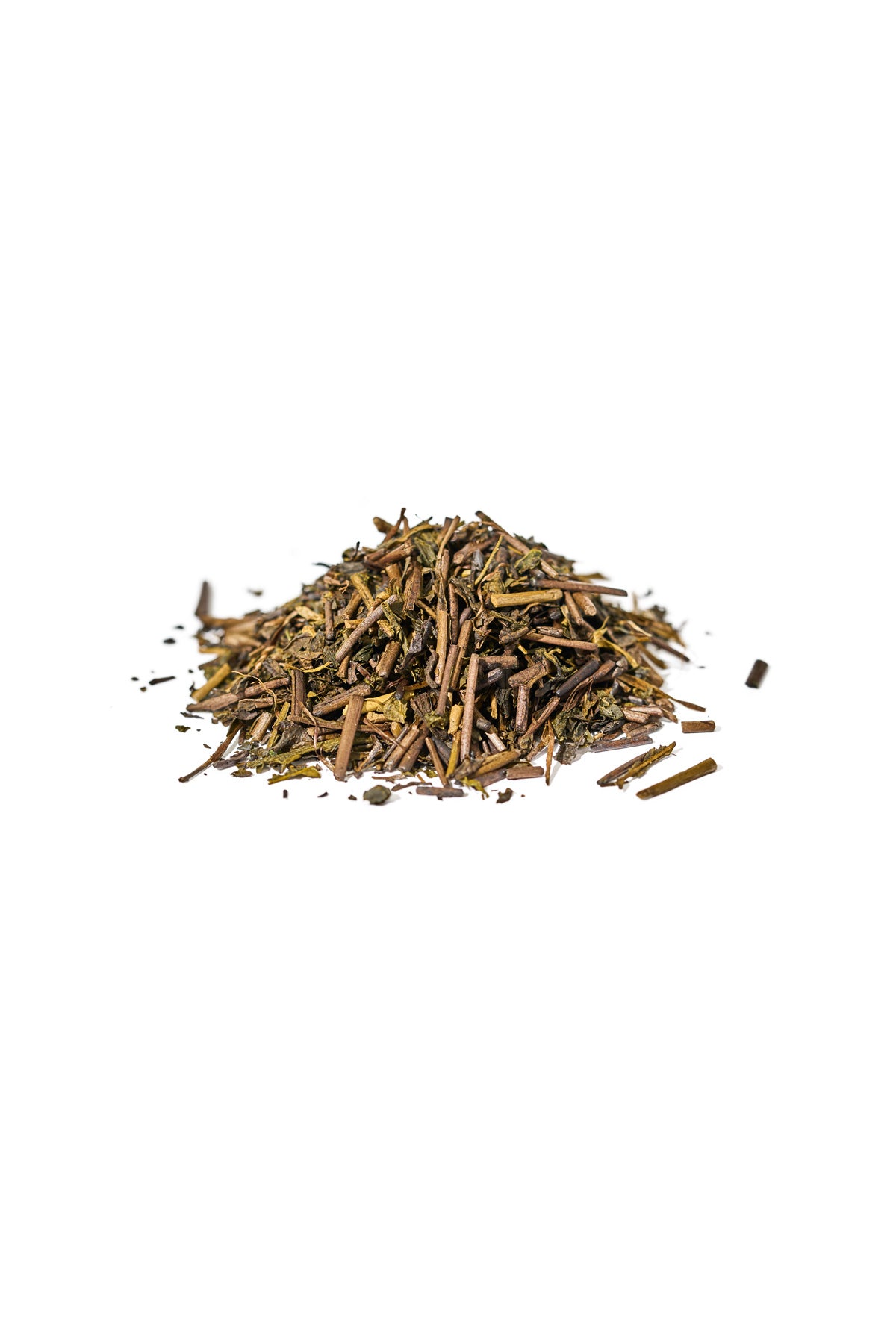
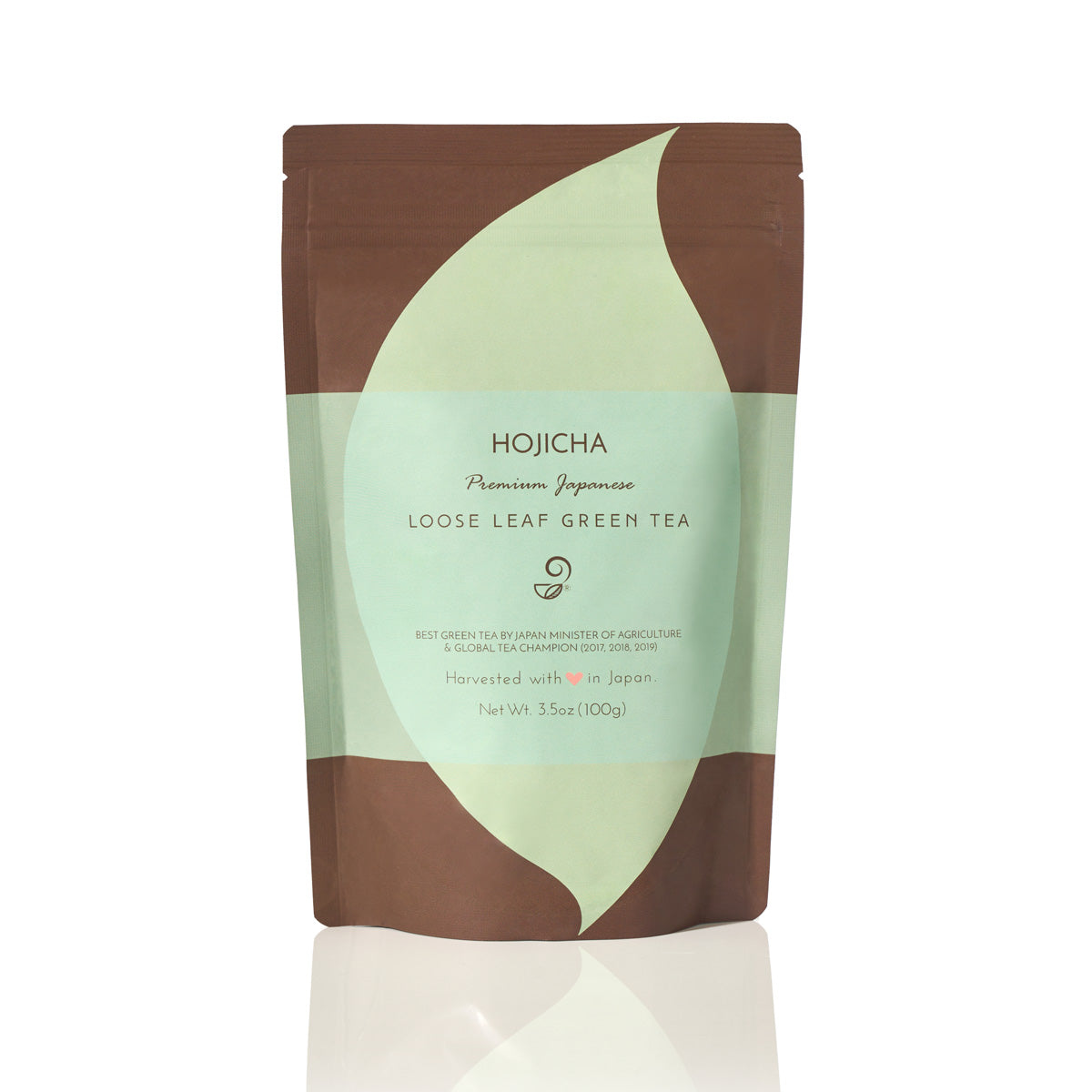
    Our roasted green tea, known as hojicha (ほうじ茶), is crafted from freshly harvested premium green tea carefully roasted in porcelain over charcoal to maximize flavor while retaining more catechins than typical hojicha on the market. With lower caffeine and a smoother, less bitter taste compared to steamed green tea, it is an ideal choice for evening relaxation and is gentle enough for kids and pregnant women. Cultivated using the Chagusaba method in nutrient-rich sugarcane soil, this loose-leaf authentic Japanese roasted green tea, made from the Yabukita cultivar, also pairs beautifully with oily foods. Each eco-friendly resealable package contains 3.5 oz (100g) of tea, enough to steep 30–40 comforting cups.

    80 reviews

    Matcha - Ceremonial Japanese Powdered Green Tea

    $39.00
    Quick view

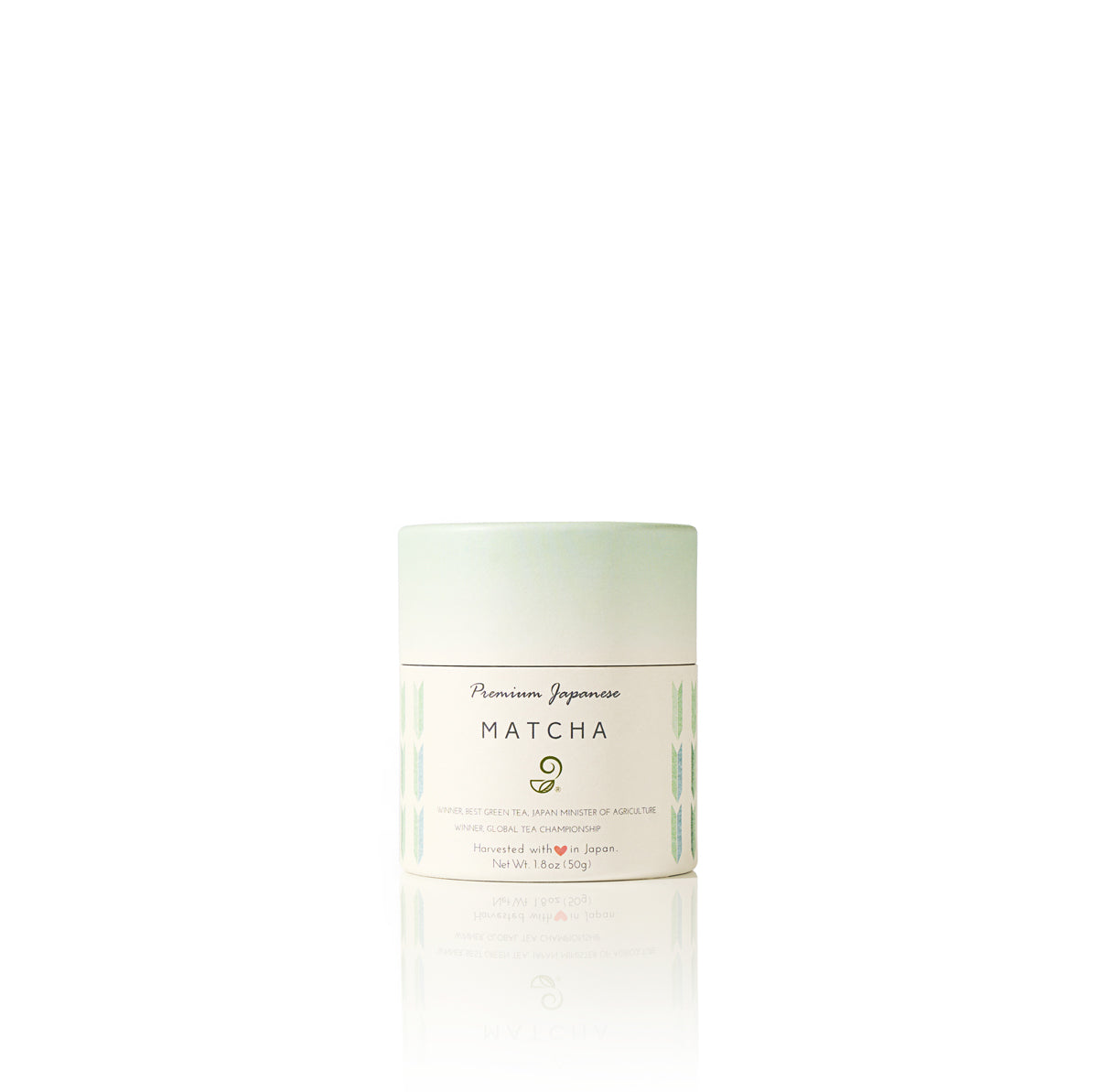
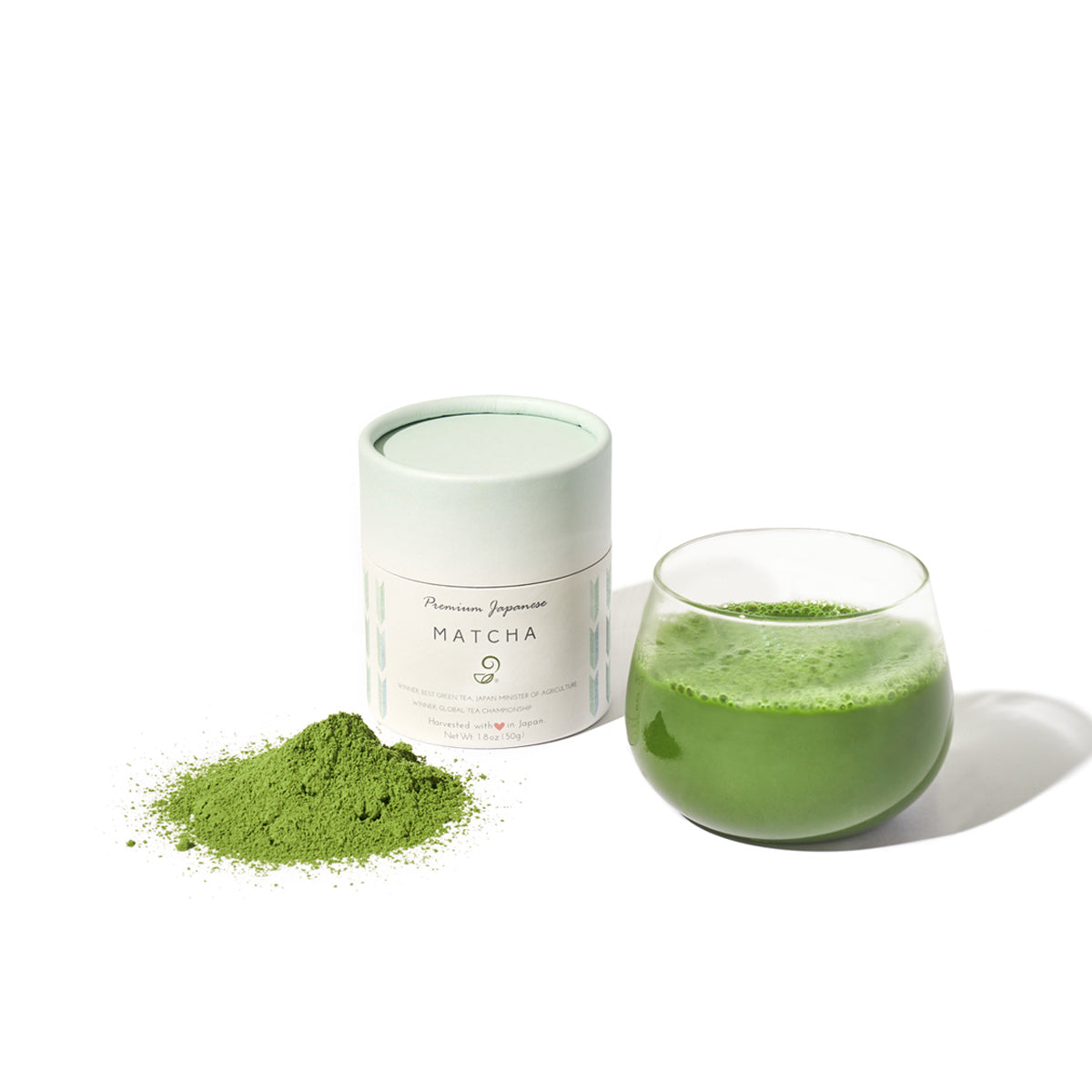
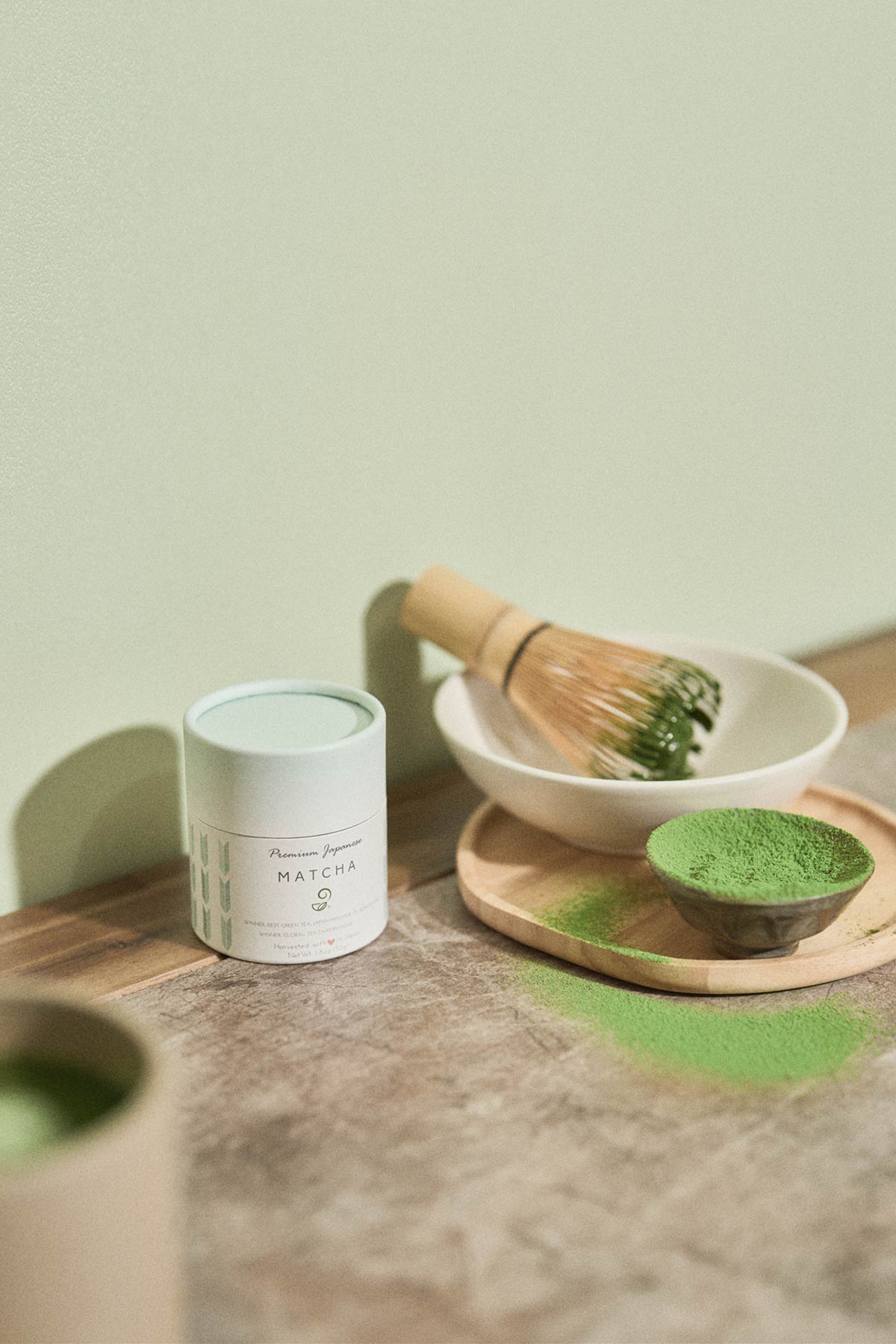
    This ceremonial matcha is crafted from the finest Japanese green tea, grown in nutrient-rich soil enhanced with compostable grasses and sugarcane through the Chagusaba method, which gives the tea a natural sweetness and exceptional flavor. In collaboration with researchers from Shizuoka University, farmers ensure that the soil quality consistently produces tea of the highest standard.

    Renowned among top Japanese chefs for its unmatched aroma, this matcha is made by carefully shading the plants before harvest to boost caffeine and amino acids, then meticulously drying, de-stemming, and grinding the leaves into a fine powder. Made from the Yabukita cultivar, this 1.8 oz (50g) matcha comes in a high-quality, air-tight paper tube canister, providing a luxurious and authentic Japanese tea experience.

    42 reviews

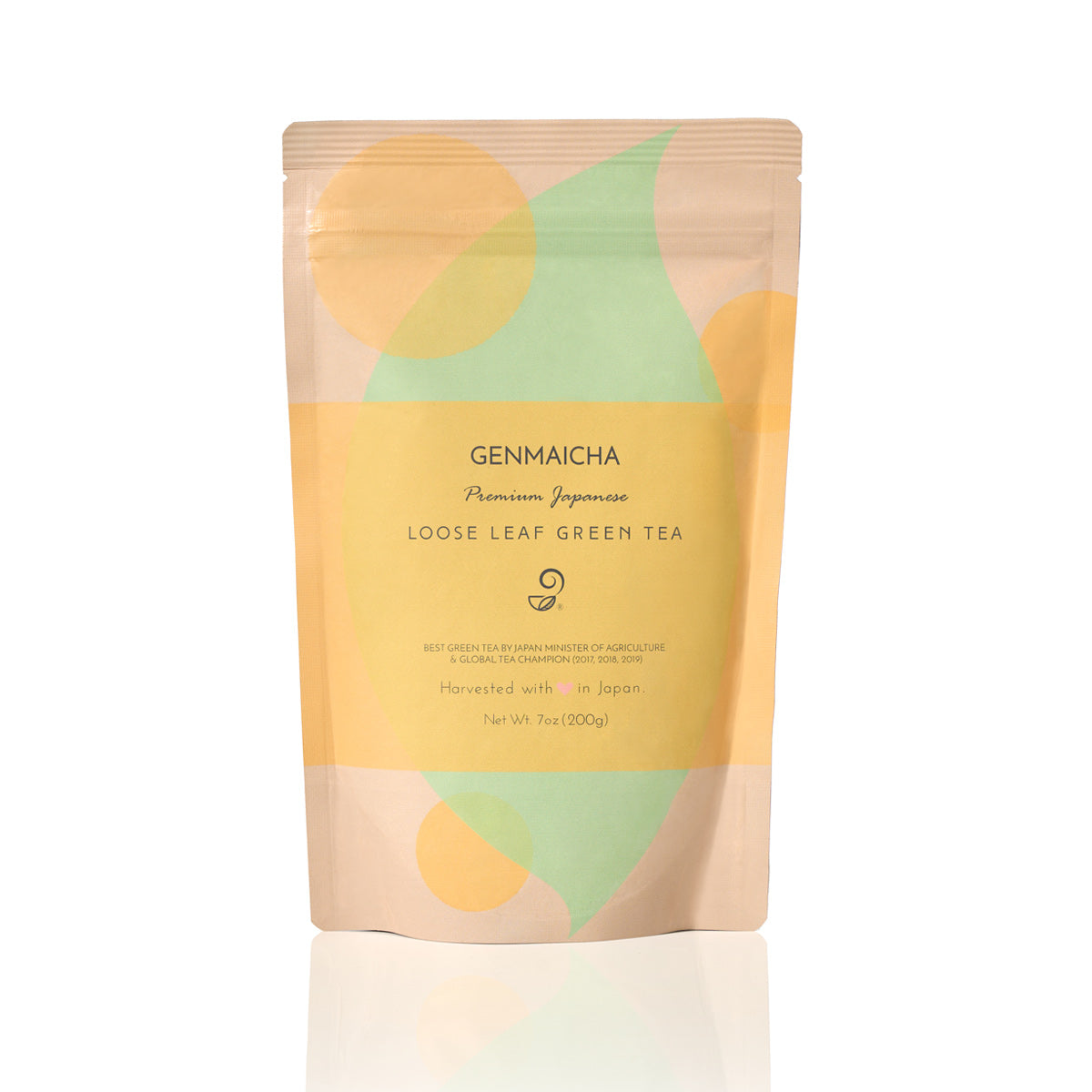
    Genmaicha - Green Tea with Roasted Brown Rice

    $30.00
    Quick view

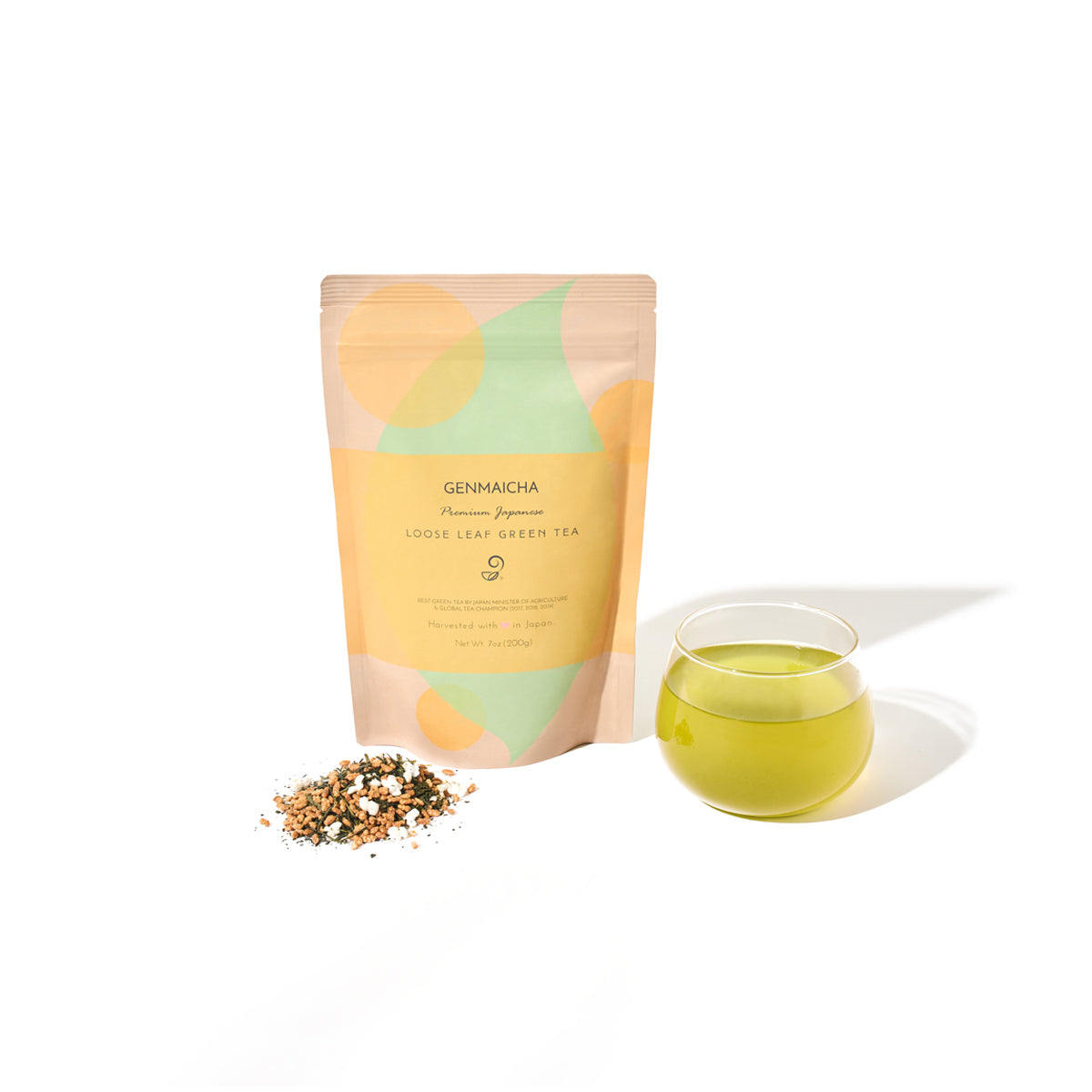
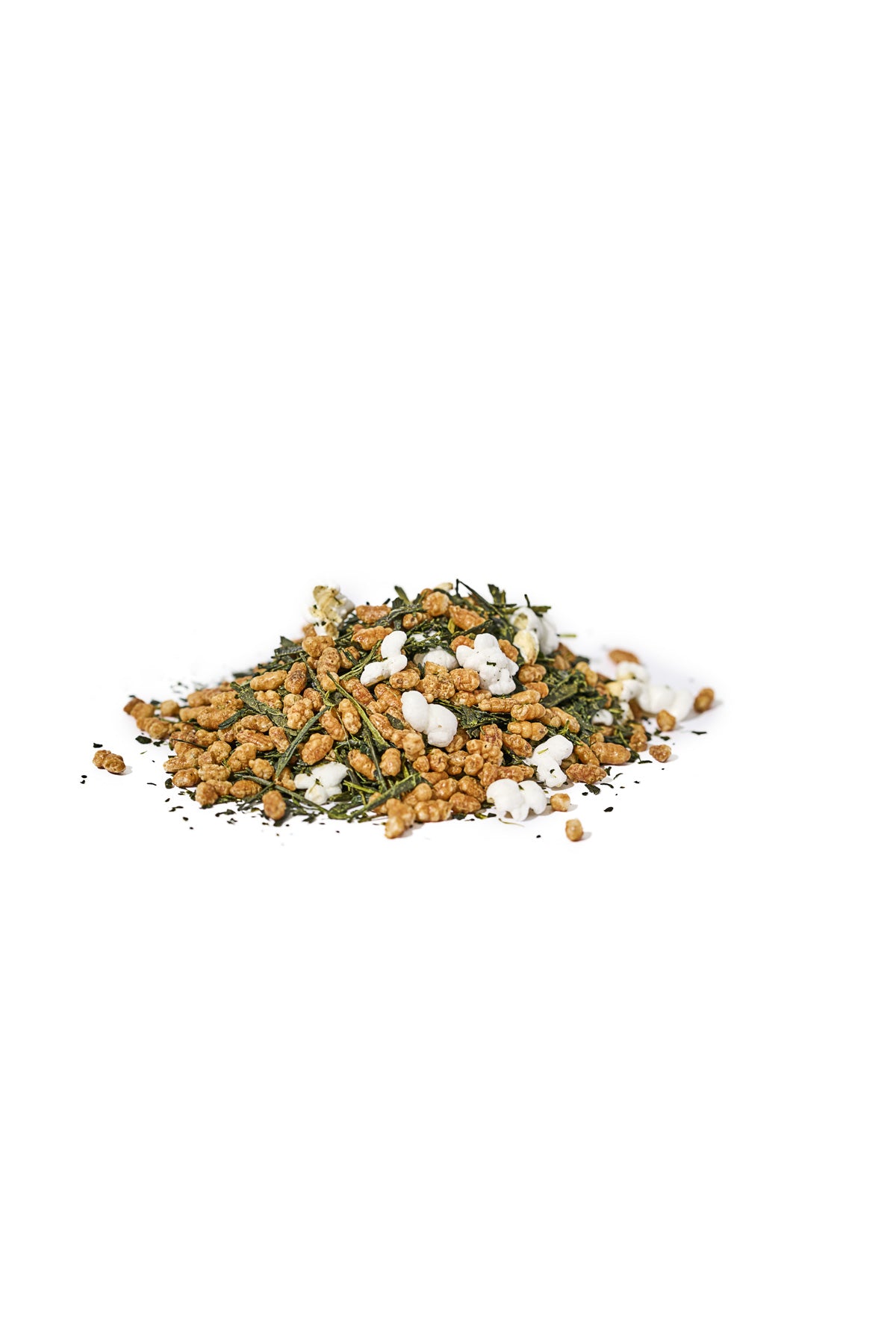
    Our premium Japanese Genmaicha blends high-quality green tea with roasted popped brown rice (genmai 玄米), often nicknamed "popcorn tea" because the roasting process sounds like popcorn popping. Popular especially among the older generation in Japan for its mild flavor and lower caffeine content, this tea is easier on the stomach while still offering a rich, comforting taste. The brown rice used is premium Japanese mochi-gome (もち米) sticky rice, enhancing the tea’s nutty, aromatic profile. Made from Fukamushi Sencha and cultivated using the Chagusaba method in nutrient-rich sugarcane soil, this Genmaicha features the Yabukita cultivar and comes in a 7.0 oz (200g) eco-friendly resealable package, enough to steep 50–60 cups.


    Related Articles You May Be Interested

    Everything You Need to Know about Genmaicha (玄米茶)
    Everything You Need to Know about Genmaicha (玄米茶)
    How To Tell If Japanese Green Tea Is Good Quality Or Not
    How To Tell If Japanese Green Tea Is Good Quality Or Not
    Green Tea Science Part 1: Polyphenols, Catechins and EGCG - 45 Commonly Asked Questions and How You Can Benefit
    Green Tea Science Part 1: Polyphenols, Catechins and EGCG - 45 Commonly Asked Questions and How You Can Benefit
    Why Japanese Green Tea is Perfect for Intermittent Fasting + How to Guide, What to do & What not to do
    Why Japanese Green Tea is Perfect for Intermittent Fasting + How to Guide, What to do & What not to do
    Can You Put Oat Milk in Tea? Yes — Here's How (Matcha + Hojicha Recipes)
    Can You Put Oat Milk in Tea? Yes — Here's How (Matcha + Hojicha Recipes)

    Get Free Bonus Books

    Join Green Tea Club

    Sign up for free to the Green Tea Club to get advice and exclusive articles about how to choose Japanese Tea, and tips, tricks, and recipes for enjoying Japanese tea.

    Unsubscribe anytime. It’s free!

    About the author

    Kei Nishida

    Kei Nishida

    Author, CEO Dream of Japan

    info@japanesegreenteain.com

    Certification: PMP, BS in Computer Science

    Education: Western Washington University

    Kei Nishida is a passionate Japanese green tea connoisseur, writer, and the founder and CEO of Japanese Green Tea Co., a Dream of Japan Company.

    Driven by a deep desire to share the rich flavors of his homeland, he established the only company that sources premium tea grown in nutrient-rich sugarcane soil—earning multiple Global Tea Champion awards.

    Expanding his mission of introducing Japan’s finest to the world, Kei pioneered the launch of the first-ever Sumiyaki charcoal-roasted coffee through Japanese Coffee Co. He also brought the artistry of traditional Japanese craftsmanship to the global market by making katana-style handmade knives—crafted by a renowned katana maker—available outside Japan for the first time through Japanese Knife Co.

    Kei’s journey continues as he uncovers and shares Japan’s hidden treasures with the world.

    Learn more about Kei Nishida

    Related Posts

    Our Matcha Is Now at Pillow Talk Cafe in Pasadena — Master Japanese-Inspired Cake Makers
    Our Matcha Is Now at Pillow Talk Cafe in Pasadena — Master Japanese-Inspired Cake Makers

    Our matcha is now at Pillow Talk Cafe Pasadena! Meet the cafe, try the Egg Heaven sando & Matchamisu, and see how th

    Read More
    Simply Donabe — New Cookbook from TOIRO's Naoko-san Is Out!
    Simply Donabe — New Cookbook from TOIRO's Naoko-san Is Out!

    Simply Donabe is here! We celebrated TOIRO's Naoko-san's new cookbook at a special dinner at Camélia in DTLA — see our p

    Read More
    Introducing New Product - Meet Hojicha Powder
    Introducing A New Product - Meet Hojicha Powder

    Discover the game-changing Hojicha powder your kitchen has been waiting for — richer flavor, easier recipes, and surpris

    Read More
    Leave a comment

    Your email address will not be published..

    Cart

    Your cart is currently empty.

    Start Shopping

    Select options