Skip to content

Top 7 Tea Books of All Time for Tea Lovers


The aromatic goodness of tea is hard to beat. There is a simplicity to heating water and steeping tea, holding the warm cup against your heart, and sipping liquid goodness. Tea lovers come in all shapes and sizes.

As you may know, I am the author of four published books about green tea, but I often get asked what other books I recommend.

Below are 7 books I personally like that are likely to fuel your love while educating you on the art of all things tea.

1. "20,000 Secrets of Tea: The Most Effective Ways to Benefit from Nature’s Healing Herbs" by Victoria Zak

Top 7 Tea Books of All Time for Tea Lovers

Teas have so many healing benefits hidden in their leaves. This guide offers a plethora of ailments and ways herbs can treat them. One of the many benefits of learning about the healing properties of different teas is that they are easy to obtain and inexpensive to boot. Find all the delicious and relaxing ways to heal your body with simple teas. This book is a wonderful resource for any home.

2. “The Book of Tea” by Kakuzo Okakura

Top 7 Tea Books of All Time for Tea Lovers
Book of Tea

A scholar of Japanese heritage, Kakuzo Okakura was best known in America as the Curator of Chinese and Japanese art at the Boston Museum of Fine Arts. If you have ever been interested in the distinctly eastern mindset toward Teaism, Okakura is prepared to show you the ins and outs of Japanese tea culture in "The Book of Tea". It is a great introduction to Japanese thinking and culture and covers everything, including origins, religious influences, history, and ceremonies. It is about more than just tea; It is about Japanese heritage and culture.

3. “Tea: History, Terroirs, Varieties” by Kevin Gascoyne, Francois Marchand, and Jasmin Desharais

Top 7 Tea Books of All Time for Tea Lovers

With beautifully vibrant photos, this is the tea reference book you’ve been waiting for. Chock full of teas from around the world, "Tea: History, Terroirs, and Varieties" is comprehensive without being overwhelming. You can learn not only about different teas from different regions but also about their histories, ceremonies, preparation, recipes, and more.

I had the pleasure of personally meeting with the author at the World Tea Expo last year. He is a wonderful person to talk with and has lots of passion for tea and the tea business. His book also reflects his personality.

Does reading more about tea makes my tea taste better?

4.Jane Pettigrew’s World of Tea: Discovering Producing Regions and Their Teas” by Jane Pettigrew

Top 7 Tea Books of All Time for Tea Lovers

If you are ready to take your tea knowledge to the next level, dive into "Jane Pettigrew’s World of Tea". It will take you on a wonderful journey through 60 tea-producing regions of the world, touching on their history, local tea culture and rituals, terroir, cultivars, etc. Become a real tea connoisseur and enjoy your cuppa on a whole new level.

5.“Tea: A User’s Guide” by Tony Gebely

Top 7 Tea Books of All Time for Tea Lovers

Drinking tea is such a relaxing experience. There is much more to that tea than knowing the perfect steep time. Tea has a rich history. This book will teach you not only about the history but also how to prepare and evaluate different varieties. You may even learn some fun facts that you never knew before.

I had the pleasure of meeting Tony at an event, and he belongs to the same group to which I belong. Here is a picture of Tony and me!
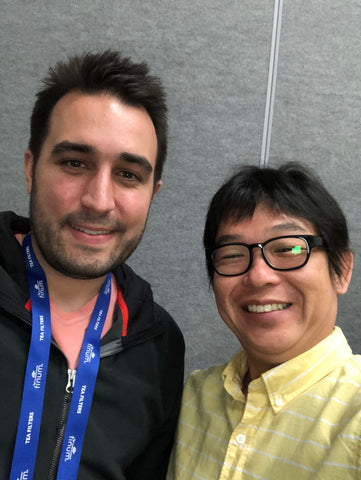
Tony Gebely and Kei Nishida
6.World Atlas of Tea: From the Leaf to the Cup, the World’s Teas Explored and Enjoyed” by Krisi Smith

Top 7 Tea Books of All Time for Tea Lovers

Did you know that the United States is the fourth-largest consumer of tea in the world? That and many more interesting facts are covered in "World Atlas of Tea". It touches on the basics: brewing and drinking, blending, and country profiles. With specialty tea outlets popping up all over the place, this book will help you better appreciate the variety of teas you may stumble upon. You may discover why some teas from different regions and countries taste differently. You can even learn how to make the perfect cup of tea.

7.The Tea Book: All Things Tea” by Nick Kilby and Louise Cheadle:

Top 7 Tea Books of All Time for Tea Lovers

This book is a wonderful encyclopedia of knowledge about tea. Tea comes in so many delicious varieties and blends that it can be hard to wade through them. Learn how to taste like a pro and even correct brewing methods. Once you know a little about tea, it will make your drinking experience exponentially better. "The Tea Book" has everything you need to know about tea. It is your definitive guide and a welcome addition to any tea lover’s library.

Bonus: The Ancient Art of Tea


Although this book is not about Japanese Tea (rather, it is about Chinese tea), Benjamin from the Green Tea Club Facebook Group recommended it, so I am adding it here. This book talks about tea from the Chinese tea perspective, and since I love Chinese tea as well, it is a great book to learn about tea from the origin of where it came from.

In Conclusion

As one of the most widely consumed beverages in the world, tea is a soothing and aromatic beverage with many healing properties. Whether you are a new tea drinker or a lifetime consumer, there are many interesting books available on the topic that can take your tea knowledge to the next level. From green tea to black tea and everything in between, learn about the history of these leaves, the cultures that grew around this beverage, traditional and unique recipes, and much, much more. So put the kettle on, grab a cozy blanket, and settle down for some light reading accompanied by your favorite tea flavor.

FAQs about Tea Books for Tea Lovers

If I only read one tea book to start, which should it be?

"The Book of Tea" by Kakuzō Okakura. Written in 1906 in English (specifically for Western readers), it's short — under 100 pages — and remains the most quoted tea book in history for good reason. Okakura introduces tea ceremony, wabi aesthetics, Zen philosophy, and the cultural meaning of tea in Japan in prose that hasn't dated badly in 120 years. It's the book most tea-school students still read first.

It's not a brewing guide — Okakura assumes you can figure out hot water and a teapot — and it's not a comprehensive history. It's a meditation on what tea means and why it matters, written by someone who had spent his life teaching Japanese aesthetics to Westerners. Read it once and you'll have a vocabulary for talking about tea that goes beyond "tastes good."

Cheap to find — it's public domain and available free online. Print copies are usually under $10. Honestly worth re-reading every few years; it tends to land differently at different ages.

What's the best book on Japanese tea ceremony specifically?

"Cha-No-Yu: The Japanese Tea Ceremony" by A.L. Sadler is the canonical English-language reference — comprehensive, historical, and detailed enough to serve as a study text rather than just an introduction. Originally published in 1933 and updated several times since, Sadler walks through the architecture, utensils, history, and ritual structure with depth that no shorter book matches. It's the closest thing to a textbook for self-study of Japanese tea ceremony.

For a more personal, contemporary read, Sen Sōshitsu XV's "Tea Life, Tea Mind" is short, profound, and written by the late grandmaster of Urasenke himself. It's less a how-to and more a meditation on what regular tea practice does to a life. Best read after Okakura. Pairs well with our six-step tea ceremony introduction if you want to ground the philosophy in actual practice steps.

Avoid the coffee-table books that emphasize photography over substance — many "tea ceremony" picture books are beautiful but tell you very little about what's actually happening. Sadler and Sōshitsu cover the substance.

What is Tea Ceremony?

What about a book on the science and health side of green tea?

"Green Tea: Health Benefits and Applications" by Yukihiko Hara (2001) is the most rigorous scientific reference still in circulation. Hara is a tea-chemistry researcher and the book covers catechins, EGCG, L-theanine, and the documented health effects with primary-research citations. It's denser than a popular health book and lighter than an academic text — the right level for a curious enthusiast.

"Tea: A Global History" by Helen Saberi covers the broader cultural-history angle without getting into the chemistry, and "For All the Tea in China" by Sarah Rose is a fun popular history of how tea cultivation moved from China to India in the 19th century. Both are entertaining rather than authoritative on the science but useful for context.

If you want a single volume that combines history, science, and practice in modest depth, "The True History of Tea" by Victor Mair and Erling Hoh is the best single all-around tea book I've recommended. It's not specifically Japanese but covers the global picture with rigor.

Are there good recent tea books, or is it all classics?

There are some recent additions worth reading. "The Tea Book" by Linda Gaylard (DK, 2015) is visually rich and covers brewing, history, and varietals in a modern accessible style — good for visual learners and intermediate drinkers. "A Beginner's Guide to Japanese Tea" by Per Oscar Brekell (2020) is a practical, well-illustrated introduction to specifically Japanese teas, written by a Swedish tea grader who works in Japan.

On the cookbook side, "Matcha Magic" by Joanne Allen Crockford and "Matcha" by Kristen Hartke offer modern recipes that use matcha across savory and sweet applications. They're more recipe books than education books, but useful if you cook with matcha regularly.

The publishing pace on tea books slowed after the 1990s tea-boom era; most current tea writing happens in articles, blogs, and YouTube rather than books. The classics still hold up better than most contemporary writing — Okakura, Sadler, and Hara remain the durable references.

Where can I read books written by Japanese tea masters in English?

Several iemoto (grandmasters) of major tea schools have written English-language books that are widely available. Sen Sōshitsu XV (Urasenke) has "Tea Life, Tea Mind" and "The Spirit of Tea" — both short, philosophical, and translated for Western readers. Yamada Sōhen (Mushakōjisenke) has "Chanoyu Quarterly" archives with essays from grandmaster perspective.

From the Omotesenke side, the school doesn't publish as actively in English as Urasenke does, but its older texts have been translated through the Tea Ceremony Foundation in Kyoto. Several past Omotesenke iemoto have translated essays available in academic library collections.

If you want the most authoritative practitioner voice in modern English, the Urasenke library is the deepest bench. The school is also the most active internationally, and most of their English-language material is in print and reasonably priced. Their bookstore in Kyoto and their Hawaii branch both ship internationally for direct purchases.

READ BOOKS ABOUT TEA BY KEI NISHIDA

8 reviews

The Sencha Lover Gift Set - Premium Japanese Green Tea Set Package

$179.00 $159.99
Quick view

This tea set features three exceptional Japanese green teas, each crafted with care and traditional techniques. Issaku Reserve, a Global Tea Champion winner in 2017 and 2019, is a rare masterpiece created by Farm Master Mr. Arahata at Arahataen Green Tea Farm. Handpicked once a year from the first flush and processed with advanced methods, Issaku represents the highest-grade deep-steamed green tea, available only in limited quantities even in Japan.

The set also includes Gyokuro, a premium shaded green tea known for its rich, sweet flavor and deep mossy green color. Grown under special mats for 20 days to increase caffeine and amino acid levels, Gyokuro offers a layered, smooth taste unlike any other. Completing the collection is Nozomi, a fine Kabuse-cha, or "Covered Green Tea," carefully grown under nets to gently shade the leaves just before new sprouts emerge, resulting in a soft, rich, and refined flavor profile.

• Disclosure: I only recommend products I would use myself, and all opinions expressed here are my own. This post may contain affiliate links that I may earn a small commission at no additional cost to you.
The commission also supports us in producing better content when you buy through our site links.
Thanks for your support.
- Kei and Team at Japanese Green Tea Co.


Related Articles You May Be Interested

10 Things about Japanese Green Tea Harvesting You (Probably) Didn't Know
Everything You Need to Know About Different Types of Japanese tea
Scientifically Proven Ways Japanese Green Tea Makes Your Bones Stronger
10 Reasons Why Green Tea Extract is Bad for You
How to Take a Bath with Japanese Green Tea

Get Free Bonus Books

Join Green Tea Club

Sign up for free to the Green Tea Club to get advice and exclusive articles about how to choose Japanese Tea, and tips, tricks, and recipes for enjoying Japanese tea.

Unsubscribe anytime. It’s free!

About the author

Kei Nishida

Kei Nishida

Author, CEO Dream of Japan

info@japanesegreenteain.com

Certification: PMP, BS in Computer Science

Education: Western Washington University
Kei Nishida is a passionate Japanese green tea connoisseur, writer, and the founder and CEO of Japanese Green Tea Co., a Dream of Japan Company.

Driven by a deep desire to share the rich flavors of his homeland, he established the only company that sources premium tea grown in nutrient-rich sugarcane soil—earning multiple Global Tea Champion awards.

Expanding his mission of introducing Japan’s finest to the world, Kei pioneered the launch of the first-ever Sumiyaki charcoal-roasted coffee through Japanese Coffee Co. He also brought the artistry of traditional Japanese craftsmanship to the global market by making katana-style handmade knives—crafted by a renowned katana maker—available outside Japan for the first time through Japanese Knife Co.

Kei’s journey continues as he uncovers and shares Japan’s hidden treasures with the world.

Learn more about Kei Nishida

Related Posts

What is Shincha - New Crop Tea and What Makes them Unique?
What is Shincha Tea and What Makes It Unique?

Discover the secrets of Shincha, Japan's acclaimed new crop tea. Explore its distinct features, flavors, and traditions.

Read More
Meet Eijiro Tsukada (塚田英次郎): The Charismatic Businessman Behind Cuzen Matcha — Now Available at Japanese Green Tea Co.

Meet Eijiro Tsukada — the man behind Cuzen Matcha. Full guide to the award-winning Matcha Maker, the Pro, and why we're

Read More
Behold: Balmuda's "The MoonKettle" — Where Boiling Water Becomes Art

We were privileged to be invited by Balmuda's Private MoonKettle Launch Event. Here are videos of it and everything you

Read More
Leave a comment

Your email address will not be published..

Cart

Your cart is currently empty.

Start Shopping

Select options